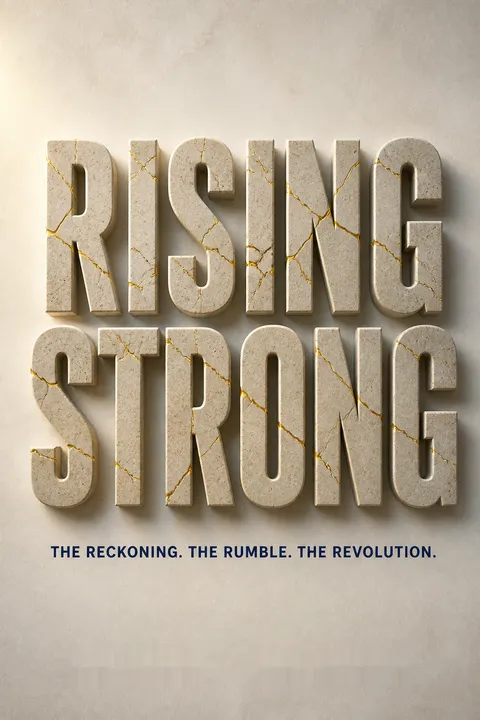


Key Takeaways
Courage includes the fall, so learn how to recover, not just perform
Bravery has a cost. Brown defines vulnerability as showing up and being seen when the outcome is uncertain. That makes the arena any place where something important is at stake, from a work presentation to a marriage. In one pivotal Lake Travis swim, Brown tried to connect with her husband, Steve, and read his quietness as rejection. She eventually told him the hurtful story she was inventing. He explained that he had been fighting panic after dreaming a boat would endanger children on the lake. Each had mistaken the other's behavior because each was caught in fear.
Recovery is the practice. The book argues that daring inevitably includes hurt, and that facing the hurt can deepen self-knowledge and connection. This is a map, not a quick or predictable cure.
What's valuable is the distinction between courage and guaranteed success. A person can act bravely and still be rejected, fail, or discover a painful truth. That makes courage a practice of agency rather than a bet on a happy ending. The lake story also demonstrates how quickly people convert ambiguity into a judgment about themselves. Still, vulnerability should not be confused with indiscriminate disclosure. In unsafe or coercive relationships, protection and outside support may be wiser than a candid conversation.
Name the feeling before it chooses your behavior
Notice the emotional signal. The first movement in Brown's process is the reckoning: recognizing that emotion is active, then becoming curious about how feelings connect to bodily sensations, thoughts, and behavior. A racing heart, a rehearsed argument, or the urge to lash out can all signal that something has been stirred. Accurate labels can come later. The first task is to notice that the reaction is bigger than the immediate moment.
Create a pause. Brown recommends attention practices such as slow, counted breathing to interrupt automatic reactions. In her account, rhythmic breathing while swimming helped her stay with discomfort long enough to question her assumptions. The goal is not to suppress emotion or instantly calm down. It is to make enough room to choose a response rather than discharge hurt onto someone nearby.
This approach resembles emotion regulation methods that begin with noticing and labeling an internal state before acting on it. It also avoids the common mistake of treating thoughts, feelings, or behavior as isolated levers. A bodily reaction can be useful information, but it is not a reliable verdict about what another person intended. The pause matters precisely because emotion is real while its first explanation may be wrong. For people whose emotions feel overwhelming or traumatic, professional support may be needed alongside self-observation.
Write your first story, then investigate what the facts support
Capture the unedited version. Brown calls the first account of a painful event an SFD, short for Shitty First Draft, or Stormy First Draft when teaching children. It is private writing that records what happened, what the writer feels, what the body is doing, what the writer thinks, and how the writer responds. Its purpose is discovery, not persuasion. The draft may be unfair or dramatic; editing it too early hides the assumptions worth examining.
Test the story. The mind prefers a coherent explanation to uncertainty, even when evidence is thin. Brown cites a study in which shoppers confidently explained their preference among socks that were actually identical. During a rumble, she recommends asking what is missing about the situation, the other people, and oneself. Brief expressive writing, including sessions of 15 to 20 minutes over four days, is discussed as one possible aid.
Writing can create distance between an event and the meaning assigned to it. That is a useful bridge between narrative reflection and cognitive approaches that test interpretations against evidence. The important safeguard is to treat the draft as a hypothesis, not as a hidden truth finally revealed. Private venting can reinforce grievance if it never moves toward reality-checking or repair. Brown's sequence is strongest when unfiltered expression is followed by questions, new information, and a willingness to revise the account.
Do not skip the messy middle between injury and a new response
Change takes a middle. Brown's three-part map moves from noticing emotion, to examining the story, to acting on what the examination teaches. The difficult stretch is the investigation: initial explanations are challenged, shame and fear surface, and comfortable fixes stop working. Pixar storytellers helped her recognize that a story cannot leap from its opening problem straight to a satisfying resolution. The middle contains the struggle that makes the ending earned.
There is no fixed timetable. Brown reports seeing this work take minutes in some situations and years in others. It is iterative rather than strictly linear, and people may revisit the same question as new feelings or facts emerge. The aim is not to hurry toward an inspirational ending or make suffering look admirable. Trauma and complicated grief, the book cautions, can require trained professional help.
The emphasis on the middle counters a familiar cultural habit: presenting recovery as a clean before-and-after transformation. In practice, people often need time to tolerate uncertainty, test explanations, and build new behavior. That insight also helps teams avoid treating a setback as resolved simply because a meeting ends with optimism. Yet struggle is not inherently productive. Time, reflection, and support can help, but adversity can also overwhelm or harm. The book's caution about professional care is essential, not an exception to bravery.
Be generous about motives without surrendering boundaries or accountability
Hold compassion and limits together. Brown's Living BIG approach joins boundaries, integrity, and generosity. Generosity means making a fair, charitable assumption about another person's intentions when information is incomplete. It does not mean excusing harmful behavior. Boundaries clarify which behaviors are acceptable, while integrity means acting in line with one's values. Brown learned this after agreeing to a speaking event because she felt guilted into it, then resenting the organizers when the arrangements felt disrespectful.
A boundary replaces resentment. A West Point leader applied the idea to an employee who was struggling. Rather than continually pressuring him to perform in the same role, the leader concluded that the person might be doing his best and that the job itself needed to change. Compassion can guide how a problem is addressed; it does not remove the need to address it.
The useful distinction is between judging a person's character and evaluating the effects of specific actions. Assuming good intent can reduce needless escalation, while clear limits prevent compassion from becoming permission for repeated harm. In organizations, this can shift attention from blame to fit, training, or reassignment. The assumption that people are doing their best is not something an observer can verify in every case. It works better as a stance that reduces contempt, paired with evidence-based decisions and accountability.
Treat disappointment as an expectation to examine, and grief as a loss to honor
Find the hidden expectation. Disappointment often follows expectations that were never made explicit. Brown calls these stealth expectations. She and Steve repeatedly argued after busy weekends, each blaming the other for not helping enough. They eventually discovered that Steve gave up personal plans when parenting alone, while Brown expected to complete her own tasks when they were both home. Naming expectations before the weekend reduced the misunderstanding.
Make room for grief. Brown also distinguishes heartbreak from ordinary disappointment. Heartbreak involves losing, or feeling the loss of, love and belonging. Grief can include loss, longing, and feeling lost, as when Claudia struggled with an addicted sister and the fantasy of a normal family holiday. Forgiveness, in Brown's account, may require grieving what cannot be restored. It does not mean forgetting, excusing abuse, or abandoning accountability.
Unspoken expectations are especially combustible because each person can experience a private standard as a shared agreement. Making them explicit turns resentment into a negotiable question. The discussion of grief adds needed breadth: loss includes identities, routines, and imagined futures, not only death. But forgiveness should remain a choice, not a moral demand placed on someone who has been harmed. Safety, accountability, and distance may be necessary even when a person is working toward less consuming anger.
Practice receiving help, not only earning worth by helping
Need is part of connection. Brown traces her discomfort around unhoused people to a deeper fear of her own need. Her grandmother had fed traveling men at the family home, partly because she knew poverty and had accepted help herself. The contrast helped Brown see that giving and receiving belong to the same human relationship. Helping can become armor when it proves usefulness while avoiding vulnerability.
Let others contribute. When Brown's mother was hospitalized, Brown took charge of every task until her sisters told her she was over-functioning. She broke down and accepted their help. The episode shows how competence can conceal fear, and how rescuing everyone may deny them a chance to participate. Asking for support is not evidence of incompetence. It gives other people the opportunity to show care and builds mutual trust.
This insight reframes care as reciprocal rather than as a transaction between capable helpers and helpless recipients. In social work and community practice, that distinction can reduce paternalism by recognizing the agency and knowledge of people receiving support. It also exposes how self-sufficiency can be a performance that isolates the person performing it. Personal generosity, however, cannot substitute for addressing structural causes of poverty or homelessness. Respectful human contact matters, but it is not a complete social response.
Turn failure into learning by separating a bad act from a bad self
Describe the mistake accurately. Shame turns an error into a verdict on the whole person. Guilt stays closer to the behavior and can prompt repair. Andrew, an agency leader, initially told himself he was a failure after failing to protect his team during a disrespectful client presentation. He spoke with a trusted colleague, admitted his part to the team, apologized, and helped them decide to leave the pitch. Their trust strengthened because he took responsibility instead of shifting blame.
Make trust observable. Brown's BRAVING checklist breaks trust into behaviors: boundaries, reliability, accountability, confidentiality, integrity, nonjudgment, and generosity. It can be used to assess others and oneself. Mistakes do not automatically erase trust; refusing to own them is more damaging. Brown's compost metaphor captures the possibility that failure, when examined honestly, can nourish better decisions rather than become a permanent identity.
Separating identity from behavior is more than a kinder form of self-talk. It preserves the possibility of action: a person who made a mistake can apologize, repair harm, and change a process. Andrew's leadership story also shows why accountability can increase credibility rather than diminish it. Still, reflection is not a substitute for consequences. A sincere apology matters when it is paired with changed conduct, and repeated failures may call for stronger safeguards, not simply another round of learning language.
Interrogate inherited stories before nostalgia edits pain into virtue
Look at the whole history. Brown describes mapping her family relationships and recognizing that stories once celebrated as colorful hard living often concealed addiction, trauma, and mental illness. She argues that nostalgia can preserve affection while also hiding costs. Examining the past more fully helped her make different choices and speak more honestly with her children about family history.
Reclaim the whole self. Brown also explores how gender expectations can divide people into supposedly acceptable roles: women are pushed to hide anger or ambition, while men are pushed to hide fear or tenderness. Integrating identity means accepting that strength and vulnerability can coexist. The book likewise recommends taking criticism seriously only when it comes from people willing to engage, contribute, and hold the person accountable, rather than anonymous attackers who offer only contempt.
Family stories shape what later generations consider normal, admirable, or inevitable. Cross-examining nostalgia can therefore be an act of prevention, not disloyalty. It allows gratitude for what was good while naming the harm that a romantic version excludes. The same principle applies to cultural scripts about gender and success. Still, inherited stories are not just private beliefs; they are reinforced by institutions and power. Individual honesty can challenge them, but structural change requires more than personal insight.
Make story-rumbling a team norm before the next crisis arrives
Build a habit of clarification. Brown argues that families, workplaces, and communities can use the same process as individuals. A team member in her organization said he feared that a postponed agenda item meant his project no longer mattered. By stating the story he was making up, he gave the leader a chance to explain that the issue had been delayed because it deserved more time. The team could address the concern before it hardened into resentment.
Make honesty operational. Brown's organization uses shared practices of respect, candid discussion, collective ownership, recovery, and reaching out. At home, her family invites children to describe the story behind a disappointment rather than dismissing it with a parental command. The aim is not to eliminate disagreement or hurt. It is to surface assumptions early enough to correct misinformation and make a more deliberate decision.
This is a practical account of psychological safety: people need enough confidence that raising a concern will not trigger humiliation or retaliation. A shared vocabulary can make that risk easier to take, and explicit follow-up keeps candor from becoming an empty ritual. The challenge is power. A manager cannot create safety simply by inviting honesty if dissent is punished afterward. Teams need visible protection for disagreement, fair accountability, and leaders who demonstrate that correction applies to them as well.
Analysis
Rising Strong is a self-help book built from qualitative research, personal narrative, and a recurring three-part map for responding to emotional setbacks. Its central move is to place recovery, not invulnerability, at the heart of courage. This matters because motivational culture often celebrates the risk-taker at the moment of action, then edits out the fear, confusion, and repair that follow. Brown restores that middle terrain and gives it practical language.
The book's strongest mechanism is the separation of event, emotion, and interpretation. A painful interaction can produce a bodily reaction, a fast explanation, and behavior that seems justified by that explanation. Writing the first account, identifying assumptions, and asking what is not yet known interrupts this chain. The method has clear kinship with cognitive approaches that examine automatic thoughts, with expressive writing that organizes experience, and with narrative identity, the process by which people connect events into a sense of self. Its value lies less in novelty than in combining these strands into a memorable practice applicable at home and at work.
The stories make abstract ideas legible. Brown's conflict with Steve shows how a single candid exchange can replace an accusation with missing context. Andrew's failed pitch demonstrates that accountable leadership can preserve trust without pretending no error occurred. The examples also make the method emotionally credible: self-knowledge is portrayed as awkward, sometimes humiliating work rather than polished self-improvement.
The main limitation is evidentiary scope. Personal stories and grounded-theory interviews can reveal patterns and generate useful concepts, but they cannot establish that the process works equally well for all people or conditions. The book appropriately distinguishes everyday hurt from trauma and complicated grief, where professional care may be needed. Its practical value is strongest when the method is treated as a flexible inquiry, not a universal formula, and when vulnerability is balanced with safety, boundaries, and accountability. That balance turns emotional honesty from a demand to disclose into a choice to understand and respond with greater integrity.
Review Summary
Rising Strong receives mixed reviews, with many praising Brown's vulnerability research and relatable storytelling. Critics appreciate her insights on embracing emotions and transforming failures. Some find the book repetitive and overly personal, while others consider it life-changing. Readers value Brown's practical advice on resilience and authenticity. However, some criticize her privileged perspective and lack of scientific evidence. Overall, fans of Brown's work find the book inspiring, while skeptics question its depth and applicability to serious hardships.
People Also Read









Glossary
The Rising Strong Process
A map for recoveringBrown's model for working through hurt, mistakes, and setbacks in order to gain understanding and change behavior. It moves through three connected phases: noticing and investigating emotion, examining the story built around the event, and applying what is learned. The process is a flexible map rather than a fixed timetable or guaranteed cure.
The Reckoning
Notice emotion and investigateThe first phase of the Rising Strong Process. A person recognizes that an emotional reaction is underway, then becomes curious about its links to bodily sensations, thoughts, and behavior. The goal is initially to acknowledge that something is happening, not to identify the perfect emotion or solve the problem immediately.
The Rumble
Examine the storyThe phase in which a person investigates the explanation they have made for a painful event. This includes testing assumptions, gathering missing information, and examining issues such as shame, blame, boundaries, grief, and trust. The purpose is to distinguish known facts from self-protective interpretations and identify what the experience teaches.
The Revolution
Practice what was learnedThe phase in which insights from examining a struggle are translated into a different way of acting. Brown uses the term for change that reaches beyond understanding and alters how a person lives, relates, parents, or leads. The transformation may emerge through repeated small decisions rather than one dramatic event.
SFD
An unedited first accountShort for Shitty First Draft, and sometimes called Stormy First Draft when used with children. An SFD is private writing that records a person's immediate account of a struggle, including feelings, physical reactions, thoughts, beliefs, and actions. It is intentionally unpolished. Its purpose is to reveal assumptions for later examination, not to justify harmful behavior or serve as a message to another person.
Living BIG
Pair generosity with boundariesBrown's approach combining Boundaries, Integrity, and Generosity. It encourages a person to make a fair assumption about another's intentions while clearly identifying acceptable behavior and acting according to personal values. Generosity is not permission for mistreatment; boundaries and accountability remain part of the practice.
BRAVING
A trust-behavior checklistBrown's acronym for seven observable elements of trust: Boundaries, Reliability, Accountability, Vault, Integrity, Nonjudgment, and Generosity. The checklist helps people identify specific behaviors that build or damage trust, rather than treating trust as an abstract feeling. Brown also applies it to self-trust by asking whether a person acted reliably, responsibly, and in line with their own values.
The Delta
The gap that yields learningBrown's name for the difference between an initial story about a painful event and the more accurate understanding reached through investigation. That gap contains the experience's key learnings. The term also evokes the meeting of river and sea, a shifting terrain where sediment gathers and new growth can take root.
Chandeliering
A disproportionate emotional eruptionBrown's term for an intense reaction to a small or seemingly ordinary trigger after emotional pain has been suppressed. The reaction can occur when a comment or minor mistake touches an unresolved tender point. She warns that it can be especially damaging where one person has power over another, because repeated eruptions create fear and undermine trust.
The 5 Rs
Shared practices for team cultureBrown's shorthand for organizational principles at The Daring Way: Respect for people and stories, Rumble with ideas and conflict, Rally to own decisions and learnings, Recover through rest and relationships, and Reach out with empathy and care. The practices aim to make reflection, accountability, and support part of everyday work rather than emergency responses.
FAQ
What's Rising Strong about?
- Exploring vulnerability and resilience: Rising Strong by Brené Brown focuses on the process of recovering after a fall, highlighting the role of vulnerability in achieving personal growth and authentic living.
- Three-phase framework: The book introduces a framework consisting of The Reckoning, The Rumble, and The Revolution, each representing a step in understanding and transforming our emotional struggles.
- Storytelling emphasis: Brown underscores the power of storytelling in making sense of our experiences and fostering connections with others.
Why should I read Rising Strong?
- Practical insights for growth: The book provides strategies for embracing vulnerability and using it as a strength, making it a valuable resource for personal empowerment.
- Real-life applications: Brown's research is grounded in real-life experiences, offering relatable advice that can be applied in personal and professional contexts.
- Building resilience: It offers tools for developing resilience, encouraging readers to view challenges as opportunities for growth.
What are the key takeaways of Rising Strong?
- Vulnerability as strength: The book emphasizes that vulnerability is not a weakness but a source of courage and connection.
- Owning your story: Brown encourages readers to take responsibility for their narratives, recognizing the power of their experiences in shaping their identities.
- Community importance: The process of rising strong is supported by connections with others, highlighting the need for empathy and understanding in relationships.
What is the Reckoning in Rising Strong?
- Recognizing emotions: The Reckoning involves acknowledging and understanding the emotions we experience during difficult times.
- Curiosity about feelings: It encourages curiosity about the stories we tell ourselves, prompting exploration of the reasons behind our emotional responses.
- Foundation for growth: This step sets the stage for deeper exploration and understanding, crucial for the subsequent steps in the rising strong process.
What is the Rumble in Rising Strong?
- Owning your story: The Rumble is about getting honest with ourselves regarding the narratives we create around our struggles and challenging those assumptions.
- Exploring key themes: This step involves delving into topics like shame, blame, and forgiveness, allowing us to gain insights into our behaviors and motivations.
- Cultivating wholeheartedness: By engaging in this process, we can foster a greater sense of connection and understanding, ultimately leading to personal transformation.
What is the Revolution in Rising Strong?
- Writing a new ending: The Revolution is about using insights from the Reckoning and Rumble to create a new, empowered narrative for our lives.
- Integrating key learnings: This step emphasizes applying what we've learned to our daily lives, relationships, and decision-making processes.
- Transformative change: The Revolution signifies a commitment to living authentically and courageously, embracing our vulnerabilities as we move forward.
How does Rising Strong define vulnerability?
- Courage to show up: Brown defines vulnerability as the willingness to show up and be seen without guarantees of the outcome, essential for meaningful connections.
- Not a weakness: The book argues that vulnerability is often misconstrued as weakness, but it is actually a measure of courage and strength.
- Foundation for growth: Embracing vulnerability is crucial for personal growth, as it allows us to confront our fears and learn from our experiences.
What is the significance of storytelling in Rising Strong?
- Wired for story: Brown emphasizes that humans are inherently wired for storytelling, which helps us make sense of our experiences and connect with others.
- Integration of experiences: Storytelling allows us to integrate our emotions, thoughts, and behaviors, facilitating personal growth and understanding.
- Empathy and connection: Sharing our stories fosters empathy and connection, creating a sense of belonging and community among individuals.
What does Brené Brown mean by "SFD"?
- SFD stands for "stormy first draft": Brown uses this term to describe the initial, often messy narratives we create about our experiences.
- Importance of revising SFDs: Revising our SFDs is crucial for personal growth, as it helps us gain clarity and understanding.
- Encouragement to share SFDs: Brown encourages sharing SFDs with trusted individuals to foster connection and receive constructive feedback.
How does Rising Strong address the concept of shame?
- Shame as a barrier: Brown discusses how shame can prevent us from being authentic and living fully, often leading to feelings of unworthiness.
- Shame resilience: The book outlines strategies for developing shame resilience, which involves recognizing and confronting shame.
- Power of vulnerability: Embracing vulnerability is key to overcoming shame, as sharing our stories diminishes its power and fosters connection.
How can I apply the concepts from Rising Strong in my life?
- Practice the three steps: Engage in the Reckoning, Rumble, and Revolution processes to navigate your own struggles and learn from them.
- Embrace vulnerability: Allow yourself to be vulnerable in your relationships, fostering deeper connections and understanding with others.
- Reflect on your stories: Regularly examine the narratives you create about your experiences, challenging negative assumptions and rewriting your story with compassion.
What are the best quotes from Rising Strong and what do they mean?
- “The credit belongs to the man who is actually in the arena.” This quote emphasizes the importance of taking action and being brave, rather than merely critiquing from the sidelines.
- “Owning our story and loving ourselves through that process is the bravest thing we’ll ever do.” This highlights the significance of self-acceptance and the courage required to confront our personal narratives.
- “We can choose courage or we can choose comfort, but we can’t have both.” This quote underscores the idea that true growth often requires stepping out of our comfort zones and embracing vulnerability.
About the Author
Other books by Brené Brown





Download PDF
Download EPUB
.epub digital book format is ideal for reading ebooks on phones, tablets, and e-readers.








