

Plot Summary
The Fox By The River
Hekla, a skilled warrior leading the Bloodaxe Crew in Istré, is furious that its chieftain bars her from the Winter Nights fighting games while a murderous mist threatens the town. After a stranger wins a bout, she follows him to the river and challenges him. Their contest turns into a night of passion; Hekla calls him Fox and keeps their names secret.
Over several stolen encounters, she lets him see the pain behind her rules: her abusive former husband hacked off her arm, and she learned to guard her independence by refusing tenderness. She shares her unusual experience of tasting colors when she feels pleasure. The Fox admits he craves his father’s approval, and Hekla begins to wonder if intimacy can exist without surrendering control.
Hekla’s rules are not simple romantic coyness. They are a survival system built after violence taught her that dependence can become a weapon in another person’s hands. The river encounters matter because she chooses both the terms of intimacy and the moments when she risks breaking them. Her prosthesis, which she can remove or wield with precision, makes visible the same tension: vulnerability does not cancel agency. The Fox’s willingness to hear her account without treating her disability as a spectacle offers a rare counterexample to her expectation of judgment, though his need for paternal approval hints that both lovers carry old injuries into the present.
The Lover Takes Command
The morning after their latest encounter, Hekla slips out of the stranger’s bed and finds him again at the Hungry Blade, introduced as Eyvind Hakonsson, a nobleman sent to take charge of the investigation.
Reynir, the Bloodaxe Crew’s absent leader, has left Hekla responsible while grieving Gunnar and withdrawn Sigrún struggle with Ilías’s death. Hekla recognizes Eyvind as the Fox, but he keeps their affair private. During her briefing, she explains that the mist pulses like a heartbeat, attacks farmsteads, and leaves altered animals and missing people.
The dead Klaernar bore Spiral Staves. Eyvind refuses her request to enter the woods or inspect the first farm, deferring instead to Loftur’s plan for a week of feasting to restore the old gods. Hekla stays to protect Istré’s people.
This shift makes the romance inseparable from the story’s question of authority. Eyvind can privately admire Hekla and publicly overrule her, while she must calculate how to challenge him without losing access to the people she is trying to protect. Loftur’s religious explanation also gives political cover to inaction: a ritual sounds purposeful, but it postpones the dangerous investigation. Hekla’s decision to remain is not submission to either man. It is a tactical choice shaped by responsibility for a vulnerable town, even as the conditions of command steadily narrow her options.
Rib Smasher Answers
Eyvind’s second-in-command, Thrand, dismisses Hekla as a woman unfit for a war band. She challenges him, fights through his greater size, and breaks his ribs, making her Bloodaxe reputation impossible to ignore.
The group rides to the Braksson farmstead, where Loftur repeats his account of the attack. Hekla slips away from the gathering and spots a Spiral Stave carved into a pine just inside the Western Woods, matching the symbol found on the murdered Klaernar.
Rather than wait for Eyvind’s permission, she follows a trail of similar markings deeper among dead undergrowth. The clues pull her onward toward a clearing, while the silence of the forest and the men’s refusal to investigate make disobedience feel less like impulse than necessity.
Hekla’s victory over Thrand is not merely a display of strength. It exposes the bias built into the group’s idea of competence, where a woman must first survive a public test before her expertise can be heard. Yet earning respect in the yard does not grant her authority over the investigation; she still has to seek evidence without permission. The Spiral Staves therefore become more than clues. They are a route around institutional disbelief, drawing Hekla toward knowledge that the official chain of command would rather keep at a distance.
The Woods Take Hold
In a sheltered clearing, Hekla touches an enormous, unfamiliar tree marked by a Spiral Stave. A rush of borrowed memories shows her a once-living forest whose network of plants is now being drained by an insatiable force.
The heartbeat grows louder, and the mist sweeps over her before she can escape. As it begins to invade her will, a huge grimwolf appears, drives it back with a thunderous burst of power, and leaves Hekla feverish and unconscious. Eyvind carries her to Istré and stays while healers try to break the fever.
When she wakes, Gunnar and Sigrún are at her bedside. Gunnar admits the crew has left too much on her; Sigrún promises they will stand with her, and their shared laughter over Ilías marks a first, painful ease in their grief.
The encounter enlarges the mystery from a monster hunt into an ecological catastrophe. Hekla experiences the forest not as scenery but as a connected system whose nourishment is being stolen, making the mist’s violence legible as an attack on relationships between living things. Her near-death also changes the Bloodaxe Crew’s emotional arrangement: Gunnar and Sigrún recognize that their grief has left Hekla isolated in command. The rescue does not cure their losses, but it turns companionship from something she provides into something she can accept.
The Barn Of The Dead
While Hekla recovers, a squirrel named Kritka begins speaking inside her mind and leads her to the forbidden Hagensson farm, the first site of the disappearances. In a chained barn, Hekla finds two dozen dead villagers, including children, changed into red-eyed draugur.
Fresh food and bedding show someone has been caring for them. The evidence points to Loftur, who has concealed the victims while claiming the farm was ritually cleansed. One draugur recognizes the mist and promises to claim Hekla too.
As its heartbeat returns, she escapes with Kritka and discovers that a torch keeps the mist at bay. The mist later thins under moonlight, revealing her horse transformed into a monster. Hekla kills the animal, then confronts Eyvind, who admits his father’s advisor, Konal, plans a ritual for the dead.
The barn turns a mystery of absence into an encounter with people who have been reduced to evidence of someone else’s hope. Loftur’s deception is monstrous in its consequences, yet the food and bedding complicate easy condemnation: he appears to be clinging to the possibility that his kin can be restored. Hekla’s discovery forces her to distinguish compassion from consent. She can understand the grief driving Loftur without accepting a ritual that places the living at risk. The transformed horse makes that danger intimate, costing her a companion and showing that the mist’s victims are not limited to the human.
Cast Out, Still Needed
Although Eyvind already knows about the draugur, Hekla’s defiance has become visible to his retinue, and he removes her from the job in front of them. Humiliated, she prepares to leave Istré, but Gunnar and Sigrún refuse to abandon the town with her.
They help her connect what they know: the mist creates undead creatures, flame repels it, and moonlight weakens it. The coming double black moon will leave the forest without that protection. Hekla returns covertly and finds Eyvind gathering wagons and provisions through Halldora.
He has been preparing an evacuation despite his public obedience to Loftur and his father. Hekla explains her plan to him, then turns away from the leadership role she once wanted: Eyvind can direct the townspeople, while she and the Bloodaxe fighters defend their escape.
Publicly expelling Hekla is both a genuine injury and a concealment strategy, which prevents the scene from resolving neatly into either betrayal or trust. Eyvind’s choice protects the evacuation plan but reproduces the humiliating structure Hekla has fought against: a man decides what she may know and lets others witness her dismissal. Her response is to rebuild a working coalition on her own terms. She does not wait for full emotional reconciliation; she assigns responsibilities according to who can best carry them, making leadership an act of practical coordination rather than a title.
The Feast Becomes A Trap
On the night of the double black moon, Loftur’s celebration turns into a disastrous offering of meat, mead, and weapons. In his panic, he reveals that the mist promised to heal the draugur in exchange for the feast.
Hekla signals the attack, and Eyvind directs the townspeople toward the wagons while she and the others hold the stockade. The mist pours into Istré, but a barrier of burning pitch traps it in the square. Turned wolves, bears, and draugur rush the defenders and throw themselves across the flames to smother them.
Sigrún’s first flaming arrow misses its target. As Hekla’s group begins to falter, Eyvind’s remaining warriors arrive. He reveals his fire magic, sealing gaps in the barrier, while Hekla enters the ring to draw the mist’s attention and buy him time to ignite the pitch barrels.
Loftur’s confession exposes the moral cost of turning fear into ritual certainty. He has not simply misread the threat; he has bargained with it on behalf of people who never consented to the risk. Against that failure, the defense of Istré depends on distributed competence: Eyvind can direct the evacuation and wield fire, Sigrún can shoot, and Hekla can hold the enemy’s attention. The plan nearly collapses because no single skill is sufficient. Hekla’s decision to enter the ring transforms her from the person repeatedly barred from the woods into the deliberate center of the danger.
Ashes And Unfinished Promises
The pitch barrels explode and destroy the mist, but the blast sets Istré ablaze. Eyvind throws himself over Hekla, and both survive; she learns his fire magic comes from his outlawed Galdra heritage. They leave the burning town with the rescued people and the Bloodaxe Crew.
At a nearby inn, Gunnar proposes marriage, but Hekla cannot accept a future she does not want to promise him. She then overhears that Eyvind is already betrothed, so the intimacy between them has no easy continuation.
Before she can retreat into those wounds, Kritka returns with a larger purpose: Hekla is the Protector sought by the squirrel’s imprisoned mistress, whose symbols summoned her. Hekla agrees to find help in Kopa, then return to free the mistress and confront the growing mist.
Survival does not provide Hekla with a tidy romantic reward. Gunnar’s proposal asks her to exchange a hard-won independence for a future that would soothe his need for stability, while Eyvind’s betrothal makes the desire between them morally and emotionally complicated. Hekla cannot solve either relationship by sacrificing her own judgement. Instead, she accepts a responsibility that reaches beyond Istré, but sets conditions: first reinforcements, then the forest. The ending preserves her agency by making commitment a chosen course of action, not a man’s claim on her.
Analysis
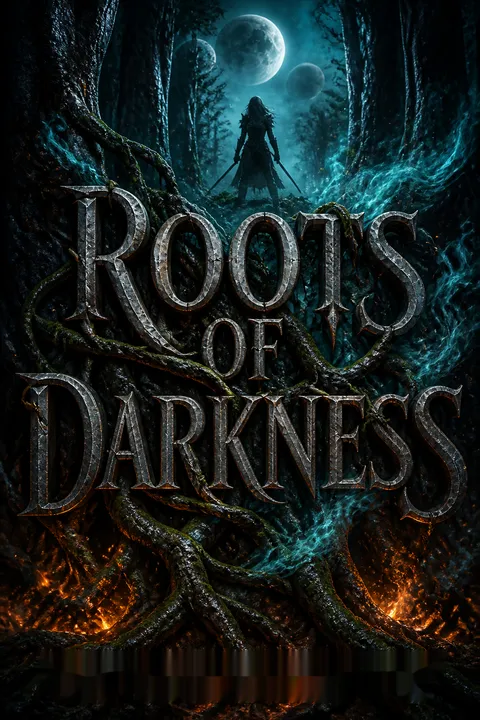
Roots of Darkness makes the question of who gets heard part of its plot mechanics. Hekla is not ignored because she lacks evidence: she has studied the attack sites, noticed the Spiral Staves, and correctly argues that the investigation must enter the woods. She is ignored because her authority is treated as conditional. The men around her can interpret her urgency as temper, then demand restraint from the person who has already done the work. The story’s gender politics therefore emerge through concrete decisions about access, credibility, and command, not simply through abstract declarations.
Hekla’s prosthesis deepens that argument. It is neither a metaphor that replaces her disability nor a magical cure. It is an actual tool that she adapts to her body, and its detachable design gives her tactical choices. Her skill comes from practice and judgement, not from overcoming disability as though it were a moral obstacle. The same precision shapes her recovery from abuse: she establishes boundaries, tests trust, and recognizes the cost of letting others decide for her.
The mist also literalizes damaged relationships. It steals nourishment from a living network, then refashions the bodies it touches into instruments of further harm. Loftur’s attempt to bargain with it is emotionally intelligible because he wants his dead kin back, but the bargain converts private grief into public danger. Against this, the story offers cooperation as a practical ethic. Hekla’s plan works only because Gunnar, Sigrún, Eyvind, and the retinue contribute different capacities, while she accepts help without relinquishing command of her choices.
The ending refuses easy romantic closure. Hekla’s tenderness toward Eyvind, Gunnar’s proposal, and the discovery of Eyvind’s betrothal do not resolve into a simple pairing. Instead, Hekla chooses the next obligation on her own terms: gather help, return to the woods, and confront a threat that the battle in Istré has only temporarily contained. Her independence is not isolation. It is the ability to choose connection and responsibility without allowing either to become a cage.
Review Summary
Roots of Darkness by Demi Winters receives overwhelmingly positive reviews, with an average rating of 4.32 out of 5. Readers praise the novella for its strong character development, especially of the protagonist Hekla. The story is described as action-packed, engaging, and a perfect addition to the Ashen series. Many reviewers appreciate the exploration of feminine rage and the challenges faced by women in male-dominated fields. The novella's world-building, romance, and connection to the larger series plot are also highly commended.
People Also Read







Characters
Hekla
The Bloodaxe commanderA formidable mercenary known as Rib Smasher, Hekla fights with a sword and a prosthetic arm fitted with metal claws. She survived domestic abuse and protects her independence with rules against tenderness and dependence. Her directness is often treated as a flaw by men who hold authority over her, even when her judgement is sound. She is also attentive to other women’s danger, as seen when she gives Halldora money that could help her leave an abusive home. Hekla’s instincts make her a fierce investigator, but her deeper challenge is learning to accept support without surrendering control of her life.
Eyvind Hakonsson
The jarl’s divided sonA polished warrior and second son of House Hakon, Eyvind is sent to Istré with political obligations as well as military responsibility. He enjoys competition and carries a more vulnerable hunger for his father’s approval than his confident manner suggests. His attraction to Hekla complicates his position as her superior, especially when his choices are shaped by family loyalty and the need to manage his retinue. Eyvind is capable of charm and daring, but his instinct for diplomacy can become a means of withholding information. His central tension is between earning recognition through obedience and deciding what leadership requires.
Gunnar
The grieving crewmanA large, warm-hearted Bloodaxe warrior, Gunnar is devastated by the death of Ilías, his younger brother. His grief makes him withdraw from the crew and leaves Hekla carrying more than her share of responsibility. He is loyal, fond of humor, and capable of returning to connection when given time. His closeness with Hekla includes a past sexual relationship, but their trust also comes from years of fighting beside one another.
Sigrún
The quiet Bloodaxe fighterA skilled warrior with extensive scars and a reserved manner, Sigrún communicates through signs. Ilías’s death leaves her withdrawn and wary of the unfamiliar men now surrounding the crew. She values belonging but does not want others to mistake her silence for helplessness. Her loyalty to Hekla is matched by a strong wish to be trusted with her own decisions.
Kritka
The woodland messengerA persistent squirrel who communicates with Hekla through a voice in her mind, Kritka is practical, insistent, and guided by loyalty to a woodland mistress. He leads Hekla toward evidence she would not otherwise be allowed to reach. His small size contrasts with the seriousness of his task, and his limited understanding of human customs can make his guidance as frustrating as it is useful.
Loftur
Istré’s fearful chieftainThe chieftain of Istré, Loftur resists Hekla’s investigation and favors a religious feast as protection against the mist. His authority rests on local history and inherited custom, but fear for his people distorts his judgement. He can be hospitable to men who share his standing while dismissing Hekla’s expertise. His attachment to the old ways reflects a community trying to recover an identity damaged by political and religious suppression.
Konal
The jarl’s hard-edged advisorKonal advises Eyvind and represents the interests of House Hakon in Istré. Stern, politically cautious, and openly dismissive of Hekla, he treats her defiance as a challenge to male authority rather than a response to danger. His knowledge of old rites gives him influence over the proposed response to the mist, while his loyalty to the jarl shapes what information reaches the investigation.
Thrand
Eyvind’s second-in-commandA powerful warrior with blue eyes, Thrand is initially confident that women do not belong in a war band. Hekla’s challenge forces him to confront the difference between presumed authority and demonstrated skill. He is fiercely loyal to Eyvind and protective of the retinue, though his certainty about Hekla’s limitations can cloud his judgement.
Reynir Bjarg
The absent crew leaderKnown as Axe Eyes, Reynir leads the Bloodaxe Crew and is trusted by Hekla as a thoughtful commander who values his fighters’ judgement. He is away from Istré when the investigation turns dangerous, leaving Hekla to assume responsibility. His absence makes his leadership principles a standard she tries to follow, even as the crew faces losses and uncertain allies.
Halldora
The inn’s abused barmaidA barmaid at the Hungry Blade, Halldora lives with an abusive partner. Hekla gives her money in secret so she can choose to leave when she is ready. Halldora’s position among Istré’s ordinary residents reminds Hekla that the town’s danger is personal, not merely a military problem. She later helps with the preparations to move people and supplies.
Rothna
Hekla’s violent former husbandRothna is Hekla’s former husband, whose abuse left her with a missing arm and taught her to distrust intimacy. His violence remains a defining part of Hekla’s history, but it does not define her abilities or choices.
Ilías
The lost Bloodaxe brotherA member of the Bloodaxe Crew and Gunnar’s younger brother, Ilías died before the main events of this novella. His absence shapes Gunnar’s grief and Sigrún’s withdrawal, while the crew’s memories of him preserve a bond they are struggling to carry forward.
Plot Devices
The Mist
Turns life against itselfA heartbeat announces the white mist as it advances from the Western Woods. It drains life from plants and transforms animals and humans into violent, red-eyed creatures. The mystery around its range, origins, and victims drives Hekla’s investigation. Discoveries at the Hagensson farm establish that the missing villagers have become draugur, while Hekla’s encounters reveal that flame repels the mist and moonlight weakens it. Its ability to adapt and spread makes the threat larger than the initial reports suggest.
The Spiral Staves
Marks a hidden pathThe spiral symbol appears in blood around the murdered Klaernar and carved into trees in the Western Woods. The marks draw Hekla away from the approved investigation and toward the clearing where she encounters the ancient tree. They connect the apparent crime scene to a deeper woodland mystery, then gain further significance when Kritka explains that they were part of his mistress’s effort to summon help.
Fire And Moonlight
Exposes the mist’s limitsHekla learns through direct danger that a torch can hold the mist back, while the sister moons’ light makes it dissipate. These discoveries change the mission from observation to preparation. The approaching double black moon removes the natural protection of moonlight, forcing Hekla and her allies to use fire deliberately. At Istré, they turn that weakness into a ring of flames, then use pitch barrels and Eyvind’s fire magic to destroy the mist.
Hekla’s Prosthetic Arm
Turns adaptation into strengthHekla’s lightweight prosthetic arm restores her reach and can deploy metal claws, making it both part of her daily life and a specialized weapon. She removes it strategically during her first contest with the Fox, then uses its claws alongside her sword in battle. The prosthesis does not erase the violence that caused her amputation, but it lets Hekla shape her own fighting style around her body. It also makes visible the difference between disability and helplessness.
Kritka’s Call
Pulls Hekla toward the woodsKritka’s mind-to-mind messages challenge Hekla’s assumption that the squirrel is only a fever vision. He first directs her toward the hidden draugur, then reveals that he is seeking a Protector for his woodland mistress. The device links the immediate threat in Istré to a larger, unresolved danger in the forest. By the novella’s end, it gives Hekla a reason to seek reinforcements and return rather than treating the destruction of the mist in town as a complete victory.
The Ashen Series


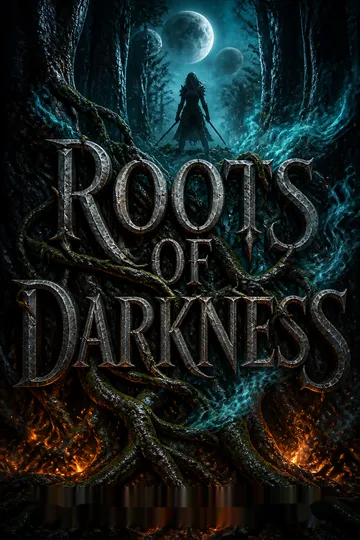

About the Author
Other books by Demi Winters


Download PDF
Download EPUB
.epub digital book format is ideal for reading ebooks on phones, tablets, and e-readers.








