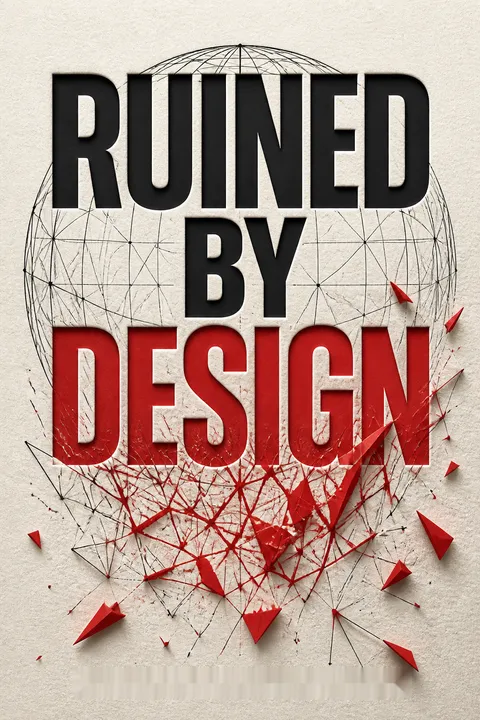


Key Takeaways
Treat every design decision as a public act, not a neutral craft.
The world works as built. Monteiro argues that harmful products and systems are not simply accidents. Their harms often follow from deliberate choices: what to optimize, what to ignore, and whose needs count. After a gunman in Christchurch livestreamed his attack, Facebook removed copies of the video 1.5 million times in a day. The platform’s machinery was built to spread content quickly, and it did exactly that, even when the content was horrific.
Impact outranks polish. A design can be elegant and still be harmful. The relevant test is not only whether something works, but what it enables, who benefits, and who bears the cost. Designers affect these outcomes through what they build, what they leave out, and whether they challenge the brief.
What's striking is the shift from design as a finished object to design as an intervention in a social system. That aligns with socio-technical research, which examines how tools, institutions, and human behavior shape one another. It also complicates the comforting idea that harmful outcomes belong only to executives: the people who make a system usable help make its effects possible. Responsibility, however, should not be confused with equal blame. Decision-makers control budgets and policy, so ethical accountability needs to match actual power.
Ask who pays when growth rewards speed, scale, and engagement.
Follow the incentives. Uber began as a way to connect drivers and riders, but investor pressure for rapid growth changed what the business rewarded. Drivers faced shrinking shares, riders faced higher fares, and the company built Greyball, a tool that deceived officials trying to regulate its service. The initial idea was not necessarily harmful; the incentives surrounding it helped make harmful decisions seem useful.
Test fairness before commitment. The veil of ignorance is a thought experiment for judging whether a system is just: design it without knowing whether you will be a driver, a rider, or an investor. That uncertainty makes it harder to treat one group’s losses as someone else’s problem. The question applies to business models as much as interfaces: who gains, who loses, and who has no say?
The veil of ignorance turns abstract fairness into a practical design test: could the system still seem acceptable if its designer occupied the least protected role? This connects to mechanism design, the study of how rules shape people’s incentives and outcomes. Uber’s story also shows why good intentions at launch cannot guarantee good conduct at scale. Yet designers do not control the entire capital structure. Ethical review is strongest when it examines investors, leadership, and business metrics, not just the interface.
Protect people who cannot enter the meeting by exercising design judgment.
A designer is a gatekeeper. In this book, a gatekeeper is a practitioner whose labor and advice help decide what reaches the public. The role is not merely to execute instructions. It includes assessing consequences, asking why a thing needs to exist, and refusing work that would put people at risk.
Expertise includes counsel. Pharmacologist Frances Oldham Kelsey was asked to review thalidomide, a drug already approved in many countries. She investigated reports of severe birth defects and withheld US approval despite pressure from its manufacturer. The lesson for designers is not that every project has an obvious answer. It is that professional judgment is part of the service being hired, especially when users affected by a decision have no voice in the room.
This account resembles professional ethics in medicine, where expertise carries a duty to the person affected, not just the institution paying the bill. It also reframes refusal as a competence rather than a failure of teamwork. Still, individual courage cannot substitute for workplace protection. A worker who challenges a harmful order may face retaliation, financial insecurity, or both. The strongest version of the gatekeeper role therefore combines personal judgment with procedures that let dissent surface safely and reach people with authority.
Hire for different lived experience, then give those voices authority.
Broaden the room. Teams often build for people whose lives resemble their own. Twitter’s early design did not adequately account for harassment, stalking, or threats, problems that were less visible to a team with a narrow range of experience. The book argues that research can help, but it cannot replace including people who know these problems firsthand.
Representation must matter. A team that includes people from varied backgrounds can notice assumptions others miss, from restrictive name fields to identity rules that expose vulnerable users. Diversity is not a decorative hiring goal; it improves the questions a team asks and the risks it can see. But inclusion is hollow if less powerful members are present only in name, or if their warnings do not shape decisions.
The practical point is more precise than a generic call for empathy: lived experience can reveal which questions a team never thought to ask. This fits research on group decision-making, where varied perspectives can reduce shared blind spots, provided people can contribute without penalty. Diversity alone is not a quality-control system. People need influence, resources, and a way to challenge dominant assumptions. Nor should any individual be treated as a spokesperson for an entire group. Representation widens inquiry, but careful research and accountability remain essential.
Put ethical scrutiny into your day job, not a guilt-driven side hustle.
Good work is not a location. Monteiro challenges the idea that designers must leave large companies to make a social difference. Work on a product used by millions has enormous social impact, for better or worse. A nonprofit project after hours cannot cancel out harmful work during the day; he calls that attempted compensation an ethics offset.
Notice normalization. The Overton window describes the range of ideas a society is willing to discuss or accept. As behavior once considered outrageous becomes familiar, a team may mistake accommodation for progress. Ask what a project does, who benefits, who could be hurt, and whether leadership is willing to change. If the honest answers are unacceptable, leaving can be the responsible choice.
The emphasis on the day job targets the gap between private values and institutional behavior. Organizational change research likewise distinguishes symbolic gestures from changes to core incentives and routines. The argument is compelling, but the book’s blunt standard can understate the constraints workers face, including debt, healthcare, and immigration status. Those pressures do not make harmful work harmless. They do make collective support, worker protections, and realistic exit options part of any serious ethical strategy.
Win influence by entering the room and making the case plainly.
Design begins before pixels. Budgets, timelines, product goals, and success metrics shape the eventual experience. Designers who appear only after those decisions are made are left adjusting a plan they had no chance to question. Ask to join the meetings where those choices happen, and explain how early input can prevent wasted effort or harm.
Lead with the decision. Monteiro recommends putting the main concern first, then giving the reasons and the action needed. A warning about a discriminatory ad system is more useful when it names the risk directly than when it opens with a long account of design process. Use research to check assumptions, tell a concise story, and ask clearly for what should change. Admitting uncertainty is better than inventing an answer.
The move from visual craft to organizational influence is a useful correction to the idea that good work will speak for itself. It connects to communication research on attention: decision-makers often have limited time, so the consequence and request need to be legible early. The advice also resists the false choice between evidence and story. Data can establish what is happening; a concrete account can make the stakes intelligible. Persuasion still depends on authority, timing, and whether leaders are willing to listen.
Reject manipulative interfaces and unnecessary data before they ship.
Protect user intent. Dark patterns are interface choices that obstruct what people are trying to do, often to benefit the business. Examples include hiding a cancellation option or shaming people through the wording of a decline button. Monteiro treats these as early warning signs of a deeper willingness to exploit users.
Collect only what the service needs. A newsletter signup does not need a person’s home address or gender if an email address will do. Location tracking and sensitive personal data create risks beyond the intended feature: a dating app that records where people go can help someone follow them. Ask why each field or feature exists, what could happen if it reaches a bad actor, and whether the same purpose can be met with less data.
Data minimization is a powerful safety principle because information that is never collected cannot be exposed, misused, or repurposed. This resembles privacy engineering, which treats risk reduction as an architectural choice rather than a promise in a policy. The book’s examples also make a broader point: a feature’s benign use does not define its full risk profile. Still, worst-case thinking should be paired with proportionate evaluation. Teams need to consider severity, likelihood, and safeguards, rather than treating every imaginable misuse as equally probable.
Organize with colleagues so refusing harm does not mean standing alone.
Build a real community. A company can offer meals, events, and services that make employees feel they belong, while directing that loyalty toward the employer rather than the wider public. The book urges designers to consider users, neighbors, and affected communities as part of their professional obligations, not just coworkers and managers.
Collective action changes the risk. In 2018, 22,000 Google employees walked out to protest the company’s handling of sexual harassment. At Microsoft, employees organized against a contract involving facial-recognition technology for ICE. These cases show how coordinated action can make concerns harder to dismiss. Professional organizations can provide standards, legal help, benefits, and a structure for workers to act together.
Collective action addresses a basic imbalance: an individual employee can be replaced more easily than an organized workforce. Labor history shows that shared rules and bargaining can turn isolated complaints into institutional pressure. The book’s call for professional organizations also connects solidarity to practical resources, not just morale. There is a tension, however, between professional standards and gatekeeping. Any organization needs transparent governance and meaningful participation from workers at different levels, or it risks reproducing the exclusions it was meant to challenge.
Demand tested competence before anyone designs systems affecting millions.
Complex work needs preparation. Designer James Liang helped create software that enabled Volkswagen to deceive emissions tests. He was sentenced to forty months in prison. The case makes the consequences of design work tangible: following instructions does not erase responsibility when a system is deliberately built to mislead.
Build accountability before crisis. Monteiro argues that high-stakes design needs stronger training, ethical standards, and potentially licensing, drawing comparisons with medicine, law, and aviation. The European Union’s GDPR also shows how regulation can set minimum rules for data collection and breach reporting. Law and ethics are not identical: something can be legal and still be harmful. Professional oversight should help prevent that gap from becoming an excuse.
The case for accountability is strongest where products affect privacy, safety, or public institutions at large scale. Licensing could establish baseline knowledge and consequences for misconduct, much as safety rules do in other dangerous fields. But credentials do not guarantee wisdom, and licensing can raise barriers for people already underrepresented in design. A credible system would need accessible training, public input, and safeguards against professional capture. Regulation can set a floor; ongoing criticism and institutional responsibility must do the rest.
Set a red line, then withdraw labor when persuasion cannot work.
Release begins the work. Monteiro compares a product to a garden: planting is only the start. Teams must watch how a service behaves in the world, gather criticism, fix failures, and remove harmful elements. A platform that amplifies harassment cannot treat the resulting engagement as proof of success. Ongoing care means tending the system, not simply launching it.
Know when to stop. Try research, persuasion, and organizing while leaders remain open to change. If a company knowingly continues harmful work and rejects meaningful correction, designers can refuse the assignment, put down their tools, or leave. Oakland teachers used a seven-day strike to secure a pay agreement and staffing changes. The larger lesson is that labor is leverage, especially when workers act together.
The garden image captures an important feature of software: consequences continue after release, so responsibility cannot be confined to a launch checklist. This is close to safety engineering, where monitoring and response to incidents are part of the system, not optional cleanup. The call to withdraw labor is powerful, but it should not romanticize personal sacrifice. Workers need shared plans and material support, because a red line is easier to enforce when the cost of drawing it is not borne alone.
Analysis
Ruined by Design is a practical argument about professional power, told through technology failures, workplace decisions, and the author's own history of complicity. Its central move is to redefine design from the shaping of interfaces to the shaping of consequences. That shift makes the book's case memorable: a designer is not merely a craftsperson downstream of business decisions, but a participant in systems that distribute risk, privacy, money, and voice.
The book is strongest when it links technical choices to incentives. The examples of Greyball, viral abuse, and careless data collection show that harm is often not a mysterious side effect. It can be the predictable result of rewarding growth, engagement, or convenience while ignoring those who pay the price. The practical tools follow from that diagnosis: ask why, research affected people, present risks clearly, build alliances, and know when to stop contributing labor.
Its polemical voice is also a deliberate instrument. Anger counters the professional habit of treating social consequences as someone else's specialty. Yet the book's moral clarity can make responsibility sound more evenly distributed than power actually is. A junior designer, an executive, an investor, and a regulator do not have equal control over a product. Ethical practice therefore needs both individual judgment and institutions that protect dissent, share accountability, and make collective action possible.
The proposal for licensing is the most contested extension of this argument. It follows logically from the claim that high-stakes design can cause public harm, but a credential alone cannot guarantee ethical judgment. The book is more persuasive when licensing is seen as one part of a larger system: education, criticism, professional standards, worker organization, and public regulation. Its lasting challenge is not to make every designer a hero. It is to stop treating harmful work as a private discomfort when its consequences are public.
Review Summary
Ruined by Design receives mixed reviews, with some praising its thought-provoking content on design ethics and others criticizing its repetitive, rant-like tone. Readers appreciate Monteiro's passionate arguments for designers' responsibility and his call for ethical practices in the tech industry. However, some find the book Americentric and lacking in-depth analysis. Despite its flaws, many consider it an important read for designers and tech workers, highlighting the need for ethical considerations in design and technology.
People Also Read






Glossary
Gatekeepers
Designers accountable for consequencesThe book’s term for designers and other workers whose labor and judgment determine what gets made and released. A gatekeeper does more than execute a request: they ask why a product exists, consider who may be harmed, and use counsel or refusal to prevent harmful work from passing into the world.
A designer's code of ethics
Shared professional dutiesMonteiro’s proposed, open-to-revision set of principles for responsible design. It places human welfare and the effects of work above aesthetics, calls for criticism and knowledge of the audience, rejects marginalizing people as edge cases, and treats diversity, professional community, and self-reflection as obligations of practice.
veil of ignorance
A fairness thought experimentA method associated with philosopher John Rawls for judging whether a system is just. Before deciding its rules, imagine that the role one will occupy is unknown. Applied to design, this means evaluating a service without knowing whether one will be a customer, worker, or person affected by its decisions.
Overton window
The bounds of public acceptanceA framework for describing which ideas or behaviors a society considers discussable or acceptable at a given time. The book uses it to show how repeated exposure can make previously shocking practices seem normal, though public opinion can also shift toward ideas once dismissed as impossible.
dark patterns
Interfaces that thwart user intentInterface choices that make it harder for people to do what they intend, often because their choices conflict with a company’s interests. Examples include obscuring a cancellation control or using shaming language to discourage a user from declining an offer. The book treats these patterns as signs of a broader willingness to exploit users.
ethics offset
Good deeds used to excuse harmThe attempted moral accounting of doing harmful paid work while compensating through separate charitable or nonprofit activity. Monteiro rejects this as a substitute for ethical practice: helping one group after hours does not cancel the effects of harmful work performed during the day.
edge cases
People wrongly treated as peripheralA product-design label for users whose needs are considered unusual or unimportant. The book challenges the term because even a small percentage of a very large user base can represent millions of people. Their needs are not defects in the population; ignoring them is a design decision with human consequences.
FAQ
What’s Ruined by Design by Mike Monteiro about?
- Design’s societal impact: The book examines how designers have contributed to societal harm through unethical design choices, especially in technology and digital products.
- Design as a political act: Monteiro argues that design is never neutral and always has real-world consequences, making designers responsible for their work’s impact.
- Call for ethical action: The book urges designers to act as gatekeepers, challenge harmful practices, and advocate for ethical standards in their profession.
- Critique of industry culture: It critiques Silicon Valley’s prioritization of growth and profit over safety, ethics, and social well-being.
Why should I read Ruined by Design by Mike Monteiro?
- Urgency and relevance: The book addresses the pressing ethical crisis in technology and design, making it highly relevant for anyone involved in creating digital products.
- Empowerment and guidance: Monteiro provides practical advice for designers to navigate ethical dilemmas, persuade stakeholders, and build professional communities.
- Inclusive audience: It’s valuable for UX designers, product managers, and anyone influencing design, challenging readers to take responsibility for their work.
- Real-world examples: The book uses concrete cases from companies like Facebook and Twitter to illustrate its points.
What are the key takeaways from Ruined by Design by Mike Monteiro?
- Designers are gatekeepers: Designers have the power and responsibility to prevent harmful products from reaching the public.
- Ethics over aesthetics: The book emphasizes that ethical considerations must come before visual or functional design choices.
- Need for accountability: Monteiro calls for professional codes of ethics, licensing, and collective action to hold designers accountable.
- Diversity and inclusion: Diverse teams create better, more ethical products and help avoid blind spots that harm marginalized groups.
How does Mike Monteiro define the ethical responsibilities of designers in Ruined by Design?
- Humanity first: Designers are first and foremost human beings, bound by a social contract to leave the world better than they found it.
- Responsibility for impact: Designers must consider both intended and unintended consequences of their work, prioritizing user well-being over business goals.
- Gatekeeper role: Designers owe honest counsel to employers, must welcome criticism, and should never blindly follow unethical orders.
- Ethics as action: Ethical design is about making practical decisions that protect society, not just abstract philosophy.
How have designers “destroyed the world” according to Ruined by Design by Mike Monteiro?
- Enabling harmful systems: Designers have built technologies that facilitate abuse, harassment, misinformation, and social division, such as targeted ads and poorly moderated platforms.
- Prioritizing growth over safety: The tech industry’s “move fast and break things” mentality led to products that amplify hate and misinformation.
- Lack of accountability: Without formal ethical codes or licensing, designers have often complied with unethical demands without consequence.
- Failure to say no: Many designers have not questioned harmful projects, allowing damaging products to reach millions.
What are the main ethical challenges and “dark patterns” discussed in Ruined by Design?
- Manipulative design tactics: The book highlights dark patterns and manipulative language that trick users into actions they don’t intend, often for business gain.
- Addictive software: Monteiro discusses how platforms exploit human psychology, leading to addiction, anxiety, and depression.
- Data misuse: Over-collection and careless handling of sensitive user data are criticized as major ethical failures.
- Shifting responsibility: Platforms often make users police abuse and harmful content instead of taking responsibility themselves.
What practical advice does Ruined by Design by Mike Monteiro offer for ethical design work?
- Ask “why” and say “no”: Designers should always question the purpose and impact of their work and refuse to build harmful products.
- Work where you can influence: Monteiro encourages designers to make a difference within their current roles, especially in large tech companies.
- Build skills and community: Learn to persuade, welcome criticism, and join professional organizations to advocate for higher standards.
- Continuous feedback: Gather meaningful feedback before and after launch to minimize misuse and maintain ethical standards.
How does Ruined by Design by Mike Monteiro address diversity and inclusion in design?
- Diversity improves outcomes: Diverse teams bring multiple perspectives, cover blind spots, and create solutions that serve a broader population.
- Current lack of diversity: The tech industry’s homogeneity leads to products that marginalize women, minorities, and other groups.
- Call for inclusive hiring: Monteiro urges companies to challenge unconscious bias and create environments where everyone has equal opportunity.
- Merit and fairness: True merit in design is only possible when everyone is included in the process.
What is the “garden metaphor” in Ruined by Design and what does it teach about product design?
- Design as ongoing care: Launching a product is like planting a garden; the real work is in ongoing maintenance and protection.
- Balancing goals and threats: Designers must protect products from misuse without compromising their core purpose, just as gardeners balance pests and plant health.
- Learning and adapting: Each iteration teaches new lessons, requiring designers to adjust based on real-world feedback.
- Responsibility after launch: Success is measured by a product’s sustained health and positive impact, not just its release.
How does Ruined by Design by Mike Monteiro explain the importance of understanding monetization in ethical design?
- Follow the money: Designers must understand how their company makes money to ensure they can ethically support their work.
- Ethical monetization: When business models depend on exploiting users or selling data, designers must question their participation.
- Design as problem-solving: Helping clients develop ethical monetization strategies is part of a designer’s responsibility.
- Transparency and accountability: Knowing where money comes from helps designers make informed, ethical decisions.
What does Ruined by Design by Mike Monteiro say about the need for professional organizations and licensing in design?
- Community builds strength: Designers should see themselves as part of a community that protects both practitioners and users.
- Professional organizations: These groups can set standards, offer legal support, and empower designers to resist unethical practices.
- Licensing for accountability: Licensing validates skills and ethics, elevates the profession, and protects the public.
- Collective power: Organized designers can influence industry practices and advocate for safer, more equitable products.
What are the best quotes from Ruined by Design by Mike Monteiro and what do they mean?
- “You are responsible for what you put into the world. And you are responsible for the effects those things have upon the world.” —Victor Papanek. This highlights the designer’s ethical responsibility for their work’s impact.
- “It is difficult to get a man to understand something when his salary depends upon his not understanding it.” —Upton Sinclair. This points to how financial incentives can blind people to ethical issues.
- “We are gatekeepers.” —Monteiro. Designers have the power and duty to prevent harmful products from reaching the public.
- “There is no such thing as neutral software.” —Monteiro. Every design choice reflects values and biases; neutrality is a myth.
- “Until you let everyone in the room, you do not get to say you’ve earned anything in this business.” —Monteiro. True merit and fairness require inclusion and diversity.

Download PDF
Download EPUB
.epub digital book format is ideal for reading ebooks on phones, tablets, and e-readers.








