Key Takeaways
1. Behavior is a Curriculum: Teach, Don't Just Tell.
One of the core duties of the classroom teacher is to consciously, explicitly teach children how to behave. This should be done with as much care and effort as any academic curriculum.
Beyond assumptions. Many teachers mistakenly assume students inherently know how to behave or will learn through osmosis. This "curse of expertise" leads experienced adults to forget the explicit instruction required for seemingly simple social skills. Just as academic subjects are taught, behavior—from listening to conflict resolution—requires deliberate, structured teaching.
Closing the gap. Students arrive with diverse backgrounds, some "Monday's child" with strong social capital, others "Sunday's child" lacking foundational behavioral skills. Without explicit behavior instruction, the disadvantage gap widens, as those already equipped succeed while others flounder. Teachers must actively bridge this gap, ensuring all students are "well instructed in the behavioural skills that they will need to be learners."
Rosenshine's principles for behavior. Effective behavior instruction mirrors effective academic teaching. This means breaking down complex behaviors into small steps, modeling desired actions, providing ample practice, and frequently checking for understanding. Treating behavior as a curriculum, with clear learning objectives and consistent reinforcement, transforms classrooms from chaotic spaces into environments where all students can flourish.
2. Proactive Management Prevents Problems.
The most common mistake teachers make is this: They wait for misbehaviour to occur and then they react to it.
Beyond reaction. The "fire brigade model" of waiting for misbehavior to react is inefficient and exhausting. Instead, teachers should adopt a "fire prevention model," designing the classroom environment to make good behavior far more likely and bad behavior less so. This proactive approach reduces the need for constant interventions and creates a more stable learning atmosphere.
Designing for success. Proactive management involves "getting in front" of misbehavior by establishing clear expectations before issues arise. This includes:
- Anticipating common problems (lateness, off-task chatter)
- Setting up the physical space (seating plans, equipment access)
- Structuring lesson pace to minimize idle time
This foresight allows teachers to guide students towards desired actions rather than constantly correcting deviations.
Invisible efforts, visible results. Experienced teachers often appear to have effortless classroom control because their proactive strategies were implemented long ago and are now deeply embedded. New teachers, observing this, may miss the "subtle, and less perceptible, behaviours that reduce the likelihood of such problems occurring in the first place." The goal is to build a system where good conduct is the default, requiring less overt intervention.
3. Understand Why Students Behave (or Misbehave).
Understanding what motivates students is crucial for teachers. We cannot expect them to instantly do as they are asked.
Complex motivations. Student behavior is a complex interplay of internal factors (values, goals, personality) and external ones (rewards, environment). It's rarely due to a single cause. Teachers must move beyond simplistic assumptions and recognize that students are not always rational long-term planners, often prioritizing immediate desires over future benefits.
Ten reasons for misbehavior. Students may misbehave for reasons including:
- Being asked to do things they dislike (e.g., trigonometry)
- Thinking is hard and requires effort
- Fear of being judged or looking stupid
- Abundant distractions (peers, phones)
- Lack of success or feeling incompetent
- Bigger problems outside school (trauma, hunger, neglect)
These are reasons, not excuses, and understanding them informs more effective teaching strategies.
Beyond happiness. The aim isn't to make students constantly "happy" in the hedonistic sense, but to foster flourishing and mastery, which often involves effort and temporary discomfort. By helping students find satisfaction in behaving well and achieving, teachers tap into deeper motivations like mattering, belonging, and self-actualization. This requires persuading them that the prescribed behaviors lead to valuable personal growth.
4. Build a Strong Classroom Culture with Clear Norms.
If you can persuade students to do the right thing, if you can convince them to truly believe this behaviour is desirable, or useful, or normal, then classrooms can become places of endeavour, success and wonder.
Defining the "normal." Every classroom develops a culture—a set of shared beliefs and values. Teachers must actively "make their own weather" by defining what is considered "normal" behavior, rather than letting students' varied pre-programmed cultures dictate the atmosphere. This involves clarifying expectations for everything from speaking volume to showing gratitude.
The power of conformity. Humans are highly social and conformist, seeking approval and status within groups. This "social proof" means students look to peers and teachers for cues on how to act. Teachers can leverage this by:
- Formally instructing on desired norms.
- Demonstrating these norms consistently.
- Highlighting exemplary student behavior.
- Applying consequences when norms are broken.
"My room, my rules." The teacher's authority to establish classroom culture stems from the necessity of creating an environment where all students can learn and thrive. This isn't about tyranny, but about providing the structure needed for collective flourishing. Undermining school-wide norms or failing to enforce classroom rules teaches students that inconsistency is the norm, leading to chaos.
5. Implement Routines to Cultivate Good Habits.
Perhaps the single most powerful way to bring efficiency, focus and rigor to a classroom is by installing strong procedures and routines.
Habit-forming building blocks. Routines are specific, sequential behaviors that, when practiced repeatedly, become automatic habits. They are the "building blocks of the classroom culture," saving time, reducing cognitive load, and providing a sense of predictability and security for students. Examples include entry/exit procedures, asking questions, and transitioning between activities.
Teaching routines like skills. Just as with academic content, routines must be taught, not just told. Applying Rosenshine's Principles of Instruction to behavior means:
- Breaking routines into small, manageable steps.
- Modeling and demonstrating each step.
- Providing ample practice until students "can't get it wrong."
- Frequently checking for understanding and correcting errors.
Consistency and maintenance. Routines require constant reinforcement and vigilance. Teachers must "demand" adherence, understanding that "practice makes permanent"—even bad habits if not corrected. Regular "beautification schedules" for checking routines, and a commitment to "never miss twice" when a routine slips, are crucial for long-term success and for students to internalize these behaviors as part of their character.
6. Consequences are Essential Feedback, Not Just Punishment.
If there are no consequences for a student’s actions, then we teach them that their actions don’t matter, that what they do doesn’t matter.
Beyond instruction. Even with clear norms and routines, some students will misbehave. Consequences serve as a vital feedback loop, signaling that actions have impact and influencing future behavior. They are not solely punitive but are a necessary part of teaching responsibility and maintaining order for the entire community.
Deterrence over severity. The effectiveness of sanctions hinges on their certainty, not their harshness. Consistent application, even of mild penalties, is more impactful than severe but inconsistently applied punishments. Sanctions deter not only the individual but also the wider class, who learn vicariously that boundaries are enforced.
Fairness and escalation. Sanctions must be proportionate, fair, and consistently applied, avoiding "attribution bias" where teachers judge students differently based on pre-existing perceptions. An escalating tariff for repeated misbehavior is crucial, but also serves as an alarm bell, prompting teachers to investigate underlying issues and offer targeted support alongside the consequence.
7. Leverage Rewards and Praise Effectively.
Praising the student is one of the most common and best ways to reward a student.
Strategic incentives. Rewards are powerful motivators, but their use must be strategic. They can change behavior, motivate others, and serve as a teaching tool. However, continuous reinforcement can lead to students expecting rewards for normal behavior, and their value can diminish. Intermittent reinforcement is often more effective, keeping students engaged and motivated.
Targeted praise. The most effective reward is sincere, proportionate, and targeted praise. It acknowledges effort, character, and specific actions, making students feel valued and noticed. This is particularly impactful for students who rarely receive praise or those who are "already fairly well-behaved," reinforcing their positive contributions and setting them as role models.
Beyond material goods. While privileges and material goods can be used, intrinsic motivation (enjoyment of mastery, belonging) is the ultimate goal. Extrinsic rewards can act as a "bump in the road" to help students overcome initial difficulties and experience success, eventually fostering a love for learning itself. Teachers should consciously seek out opportunities to "catch them being good" across the entire student spectrum.
8. Master Interpersonal Skills and Prepare with Scripts.
Having a script creates the impression you are calm, prepared, and focused. It minimises errors generated by having to think on one’s feet.
Relationships built on structure. While strong teacher-student relationships are invaluable, they are built on trust, predictability, and consistency—the very foundation of norms and routines. Relying solely on "likeability" or spontaneous charm is unsustainable and unfair to teachers, especially new ones. Effective relationships emerge from a well-managed, structured environment.
The power of scripting. Teachers face constant, complex interactions. Preparing "scripts"—pre-planned actions and phrases—for common situations (e.g., late arrivals, asking for quiet, parent calls) allows for efficient, assertive, and professional responses. This reduces stress-induced errors and ensures key messages are delivered clearly, even if ad-libbed to suit the moment.
Invisible ladder of consequence. Beyond formal sanctions, teachers employ an "invisible ladder of consequence" through subtle cues: eye contact, proximity, tone, and strategic praise. This "least invasive intervention" approach allows students to course-correct without losing face, gradually herding them towards desired behaviors before formal consequences are needed.
9. Address Crises with Calm, Clear De-escalation.
The best way to de-escalate behaviour is to prevent behaviour getting to the point where you need to de-escalate.
Prevention is paramount. The most effective strategy for managing crises (fights, meltdowns) is to prevent them through a strong, consistent classroom culture where even minor misbehavior is rare and addressed. "Sweating the small stuff" creates an environment where major disruptions are less likely, as students internalize high expectations and clear boundaries.
Stages of intervention. When crises do occur, intervention stages are:
- Defusal: Early nudges and clear redirection to prevent escalation.
- Containment: Managing the situation to prevent further harm, acknowledging that emotional states will eventually pass. This might involve removing the student to a calm space.
- De-escalation: Using calm, assertive communication, active listening, and non-threatening body language to help the student regain control.
Safety and resolution. Prioritize safety for all. Summon assistance if needed, and only physically intervene as a last resort if trained. After the immediate crisis, a "threshold conversation" is crucial for resolution, helping the student understand their actions, take responsibility, and see a path back to positive engagement, reinforcing that they are valued despite their missteps.
10. Partner with Parents Proactively.
One of the biggest mistakes we can make is to treat the parent as a problem.
Parents as allies. Parents are the primary influence on a child's upbringing and are often the teacher's greatest potential allies. Most parents deeply care about their child's well-being and success. Teachers must approach parents with respect and assume positive intent, avoiding the common pitfall of only contacting them when problems arise.
Building bridges. Proactive communication is key. Teachers should aim to "call home before you need to," introducing themselves, outlining expectations, and asking if there's anything they should know. This builds an "emotional bank account" of trust and rapport, making difficult conversations easier later. Using "value mapping" by acknowledging shared goals (e.g., child's success) fosters collaboration.
Clear communication and boundaries. When discussing misbehavior, use a professional, empathetic script that frames issues as the child "letting themselves down" and asks for parental help (the "Benjamin Franklin effect"). Teachers must also manage parental expectations and set clear boundaries for communication (e.g., avoiding personal contact details), ensuring their own well-being while fostering a supportive home-school partnership.
Last updated:
Review Summary
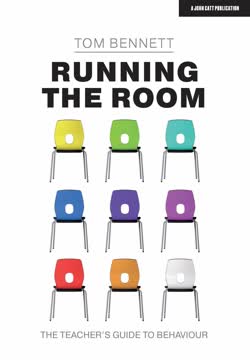
Running the Room is highly praised by educators as an essential guide to classroom management. Readers appreciate Bennett's practical advice, humor, and research-based approach. The book offers clear strategies for establishing routines, teaching behavior, and maintaining order. Many reviewers wish they had this resource earlier in their careers. While some find it repetitive or too long, most consider it a must-read for teachers at all experience levels. The book's focus on consistent, explicit instruction in behavior management is seen as particularly valuable.
Similar Books