

Key Takeaways
Stop treating sleep as the whole answer to exhaustion
Sleep is necessary, but incomplete. The author begins with her own burnout: after collecting her children, she lay on the foyer floor for ten minutes because she had no energy for an elaborate recovery ritual. That pause brought a kind of peace she could not get by simply sleeping longer. Sleep is a biological requirement, but rest also means restoring the capacities depleted by daily life: attention, emotional steadiness, connection, and a sense of meaning.
Look beyond the obvious. A patient named Karen had fatigue, aches, irritability, and trouble concentrating. After medical tests found no common cause, the author suggested that an inadequate pattern of rest might be part of the problem. The point is not to dismiss symptoms as busyness. Persistent fatigue deserves medical attention, and rest can be one part of a broader investigation.
The distinction is useful because people often treat sleep as a universal reset button, then feel confused when a weekend in bed changes little. Different forms of strain may need different recovery, just as physical soreness and decision fatigue are not interchangeable. The caution matters equally: a broad idea like a rest deficit should not become a catch-all diagnosis. Sleep disorders, depression, medication effects, and other medical conditions can also produce fatigue. Rest is a lens for noticing unmet needs, not a substitute for assessment.
Match rest to the resource your day actually drains
Rest deficits are mismatches. A rest deficit is the gap between the energy a person spends and the kind of restoration needed to replenish it. The author identifies seven areas that can be depleted: physical, mental, emotional, spiritual, social, sensory, and creative. A physically restful evening may not ease a mind burdened by nonstop decisions; extra sleep may not address loneliness or a loss of meaning.
Choose the right refill. The book’s examples make the distinction concrete: a screen-heavy day may call for less visual stimulation, while a day of emotional caretaking may call for honesty and supportive company. Its R-E-S-T method asks readers to recognize their risk, evaluate their current position, consider research, and apply a response today. A short assessment helps readers notice which areas need attention rather than treating every kind of tiredness alike.
The framework’s strength is diagnostic: it replaces the vague question “Why am I tired?” with a more useful one, “What has been spent, and what would restore it?” That resembles resource models in psychology, where attention, self-regulation, and social support are treated as limited capacities. The seven categories are best used as prompts, not sealed compartments. Sensory overload can worsen concentration, for example, while emotional strain can disrupt sleep. The value lies in making recovery more specific, not in proving that every form of fatigue belongs to exactly one box.
Give your body deliberate pauses before it forces one
Stillness can be active care. The author once feared physical stillness after a frightening childbirth experience left her temporarily unable to move or speak. She responded by filling her schedule, until she began to recognize that rest was not surrender to weakness. Physical rest can be passive, as in sleep or a nap, or active, as in stretching, breathing exercises, a warm bath, or a gentle walk.
Try small signals first. The book suggests noticing where tension gathers, changing position regularly, lying still for a few minutes, and creating a calm bedtime routine. It also cites a University of Georgia study in which light exercise for twenty minutes, three times weekly, was associated with a 65 percent reduction in fatigue symptoms after six weeks. That finding supports gentle movement as one option, not a guaranteed prescription for everyone.
This section reframes bodily care from repair after collapse to regular maintenance. Athletes already treat recovery as part of training, while many people with less visible physical demands ignore tight shoulders, shallow breathing, or persistent fatigue. The invitation to notice bodily cues is practical because it makes rest less dependent on a dramatic vacation or a crisis. Still, physical activity and rest need individual calibration. A walk may restore one person and exhaust another, particularly during illness or injury. The guiding question is not whether movement is virtuous, but whether it helps this body recover.
Unload mental chatter instead of feeding it more stimulation
The mind needs intervals. The author calls the ongoing inner commentary of worries, regrets, imagined conversations, and self-criticism “cerebral background noise.” It can follow a person into bed and make concentration harder the next day. A story in the book describes one traveler who carried a woman across a river and set her down, while his companion kept mentally carrying the incident for hours. The image captures how replaying a finished event can consume attention in the present.
Make space for attention. Suggested practices include grouping low-value tasks such as email into limited time blocks, observing thoughts without immediately judging them, and returning attention to a chosen focus. The book also warns that trying to handle mental and physical tasks at once can increase fatigue and errors. A planned pause can be more restorative than adding another stimulant or entertainment stream.
The practical insight is that mental rest is not achieved by changing the screen or task while leaving the mind in a state of constant reactivity. Attention needs both a target and intervals without demands. The river story also distinguishes reflection from rumination: reflection can extract a lesson, while repetitive replay often circles the same material without new information. Not every recurring thought can be switched off at will, however. Persistent intrusive thoughts or severe anxiety may require structured clinical support, rather than a simple instruction to think differently.
Tell the truth and seek relationships that replenish you
Emotional rest begins with honesty. At a conference for women in medicine, the author abandoned her prepared talk and acknowledged how professional culture had taught people to hide emotion. The admission opened space for attendees to speak about grief, isolation, and strain. In the book, emotional rest means easing the pressure to perform and being able to acknowledge one’s current feelings without shame.
Connection must feel safe. Social rest is the restoration found in relationships where a person feels seen, accepted, and able to speak openly. The author describes a man asking her to remember him by name, and a patient whose loneliness became impossible to ignore. The book cites a study of more than 300,000 people associating weak relationships with a 50 percent higher risk of premature death. Its practical advice is to invest in a few trusting, face-to-face connections, not just accumulate online contacts.
Emotional honesty and social support reinforce each other: naming a feeling can make it shareable, while a receptive listener can make it safer to name. This is a strong corrective to cultures that reward composure at the expense of processing. The boundary is important, too. Vulnerability does not require disclosure to everyone, and not every relationship is safe enough to hold it. The book’s emphasis on a small circle of trusted people is more useful than treating social activity itself as restorative. The quality of connection matters more than the performance of sociability.
Give your senses and imagination room to recover
Input can become exhausting. The author describes sensory rest as temporarily reducing the stimulation reaching the senses. Bright screens, background noise, strong smells, constant motion, and crowded environments can leave a person tense or irritable. One example is a mother who loved her children but needed a break from continually giving attention and energy. Another is the author’s own sensory overload in a noisy public bathroom after a loud movie.
Make room for wonder. The book recommends unplugging for a set period, taking visual breaks, seeking quiet or fresh air, and noticing which sensory experiences soothe rather than strain. Creative rest is related but distinct: it means absorbing beauty without requiring oneself to produce art. A landscape, music, a flower, or a child’s laughter can rekindle a sense of wonder. Art-making may follow, but turning restoration into another performance defeats the purpose.
This pairing connects environmental design with imagination. A person’s surroundings can either demand continuous filtering or offer a softer field of attention. Nature and art can provide a change in mental texture, while a quieter room or a screen break can reduce competing input. The key is not to romanticize silence or scenery as universally restorative. Some people find silence uncomfortable, and others live or work in environments they cannot easily change. Small adjustments, such as reducing one recurring source of stimulation, can make the idea more accessible than an idealized retreat.
Protect rest with boundaries and planned cessation
A yes spends real capacity. The author portrays a day meant for self-care being consumed by volunteering, errands, a family call, and children’s activities. Boundaries are the limits that protect a person’s time, energy, and priorities. They make it possible to refuse requests without turning every refusal into a trial of personal worth. The author’s test is whether a yes reflects genuine willingness or fear, guilt, and people-pleasing.
Stop on purpose. She also describes cessation: choosing to disengage from usual tasks before exhaustion makes the decision. The Hebrew term Shabbat refers to rest or cessation of usual activity, a time set aside for renewal and reflection. The book encourages some unoccupied time each week, rather than filling every weekend with chores and appointments. Rest need not mean doing nothing at all. It means stepping away from the activities that keep draining the same reserves.
Boundaries turn an abstract desire to rest into a decision that can survive contact with other people’s requests. They also expose a social problem: some households and workplaces distribute care and labor unevenly, so an individual’s “no” may carry costs that advice about self-care understates. Even so, the distinction between a chosen commitment and an automatic yes is powerful. Planned cessation creates a predictable counterweight to constant availability. It is less about maximizing leisure than refusing to let every open space be claimed by the next demand.
Measure productivity by nourishing fruit, not a crowded calendar
Activity is not the same as progress. The author compares a bee, whose work helps create flowers and honey, with a mosquito, whose activity irritates and drains. The image asks whether a busy day produces what a person values. A packed schedule can still leave someone detached from family, resentful, or unable to enjoy the results of their work. Productivity, in this account, means doing work that matters and making time to experience its benefits.
Let recovery support the work. The book uses “abiding rest” for a steady reliance on restoration as the ground from which meaningful effort grows. It suggests working in focused periods, then taking a break, and offers a rhythm of roughly 90 minutes to two hours of work followed by about 20 minutes of rest. The deeper test is whether the work leaves room for love, health, purpose, and presence, not merely a longer checklist.
The section challenges a common measurement error: counting completed tasks while ignoring what those tasks cost. A more complete account of productivity includes both output and the capacity to continue producing without damaging health or relationships. The bee image makes that difference memorable, though the value of work cannot always be judged by an immediate visible reward. Caregiving, study, and maintenance may matter even when their “fruit” is hard to see. Rest is therefore not a rival to productivity, but a way to question which outcomes deserve effort.
Let rest loosen control without pretending pain is simple
Rest has a spiritual center here. The author’s Christian framework presents rest as a relationship with God, not merely a break from activity. Her own journey includes childhood grief, distrust of God, and a gradual movement toward faith. She describes surrender as releasing anxious control, and “exchange” as bringing fear, fatigue, or disappointment to God while receiving comfort, strength, or peace. Acceptance, in this frame, means worth is not earned by endless achievement.
Faith does not erase difficulty. The book’s final promise is not a life without bad days. It is the possibility of returning to physical, mental, emotional, social, sensory, creative, and spiritual forms of restoration. Its GRACE acronym means God’s Resurrecting power Actively Changing and Empowering life. For readers outside the Christian tradition, the practical core remains recognizable: make space for meaning, acknowledge what hurts, seek support, and release the demand to control every outcome.
The spiritual frame gives the book a source of meaning beyond personal efficiency. Its strongest contribution is the idea that rest can involve receiving care rather than proving one deserves it. That can be deeply sustaining, especially when grief or uncertainty makes control feel like the only defense. The account should not be reduced to a promise that faith makes suffering manageable on demand. Spiritual practice can complement medical care, therapy, and practical help, but it cannot guarantee a particular outcome. The author’s own painful history gives the invitation credibility precisely because it does not begin from an untouched life.
Analysis
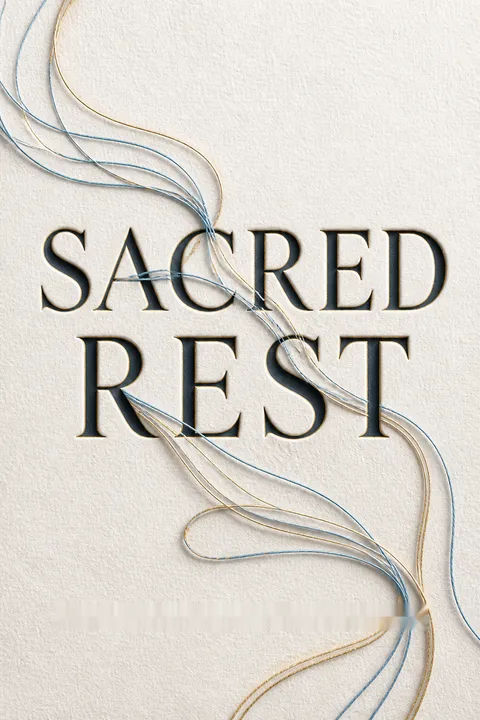
Sacred Rest is part memoir, part health-oriented self-help, and part Christian spiritual reflection. Its organizing insight is not that people need more leisure, but that fatigue has multiple sources and therefore needs more than one remedy. The seven-part model gives readers a vocabulary for distinguishing physical depletion from mental overload, emotional performance, isolation, overstimulation, lack of wonder, or spiritual disconnection. That vocabulary is the book’s most portable contribution: it makes a broad, blurry complaint easier to examine.
The narrative earns that framework through recurring contrasts. The author’s ten minutes on the foyer floor stand against the polished ideal of elaborate self-care. Karen’s normal test results complicate the assumption that every symptom has an easy diagnosis. The woman physician’s conference shows how professional competence can coexist with emotional concealment. These stories make rest feel less like an indulgence and more like a condition for participating in the life one is working to build.
The model is most persuasive as a reflective tool, not a clinical taxonomy. Its categories overlap, and the book’s brief assessment cannot establish the cause of fatigue. Its research references also vary in strength and should not be read as proving that each suggested practice treats illness. Ongoing exhaustion, sleep disruption, depression, or pain can have medical and psychological causes that require qualified care. The book itself acknowledges several possible causes of fatigue, a useful safeguard against treating rest as a universal cure.
Its Christian language is integral rather than decorative. Rest is framed as trust, relationship, and receptivity to God, with surrender and acceptance countering achievement-based worth. Readers who do not share that faith may still use the practical distinctions, though the theological claims will not translate without remainder. The book’s larger challenge is cultural: a person cannot privately optimize their way out of every excessive workload or unequal obligation. Still, identifying one drain, protecting a small interval, and choosing a fitting form of renewal offers a realistic beginning.
Review Summary
Sacred Rest receives mostly positive reviews, praised for its fresh perspective on different types of rest beyond sleep. Readers appreciate the author's personal experiences and practical tips. Some find the Christian content helpful, while others feel it's too preachy. The book's strengths include its insights on various rest types and the REST Method, though some reviewers wanted more scientific backing. Critics note redundancy and an overemphasis on religious aspects. Overall, many readers found the book eye-opening and useful for improving their approach to rest.
People Also Read







Glossary
Sacred rest
Rest that restores the whole personThe author’s broad term for intentional restoration of body, mind, emotions, relationships, senses, creativity, and spirit. Sacred rest is not simply sleep, inactivity, or vacation. In the book’s Christian framing, it also involves making room for connection with God. The practical emphasis is to identify what has been depleted and choose a form of rest that replenishes it.
Rest deficit
A mismatch of energy and renewalA condition in which a person’s daily energy expenditure is not matched by adequate restoration. The book treats this as potentially specific to different areas of life: physical, mental, emotional, spiritual, social, sensory, or creative. The term is a self-reflection tool, not a medical diagnosis, and should not replace evaluation of persistent fatigue or other symptoms.
R-E-S-T method
A four-part rest assessmentThe book’s approach to applying rest practices: Recognize your risk, Evaluate your current position, consider Science and research, and choose Today’s application. It is used to move from noticing a possible area of depletion to testing practical ways to replenish it. The method encourages a tailored response rather than assuming one routine works for everyone.
Cerebral background noise
Ongoing internal mental chatterThe author’s name for the stream of internal commentary that can include worry, regret, self-criticism, repetitive thoughts, imagined scenarios, and distraction from the present. This mental activity can consume attention and interfere with concentration or sleep. Mental rest involves noticing the chatter, reducing unnecessary demands, and giving attention periods of quiet or deliberate focus.
Shabbat
Rest from usual activityA Hebrew term the author uses for rest or cessation of usual activity. In the book, it describes setting aside time intentionally for reflection, relationships, spiritual attention, and renewal rather than continuing ordinary work. The emphasis is not on total inactivity, but on pausing depleting routines and making room for restorative experience.
Abiding rest
A steady foundation for meaningful workThe author’s Christian concept of remaining rooted in spiritual rest while carrying out daily responsibilities. Drawing on the image of a vine and branches, the term presents meaningful productivity as something sustained by connection to God rather than by self-sufficiency alone. Rest is treated as an ongoing source of renewal, not merely a break after work is finished.
GRACE
God’s active power for changeAn acronym for “God’s Resurrecting power Actively Changing and Empowering” a person’s life. The author uses it to describe faith as a process of confronting wounded areas, releasing burdens, receiving spiritual renewal, and making changes with God’s help. It expresses the book’s belief that restoration is not achieved through greater effort alone.
FAQ
What's "Sacred Rest" by Saundra Dalton-Smith about?
- Overview of the book: "Sacred Rest" explores the concept of rest beyond just physical sleep, delving into seven distinct types of rest that are essential for a balanced life.
- Author's background: Saundra Dalton-Smith is a board-certified internal medicine physician who combines her medical expertise with personal experiences to offer insights into achieving true rest.
- Purpose of the book: The book aims to help readers recover their lives, renew their energy, and restore their sanity by understanding and implementing different types of rest.
- Structure of the book: It is divided into three parts: "Why Rest?", "The Gifts of Rest", and "The Promises of Rest", each addressing different aspects and benefits of rest.
Why should I read "Sacred Rest"?
- Comprehensive approach to rest: The book provides a holistic view of rest, addressing not just physical but also mental, emotional, spiritual, social, sensory, and creative rest.
- Practical solutions: It offers practical advice and strategies to incorporate rest into daily life, making it accessible and actionable for readers.
- Personal transformation: By following the guidance in the book, readers can expect to experience improved well-being, increased energy, and a more balanced life.
- Scientific and spiritual insights: The book combines medical research with spiritual wisdom, appealing to both scientific and faith-based audiences.
What are the key takeaways of "Sacred Rest"?
- Seven types of rest: Understanding and implementing physical, mental, emotional, spiritual, social, sensory, and creative rest are crucial for a balanced life.
- Rest is not just sleep: True rest involves more than just getting enough sleep; it requires addressing various aspects of life that contribute to overall well-being.
- Importance of boundaries: Setting personal boundaries is essential to protect one's rest and ensure a healthy balance between work and personal life.
- Rest as a divine gift: Rest is portrayed as a sacred gift that allows individuals to connect with themselves, others, and a higher power.
What is the R-E-S-T method mentioned in "Sacred Rest"?
- Recognize your risk: Identify areas in your life where you are at risk of rest deficits and understand the consequences of neglecting rest.
- Evaluate your current position: Assess your current state of rest and determine which types of rest you are lacking.
- Science and research: The book provides scientific evidence and research to support the importance of each type of rest.
- Today's application: Practical steps and strategies are offered to help readers incorporate rest into their daily routines.
How does "Sacred Rest" define the seven types of rest?
- Physical rest: Involves both passive (sleep, napping) and active (stretching, breathing exercises) forms to restore the body.
- Mental rest: Focuses on quieting the mind and reducing cerebral background noise to improve concentration and clarity.
- Emotional rest: Encourages authenticity and vulnerability, allowing individuals to express their true feelings without fear of judgment.
- Spiritual rest: Involves connecting with a higher power and finding a sense of purpose and belonging.
- Social rest: Emphasizes the importance of nurturing relationships that provide support and comfort.
- Sensory rest: Involves reducing sensory input to prevent overload and promote relaxation.
- Creative rest: Encourages exposure to beauty and inspiration to rejuvenate the mind and spirit.
What are the best quotes from "Sacred Rest" and what do they mean?
- "Rest is not for weaklings." This quote emphasizes that rest requires strength and courage, as it involves setting boundaries and prioritizing self-care.
- "Rest is obtainable." It reassures readers that achieving true rest is possible with intentional effort and commitment.
- "Rest is a taste of heaven." This metaphor highlights the divine and transformative nature of rest, suggesting it brings peace and fulfillment.
- "Rest is salvation." It implies that rest can save individuals from burnout and restore their well-being.
How does "Sacred Rest" address the concept of burnout?
- Burnout as a common issue: The book acknowledges that many people experience burnout due to overwork and lack of rest.
- Identifying burnout symptoms: It helps readers recognize signs of burnout, such as chronic fatigue, irritability, and lack of motivation.
- Rest as a solution: The book offers rest as a remedy for burnout, providing strategies to incorporate different types of rest into daily life.
- Long-term benefits: By addressing burnout through rest, individuals can achieve lasting improvements in their mental, physical, and emotional health.
What practical advice does "Sacred Rest" offer for incorporating rest into daily life?
- Time management: The book suggests setting aside specific times for rest and creating a routine that prioritizes self-care.
- Setting boundaries: It emphasizes the importance of saying no to activities that drain energy and interfere with rest.
- Mindfulness practices: Incorporating mindfulness techniques, such as meditation and deep breathing, can enhance rest and relaxation.
- Creating a restful environment: The book advises creating a space conducive to rest, free from distractions and stressors.
How does "Sacred Rest" integrate scientific research with spiritual insights?
- Evidence-based approach: The book uses scientific studies to support the benefits of rest and its impact on health and well-being.
- Spiritual perspective: It incorporates spiritual teachings and principles to provide a holistic understanding of rest.
- Balanced view: By combining science and spirituality, the book appeals to a wide audience and offers a comprehensive approach to rest.
- Practical application: The integration of research and spirituality provides actionable steps for readers to implement rest in their lives.
What role does faith play in "Sacred Rest"?
- Faith as a foundation: The book presents faith as a crucial element in achieving true rest and finding peace.
- Spiritual rest: It emphasizes the importance of connecting with a higher power to experience spiritual rest and renewal.
- Trust in divine timing: The book encourages readers to trust in a higher plan and let go of control, allowing rest to unfold naturally.
- Faith-based practices: It suggests incorporating prayer, meditation, and reflection as part of a restful routine.
How can "Sacred Rest" help improve relationships?
- Social rest: The book highlights the importance of nurturing relationships that provide support and comfort.
- Emotional authenticity: Encourages individuals to express their true feelings and be vulnerable in relationships, fostering deeper connections.
- Setting boundaries: It advises setting boundaries to protect personal rest and prevent relationship strain.
- Quality time: The book emphasizes the value of spending quality time with loved ones to strengthen bonds and enhance social rest.
What is the "Sacred Rest Challenge" mentioned in the book?
- 30-day challenge: The Sacred Rest Challenge is a 30-day program designed to help readers implement the principles of rest in their daily lives.
- Daily prompts: Participants receive daily prompts and encouragement to incorporate different types of rest into their routines.
- Community support: The challenge encourages sharing experiences and connecting with others on social media using the hashtag #SacredRest.
- Goal of the challenge: The aim is to help individuals develop a sustainable rest practice and experience the transformative benefits of rest.
Download PDF
Download EPUB
.epub digital book format is ideal for reading ebooks on phones, tablets, and e-readers.








