Plot Summary
Prologue: The Lucifer Effect
The story opens with Professor Lazlo lecturing on the Stanford Prison Experiment, discussing how environment can create monsters. He's approached by a mysterious recruiter for the Blackwood Institute, a secretive psychiatric facility with no ethical boundaries. Lazlo, seduced by the promise of unlimited power and research freedom, accepts, setting the stage for a tale where the line between victim and villain blurs.
Broken Mirrors, Shattered Minds
Brooklyn, the protagonist, awakens in Blackwood after a suicide attempt, haunted by trauma and unsure if she's alive. Her friends—Hudson, Kade, Phoenix, and Eli—struggle to support her as she battles dissociation, self-harm, and the aftermath of being manipulated by Rio, a fellow patient. The group's bonds are tested as they try to protect Brooklyn and themselves from the institution's dangers.
The Blackwood Pact
The group—Brooklyn and her four love interests—form a pact to protect each other against Blackwood's cruelty and the predatory staff. Each member is deeply scarred: Phoenix fights addiction, Eli is mute and self-destructive, Kade is the peacemaker with secrets, and Hudson is volatile and fiercely protective. Their relationships are complex, blending love, lust, and trauma, as they navigate the institute's oppressive regime.
The Rooftop Storm
Rio manipulates Brooklyn into a suicide attempt on the roof, intending to exploit her for sinister purposes. The group intervenes, but Rio's actions lead to his death—covered up as a suicide by the boys to protect Brooklyn. This event fractures the group, intensifies their trauma, and draws the attention of Blackwood's authorities, setting off a chain of violence and cover-ups.
Aftermath and Alliances
The fallout from Rio's death leaves the group reeling. Brooklyn is wracked with guilt and dissociation, while the boys struggle with their own demons and the burden of their secret. The arrival of new guards and the sinister Dr. Augustus signals a shift in Blackwood's power structure. The group's unity is tested as they face escalating violence, surveillance, and psychological manipulation.
The Institute's Dark Heart
Dr. Augustus replaces Lazlo, introducing harsher rules and experimental therapies. Brooklyn is targeted for special treatment, subjected to drugs and psychological torture. The group uncovers hints of a deeper conspiracy: Blackwood is not a place of healing, but a laboratory for creating and studying evil. The warden and staff are complicit, and patients are expendable in the pursuit of scientific "progress."
Ghosts in the Basement
Brooklyn's mental state deteriorates as she's haunted by hallucinations of her abusers and the ghosts of Blackwood's victims. Therapy sessions with Augustus and Sadie, a sympathetic therapist with her own agenda, dredge up repressed memories of childhood abuse and family tragedy. The basement—Z Wing—emerges as a place of unspeakable horror, where failed experiments and lost patients are hidden.
The Arrival of Augustus
Augustus asserts control with brutality, orchestrating public punishments and using the guards as enforcers. He singles out Brooklyn for his experiments, threatening her friends to ensure compliance. The group is forced to play along, even as they plot resistance. Augustus's true goal is revealed: to break Brooklyn and mold her into the perfect subject—Patient Eight.
Descent into Madness
Subjected to isolation, drugs, and psychological games, Brooklyn's grip on reality slips. She's tormented by hallucinations of her abuser Vic, her dead brother, and the monstrous staff. Augustus uses her trauma as a tool, pushing her to the brink. The group, fractured by guilt and fear, struggles to hold together as Blackwood's violence escalates and hope fades.
Blood and Betrayal
The group's relationships become increasingly toxic and desperate, blending love, hate, and self-destruction. Brooklyn's sexual encounters with the boys are both a source of comfort and pain, mirroring their shared trauma. Betrayals and confessions surface—Kade's family is revealed as Blackwood's benefactors, and staff members are exposed as complicit in the abuse. The line between victim and perpetrator blurs.
The Z Wing's Secrets
Brooklyn is taken to the Z Wing, where she witnesses the fate of failed subjects—broken, mutilated, or dead. She meets Seven, a former patient turned enforcer, and learns of the program's goal: to create monsters from trauma. Augustus forces Brooklyn to participate in violence, testing her capacity for evil. The group's attempts to rescue her are met with brutality and loss.
The Price of Survival
To protect her friends, Brooklyn submits to Augustus's demands, becoming both victim and weapon. She's forced to kill or be killed, her humanity eroded by the need to survive. The boys, each in their own way, are drawn into Blackwood's web—Kade as a stooge, Hudson as a fighter, Phoenix as a self-destructive addict, Eli as a silent witness. The cost of survival is innocence, trust, and selfhood.
Family, Forgiveness, and Fury
The group confronts their histories—family abuse, betrayal, and guilt. Kade is forced to kill Hudson's mother to protect the family's secrets. Brooklyn's repressed memories surface, revealing the truth about her brother's death and her mother's madness. Forgiveness becomes both a necessity and an impossibility, as the group struggles to reconcile love with the violence they've endured and inflicted.
The Riot Ignites
Kade orchestrates a riot, arming the patients and inciting an uprising against the guards. The institute descends into chaos as patients and staff clash in a bloody battle. Sadie, revealed as an ally, helps the group plan their escape. The riot is both a bid for freedom and a reckoning for Blackwood's crimes, as the walls of the institution begin to fall.
Escape from Blackwood
Amidst the burning ruins of Blackwood, the group fights their way to freedom, rescuing survivors from the Z Wing and confronting Augustus in a final showdown. Brooklyn kills Augustus, reclaiming her identity and agency. The group, battered and traumatized, escapes into the night, leaving the institute in flames behind them.
The Cost of Freedom
The group reunites outside Blackwood, scarred but alive. They mourn their losses and confront the reality of their actions—violence, betrayal, and survival at any cost. Brooklyn, Hudson, Kade, Phoenix, and Eli are changed forever, bound by trauma and love. The world outside is uncertain, and the scars of Blackwood linger.
The Past Unveiled
Safe for the moment, the group uncovers evidence of Blackwood's true purpose: it was only one of several institutes run by a shadowy corporation, Incendia. The experiments continue elsewhere, and the conspiracy is far from over. Sadie, reunited with her lost brother Seven, reveals the scale of the operation. The group faces the daunting task of exposing the truth and stopping the cycle of abuse.
The Monster Within
Brooklyn and the others grapple with the monsters they've become—products of Blackwood's cruelty and their own choices. Forgiveness, healing, and love are hard-won, and the future is uncertain. The group must decide whether to run, fight, or succumb to the darkness within. The story ends with a sense of hope and dread, as they prepare for the next battle.
The Beginning of the End
The survivors, now fugitives, plan their next move. The revelation that Blackwood was only the beginning sets the stage for a larger war against Incendia and the system that created them. The story closes on the promise of continued struggle, love, and the search for redemption in a world that profits from pain.
Characters
Brooklyn West
Brooklyn is the central figure—a young woman shattered by childhood abuse, institutionalization, and violence. Her psyche is fractured, plagued by hallucinations, dissociation, and self-harm. Brooklyn's journey is one of survival at any cost, forced to become both victim and perpetrator. Her relationships with the four boys are intense, toxic, and redemptive, offering both solace and further trauma. Brooklyn's arc is about reclaiming agency, confronting her past, and choosing to live despite the darkness within. She is both the product and the challenger of Blackwood's monstrous system.
Hudson Knight
Hudson is Brooklyn's first love and greatest source of pain. Marked by violence, addiction, and guilt, he is both her protector and a mirror of her own self-destruction. Hudson's relationship with Brooklyn is passionate, possessive, and fraught with unresolved trauma—he is haunted by his role in her abuse and his mother's death. Hudson's arc is about learning to forgive himself, channel his rage, and fight for those he loves, even as he teeters on the edge of becoming a monster himself.
Kade Knight
Kade is the group's brain and emotional anchor, hiding his own wounds behind a façade of control. As the adopted son of Blackwood's benefactor, he is both insider and outsider, forced to betray and protect his found family. Kade's arc is one of reckoning with complicity—he must confront the cost of survival, the burden of secrets, and the need for forgiveness. His love for Brooklyn is steady and nurturing, but he is haunted by the violence he's committed in the name of family.
Phoenix Kent
Phoenix is the group's wild card, using humor and chaos to mask deep pain. His struggles with addiction, self-loathing, and abandonment drive him to both love and hurt those closest to him. Phoenix's relationship with Brooklyn is volatile, blending desire, resentment, and desperate need. His arc is about confronting his own worth, breaking free from self-destruction, and learning to accept love without conditions.
Elijah "Eli" Woods
Eli is the group's quiet heart, rendered mute by trauma and marked by self-harm and burn scars. His relationship with Brooklyn is deeply intimate, built on shared pain and wordless understanding. Eli's arc is about finding his voice—literally and metaphorically—reclaiming agency, and choosing life over oblivion. He is the group's moral compass, reminding them of the possibility of healing.
Dr. Warren Augustus
Augustus is the true villain—a psychiatrist obsessed with the creation and study of evil. He manipulates patients and staff alike, orchestrating violence and suffering for his experiments. Augustus is a master of psychological torture, using Brooklyn as his ultimate subject. He represents the system's inhumanity, the corruption of science, and the seductive power of control.
Professor Lazlo
Lazlo is the original architect of Blackwood's program, obsessed with the nature of evil. His legacy haunts the institute, and his methods are continued and surpassed by Augustus. Lazlo's presence lingers in Brooklyn's mind as both a literal and figurative ghost, symbolizing the inescapability of trauma and the dangers of unchecked ambition.
Sadie White
Sadie is a rare ally within Blackwood, hiding her true motives behind a professional façade. Driven by the disappearance of her brother (Seven), she aids the group and ultimately helps orchestrate the escape. Sadie's arc is about the cost of resistance, the pain of loss, and the hope of redemption. She represents the possibility of compassion within a broken system.
Seven (Jude)
Seven is a former patient turned weapon, stripped of identity and humanity by Blackwood's experiments. He forms a bond with Brooklyn, recognizing a kindred spirit. Seven's arc is about the struggle to reclaim selfhood, the trauma of dehumanization, and the possibility of connection even in hell.
Jefferson
Jefferson is the embodiment of Blackwood's brutality—a guard who delights in violence and humiliation. He is both a tool and a product of the system, ultimately meeting a violent end at Brooklyn's hands. Jefferson's presence underscores the dangers of unchecked power and the ease with which institutions breed monsters.
Plot Devices
Psychological Experimentation and Social Control
Blackwood Institute is not a hospital but a site of ongoing psychological experimentation, inspired by real-world studies like the Stanford Prison Experiment. The narrative uses the institution's structure—surveillance, isolation, forced roles, and manipulation—to explore how trauma, environment, and power create evil. Patients are stripped of agency, forced into roles (victim, perpetrator, stooge), and subjected to escalating violence to test their breaking points.
Unreliable Narration and Hallucination
Brooklyn's perspective is deeply unreliable, shaped by trauma, drugs, and psychological torture. Hallucinations of abusers, ghosts, and her dead brother serve as both symptoms and symbols—manifestations of guilt, memory, and the struggle for selfhood. The narrative structure uses these hallucinations to foreshadow revelations, reveal repressed memories, and heighten the sense of dread and confusion.
Reverse Harem and Found Family
The "why choose" romance structure is used to explore the complexities of trauma bonding, codependency, and healing. Brooklyn's relationships with Hudson, Kade, Phoenix, and Eli are both sources of strength and sites of further pain. The group's unity is tested by betrayal, violence, and the demands of survival, but ultimately becomes their means of resistance and escape.
Cycles of Abuse and Institutional Corruption
The story repeatedly blurs the line between victim and abuser, showing how trauma begets violence and how institutions protect and create monsters. The staff—Lazlo, Augustus, guards—are as damaged as the patients, and the system rewards cruelty. The plot uses cycles of abuse, cover-ups, and complicity to critique the failures of mental health care and the dangers of unchecked authority.
Foreshadowing and Revelation
The narrative is structured around secrets—Brooklyn's repressed memories, Kade's family ties, Sadie's lost brother, the true purpose of Blackwood. Hallucinations, therapy sessions, and investigative subplots gradually reveal the truth, culminating in the exposure of Blackwood as one of many such institutes. The ending foreshadows a larger battle against the system, leaving the story open for continuation.
Analysis
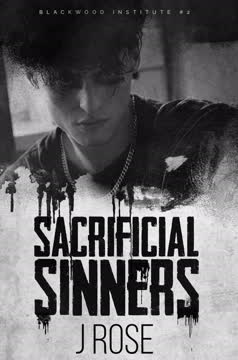
Sacrificial Sinners is a harrowing, unflinching exploration of trauma, institutional abuse, and the creation of evil. Through the lens of a reverse harem dark romance, it interrogates the ways in which systems—familial, psychiatric, societal—break people and turn victims into monsters. The novel's structure, blending unreliable narration, psychological horror, and intense interpersonal drama, immerses the reader in the chaos and confusion of life inside Blackwood. Its characters are deeply flawed, their relationships both a source of hope and further pain, reflecting the messy reality of healing from trauma. The book's central lesson is that survival often comes at the cost of innocence, and that forgiveness—of self and others—is both necessary and nearly impossible. By exposing the complicity of individuals and institutions in perpetuating cycles of violence, Sacrificial Sinners challenges readers to question the boundaries of morality, the nature of evil, and the possibility of redemption. In the end, it is a story about the fight to reclaim agency and humanity in a world determined to strip them away—a fight that is ongoing, unfinished, and deeply necessary.
Last updated:
Review Summary
Sacrificial Sinners, book two in the Blackwood Institute series, receives predominantly positive reviews with an overall 4.24 rating. Readers praise the dark, brutal, and psychologically intense narrative set in a mental institution. Many highlight the strong character development, particularly of protagonists Brooklyn and her four love interests—Eli, Phoenix, Hudson, and Kade. The book features graphic content, mental health themes, and steamy scenes. Some critics note pacing issues, with the middle dragging before an explosive ending. Reviewers emphasize checking trigger warnings, as the story contains violence, psychological torture, and disturbing themes.