

Key Takeaways
Courage isn't proof that danger is worth choosing.
Risk became identity. Hall traces his attraction to danger to an early assignment in Iraq, where the thrill of a near-disastrous flight made war reporting feel like his calling. He pursued proximity to combat, sometimes for the story and sometimes because it made him feel alive. His father’s childhood escape from Japanese-occupied Manila also shaped his reverence for soldiers and rescue. But experience did not make Hall invulnerable or every risk worthwhile. In Misrata, he watched his own face become blank and robotic on camera after days of exposure to death and shelling.
Bravery has a cost. Hall’s account shows a vocation can be meaningful and psychologically costly at once. The fact that he could suppress fear and keep moving did not mean he was unaffected. His colleagues’ deaths and his own injuries make the distinction between courage and sound judgment impossible to ignore.
What's striking is the difference between being able to tolerate danger and having a good reason to seek it. In high-risk professions, competence can create a misleading sense of control: familiarity lowers perceived threat even when the hazard remains. Hall’s younger self treated proximity as proof of commitment, a pattern that appears in emergency work, activism, and elite sport. His story does not reduce courage to recklessness, but it does suggest that purpose needs limits. A mission can be important without making every additional risk wise.
Report the people inside war, not just its explosions.
The human story matters. Hall’s early work often pulled him toward the loudest fighting. In Misrata, he filmed a young rebel dying despite a doctor’s efforts, and he later questioned whether recording the moment had been right. At another makeshift hospital, he saw a mother mourning her dead children. The scenes made clear that war reporting is not just about reaching the front; it also asks what a camera should witness, and what it might violate.
A different lens emerged. Alicia asked Hall to look beyond military movement and attend to families and civilians. In Iraq, he chose to report the return of a Yazidi girl kidnapped by ISIS, documenting a family’s reunion and the trauma surrounding it. The story was powerful, but the camera’s presence in intimate grief remained ethically complicated.
What's valuable here is the distinction between access and understanding. A dramatic image can make suffering visible, yet visibility alone does not guarantee dignity or context. Journalism’s ethical problem is not solved by looking away, since silence can protect perpetrators, but neither is it solved by filming everything. Hall’s evolving attention to families broadens the meaning of frontline reporting. The tension remains productive: a journalist must serve the public’s need to know while recognizing that the people being filmed are not merely evidence.
Let family obligations revise the identity your work built.
A promise met reality. After Alicia became pregnant, Hall told her and her father that he intended to leave frontline reporting. Yet he kept accepting assignments. On one Iraq trip, he hesitated before joining Kurdish fighters who were moving closer to ISIS positions. He stayed back, though only a few hundred yards separated him from the most dangerous area. He later recognized this small decision as an early sign that fatherhood was changing his priorities.
The old pattern returned. Hall eventually moved to Washington for what seemed a safer State Department role, but he lived apart from his family, and when Russia invaded Ukraine, he volunteered to go. He reassured Alicia that he would be far from the front. The assignment placed him in Kyiv, then in the village where the bombing nearly killed him. His work identity repeatedly overruled the balance his family needed.
What's striking is how identity can outlast the conditions that first made it useful. Hall had built a self around being the person who went toward conflict; a new job title did not automatically undo that commitment. Research on role transitions similarly suggests that changing circumstances is easier than changing the habits and self-concept attached to a role. His story also complicates the idea that loved ones can simply set boundaries for someone else. Honest risk-sharing matters because reassurance based on selective information prevents families from making informed choices together.
Anchor survival to one concrete reason to keep moving.
A voice broke through. On March 14, 2022, two Russian strikes hit the car carrying Hall, cameraman Pierre Zakrzewski, Ukrainian journalist Oleksandra Kuvshynova, and two Ukrainian soldiers near Kyiv. Hall blacked out, then heard what seemed to be his six-year-old daughter Honor urging him to get out. He regained awareness, forced himself through the open car door, and was thrown to the ground by another explosion. His right leg was badly damaged, his body was burning, and he could barely move.
Survival became an immediate task. Hall focused on getting to the road, dragging himself up a slope and throwing dirt toward a passing car to attract attention. A Ukrainian operative, code-named Song, eventually found him and carried him to an ambulance. Hall’s determination mattered, but so did the people who saw him and acted.
The scene shows how a sharply defined goal can organize attention when deliberation is no longer possible. Under extreme stress, a person may rely on a familiar attachment or immediate task rather than a complicated plan. That does not make a loved one’s image a universal survival technique, nor does it imply that mindset can overcome catastrophic injury. Hall’s account is strongest when inner resolve and external rescue remain joined: the desire to reach his children moved him, while other people supplied the hands, transport, and medical care that made survival possible.
Treat rescue as a system of trust, timing, and improvisation.
Many hands made extraction possible. Fox colleagues searched hospitals and coordinated information; Jennifer Griffin connected the crisis to Save Our Allies, a humanitarian group with experienced operators nearby. A team led by the operative called Seaspray entered Kyiv in ambulances, dressed as medical workers and avoiding visible weapons. Dr. Rich Jadick assessed Hall’s injuries. A Polish government train carrying senior leaders became the only viable route out, but access required urgent diplomatic and military coordination.
The plan kept changing. Ukrainian checkpoints, a curfew, poor communications, and Hall’s fragile condition threatened the operation. Polish officials ultimately allowed him onto the train, and U.S. forces collected him at the Polish border and flew him to Landstuhl, Germany. The same network had recently helped two young Ukrainian women escape, giving its members practical experience under pressure.
What's striking is that this rescue resembles a high-reliability organization more than a lone-hero story. Such systems depend on clear roles, local knowledge, redundant plans, and permission to improvise when the original route fails. The ambulance’s nonthreatening appearance was not cosmetic; it helped shape how armed checkpoints interpreted the team. Still, coordination cannot eliminate uncertainty, and the operation depended on individual judgment and rare political access. The account usefully makes preparedness visible without pretending that every person in danger can receive an operation of this scale.
Define recovery by useful function, then celebrate each inch.
Function clarified the choice. Hall arrived at Brooke Army Medical Center with extensive burns, a brain injury, a severely damaged left hand, a right leg amputated below the knee, and a badly injured left foot. Doctors explained that preserving the damaged foot could mean years of complex surgery and still might not restore walking. Hall chose the goal that mattered most to him: becoming mobile enough to return to his family.
Progress came in increments. Prosthetists fashioned a socket for his unusually short right stump and an Intrepid Dynamic Exoskeletal Orthosis, or IDEO, to support the remains of his left foot. Physical therapists rebuilt his strength. Infection and surgery interrupted the progress, and a poorly fitting liner caused severe pain just before a planned departure. Once the liner was changed, he could walk again. His recovery was neither quick nor linear.
What's useful is the way Hall separates an idealized image of restoration from a personally meaningful outcome. Rehabilitation often works through measurable functions, such as standing, transferring, or walking, rather than a return to a previous body. That reframing can restore agency because it gives patients decisions they can act on. It also requires care: function is not the same for everyone, and a patient’s priorities may change. Hall’s choice was his own, not a universal argument for amputation over limb reconstruction.
Let care include emotional honesty, not just physical endurance.
Recovery required dependence. Hall had spent years controlling fear and hiding distress from loved ones. At Brooke Army Medical Center, he depended on doctors, nurses, therapists, and Jock, the security agent who became his caregiver and constant companion. He needed help with medication, bathing, dressing, and the ordinary tasks of daily life. When he began to speak openly about pain and cry, he found that expressing emotion could ease the strain rather than undermine his resolve.
Support took many forms. Physical therapists pushed him through demanding sessions, colleagues visited, and a therapy dog named Huckleberry brought him to tears by playing fetch. Hall’s care team treated his moods and relationships as part of recovery, not distractions from it. His determination remained important, but it could not substitute for skilled help or companionship.
What's striking is that the memoir revises a familiar ideal of toughness. Endurance is not the same as silence, and asking for help does not cancel agency. In rehabilitation, trust and communication can improve care because clinicians need accurate reports of pain, fear, and changing function. Hall’s earlier instinct to conceal distress was understandable as a survival strategy in war zones, but the hospital demanded a different skill: accurate disclosure. The contrast suggests resilience is context-sensitive, not a fixed personality trait.
Treat ordinary family life as the victory, not a return to normal.
Home meant presence. After months in hospitals, Hall returned to London and was greeted by Alicia, their three daughters, and their dog. His daughter Iris first wanted to know whether he had brought home Yellow Jumpsuit, the small hedgehog toy he had used in videos from Ukraine. Once she saw the toy, she came over and hugged him. The reunion was not a return to their old life; Hall had new physical limits and a long recovery ahead.
Small routines gained weight. Hall had spent years missing dinners, bedtime, and family events because of work. After the injury, sitting with his daughters, reading to them, and helping with everyday tasks became central pleasures. The children learned about his prosthetic leg gradually, and the family chose not to hide his injuries or make them the whole story.
What's compelling is the shift from a heroic scale of achievement to the ordinary scale of belonging. Family life does not erase disability or trauma, and the book does not claim that gratitude makes practical barriers disappear. Instead, familiar rituals become evidence that a meaningful life can be reorganized around changed capacities. The hedgehog toy is a small but precise symbol: Hall’s connection with his daughters continued through separation, then helped make reunion less frightening. Recovery here is relational as well as medical.
See goodness as coordinated work, not an abstract promise.
Help had faces and tasks. Hall links his rescue to his father’s childhood rescue by American soldiers in Manila, nearly eighty years earlier. In his own crisis, help came from Fox colleagues, Ukrainian rescuers, Save Our Allies, military personnel, doctors, nurses, therapists, friends, and family. Even a special forces soldier sharing gummy bears with Hall during an agonizing flight became a moment of human kindness. No single person could have carried the whole effort.
Goodness did not end the war. Hall’s recovery left him more appreciative of ordinary life and more convinced that people can act generously under pressure. Yet the conflict continued, and he remained involved in efforts to document alleged war crimes. The book’s hope is therefore not that suffering disappears, but that people can respond to it with practical solidarity and preserve the truth of what happened.
The memoir’s claim about human goodness is most persuasive when grounded in action: making a call, treating a wound, providing transport, or staying beside someone who cannot care for himself. This resembles the idea of prosocial behavior in crises, where cooperation can emerge across professional and national boundaries. The claim should not be mistaken for a guarantee that good ultimately wins; the book records continuing violence and irreversible loss. Its more durable point is that human agency survives catastrophe, even when it cannot undo it.
Analysis
Saved is a war memoir, a survival narrative, and a record of collective rescue. Its structure moves from Hall’s early attraction to dangerous assignments, through the bombing in Ukraine, into an elaborate extraction and prolonged rehabilitation. The central tension is not simply whether he will survive. It is whether a man whose work and identity have depended on approaching danger can recognize the claims of family, accept dependence, and build a life around irreversible injury.
The memoir’s most revealing contrast is between Hall’s former competence in suppressing fear and his later need to describe pain honestly. In a combat zone, emotional containment helped him function. In rehabilitation, hiding pain could obstruct care. The book therefore treats resilience as adaptive rather than absolute: the same habit can protect someone in one setting and limit them in another. This gives the recovery narrative more complexity than a conventional triumph-over-adversity arc.
Its rescue sequence also changes the scale of the story. Survival is not presented as a private achievement earned by willpower alone. It depends on journalism colleagues, Ukrainian rescuers, humanitarian operators, military officials, clinicians, and family members acting across institutional boundaries. The detail of the prime minister’s train makes that interdependence tangible, while the earlier rescue of two Ukrainian women shows that the network’s capabilities were built through prior work, not conjured from nothing.
The book’s optimism is both its emotional center and a claim that deserves careful reading. Hall finds goodness in individuals who help amid war, but such moments do not redeem the violence or erase the dead. The strongest interpretation is narrower and more credible: catastrophe does not dictate every human response. Care, truth-telling, and solidarity remain possible, and their possibility creates obligations. The ending does not promise a return to normal. It locates meaning in the changed, ordinary life Hall can share with his family, while acknowledging that grief, disability, and war continue beyond the final page.
Review Summary
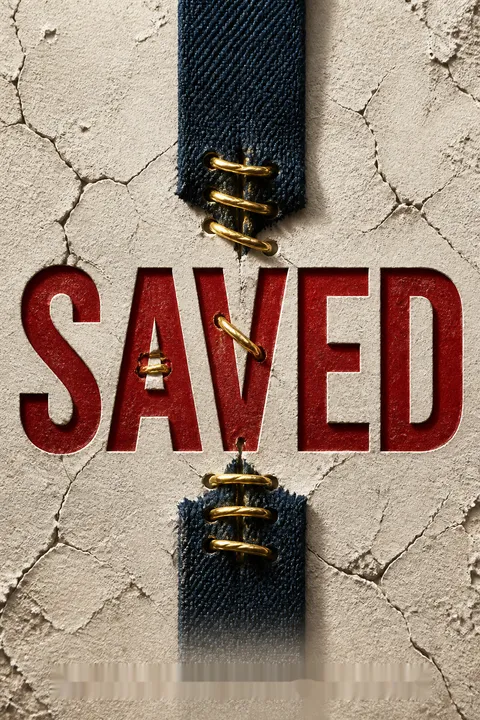
Saved is a highly praised memoir by Benjamin Hall, recounting his experiences as a war correspondent and his recovery from severe injuries sustained in Ukraine. Readers appreciate Hall's candid storytelling, positive attitude, and gratitude towards those who aided him. The book offers insights into war reporting and the challenges of rehabilitation. While some found certain sections too long or self-focused, most reviewers were deeply moved by Hall's resilience and determination to return home to his family. The audiobook narrated by Hall is particularly recommended.
People Also Read


Glossary
polytrauma
Multiple severe injuriesA medical condition involving serious injuries across multiple body systems, often caused by a blast or other high-energy event. Hall’s injuries included burns, amputations, a brain injury, eye damage, and damage to his hand. Treatment required specialists from several disciplines to coordinate care rather than addressing each injury in isolation.
Intrepid Dynamic Exoskeletal Orthosis (IDEO)
Support for a damaged limbA customized, energy-storing brace that supports a damaged lower limb and can improve stability, gait, and function. Hall’s device fitted around the remaining part of his injured left foot and heel, with a strut extending up the leg. It helped him walk without relying on a complete reconstruction of the foot.
Blood Flow Restriction
Low-load muscle trainingA physical therapy method in which a tourniquet temporarily restricts circulation during exercise. Hall’s therapist used it to make relatively light exercises fatigue muscles more intensely, supporting strength-building when heavy lifting was not appropriate. The restriction is temporary and used under professional supervision.
Golden Minute
Immediate injury treatmentDr. Rich Jadick’s emphasis on treating combat injuries as close as possible to the moment and place of injury. He argued that the first minutes can be more decisive than the broader medical idea of a Golden Hour. The term reflects his effort to move medical capability nearer to the front line.
Quick Reaction Force
Rapid-response rescue teamA team prepared to deploy quickly when an urgent operation is required. During Hall’s extraction, two teams and ambulances were readied, including a backup plan. The structure provided additional people, medical supplies, and options if the primary route or vehicle failed.
RISC
Training to treat colleaguesReporters Instructed on Saving Colleagues, a training program for freelance journalists that Hall describes after photographer Tim Hetherington died from a severe bleed in Libya. The instruction covered basic steps to slow life-threatening blood loss while an injured person awaited professional medical care.
FAQ
What's Saved: A War Reporter's Mission to Make It Home about?
- Personal Journey of Survival: The book details Benjamin Hall's experiences as a war correspondent during the Russian invasion of Ukraine in 2022, including his near-fatal injuries from a Russian strike.
- Humanity Amidst Chaos: Hall highlights the collective efforts of those who helped him, showcasing the goodness that can emerge even in the darkest times of war.
- Reflections on War Reporting: It provides insights into the life of a war reporter, the moral dilemmas faced, and the emotional toll of covering conflicts.
Why should I read Saved: A War Reporter's Mission to Make It Home?
- Inspiring True Story: Hall's narrative is a gripping account of courage and resilience, making it a compelling read.
- Insight into War Journalism: Readers gain a unique perspective on the challenges and dangers faced by war correspondents.
- Universal Themes: Themes of family, sacrifice, and the search for meaning resonate throughout the book.
What are the key takeaways of Saved: A War Reporter's Mission to Make It Home?
- Resilience in Adversity: Hall's story illustrates the power of human resilience and community support during crises.
- Moral Complexity of War: The memoir delves into the moral complexities of war reporting and the risks involved.
- Value of Family: Hall emphasizes the significance of family and the emotional weight of being a parent in dangerous environments.
What are the best quotes from Saved: A War Reporter's Mission to Make It Home and what do they mean?
- "Daddy, you’ve got to get out of the car.": Symbolizes Hall's connection to his daughters and his fight to return to them.
- "Even amid the very worst displays of human nature, there exists something impossibly beautiful and indefatigably good.": Captures the theme of finding hope and goodness amidst chaos.
- "We came to bring the news, not be the news.": Reflects the internal struggle of journalists in perilous situations.
How does Saved: A War Reporter's Mission to Make It Home address the theme of teamwork?
- Collective Efforts for Survival: Hall recounts the coordinated efforts of various individuals and groups who ensured his safety.
- Global Support Network: Highlights how people from different backgrounds came together to help him.
- Importance of Communication: Emphasizes the role of clear communication and trust among team members.
What challenges did Benjamin Hall face during his recovery in Saved: A War Reporter's Mission to Make It Home?
- Physical and Emotional Trauma: Hall endured significant physical injuries and the emotional toll of his experiences.
- Struggle with Identity: He grappled with his identity and purpose after the attack.
- Support from Loved Ones: Relied on the unwavering support of family, friends, and colleagues.
How does Saved: A War Reporter's Mission to Make It Home explore the impact of war on families?
- Personal Reflections on Fatherhood: Hall reflects on the emotional conflict of being a father while covering dangerous stories.
- Stories of Other Families: Includes accounts of other families affected by the war, illustrating the widespread impact.
- Hope and Resilience: Highlights the resilience of families who endure hardship and loss.
What lessons does Saved: A War Reporter's Mission to Make It Home offer about the nature of courage?
- Courage in Vulnerability: True courage involves vulnerability and confronting one's fears.
- Everyday Acts of Bravery: Highlights the everyday acts of courage by those who assisted Hall.
- Facing the Unknown: Emphasizes facing the unknown with determination and hope.
How does Saved: A War Reporter's Mission to Make It Home depict the realities of war reporting?
- Dangerous Environment: Provides a candid portrayal of the risks and dangers faced by war correspondents.
- Ethical Considerations: Delves into the ethical challenges of war reporting.
- The Role of Storytelling: Emphasizes storytelling in understanding the human experience during war.
What does Saved: A War Reporter's Mission to Make It Home reveal about the nature of hope in times of crisis?
- Finding Light in Darkness: Illustrates that hope can emerge through the support of others.
- Community and Connection: Highlights the power of community in fostering hope during crises.
- Personal Growth and Transformation: Hall's experiences lead to a deeper understanding of hope and its role in healing.
How did Hall’s experiences shape his views on war reporting in Saved: A War Reporter's Mission to Make It Home?
- Understanding the Risks: Deepened his understanding of the risks journalists face in conflict zones.
- Moral Responsibility: Reinforced the moral imperative to tell the truth and document war realities.
- Connection to Humanity: Emphasizes the human connections formed in times of crisis.
What insights does Saved: A War Reporter's Mission to Make It Home provide about the nature of war?
- Complexity of Conflict: Reveals the complexities of modern warfare and its impact on civilians.
- Human Cost of War: Highlights the devastating human cost of conflict.
- Hope Amidst Despair: Conveys a message of hope and resilience despite the horrors of war.
Download PDF
Download EPUB
.epub digital book format is ideal for reading ebooks on phones, tablets, and e-readers.








