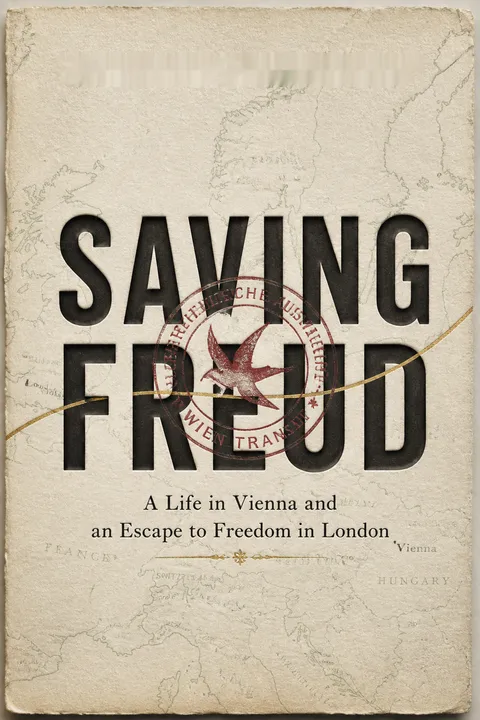


Key Takeaways
A brilliant mind can diagnose human aggression and still misread political danger
Insight did not immunize him. Freud had spent decades arguing that civilization did not erase human aggression, and that Jews could become targets for it. Yet when Hitler took power in Germany, Freud believed Austria might remain safer, treaties would protect minorities, and leaving Vienna would be its own hardship. He was also old, ill, and deeply attached to the home where he had built his family and career.
The warning became personal. After the 1938 Anschluss, Nazi agents searched his home and Anna was summoned by the Gestapo. Her return made the danger immediate in a way political arguments had not. Freud finally accepted that he had to leave, though the escape still depended on others persuading governments and officials to let him go.
What's striking is the gap between understanding a danger in theory and recognizing its arrival in one's own life. Risk psychology calls one version of this normalcy bias: people interpret escalating evidence through familiar expectations, especially when accepting the threat would demand painful change. Freud's age and illness made his reluctance human, not merely foolish. The distinction matters because hindsight turns uncertainty into apparent inevitability. His case suggests a practical safeguard: when credible warnings multiply, assess what would happen if they are right, rather than judging them only by how disruptive action would be.
Vienna's cultural brilliance concealed the dangers its Jewish citizens learned to discount
A tolerant city was not a safe one. Vienna had been the capital of a multinational empire of roughly fifty million people, and its Jewish residents rose to prominence in science, medicine, publishing, and the arts. By the late nineteenth century, Jews made up about a tenth of the city's population. Freud found opportunity there, even as anti-Semitism remained part of public life.
Contradictions became camouflage. Mayor Karl Lueger modernized the city and remained popular while building political support through anti-Jewish rhetoric. Hitler, who spent about five years in Vienna, absorbed the rhetoric of Lueger and other nationalists after his artistic ambitions failed. Freud and many Jewish Viennese, by contrast, trusted the city's culture and their own place in it. Its charm made danger easier to dismiss.
What's striking is how cultural achievement can coexist with exclusion without either cancelling the other. A society may welcome Jewish artists and professionals while normalizing political language that marks Jews as outsiders. That is a more useful model than treating anti-Semitism as either an invisible prejudice or an inevitable march toward catastrophe. It also warns against using successful minorities as proof that discrimination is harmless. Individual access to elite institutions does not show whether a group is secure when political incentives change.
Treat a theory as a working map, not a monument to its founder
Freud learned by trying and revising. Early in his career, he promoted cocaine as a promising treatment and urged a friend suffering from morphine addiction to try it. The friend became dependent on both drugs. Freud also explored hypnosis, then abandoned it as a central method. His work with Josef Breuer on patients with hysteria helped direct him toward the talking cure, which he eventually named psychoanalysis.
Discovery brought dogma with it. Freud's emphasis on childhood, dreams, and sexuality drew fierce opposition, but it also became a test of loyalty inside his movement. Alfred Adler and Carl Jung developed competing ideas, and Freud's disputes with them ended in major breaks. The history presents intellectual courage and intellectual rigidity in the same person.
This arc resembles the strongest account of scientific progress: not a clean march from error to truth, but repeated attempts whose failures expose new questions. Freud's willingness to revise his treatment methods sits beside a marked unwillingness to relax some central theoretical commitments. That tension is common in fields organized around a powerful founder. A coherent theory can focus inquiry, but when disagreement becomes disloyalty, it narrows the evidence the movement can absorb. Freud's story supports both ambition and institutional skepticism.
Broaden a movement's coalition without reducing allies to symbols
Freud knew the label was dangerous. Because most early psychoanalysts around him were Jewish, critics could dismiss psychoanalysis as a Jewish invention rather than engage with its claims. Freud therefore elevated Carl Jung, a Swiss Protestant, to leadership and hoped his prominence would broaden acceptance. He also believed that gentile colleagues could help protect the movement from anti-Semitism.
A symbolic ally is not a guaranteed heir. Jung's differences with Freud over sexuality and the unconscious deepened, and they eventually separated. Ernest Jones, a Welsh physician who learned German to study Freud, became a more durable international advocate. Anna Freud and Marie Bonaparte also helped build the field, as practitioners, organizers, translators, and supporters.
The strategy recognizes a real political fact: a movement associated with a stigmatized group may need advocates who can cross social boundaries. But it risks treating those advocates as shields instead of full intellectual partners. Jung's departure demonstrates the limits of recruiting someone for the symbolic value of his identity while expecting doctrinal agreement. Durable coalitions require room for disagreement, reciprocal trust, and contributions that are valued on their own merits, not only for how they change a movement's public image.
Build a rescue network before each specialist becomes urgently necessary
No single rescuer could do it all. Ernest Jones persuaded Freud to leave and secured British entry permits covering eighteen adults and six children. William Bullitt used his diplomatic influence to bring the danger to President Roosevelt's attention. U.S. consul John Wiley kept watch in Vienna, while Marie Bonaparte offered money, contacts, and shelter. Anna handled negotiations and family logistics; Max Schur provided medical care.
Preparation made speed possible. These people had known Freud and one another through years of work, friendship, and family ties. Their varied positions mattered once the crisis began: Jones could reach British officials, Bullitt could activate American diplomacy, and Bonaparte could pay costs and move documents. Rescue was a coordinated effort across several countries, not a last-minute act by one celebrated friend.
The episode illustrates a basic principle of resilient systems: different nodes bring different capabilities, and a network can act when no individual has enough authority or resources. It also shows why relationships built in ordinary times matter during emergencies. Yet a network is not automatically effective; coordination, shared urgency, and trust are essential. The rescuers had to overcome Freud's resistance, shifting Nazi demands, and British immigration restrictions. Their achievement came from combining complementary skills while keeping the goal clear.
Under a dictatorship, a sympathetic official can decide whether paperwork becomes a trap
Bureaucracy made persecution practical. After the Anschluss, Jews faced confiscations, exit taxes, and a maze of permits. The Freud family's assets were valued at 125,318 Reichsmarks, creating a flight tax of more than 31,000 Reichsmarks. Marie Bonaparte paid much of what was required. The family also needed official proof that it had settled its obligations before it could leave.
One official chose not to expose them. Anton Sauerwald, the Nazi-appointed trustee overseeing Freud's assets, found documents revealing foreign funds that could have blocked the family's escape. He kept the records from his superiors and helped preserve books. His initial anti-Semitic behavior did not disappear from the story, but his decisions helped Freud's party depart.
Sauerwald's role resists the comforting idea that people under authoritarian rule divide neatly into heroes and villains. A coercive system gave him power over someone's survival, and he used some of that discretion to help Freud while still accepting Nazi beliefs about Jews. That contradiction neither excuses the regime nor turns the rescue into a tale of redemption. It shows how persecution depends on ordinary administrative acts, and how individual discretion can sometimes interrupt, but rarely dismantle, the machinery.
Escape preserves a life, not the world that made it
Safety came with exile. Freud left Vienna on June 4, 1938, by train with Martha, Anna, his housekeeper, and a doctor. After passing through Nazi Germany, he reached France and then London. He felt relief at being free, but grieved the city he had loved despite its flaws. His family could recreate parts of home at their new London house: his books, antiquities, furniture, and consulting room followed him.
Not everyone could be saved. Bonaparte smuggled papers and possessions out of Vienna, while Freud's four elderly sisters remained behind. They were later deported and died under Nazi rule. The rescue preserved Freud, much of his work, and the lives of many in his immediate party, but it could not restore his former home or protect every relative.
Exile is not simply movement from danger to safety. It also means losing familiar institutions, language, routines, and the ordinary geography of a life. Rebuilding Freud's study in London offered continuity, but the four sisters' fate makes clear that preservation is partial and uneven. This story also exposes the privilege embedded in rescue: fame, money, influential friends, and a country willing to grant entry mattered. The account honors extraordinary help without mistaking one successful escape for a general solution to persecution.
Freedom included choosing when pain had made continued life unbearable
Freud set terms for his care. By the time Max Schur became his physician, Freud had endured repeated operations for cancer in his jaw, painful radiation, and difficulty using his prosthesis. He asked Schur to tell him the truth about his condition and not prolong his suffering needlessly. Schur agreed, making the promise part of their relationship from the beginning.
The promise mattered at the end. In September 1939, with the cancer causing severe pain and no useful treatment remaining, Freud told Schur that continuing had become unbearable and pointless. With Anna's agreement, Schur gave him morphine. Freud died on September 23, aged eighty-three. His escape from Vienna had preserved not a cure, but the ability to live and work in safety until he chose otherwise.
The ending brings autonomy into a difficult medical and ethical territory. Freud had stated his preference in advance, understood his condition, and made his request directly when the pain became severe. Those details distinguish the decision from a general claim that suffering should be ended, or that every patient would choose the same path. The story asks readers to take seriously both the duty to relieve pain and the importance of consent. It also resists a sentimental account of survival: freedom sometimes means control over the final limits of care.
Analysis
Saving Freud is more than an account of a famous refugee's escape. It is a study of how political catastrophe becomes visible unevenly. Freud could describe aggression as a feature of human life, yet his confidence in Vienna's familiar rhythms and his own attachment to home delayed his response to a threat that was already legible to others. His failure was not a lack of intelligence. It was the collision of political evidence with age, illness, identity, and the cost of starting over.
The rescue itself shifts attention from the solitary genius to the people and institutions around him. Jones could negotiate British entry, Bullitt could mobilize diplomacy, Bonaparte could finance and shelter, Anna could handle the exhausting practical work, Schur could safeguard Freud's health, and Wiley could monitor danger locally. Sauerwald's role adds a troubling complication: survival depended partly on a Nazi official's discretion. No one person could guarantee safety, and no one individual's decency made the system humane.
The book also makes clear that rescue was selective. Freud's international reputation and wealthy, influential allies helped move a large family party through barriers that trapped many others. His four sisters remained in Vienna and died in Nazi custody. The contrast prevents the story from turning into a simple celebration of resourcefulness. It shows both the life-saving power of a network and the inequalities that determine who can access one.
Freud's final years bring the book's central idea into sharper focus. Escape did not undo exile, restore the lost Viennese world, or save every relative. It did allow Freud to continue his work, rebuild a meaningful environment, and make choices about his care. The achievement was therefore neither total victory nor mere survival. It was a narrow but consequential recovery of agency in a world designed to strip it away.
Review Summary
Saving Freud received mostly positive reviews, with readers praising its engaging narrative style and historical detail. Many found it informative about Freud's life and the events surrounding his escape from Nazi-occupied Vienna. Some reviewers noted the book focuses more on Freud's biography and the people who helped him than on the actual rescue. A few criticized the misleading title and felt the book could be dry at times. Overall, readers appreciated the insights into Freud's personal life and the historical context of his final years.
People Also Read





Glossary
Psychoanalysis
Exploring unconscious motivesA method of investigating and treating psychological distress that Freud developed from clinical work and reflection. It seeks to understand how unconscious motives, memories, dreams, and conflicts shape behavior. Freud also used the term for the intellectual movement and professional practice that grew around his theories.
id
Instinctual drivesIn Freud's model of the mind, the id is the part driven by basic instincts and impulses. It operates outside conscious deliberation. Freud contrasted it with the ego, which manages impulses in relation to reality, and the superego, which reflects internalized rules and expectations.
ego
Reality-managing selfIn Freud's account, the ego tries to manage the id's impulses while responding to the demands of the outside world. It seeks to prevent distress and conflict by regulating what a person wants and what circumstances permit. The ego is one part of Freud's proposed model of mental life.
superego
Internalized rulesFreud's term for the mental structure shaped by parental influence and other early standards of right and wrong. The superego continues to affect a person in adulthood, setting ideals and restrictions. In his model, it interacts with the instinctive id and the reality-oriented ego.
Oedipus complex
Childhood family conflictFreud's theory that a young boy may experience unconscious sexual attraction toward his mother and regard his father as a rival. Freud treated this as a significant stage in psychological development. The concept was central to his account of childhood sexuality, but it remains a historically influential theory rather than an uncontested fact.
libido
Sexual driveFreud's term for the sexual drive, which he regarded as a major force shaping human behavior and neuroses. His insistence on the centrality of libido contributed to his disagreements with colleagues, including Carl Jung, who assigned less explanatory weight to sexuality and repression.
transference
Redirected feelingsA psychoanalytic process in which a patient redirects feelings associated with another person onto the analyst. Freud regarded this relationship as important to treatment, though it could create emotional complications. In the book, he used the idea to interpret the intense feelings that could develop between patients and their analysts.
death instinct
Destructive impulseA theoretical drive Freud proposed to explain the human tendency toward destruction and aggression. He contrasted it with the life-preserving and unifying impulse he described as erotic. The concept informed his thinking about war and violence, but it was an interpretive theory, not a directly observable mechanism.
Anschluss
Germany's annexation of AustriaThe incorporation of Austria into Nazi Germany in March 1938. German troops entered Austria without military resistance, and the independent Austrian state was abolished. The Anschluss brought Nazi rule, anti-Jewish violence, and immediate danger to Freud and his family.
FAQ
What’s Saving Freud: The Rescuers Who Brought Him to Freedom by Andrew Nagorski about?
- Chronicles Freud’s final years: The book details Sigmund Freud’s last decade in Vienna, focusing on his health struggles, intellectual pursuits, and the mounting dangers posed by the Nazi regime.
- Rescue mission narrative: It centers on the extraordinary efforts of a diverse group of friends, family, and colleagues who orchestrated Freud’s escape from Nazi-occupied Austria to London.
- Historical and personal context: The story is set against the backdrop of the Austro-Hungarian Empire’s decline, World War I, and the rise of Nazism, intertwining Freud’s personal journey with major historical events.
- Key figures and themes: The narrative introduces rescuers like Ernest Jones, Marie Bonaparte, Max Schur, William Bullitt, and Anna Freud, exploring themes of loyalty, resilience, and the clash between culture and oppression.
Why should I read Saving Freud by Andrew Nagorski?
- Humanizes a historical icon: The book offers a nuanced portrait of Freud, revealing his vulnerabilities, addictions, and personal struggles beyond his reputation as the father of psychoanalysis.
- Rich historical insight: Readers gain a vivid understanding of the political and social upheavals in 1930s Europe, especially the impact of Nazism on Jewish intellectuals and the psychoanalytic movement.
- Celebrates courage and loyalty: The story highlights the bravery and determination of Freud’s rescuers, showing how personal loyalty and international diplomacy combined to save a great mind.
- Broader cultural lessons: It provides lessons on resilience, the dangers of political blindness, and the enduring power of cross-cultural alliances in the face of tyranny.
Who were the key rescuers involved in Sigmund Freud’s escape, according to Saving Freud by Andrew Nagorski?
- Ernest Jones: A Welsh physician and Freud’s devoted disciple, Jones played a pivotal role in persuading Freud to leave Vienna and securing British government approval for his escape.
- Marie Bonaparte: Napoleon’s great-grandniece and a prominent psychoanalyst, Bonaparte provided financial support, diplomatic assistance, and personal care, helping smuggle valuables and documents out of Vienna.
- Max Schur: Freud’s personal physician, Schur managed his complex medical needs and delayed his own emigration to ensure Freud’s safety and comfort.
- William Bullitt and John Wiley: American diplomats who used their influence to protect Freud and his family, arranging diplomatic presence and financial guarantees during the escape.
- Anna Freud: Freud’s youngest daughter, who was his closest companion and caregiver, playing a central role in both his personal life and the rescue operation.
How did Sigmund Freud’s escape from Vienna unfold, as described in Saving Freud by Andrew Nagorski?
- Nazi intimidation and raids: After the Nazi annexation of Austria in 1938, Freud’s home and publishing house were raided, and the family faced Gestapo interrogations and threats.
- Diplomatic intervention: Friends and diplomats, including Bullitt and Bonaparte, mobilized to secure exit visas and negotiate with Nazi authorities, providing crucial protection and support.
- Bureaucratic and financial hurdles: The family had to pay heavy taxes and navigate complex bureaucracy to obtain permission to leave, risking their safety throughout the process.
- Final departure: In June 1938, Freud and his family left Vienna by train, traveling through Germany to Paris and then to London, where they found refuge and safety.
What were Sigmund Freud’s main health challenges in his final years, according to Saving Freud by Andrew Nagorski?
- Jaw cancer and surgeries: Freud endured over thirty operations on his jaw and palate due to cancer, resulting in severe pain and the need for a difficult prosthesis he called the “Monster.”
- Addiction to cigars: Despite knowing the risks, Freud continued to smoke cigars, believing they were essential to his productivity and creative work.
- Chronic health issues: He suffered from heart problems, fainting spells, digestive issues, and episodes of tachycardia, all of which affected his daily life and mood.
- Dependence on Max Schur: His personal physician, Max Schur, was vital in managing Freud’s health, providing both medical care and emotional support.
How did Sigmund Freud’s personal and professional life influence his reluctance to leave Vienna, as explored in Saving Freud by Andrew Nagorski?
- Deep attachment to Vienna: Freud cherished his routines, social life, and the city’s Jewish community, making it emotionally difficult to abandon his home at Berggasse 19.
- Health and age factors: Approaching his eighties and battling cancer, Freud hoped to spend his remaining years in peace, underestimating the Nazi threat.
- Professional identity: Vienna was the birthplace of psychoanalysis and the center of Freud’s intellectual world; leaving meant severing ties with his followers and legacy.
- Denial and hope for normalcy: Freud initially underestimated the danger, hoping for a return to normal life despite mounting evidence to the contrary.
What role did psychoanalysis and Freud’s theories play in the context of the Nazi regime, according to Saving Freud by Andrew Nagorski?
- Target of Nazi ideology: Psychoanalysis was denounced by the Nazis as a “Jewish pseudoscience,” making Freud and his work immediate targets for persecution.
- Suppression and exile: The rise of Nazism led to the persecution of Jewish psychoanalysts and the suppression of Freud’s work in Germany, forcing many colleagues to flee.
- Freud’s insights on aggression: His writings, such as Civilization and Its Discontents, explored themes of human cruelty and societal tensions, foreshadowing the violence of the Nazi era.
- Cultural battleground: The survival of psychoanalysis depended on navigating political and social hostility, with both Jewish and gentile followers working to preserve the movement.
How did Freud’s relationships with his family and disciples evolve in his later years, as depicted in Saving Freud by Andrew Nagorski?
- Anna Freud’s central role: Anna became Freud’s closest companion, caregiver, and intellectual heir, managing his care and continuing his psychoanalytic legacy.
- Marie Bonaparte’s influence: Bonaparte was both a devoted patient and trusted confidante, providing crucial support and sharing Freud’s intellectual pursuits.
- Family dynamics: Freud’s wife Martha managed the household but was less involved in psychoanalytic matters, while his sister Minna’s role diminished as Anna’s prominence grew.
- Complex emotional undercurrents: The household experienced shifting loyalties, jealousy, and evolving relationships as Freud’s health and circumstances changed.
What were Freud’s views on death and mortality, as presented in Saving Freud by Andrew Nagorski?
- Acceptance of death: Freud saw death as natural and unavoidable, believing that society’s denial of death was unhealthy.
- Personal preoccupation: He often calculated his likely age of death, influenced by the ages at which his father and half-brother died.
- Desire for dignity: Freud wished to avoid unnecessary suffering and wanted to remain intellectually active until the end, asking his doctor to ensure he would not suffer needlessly.
- Philosophical reflections: His late writings and correspondence reveal ongoing engagement with themes of mortality, legacy, and the meaning of existence.
What were Freud’s final intellectual projects and contributions, according to Saving Freud by Andrew Nagorski?
- Moses and Monotheism: Freud’s controversial study argued that Moses was Egyptian and explored the origins of monotheistic religion, challenging traditional beliefs.
- An Outline of Psycho-Analysis: An unfinished summary of his psychoanalytic theories, intended as a concise guide, published posthumously.
- Reflections on life and death: Freud’s late works and letters continued to address themes of mortality, trauma, and the future of psychoanalysis.
- Legacy preservation: Even as his health declined, Freud remained committed to advancing and safeguarding his intellectual legacy.
How did Freud’s family and close associates continue his legacy after his death, as described in Saving Freud by Andrew Nagorski?
- Anna Freud’s leadership: Anna became a leading child psychoanalyst, founded clinics, and promoted psychoanalysis worldwide from the family home in London.
- Ernest Jones’s biography: Jones authored a comprehensive biography of Freud, aiming to present an authoritative account with the family’s support.
- Marie Bonaparte’s advocacy: Bonaparte continued her psychoanalytic practice and humanitarian efforts, helping Jewish refugees and supporting the movement.
- Max Schur’s memoir: Schur published a memoir about Freud, emphasizing his dignity and courage in facing death.
What are the best quotes from Saving Freud by Andrew Nagorski and what do they mean?
- “Finis Austriae.” Freud’s diary entry on the Nazi annexation of Austria, meaning “The end of Austria,” captures his sense of loss and the collapse of his homeland.
- “I can heartily recommend the Gestapo to anyone.” Freud’s sardonic remark when forced to sign a declaration praising Nazi treatment, reflecting his dark humor and resistance under duress.
- “We are going to do the same.” Freud’s vow to preserve psychoanalysis after the Anschluss, symbolizing resilience and hope in the face of destruction.
- “Promise me one more thing: that when the time comes, you won’t let me suffer unnecessarily.” Freud’s request to his doctor, underscoring his desire for dignity in death amid prolonged suffering.
What are the key takeaways from Saving Freud: The Rescuers Who Brought Him to Freedom by Andrew Nagorski?
- **Complexity of historical
Download PDF
Download EPUB
.epub digital book format is ideal for reading ebooks on phones, tablets, and e-readers.








