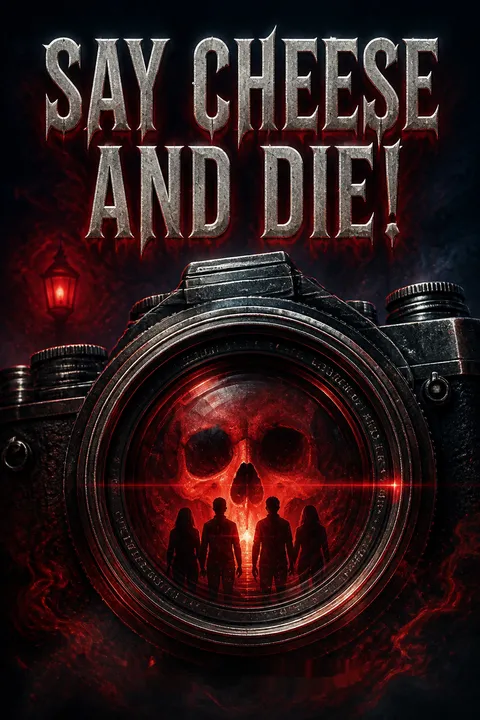


Plot Summary
A Dare at Coffman House
In Pitts Landing, Greg Banks and his friends Shari Walker, Doug Arthur, nicknamed Bird, and Michael Warner are tired of having nothing to do. Michael proposes exploring the long-abandoned Coffman house, though Greg worries about the black-clad stranger the kids call Spidey, who is often seen nearby. Inside, the friends find dust, broken windows, and signs that someone has been sleeping in the basement.
Bird fakes a cry for help, briefly making the others believe he is in danger. While they rummage through old clothes, Greg discovers that turning a workbench vise opens a concealed compartment. A heavy camera rests inside. Greg, who dreams of becoming a photographer, takes it before the group escapes through a back door.
The adventure begins as a response to ordinary boredom, which makes the trespass feel less like a considered risk than a dare that has gathered momentum. Greg is already distinct from his friends: he notices the house may belong to someone and hesitates, yet embarrassment pushes him to follow. Bird's false alarm turns fear into entertainment, establishing how quickly this group treats danger as a game. The camera's concealment changes the texture of that game. Greg finds an object hidden by someone with a reason to keep it private, but his longing to make pictures overrides his unease. Curiosity becomes the first consequential mistake.
Michael Falls Before the Flash
In the basement, Michael poses on the stair railing while Greg tries the camera. The flash fires, and a small print begins developing. Before anyone can inspect it, the railing breaks and Michael falls hard onto the concrete, injuring his ankle. Hearing footsteps above, the friends fear Spidey has returned.
They help Michael through a second stairway and escape into the overgrown yard, where a dark figure watches them from a window. At Michael's house, the photograph reveals him falling, although Greg remembers taking it while he was still posing. The camera has not merely produced a bad picture. Its image seems to show an event before it happens, giving Greg a reason to fear the object he has just taken.
The first uncanny photograph makes seeing itself unreliable. Greg remembers the moment as a posed snapshot, but the image insists that the camera recorded a fall still in the future. The distinction matters: the friends can dismiss a blurry or damaged picture, but this print appears to possess knowledge. Michael's injury gives that knowledge a physical cost, while the escape leaves the children unsure whether Spidey is a threat or simply a person whose home they invaded. Greg's fascination with photography now carries a burden his friends do not share. He has found a machine that seems to make the future visible, yet cannot tell whether it warns against danger or participates in it.
A Wreck Before the Drive
Greg takes the camera home and hides it in a secret compartment in his headboard. A picture of his family's new station wagon develops as a wreck, its windshield shattered and one side crushed. Although the actual car gleams untouched in the driveway, Greg's dread grows when his father takes the family out for a drive.
On the highway, Mr. Banks accelerates too fast, searches an unfamiliar dashboard for the headlights, and swerves toward an oncoming truck. The family avoids a collision, but Greg recognizes the danger his photograph seemed to foretell. That night he tests the camera on his brother Terry. The resulting image shows Terry frightened outdoors, with a familiar house behind him, an unexplained scene Greg cannot yet place.
Greg's private experiment becomes a test of whether he can trust his own perception. The wrecked-car image conflicts with the shining vehicle in front of him, but his father's reckless drive gives the picture a disturbing foothold in reality. Greg cannot prove the camera caused the near collision, and that uncertainty is psychologically sharper than certainty: he must act on a warning he cannot explain. The photograph of Terry extends the pattern without resolving it. Each exposure increases Greg's responsibility, because he keeps using the camera even after its images frighten him. His wish to be a photographer has become entangled with a more urgent question: what does it mean to look when looking may invite harm?
Warnings Come Due
At Bird's Little League game, Shari borrows the camera and accidentally photographs Bird lying unconscious with his neck bent. Bird dismisses the image, then pretends to collapse in the same pose to tease Greg and Shari.
The joke ends when a line drive hits Bird in the head and knocks him down, frightening the spectators. As Shari runs to him, Terry arrives from across the street with news that their father has been in a serious crash. The new station wagon is wrecked, just as Greg's earlier print showed.
At the hospital, Greg sees his father bandaged and injured but alive. He tries to tell his parents about the photograph, then stops when his mother cuts him off. The camera's warnings have become impossible to dismiss, but Greg still has no explanation.
The sequence strips away the easy defense that the camera is merely broken. Bird's prank briefly turns the ominous picture into a joke, then the real injury repeats its composition with cruel precision. The image's power lies partly in that repetition: it makes the future seem fixed, even as the children keep acting as if they can laugh it off. Terry's arrival binds the camera's separate warnings into a family crisis, and Greg's silence at the hospital shows how isolation compounds fear. He has evidence, but no language adults will accept. The novel places a child between private knowledge and social credibility, asking what responsibility looks like when the truth sounds absurd.
Shari Leaves the Frame
At Shari's birthday party the next weekend, Greg brings the camera reluctantly after she insists that everyone should try it. His first picture of Shari shows only the tree behind her. A second exposure, carefully centered on her, also leaves her out of the image.
Shari treats the failure as a camera defect and turns the party toward a game in the woods. When the guests return for cake, her mother notices that Shari is missing. Bird searches the nearby trees, then the family and friends check the yard and house, but no one finds her.
Police officers search the grounds while the birthday cake sits untouched beneath melted candles. Greg watches the search and understands that the camera may have taken Shari out of the world as completely as it removed her from the photographs.
Shari's disappearance transforms Greg's private suspicion into a crisis involving someone he loves. The empty photographs are not simply ominous predictions; they make absence visible before anyone recognizes it as danger. Shari's confidence that the camera is defective reflects the group's earlier habit of treating unsettling evidence as a joke, but Greg's growing dread has made that habit impossible for him. The untouched cake gives the party a concrete, almost domestic measure of what has gone wrong: a celebration has been interrupted without explanation. Greg now faces more than fear of the camera. He must decide whether to expose his belief to adults who may reject it, or protect a secret that might be the only clue to finding Shari.
A Shadow in the Snapshot
Greg tells Officer Riddick that the camera may have made Shari disappear, but the policeman assumes grief has confused him and sends him home. There, Greg finds his room ransacked, with the bed stripped and drawers emptied. He believes Spidey searched for the camera.
Greg asks Bird and Michael to help return it to Coffman house, but they refuse. During their argument at the playground, Bird accidentally triggers the shutter. Joey Ferris and Mickey Ward, two older bullies, grab the camera and claim it as theirs.
Greg snatches it back when Mickey aims it at Joey, then runs with Bird and Michael. Only later does Greg examine Bird's print: it shows Greg beside Shari beneath a looming shadow, though Shari is still missing. The image offers a clue, but no safe way to use it.
Greg's attempt to seek adult help fails, leaving him caught between two kinds of disbelief: the policeman's dismissal and his friends' reluctance to return to the house. The ransacked bedroom makes the supernatural danger intimate; whoever wants the camera has crossed into Greg's private space. Joey and Mickey add a recognizable human threat, turning the camera into an object others can seize through ordinary intimidation. Yet the accidental photograph complicates the situation by placing Shari back beside Greg in an image. Her presence is not a rescue, only evidence that the camera's pictures may connect people across an absence. The section pushes Greg from anxious observer toward action, even as every available choice exposes someone to risk.
The Torn Prints Bring Her Back
Two days after Shari disappears, Greg tears up the prints in which she is absent, consumed by guilt over having taken them. Two hours later, Shari calls from home: she has returned after being gone for two days, remembers nothing of where she was, and cannot explain the gap.
Greg wonders whether destroying the pictures brought her back. The next afternoon, he shows Shari the snapshot of them beneath the shadow and asks her to help return the camera. Before she can answer, Spidey rushes toward them.
Their neighbor Jerry Norman backs his car toward the stranger and threatens to call the police, forcing Spidey to retreat behind a hedge. Greg believes the camera is the reason Spidey is pursuing them. Shari agrees to meet him at Coffman house the following day.
Shari's return relieves the immediate terror but deepens the mystery: she is home, yet the missing two days have left no memory she can use to explain them. Greg's torn photographs become a possible act of repair, though he cannot know whether they caused her return or merely coincided with it. That uncertainty gives guilt a dangerous logic. If the images can alter a person's fate, then Greg's handling of them may matter; if not, he has destroyed evidence. Spidey's pursuit makes the camera's danger external and immediate. Shari's willingness to help marks a change in their partnership. She does not share Greg's certainty, but she chooses to face the risk with him.
A Secret Beneath Coffman
Under a storm-dark sky, Greg and Shari check the Coffman house for Spidey, then enter and descend to the basement. Greg opens the hidden compartment and replaces the camera. Spidey appears on the stairs before they can leave.
He reveals that his real name is Dr. Fritz Fredericks and that he once stole the camera from the partner who invented it. That partner, a practitioner of dark arts, cursed the device to steal souls; Fredericks says it cannot be destroyed and that people close to him have died because of it.
He has sacrificed his work and family to keep it hidden. Greg and Shari apologize, but Fredericks says they know too much and refuses to let them go. The camera is back in its hiding place, yet the children are trapped with the man who guarded it.
The revelation gives the camera a history shaped by human choices rather than mysterious accident. Fredericks admits that greed brought the device into his hands, while his attempt to contain its curse has narrowed his life around secrecy. His account explains the photographs without making the harm morally simple: the camera is cursed, but people still decide to steal, hide, and control it. Greg and Shari have done the responsible thing by returning it, only to find that knowledge itself has become a threat. Fredericks' refusal to release them exposes the contradiction in his guardianship. He wants to prevent further harm, yet protects the secret by endangering two children, repeating the coercive logic that began with the theft.
One Flash Too Many
As Fredericks moves to hold them, Shari sees that his hands are occupied and grabs the camera. She points it at him, trying to create a chance for Greg to escape. Fredericks lunges for the device, and the flash fires while they struggle over it. Greg and Shari run through the cluttered basement, but Fredericks' cries abruptly stop.
They turn back and find him on the floor, dead, his face fixed in terror. The developing photograph shows him in the same position. Greg believes the knowledge of what the camera can do frightened Fredericks to death, though neither child can be certain. He puts the camera back in its concealed shelf and closes the compartment. Then he and Shari leave the house to call the police.
The climax turns the camera's power back on the person who has spent years trying to contain it. Shari acts from immediate necessity, not revenge: she takes the only opening she sees and uses the flash to distract Fredericks. The result is devastating precisely because intention and consequence diverge. The photograph freezes his terror, while the children are left to interpret whether fear killed him or the cursed camera did. Greg's decision to return the device to its hiding place restores the original containment, but not innocence. He now understands that concealment may prevent further harm while also preserving the conditions for it to happen again. His call to the police acknowledges the ordinary evidence of a death, even as he withholds its extraordinary cause.
The Secret Changes Hands
Two days later, Greg, Shari, Bird, and Michael tell the police they entered the house to shelter from the storm and discovered the body. The officers attribute Fredericks' death to heart failure, and the four friends leave the camera hidden in its compartment, convinced that no one would believe the truth.
They pedal away from Coffman house, hoping its danger is sealed behind them. But Joey and Mickey emerge from the back of the house. They had watched Greg and Shari through a basement window and know where the camera is concealed.
The bullies retrieve it and test its shutter on each other. The story ends before their photograph develops. Greg's choice has spared him another confession, but the secret has passed to two boys who have no reason to handle it carefully.
The resolution offers the friends a fragile form of closure: they report the body, preserve the camera's hiding place, and leave together. Their silence is partly practical, since the adults already dismissed Greg's explanation, but it also creates the ending's new danger. Joey and Mickey were not merely incidental bullies; their surveillance makes the house's apparent isolation false. The camera survives because containment depends on people knowing where it is and choosing not to take it. That fragile arrangement fails as soon as the friends turn away. The final image of the bullies waiting for a picture to develop does not explain what will happen to them. Instead, it leaves the reader with the cycle's central risk: curiosity and entitlement can restart the harm.
Analysis
Say Cheese and Die! builds its suspense from a child's ordinary wish to make a good picture. Greg wants a camera worthy of his ambition, then discovers that this one gives him images whose meanings arrive only after the harm. That delay turns photography into a moral problem: the camera appears to show the future, but Greg cannot know whether it warns, causes, or simply records what is inevitable. Each answer demands a different response, and every test risks another person.
The book also contrasts forms of belief. Greg's friends repeatedly turn fear into jokes, while adults such as Officer Riddick translate his account into distress because it does not fit ordinary evidence. Their skepticism is understandable, but it leaves Greg responsible for a danger he cannot publicly prove. Shari's return briefly seems to reward Greg's attempt to destroy the prints, yet the story withholds certainty, refusing to convert grief into a simple rule the children can use.
Fredericks' history gives the supernatural object a human origin: greed leads him to steal an invention, and fear leads him to imprison its secret. His wish to prevent harm becomes another form of coercion when he refuses to let the children leave. The camera's curse does not erase human agency; it magnifies the consequences of decisions made under temptation, panic, and control.
The ending denies the comfort of a solved mystery. Greg and his friends hide the camera, but Joey and Mickey retrieve it as soon as the others leave. Their curiosity restarts the danger, suggesting that containment is only as strong as the people who maintain it. The final threat grows from recognizable impulses, wanting possession, wanting excitement, and assuming that consequences belong to someone else.
Review Summary
Say Cheese and Die! receives mostly positive reviews from readers, with many praising its nostalgic appeal and creepy concept. The story of an evil camera that predicts or causes misfortune captivates both young readers and adults revisiting their childhood favorites. Reviewers appreciate Stine's ability to create tension and deliver age-appropriate scares. Some criticize the book's simplistic writing and predictable plot elements, but overall, it remains a beloved entry in the Goosebumps series, known for its memorable premise and eerie atmosphere.
Characters
Greg Banks
Cautious young photographerGreg is an athletic, friendly boy whose strongest private ambition is to become a photographer. He often ends up as the sensible one among his friends, though he dislikes being treated as timid and can be pulled into a dare by the fear of looking foolish. His fascination with cameras makes the object in Coffman house irresistible, while his habit of noticing details makes him the first to connect its images with later events. Greg is not naturally sure of himself: he hides the camera, lies about where it came from, and worries that adults will think him irrational. His defining struggle is whether he can accept responsibility for what he has taken, even when he cannot explain what it does.
Shari Walker
Bold, teasing friendShari is Greg's next-door neighbor and closest friend, quick with a joke and usually more willing than Greg to turn a dull afternoon into an adventure. She teases her friends, makes decisions briskly, and resists being treated as fragile or easily frightened. Her confidence can draw the group forward, but it can also make her impatient with Greg's warnings. Shari approaches strange events with skepticism rather than immediate belief, preferring to test what she can see. That practical streak gives her a different kind of courage from Greg's anxious caution: she may doubt his explanation and still be willing to act when someone she cares about needs help.
Doug Arthur, called Bird
Joking baseball hopefulDoug, known to everyone as Bird, is a lanky friend whose goofy jokes and false alarms make him the group's comic spark. He enjoys provoking reactions and can mistake other people's fear for an invitation to keep playing, especially when the danger still seems imaginary. His humor helps his friends feel less intimidated by the unfamiliar, but it also blurs the line between harmless teasing and a real call for help. Bird wants to be taken seriously as an athlete despite his awkward appearance and uneven baseball skills. Beneath his clowning is a boy who wants a place in the group, even if making them laugh is the easiest role he knows how to claim.
Michael Warner
Restless dare-seekerMichael is Greg's red-haired, freckled friend, eager to escape the routine of Pitts Landing and often the first to suggest doing something adventurous. His enthusiasm can outrun his caution, especially when a neglected house promises a story worth telling. Michael is also sensitive to how his friends see him, and their teasing can make him defensive even when he joins in the jokes. He is not a natural comedian, but he keeps trying, and his warmth helps hold the group together. His mix of impulsiveness and vulnerability makes him a useful counterweight to Greg: where Greg worries about consequences, Michael wants to discover what might happen.
Spidey
Mysterious house dwellerSpidey is the name the children give a thin, black-clad stranger who appears around Coffman house. His long limbs and silent movements make him seem more like a local ghost story than an ordinary adult, and the children know little about where he came from or why he stays near the abandoned property. He appears to want privacy and reacts angrily when the friends enter the house and handle its belongings. Because the children see him first through rumor and fear, it is difficult for them to distinguish genuine danger from the frightening image they have built around him. His presence turns the house into more than an empty place to explore.
Terry Banks
Greg's older brotherTerry is Greg's older brother, an after-school worker at the Dairy Freeze who is often occupied with his own plans. He has an easy teasing manner with Greg and fits comfortably into their family's everyday routines. His presence gives Greg someone close in age to look toward, though Terry is not part of the group exploring Coffman house. When family trouble interrupts ordinary life, he becomes the person who carries urgent news to Greg. Terry is a practical older sibling, more grounded in immediate events than in Greg's private fears.
Mr. Banks
Greg's optimistic fatherMr. Banks is Greg and Terry's father, pleased by the family's new station wagon and eager to share the purchase with them. His enthusiasm makes him less cautious than his wife during the first drive, as he tests the car and wrestles with its unfamiliar controls. He is affectionate and proud, but his confidence can briefly outrun his attention. At home, he joins the family's light teasing and treats Greg's withdrawn mood as a passing problem.
Mrs. Banks
Greg's attentive motherMrs. Banks is Greg and Terry's mother, observant of her sons and alert to changes in their moods. She is cautious during the family's first drive and tries to keep her husband from taking unnecessary risks. Her concern for Greg is immediate, but she does not know the secret he is carrying and reads his anxiety as illness or reluctance. In a crisis, she focuses on the concrete needs of her family, especially her injured husband.
Mr. and Mrs. Walker
Shari's worried parentsShari's parents host her birthday party and expect an ordinary afternoon of cake, games, and friends. When she goes missing, their concern becomes visible in their anxious wait and their questions to the police. They are loving parents confronted with an event they cannot control or explain. Their distress gives Shari's disappearance a family dimension beyond Greg's guilt, while their need for a plausible answer contrasts with the supernatural explanation he struggles to voice.
Officer Riddick
Skeptical investigatorOfficer Riddick leads the search after Shari disappears. He speaks gently to Greg and gives him room to explain what he thinks happened, but the camera's story sounds too implausible to accept as evidence. His response is not cruelty so much as the limits of ordinary investigation: he sees a frightened child and tries to protect him from further distress. For Greg, that well-meaning disbelief is still isolating.
Jerry Norman
Protective neighborJerry lives across the street and recognizes Spidey as a familiar neighborhood presence. When he sees the man pursuing Greg and Shari, he uses his car and threat to call police to interrupt the chase. His quick intervention gives the children a chance to escape.
Joey Ferris
Older playground bullyJoey is a swaggering ninth-grader who picks on younger children and treats other people's possessions as fair game. He uses intimidation and mockery to control encounters, usually alongside his friend Mickey. His confidence rests on making others back down.
Mickey Ward
Joey's bullying companionMickey is a large, aggressive ninth-grader who hangs around with Joey and joins him in threatening younger kids. He likes to act as though whatever he has taken now belongs to him. His appetite for control makes the camera another object he assumes he can claim.
Plot Devices
The strange camera
Pictures that shape fearThe heavy, unnamed camera is hidden in a compartment beneath the Coffman house. It produces small, self-developing prints, but its images show events that have not yet happened or people who are no longer visible. Greg's first exposures make the device seem like a predictor of accidents; Shari's disappearance and Spidey's explanation reveal a more dangerous supernatural force. The camera links curiosity, guilt, and consequence, because every new picture tempts the children to test it again. Its apparent inability to be destroyed makes hiding it seem like the only available safeguard, though the ending shows how easily that safeguard can fail.
Developing photographs
Future made visibleThe camera's prints develop in front of the children, allowing them to compare an image with events as they unfold. A picture of Michael falling, a wrecked station wagon, and Bird lying injured each turns a casual snapshot into a warning. Yet the prints do not give the children reliable instructions: they cannot tell whether the camera predicts an event, causes it, or does both. Shari's absence from her portraits makes the device stranger still, while a later image places her beside Greg again. The photographs are evidence, but never an explanation.
The hidden compartment
A fragile hiding placeA vise on the basement workbench opens a concealed shelf where Greg finds the camera. The mechanism explains how the object stayed out of sight, and it gives Greg a specific place to return it once he learns the danger it holds. The shelf is not secure in any lasting sense: the children can open it, Spidey can reach it, and Joey and Mickey eventually find the camera. It embodies the story's central practical dilemma. Keeping a dangerous object hidden can limit access, but concealment does not remove the danger or guarantee that others will leave it alone.
Coffman house
A refuge turned trapThe overgrown house first attracts the friends because it promises an adventure in a town they consider dull. Its broken windows, neglected rooms, and basement refuge make it feel abandoned, but signs of habitation warn that the place belongs to someone in a way the children do not understand. The house shelters the camera and its keeper, then becomes the site where Greg and Shari learn the object's history. Its concealed workbench compartment makes the house part of the camera's containment, while the children's repeated returns show that a place can be both a hiding place and a source of danger.
The torn photographs
A possible reversalAfter Shari disappears, Greg tears up the prints in which she is absent. Two hours later, she is home again, unable to remember where she was. Greg suspects that destroying the pictures brought her back, but the story never confirms that conclusion. The moment gives him a reason to believe the photographs do more than document events, while preserving uncertainty about how the camera's power works. It also makes his guilt tangible: he is no longer merely holding the camera, but handling the evidence as if it might alter the fate it records.
FAQ
Synopsis & Basic Details
What is Say Cheese and Die! about?
- Curiosity Unleashes Terror: Say Cheese and Die! follows Greg Banks and his friends in the dull town of Pitts Landing as they seek excitement by exploring the abandoned Coffman house, where they discover a mysterious, old camera.
- Photos Foretell Disaster: Greg takes the camera, only to find that every picture it snaps seems to predict or cause terrible accidents and misfortunes for the subjects, from his friend Michael's injury to his family's new car being totaled.
- A Race Against the Curse: As the camera's malevolent power escalates, culminating in the mysterious disappearance of his friend Shari, Greg becomes consumed by guilt and fear, desperately trying to understand and return the cursed object before it claims more victims.
Why should I read Say Cheese and Die!?
- Classic Goosebumps Thrills: Readers seeking a quintessential R.L. Stine experience will find Say Cheese and Die! delivers on all fronts: a relatable protagonist, escalating supernatural dread, and a chilling, unresolved ending that leaves a lasting impression.
- Explores Darker Themes: Beyond the surface-level scares, the book subtly delves into themes of responsibility and consequences, the consequences of unchecked curiosity, and the insidious nature of evil, making it more thought-provoking than typical horror fare for its age group.
- Engaging, Fast-Paced Narrative: Stine's signature short chapters and constant cliffhangers ensure a gripping read, pulling you deeper into Greg's terrifying predicament with each turn of the page, perfect for a quick, suspenseful escape.
What is the background of Say Cheese and Die!?
- Goosebumps Series Staple: Published in 1994 as the fourth book in the original Goosebumps series, Say Cheese and Die! quickly became one of the most iconic and memorable titles, embodying the series' blend of everyday settings with supernatural horror.
- Reflects Childhood Fears: R.L. Stine masterfully taps into common childhood anxieties, such as the fear of the unknown, the consequences of breaking rules, and the helplessness of facing an inexplicable threat, making the camera a potent symbol of uncontrollable doom.
- Genre-Defining Horror: The book exemplifies the "cursed object" trope, a popular subgenre of horror, where an ordinary item becomes a conduit for malevolent forces, a concept that resonates deeply with readers and has been explored in countless other stories.
What are the most memorable quotes in Say Cheese and Die!?
- "Say cheese.": This seemingly innocent phrase, uttered repeatedly before each disastrous photo, becomes a chilling mantra of impending doom, transforming a common photographic instruction into a trigger for terror.
- "Does the camera show the future? Or does it actually cause bad things to happen?": Greg's internal struggle (Chapter 15) encapsulates the central mystery and horror of the story, forcing both the character and the reader to confront the terrifying implications of the camera's power.
- "It's not an ordinary camera... It's evil.": Dr. Fredericks' stark revelation (Chapter 29) about the camera's true nature and its cursed origins provides a definitive, albeit terrifying, explanation for the unfolding horrors, solidifying its role as a malevolent entity.
What writing style, narrative choices, and literary techniques does R.L. Stine use?
- First-Person Perspective: The story is told from Greg's point of view, immersing readers directly into his escalating fear, guilt, and confusion, making his internal struggles and external horrors feel more immediate and personal.
- Short Chapters & Cliffhangers: Stine employs a characteristic structure of brief chapters, each often ending on a suspenseful note or a shocking revelation, compelling readers to continue turning pages and creating a relentless pace.
- Simple, Direct Language: The prose is straightforward and accessible, designed for a middle-grade audience, yet effectively conveys intense emotions and terrifying events without relying on complex vocabulary or intricate sentence structures, focusing instead on visceral impact.
Hidden Details & Subtle Connections
What are some minor details that add significant meaning?
- "Pitts Landing is the pits" Slogan: The friends' self-deprecating town slogan (Chapter 1) subtly foreshadows the underlying boredom that drives them to seek dangerous excitement, ultimately leading them to the cursed camera and its misfortunes.
- The Cocker Spaniel's False Scare: The dog's sudden "attack" on Greg (Chapter 1) serves as an early, playful misdirection, a "jump scare" that primes the reader for genuine frights, contrasting with the real, supernatural terror that soon follows.
- Coffman House's Neglect: The detailed description of the Coffman house's decay—broken windows, cracked shingles, overgrown lawn (Chapter 1)—symbolizes the hidden, corrupt nature of the camera within, a once-grand invention now fallen into ruin and malevolence.
What are some subtle foreshadowing and callbacks?
- Bird's Chicken Jokes: Bird's repeated "chicken" jokes and clucking imitations (Chapter 2, 17) ironically foreshadow his own fear and reluctance to return to the Coffman house, and later, his injury on the baseball field, linking his persona to his fate.
- The Broken Railing: The initial broken railing in the Coffman house basement (Chapter 4) that causes Michael's fall is not just an accident but a direct, physical manifestation of the camera's first "prediction," immediately establishing its tangible impact.
- Spidey's Initial Observation: The dark figure of Spidey "staring at us" from the Coffman house window (Chapter 6) after the friends escape subtly foreshadows his later knowledge of Greg and the camera, revealing he was aware of their intrusion from the start.
What are some unexpected character connections?
- Dr. Fredericks' Parallel to Greg: Dr. Fredericks' backstory as a "greedy" scientist who stole the camera (Chapter 29) creates an unexpected parallel with Greg, who also "stole" the camera out of curiosity, highlighting a cyclical pattern of temptation and consequence.
- Joey and Mickey Mirror Greg's Initial Actions: The bullies Joey and Mickey (Chapter 23, 31) finding the camera at the end mirrors Greg's initial discovery and casual appropriation of it, suggesting that the curse preys on those who take what isn't theirs, regardless of their intentions.
- Shari's Disappearance and Return: Shari's unique experience of vanishing and returning (Chapter 17, 25) sets her apart, creating a deeper, shared trauma with Greg that solidifies their bond as the primary witnesses and victims of the camera's most extreme power.
Who are the most significant supporting characters?
- Dr. Fritz Fredericks (Spidey): Beyond being the antagonist, Dr. Fredericks is a tragic figure whose life was consumed by the camera's curse, making him a cautionary tale and the key to understanding the camera's origins and the depth of its evil.
- Shari Walker: As Greg's closest friend and the most directly affected by the camera's curse (her disappearance), Shari serves as a crucial emotional anchor and a catalyst for Greg's desperate attempts to resolve the situation.
- Greg's Parents: While not central to the supernatural plot, Greg's parents represent the oblivious adult world, their disbelief and concern for mundane matters (like the new car or Greg's "illness") isolating Greg and intensifying his burden of secret knowledge.
Psychological, Emotional, & Relational Analysis
What are some unspoken motivations of the characters?
- Greg's Atonement for Guilt: Greg's desperate drive to return the camera (Chapter 22, 25) is not just about fear, but an unspoken motivation to atone for his initial act of taking it and the subsequent harm it caused, especially after Shari's disappearance.
- Shari's Impatience for Excitement: Shari's eagerness for "fun" and her insistence on using the camera for her birthday party (Chapter 16) stems from a deeper, unspoken teenage desire to escape boredom and prove her bravery, overriding her initial caution.
- Dr. Fredericks' Burden of Responsibility: Spidey's motivation to guard the camera (Chapter 29) is driven by profound, unspoken guilt over his past greed and the suffering it caused, transforming him from a villain into a tormented guardian trying to prevent further harm.
What psychological complexities do the characters exhibit?
- Greg's Denial and Rationalization: Greg initially exhibits psychological denial, repeatedly trying to rationalize the camera's effects as "broken" (Chapter 11, 12) rather than confronting the terrifying reality of its supernatural power, a common coping mechanism against the unbelievable.
- The Friends' Collective Fear and Skepticism: The group's fluctuating belief in the camera's curse, particularly Bird and Michael's reluctance to help Greg return it (Chapter 22), highlights the psychological difficulty of accepting the supernatural and the burden of shared trauma.
- Dr. Fredericks' Tragic Transformation: Spidey's character arc from a "greedy" scientist to a reclusive, tormented figure (Chapter 29) reveals the profound psychological toll the camera's curse has taken, turning him into a prisoner of his own past actions and the object he created.
What are the major emotional turning points?
- Michael's Fall: The moment Michael falls from the railing (Chapter 4) after his picture is taken is the first major emotional turning point, shifting the friends' mood from playful exploration to genuine fear and the dawning realization of the camera's sinister nature.
- Shari's Disappearance: Shari's vanishing act (Chapter 17) marks a critical emotional climax, transforming Greg's fear into intense guilt and a desperate, personal need for action, as the camera's threat moves from injury to outright disappearance.
- Dr. Fredericks' Death: The sudden, terrifying death of Dr. Fredericks (Chapter 31) by fright, captured by the camera, is the ultimate emotional shock, confirming the camera's lethal power and the irreversible consequences of its curse.
How do relationship dynamics evolve?
- From Camaraderie to Isolation: The initial close-knit camaraderie among Greg, Shari, Bird, and Michael (Chapter 1) gradually erodes under the pressure of the camera's curse, leading to fear, blame, and Greg's increasing isolation as his friends refuse to believe or help him (Chapter 22).
- Greg's Strained Family Ties: Greg's relationship with his family (Chapter 9, 10, 14, 15) becomes strained by his secret knowledge of the camera's power and his desperate attempts to protect them, creating a profound sense of loneliness as he cannot confide his unbelievable fears.
- Greg and Shari's Shared Trauma: The dynamic between Greg and Shari evolves from playful teasing (Chapter 1) to a deep, terrified bond forged through shared trauma, especially after her disappearance and return, making them co-conspirators against the camera's evil (Chapter 25, 26).
Interpretation & Debate
Which parts of the story remain ambiguous or open-ended?
- Shari's Disappearance Mechanism: The exact nature of Shari's two-day disappearance and her subsequent return (Chapter 17, 25) remains ambiguous; it's unclear if the camera literally "erased" her from existence, transported her, or induced a form of amnesia, leaving the reader to ponder the extent of its power.
- Camera's Predictive vs. Causal Power: A central interpretive debate is whether the camera merely predicts future misfortunes or actively causes them to happen (Chapter 15, 25). Greg's act of ripping up Shari's photos immediately before her return strongly suggests causation, but the narrative never explicitly confirms this, maintaining a chilling uncertainty.
- The Curse's True Origin: While Dr. Fredericks explains his partner put a "curse" on the camera (Chapter 29), the specific nature of this dark magic and its limitations are left vague, allowing for broader interpretations of the camera as a symbol of inherent evil or a force beyond human comprehension.
What are some debatable, controversial scenes or moments in Say Cheese and Die!?
- Greg's Continued Use of the Camera: Greg's repeated decision to use the camera (Chapter 7, 11) even after witnessing its terrifying effects on Michael and his family's car, sparks debate about his curiosity versus responsibility, and whether his actions are naive or reckless.
- The Police's Dismissal of Greg's Story: Officer Riddick's immediate dismissal of Greg's claims about the camera (Chapter 19) as a sign of emotional distress highlights the common trope of adults disbelieving children, but also raises questions about the narrative's portrayal of authority figures in the face of the supernatural.
- Dr. Fredericks' Moral Ambiguity: Dr. Fredericks' decision to reveal the camera's origins and curse to Greg and Shari (Chapter 29), only to then attempt to trap them, creates a controversial moment, blurring the lines between his role as a tragic guardian and a desperate, dangerous antagonist.
Say Cheese and Die! Ending Explained: How It Ends & What It Means
- The Cycle of Evil Continues: The ending of Say Cheese and Die! (Chapter 31) reveals that the camera's curse is not broken but merely transferred. After Greg and Shari return the camera to the Coffman house, local bullies Joey Ferris and Mickey Ward immediately find it and begin taking pictures, unaware of its malevolent power.
- Unresolved Threat & Persistent Danger: This conclusion reinforces a classic Goosebumps trope: the threat is never truly vanquished, only passed on. It signifies that the "evil" of the camera is an inherent, persistent force that cannot be destroyed, only temporarily contained, leaving the reader with a lingering sense of dread.
- Consequences of Unchecked Power: The final scene underscores the theme of responsibility and consequences that power, especially dark power, will always find new hands to wield it, often those who are ignorant or reckless. Joey and Mickey's casual use of the camera mirrors Greg's initial curiosity, suggesting that the cycle of misfortune and the camera's ability to cause harm will inevitably continue, trapping new victims in its web.
Say Cheese and Die! Series
About the Author
Other books by R.L. Stine



Download PDF
Download EPUB
.epub digital book format is ideal for reading ebooks on phones, tablets, and e-readers.








