


Plot Summary
The Inheritance in Dark Falls
Amanda and her eleven-year-old brother, Josh, have spent their lives in a cramped home when their father inherits a mansion in Dark Falls from an uncle they never knew. On their first visit, dead leaves choke the garden and a chill hangs around the house despite the summer heat. Their dog, Petey, growls at the real estate agent, Compton Dawes, then races into the yard.
Inside, Amanda finds a spacious bedroom and briefly sees a blond boy vanish from its doorway. When she goes back outside, Josh and Petey have disappeared. The family finds Josh in a nearby cemetery, chasing Petey among the gravestones. The dog returns with them, but his strange behavior leaves Amanda uneasy about the new home.
The inheritance makes the move seem like a practical rescue: more space, no purchase price, and a chance for Amanda's father to pursue writing. That apparent generosity also weakens the family's ability to refuse. Amanda notices the house's physical wrongness before she has evidence, while her parents treat the move as a solution to ordinary financial and domestic pressures. Petey's reaction matters because it precedes the children's explanations; his instinctive hostility gives the setting a witness that adults cannot easily dismiss. The first visit therefore establishes a tension between useful appearances and bodily warning. The family has not chosen Dark Falls so much as accepted an offer that seems too good to question.
Curtains Without Wind
During the weeks before the move, Amanda grieves leaving her best friend, Kathy, while Josh sulks and their parents bicker over small things. On moving day, rain darkens Dark Falls, and Amanda again spots the blond boy watching from an upstairs window. Her mother dismisses the sight, as she does the noises Amanda hears after the family settles in.
A bedroom door shifts in the wind, and Amanda discovers an open window, but later the curtains flutter with the window shut. She dreams that her family has died and sits eating bones while Kathy pounds at the door. The next morning, Amanda sees a strange girl on the landing; when she fetches her father, only a pile of clothes remains.
The house turns the family's move into a test of interpretation. Each unexplained event has a plausible cover: wind, fresh paint, shadows, exhaustion, or clothes mistaken for a person. Those explanations are not absurd, which is why Amanda's uncertainty feels earned rather than merely imposed. Her parents' disbelief also reflects their own strain; accepting her fear would mean admitting that the house has become another problem they cannot manage. Kathy's appearance in Amanda's nightmare gives the haunting an emotional dimension: the danger is bound up with separation from the life she knew. The family's ordinary adjustment rituals, unpacking, sleeping, reassuring one another, are already being invaded.
The Children of Dark Falls
Amanda and Josh take Petey out to explore and meet Ray Thurston, a pale boy who says he once lived in their house. Petey barks at him, then calms when Josh clips on a leash. Ray leads them toward the school, where a neighborhood gang first surrounds the siblings before Dawes interrupts; the children then behave as if nothing unusual happened.
They play softball, and Karen Somerset seems eager to befriend Amanda, but says she also lived in the Bensons' house. The children leave the game abruptly when a whistle calls them home, despite the early hour. Over the following days, Amanda continues hearing whispers in her room and sees apparitions that vanish into ordinary objects. Josh admits he has dreamed of frightening boys.
Ray and Karen offer Amanda the social welcome she wants, but their repeated connection to her house makes friendship feel less like a fresh beginning than a return to someone else's history. The neighborhood children shift quickly from threatening to companionable, leaving Amanda unable to tell whether she misread them or they concealed their intentions. The softball game briefly offers an ordinary structure: teams, turns, and shared play. Its abrupt end breaks that structure without explanation. Josh's admission of a frightening dream also complicates Amanda's isolation. The siblings do not share the same evidence, yet both experience the house as intrusive, making their bond a more reliable source of knowledge than adult reassurance.
Names Beneath the Flashlight
During a later softball game, Petey slips free and vanishes. Amanda and Josh search the neighborhood for hours, then return home without him. After midnight, Josh wakes Amanda, convinced Petey has gone back to the cemetery where he ran on their first visit. Ray follows them and urgently tries to stop them entering, but the siblings find Petey among the stones.
The dog smells foul, ignores their calls, and moves away instead of welcoming them. Amanda's flashlight reveals a grave for Karen Somerset, with dates showing she died at twelve, then stones bearing the names of George Carpenter, Jerry Franklin, Bill Gregory, and finally Ray Thurston. Ray appears beside his own grave and admits that the inscription is his.
Petey's disappearance pulls the siblings into the place that has quietly organized the novel from the beginning. Josh's stubbornness, previously a source of friction, becomes useful persistence: he remembers the dog's first route and refuses to abandon him. The cemetery changes the children's social world into physical evidence. Names and dates make it impossible to explain away what Amanda has seen on the playground. Petey's lack of recognition carries a particular force because the siblings' affection for him is concrete and familiar; the dog's behavior registers a rupture before they understand its cause. Ray's appearance at his own grave then converts a puzzle into a direct confrontation.
The Watcher Unmasked
Ray explains that the town's dead residents need fresh blood and that he was assigned to watch Amanda's family until their time came. He also confirms that he had been watching her in the house. Petey, Ray says, is dead, and dogs are killed because they recognize the undead. When Ray rises toward Amanda and chokes her, Josh shines his powerful halogen flashlight at him.
Ray's face and body collapse beneath the beam. The siblings flee home, only to find Karen, George, Jerry, and other dead children waiting in the dark. They reveal that the house is a place where living newcomers are kept until the town can claim them, and that the annual move is a deliberate trap. A knock interrupts their attack: Dawes has come for the children.
Ray's confession explains the earlier incidents without making them feel harmless in retrospect. His position as watcher gives him a divided role: he has been close enough to Amanda to seem like a possible friend, yet his duty serves the town's appetite. The flashlight's effect supplies the siblings with an immediate means of resistance, but their apparent escape is incomplete; the other children can enter the house and outnumber them. The revelation also rewrites the inheritance. A free home is not merely a lure but part of a repeated civic mechanism, one that turns families into renewable resources. By having the threat speak through children, the story makes belonging itself feel conditional and dangerous.
Dawes Beneath His Name
Dawes claims he escaped a gathering with Amanda's parents and leads the siblings toward the cemetery, where he says the parents are hidden in an earth-built theater. Josh spots Petey among the graves and runs toward him, then trips over a stone bearing Compton Dawes's name and dates. Dawes admits Dark Falls was once an ordinary town until yellow gas escaped from a plastics factory and killed its residents.
He says the town cannot rest and that the children should join their parents. Josh's flashlight has broken, but he hurls it at Dawes, cracking his forehead. As daylight strengthens, Dawes retreats into the cemetery's shade. Amanda and Josh watch townspeople move toward the hidden theater, then see their parents bound before the crowd.
Dawes's gravestone is the decisive correction to the children's last hope. His initial role as a reassuring adult had already helped normalize the house and town; his apparent rescue repeats that pattern by offering safety in precisely the form Amanda longs for. The inscription exposes the cost of relying on authority without checking its claims. Josh's broken flashlight removes the tool that defeated Ray, so he improvises with the object itself, turning a failed instrument into a weapon. The factory accident gives Dark Falls a material origin, but it does not excuse the town's yearly violence. The dead have inherited a catastrophe and built a system that transfers its consequences to strangers.
Sunlight Through the Roots
Hidden behind the leaning tree that conceals the theater, Amanda and Josh see their parents tied back-to-back below while the town's dead fill the sunken benches. As the crowd moves toward their captives, Amanda realizes the tree could fall and expose the gathering to daylight. She and Josh throw their weight against its trunk, but it barely shifts; then the ground cracks and the tree crashes down.
Sunlight floods the theater. The dead claw toward the remaining shadows, but their bodies disintegrate in the brightness. Karen looks up at Amanda before collapsing, and the crowd disappears. Amanda and Josh rush to free their parents, who are alive and stunned. The family leaves Dark Falls and returns to their old home.
The siblings' escape depends on combining knowledge they have gathered under pressure. They know light can destroy the dead, recognize that the tree shields the theater, and act when no adult can reach their parents. The initial failure to move the trunk keeps the rescue from feeling effortless; the tree's collapse is a physical event they provoke but cannot fully control. Sunlight functions as exposure as much as a weapon: the town's hidden assembly becomes visible, and its population cannot survive outside the cover that sustained it. Karen's final look gives the destruction a human cost, though the story does not allow the children time to mourn. Survival demands action before understanding is complete.
The Next Family Arrives
Back at the mansion, Amanda asks her family to stop before they drive away and takes one last look at the house. A station wagon pulls into the driveway with parents and two boys, apparently the next family to move in. One boy asks Amanda who she is, and she tells him she used to live in the house before running back to her family's car.
She thinks she glimpses Dawes waiting on the porch with a clipboard, but rejects the sight as impossible. The Bensons speed away without looking back. Amanda has escaped the cycle, yet the final arrival gives the empty house a new set of occupants and leaves her unable to know whether the town's menace has truly ended.
The ending refuses the comfort of a cleanly sealed escape. Amanda and her family have returned to the life they lost, but the mansion immediately acquires new occupants, repeating the opening image of a family arriving at a place they do not understand. Amanda's warning is deliberately inadequate: she identifies herself as a former resident, but cannot explain what happened or persuade the new boy to listen. The possible sight of Dawes preserves uncertainty without undoing the siblings' victory. Psychologically, Amanda has moved from doubting her perceptions to acting on them, yet she cannot control what happens to others. The story closes on the limit of personal rescue.
Analysis
Welcome to Dead House builds its horror from the collision between ordinary explanations and evidence that grows too specific to dismiss. Amanda's first sightings can be blamed on shadows or nerves, and the family's move genuinely creates stress. But the clues accumulate with a logic of their own: Petey's hostility, children who claim the house as former home, and familiar names carved into graves. The suspense comes not from a single sudden revelation but from watching Amanda's reasonable self-doubt become an obstacle to acting on what she sees.
The house is also a social instrument. It promises the Bensons space, financial relief, and a fresh start, then makes those hopes part of the trap. Dark Falls offers community through children who invite Amanda and Josh to play, yet their welcome is governed by a hidden appetite. The town's supernatural condition began with a factory disaster, a human-made catastrophe that killed residents without giving them rest. Rather than confront that history, the dead preserve themselves by making another family pay its cost. Their annual demand turns survival into a predatory civic routine.
Amanda and Josh resist through complementary habits. Amanda notices patterns and checks what others dismiss; Josh follows Petey, acts under pressure, and improvises when his flashlight fails. Their sibling relationship becomes more cooperative because the danger makes neither temperament sufficient alone. The adults' disbelief is understandable but consequential: they are busy maintaining a move that seems beneficial, and their practical hopes narrow what they are willing to consider.
The ending grants the family escape without granting certainty. Sunlight destroys the gathered dead, yet another family arrives at the mansion, and Amanda cannot tell whether Dawes is truly gone. Her warning to the new boy is too small to explain the threat, but it marks a change in her: she no longer treats what she witnessed as an embarrassing mistake. The story's final unease lies in the gap between surviving a system and knowing whether anyone else can be saved from it.
Review Summary
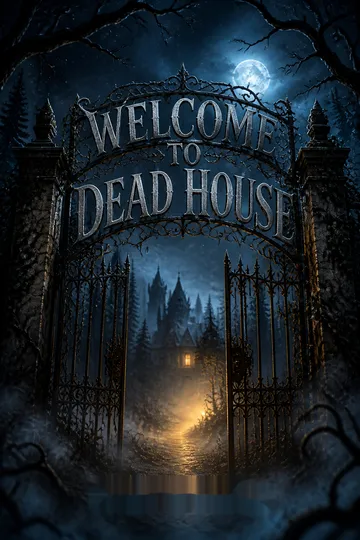
Welcome to Dead House, the first book in R.L. Stine's Goosebumps series, receives mixed reviews. Many readers appreciate its nostalgic value and creepy atmosphere, praising Stine's ability to create suspense for young readers. Critics note the simplistic writing style and predictable plot twists but acknowledge the book's importance in introducing horror to children. Some adult readers find the story less effective upon revisiting, while others still enjoy the quick-paced, spooky tale. Overall, the book is considered a solid start to the popular series, despite its flaws.
Characters
Amanda Benson
The watchful older sisterAmanda is twelve, observant, and more patient than her younger brother, Josh. She wants to be sensible, but her confidence in rational explanations falters as the house produces sights and sounds she cannot account for. Amanda also feels the loss of Kathy and her old neighborhood keenly, making her wish for friendship in Dark Falls both understandable and vulnerable. Her close attention to details, such as Petey's reactions and the dates on gravestones, gives her a practical kind of courage: she keeps looking even when adults dismiss what she sees. Her relationship with Josh shifts between exasperation and loyalty, and she increasingly treats his fear and stubbornness as information rather than nuisances.
Josh Benson
The stubborn younger brotherJosh is eleven, impulsive, argumentative, and deeply attached to the home and routines he has been forced to leave. He often demands attention through complaints or pranks, which makes his fear difficult for Amanda and their parents to distinguish from misbehavior. His bond with Petey is especially strong, and the dog's disappearance pushes Josh into action even when the search becomes frightening. Though he resists Amanda's judgments, he also joins her when it matters. Josh's willingness to act quickly, and to improvise when a plan fails, balances Amanda's more cautious observation. Their sibling dynamic supplies both friction and the trust necessary to face danger together.
Petey
The family's wary terrierPetey is the Bensons' small white terrier, usually affectionate and obedient. In Dark Falls, he reacts fiercely to people who seem harmless to the family and repeatedly tries to run toward the cemetery. His behavior becomes a source of worry for Amanda and Josh, who first explain it as anxiety about moving. Because he cannot explain what he senses, Petey makes instinct visible: his body responds before the children can interpret the town. His attachment to Josh and Amanda gives his absence emotional weight, while his unusual reactions help direct the siblings toward the truth.
Compton Dawes
The welcoming real estate agentCompton Dawes is the polished local agent who introduces the Benson family to their inherited home. He is young in appearance, sociable, and quick to ease the family's discomfort with jokes and reassurance. His warmth contrasts with the old, shadowed house, making him seem like a bridge between newcomers and the town. Amanda notices that Petey distrusts him, but Dawes's friendly manner encourages the family to treat that warning as an ordinary dog's oddity. His role in the family's arrival makes him central to their first impressions of Dark Falls, while his calm confidence raises questions about how much he knows.
Ray Thurston
The guarded neighborhood boyRay is a pale, blond boy Amanda and Josh meet while exploring Dark Falls. He says he once lived in their house and knows the neighborhood children, but his reserve makes him difficult to read. He seems particularly wary of Petey and becomes anxious when the siblings head toward the cemetery at night. Ray's connection to the house gives Amanda a possible explanation for the boy she thought she saw there, though he does not immediately confirm her suspicions. He occupies an uneasy space between guide and warning, embodying the way friendship in Dark Falls can carry information that a newcomer is not yet prepared to understand.
Josh and Amanda's mother
The strained family anchorAmanda and Josh's mother tries to make the move feel manageable, emphasizing the space and possibilities in the inherited house. Packing and settling in leave her tired and irritable, so she often interprets Amanda's reports as the product of nerves. Her skepticism is not cruelty; it reflects the pressure of building a home in unfamiliar surroundings while keeping the family moving. She and Amanda share affection, but the new house strains their ability to trust each other's perceptions.
Josh and Amanda's father
The hopeful new homeownerAmanda and Josh's father is excited by the inheritance because the house offers room and a chance to focus on his writing. His practical optimism helps persuade the family to move, but it also leads him to regard the children's fears as part of an ordinary adjustment. He is affectionate and wants to provide for them, though financial pressures and the work of settling in make him impatient at times. His hopes for the house give the move its initial promise.
Karen Somerset
Amanda's eager new friendKaren is a twelve-year-old girl with short blond hair and braces, one of the neighborhood children Amanda meets through softball. She is friendly and seems particularly interested in welcoming Amanda. Her claim to have once lived in the Benson house gives their new friendship an odd note of familiarity. Karen offers Amanda the possibility of belonging in Dark Falls, while her quick departures and the other children's guarded behavior keep that welcome from feeling entirely ordinary.
Kathy
Amanda's lifelong friendKathy is Amanda's oldest and closest friend, and the person Amanda most fears losing when the family moves. Their friendship is affectionate and longstanding, with a familiar mix of teasing and loyalty. Kathy tries to make the distance between their homes sound manageable, but their tearful farewell reveals how uncertain both girls feel. Though she remains behind, Kathy represents the life Amanda must leave and the relationships that make the move painful.
George Carpenter
A neighborhood softball playerGeorge is a red-haired boy in Ray's neighborhood group. He joins the children at the playground and is among the players Amanda and Josh try to know as newcomers. His casual presence helps make the group seem like an ordinary circle of local friends.
Jerry Franklin
The game's brisk organizerJerry is one of the older neighborhood children and organizes the softball teams. He also uses a whistle to end the game and send everyone home, an oddly abrupt decision that Amanda notices. His confident place in the group makes him part of the town's tightly managed social order.
Bill Gregory
A member of Ray's groupBill is one of the neighborhood children introduced through Ray and the playground games. He is part of the group that offers Amanda and Josh a first chance at local companionship. His presence adds to the impression that the town's children already share a history the newcomers cannot see.
Plot Devices
The inherited mansion
A house-shaped invitationThe mansion gives the Benson family a plausible reason to move to Dark Falls: it is large, inherited, and apparently free. Its rooms, attic, and generous space fulfill hopes the family's cramped old home could not. At the same time, the house is connected to earlier residents, strange sounds, and the children's unexplained familiarity with it. The inheritance therefore works as both domestic opportunity and mechanism of entrapment. Its appeal matters because the family does not arrive seeking danger; practical hope brings them within reach of it.
Petey's behavior
Instinct before explanationPetey's unusual reactions provide an early warning system. He growls at Dawes, runs repeatedly toward the cemetery, and becomes hostile to neighborhood children despite his usual friendliness. Amanda and Josh initially attribute these changes to the stress of moving, which keeps the clues from resolving too quickly. Later, Petey's behavior helps the siblings understand that the town's danger is not simply a product of their imaginations. The dog gives physical form to knowledge the children cannot yet articulate.
The cemetery inscriptions
Names that expose the townThe gravestones turn an unsettling suspicion into verifiable evidence. Amanda recognizes the names of children she has met, and the dates show that they died at the same ages they appear to be now. Ray's own stone confirms that his connection to the house is more than a memory. Later, Dawes's grave disproves his account of being a living rescuer. The inscriptions make the cemetery a record the town cannot disguise, forcing Amanda and Josh to revise their understanding of every friendly local face.
The halogen flashlight and sunlight
Light against the deadJosh's bright flashlight first gives the siblings a way to see and navigate the cemetery, then becomes an improvised defense when Ray attacks Amanda. The later confrontation with Dawes complicates that protection: the flashlight breaks, and Josh has to throw it rather than use its beam. Sunlight proves more powerful and widespread. Amanda and Josh connect that vulnerability to the tree covering the outdoor theater, then expose the gathered town to daylight. Light functions both as evidence and as a means of destroying what darkness shelters.
The yearly newcomers
A cycle of fresh bloodThe town's need for living newcomers explains why the Bensons were offered a house and why the children are watched before they understand the danger. The annual pattern turns the seemingly random arrival of a family into a deliberate recruitment process. It also links the mansion, the children's claims that they once lived there, and the town's demand for fresh blood. At the ending, another family reaches the house, suggesting how easily the cycle might begin again even after Amanda and Josh escape.
FAQ
Synopsis & Basic Details
What is Welcome to Dead House about?
- Family Inherits House: The Benson family—Amanda, Josh, and their parents—move to the eerie town of Dark Falls after inheriting a large, old house from a distant relative they never knew.
- Unsettling Atmosphere: From the moment they arrive, the house and town feel wrong, marked by perpetual shade, dead leaves in summer, and strange occurrences like mysterious sightings and unsettling sounds.
- Uncovering a Dark Secret: As Amanda and Josh try to adjust and make friends, they discover a horrifying truth about the town's inhabitants and their own house, leading to a desperate fight for survival.
Why should I read Welcome to Dead House?
- Classic Goosebumps Thrills: It's the very first book in the iconic Goosebumps series, establishing the signature blend of suspense, mystery, and age-appropriate horror that defined a generation of readers.
- Atmospheric Setting: The town of Dark Falls and the "Dead House" itself are vividly described, creating a palpable sense of dread and isolation that is central to the story's impact.
- Engaging Sibling Dynamic: The relationship between Amanda and Josh, their initial bickering giving way to mutual support in the face of terror, provides a relatable emotional core to the supernatural events.
What is the background of Welcome to Dead House?
- Series Origin: Welcome to Dead House was published in 1992 as the inaugural book in R.L. Stine's Goosebumps series, designed to provide scary but not overly graphic stories for young readers.
- Setting as Character: The town of Dark Falls is more than just a backdrop; its name, perpetual darkness, and unsettling quiet are integral to the plot and the reveal of its secret, functioning almost as a character itself.
- Post-Industrial Decay Theme: The backstory of the town's demise due to a gas leak from a plastics factory subtly touches upon themes of industrial accidents and environmental consequences, albeit filtered through a horror lens.
What are the most memorable quotes in Welcome to Dead House?
- "This house is creepy.": Amanda's initial thought upon seeing the house (Chapter 1), perfectly encapsulating the immediate, visceral sense of unease that defines the setting and foreshadows the horrors within.
- "We need fresh blood.": Jerry Franklin's chilling explanation (Chapter 15) of the undead townspeople's motivation, starkly revealing the predatory nature beneath their seemingly normal appearance and the family's true purpose in Dark Falls.
- "Thank you, Amanda! Thank you!": Karen's final words (Chapter 18) as she crumbles to dust in the sunlight, a surprising moment of gratitude from one of the undead, hinting at the suffering of their existence and the release that destruction brings.
What writing style, narrative choices, and literary techniques does R.L. Stine use?
- First-Person Perspective: The story is told primarily from Amanda's point of view, immersing the reader directly in her fears, confusion, and discoveries, making the suspense more immediate and personal.
- Short Chapters & Cliffhangers: Stine employs brief chapters, often ending on a moment of tension or a shocking reveal (e.g., seeing the boy in the window, discovering the gravestones), encouraging readers to keep turning pages.
- Repetitive Phrases & Sensory Details: Recurring descriptions like the "dark, old house," the "dead brown leaves," and the "smell of paint" or "sour smell" create a consistent, unsettling atmosphere, while simple, direct language keeps the narrative accessible and fast-paced for young readers.
Hidden Details & Subtle Connections
What are some minor details that add significant meaning?
- Petey's Immediate Reaction: The family dog, Petey, barking and growling menacingly at Mr. Dawes upon first meeting him (Chapter 1) is a crucial early clue that something is fundamentally wrong with the real estate agent and, by extension, the townspeople, highlighting animals' instinctual ability to sense danger or the unnatural.
- The Perpetual Shade: The repeated descriptions of the town and house being covered in "darkness," "shade," and "shadows" (Chapters 1, 2, 9) aren't just atmospheric; they subtly foreshadow the undead residents' vulnerability to sunlight, turning a seemingly natural detail into a vital plot point for the climax.
- The Smell of Decay: Josh's disgusted reaction to Petey smelling "like a dead rat" (Chapter 12) after finding him in the cemetery is a grim detail that confirms Petey's fate and links him directly to the state of the undead, whose presence is later associated with a "sour" smell (Chapter 14).
What are some subtle foreshadowing and callbacks?
- Amanda's "Haunted" Question: Early on, Amanda jokingly asks Mr. Dawes if the house is haunted (Chapter 1), a seemingly innocent question that he dismisses, but which directly anticipates the supernatural reality she later confronts, turning his chuckle into an ironic moment in retrospect.
- The Boy in the Window: Amanda's initial sighting of a boy in the upstairs window (Chapter 3) is dismissed as imagination, but this figure is later revealed to be Ray (Chapter 9), one of the undead "watchers," confirming her initial perception and establishing the house as a place of surveillance by the town's secret inhabitants.
- Karen's Claim of Past Residency: Karen's casual remark that she "used to live in your house" (Chapter 9) is initially confusing but serves as a direct foreshadowing of the reveal that the house is a temporary home for new, living families before they become part of the undead community, linking the house's history to the town's cycle.
What are some unexpected character connections?
- Mr. Dawes as a Resident: The friendly real estate agent, Mr. Dawes, is revealed to be one of the undead (Chapter 15), his gravestone confirming his death years prior (Chapter 16), showing that the town's secret extends beyond the children and involves figures meant to appear trustworthy and welcoming.
- The "Great-Uncle" Deception: The premise of inheriting the house from a "Great-Uncle Charles" (Chapter 1), a man the family didn't know, is revealed to be a complete fabrication (Chapter 15), orchestrated by the undead townspeople to lure the Bensons to Dark Falls, making the unknown relative a tool of the town's predatory cycle.
- Ray as the "Watcher": Ray, the first undead child Amanda and Josh interact with, reveals his specific role as a "watcher" (Chapter 13), tasked with monitoring new families, highlighting a structured, almost organized effort by the undead community to manage their need for "fresh blood."
Who are the most significant supporting characters?
- Mr. Dawes: As the initial point of contact and the seemingly helpful real estate agent, Mr. Dawes serves as the primary lure for the Benson family, embodying the deceptive facade of normalcy in Dark Falls and representing the adult undead population's involvement in the town's cycle.
- Ray: Ray is the first undead character Amanda truly interacts with and the one who provides the most direct explanation of the town's condition and the undead's motivations (Chapter 13), making him crucial for the plot's central revelation and adding a layer of tragic complexity as a "watcher" who fails in his task.
- Karen: Karen represents the group of undead children Amanda and Josh attempt to befriend, highlighting the unsettling contrast between their appearance/past lives and their current state, and her final words (Chapter 18) offer a brief, poignant glimpse into the potential suffering of their undead existence.
Psychological, Emotional, & Relational Analysis
What are some unspoken motivations of the characters?
- Parents' Desire for a Fresh Start: While stated as inheriting a free house (Chapter 1), the parents' eagerness to move, particularly Dad's desire to quit his job and focus on writing, suggests an unspoken motivation to escape their current life and financial worries, making them perhaps overly optimistic and less attuned to the initial warning signs.
- Josh's Stubbornness as Fear: Josh's initial, intense resistance to the move and the house (Chapter 1) and his later insistence on finding Petey in the cemetery (Chapter 11) can be interpreted not just as childish stubbornness but as a manifestation of his fear and anxiety about the unfamiliar and unsettling environment, driving him to regain control or find comfort (Petey).
- The Undead's Need for Companionship: Beyond the stated need for "fresh blood" (Chapter 15), the undead children's interactions, their games, and their desire for Amanda and Josh to "be with us" (Chapter 15) hint at a deeper, perhaps unconscious, motivation rooted in loneliness and a desire for connection in their perpetual, unchanging state.
What psychological complexities do the characters exhibit?
- Amanda's Self-Doubt vs. Perception: Amanda repeatedly questions her own sanity, wondering if she's "seeing things" or if her "imagination is working overtime" (Chapters 4, 8, 10), showcasing the psychological toll of experiencing inexplicable events that are dismissed by others, forcing her to grapple with trusting her own perceptions against external validation.
- Josh's Shift from Whining to Determination: Josh transitions from a spoiled, complaining child (Chapters 1, 3, 7) to a determined, brave sibling who actively participates in the escape and even incapacitates Mr. Dawes (Chapter 17), illustrating a psychological shift driven by real danger that forces him to mature and act decisively.
- Ray's Internal Conflict: Ray's role as a "watcher" who feels "sorry" (Chapter 13) and admits he "messed up" (Chapter 13) suggests a degree of psychological complexity among the undead, hinting that their transformation might not erase all past feelings or moral understanding, creating a conflict between their undead nature and remnants of their former selves.
What are the major emotional turning points?
- Amanda's First Sighting: Seeing the boy in the window (Chapter 1) marks the initial emotional turning point for Amanda, shifting her feelings about the house from mere dislike to genuine unease and suspicion, setting the stage for her later investigations.
- Discovery in the Cemetery: Finding the gravestones of the children they know (Chapter 12) is a massive emotional shock for both Amanda and Josh, transforming their fear from vague unease about a creepy house into concrete terror about the true nature of the town and its inhabitants.
- The Confrontation with Ray: Ray's confession about being dead and the town's need for "fresh blood" (Chapter 13) is the pivotal emotional climax of the mystery, confirming their worst fears and shifting their goal from understanding the strange occurrences to a desperate fight for survival.
How do relationship dynamics evolve?
- Sibling Bond Under Stress: Amanda and Josh's relationship evolves from typical sibling bickering and annoyance (Chapters 1, 3, 7) to a partnership based on mutual fear, trust, and reliance (Chapters 11, 15, 17), demonstrating how shared trauma strengthens their bond.
- Parental Dismissal to Shared Terror: The parents initially dismiss Amanda and Josh's fears as imagination (Chapters 4, 7, 8), creating a dynamic of frustration and isolation for the children, but this shifts dramatically when the parents themselves are captured (Chapter 15), leading to a shared experience of terror and relief upon rescue.
- Friendship as Deception: The potential friendships Amanda and Josh attempt to form with the local kids like Karen and George (Chapters 9, 10) are revealed to be based on deception, highlighting the isolation imposed by the town's secret and the difficulty of forming genuine connections with the undead inhabitants.
Interpretation & Debate
Which parts of the story remain ambiguous or open-ended?
- The Nature of the Undead Existence: While Ray explains they are "living dead" who need "fresh blood" (Chapter 13), the exact nature of their existence, their daily lives when not interacting with newcomers, and the extent of their sentience or suffering remain largely unexplored and open to interpretation.
- The Town's Geographic Isolation: The story implies Dark Falls is somewhat isolated ("a four-hour drive from our home" - Chapter 1), but the lack of outside intervention despite the town's secret and the ease with which new families are lured there raises questions about its connection to the outside world and why its strange nature hasn't been discovered.
- The Cycle's Perpetuation: The ending shows a new family moving into the house (Chapter 18), implying the cycle of luring new residents continues, but it leaves ambiguous whether this cycle can ever be broken or if the town is doomed to repeat its horrifying pattern indefinitely.
What are some debatable, controversial scenes or moments in Welcome to Dead House?
- Petey's Fate: The reveal that Petey is dead and was killed because "Dogs always recognize the living dead" (Chapter 13) is a surprisingly dark and potentially upsetting moment for a children's book, raising questions about the necessity and impact of animal death in the narrative.
- The Undead's Destruction: The graphic description of the undead melting and crumbling to dust in the sunlight (Chapter 18), including eyeballs rolling out and skulls cracking, is quite visceral for the target audience and could be debated in terms of its appropriateness and level of horror.
- The Ending's Lack of Resolution for Dark Falls: The story concludes with the Benson family escaping, but the town of Dark Falls and its undead inhabitants are left to continue their existence and predatory cycle (as shown by the new family arriving), which could be seen as a bleak or unresolved ending for the town itself.
Welcome to Dead House Ending Explained: How It Ends & What It Means
- The Climax in the Amphitheater: The story culminates with Amanda and Josh finding their parents tied up in a hidden outdoor amphitheater next to the cemetery, surrounded by the entire town of undead residents who are preparing to turn the parents into one of them.
- Sunlight as the Weapon: Remembering the undead's aversion to light (seen with Ray), Amanda and Josh realize the leaning tree covering the amphitheater is the key. They manage to push it over, flooding the area with sunlight, which causes the undead townspeople to melt and crumble to dust, effectively destroying them.
- Escape and the Continuing Cycle: The Benson family escapes Dark Falls, leaving the town empty of its undead inhabitants. However, the final scene shows a new family arriving at the house, implying that the town's method of luring newcomers will continue, suggesting the horrifying cycle of Dark Falls is not truly broken, only paused for the Bensons. This ending highlights the theme of inescapable danger and the idea that escaping one horror doesn't necessarily end its existence for others.
Goosebumps Series Series

About the Author
Other books by R.L. Stine






Download PDF
Download EPUB
.epub digital book format is ideal for reading ebooks on phones, tablets, and e-readers.








