

Key Takeaways
Treat running as a spring-and-brake cycle, not merely repeated footfalls
Each stride stores and returns force. Running coordinates muscles, joints, and the nervous system through a repeating cycle of stance, when the foot is on the ground, and swing, when the leg travels forward. At landing, the body absorbs ground reaction force, the force the ground applies back to the runner. Muscles and tendons control that impact and store some of its energy. The Achilles tendon, for example, stretches under load and recoils during push-off.
Energy and movement work together. Steady distance running relies mainly on aerobic energy production, while hard surges call more heavily on anaerobic processes. The body moves efficiently when it absorbs, transfers, and returns force rather than wasting it in excessive braking or vertical bounce. Understanding those demands helps explain why technique, fitness, and strength training belong in the same conversation.
The spring analogy is useful because it makes running mechanics intuitive without reducing the body to a machine. It also points toward a practical distinction: impact is not automatically damage. Tissues need to experience force to adapt, but the force must be within their current capacity. The analogy has limits, since tendons, muscles, and bones respond differently and do not behave like identical springs. A runner benefits most from thinking in terms of coordinated systems, not searching for one perfect part or movement.
Adjust cadence before forcing a new footstrike or buying new shoes
There is no universal ideal gait. Rearfoot, midfoot, and forefoot describe which part of the foot contacts the ground first. Research cited in the book does not show that switching to a forefoot strike reliably prevents injury or makes runners more economical. Footstrike mainly shifts where forces are felt: a forefoot strike loads the calf and Achilles more, while a rearfoot strike places different demands on the lower leg.
Try a modest cadence change. Cadence is the number of steps taken per minute. For a runner who overstrides, increasing it by about 5-10% can shorten the step and bring the foot closer to the body’s centre of mass. The book links this adjustment with reduced braking, vertical bounce, and several joint and tendon loads. Change gradually, since abrupt technique or shoe changes can create new stresses.
This is a strong antidote to the running industry’s appetite for simple corrections, such as matching shoes to arch shape or prescribing one landing style for everyone. The more defensible goal is not visual conformity, but a movement pattern that suits the runner’s history, comfort, and demands. Cadence is measurable, yet the number is not a score to maximize. A change that reduces one load may increase another, so symptoms and recovery matter more than a tidy-looking gait metric.
Manage training load before blaming your anatomy for every injury
Most running injuries are overuse problems. The book estimates that up to half of runners experience an injury in a year, with many cases linked to repeated loading that outpaces recovery. Training load includes both how much a person runs and how hard the sessions are. A sudden rise in distance, frequency, or intensity can exceed what tissues have adapted to handle.
Build capacity in steps. The book offers 10-15% weekly load increases as a general planning guide, while emphasizing that training history and individual resilience matter. Track both external load, such as distance and duration, and internal load, such as perceived effort or heart rate. Low arches, knock knees, and other visible anatomical variations do not automatically predict injury. A runner’s own anatomy can often tolerate training when the load rises progressively.
The central insight resembles the distinction between stress and strain in engineering: the same external demand can affect two systems differently depending on their capacity. That makes gradual progression more sensible than treating mileage as a universal safe-or-unsafe threshold. The 10-15% suggestion is best treated as a rough guardrail, not a biological law. Work, sleep, illness, and prior injury also shape recovery, and a simple weekly percentage cannot capture every relevant stressor.
Treat pain as a load signal, then match recovery to tissue
Know when to stop. The book advises runners to stop and seek clinical guidance if pain rises above 3 out of 10 during or after a run, if pain changes their gait, or if symptoms are worsening. These signs matter more than toughness. Tendon pain can be delayed, so feeling fine immediately after a workout does not always mean the load was appropriate. Stress fractures require particular caution, including stopping running and reducing weight-bearing while getting help.
Recovery is not one-size-fits-all. Some injuries respond to temporarily reduced training followed by gradual loading; others need a clinician’s assessment and a longer break from impact. Low-impact cross-training can maintain fitness while tissues recover. The useful principle is neither to force a painful run nor to assume that complete inactivity is always best. Protect the injured area, keep appropriate movement, and return progressively.
Pain is informative, but it is not a perfectly calibrated damage meter. A numerical scale helps make symptoms discussable, while gait changes and worsening pain offer more concrete warning signs. The book’s advice to load tissue appropriately avoids the common extremes of running through everything or resting indefinitely. Still, serious, persistent, or unusual symptoms deserve assessment rather than self-diagnosis. The key skill is noticing a change early enough to respond before it becomes a larger interruption.
Lift heavily enough to build the strength running alone misses
Running does not train every capacity. The book recommends resistance training because it can improve performance and reduce injury risk. It specifically challenges the idea that runners should focus on high repetitions with light resistance: a heavy resistance programme twice weekly for six weeks or longer has been shown to improve running performance. Tendons also benefit from high loads that running may not provide for long enough in each step.
Train both braking and push-off. During landing, muscles lengthen under tension to control impact. During propulsion, they shorten to help drive the body forward. Exercises such as heel drops, step-downs, deadlifts, and single-leg hops target different parts of that work. A balanced routine can strengthen the foot and ankle, hips, thighs, and trunk. New or painful exercises should be adapted with professional guidance.
Strength training offers a useful complement to running because it exposes tissues to controlled demands that differ from thousands of repeated strides. The distinction between absorbing force and producing it also helps explain why a runner may be strong in one phase and underprepared in another. However, a list of exercises is not a prescription for every body. Technique, load, and progression determine whether a movement builds capacity or aggravates symptoms, so the best programme is one the runner can perform consistently and safely.
Warm up with movement, save long static holds for after running
Prepare for the task ahead. A running warm-up combines an easy jog with dynamic stretches, which move the joints through a growing range of motion, and drills that rehearse running actions. Examples include leg swings, calf movements, and short form drills. The book reports that a structured warm-up programme may reduce overuse injury risk in running-based sports by up to 50%.
Static stretching has a different role. Holding a muscle in one position before a run has not been shown to prevent injury and may reduce performance. Static stretches can be used after exercise to maintain or improve flexibility, but they are not a substitute for recovery. Start dynamic movements gently, then increase range and speed as the body warms. The routine also gives runners a chance to notice stiffness or side-to-side differences before running harder.
This distinction is more useful than the blanket instruction to stretch or never stretch. Preparation should resemble the movements and range of the activity, while flexibility work can be scheduled separately. A warm-up also functions as a low-cost readiness check: unusual stiffness may prompt a runner to adjust that day’s session. The reported injury reduction is promising, but a warm-up cannot neutralize a large training spike or guarantee prevention. Its value is greatest as one part of a broader load-management approach.
Build training in phases, with recovery planned rather than improvised
A plan organizes stress and adaptation. The book’s programmes move from general preparation toward race-specific workouts, then taper before competition. Base-building develops aerobic fitness and running skills. A support phase adds training closer to the demands of the target event. Race-specific work rehearses goal pace, and the taper reduces training enough to arrive fresher without losing fitness.
Protect the hard sessions. The plans generally use three key workouts each week, with recovery between them. Easy runs, cross-training, or rest can fill the gaps, depending on experience and readiness. Track duration or distance alongside effort, fatigue, and pain. If fatigue rises or performance drops, the body may not be absorbing the load. The schedule is a framework, not a command: repeat a week, reduce volume, or extend a preparation phase when the response calls for it.
Periodization translates the broad principle of adaptation into a calendar: apply a stimulus, allow recovery, and then ask for more. Its value is partly physiological and partly practical, since a written plan can prevent every run from becoming a test of fitness. The danger is confusing a schedule with evidence that the body is ready. Monitoring symptoms and effort gives the plan feedback, making adjustment a sign of good training rather than failure to follow instructions.
Give easy runs room, then target one fitness quality per hard session
Different workouts solve different problems. Easy continuous running builds aerobic volume while keeping effort low enough to recover. Tempo runs develop the ability to sustain a challenging pace near the lactate threshold, the highest intensity before lactate begins accumulating rapidly. Pace-change runs alternate faster and slower sections to practise changing gears. Interval sessions use intense efforts and recovery periods to develop speed or aerobic capacity. Hills build strength and conditioning while challenging form.
Use effort as well as pace. The rate of perceived exertion, or RPE, is a self-rating of exercise difficulty on a 0-10 scale. The book recommends using it alongside pace and heart rate, since heat, terrain, fatigue, and stress can change how a given pace feels. A 30-minute time trial can estimate lactate-threshold pace, but workouts should remain controlled enough to preserve good form.
These workout categories are valuable because they connect a session to a purpose. That makes training easier to evaluate: a hard interval day is not simply a more virtuous version of an easy run. RPE adds context to devices by capturing how demanding the same pace feels under changing conditions. Still, perceived effort is subjective, and pace is affected by the environment. Combining signals is more informative than treating a single number as the truth.
Rehearse race fueling and pacing before race day, not during it
Practise the conditions you intend to race. For events lasting longer than 90 minutes, the book recommends taking in carbohydrates during the race, with about 60 grams per hour as a target to test in training. Runners can use sports drinks, gels, or other easily absorbed options, but should find what their stomach tolerates before competition. Pre-race meals should emphasize carbohydrates, and unfamiliar foods are a poor experiment on race morning.
Pace by plan, then adapt. Set realistic A, B, and C goals, settle into a sustainable opening effort, and avoid being pulled along by early excitement. Course terrain and weather may require adjustments, so effort can be a better guide than rigid pace. After a race, allow recovery through low-impact activity before resuming harder work. Sleep, nutrition, and time away from intense training support the body’s repair.
Race preparation is a form of risk reduction: it removes avoidable surprises from fuelling, pacing, and logistics so attention can stay on the event itself. Rehearsal is especially important for gastrointestinal tolerance, which can change under strenuous exercise. Yet targets remain individual, and more fluid or fuel is not automatically better. The book’s emphasis on practice and adjustment is stronger than any universal race-day formula; the runner’s response is the final test.
Analysis
Science of Running is both an illustrated reference and a practical coaching guide. Its central strength is integration: it links anatomy and energy systems to gait, injury, strength work, and race planning, rather than treating performance as a shoe choice or a single technique cue. The recurring logic is adaptation. Running imposes repeated demands, tissues adapt to those demands, and injury becomes more likely when load rises faster than capacity or recovery.
The most useful corrective is its resistance to universal fixes. Footstrike, arch shape, and shoe category are not reliable stand-alone predictors of injury, while gait changes can redistribute stress rather than erase it. This is a more sophisticated view than the popular search for a perfect form. It asks runners to notice where loads are felt, consider their injury history, and make changes cautiously.
The book also distinguishes mechanisms from outcomes. A tendon’s energy return or a cadence adjustment can explain why a movement might matter, but a plausible mechanism does not prove that one intervention prevents injuries across all runners. The text often acknowledges mixed or limited evidence, and readers should preserve that caution when applying simplified recommendations such as weekly load increases or pain thresholds. These are decision aids, not laws.
Its training advice is strongest when read as a feedback system. Plans supply structure, varied sessions develop distinct capacities, and measures such as pace, heart rate, RPE, fatigue, and pain help determine whether the structure is working. Devices can add useful information, but they cannot replace judgment about symptoms, context, or recovery. For beginners, this means consistency and gradual progress matter more than sophisticated metrics. For experienced runners, it means improvement depends not only on harder workouts, but on the ability to absorb them. The book’s practical promise is not that science can eliminate uncertainty. It is that understanding the body makes uncertainty easier to manage, one measured adjustment at a time.
Review Summary
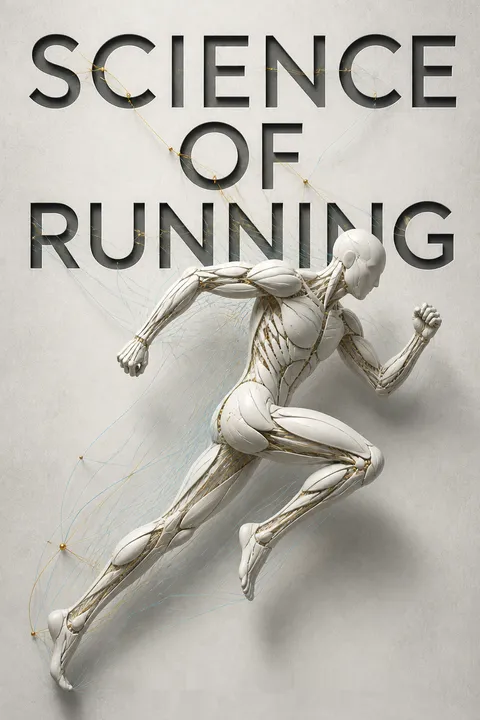
Science of Running receives praise for its comprehensive coverage of running biomechanics, injury prevention, and training techniques. Readers appreciate the detailed anatomical illustrations and scientific approach. The book is considered valuable for both beginners and experienced runners, offering practical advice and exercise recommendations. Some readers find the training plans limited and the technical content challenging. Overall, it's viewed as an informative reference for understanding the physiology of running and improving performance, though its textbook-like format may not appeal to all.
People Also Read






Glossary
Ground reaction force (GRF)
Ground’s force on the bodyThe force the ground applies back to the runner when the foot contacts it. It is equal and opposite to the force the body applies to the ground, and includes vertical, forward-backward, and side-to-side components. The body’s muscles, tendons, and joints absorb, redirect, and use this force during each stride.
Lactate threshold
Limit before lactate rises rapidlyThe highest exercise intensity a runner can sustain before blood lactate begins accumulating rapidly. It reflects the relationship between lactate production and clearance, and is relevant to distance-running capacity. The book describes estimating threshold pace through a hard 30-minute time trial or assessing effort with the rate of perceived exertion.
Rate of perceived exertion (RPE) scale
Self-rating of exercise effortA subjective scale used to rate how difficult exercise feels. The book uses a 0-10 scale, ranging from no effort to maximal effort. RPE can help guide workouts when pace or heart rate is affected by terrain, weather, fatigue, or other conditions, and is most informative when tracked alongside other measures.
Training load
Total stress from trainingThe combined stress placed on the body by training over time. It depends on factors such as frequency, intensity, duration, and activity type. External load can be measured through distance or time, while internal load reflects the body's response, such as heart rate or perceived effort. Tracking both can help identify excessive strain.
Running economy
Oxygen cost at a given speedThe amount of energy, commonly assessed through oxygen use, needed to run at a particular submaximal speed. Better running economy means using less oxygen at that speed. Fitness, biomechanics, footwear, body mass, and environmental conditions can affect it, so changes in pace at a familiar effort can offer a practical clue.
Kinetic chain
Linked body segments in motionA model that treats body segments as connected parts whose movements influence one another. During running, individual motions at joints and body regions combine into larger coordinated actions. The concept helps explain how forces and rotation travel between the lower and upper body rather than being produced by one isolated muscle or joint.
FAQ
What's Science of Running about?
- Focus on Running Science: Science of Running by Chris Napier explores the biomechanics and physiology of running, offering insights into enhancing performance and preventing injuries.
- Comprehensive Training Guide: It provides practical advice on training techniques, injury prevention, and recovery strategies, suitable for runners of all levels.
- Research-Based Insights: The book combines the latest research findings with practical applications, ensuring readers can effectively apply the science to their running routines.
Why should I read Science of Running?
- Enhance Performance: Understanding the mechanics of running can lead to improved performance, with knowledge of biomechanics allowing for better training adjustments.
- Injury Prevention: The book emphasizes strategies to avoid common running injuries, providing actionable advice to mitigate risks.
- Expert Guidance: Authored by a physiotherapist and researcher, it is grounded in scientific evidence, making it a reliable resource for serious runners.
What are the key takeaways of Science of Running?
- Understanding Biomechanics: Proper form and technique significantly impact performance and injury risk, highlighting the importance of biomechanics in running.
- Injury Management: The book outlines common running injuries and their causes, along with strategies for prevention and recovery.
- Training Techniques: It offers various training techniques, including strength exercises and dynamic stretches, to enhance running efficiency and effectiveness.
How does Science of Running address injury prevention?
- Identifies Common Injuries: Details common running injuries, such as patellofemoral pain and Achilles tendinopathy, explaining their causes and risk factors.
- Prevention Strategies: Offers practical strategies for preventing injuries, including strength training and proper warm-up routines.
- Biomechanical Analysis: Emphasizes the role of biomechanics in injury prevention, encouraging runners to assess and improve their running form.
What specific training techniques are recommended in Science of Running?
- Dynamic Stretching: Advocates for dynamic stretching as part of a warm-up routine to prepare the body for running, increasing blood flow and flexibility.
- Strength Training: Emphasizes strength training exercises, such as lunges and step-ups, to build muscle strength for running.
- Running Drills: Includes various running drills, like high-knee and butt-kick drills, to enhance running form and efficiency.
How does Science of Running explain the running cycle?
- Phases of Running: Breaks down the running cycle into key phases: stance and swing, crucial for understanding body movement and impact absorption.
- Ground Reaction Forces: Discusses the significance of ground reaction forces and their effect on running mechanics.
- Energy Storage and Release: Explains how the body stores and releases energy during the running cycle, particularly through tendons and muscles.
What are the common injuries discussed in Science of Running?
- Patellofemoral Pain: Known as "runner's knee," characterized by pain around the kneecap, with causes and prevention strategies discussed.
- Achilles Tendinopathy: Involves pain along the Achilles tendon, common among runners, with insights into management and prevention.
- Medial Tibial Stress Syndrome (MTSS): Also known as shin splints, with detailed discussion on causes and prevention through proper training techniques.
How can I apply the concepts from Science of Running to my training?
- Assess Your Form: Use insights to evaluate your running form and identify areas for improvement, leading to better performance and reduced injury risk.
- Incorporate Strength Training: Implement recommended strength exercises to build muscle resilience, enhancing your ability to handle running demands.
- Follow Injury Prevention Strategies: Apply outlined strategies, such as proper warm-ups and dynamic stretching, to maintain running health.
What role does biomechanics play in running, according to Science of Running?
- Understanding Movement: Biomechanics is essential for understanding body movement during running, helping optimize performance.
- Injury Risk Assessment: Poor biomechanics can increase injury risk; analyzing and improving form can mitigate these risks.
- Performance Enhancement: Small adjustments in biomechanics can lead to significant improvements in running efficiency and speed.
How does Science of Running address training for different levels?
- Beginner to Advanced Plans: Includes training plans for various levels, designed to progressively build endurance and speed while minimizing injury risk.
- Specific Workouts: Details workouts tailored to different race distances, allowing runners to choose plans aligning with their goals.
- Emphasis on Recovery: Incorporates recovery weeks and lighter sessions to prevent overtraining, maintaining long-term performance and health.
What strength exercises are recommended in Science of Running?
- Core Strengthening: Emphasizes core strength for maintaining proper running form and stability, recommending exercises like planks.
- Leg Strength: Highlights exercises such as lunges and deadlifts to build leg strength, crucial for running performance.
- Hip and Knee Focus: Includes exercises targeting the hip and knee to enhance strength and function, aiding in injury prevention.
What role does nutrition play in Science of Running?
- Carbohydrate Loading: Discusses carbohydrate loading before races to maximize glycogen stores, crucial for endurance events.
- Hydration Strategies: Emphasizes proper hydration before and during races, advising to drink according to thirst.
- Post-Workout Nutrition: Highlights the importance of post-workout nutrition for recovery, recommending a mix of carbohydrates and protein.
Download PDF
Download EPUB
.epub digital book format is ideal for reading ebooks on phones, tablets, and e-readers.








