


Plot Summary
A Seat on Spirits
Twelve-year-old Claire Koster would rather study science than hear another Chicago ghost story, and she is already dreading how her father David’s tour business makes her stand out at school. At a bookstore, she sees her best friend, Casley, laughing with Emily, a new classmate, and realizes she has not been included.
That evening, the family’s tour driver, Joshua, calls in sick. Claire’s mother, Julia, explains that David cannot cancel without losing money, while Claire’s brother Sam has hockey games.
Claire reluctantly agrees to help for fifty dollars toward her microscope fund. At the downtown pickup, she tries to stay unnoticed, but David covers the rented bus with a huge glow-in-the-dark logo. The tour is unmistakably his, and Claire is trapped beside it.
Claire’s first crisis is social before it is supernatural. The tour embarrasses her because it makes visible the family identity she wants to keep private, while Casley’s closeness with Emily threatens Claire’s sense of belonging. Her reluctant decision to help is not a conversion to her father’s interests; it is a small act of responsibility shaped by the family’s money worries. The luminous logo makes that tension physical: David wants his work seen, while Claire wants to disappear. The story begins by setting their opposing relationships to visibility, a conflict that later matters when Claire must decide whether a neglected history should remain unseen.
The Boy at Couch Tomb
At the Alley of Death, David recounts the Iroquois Theater fire and the people who jumped from its platforms; Claire finds the site more disturbing than she expected. At Hull-House, she hears a whisper on the empty bus and sees a blur pass a window, but finds no passenger.
The final stop is the Couch Tomb, where David explains that thousands of unrecorded bodies remain beneath Lincoln Park. When Claire boards again, a small boy in an old-fashioned white suit is sitting in the back row, his clothes and hair dripping wet.
He stares at her and silently forms words she cannot understand. After the passengers leave, he has vanished. Claire finds only a damp scrap marked 396. That night, scratching in her wall and a rattling doorknob keep her awake.
The tour turns the city’s history from material for David’s stories into a physical presence Claire cannot comfortably dismiss. The boy’s appearance follows accounts of deaths left unpunished or poorly recorded, but the crucial distinction is that he addresses Claire alone. His wet clothing and the unexplained number are not yet answers; they are evidence without context, the kind that unsettles a scientifically minded child precisely because it resists a neat explanation. The episode also reverses Claire’s usual position in her father’s storytelling. She is no longer a skeptical listener at the edge of the tale. She has become its witness.
The House Starts Scratching
The next day, scraping sounds chase Claire through the alley, and water mysteriously soaks the clothes in her dresser. At school, she glimpses the same white-suited boy after he knocks an orange from her tray.
Casley’s new interest in makeup and Emily makes Claire feel further excluded, and during lunch she lashes out at Emily, then leaves when Casley does not follow. Home alone, Claire hears scratching again as a violent draft scatters papers and breaks a family photograph.
In the bathroom, she pulls back the shower curtain and finds 396 written on the tile. She hides the discovery from her parents, fearing David will turn her experience into tour material. When Sam sees how shaken she is, Claire finally tells her brother about the boy and the strange events.
The haunting intensifies alongside Claire’s fear that friendship is changing without her permission. She misreads Emily’s attention to appearance as proof that Casley is abandoning their shared interests, then turns that insecurity into an unfair attack. At home, the ghost’s disturbances make the ordinary rooms feel unreliable, yet Claire’s concealment is driven as much by embarrassment and mistrust as by fear. She expects her father to exploit the events, so she keeps the evidence to herself until she can no longer bear it alone. The chapter’s emotional hinge is not the writing on the tile, but Claire’s first decision to let another person know she is frightened.
The Number 396
Sam believes Claire after seeing the number on the shower wall, and the siblings begin tracing the boy’s possible origins through the tour stops. Claire refuses to involve David, worried that his enthusiasm for ghosts will worsen the situation.
She and Sam use the scientific method to organize what they know: the child’s old-fashioned knickerbockers suggest the early twentieth century, but Chicago’s many disasters leave too many possibilities. Sam admits he had hidden a failed pre-algebra test in the alley, then confesses it to their parents; Claire offers to help him study.
That night, the ghost rattles Claire’s closet door. She finds no one inside, only wet footprints leading to the closet and a dripping doorknob. The next day, after Casley asks why Claire has been avoiding her, Claire still cannot explain.
The investigation gives Claire a method for facing what frightens her, but it does not magically remove her fear. She translates the haunting into observations, clues, and hypotheses because that is the intellectual language in which she feels most capable. Sam’s disclosure about his failed test creates a parallel: both siblings have been hiding vulnerability, though for different reasons. Claire’s offer to tutor him makes their partnership reciprocal rather than merely protective. Yet she continues to shut out Casley, showing that evidence can be easier to share than shame. The wet tracks outside the closet confirm the ghost’s presence, while Claire’s silence keeps her most important friendship at a distance.
Friends Join the Investigation
After the boy appears in a school bathroom, the lights fail and Claire sees his shoes and face in the mirror. Casley finds her shaken and listens as Claire admits the ghost has followed her home. When the faucets burst on, Claire orders the unseen boy to stop, and the water shuts off.
She apologizes for resenting Casley’s friendship with Emily; Casley reassures her and promises to help. Emily joins them after explaining that her parents divorced, her mother lost her job, and cheerful makeup sessions help her cope.
At Claire’s home, the three girls examine the 396 scrap while Sam joins their research. The ghost sends repeated messages asking where someone is, then floods the upstairs bathroom and ruins David’s papers. A surviving page names the Eastland, directing them toward the ship disaster.
The social and paranormal plots meet when Claire stops treating fear as something she must conceal. Her apology restores trust, while Emily’s account reframes the behaviors Claire had judged from the outside. This is not simply a lesson in being nicer: each girl has been managing uncertainty by controlling what others can see. The ghost’s message about missing people sharpens the mystery, and the Eastland page converts a diffuse haunting into a researchable historical question. Water links the boy’s appearance, the flooded spaces, and the shipwreck, giving the group a concrete line of inquiry. Collaboration begins to replace secrecy as Claire’s main strategy.
A Locker Becomes Evidence
When Claire’s parents return, they find the upstairs dry and David’s research intact, although the children remember spending an hour mopping water. Julia and David think Sam and Claire invented the disaster and ground them.
That night, the siblings discover the shower writing and the ghost’s repeated phone messages have vanished too. Sam suggests the boy may be making his signs visible only to children, but neither can prove it. The next morning, school moves Claire’s locker because of fumigation, and her new number is 396.
Warner Jameson, the boy Claire likes, helps her open it and reveals that Emily is his cousin. Despite their grounded status, Claire and Sam arrange to investigate the Eastland site after school, with Casley and Emily joining them.
This turning point makes credibility itself part of the mystery. Claire cannot persuade her parents because the ghost’s evidence disappears, and the resulting punishment compounds her fear with the injustice of being disbelieved. Sam’s theory that the haunting is selectively visible is plausible but unconfirmed, preserving uncertainty rather than resolving it prematurely. The locker number functions differently from the handwritten clues: it appears in a mundane institution, where coincidence remains possible. Warner’s support also counters Claire’s habitual expectation of ridicule. The children’s decision to travel downtown is therefore both an investigation and an assertion of agency against adult disbelief.
The River Replays 1915
At the Chicago River near LaSalle and Wacker, Claire, Sam, Casley, and Emily reach the site where the Eastland capsized. Claire looks into the water and sees the ghost boy’s face reflected in place of her own. Her friends disappear from view as the river becomes the scene of the 1915 disaster: the overturned ship, passengers struggling in shallow water, rescuers pulling people free, and a diver returning to the wreck.
Claire experiences the panic and confusion before the vision fades and she collapses. When she wakes, she tells her friends she is certain the boy died on the Eastland. Remembering that the victims were numbered during identification, she connects the scrap to a morgue label and searches online for boy 396.
The vision moves the plot from inference to witness. Claire sees not an abstract shipwreck but people making urgent choices amid a disaster that unfolded in minutes. That embodied perspective complicates the detached posture she had relied on as a scientist: observation is still necessary, but it cannot remain emotionally neutral. Her collapse shows that knowing more can hurt before it helps. The connection between the scrap and morgue numbering emerges from practical reasoning, not supernatural revelation alone. The group’s method combines the ghost’s testimony with archival evidence, making the investigation a joint act of listening and verification.
Boy Number 396
Claire’s search finds a 1915 Chicago Tribune report about an unidentified child at the morgue, dressed in white and marked number 396. Sam locates another account and a photograph, and Claire recognizes the boy who has been haunting her: Willie Novotny, age seven.
His parents and other family members died in the disaster, leaving no one to identify him for days. The group understands the boy’s repeated question about where they are: he has been searching for his family.
Claire realizes the broken family photograph and the ghost’s insistence on missing people were clues to his grief. The discovery gives Willie a name and explains the number, but Claire still feels the haunting is unfinished. She and Sam decide to seek more information at the Chicago History Museum.
The newspaper archive supplies the factual key, but its effect is moral as well as investigative. Willie’s number records an administrative effort to keep bodies distinguishable; at the same time, it risks reducing a particular child to a case. Claire and her friends restore his name, family ties, and question to the story. Their reasoning also revises Claire’s understanding of the clues she had misread: the family photograph, water, and repeated search all pointed beyond her own anxieties. The revelation does not end the haunting, because being identified is not the same as being remembered. That difference propels the next stage.
Chicago Has Forgotten
Claire and Sam visit the Chicago History Museum, where a guide explains that the Eastland disaster receives little public attention despite killing more passengers than the Titanic. The exhibit is nearly empty, and it contains no display about Willie.
A researcher recognizes him as the cabinetmaker’s son but cannot offer more material in the exhibit. Claire understands that Willie was forgotten not only at the morgue but in the city’s later telling of the disaster. At home, she tells David that his next book should include Willie and the Eastland.
David reveals that he has already researched Willie and was considering an Eastland book, but had not chosen a family to center. He invites Claire to help, apologizes for making her distrust him, and ends her grounding.
The museum functions as a mirror of the morgue: both spaces hold evidence, but evidence alone does not ensure attention. The sparsely visited exhibit gives Claire a new interpretation of the haunting, linking Willie’s personal abandonment to a civic pattern of forgetting. Her appeal to David is consequential because she no longer sees his work only as an invasion of her privacy. He, in turn, recognizes that his passion can crowd out his daughter’s trust. Their collaboration reframes storytelling as an ethical responsibility: the goal is not to sensationalize a ghost, but to restore the people behind a disaster to public memory.
The Novotny Family Stone
One week after Willie first appeared, Claire and Sam go to Bohemian National Cemetery to say goodbye. They find an Eastland memorial and a nearby stone marked Rodina Novotny. Claire discovers that rodina means family in Czech, so the marker commemorates the Novotnys together even though it does not name each person separately.
As she stands beside it, invisible fingers squeeze her hand, and the oppressive feeling of something missing lifts. Claire understands that Willie is no longer searching for his family. The siblings leave the cemetery knowing the boy is at peace, and Claire returns to her family without the fear that has kept her sleeping in a closet. David’s planned book and her own research will carry Willie’s story forward.
The resolution answers the ghost’s question through a place and a relationship, not through a ritual or an exorcism. The family marker is linguistically unfamiliar to Claire at first, but learning its meaning lets her recognize the collective identity that the disaster and the records had obscured. Willie’s final touch offers confirmation without turning him into a spectacle. Claire’s goodbye also completes her movement from avoidance to chosen engagement: she can enter a cemetery, interpret its evidence, and leave without pretending not to be afraid. The peace she gains is connected to the work of remembering, not to mastery over the supernatural.
Epilogue
A month later, Claire volunteers at the Chicago History Museum and makes sure visitors hear about Willie and the Eastland. Sam’s pre-algebra grades have improved with her help, and Casley and Emily remain close friends. Warner joins the group at Graceland Cemetery, where Claire is showing him the grave of Dexter Graves for their history project.
She tells her friends the legend attached to his statue, then takes Warner’s hand as they prepare to look at it together. Claire still does not love ghost stories, but she no longer lets fear dictate where she goes or what she learns.
The epilogue measures change through ordinary actions: Claire volunteers, tutors Sam, invites Warner to join her, and leads friends through a cemetery. These are not proofs that she has become fearless. Instead, she can act while fear remains possible, and she can share knowledge without using it to hide from other people. Her work at the museum extends Willie’s resolution beyond the private cemetery goodbye, turning remembrance into a repeated public practice. The Dexter Graves visit also echoes the opening conflict: Claire once resented her father’s ghostly interests, but now she can approach them on her own terms. The group’s handholding makes courage collective rather than solitary.
Analysis
Scritch Scratch makes historical research the practical language through which a child learns to respond to fear. Claire begins with a strict division: science is reliable, ghost stories are embarrassing, and asking for help risks losing control. The haunting breaks that arrangement, but the novel does not ask her to abandon reason. Instead, she uses observation, comparison, and archival research to identify what the supernatural signs mean. Her method becomes stronger when shared with Sam, Casley, and Emily, whose different experiences contribute evidence she could not gather alone.
The book’s central mystery also gives form to two kinds of exclusion. Claire fears that Casley is moving on without her, while Willie appears to be searching for a family lost in a disaster and a city that has largely forgotten him. Claire initially assumes the ghost’s sense of absence belongs to her own social pain. Understanding his history requires her to recognize that another person’s grief is not merely a mirror for her feelings. That recognition lets her move from resentment toward Emily to empathy, and from fear of Willie to care for his story.
The novel treats public memory as more than the storage of facts. A museum can possess artifacts yet leave a history nearly unattended; a newspaper can record a child by number before restoring his name. Claire’s work with her father responds to that gap by joining individual remembrance to collective storytelling. The ending does not claim that fear disappears or that history can be repaired completely. It shows Claire choosing what to do with what she has learned: tell the story, accept help, and enter places she once avoided. Courage here is neither bravado nor certainty. It is the willingness to look closely, revise a mistaken judgment, and share the burden of remembering.
Review Summary
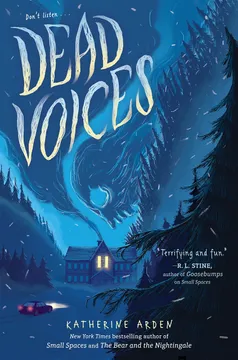
Scritch Scratch is a spooky middle-grade novel that blends Chicago history with a ghostly mystery. Readers praise its creepy atmosphere, well-developed characters, and engaging plot. The story follows Claire, a science-loving girl who encounters a ghost on her father's tour bus. Many reviewers appreciate the book's balance of scares and emotional depth, as well as its exploration of friendship and family dynamics. While some found certain aspects predictable, most agree it's an excellent choice for young readers seeking a thrilling yet heartwarming ghost story.
People Also Read



Characters
Claire Koster
The skeptical investigatorClaire is a twelve-year-old science enthusiast who trusts evidence, order, and careful observation more than her father’s ghost stories. She counts when fear threatens to overwhelm her, a private strategy she considers embarrassing. Her concern with fitting in at school makes her sensitive to changes in her friendships, and she initially interprets Casley and Emily’s closeness as rejection. Claire is also curious and persistent: when events defy her explanations, she gathers clues and tests possibilities rather than simply accepting someone else’s account. Her central tension is between wanting to appear unaffected and needing help. She values fairness, even when it takes her time to recognize that her first judgments about people may be wrong.
Sam Koster
Claire’s candid allySam is Claire’s older brother, a hockey player with a teasing manner and a sharper sense of her feelings than she expects. He enjoys provoking her, but he also notices when she is frightened or withdrawing. His willingness to help investigate the ghost gives Claire an ally inside the family, while his own struggles with pre-algebra reveal that his confidence can conceal worry about failure. Sam is practical without being dismissive, and he can challenge Claire when she is keeping too much to herself. Their relationship moves between sibling rivalry and real cooperation, with each discovering that support works best when it is returned.
Casley
Claire’s longtime best friendCasley has been Claire’s closest friend since elementary school. She is sociable, expressive, and increasingly interested in clothes and makeup, changes that Claire initially mistakes for a rejection of their shared past. Casley knows what it feels like to face family upheaval, and that experience makes her attentive to friends who are struggling, even when they will not explain why. She is willing to confront Claire about being shut out, but she does not abandon her when Claire finally admits her fear. Casley’s openness and loyalty help make friendship a place where difficult truths can be spoken, rather than a promise that nothing will ever change.
Emily Craig
The puzzle-solving newcomerEmily is a new student who appears polished and cheerful, with a gift for makeup and an interest in puzzles. Claire initially sees those visible qualities as evidence that Emily is shallow and is taking Casley away from her. In reality, Emily is coping with her parents’ divorce, her mother’s unemployment, and the loss of their former home. Her upbeat energy is partly a way to keep hardship from swallowing every moment. Emily is perceptive, quick to spot useful clues, and willing to help even when the supernatural problem sounds implausible. Her guardedness is not coldness; she chooses carefully when to share painful parts of her life.
David Koster
The ghost-story fatherDavid is Claire and Sam’s father, a former history teacher who writes about Chicago’s haunted past and runs the Spirits of Chicago tour. His enthusiasm can make him seem oblivious to Claire’s embarrassment and worried that he values ghost stories more than family privacy. He is also a committed historian who cares about events and people that public memory has neglected. David’s work grows from genuine curiosity and a desire to preserve stories, though he does not always recognize how his interests affect his children. His relationship with Claire is shaped by their different responses to the supernatural and by the trust required to share his passion without imposing it.
Julia Koster
The observant motherJulia is Claire and Sam’s mother, an energetic baker building an online business while helping keep the family afloat. She is affectionate and practical, often using a small lesson or a meal to draw her children toward a wider perspective. Her attention to others’ feelings is an important counterpoint to Claire’s tendency to retreat into private analysis. Julia does not always see the full extent of her daughter’s fear, but she wants the family to communicate and support one another. Her belief that overlooked stories matter gives Claire a way to connect historical research with care for individual lives.
Willie Novotny
The silent child spiritWillie first reaches Claire as a pale, wet boy dressed in old-fashioned clothes, appearing when she is helping on her father’s Chicago ghost tour. He cannot make himself understood at first, and his presence brings unsettling changes to Claire’s home and school life. He is frightening because his distress has no clear explanation, not because Claire knows him to be cruel. The mystery surrounding him draws on the gap between a person’s lived experience and the scraps of evidence left behind. Willie’s connection to the city’s past challenges Claire to look beyond ghost legends and ask whose individual stories have been overlooked.
Warner Jameson
Claire’s kindhearted crushWarner is a friendly classmate admired by Claire for his intelligence, kindness, and ease with other students. He does not join in the gossip surrounding Claire’s family, which is one reason she has liked him from afar. His connection to Emily makes him part of the social world Claire is learning to navigate, and his small acts of consideration give her room to be herself around him. Warner is neither a rescuer nor a mystery to solve; he offers Claire an ordinary relationship built on mutual interest, humor, and shared curiosity.
Joshua
The absent tour driverJoshua normally drives David’s tour bus and handles the practical work that keeps each stop on schedule. When illness prevents him from working, Claire is asked to fill in, setting the story in motion. His role shows that the tour is a real small business with logistical and financial pressures, not merely David’s eccentric hobby.
Ms. Mancini
Claire’s kind science teacherMs. Mancini teaches Claire’s science class and responds gently when Claire is exhausted. Her kindness makes her one of the adults at school whom Claire trusts, even though Claire has not yet learned how to tell her what is happening.
Plot Devices
The number 396
A paper trail to identityThe damp scrap marked 396 is the first concrete object the ghost leaves behind. Its number appears again on Claire’s shower wall and later on her reassigned school locker, keeping the mystery present even when the ghost disappears. Claire and her friends first consider whether it might be a death toll or another historical reference. Research into the Eastland disaster reveals that 396 was the morgue label attached to an unidentified child. The clue turns a frightening number into a record of a person whose name was temporarily lost.
The scientific method
A framework for courageClaire applies the steps of scientific inquiry to a situation she cannot easily explain. She records observations, compares the boy’s clothes with historical images, connects his appearances to locations and disasters, and tests her Eastland hypothesis at the river. This method does not erase uncertainty or make Claire invulnerable. Instead, it gives her a way to act while frightened and lets her combine her own observations with Sam, Casley, and Emily’s ideas. The device also makes the investigation feel true to Claire’s identity as a young scientist.
Water and wetness
A physical clue to the pastThe boy appears soaked, Claire’s clothes become wet, water pours from school faucets, and the Koster home seems to flood. These recurring manifestations make water both a source of danger and the most consistent clue to the ghost’s history. The water leads Claire and her friends toward the SS Eastland, where the ghost’s experience becomes visible in a vision of the disaster. Its repetition gives the haunting a pattern that the group can investigate rather than treating each disturbance as unrelated.
Chicago’s forgotten records
History hidden in plain sightTour stories, old newspaper articles, the museum exhibit, and cemetery inscriptions gradually reveal the distance between a disaster and its public memory. Claire’s investigation depends on records that preserve a number, a photograph, and fragments of a family story, even when the museum gives them little attention. The device turns research into a moral act: the characters must do more than locate facts; they must decide whose story deserves to be told. The historical setting also grounds the haunting in specific Chicago places and events.
Download PDF
Download EPUB
.epub digital book format is ideal for reading ebooks on phones, tablets, and e-readers.








