

Plot Summary
The Figure in Blue
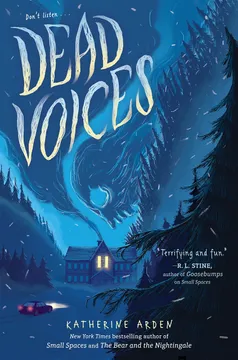
Two months after surviving a scarecrow-filled world, Ollie Adler, Coco Zintner, and Brian Battersby set out for a ski holiday with Ollie’s father and Coco’s mother. A prize has brought them to Mount Hemlock, a new resort they can barely afford to visit. On the stormbound mountain road, Coco wakes from a nightmare and spots a person in a blue ski jacket, one bare hand raised.
The car skids to a stop, but the figure and its footprints are gone. At Hemlock Lodge, the Wilsons welcome their only guests into a dark lobby crowded with stuffed animals. Coco glimpses another reaching shadow in the hallway, but cannot persuade the others that anyone is there.
The trip begins with a familiar conflict between Coco’s caution and her friends’ appetite for adventure, but the vanished figure gives her fear a physical object. Her companions’ doubt leaves her uncertain not only about what she saw, but about whether she can trust her own perception. The lodge extends that uncertainty: its stuffed animals resemble the scarecrows the children escaped, while the storm makes turning back impossible. The setting thus converts a holiday into a pressure chamber before the supernatural threat is fully visible.
The Orphanage Beneath
The first night brings Coco and Ollie dreams of a frostbitten girl searching for her bones, and Ollie wakes with the image of a strict woman in black. In the morning, the wind has stopped the ski lifts, and the power is failing. Don Voland, a journalist who investigates ghosts, arrives and explains that the resort once housed an orphanage.
Local stories name a wandering child, Gretel, and her punishing teacher, Mother Hemlock, whose spirits supposedly haunt the building. Ollie presses Don for details, while Coco recognizes pieces of her dream in his account. She is also drawn to his knowledge of ghost communication because she hopes to reach her dead mother through her mother’s old watch.
The legend gives the children’s private nightmares a shared vocabulary, but it does not yet tell them which details are trustworthy. Ollie’s interest in Don is emotional before it is investigative: she wants a method for speaking with her mother, not a ghost story for its own sake. That longing leaves her vulnerable to anyone who claims expertise. Coco, meanwhile, notices connections but holds back, her skepticism shaped by the adults’ disbelief and her friends’ earlier dismissal of the figure on the road.
The Hall Starts Answering
When Brian and Coco investigate a rattling utility closet, a frightened child begs to be released from inside, yet the closet contains only cleaning supplies and a crude smiling face carved into its wall. Ollie’s watch suddenly beeps and flashes a warning before she can read more.
The three friends and Don then see a tall woman in black at the far end of the corridor; she points at them and disappears. Ollie recognizes her from her nightmare and insists they retreat. Don continues alone. He returns shaken, his arm marked by frost, and admits that Mother Hemlock wants to keep them there. The lodge grows colder as its power and heat fail, while the snow seals the roads outside.
The children’s past experience has taught them that an apparently helpless voice can be bait, yet the closet still provokes Coco’s instinct to help. The episode tests whether compassion can coexist with caution. Ollie’s warning watch offers a counterweight, but its message is incomplete, making her rely on judgment rather than supernatural certainty. Don’s injury confirms that the danger is not merely a frightened child’s imagination, while the failing heat turns an unseen haunting into a bodily threat.
The Mirror Holds On
Searching upstairs for blankets, the friends and Don walk a corridor that seems to lengthen behind them. Coco notices wet footprints despite nobody having been outside. In a mirror, they count five reflections, and the extra figure wears the blue ski jacket Coco saw on the road. Its icy hand grips Ollie and begins pulling her toward the glass.
Don smashes the mirror, freeing her, and the group finds their room directly beside them. Later, Coco searches the lodge’s history and finds the report of Gabriel Bouvier, a teenage skier who vanished on Mount Hemlock in a blue jacket. The adults cannot repair the generators or heating, so everyone prepares to sleep downstairs. Don proposes contacting a ghost after dark.
The mirror makes the lodge’s distortions legible: the extra reflection and impossible corridor expose a threat that ordinary sight cannot locate. Don’s decision to break the glass saves Ollie, but it also establishes a practical rule, that familiar objects can become entrances or restraints. Coco’s discovery links the road figure to a documented disappearance, grounding the haunting in a human absence. Meanwhile, the adults’ unsuccessful repairs deepen the children’s isolation, even though the adults remain physically present and protective.
The Voice Behind Glass
That night, Don sets up a Ouija board and guides Ollie as she tries to contact her mother. The planchette answers that a ghost is keeping them in the lodge, then directs Ollie toward a mirror. A woman appears in its surface and seems to call to her, but the black-dressed figure from Ollie’s nightmares reaches through and drags her into the ruined lodge on the other side.
Don reveals his true identity: he is Seth, the smiling man who once trapped the children in the world behind the mist. He has taken Ollie’s watch and gives her until dawn to find a way back. If Brian and Coco help her and she fails, all three will be trapped; if they abandon her, he promises they will forget her.
Seth weaponizes Ollie’s grief by making a false reunion feel more credible than a warning. Her mother’s watch and the Ouija board have offered genuine help before, so trust in them is not foolish; the danger lies in treating a familiar signal as proof of the person behind it. Seth’s wager turns friendship into his chosen instrument of control, forcing the children to weigh one another’s safety against the possibility of rescue.
Coco Plays for Time
Coco refuses Seth’s offer to abandon Ollie and challenges him to chess for the stolen watch. Brian stakes his own freedom if Coco loses. She keeps her nerve through a hard endgame and checkmates Seth, who hands over the watch. Coco and Brian flee with the Ouija board, but animated animal trophies drive them upstairs.
Brian vanishes among the lodge’s false doors, leaving Coco alone with voices that imitate him from every closet. On the other side of the mirror, Mother Hemlock drags Ollie through the ruined dining room. Ollie escapes by using matches and a broken plate to misdirect the dead bear, then reaches the basement, where she meets the frostbitten girl from her dreams, Gretel.
Coco’s chess skill is not simply a clever trick. It lets her meet Seth on ground he considers his own and make a plan while fear is trying to narrow her attention. Brian’s wager shows his loyalty, but his disappearance removes the friend who usually supplies physical confidence. Ollie’s escape is less elegant and more immediate: she survives by improvising with whatever her hands can reach. The parallel actions reveal two kinds of courage, strategic patience and urgent, imperfect persistence.
The Basement’s False Guide
Guided by the watch, Coco finds a hidden way into the basement and uses the Ouija board to contact Ollie across the mirror. A ghost skier named Gabriel helps Ollie communicate that Gretel’s bones, reportedly hidden in a second-floor closet, can open a passage through the bunk-room mirror.
Seth interrupts the exchange and steals the board. Ollie, Gretel, and Gabriel flee through a concealed stairway, but in the orphanage dormitory Seth exposes Gabriel’s bargain: he has been steering them toward a trap in exchange for release.
Mother Hemlock puts Ollie and Gretel to sleep among the other frozen girls. On Coco’s side, the watch leads her to the bunk room, where she sees Ollie trapped and realizes the bones may be another distraction. The oil lamp appears on both sides of the mirror.
The communication across the mirror gives the friends a fragile way to coordinate, but the message arrives through an unreliable guide and under severe time pressure. Coco’s crucial shift is from asking which clue is true to asking who benefits if she follows it. That is a more mature form of skepticism than simply disbelieving everything. The shared lamp offers a concrete alternative because it exists in both spaces, turning Coco’s memory of earlier crossings into a working hypothesis.
Fire Opens the Mirror
Coco tests the watch and learns that Ollie can wake only if Coco reaches her side and calls her by name. She pretends to give up, drawing Brian back from the maze of false rooms, then lets Seth open the mirror so she can cross. Mother Hemlock waits beside Ollie’s frozen bed. Coco throws a blanket over the ghost, finds the shared oil lamp, and wakes Ollie with her voice.
Brian keeps fire burning on the real side while Coco ignites the lamp and curtains on the ghost side. The two fires connect across the mirror. Coco and Ollie run through the opening with Brian, who now wears Ollie’s recovered watch. Seth cannot stop them; the dawn and the fire alarm break the night’s siege.
Coco wins by combining inference with performance. She acts defeated because Seth expects surrender to mean helplessness, then uses his confidence to create the opening she needs. Calling Ollie by name is both a practical key and an intimate act: Coco refuses to let the frozen, anonymous bed erase her friend. Fire is dangerous, not a clean solution, and the children accept that risk because Seth has made safety itself a trap.
Waffles After Hemlock
The adults wake when the alarm sounds and help extinguish the fire, unaware of the mirror-world battle. Ollie cries in her father’s arms, while Coco and Brian explain their split lips as injuries from the darkened lodge. The group leaves as soon as plows clear the road and returns to the Egg, where Ollie asks for waffles and the exhausted children sleep.
Later, they piece together Coco’s reasoning: objects present on both sides of the mirror can open a passage, and the fire helped hold it open. Ollie hopes Gretel and the other trapped children were freed. Her mother’s watch again displays its final message of love. The friends plan a local ski trip, knowing Seth may return but trusting one another more than before.
The return to ordinary life does not erase what happened; it gives the children a safe place to interpret it. The adults’ confusion preserves the gap between their experience and the children’s, while Roger’s embrace lets Ollie accept comfort without mistaking it for a replacement for her mother. Coco’s explanation turns terror into shared knowledge, and the watch’s restored message reconnects Ollie with a bond that can endure without bringing the dead back.
Analysis
Dead Voices makes the children’s ability to perceive danger inseparable from the question of whom to trust. The adults are present, loving, and resourceful, yet they cannot see the supernatural threat. That gap leaves Ollie, Coco, and Brian to rely on one another while carrying knowledge they cannot easily explain. Their earlier experience has made them a team, but not a perfectly harmonious one: Ollie pursues contact with her mother, Brian pushes toward direct action, and Coco searches for patterns. Seth exploits these differences by making each child face a private version of fear.
The novel’s strongest psychological conflict centers on grief as both attachment and vulnerability. Ollie’s watch preserves a meaningful bond with her mother, but her need to hear from that mother makes a false voice especially persuasive. The story does not resolve grief by replacing the lost parent or denying the child’s longing. Instead, Ollie survives through the living relationships around her, especially Coco’s refusal to leave her behind. Coco’s ingenuity matters because it joins emotional loyalty to careful inference. She does not simply believe or disbelieve the supernatural clues; she asks what each clue explains and who benefits from it.
The lodge’s mirrors, closets, and corridors give shape to that problem of judgment. A reflection can show what ordinary sight misses, but it can also lure a child toward a convincing falsehood. The children escape not by mastering every rule of the haunted world, but by comparing observations, remembering earlier crossings, and revising their assumptions. Even the final fire is a risky experiment rather than a guaranteed victory. Their success rests on shared attention: each child contributes a different strength, and none can solve the danger alone. Returning home restores warmth, not innocence. The watch, the friends’ agreement to face future danger together, and Ollie’s renewed bond with her mother’s memory are the quieter forms of security the night leaves behind.
Review Summary
Dead Voices is the second book in Katherine Arden's Small Spaces series, receiving an overall rating of 4.07/5. Most reviewers praise its atmospheric winter setting, creepy ghost story elements, and strong character development, particularly Coco's expanded role. Many found it comparably enjoyable to its predecessor, though opinions are divided on whether it surpasses or falls short of Small Spaces. Readers consistently highlight Arden's masterful atmospheric writing, while some felt the climax was rushed or the story less frightening than the first installment.
People Also Read
Characters
Olivia Adler
Restless, grieving daredevilOllie is a bright, impulsive sixth grader who would rather climb, race, or investigate than wait safely on the sidelines. Her mother’s death has left her fiercely attached to the memories and objects that keep that relationship present, especially her mother’s old watch. Ollie dislikes being treated as fragile and often conceals distress behind action. She is loyal to Coco and Brian, though fear and grief can make her stubborn about deciding what help she needs. Her adventurousness makes her capable in danger, but also vulnerable to anyone who can turn her longing into a promise.
Coco Zintner
Small, strategic survivorCoco is observant, cautious, and often underestimated because of her small stature and youthful appearance. She loves chess, history, and concrete information, habits that give her a way to organize fear into choices. She worries about disappointing her friends and sometimes hides what she has seen when she expects disbelief. Her closeness to Ollie is sisterly, but Ollie’s bond with her dead mother can leave Coco unsure where she belongs. Coco’s strength is not fearlessness. It is her ability to keep thinking while afraid, then act on a plan even when no one can guarantee it will work.
Brian Battersby
Watchful, loyal teammateBrian is a hockey player, reader, and reliable friend whose teasing can obscure how closely he watches the people around him. He notices emotional shifts in Ollie and Coco and tries to protect them, often through action rather than explanation. His confidence in physical challenges does not make him careless about danger; he is quick to recognize when a situation calls for teamwork. Brian’s loyalty is practical and generous, though his impulse to rush in can put him at risk. His friends matter more to him than winning an argument or appearing brave.
Roger Adler
Ollie’s devoted fatherRoger is Ollie’s warm, energetic father, a gifted cook who uses food, jokes, and plans to keep people comfortable. He is brave in ordinary crises and sometimes too optimistic about what can be managed. Since his wife’s death, he has continued caring for Ollie through practical routines, even as both of them adjust to loss. His easy affection for Coco and her mother hints at a possible new shape for the family, a change Ollie notices before she knows how she feels about it.
Zelda Zintner
Coco’s careful protectorZelda is Coco’s journalist mother, a cautious and competent adult who takes responsibility seriously. She knows enough about generators to help investigate the lodge’s failures, and she tries to reassure Coco when the storm leaves the guests stranded. Her affection is direct, though she does not automatically accept the children’s supernatural explanations. Zelda’s groundedness gives Coco security, even when that same skepticism makes it hard for Coco to share what she has seen.
Don Voland
Curious ghost journalistDon arrives as a journalist specializing in hauntings, confident enough to tell the lodge’s history over breakfast and eager to investigate its strange events. His curiosity draws the children into the mystery, especially Ollie, who hopes his knowledge can help her contact her mother. Don presents himself as experienced with ghosts, but his enthusiasm can make him seem less careful about the risks facing the children. His polished manner and unusual attentiveness leave room for doubt about how much he knows.
Sam Wilson
Lodge-owning handymanSam co-owns Hemlock Lodge with Sue and greets the stormbound guests with generous hospitality. He is proud of the stuffed animals decorating the lodge and tries to keep the resort functioning despite its failing power and heat. His practical confidence is tested by mechanical problems he cannot explain. Sam is a capable host, but the old building and the storm quickly exceed what he can repair alone.
Sue Wilson
Stranded lodge hostSue co-owns the lodge and works hard to make its first guests welcome, even as the storm disrupts the resort before it can properly open. She is brisk, friendly, and attentive to the practical needs of the stranded group. The unexpected ghost stories unsettle her, and she prefers ordinary explanations for the building’s problems. Her efforts to keep the lodge hospitable continue even as the conditions become increasingly difficult.
Gretel
Lost child of legendGretel is the child at the center of Hemlock Lodge’s old orphanage legend, remembered as a restless girl who wandered when she was meant to be asleep. In the children’s dreams, she appears cold, frightened, and desperate to find her way home. Her warnings are difficult to understand, and her long entanglement with the lodge has left her confused about what is real. Gretel’s fear gives the haunting a child’s perspective rather than the adults’ distant folklore.
Mother Hemlock
Orphanage’s strict teacherMother Hemlock is the stern teacher from the lodge’s orphanage stories, associated with dark hallways, locked rooms, and punishment for children who disobey. Her legend persists because it describes a particular kind of authority: one that calls control protection and treats curiosity as misconduct. She appears in the children’s nightmares as a severe figure whose rules are difficult to escape. Her presence connects the lodge’s haunted past to its threatening present.
Gabriel Bouvier
Missing young skierGabriel is a teenage skier whose disappearance on Mount Hemlock became the subject of local news reports. Coco finds his story while searching for information about the lodge, and the blue jacket in the report recalls the figure she saw on the road. His absence gives the mountain a second history of loss, separate from the orphanage legend.
Seth
The smiling manSeth is a supernatural adversary who turns people’s desires into bargains and treats danger as a game of wit. He is theatrical, patient, and skilled at presenting manipulation as a fair choice. His interest in Ollie and her friends arises from their earlier resistance to him, while his confidence makes him underestimate the forms intelligence can take. Seth’s games depend on separating people and making them doubt their own judgments.
Plot Devices
Ollie’s mother’s watch
A signal through griefOllie’s cracked watch once belonged to her dead mother and carries messages that help the children recognize danger. At Hemlock Lodge, its warnings become intermittent, and Seth takes it to weaken Ollie’s ability to act. Coco recovers it through a chess match and later uses its beeps to test ideas and navigate the lodge. The watch makes grief materially present without making it a substitute for Ollie’s mother. Its final message restores a connection based on memory rather than rescue.
The lodge mirrors
A door between worldsMirrors distort the lodge’s corridors and expose figures that cannot be seen directly. One traps Ollie’s hand until Don smashes it; another becomes the boundary between the children’s worlds. Coco eventually reasons that an object present on both sides can help create a passage. The mirror’s mechanics reward observation, but its reflective surface is also a psychological trap: it makes a false image seem close enough to trust.
The Ouija board
A fragile message channelDon uses the board to contact the dead, and its moving planchette appears to answer Ollie’s questions about the lodge. Later, Coco and Ollie use it to communicate across the mirror, while the children test its claims against what they know. Because its messages can mislead as well as help, the board makes discernment part of the danger. Its presence on both sides of the mirror also offers a possible link between worlds.
Chess
A contest of attentionCoco challenges Seth to chess because he has dismissed her as an easy opponent. The game gives her a way to win Ollie’s watch and demonstrates how she thinks under pressure: she watches the board, conceals her intentions, and commits to a difficult endgame. Later, the idea of a feint helps Coco understand that Seth’s clues about Gretel’s bones may be designed to distract her. Chess turns Coco’s private talent into a practical tool for survival.
Small Spaces Series

About the Author

Download PDF
Download EPUB
.epub digital book format is ideal for reading ebooks on phones, tablets, and e-readers.








