

Plot Summary
Prologue
A graduating girl writes in her diary about leaving her troubled home with her boyfriend, though neither of them knows what their future will be. Her mother drinks, her father is away, and she has spent years caring for her twelve-year-old brother.
She plans a private graduation party while her parents are gone, hoping candles and friends will make the double-wide feel like a place of her own. The entry ends with excitement and uncertainty, a small celebration poised beside a choice that will shape the next twenty years.
The diary gives the novel a concealed origin before the present-day mystery has a name. Its writer is not yet a villain or a victim, but a young person trying to imagine escape without understanding what escape will cost. The absent parents and the brother left in her care establish a moral pressure the girl cannot yet bear. Her party plan also introduces candles as an ordinary detail with dangerous potential. Because the entry is hopeful rather than ominous, the later consequences emerge not from malice but from youthful panic and a desire to begin again.
The Unclaimed Steamer Trunk
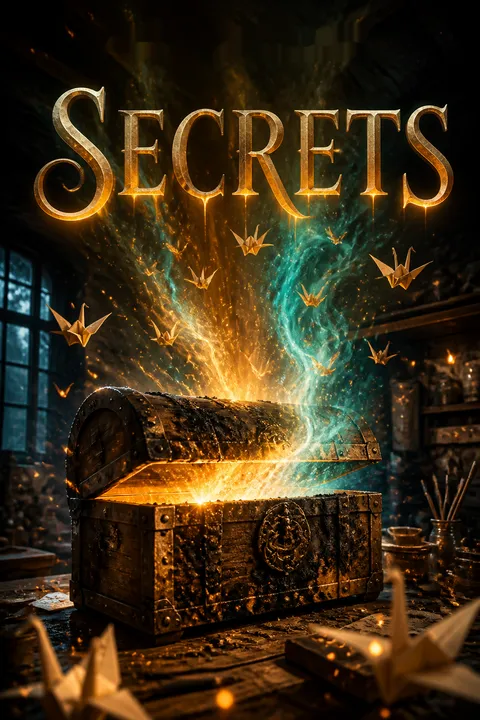
At the Stillwell Art Center in North Carolina, antique restorer Cullen Bodman receives a battered steamer trunk with no return address. The unsigned note asks him to repair it, preserve anything inside, and hold the contents for collection; a thousand-dollar money order makes the request harder to dismiss.
The leather smells of smoke, and the crate carries no clue to its sender. Cullen's sister Luna, who runs the adjoining café and reads impressions from objects, calls the delivery unsettling.
Their friends Ellie Stillwell and jewelry artist Chi-Chi join a discussion after the center closes. Cullen agrees not to rush the restoration, and the group decides to open the trunk together, turning a workshop commission into a shared investigation.
The trunk functions first as a breach in the ordinary safeguards of work: Cullen has been paid, but cannot identify the client or verify what he is being asked to protect. His professional instinct is to restore the object without making assumptions, while Luna reads the missing information itself as a warning. That difference creates the story's investigative partnership. Ellie and Chi-Chi's presence makes the mystery communal before anyone knows its human stakes. The deposit is both practical and ethically ambiguous: it gives Cullen a reason to act, but not enough certainty to make the action safe.
A Pregnancy Reopens Flight
Thirty-eight-year-old Tori leaves a doctor's office shaken by an unplanned pregnancy. Her adult son, Brendon, has joined the Army's cyber program, and the quiet left by his departure exposes how lonely her marriage has become. At eighteen, Tori ran away with her boyfriend Kyle from a chaotic home where she had cared for her younger brother while their mother drank and their father was often gone.
Over the years, Kyle's controlling habits and moods have narrowed her life, while Tori learned to avoid conflict rather than name what she needed. At a large grocery store, she overhears women mention a psychic at the Stillwell Art Center. She decides to seek Luna, hoping an outside perspective will help her choose what comes next.
Tori's crisis is not simply whether she wants another child. Pregnancy makes the cost of her habitual passivity immediate: a new person would enter the same household pattern she has endured. Her history of parentification helps explain why she can competently organize a home and care for others but struggles to imagine a future on her own terms. Kyle's control is initially difficult for her to name because it has been normalized as routine. The art center becomes a first experiment in agency. Tori chooses a destination for herself before she has a solution, and that modest decision begins to loosen the old pattern.
Carnival Tokens and a Boy
With Ellie, Chi-Chi, and Cullen watching, Cullen carefully releases the trunk's jammed lock. Inside, beneath a blanket, they find a locked diary and a wooden box holding carnival tickets, a flyer, imitation ride tokens, and a dried flower. Luna touches the letter, the trunk, and its contents, then draws flames and a boy; contact with the trunk brings brief images of a swing and a fairground.
She senses terror and abandonment, but cannot tell whose memories she has touched. When U.S. Marshal Christopher Gaines joins them for dinner, Luna argues that the sender's concern for the contents suggests a person is being sought. Gaines declines to treat it as a case without evidence of a crime, but agrees to examine what the friends uncover.
The keepsakes transform the trunk from a restoration job into a problem of interpretation. Their smallness matters: tickets and tokens have little market value, yet they preserve a childhood in a form that survived the fire. Luna's impressions offer emotional information, not a reliable chronology, so the group must combine intuition with material evidence. Gaines supplies an institutional boundary by refusing to use official resources on a hunch. His caution does not discredit Luna; it forces the investigation to earn its claims. The scene establishes two complementary ways of knowing, one attentive to felt traces, the other requiring verifiable links.
The Sketches Match
At the center, Tori buys a hand-blown glass wishing ball and learns to fold an origami crane before finally meeting Luna. In a brief reading, Luna senses Tori's pregnancy, her Army-bound son, and the distance in her marriage. Luna begins to sketch without looking; the page shows flames and three figures, echoing the drawing she made from the trunk.
A delivery interrupts them before Tori can explain her past, but she plans to return. Later, food vendor Rita tells Luna about a childhood best friend who disappeared with her boyfriend twenty years earlier after an accident. As Rita describes the girl's family and younger brother, Luna sees that her drawing from Tori's reading may connect to the old trunk.
The parallel drawings create a link without yet proving one. Luna's practice is most useful here when it prompts attention, not when it claims certainty: a repeated image gives her a question to investigate, while Tori's limited first meeting leaves the central facts undisclosed. The glass ball and crane matter for a different reason. Tori spends money on something beautiful and learns a new skill, experiences that counter the domestic rule that her choices must be justified to someone else. Rita's memory introduces a second kind of absence, preserved through ordinary loyalty rather than official records. The plot begins to braid private longing with physical evidence.
Nine O'Clock at Ringo's
After telling her employer, George Layton, about the pregnancy and her unhappiness, Tori researches divorce law and asks him how to approach Kyle. George urges a direct conversation before she makes a final decision. A strange gray-haired woman at a diner then directs Tori to Ringo's at nine on Thursday.
Tori arrives hoping to surprise Kyle, but sees him at the bar while another woman clings to him. He ignores Tori's text, so she takes photographs and drives home shaken, nearly colliding with an oncoming car. Rather than confront him while stunned, she waits. When she later returns to the diner, the staff deny that the woman works there or that they saw her speak to Tori, deepening the mystery.
Tori's response to the bar scene marks a change in method. Earlier, she avoided conflict because anticipation of Kyle's anger felt more dangerous than silence; now she gathers evidence and postpones action until she can think clearly. George's advice gives her a structure for speaking rather than a decision about what to do. The unidentified woman's precise instruction troubles the boundary between intuition and coincidence, but it also directs Tori toward a confrontation she has postponed for years. Crucially, the photographs are suggestive rather than conclusive. Tori's new agency is not certainty; it is the willingness to ask for an explanation instead of treating fear as an answer.
A Song Between Friends
When Chi-Chi's brother Abeo arrives in town earlier than expected, she keeps her plans with Cullen rather than canceling their long-awaited dinner. She leaves Abeo at the art center's music event, where pottery artist Jennine quickly takes him under her wing. At the restaurant, Chi-Chi asks the jazz musicians to accompany her in a song, revealing a voice Cullen has never heard.
Her performance earns applause and a complimentary bottle of champagne. Cullen takes her home afterward, and they finally kiss. Meanwhile, Abeo returns to Chi-Chi's house with Jennine after drinking too much and passing out there. Chi-Chi is exasperated by the intrusion, but her brother's unexpected visit does not erase the evening she chose for herself.
Chi-Chi's subplot turns on a tension between family obligation and adult autonomy. Abeo's surprise arrival presses an old sibling pattern in which he expects access to her time, but she does not surrender a commitment she has made. Her singing is another form of chosen visibility: the composed jeweler risks public performance and discovers that the room welcomes her. Cullen's attraction becomes mutual action rather than private speculation when they kiss. The comic disruption at home keeps romance from becoming a sealed fantasy. Intimacy has to coexist with imperfect families, awkward boundaries, and the unglamorous consequences of other people's choices.
The Blackout Breaks Distance
Luna drives to Charlotte to help Gaines plan renovations for the brown-paneled house he has been slowly repairing. She sketches a kitchen island that works around a load-bearing wall and suggests brighter finishes that fit his budget.
Gaines makes dinner at home, and their easy collaboration shifts into intimacy after a power failure leaves them by the fire. They spend the night together, then share coffee the next morning without retreating into embarrassment or pretending the closeness meant nothing.
Luna brings out the diary and the note; Gaines agrees to have a handwriting analyst compare them. He also invites her back to continue the renovation. Their relationship now has both a personal future and a practical reason to keep working together.
The house gives the romance a concrete grammar. Luna does not merely admire Gaines; she helps him imagine a home that reflects how he and his son live, while he makes space for her in a project already underway. The power outage removes their usual routines without manufacturing a new attraction; it lets an existing one become action. Their calm morning afterward is as significant as the night itself. Neither treats intimacy as a contract or a mistake. Gaines's offer to examine the handwriting also shows care in Luna's own language: he supports her investigation without taking it over.
Origami Before Confession
At the origami workshop, Tori returns to the art center and notices a metal sculpture shaped like the double-wide she left as a teenager. The familiar details unsettle her, though she cannot explain why. At home, Kyle admits he followed her to the center because her new independence worried him.
Tori shows him the photographs from Ringo's and demands an explanation. Kyle identifies the woman as a friend's sister who had been pestering him, not someone with whom he was having an affair.
The accusation opens a deeper conversation: Tori says she has felt alone and unsupported, while Kyle admits he has been intimidated by her success and ashamed of his own choices. Tori then tells him she is pregnant, and they agree to try counseling and rebuild their partnership.
The workshop makes Tori's independent life visible to Kyle, and his decision to follow her exposes how control can disguise itself as concern. The photographs give her leverage, but the deeper revelation is not infidelity: each spouse has been interpreting the other's silence through fear and resentment. Kyle's explanation does not erase his past behavior, and Tori does not instantly trust a promise. Their agreement to seek counseling is tentative, grounded in a conversation rather than a convenient declaration of repair. The metal double-wide quietly connects Tori's present choices to the past she has avoided. Its meaning remains unresolved, giving her personal story a larger question.
The Fire's Name
Luna and Ellie investigate the carnival flyers and learn that the company traveled through the Carolinas in the early 2000s. At the county library, a librarian recalls a fire at Shady Grove Mobile Park near graduation.
A twelve-year-old boy suffered severe burns when a candle ignited curtains; his sister, Victoria, was missing, and their parents had been away. The newspaper identifies the parents as Gina and James T. Conover. Ellie recognizes James T. Conover as the name attached to the art center's elusive metal sculptor, Jimmy Can-Do.
Luna connects the fire, the boy in her drawing, and the name Tori as a possible nickname for Victoria. The friends now have a credible theory, but they still need the handwriting comparison and a chance to ask Tori.
The library turns scattered impressions into a testable history. The decisive move is not supernatural: it is a librarian's memory, a newspaper record, and the connection between a legal name and a public but faceless artist. Yet Luna's earlier image has shaped what she knows to look for, showing how intuition can generate a research question without settling its answer. The account of the boy's injury reframes the fire as a family rupture, not simply a clue. The group must resist converting a plausible match into certainty. Their next step depends on corroboration and, more importantly, on allowing the people involved to decide what reunion means.
Three Lives Rejoin
On Saturday, Gaines reports that the diary and Tori's note share the same handwriting. Luna asks Tori about the fire, and Tori admits she was with Kyle when the candle accident began. She saw her brother running from the burning home, but Kyle panicked about police questioning and persuaded her to flee.
Rita arrives at the café, recognizes Tori as her vanished friend, and the two women embrace after twenty years apart. Ellie brings Jimmy, the metal artist, into the atrium. Tori recognizes her brother as J.T. and apologizes; he tells her that foster care gave him support and that he learned metalwork while recovering from the trauma. Cullen's restored trunk returns to its owner, and the siblings face the past together.
The reunion resolves the mystery through converging forms of evidence: handwriting, the newspaper account, the sculptor's name, and Tori's own memory. The emotional center is not the cleverness of the solution but the unequal burdens of the original event. Tori fled from guilt and fear; Jimmy endured injury and foster care; Rita remained outside the story, holding onto a friendship without knowing why it ended. Their meeting does not make those histories equivalent or erase the years apart. It gives each person a chance to speak from the life they actually lived. The trunk's restoration becomes meaningful because its contents can finally return to human context.
Epilogue
Several months later, Tori is in her third trimester, and Kyle is preparing for their baby while Brendon looks forward to meeting his sister. At the art center, Luna, Ellie, and Rita host a combined baby shower and belated wedding reception. Jimmy keeps his anonymous artist's routine but is no longer isolated from his family.
Chi-Chi sings, Cullen proudly attends as her regular date, and origami mobiles made by Suki decorate the atrium. George Layton arrives and reconnects with Ellie, while Luna spends the celebration beside Gaines. The place that first gathered strangers around a damaged trunk now holds the family and friendships its contents helped restore.
The epilogue makes repair visible as an ongoing practice rather than a single revelation. Tori's pregnancy moves from a private source of dread into a future she and Kyle prepare for together, while Jimmy's continued anonymity shows that reconciliation does not require surrendering every boundary. The art center hosts the celebration because it has served as a meeting place, not because it magically solves the characters' problems. Its community gives them practical forms of belonging: music, food, shared craft, and witnesses to new commitments. The final image balances romantic fulfillment with a broader network of care, suggesting that family can be renewed through chosen presence as well as blood ties.
Analysis
Secrets uses a modest object-restoration mystery to connect three kinds of absence: a brother separated from his sister, a friend left without explanation, and a wife who has gradually disappeared inside a marriage organized around someone else's habits. The plot's strongest structural choice is to make evidence emotionally charged but incomplete. Luna's impressions are suggestive, the carnival tokens are ordinary, and the newspaper article supplies only a fragment. No single clue can restore the past; the characters have to assemble an account and then let the people involved speak for themselves.
The book also contrasts two forms of agency. Tori begins by treating the consequences of her teenage flight as a fixed sentence, then discovers that adult responsibility means acting in the present: buying the glass ball, learning origami, researching her choices, and finally confronting Kyle. Her renewed marriage is not secured by a magical insight but by the difficult conversation she had long avoided. Luna, meanwhile, is skilled at interpreting others but hesitant to risk emotional exposure herself. Her relationship with Gaines develops when both translate attraction into ordinary acts of trust, including shared work on his house. Cullen and Chi-Chi echo that movement through their awkward, chosen courtship.
The Stillwell Art Center provides the novel's social model. It is not a family substitute so much as a place where people with different histories can meet without being reduced to them. Ellie funds the space, artists contribute their work, and the friends combine intuition, craft, professional knowledge, and memory. The ending does not erase the twenty years lost to fear. Instead, it gives the characters a new setting in which to acknowledge what happened and decide what forms of connection remain possible. Restoration here means neither returning an object to an untouched state nor pretending damage did not occur. It means making the past legible enough to live with.
Review Summary
Secrets received mixed reviews, with an average rating of 4.21 out of 5. Many readers found it lacking as a mystery, focusing more on relationships and daily life. Some enjoyed the characters and romance elements, while others felt the plot was weak and predictable. Criticisms included excessive "fluff," unrealistic scenarios, and outdated character perspectives. Positive reviews praised the book as a light, enjoyable read with likable characters. Overall, opinions varied widely, with some readers disappointed by the lack of suspense and others appreciating the blend of mystery and romance.
Characters
Luna Bodhi Bodman
Psychic café ownerLuna is a thirty-three-year-old café owner, artist, and amateur medium who works beside her brother Cullen at the Stillwell Art Center. Her background in psychology and child services gives her practical experience reading behavior, while her psychometric impressions offer another, less verifiable way of noticing distress. She is exuberant, generous, and difficult to deter once a person or mystery has caught her attention. That energy can mask a more vulnerable romantic self: she trusts her perceptions about others more readily than her own judgment in love. Luna's strongest instinct is to help, but she must learn to distinguish support from certainty and to let other people choose what they do with the truths she uncovers.
Tori
Newly awakening self-advocateTori is a thirty-eight-year-old legal assistant, wife, and mother whose orderly competence grew from a childhood in which she had to care for herself and her younger brother. She is observant and capable, yet years of conflict avoidance have taught her to treat her own needs as secondary. The departure of her adult son and the prospect of another child expose how little space she has made for her own wishes. Tori's quiet humor and attention to detail survive even when she feels trapped. Her central struggle is not a lack of intelligence but a learned fear of consequences: she knows how to manage a crisis for others, and is beginning to ask what taking responsibility for herself might require.
Cullen Bodman
Restorer and cautious brotherCullen, thirty-six, runs the antique restoration business beside Luna's café and balances her improvisational nature with a careful eye for craft and risk. He prefers tangible work: repairing locks, stripping paint, restoring wood, and keeping the business financially sound. His affection for Luna is expressed through patience, teasing, and an instinct to protect her without denying her independence. In romance, however, Cullen is as hesitant as his sister, prone to overthinking what another person expects. His interest in Chi-Chi draws him beyond the comfortable role of brother and business partner. Cullen's work offers a fitting metaphor for his temperament: he believes damaged things deserve time, skill, and an honest assessment of what can be preserved.
Christopher Gaines
Marshal and patient fatherChristopher Gaines is a U.S. marshal who works on missing-child cases and lives in Charlotte with his teenage son, Carter part-time. He is observant, disciplined, and comfortable with evidence, but he respects Luna's unusual abilities rather than dismissing what he cannot explain. His divorce and demanding schedule have made him careful about beginning a relationship, especially when his son depends on him. Gaines is warm without being pushy, and his humor softens a professional reserve that can otherwise make him seem self-contained. He values practical connection: time with Carter, a house made livable, and a partner whose insight he can trust. His relationship with Luna grows through mutual work as much as attraction.
Chi-Chi Lebici Stone
Jeweler and loyal friendKnown to her friends as Chi-Chi, Lebici Stone is a Nigerian-born jeweler who designs silver pieces with stones from her homeland. Elegant and level-headed, she is also frank, protective, and willing to prod friends when they hide behind hesitation. Her close bond with Luna gives the art-center group an affectionate center, while her attraction to Cullen tests her own reserve. Chi-Chi was raised with strong family and religious expectations, yet she has built an independent business and life. Her musical talent reveals a playful, expressive side that does not always appear in her composed public manner.
Ellie Stillwell
Generous art-center patronEllie is the wealthy, widowed founder of the Stillwell Art Center, a place she created to give working artists room and a community audience. Her doctorate in art history informs her vision, but her investment in the center is also an act of generosity and civic stewardship. She is warm, decisive, and comfortable offering advice without pretending to control her friends' choices. The loss of her husband remains part of her inner life, though she draws strength from the confidence he helped build in her. Ellie treats the center as both a business and a gathering place, and she notices when its people need practical help.
Rita
Caterer and faithful friendRita runs the Blonde Shallot, where she sells inventive sandwiches and brings an easy generosity to the art-center community. A wife and mother, she has built her business around food she enjoys making and sharing. Beneath her capable, sociable manner lies a long-standing sadness about a childhood friend who vanished without explanation. Rita has preserved a photograph and a memory of their closeness, not because she expects a solution but because the friendship still matters to her. Her patience makes her a quiet keeper of the past, and her practical kindness helps others feel welcome.
Jimmy Can-Do
Anonymous metal sculptorJimmy Can-Do is the elusive metal artist whose sculptures appear at the Stillwell Art Center without the public ever seeing him at work. He shapes discarded cans and other metal into playful pieces, selling them through an honor system that reflects the center's trust in its artists and visitors. His privacy is deliberate, and his craft suggests a patient, inventive temperament. Jimmy's absence becomes part of the center's folklore, but his work gives him a visible presence without requiring him to stand in the spotlight. He is an artist who has found a way to communicate through objects while keeping his personal life guarded.
Kyle
Police officer and husbandKyle is Tori's husband and a local police officer. He and Tori ran away together as teenagers, united by difficult family lives and the hope of building a different future. Over time, his pride, work culture, and emotional habits have contributed to a marriage in which Tori carries much of the domestic responsibility. Kyle can be controlling and dismissive, though he is not presented as a simple villain; he has his own shame and fear of inadequacy. His identity as a father and officer shapes how he understands responsibility, sometimes narrowly. The challenge for him is to treat partnership as shared emotional labor rather than provision and routine.
George Layton
Mentor at the law firmGeorge Layton is a senior attorney who hired Tori away from restaurant work and encouraged her to develop as a legal assistant. A widower and grandfather, he is kind without being sentimental, and he recognizes Tori's competence even when she does not. His advice is practical: speak honestly, choose a neutral place, and put thoughts into words before acting. George does not make decisions for Tori, but he provides a stable adult presence unlike the one she had as a child. His mentorship demonstrates how professional respect can become a form of personal support without erasing appropriate boundaries.
Brendon
Army-bound cyber specialistBrendon is Tori and Kyle's eighteen-year-old son, recently enlisted in the Army's cyber program. Thoughtful and compassionate, he has a more sensitive temperament than his father and a clear sense of direction. His departure changes the emotional balance at home, leaving Tori with more room to recognize her own loneliness and uncertainty. Though he is away for much of the story, his choices remain important to his mother's hopes for family and independence.
Carter
Marshal's baseball-loving sonCarter is Gaines's twelve-year-old son, a student and athlete whose baseball gear and adolescent interests fill his room. Gaines wants to preserve a close bond with him as he grows older, and their shared activities shape the marshal's priorities. Carter is not present for the central mystery, but his needs explain why Gaines approaches romance carefully and values dependable family time.
Abeo
Protective older brotherAbeo is Chi-Chi's older brother, a businessman who travels from Nigeria and has a teasing, sometimes overprotective relationship with her. He is accustomed to thinking of Chi-Chi as his younger sister, even though she has built an independent life. His sudden visits and family expectations create comic friction, but his affection for her is genuine.
Jennine
Flirtatious pottery makerJennine owns Clay-More, a pottery shop at the art center, and cultivates a glamorous, exuberant persona. She is bold in pursuing men and often ignores how overwhelming her attention can feel to them. Her behavior supplies comic disruption, but she is also a working artist and an established member of the center's lively community.
Nathan Belmont
Retired farm supervisorNathan is a longtime friend of Ellie and a former supervisor on her farm. Robust, dependable, and comfortable with practical responsibility, he agrees to help manage the art center's unruly visitors. His imposing presence makes him useful as a security guard, while his history with Ellie gives their friendship ease and warmth.
Alex
Dog park attendantAlex supervises the art center's dog park and looks after Luna's dog Wiley. He once trained as a veterinary technician but prefers spending his workday with animals at play. Responsible and good-natured, he balances the job with extra shifts to pay his student loans.
Suki
Patient origami teacherSuki runs Between the Folds, an origami shop where she teaches visitors to make paper figures. Patient and welcoming, she helps Tori discover a creative activity that rewards attention rather than speed. Her instruction gives Tori a small, practical experience of learning something for herself.
Plot Devices
The charred steamer trunk
Carries a hidden historyAn anonymous client sends Cullen a fire-damaged trunk with a deposit and instructions to preserve its contents. The trunk contains no obvious treasure, only a diary, carnival remnants, and traces of a family history. Its restoration gives Cullen a legitimate reason to open and examine it, while the missing sender forces Luna and her friends to ask who wants the objects returned and why. The trunk's physical damage also links the present investigation to an old fire. Its eventual value lies not in the leather or hardware but in bringing scattered memories into contact with the people who lived them.
Luna's psychometry
Turns objects into cluesLuna believes objects retain energetic impressions and uses touch, concentration, and sketching to interpret them. Her readings are partial rather than explanatory: she receives sensations of terror and abandonment, then images of flames, a boy, and a fairground. These impressions do not identify a culprit or establish facts, but they direct the group toward questions that can be checked through records and testimony. The device lets the novel place intuition beside investigative procedure. Luna's perceptions are most useful when treated as prompts for inquiry, not as proof that removes the need for other people's accounts.
Carnival keepsakes
Date the lost childhoodTickets, imitation coins, and old flyers in the trunk carry an ordinary childhood's residue and offer the investigators a route into the past. Luna contacts the carnival company, whose account narrows the material to the early 2000s. The artifacts help focus a library search on the period surrounding the fire, while the diary's reference to graduation helps align the sequence. Their modest nature is essential: they are personal evidence, not forensic proof, and their meaning depends on pairing them with newspaper records and handwriting analysis.
The honor-system artist
Hides identity in plain sightThe Stillwell Art Center's metal sculptor, known publicly as Jimmy Can-Do, leaves work for sale through an honor box and never appears in person. The arrangement suits the center's trust-based culture and gives him a public identity made entirely of objects. His anonymity initially seems like an eccentric local legend, but the artist's name and his metalwork become relevant as Luna and Ellie investigate the old fire. The device links privacy, craft, and survival: a person can participate in a community while keeping control of how much of himself it sees.
The origami crane
Measures Tori's new agencyAt the art center, Tori learns to fold a crane and signs up for a workshop. The paper figure is a small, visible result of choosing an activity without first seeking permission. It also leads her back to the center, where a metal sculpture resembling her childhood home unsettles her and brings the past closer to the present. Origami offers a counterpoint to the trunk: both involve shaping fragile material, but one preserves history while the other lets Tori practice making something new.
Lost and Found Series
About the Author
Other books by Fern Michaels





Download PDF
Download EPUB
.epub digital book format is ideal for reading ebooks on phones, tablets, and e-readers.








