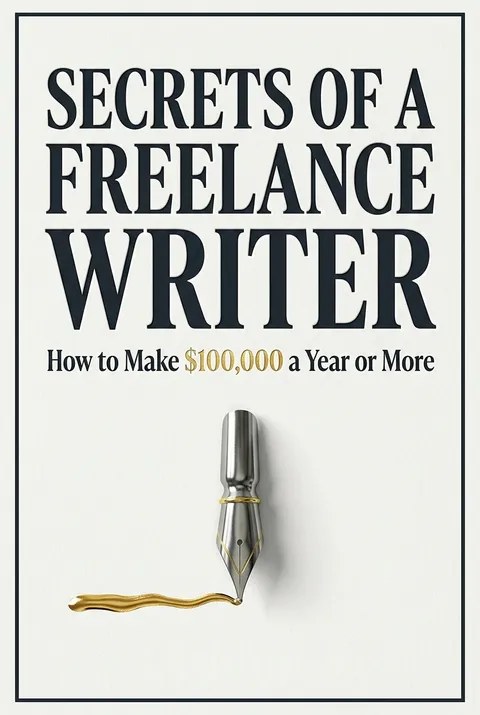


Key Takeaways
Build a commercial writing business, not a career lottery ticket.
Sell useful work. Bly’s central argument is that writers can earn more by serving organizations that need material to sell, explain, or support their work, rather than relying mainly on books and magazine articles. He calls this “High-Profit Writing”: commercial writing for businesses and other organizations. The assignments range from brochures and sales letters to annual reports, manuals, and Web pages. The author reports that corporate freelancers commonly earned two to four times what writers earned from traditional publishing, although that comparison reflects the book’s 2006 context.
Value beats glamour. In Bly’s example, four assignments during a busy week brought in $4,800. The point is not that every week pays that way, but that client work can combine varied projects, repeat business, and professional fees. It may lack a byline or literary freedom, so it is best understood as a business that can fund other creative ambitions.
The reframing is powerful because it separates the identity of “writer” from one narrow route to income. A commercial assignment is not automatically less creative; it simply gives creativity a client, audience, and purpose. That distinction can free writers from treating literary prestige as the only legitimate measure of their work. The income contrast, however, should be read as an argument about market structure, not a promise: earnings depend on demand, specialization, sales ability, and workload. A useful test is whether the writer values client variety and dependable services enough to accept that the client, not the writer, owns the final decision.
Turn whatever you have written into evidence that you can solve a client’s problem.
Start with proof. A beginner may already have usable material: workplace reports, persuasive letters, school publications, newsletters, or articles. Bly recounts getting his first staff writing job after a counselor treated his college newspaper work as relevant evidence, not as “nothing professional.” The client is usually less interested in a writer’s autobiography than in whether the writer can handle the assignment reliably and on time.
Make samples deliberately. If the file is empty, Bly suggests creating a few examples through volunteer work, a small-business project, a class assignment, or a rewritten advertisement. Keep copies. A novice can emphasize services, relevant knowledge, and the benefit offered instead of pretending to have a long client list. The book also recommends presenting employers and other writing experience honestly as “clients/experience,” rather than implying every organization hired the writer as a freelancer.
This is a practical answer to the familiar experience trap: clients ask for proof, but proof often arrives only after someone takes a chance. Small, concrete samples lower that barrier. The broader lesson is to treat a portfolio as evidence of judgment and execution, not merely a list of famous logos. There is an ethical boundary worth preserving: a sample should demonstrate ability without implying paid work or results that never occurred. Clear labeling protects trust, while tailoring examples to a prospect’s problem makes limited experience more persuasive than a large but irrelevant archive.
Specialize enough to make hiring you feel like the low-risk choice.
Sell a close fit. Companies often hire freelancers for a specific project and want someone who can begin with little training. A specialist in software direct mail, medical writing, or annual reports can therefore be easier to choose than a capable generalist with no matching experience. Bly identifies direct mail, financial services, health care, high technology, speechwriting, annual reports, and corporate communications among higher-paying specialties.
Let work reveal the niche. Beginners need not choose a specialty before they know what they are good at. Bly advises starting broadly when necessary, then reviewing the first year’s assignments for patterns. Two or three related projects can begin to support a credible specialty. A writer can keep accepting work outside that niche, while presenting different experience to different markets. The aim is not to trap oneself in a tiny category, but to give each prospect a clear reason to hire.
Specialization works as a signal: it tells a busy buyer that less time will be spent explaining the audience, format, or industry. It also makes marketing more precise because the writer can speak to a recognizable need. Yet a specialty is most useful when it reflects genuine competence, not just a label. Over-narrow positioning can shrink the pool of potential clients, while excessive breadth can make a writer indistinguishable from everyone else. Bly’s staged approach offers a sensible middle course: build a foothold, notice where demand and aptitude meet, and broaden only when the core offer is legible.
Keep marketing while busy, or your pipeline will empty after the current projects.
Plant future work. Freelance assignments end, and clients may disappear when contacts change jobs or priorities shift. Bly says established writers may spend 10 to 25 percent of their time marketing, while beginners may need to spend 25 to 50 percent. The specific share varies, but the principle is to keep prospecting even when the desk is full. His first sales letter, sent to 500 advertising agencies, produced 35 replies, a 7 percent response rate.
Test and follow through. Direct mail, articles, referrals, speaking, a website, and an e-mail newsletter can all bring prospects into view. Test small efforts before scaling them. Track inquiries, the source of each lead, and the next contact date. When a prospect requests information, follow up at an agreed time instead of assuming silence means rejection. Useful updates and relevant articles can keep a relationship alive without turning every contact into a sales pitch.
The pipeline idea makes marketing a form of risk management, not merely self-promotion. Dependence on one client or a burst of assignments creates fragility; a modest, regular flow of contacts can soften that volatility. The book’s response figures illustrate what testing can teach, but one successful mailing does not establish a universal conversion rate. Channels and costs change, so the enduring method is to measure qualified inquiries and paid work, then invest in the approaches that actually produce them. Follow-up also benefits from restraint: persistent contact is useful when relevant and welcome, but repetition without value can consume time and damage goodwill.
Quote a project price, but calculate it from your real hourly costs.
Price the assignment. Bly favors fixed project fees because clients understand the cost of a defined deliverable more readily than a high hourly rate or a long estimate of hours. In the surveys cited in the book, 64 to 74 percent of freelance copywriters charged fixed fees. The writer still needs an internal hourly target: estimate research, writing, editing, and expected revisions, then use that estimate to build a price. Bly suggests that a freelancer’s minimum hourly rate should be about 2.5 times the comparable employee wage, to account for benefits, business expenses, and income risk.
Match fee to scope. If the project is uncertain, quote a range or bill hourly until the work is defined. If a client cannot afford the full project, propose a smaller deliverable rather than doing the same work for less. A fee schedule can set expectations, but it should be described as a guide, not an automatic quote.
This approach joins two perspectives that are often treated as opposites. The client buys a result, while the freelancer must protect the economics of producing it. Fixed fees reward efficiency, but they also transfer estimation risk to the writer. That makes scope definition essential: unclear goals, repeated reviews, or changing requirements can quietly erase the expected margin. The 2.5 multiplier is a rule of thumb, not a universal labor-market law. Its deeper value is prompting writers to count the hidden costs of self-employment before mistaking a gross fee for take-home income.
Put payment, revisions, deadlines, and cancellation terms in writing before starting.
Prevent avoidable disputes. Bly recommends a signed contract, purchase order, or letter of agreement before work begins. It should specify the fee, deliverables, deadline, deposit, expenses, revision policy, and what happens if the client changes or cancels the assignment. His own practice asks new clients for half the fee in advance, with the balance due on delivery. The exact arrangement can vary, but written terms make shared expectations visible and help limit cash-flow risk.
Separate revision from scope change. A requested edit may be included, while a new audience, extra version, or changed assignment can require a new fee. Bly’s practical principle is to treat added work as a change order rather than absorbing it silently. He also advises prompt, polite invoice follow-up, escalating from reminders to calls and formal collection steps when necessary. A contract cannot guarantee payment, but documentation gives the freelancer a stronger basis for seeking it.
Written agreements are not a sign of distrust; they are a memory aid for two parties who may understand the same conversation differently. They also make the invisible parts of writing work visible: meetings, review rounds, research, and delays. This is especially important when the client’s organization has multiple approvers. The contract should be proportionate and understandable, not a wall of legal language that neither side reads. Since the book is not legal advice, freelancers should adapt templates to their jurisdiction and circumstances, particularly for ownership, cancellation, and late-payment provisions.
Ask about the business problem before showing samples or proposing copy.
Diagnose before pitching. Bly contrasts a portfolio-centered meeting with consultative selling, a way of discussing the client’s needs before presenting a solution. Instead of making the portfolio the event, ask what the client is trying to accomplish, who the audience is, and what has or has not worked. Samples matter when they answer those questions, but a parade of unrelated work can pull attention away from the assignment.
Research for specifics. Before writing, collect the client’s existing materials, competitor examples, product details, customer comments, and relevant research. Ask which benefit matters most, what distinguishes the offer, and what action the copy should prompt. For a complicated project, Bly recommends presenting a copy platform, a proposed approach and outline, or a sample opening page for approval. Early alignment can prevent a full draft built around the wrong premise.
The consulting posture changes the sales conversation from “Is this writer impressive?” to “Does this person understand the situation?” That shift builds credibility while revealing whether the client has a defined brief, realistic expectations, and a workable approval process. Research is not simply fact gathering; it is a way to discover which facts matter to this audience. Still, a writer should be careful not to give away extensive strategic work in an unpaid meeting. A few diagnostic questions can establish fit, while substantial analysis belongs in a paid scope.
Make reliability part of the product clients are paying for.
Protect the deadline. In commercial work, copy may be tied to a mailing, trade show, or launch date. Missing that date can make good writing unusable. Bly recommends leaving room in the schedule, starting research and interviews early, and refusing work that cannot be completed properly. He describes two to three weeks as a common turnaround among the writers he knew, while emphasizing that timing depends on the project and the writer.
Make service predictable. Clients usually expect revisions, so ask for specific comments rather than guessing at vague dissatisfaction. Confirm what they want changed, resolve contradictions, and tell them when the new draft will arrive. Courtesy, attentive listening, and an occasional useful extra can encourage repeat work. But exceeding expectations does not mean accepting unlimited revisions or permanent rush deadlines. Good service combines responsiveness with clear boundaries.
Reliability is a competitive advantage precisely because it is observable. A client may disagree about whether a headline is brilliant, but a missed deadline or unanswered message is hard to reinterpret. The book also links service to retention: preserving a client relationship can be more valuable than winning a single assignment. That does not require constant availability. In fact, boundaries help sustain service quality by keeping commitments realistic. A freelancer’s reputation is built not only through the finished text, but through the experience of getting that text from brief to approval.
Grow earnings without mistaking a larger company for a better freelance life.
Choose your leverage. Bly identifies several ways to increase income: write faster through experience, raise fees, negotiate royalties or mailing fees, hire assistants, build a company, or add related profit centers such as consulting, seminars, and products. These paths differ in what they demand. An assistant can free time for writing, while running an agency adds hiring, management, and administration. A royalty can create income from continued use of successful copy, but it should not replace a fair base fee casually.
Keep the work balanced. When exploring a new market, Bly suggests keeping roughly 80 percent of assignments in established areas and 20 percent in new ones. The established work supports income; the new work builds future capability. He also warns that repetitive work, isolation, and overwork can contribute to burnout. Taking a break, varying assignments, or reducing workload may be wiser than expanding by default.
This is a useful distinction between earning more and building an organization. A solo practice can be lucrative precisely because the owner spends most of the day doing skilled work. Scaling through staff may raise revenue while replacing writing with management. The right model depends on temperament and desired daily life, not just a growth target. The 80/20 split is best treated as a planning prompt, not a formula: an unusually strong opportunity or a sudden downturn may justify a different mix. Growth is valuable when it increases resilience or choice, not merely busyness.
Move freelance fees into savings before lifestyle spending claims them.
Build personal reserves. Freelance income can arrive irregularly, while taxes and household bills do not wait. Bly recommends setting aside money for taxes, maintaining a reserve, limiting debt, and saving a portion of each fee. He proposes saving 10 to 40 percent when possible and treats retirement investing as a second career. The book’s example says an 18-year-old investing $2,000 annually from age 18 through 25 at a 10 percent return could have more than $1 million by age 65.
Understand the assumptions. That striking projection depends on a steady return and a long time horizon, neither of which is guaranteed. The durable advice is simpler: begin saving as early as circumstances allow, invest consistently, and avoid spending every strong month as if it were normal. A cash reserve can also reduce pressure to accept poor-fit clients or underpriced work during a slow spell.
Saving changes the freelancer’s negotiating position. A reserve creates time to reject an exploitative scope, wait for a better client, or withstand a delayed invoice. In that sense, financial planning supports professional independence rather than sitting apart from it. The book’s investment illustration is mathematically dependent on its assumed return and should not be read as a forecast. Market outcomes vary, and tax rules change. The strongest principle is behavioral: automate a sustainable contribution, keep near-term operating cash separate from long-term investments, and seek qualified financial advice for decisions beyond general budgeting.
Analysis
Bly’s most consequential move is to treat freelance writing as a service business whose output happens to be language. That perspective explains the book’s unusually broad scope: finding clients, pricing, contracts, research, revisions, promotion, cash collection, and saving all matter alongside craft. The writer does not simply wait for recognition. The writer identifies a buyer, clarifies a need, makes an offer, delivers reliably, and builds enough trust for the next assignment.
The argument is strongest where it converts vague professional anxieties into operating choices. Beginners can make samples rather than wait for permission. Specialists can make a buyer’s decision easier. Project pricing can communicate value without inviting a client to audit every hour. Written terms can prevent scope disputes. Ongoing marketing can reduce dependence on one contact or one season. These are useful mechanisms, not motivational slogans.
The book’s weaknesses stem partly from its 2006 publication date and partly from its confident income framing. Its fee schedules, technology advice, online promotion tactics, and cited market conditions are historical snapshots, not current benchmarks. The promise of six-figure income is an aspiration supported by anecdotes and surveys, not a reliable forecast for any particular writer. The income ceiling also depends on specialization, sales skill, capacity, health, geography, and clients’ budgets. A good writer may still find that the preferred market is inaccessible or that the business tasks are a poor fit.
There is also a tension between independence and constant availability. Bly champions control over time while encouraging persistent promotion, responsiveness, rush accommodation, and relentless client service. Without boundaries, the writer can recreate a demanding job with no employer benefits. The best interpretation is therefore not “work harder until the income arrives,” but “design a business in which positioning, pricing, process, and reserves protect both earnings and autonomy.” The book remains valuable as a practical map of commercial freelancing, provided its old figures are treated as examples and its central claims are tested against present-day conditions.
Review Summary
Secrets of a Freelance Writer receives mostly positive reviews, with readers praising its practical advice for aspiring commercial writers. Many find the book useful as a reference guide, offering valuable insights on client acquisition, pricing, and business strategies. Reviewers appreciate Bly's experience and confidence, though some note outdated information. The book is particularly recommended for those interested in commercial writing, with readers highlighting its comprehensive coverage of the field. Some critics mention dry sections and question the applicability for non-commercial writing pursuits.
Glossary
High-Profit Writing
Commercial writing for clientsBly’s term for writing commissioned by companies and other organizations for commercial purposes. The work may inform, educate, persuade, or support sales, and includes assignments such as brochures, direct mail, Web content, reports, manuals, and speeches. The model emphasizes recurring client relationships and paid projects rather than relying primarily on publishers to buy articles or books.
spec work
Unpaid speculative writingAn assignment completed without a firm promise of payment, usually so a prospective client can judge the writer’s ability before offering paid work. The client may pay only if the work is accepted or used. Bly advises caution, suggests requesting a partial kill fee, and treats short test assignments as possible exceptions rather than a normal business practice.
copy platform
Proposed copy planA planning document presented before a full draft. It can set out a proposed headline, the copy’s central approach, an outline of major points, the offer or call to action, and the intended audience. Its purpose is to give the client an early chance to approve or redirect the strategy, reducing the risk of completing a draft based on the wrong approach.
bait piece
Free information for leadsA useful free item, such as a booklet, special report, or downloadable document, offered in a promotion to encourage prospects to respond. In Bly’s approach, the information itself should be valuable, while the response provides a way to introduce the writer’s services or gather contact details. The item supports lead generation without making the entire promotion a direct sales pitch.
Agora Model
Convert visitors into subscribersThe book’s name for an online marketing sequence built around offering visitors a free e-zine in exchange for an e-mail address. The writer then sends useful content and occasional offers to subscribers, building familiarity before asking for business or promoting products. Bly presents the model as a way to turn otherwise anonymous Web traffic into an ongoing audience.
mailing fee
Payment per continued mailingA performance-related payment sometimes negotiated for direct-mail copy. The writer receives a project fee for creating the promotion and may also receive a small amount for each piece mailed after an agreed test quantity. Because payment depends on the client’s continued use and accurate tracking, Bly recommends considering the arrangement only when the client can reliably report and pay it.
magalog
Magazine-style sales mailingA direct-mail promotion designed to resemble a magazine while selling a product, subscription, or other offer. It combines editorial-style articles and presentation with catalog or sales content. Bly describes magalogs as substantial projects, often 16 to 24 pages or longer, and notes that their production demands and fees can be considerably greater than those of a standard brochure.
AIDA
Attention-to-action sequenceA copywriting sequence identified in the book’s example query letter: Attention, Interest, Desire, and Action. The writer first catches the reader’s attention, then develops interest, gives reasons to want the offer, and asks for a specific response. The example applies the sequence to persuasive business letters, but it can also serve as a simple structure for sales copy.
About the Author
Other books by Robert W. Bly





Download PDF
Download EPUB
.epub digital book format is ideal for reading ebooks on phones, tablets, and e-readers.








