

Key Takeaways
Email earns revenue only when readers trust the sender enough to open.
The channel is powerful. Bly argues that email remains central despite the rise of social platforms. He cites 205 billion messages sent and received worldwide in 2015 and an average of 121 emails a day for office workers. In the book, email marketing is also credited with a reported return of $44 for every dollar spent. These figures are historical, but the underlying advantage is clear: email reaches people directly, supports links and attachments, and can prompt a measurable response.
Attention is not automatic. Every message competes with an already crowded inbox. Email's low sending cost makes it easy for businesses to overuse the channel, but recipients can ignore, filter, or unsubscribe from messages that do not feel worth their time.
Email's economic appeal comes from its combination of reach, low marginal cost, and direct response, not from any guarantee that an inbox is a captive audience. The key scarce resource is trust, which accumulates through useful, relevant contact and is spent with each interruption. The book's return figures should be read as reported estimates, not universal benchmarks: campaign economics depend on audience quality, margins, and what counts as a conversion. The strongest lesson is strategic restraint. A list of people who anticipate a message can outperform a much larger list that merely tolerates it.
Protect inbox delivery before spending hours polishing the copy.
A message must arrive. Bly stresses that excellent writing cannot persuade a reader who never sees it. He cites a 2016 report estimating that 79 percent of email reached inboxes worldwide, with a lower figure for the United States. The book attributes most delivery failures to poor sender reputation, a measure email providers use to judge whether a sending address is trustworthy. Spam complaints, invalid addresses, and ignored messages can all weaken that reputation.
Permission and maintenance matter. The book's account of the CAN-SPAM Act emphasizes truthful sender and subject information, a physical mailing address, and a simple unsubscribe process. It also recommends monitoring bounces and complaints, removing inactive addresses, authenticating sending domains, and testing messages before a large send. The legal details reflect the book's 2018 publication and should not replace current legal advice.
Deliverability is both a technical problem and a relationship signal. A recipient who marks a message as spam may be expressing a genuine mismatch, not merely reacting to a filter's quirks. That makes permission, relevance, and easy exit mechanisms part of the communication strategy, not administrative decoration. The distinction between legal compliance and good practice is important: a message can satisfy a rule and still be unwelcome. Conversely, careful testing and domain authentication reduce avoidable failures, but cannot rescue a list that has little interest in what it receives.
Make sender identity familiar, and subject lines specific enough to earn attention.
The inbox gives two clues. Before opening, recipients see who sent the email and what it appears to concern. Bly cites research in which 68 percent of Americans said the sender name influenced their decision to open, while 35 percent said the subject line alone did. The practical advice is to use a recognizable person, company, or publication name, then keep it consistent. A subject line should quickly signal the message's benefit or point, rather than rely on vague teasers.
Test what your readers prefer. Subject lines should be short enough to display on mobile screens, with the most meaningful words near the beginning. Bly describes A/B testing: send two versions that differ in one element, then compare results. A higher open rate is useful, but clicks and sales reveal whether the subject attracted the right readers.
Sender identity works like a trust cue: familiar names lower uncertainty, while unexplained or shifting identities make even legitimate messages look suspicious. Subject lines then help readers allocate scarce attention. This is closely related to information scent in interface design, where people choose a path based on whether a label seems likely to lead to something useful. Testing is valuable, but only when the test isolates a variable and uses a meaningful outcome. A curiosity-driven subject can increase opens while disappointing readers, so click quality and downstream behavior matter more than attention alone.
Be concise, not incomplete: put the reader's decision first.
Short is not the same as clear. Bly distinguishes brevity from concision: concise writing includes everything needed, with nothing that does not help. He recommends identifying the reader, purpose, and desired action before drafting. His planning device is the journalistic five Ws, plus how: who, what, where, when, why, and how. Put the most important point at the top, then supply supporting detail in descending order of importance, an approach known as the inverted pyramid.
Solve the reader's actual problem. In a sample customer-service reply, a company acknowledges a defective product, explains when a replacement will ship, describes how to return the faulty item, and gives a contact route. The message is longer than a quick note, but it answers the questions the customer needs answered. Bly suggests 50 to 125 words for many routine messages, while allowing more space when the topic requires it.
The inverted pyramid suits email because readers often scan before deciding whether to continue. It also reduces the cost of partial attention: even a reader who stops early receives the essential point. The approach has a useful parallel in safety communication, where ordering information by consequence can prevent misunderstandings. Still, a universal word target can mislead. A sensitive explanation, technical instruction, or complex decision may need more room. The practical standard is not minimal length, but low reader effort: make the purpose obvious, the facts complete, and the next step unmistakable.
Send short invitations to persuasive pages, not entire sales letters by default.
Email is one part of the pitch. Bly explains that online sales copy can be divided between an email and the page reached by its link. The email earns attention and a click; the landing page supplies the fuller argument and the order mechanism. He describes combinations ranging from a short email and short landing page to a brief email leading to a longer microsite. The right split depends on the offer and how much explanation a buyer needs.
Build the page around a decision. Bly calls his landing-page approach the Motivating Sequence. In essence, it draws attention, names a problem, presents a solution, supports the claim with evidence, and asks for action. He reports a 32 percent conversion rate for one of his own landing pages, an example of a result tied to a particular offer, not a general promise.
Splitting the message across email and a landing page is an exercise in progressive disclosure: give enough information for the next step, then deepen the explanation where the reader has chosen to engage. This can reduce friction without sacrificing substance. It also creates a responsibility to maintain continuity. If the email promises one benefit and the page shifts to another, the click feels like a bait-and-switch. Conversion data should be interpreted in context, since audience intent, price, and page experience can matter as much as copy. Persuasion is strongest when clarity and evidence accompany urgency.
Design emails for the phone screen, then test the whole message.
Small screens change the reading experience. Bly cites a 2017 report that placed mobile phones ahead of desktop as the most common setting for email opens. He recommends simple layouts, readable type, short paragraphs, left-aligned text, and prominent links or buttons with enough space to tap. A single-column design is easier to follow than a wide newsletter that forces readers to scroll sideways.
Assume images may disappear. Some readers or email programs block images, so essential meaning should remain in the text. Alternative text can describe an image when it is not displayed, and a still image linked to a hosted video is more dependable than assuming video will play inside the message. Bly urges senders to test across devices and email programs, checking both the text-only view and the version with images.
Mobile-first design is not simply a matter of shrinking a desktop layout. It changes how people scan, tap, and recover their place in a message. Accessibility strengthens the same design choices: adequate type, strong contrast, descriptive image text, and controls that are easy to activate help readers with different abilities and circumstances. Device-specific dimensions in the book belong to its period, so the lasting principle is robust testing rather than rigid pixel rules. A design that depends on images, precise rendering, or tiny controls is fragile even before a reader opens it on an older phone.
Automate useful follow-up, but make every message feel earned.
Automation can serve the customer. An autoresponder is software that sends a prepared email, or timed series, after a date or action such as signing up, buying, or abandoning a cart. Bly lists uses including welcome notes, order confirmations, shipping updates, renewal reminders, and requests for feedback. He cites potential sales increases of 10 to 30 percent or more, while urging marketers to track their own results.
Sequences should have a reason. A drip campaign is a planned series of messages sent over time to build understanding or move a prospect toward a decision. A welcome email can deliver a promised report; a later message can offer relevant advice; a purchase can trigger clear delivery information. Bly recommends segmentation and double opt-in, where a new subscriber confirms the signup, to improve list quality and reduce mistaken registrations.
Automation is most persuasive when it removes delays in service: a receipt, shipping update, or promised download is useful precisely because it arrives promptly. The risk is confusing efficiency with relationship. A sequence triggered by behavior can feel attentive when it answers a need, and intrusive when it treats every click as permission for relentless sales pressure. Good automation therefore needs limits, clear expectations, and a way to correct mistaken assumptions. The book's conversion estimate is best treated as a hypothesis for testing, not a guaranteed effect of installing software.
Publish information readers can use before asking them to buy.
Useful content has a long history. Bly recalls creating a technical manual at an engineering company to help refinery engineers specify equipment correctly. The manual was widely requested, though the company did not call the practice content marketing. He also points to early twentieth-century recipe booklets that used Campbell's soup as an ingredient. In both cases, information helped readers while naturally connecting them to a product.
Give the content a job. A lead magnet is useful free material offered to attract a potential customer, such as a guide, report, course, or webinar. Bly recommends narrowing its topic, aiming it at a specific reader, and deciding what the reader should understand or do afterward. Generic information is easy to find; practical expertise, clearly organized around a real problem, gives a reader a reason to pay attention and a basis for trusting the sender.
The engineering manual illustrates a strong form of content marketing because the material solves a real task rather than merely dressing up an advertisement. It also shows how education can reveal the complexity of a problem and the value of specialized help. This resembles reciprocity, the social tendency to respond positively to a benefit received, but usefulness should not be mistaken for an obligation to buy. When free information is actually a sales device, the relationship is healthier if that commercial purpose is transparent. Content volume is less important than whether the material changes a reader's capacity to act.
Treat personal email as relationship work, not a template exercise.
The right tone depends on the moment. Bly's personal examples show how specificity makes a message feel considered. A congratulation names the achievement; a condolence recalls a meaningful quality or memory without trying to put a cheerful spin on grief. A sound apology identifies the harm and accepts responsibility instead of hiding behind conditional wording. When declining an invitation, a brief explanation and a genuine alternative can preserve the connection.
Business writing needs the same human judgment. A complaint should state what happened and what resolution is sought without attacking the recipient. A work email should be clear, accurate, professional, and complete enough to support a decision. The book also warns that email is not always the right channel. If nuance, urgency, or emotional sensitivity matters, a call or conversation may serve better.
Templates can help people who struggle to begin, but they cannot supply the judgment that makes a condolence, apology, or complaint humane. Specific detail signals attention; responsibility signals respect. These are not merely stylistic virtues, since written messages can be forwarded, reread, and interpreted without vocal cues. That permanence argues for careful wording, especially in conflict. At the same time, email's speed can tempt senders to handle delicate matters in a channel poorly suited to emotion. Choosing when not to email is part of writing well.
Coordinate email with other channels around one measurable customer journey.
Email connects the steps. Bly presents email as one channel in a larger system that may include direct mail, social media, advertising, phone calls, webinars, and landing pages. A marketing funnel is the path intended to guide a person from first contact toward an action, such as signing up, requesting information, or buying. Email can welcome a new subscriber, deliver content, remind someone about an event, confirm an order, or follow up after a webinar.
Measure the journey, not just the send. The book's examples include Starbucks emailing Rewards members about a charity-linked holiday promotion and Disney using social sharing to support Make-A-Wish. These campaigns paired a clear message with other ways to participate. Tracking clicks, responses, and conversions can reveal which steps work, but the channel should fit the audience and task, rather than being selected simply because it is easy to automate.
The multichannel view avoids the common mistake of treating each email as an isolated campaign. A person may encounter an offer in one place, research it elsewhere, and act through a third channel; measurement should reflect that path. Yet more tracking is not automatically better. The book describes cookies and tracking pixels as powerful tools, but such surveillance can undermine the trust on which email depends if users lack meaningful notice or choice. Effective integration balances attribution with privacy, and uses data to improve relevance rather than to pursue every possible behavioral signal.
Analysis
The book is best understood as a practical field guide to the full email lifecycle, not a single theory of persuasion. Its scope ranges from condolences and workplace correspondence to deliverability, newsletters, sales pages, automation, and technical design. That breadth is both its strength and its summarization challenge: the central principles must be separated from long lists of templates, platforms, and implementation details.
The most durable argument is that email success depends on a chain of conditions. The message must be permitted and delivered, recognized in the inbox, worth opening, easy to read, and connected to a useful next step. A weakness at any link can nullify the effort invested in the others. This systems view is more valuable than any individual subject-line formula or button color. It also gives the book an implicit ethical standard: a reader's attention is not a resource the sender owns.
The source is from 2018, and much of its numerical evidence comes from studies cited from 2015 to 2017. Interface guidance, platform behavior, legal requirements, and performance benchmarks change. Some claims, including reported return on investment and conversion gains, are context-dependent and should be tested rather than treated as universal laws. The text itself notes that open tracking can be unreliable, since image blocking can make an opened email invisible to the measurement system. That caveat is central: metrics are proxies for attention and action, not direct access to a reader's mind.
The adaptation's main synthesis is therefore practical and critical. Use email as a reliable relationship channel, but do not confuse automation with care, measurement with understanding, or persuasion with pressure. The reader should leave with a process: earn permission, protect delivery, make the purpose clear, offer enough evidence, design for real devices, and measure whether the recipient's problem was actually addressed.
Review Summary
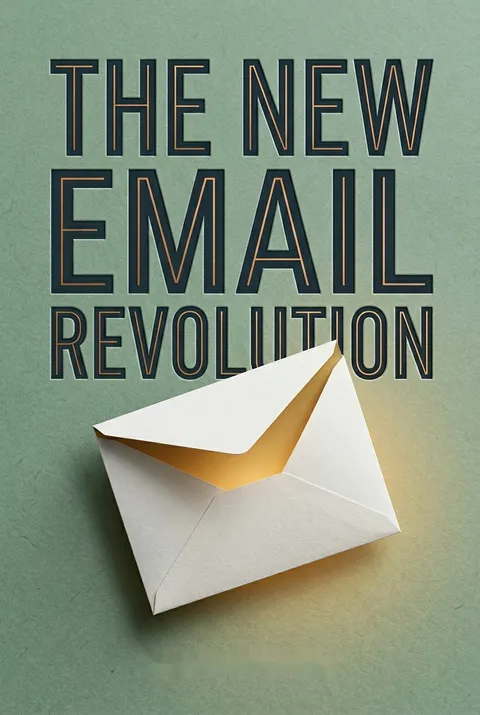
The New Email Revolution receives mixed reviews, with an average rating of 3 out of 5. Some readers find it valuable for email marketing strategies, praising its tips and examples. Others criticize it as outdated or too basic for experienced marketers. Positive reviews highlight its practical advice and relevance to modern business communication. Negative reviews suggest it lacks depth for professionals. Overall, the book seems most beneficial for beginners in email marketing, offering fundamental concepts and techniques for optimizing email use in business contexts.
People Also Read










Glossary
CAN-SPAM Act
US commercial email lawA United States law enacted in 2003 that regulates commercial email. As summarized in the book, it requires accurate sender information, nondeceptive subject lines, a physical postal address, and a clear way to unsubscribe, with requests handled within the legal period. Its current application should be checked against up-to-date official guidance or legal advice.
Sender reputation
Trust score for sendersA judgment made by internet service providers and email services about the trustworthiness of an email sender or sending address. The book says that spam complaints, filtering, poor engagement, and related behavior can damage this reputation, making future messages more likely to be blocked or placed in junk folders.
Autoresponder
Automatically triggered emailSoftware or a service that sends a prepared email, or a timed sequence of emails, on a chosen schedule or after a defined action. Examples include confirming a purchase, delivering a requested download, reminding a shopper about an unfinished order, or sending a renewal notice.
Drip campaign
Timed follow-up sequenceA series of planned messages sent over time to nurture a prospect or customer. In the book, drip campaigns use repeated, scheduled contact to provide useful information, build a relationship, encourage a purchase, or prompt an existing customer to renew or buy again.
Lead magnet
Free content that attracts prospectsA useful free resource offered to draw potential customers into a marketing relationship, often in exchange for contact information. Examples in the book include white papers, ebooks, courses, webinars, and reports. A strong lead magnet solves a focused problem for a defined audience and supports a clear business purpose.
The Motivating Sequence
Persuasive page structureBly's named approach for organizing persuasive material such as a landing page. It begins by attracting attention, identifies a reader's problem or need, presents a solution, supports the offer with proof, and asks the reader to act. The sequence is intended to guide a decision, not simply to decorate a page with sales language.
A/B split test
Comparison of two variantsA controlled comparison in which different audience groups receive versions of a message that vary in one chosen element, such as the subject line or call to action. Results are compared to learn which version performs better. The book stresses keeping other variables stable and judging outcomes beyond opens when clicks or sales are the real goal.
Marketing funnel
Path toward customer actionA planned series of steps that guides a potential customer from initial awareness toward an action, often a purchase. In the book's examples, a person may receive an email, visit a landing page, review an offer, and complete a transaction. Multiple channels can feed into the same path.
FAQ
1. What’s The New Email Revolution by Robert W. Bly about?
- Comprehensive email communication guide: The book covers writing effective emails for personal, business, and marketing purposes, from basic mechanics to advanced strategies.
- Covers technical and legal aspects: It explains email anatomy, CAN-SPAM compliance, design options, deliverability, and integration with other marketing channels.
- Practical tools and templates: Readers get model emails, legal checklists, design tips, and marketing fundamentals to improve their email results.
2. Why should I read The New Email Revolution by Robert W. Bly?
- Expert insights from a veteran: Robert W. Bly is a renowned copywriter with decades of experience, sharing proven strategies and real-world examples.
- Email’s enduring power: The book demonstrates why email remains the most widely used and effective digital communication tool, despite the rise of social media.
- Boost results and avoid pitfalls: Learn to write emails people want to read, increase engagement, and avoid legal and deliverability issues.
3. What are the key takeaways from The New Email Revolution by Robert W. Bly?
- Master email fundamentals: Understand the importance of subject lines, sender reputation, concise writing, and clear calls to action.
- Legal and technical compliance: Learn how to comply with CAN-SPAM laws, avoid spam filters, and ensure high deliverability.
- Effective marketing strategies: Discover how to use segmentation, automation, and multichannel integration to maximize email marketing ROI.
4. What are the most important components of an effective email according to Robert W. Bly?
- From and subject lines: These are critical for open rates; recognizable senders and curiosity-driven subjects increase engagement.
- Clear structure and concise body: Use a logical flow—headline, lead, main copy, bullets, CTA, close, signature, and P.S.—to keep emails readable and actionable.
- Strong calls to action: Place visually distinct CTAs and hyperlinks to guide readers toward desired actions.
5. How does Robert W. Bly recommend writing and formatting emails for maximum impact?
- Keep it concise and clear: Aim for 50–125 words for most emails, using simple language and short sentences at a seventh-grade reading level.
- Use bullet points and structure: Organize information for easy scanning and comprehension, especially in marketing emails.
- Personalize and segment: Tailor messages to recipient profiles and behaviors for higher relevance and response rates.
6. What does The New Email Revolution by Robert W. Bly say about CAN-SPAM compliance and legal requirements?
- Truthful and transparent: Use accurate headers, sender information, and subject lines to comply with the law.
- Easy opt-out: Always include clear unsubscribe links and honor opt-out requests promptly.
- Avoid spammy practices: Don’t harvest addresses or send unsolicited emails; violations can result in hefty fines and damage your reputation.
7. What are the main barriers to email deliverability and how does Robert W. Bly suggest overcoming them?
- Sender reputation is key: Most undelivered emails are due to poor sender reputation, often from spam complaints or high bounce rates.
- Engagement matters: Regularly clean your list of inactive subscribers and encourage recipients to whitelist your address.
- Technical best practices: Use proper HTML, set up SPF and reverse DNS, avoid spam trigger words, and test emails across platforms.
8. How does Robert W. Bly differentiate between text emails, HTML emails, and text in an HTML shell?
- Text emails: Simple, personal, and highly deliverable, but limited in formatting and tracking.
- HTML emails: Visually appealing with images and design, but risk being flagged as spam and may not display well everywhere.
- Text in an HTML shell: Combines the readability of text with HTML’s formatting and tracking, offering a balanced approach.
9. What advice does The New Email Revolution give on using video and rich media in email marketing?
- Boosts engagement: Video emails can increase engagement by 44% and nearly double click-through rates.
- Keep videos short: Two minutes or less is ideal; longer videos should be linked to from the email.
- Use third-party hosting: Host videos on platforms like YouTube or Vimeo, embed with fallback images, and include clear CTAs.
10. How does Robert W. Bly recommend using autoresponders and automation in email marketing?
- Automated sequences: Autoresponders send prewritten emails based on user actions or time intervals, increasing sales by 10–30% or more.
- Versatile applications: Use for welcome messages, abandoned cart reminders, confirmations, feedback requests, and drip campaigns.
- List management: Autoresponders help segment lists, manage subscribers, and support double opt-in for compliance and quality.
11. What are Robert W. Bly’s best practices for designing emails for different devices and ensuring mobile compatibility?
- Mobile-first design: Use single-column layouts (320–480 pixels wide), large fonts, and easy-to-tap CTA buttons for mobile users.
- Responsive coding: Employ CSS media queries and HTML for adaptable layouts that render well across devices and email clients.
- Minimal, relevant images: Use images sparingly, include alt-text, and ensure they support the message for recipients who block images.
12. What are the best quotes from The New Email Revolution by Robert W. Bly and what do they mean?
- James Thurber: “Precision of communication is important…”—emphasizes the need for clarity and accuracy to avoid misunderstandings in email.
- Mark Twain: “The difference between the right word and the almost right word…”—highlights the power of precise language in effective email writing.
- Suzy Kassem: “Originality is the key to being memorable.”—reminds readers that unique subject lines and content help emails stand out and avoid spam filters.
About the Author
Other books by Robert W. Bly




Download PDF
Download EPUB
.epub digital book format is ideal for reading ebooks on phones, tablets, and e-readers.








