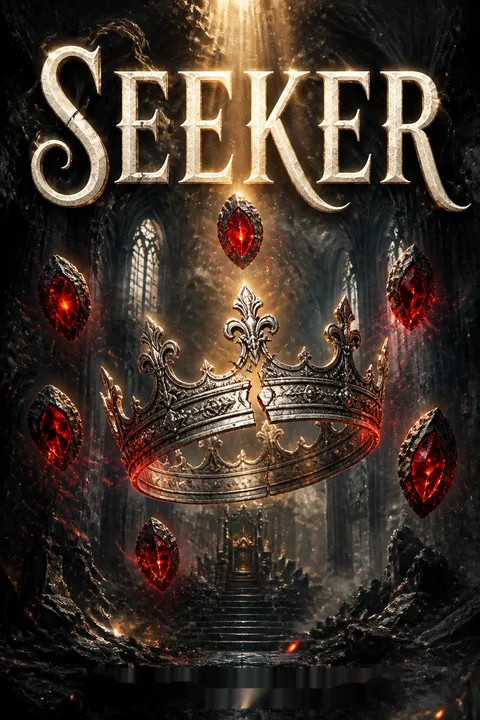


Plot Summary
The Oath Breaks Zan
After winning the first trial, Calla uses her reward to spend the night with Prince Alexander, intending to wreck the growing attachments she has formed with her three tutors. When Alexander reveals that he is Zan, the eldest prince disguised as her tutor, the oath concealing his identity crushes him with a brain hemorrhage.
Tied to the bed, Calla watches his heart stop, then feels a surge of heat burn through her restraints until they crumble into ash. Princess Sagen arrives and finds a pulse where Calla felt none. Calla fetches Zan's brother Lee, who begins healing him, while the blood, her wounds, and the unexplained magic leave her unable to understand what she herself has done.
Calla's choice is an act of self-sabotage disguised as control: she seeks a clean rupture by choosing a prince she believes will treat her carelessly. Instead, the oath turns that decision into bodily catastrophe. The scene also unsettles the boundary between agency and power. Calla's restraints disappear during an emotional crisis, but she cannot yet claim the act as hers. Sagen's calm response adds another disturbance: the court's secrets are already arranged in layers, and Calla has entered a game whose rules even its apparent victims may not fully reveal.
Three Tutors, Three Princes
As Lee heals Zan, Calla brings Ty, the third tutor, to the room and learns that he is Prince Thibault, while Lee is Prince Louis. The brothers admit that their father imposed the identity oath so they could observe the trial candidates without their royal status changing how the women behaved.
Their revelations force Calla to confront her own false identity: she has been pretending to be Lady Callaluna, just as they pretended to be servants. She shares what she overheard King Titus and his adviser, Lord Taipanus, discussing after poisoning her.
They mean to weaken the princes and their future queen with poison, then rule through them as compliant figureheads. Calla agrees to help stop them, even as all three brothers compete for her affection.
The parallel deceptions matter because they do not make the characters equally powerful. The princes can hide behind rank and magic; Calla's borrowed identity protects her from a class system that would otherwise expose her. Their mutual recognition creates intimacy, but not instant trust. Her warning about poison changes the brothers' understanding of their father from a political opponent into a personal threat, while her decision to join them makes private desire inseparable from public danger. The tangled romance is therefore not a diversion from the conspiracy; it is one of the places where its costs become visible.
Ophelia's Lost Crown Quest
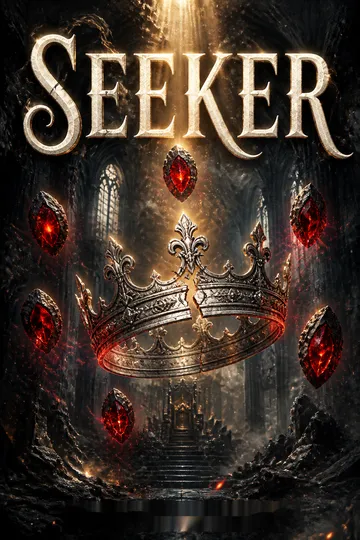
The second trial sends the surviving contestants out of the palace to recover Queen Ophelia's missing crown, with the winner promised the title of Seeker. Each woman receives a red stone said to be enchanted by Titus to draw its holder toward the crown. Calla feels an older, living magic in hers and suspects the king's explanation is false.
The three princes decide to travel with the contestants, still masked in public, and Ty supplies Calla with a silver horse she names Cat. On the road, Calla and Lady Hazel notice that the escort has not been strengthened despite the princes' presence. Before they can reach Wakefield, strange purple-blue storm clouds gather ahead, turning the quest into a fight for shelter.
The trial dresses a succession crisis as a treasure hunt. Its official promise of land, wealth, and status is thin protection in a contest already marked by deaths, while the crown's stone gives Calla a sensory clue the court's explanations cannot contain. Her instinct is becoming a form of knowledge, though she has little institutional power with which to validate it. The princes' decision to travel openly shifts the expedition's stakes: their presence offers protection, but also exposes the candidates to political danger. The storm makes that danger immediate and physical.
The Storm Takes Its Due
Wild magic rain catches the riders before they can reach the forest. The storm's lightning disintegrates a tree and kills two guards with a single strike, while the carriages carrying the other women fall behind. Ty turns back with most of the soldiers to protect them; Calla continues toward a deserted farm with Lee and two guards.
One bolt kills both guards, leaving Calla and Lee to reach the barn alone. They strip off their soaked clothes and rinse the magic from their skin with a livestock sprinkler. Calla's skin has begun to buzz and she has scratched her arms bloody, but Lee helps her wash the rain from her hair. They shelter in the hayloft until the storm passes, their attraction briefly surfacing amid the cold and danger.
The storm exposes how little control anyone has over the kingdom's failing magic. Its effects are unpredictable, but its violence is not abstract: two guards die, the party scatters, and Calla has to rely on practical skills rather than noble status. The barn compresses intimacy and survival into the same space. Lee's care is tender, yet the danger prevents tenderness from becoming an escape from the larger crisis. Calla's attention to the other women, even when it costs her safety, also distinguishes her from the court's competitive logic.
Six Eyes in Wakefield
At Wakefield's traveling market, a six-eyed creature with two rows of jaws bursts through a honey-ball stall and kills Lady Liesel and two guards. When Calla sees it swallow Liesel's crown stone, she attacks with the throwing knives Ty bought her. The beast pins her shoulder and tears into her legs, but she jams a dagger into its jaw and finishes it as flames spread from shattered lanterns around them.
She cuts open its body and finds two stones, including the one it swallowed. Smoke overwhelms her before she can escape. A stranger lifts her from the burning building, but Calla cannot later remember what happened next. She vanishes for three days, leaving the princes to search Wakefield without knowing whether she survived.
Calla's intervention grows from a refusal to let danger become somebody else's problem, but the choice nearly kills her. Her new knives are practical gifts, not romantic tokens alone; they give her the means to act, even when acting carries a cost. The beast's appetite for the stones links the trial's scavenger hunt to the land's mutations, suggesting the crown is exerting a force beyond the king's staged contest. The stranger's rescue preserves Calla while withholding the explanation. Survival here creates a mystery rather than closure.
Nine Stones, One Lie
Calla wakes on a road outside Wakefield in a red dress, with painted nails and three days missing from her memory. She reaches the inn, where Zan, Ty, and Lee gather her in relief.
The princes reveal that the stones were rigged to lead contestants in circles, and that their guards were meant to give Lady Gracelin a fake crown so Titus could declare her the Seeker. Calla refuses the deception. Her pocket holds nine genuine stones, although she cannot explain how she collected the others while unconscious.
Their pull points north toward Ironforge, a town reported deserted. Later, Calla confronts Jules, her maid and former friend, who admits she has been reporting to crime lord Master Bloodeye. Calla refuses to submit to either man's plans and prepares to continue the quest.
The false trial reveals how institutions manufacture legitimacy: a crown, a designated winner, and a royal announcement could make a sham look official. Calla's unexplained possession of the stones reverses her position from contestant following a trail to the one person capable of interpreting it. Her return also brings a second betrayal into focus. Jules acts from fear and self-preservation, but her choice confirms that Calla cannot rely on friendship as an automatic refuge. The chapter's tension comes from competing systems of control, each expecting Calla to become useful to someone else.
Aana Comes Drowning
That night, a radiant woman lures Calla from the inn into the woods and identifies herself as Aana, the goddess of fortune she has prayed to for years. Aana calls Calla an abomination and tries to drown her in a stream. Calla frees herself by tearing a sharp stone from the creek bed and cutting the goddess's leg. Before fleeing, Aana warns that another goddess may also be hunting her.
Calla notices a new, faint mark on her neck, then returns to the princes and tells them what happened. They do not dismiss her account. Ty explains that Zan woke with the conviction that Calla was drowning, and Ty found her by following his brother's panic. Zan's new chest mark seems to connect him to Calla's feelings.
Aana's attack shatters the safety of religious belief: the goddess Calla trusted is not a distant ideal but an intimate threat. Calla survives by refusing the role of helpless supplicant, using the very ground beneath her to wound a divine attacker. Her emerging marks make connection feel both protective and invasive. Zan's perception helps save her, yet Calla has not consented to being emotionally legible to him. The episode expands the danger from court conspiracy to divine conflict without explaining why Calla has become its target.
The Meadow Takes Control
On the ride toward Ironforge, Zan tells Calla that the silver mark on his chest lets him sense sudden surges of her feelings. When they find a spineback piglet trapped in liquid bronze, Zan risks his hands and frees it with his shirt. Later, Ty leads Calla into a meadow of lilac flowers. Their scent clouds her judgment, and she and Ty have sex while an unseen magical barrier keeps the others away.
When the effect breaks, Zan and Ty fight with startling ferocity, while Lee admits the brothers have misjudged how willing they are to share Calla. Calla stops the fight by dousing them with Lee's water flask. The meadow's enchantment leaves her shaken, and the princes' rivalry now threatens the trust she needs from them.
The meadow turns desire into an environment that acts upon the characters, complicating any easy distinction between authentic feeling and magical coercion. Calla's attraction to Ty is real, but the flowers amplify it until ordinary judgment disappears. The brothers' fight then exposes the cost of treating their shared affection as a private arrangement without fully confronting its limits. Calla refuses to be treated as a prize, yet she also cannot dismiss the emotional harm her indecision causes. The episode makes consent, jealousy, and magical influence part of the same unstable negotiation.
Beast-Women of Ironforge
Calla notices two glowing figures watching from a tree: a winged woman and an armored man, later identified as Rayventh, goddess of love, and Gewalt, god of war. They seem amused by the lovers' conflict. Before Calla can question them, Sagen runs into the meadow and an arrow strikes her shoulder.
Beast-shaped women surround the group, bind their wrists, and march them into Ironforge. The captors ignore royal titles and rough up the princes, while Calla and Lee try to understand why the town supposedly empty of people is inhabited.
In the town hall cell, the prisoners learn that the women blame King Titus for the collapse of magic and their mutations. Their arrival turns a missing-crown quest into direct contact with the kingdom's abandoned victims.
The gods' presence reframes the meadow's violence as something more than private jealousy, but their amusement makes divine intervention feel dangerously casual. The beast-women, by contrast, embody consequences that cannot be laughed away: their bodies carry the cost of a political and magical crisis. By taking the princes prisoner without regard for rank, they briefly invert the hierarchy that has governed the trials. Calla's position between royal power and the women harmed by it becomes harder to avoid. The quest now has a human community at stake, not merely a crown.
Sagen's Secret Alliance
After Lee heals Sagen's wound, Sagen explains that she has been helping the princes gather intelligence because they needed an ally among the trial contestants. Her presence in Zan's room had not been an affair, and she did not revive him; Calla's own unexplained magic remains the likely cause. A guard offers to release Calla, Sagen, and Jules while keeping the men imprisoned.
Calla refuses to leave without the princes, and Sagen stays with her. Their captors say the Ironforge women were changed when the king drained the land's magic, and their High Priestess may be able to explain what happened. Under a blood-red moon, the guard finally agrees to take Calla and Sagen to her. Calla carries the stones that seem to point toward the crown.
Sagen's disclosure recasts her hostility as partly strategic without erasing its cruelty. She is neither simply rival nor ally; she has been navigating the trial as an operative, much as the princes have. Calla's refusal to accept selective freedom marks a moral choice with practical risk. She will not escape by leaving people she loves to face danger alone, but she also insists on meeting the community's authority rather than treating its prisoners as obstacles. The blood moon intensifies the sense that ordinary political explanations are no longer sufficient.
The Crown Beneath Ironforge
The High Priestess, Rema, receives Calla and Sagen in an old mine. She explains that the town's mutations followed the king's theft of the land's magic, and that many residents died or fled before the surviving women sought her protection. When Calla's stones vibrate, Rema produces Queen Ophelia's real crown, which she has kept hidden.
Sagen cannot touch it, and Rema says only Calla can. Sagen recognizes Calla's surname as the one given to orphans in Lakehaven, exposing that her supposed noble background is false. Calla reaches for the crown anyway. Its magic draws her into a vision, while Sagen remains behind in the mine. The object she has pursued is not just proof of a trial victory; it is keyed to Calla herself.
Rema's account gives political language to a crisis experienced as bodily mutation and disappearance. The crown's restriction to Calla quietly shifts the quest from a public competition toward a question of inheritance, though Calla has not yet been told what that means. Sagen's recognition of the Waise name strips away Calla's protective cover at a moment when she cannot retreat from the consequences. The crown is both a political object and a test of belonging. Its magic does not reward rank or ambition; it responds to a history Calla does not know.
Ophelia's Heir Awakens
Inside the crown's vision, Calla meets the memory of Queen Ophelia, who recognizes her as Zarina, her lost daughter and rightful heir. Ophelia explains that she placed part of her soul in the crown so it would reach her child, and that her family carries ancient magic through a divine ancestor. She urges Calla to trust her intuition and search beneath the queen's sanctuary.
A second god appears and reveals that Calla's father is Sal, ruler of the gods, and that the gods have returned because someone is damaging the land's magic. When Calla returns to the mine, the women have become human again, and they hail her as queen. Rema vanishes, leaving Calla with the crown and a warning that not every god wants her dead.
The revelation gives Calla a lineage, but not a simple homecoming. Her mother can offer recognition only through a fading spell, and the inheritance arrives bundled with political danger and a divine vendetta. Calla's identity has been assembled through survival, disguise, and chosen attachments; royal ancestry does not erase those experiences. The cure in Ironforge also complicates individual heroism. Calla touches the crown, but the priestess and the community's prior endurance make the restoration possible. The scene offers recognition while withholding a stable explanation of who is manipulating the world's magic.
Red Dawn, Broken Bridge
During Ironforge's celebration, Calla hides the crown rather than accept the queen's role immediately. Zan confronts her about choosing among the brothers; when she refuses, he leaves the inn for his horse. Calla follows him to the stables, but he rides away and reaches the suspension bridge just as its cables snap. The bridge drops into the ravine, and Calla believes Zan has died.
Sagen saves her from an arrow and drags her back into the stable as King Titus's soldiers attack the town. The two women arm themselves, wake the guests, and fight in the streets. Calla kills a rooftop archer with one of Ty's knives, then sees Lee and Ty battling beside the Ironforge women. Titus's adviser Taipanus captures Ty with a metal-tipped whip.
The romantic conflict becomes a literal separation when Zan rides away, and the bridge's collapse turns an unresolved choice into apparent irreversible loss. Calla's refusal is not a lack of feeling; it is an unwillingness to rank attachments she experiences as equally real. The attack then prevents private grief from becoming the only response available. Sagen's rescue and Calla's use of Ty's knife convert intimacy into practical survival. The battle exposes the king's real answer to a rival claim: rather than honor the trial, his forces seize the people and power that might challenge him.
A Soul Torn Free
Calla follows Taipanus to an old crane at the edge of a cliff, where he holds Ty aloft and threatens to drain the prince's magic. Taipanus uses a dark, enchanted blade to stab Ty, and black veins begin spreading through his body. Calla's fear erupts as a force that lets her sense lives across Ironforge. She releases the townspeople from her grasp, then tears Taipanus's soul from his body.
His death also removes the grip holding Ty, and the prince drops over the ravine. Calla catches his hand and strains to hold him, but the dark magic clouds his eyes and his fingers slip against hers. The story ends with Ty suspended above the drop, Calla unable to tell whether she can keep him from falling.
Calla's power arrives as a crisis of responsibility: for an instant, she can feel how easily she might control every life around her. Her decision to spare the townspeople while killing Taipanus distinguishes protection from domination, but the choice is made under unbearable pressure. Victory over the adviser immediately creates a new danger because his body had been holding Ty. The cliffhanger refuses the usual exchange of power for security. Calla can act on a vast scale, yet the person she loves remains physically beyond her control, leaving the book's central tension unresolved.
Analysis
Seeker makes political legitimacy feel less like a matter of law than a contest over who can control the story of succession. Titus turns the trials into theater: a false crown and a designated winner would make manipulation look like tradition. Against that machinery, Calla's ability to notice what does not fit becomes a form of political intelligence. She reads the warmth of a jewel, the danger in a storm, and the motives hidden beneath courtly behavior. Her knowledge is practical and embodied, formed by vigilance rather than education at court.
The novel's romantic conflict is not separable from that struggle for power. Calla wants the three princes, but her refusal to choose forces them to confront the difference between loving her and accepting uncertainty. Zan's departure is painful because his demand is not simply possessive; he fears becoming someone he despises through jealousy. Yet his ultimatum also asks Calla to reduce her feelings to a hierarchy she does not experience. The enchanted meadow sharpens this problem by showing how magic can intensify desire while making consent and choice harder to interpret.
The gods enlarge the story's scale without providing moral clarity. Aana's attack overturns Calla's trust in religious comfort, while Rayventh and Gewalt treat the lovers' conflict as entertainment. Barmzig's influence, by contrast, is associated with mercy and communal survival. Divine power is therefore neither inherently benevolent nor uniformly hostile. It resembles political power: its meaning depends on who wields it and whose vulnerability it ignores.
Calla's transformation into Queen Zarina does not settle the conflict. The crown identifies her as an heir, but the title arrives just as Titus's forces attack and the brothers' relationship fractures. At the crane, Calla discovers immense power and uses it selectively, refusing to crush the whole town simply because she can. Still, the final image leaves her holding Ty above the ravine, unable to convert power into certainty. The book's central question remains open: can Calla inherit authority without reproducing the coercion that made her world so dangerous?
People Also Read

Characters
Calla
The streetwise contenderCalla is observant, resourceful, and suspicious of anyone who offers safety in exchange for obedience. She reads rooms and danger quickly, skills that let her navigate a court whose customs are designed for people born to privilege. Beneath her defiance is a fierce attachment to those she chooses, even when loyalty puts her in danger. Calla's humor helps her endure fear, but her reflex to carry every burden herself can make intimacy difficult. She is drawn to the princes without knowing how to make her desire fair to any of them. Her strongest instinct is not ambition but refusal: she resists becoming property, a political tool, or a spectator to someone else's suffering.
Zan
The guarded eldest princeZan, known publicly as Prince Alexander, is the eldest of the three brothers and carries himself with a deliberately sharp, imperious edge. Beneath that performance lies a man willing to risk himself when a secret matters, though his choices can be reckless and his jealousy difficult to contain. He and Calla are drawn together by a volatile mixture of distrust, desire, and unexpected tenderness. Zan wants to protect the people he loves, but he also wants certainty from them, a need that clashes with Calla's refusal to choose among the brothers. His pride is both armor and vulnerability: he would rather withdraw than remain in a relationship that makes him feel replaceable.
Ty
The battle-ready princeTy, Prince Thibault, is the youngest brother, a trained fighter whose physical confidence often turns flirtation into a contest. He is bold and teasing, but he also notices when Calla is in danger and acts quickly to protect her. His attraction to her is open and forceful, which can be exhilarating for her and unsettling for his brothers. Ty's competitive streak coexists with genuine loyalty to his family; he does not want to be the reason they break apart, even when he refuses to hide his own desire. He expresses care through action, from choosing a horse for Calla to helping her survive the road, and he is most comfortable when danger gives him something concrete to confront.
Lee
The gentle royal healerLee, Prince Louis, is the middle brother and the healer among the three. He is patient, perceptive, and intellectually curious, often trying to understand a crisis before deciding how to respond. His gentleness is not passivity: he can be jealous, stubborn, and unwilling to surrender his place in Calla's life simply because he is the least forceful of the brothers. He offers care through healing and attention, while his attraction to Calla makes that care emotionally complicated. Lee's instinct to mediate helps keep the brothers connected, but it also risks making him responsible for everyone else's feelings. His reserve gives way when he decides that being agreeable is no longer enough.
Sagen
The hard-to-read princessSagen is a princess with a cutting tongue, a composed public manner, and a talent for keeping her motives difficult to read. She appears to treat the trials as a competition and Calla as a rival, but her sharpness is paired with practical courage and a willingness to take risks. Sagen understands court performance and uses it as cover, making her more politically alert than her contemptuous manner suggests. She does not offer warmth easily, yet she can recognize when another woman needs protection. Her relationship with Calla shifts through friction rather than easy affection, and their uneasy alliance depends on what each is willing to do when survival matters more than pride.
Jules
The compromised friendJules is Calla's former friend and maid, a woman whose choices are shaped by poverty and fear of the powerful people around her. She is quick to talk, skilled at performing whatever role will keep her safe, and capable of making betrayal sound like mere practicality. Her history with Calla gives their arguments an intimacy that a court acquaintance could not have. Jules wants security, but she also wants to believe that survival excuses the damage she causes. She tests Calla's ability to distinguish compassion from renewed trust.
King Titus
The grasping kingTitus rules Teich and is father to Zan, Ty, and Lee. He treats the throne as something to preserve rather than a public trust, and the court's rituals bend toward his interests. His authority is reinforced by advisers, guards, and the trials themselves, allowing him to present coercion as tradition. Titus's relationship with his sons is marked by power rather than intimacy; their royal status does not protect them from his reach. He represents a ruler who sees succession as a threat to personal control.
Lord Taipanus
The king's polished adviserTaipanus is a senior royal adviser, a smooth political operator whose access to the king gives him influence over the court's most dangerous decisions. His manner suggests patience and calculation rather than open force, making him easy to underestimate. He is closely associated with the machinery of the trials and the king's private plans. Taipanus is the kind of official who turns a ruler's appetite for control into procedures, poison, and armed action.
Queen Ophelia
The remembered queenOphelia was Teich's former queen, remembered through a missing crown, an abandoned sanctuary, and stories of the kingdom before its magic faded. She is absent from most of the present action, yet her legacy shapes the trials and the political claims made in her name. Her story suggests a ruler who guarded knowledge carefully and understood that the throne's public face might not be its whole truth. For Calla, Ophelia represents a history that has been deliberately obscured.
Aana
The dangerous fortune goddessAana is the goddess of fortune, a deity Calla has treated as a source of comfort and luck. Her beauty and luminous presence make her seem worthy of reverence, but her character is not safely contained by the prayers people offer her. Aana's attention carries an unnerving intimacy: she knows more than a mortal should be able to know and acts according to divine purposes rather than human ideas of fairness. She embodies the gap between a culture's comforting image of a god and the god's own will.
Rema
The wolf-headed priestessRema is the High Priestess of Barmzig, encountered in the Ironforge mines. Her wolf-like features set her apart, but her voice and bearing are calm, ceremonial, and compassionate. She serves as a guide to the women of a damaged town and carries authority that does not depend on the royal court. Rema speaks in terms of mercy and survival rather than political advantage, though she keeps some knowledge to herself. Her presence offers Calla a different model of leadership, rooted in care for a community rather than possession of a throne.
Barmzig
The goddess of mercyBarmzig is the goddess of mercy, invoked by people who ask for relief from suffering. Her name is associated with the Ironforge priestess and the possibility that divine power can preserve human life amid the kingdom's magical collapse.
Rayventh
The watching love goddessRayventh is the goddess of love, one of the luminous figures Calla glimpses in the meadow. Her presence suggests that desire among mortals can attract divine attention, though her amusement makes her motives difficult to trust.
Gewalt
The armored war godGewalt is the god of war, appearing beside Rayventh as an armored, watchful figure. His association with conflict makes his quiet observation of the princes' rivalry feel less like neutral witnessing than an invitation to violence.
Sal
The ruler of the godsSal is the god of fate and ruler of the pantheon, a distant authority whose decisions reach mortal lives through magic and divine politics. People invoke him as a figure of destiny, though the events surrounding the royal family suggest that even fate has personal consequences.
Lieutenant Greenjoy
The scholarly soldierGreenjoy is a lieutenant who once pursued academic work before joining the military to support his family. He watches carefully, knows more about old beliefs than most soldiers, and is willing to consider explanations beyond royal propaganda. His curiosity makes him useful when the group encounters gods, mutations, and magic that the court has failed to explain.
Captain Jefferson
The loyal escort captainJefferson commands the guards accompanying the trial contestants. He is measured and dutiful, but his loyalty is not blindly attached to the king. His decisions help the princes and Calla navigate a court where even military allegiance can become a political choice.
Lady Gracelin
The ambitious court rivalGracelin is one of the noble contestants in the Royal Trials, confident in her status and eager to benefit from courtly favor. Her polished manner places her firmly among the candidates who understand competition as a route to power.
Lady Liesel
The doomed trial contestantLiesel is a noble contestant whose public confidence and concern with prices mark her as accustomed to privilege. Her brief place in the quest connects the court's insulated contestants to the lethal dangers beyond the palace.
Lady Hazel
The cautious horsewomanHazel is a thoughtful contestant who notices the trial's suspiciously light guard detail and questions whether the quest is truly safe. Her caution shows that not every noblewoman accepts the official account without scrutiny.
Plot Devices
The identity oath
A secret with lethal forceThe oath prevents the princes from revealing their identities while they serve as tutors during the trials. Its punishment is physical and catastrophic: when Zan breaks it, blood loss and a brain hemorrhage leave him apparently dead. The oath creates the central irony that the princes need Calla's trust but are magically forbidden to earn it through honesty. Calla's own false identity makes the rule more complicated, since she is also surviving through disguise. When Zan breaks the oath, the concealment system changes, allowing the brothers to speak more openly, but it does not remove the political danger that made secrecy necessary.
The Royal Trials
A courtly succession contestThe trials are presented as a way to choose a queen and consort, testing the contestants through dangerous competitions. They also serve the king's political needs: the contestants can be manipulated, eliminated, or used to disguise a predetermined outcome. The crown-recovery challenge sends the women beyond the palace and gives them stones that supposedly lead to Queen Ophelia's lost crown. Its public promise of a title and reward masks the danger of the surrounding conspiracy. The trials force Calla to navigate both courtship and political survival, with every choice carrying consequences for her and the princes.
The crown stones
A false trail to inheritanceThe contestants receive red stones presented as fragments of Ophelia's crown, with the king claiming they will pull their holders toward the missing artifact. In practice, the stones distributed for the trial are a deceptive mechanism that leads contestants in circles. The genuine stones respond to older magic, attract dangerous creatures, and eventually point Calla toward Ironforge. Their role shifts from navigation to recognition: the true crown responds to Calla in a way it does not to the other contestants. The stones link the false competition to the buried history of the royal family.
The silver marks
Magic made intimateSilver marks appear on Calla and Zan, linking them through a magic neither understands at first. The mark on Zan's chest allows him to sense sudden emotional shifts in Calla and alerts him when she is in danger. The marks also suggest that Calla's body carries a history beyond her conscious memory. They make magic personal and relational rather than merely a weapon or a royal privilege. Their protection and insight come at a cost, because emotional access can blur the boundaries between care, privacy, and control.
Wild magic
A kingdom's unraveling weatherAs magic drains from Teich, it gathers into violent storms and unpredictable transformations. Rain can change bodies, while magical lightning can erase trees and kill people outright. Some effects fade quickly, but the mutations in places such as Ironforge show that the damage can endure. Wild magic makes the kingdom's political crisis visible in the weather and in the bodies of its inhabitants. It also gives Calla experiences she cannot explain, including the apparent emergence of power when she is frightened or grieving. The phenomenon connects local disasters to the wider struggle over the land's magic.
The Royal Trials Series Series






Download PDF
Download EPUB
.epub digital book format is ideal for reading ebooks on phones, tablets, and e-readers.








