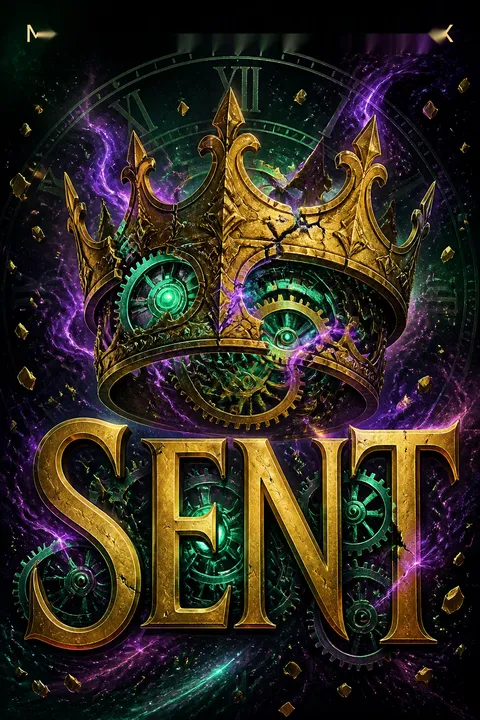


Plot Summary
Prologue
Jonah, his sister Katherine, and their friend Chip plunge into an unknown past after Jonah interrupts the time travelers’ plan to send Chip and Alex away alone. Jonah has taken a Taser and the Elucidator, a device he barely understands, and argues that he and Katherine must be allowed to help their friends.
JB, the time officer directing events, finally agrees. As the familiar world disappears, Jonah realizes they are falling toward the fifteenth century, where Chip and Alex have been sent to resume their endangered historical lives.
The opening makes loyalty the first force to disrupt the machinery of time. Jonah does not understand the Elucidator or the historical stakes, yet he acts because separation feels more dangerous than the unknown. His boldness is partly protective instinct: Katherine is frightened, Chip is being taken, and Jonah turns fear into a demand for shared risk. The prologue also establishes the story’s central conflict between preserving history and protecting actual children. JB treats the past as a system with rules; Jonah insists that the people caught inside those rules must be allowed to matter.
A King Without a Crown
The four children arrive sick and disoriented in a dark stone room. Jonah can barely move, but Chip demands answers from JB, the time officer speaking through the Elucidator. JB explains that Chip is really Edward V, the twelve-year-old king of England, and that Alex is his younger brother, Prince Richard.
The boys had been stolen from history as infants and raised in modern Ohio, unaware of their identities. Chip is delighted to learn he is royal, while Jonah suspects that being a child king may be dangerous. Katherine, suffering badly from her first time jump, refuses JB’s offer to take her home. When she opens the door, she sees two pale, transparent boys who look like younger versions of Chip and Alex.
Identity arrives here as a bodily and political shock, not a tidy revelation. Chip initially interprets royalty as proof that his life has finally acquired value, a sharp response to the neglect he remembers from his adoptive home. Jonah, by contrast, immediately imagines the danger attached to a crown. Katherine’s refusal to leave gives the siblings’ bond practical force: she is not simply a witness but a participant who chooses uncertainty over safety. The ghostly boys complicate the idea of a single self. The children have not merely traveled to another place; they have entered the lives they were removed from.
The Tracers Take Shape
The transparent boys are tracers, images of what Edward and Richard would have been doing if history had continued undisturbed. Jonah watches them pray, quarrel, and comfort each other, while Chip and Alex discover that they can pass their hands through the figures. Then Chip settles into the older boy’s space and merges with him.
For a moment, his modern clothes and face overlap with the prince’s, and he begins thinking with Edward’s memories and fears. Alex joins his own tracer and experiences the same pull. Katherine cannot merge because she has no historical counterpart in the room. When intruders approach, Jonah and Katherine drag the boys away. Chip returns shaken, carrying the conviction that his uncle may kill him.
The tracers make historical identity intimate and seductive. Chip and Alex do not simply observe their younger selves; they temporarily inherit their thoughts, faith, memories, and loyalties. This blurs the boundary between a life chosen through experience and a life assigned by birth. Katherine’s inability to merge marks her as an outsider to this history, but also leaves her better able to notice when her friends are being absorbed by it. The scene’s danger grows from an understandable desire to belong: the boys feel at home in the past even as its political facts threaten them.
The Window Plot
Two men enter the princes’ chamber and claim that Queen Elizabeth has sent them to rescue her sons. Chip and Alex, drawn toward their tracers, trust the supposed rescuers and climb onto the bed. Jonah and Katherine hesitate, unsure whether interfering will expose them, until the men seize the boys and carry them toward the window. A candle falls, plunging the room into darkness.
Jonah uses the tracers’ brief flashes of light to find Chip and pull him clear just as a man throws the historical image out of the window. Katherine frees Alex. The tracers fall, but the real boys remain in the room. Outside, searchers cry out that the bodies are missing, revealing that the children’s intervention has changed events.
The rescue turns uncertainty into action before the children can know whether they are saving or damaging history. Jonah’s decisive movement is not based on expert knowledge; it follows the evidence of a body being thrown from a window. The darkness and the tracers make improvisation possible, but they also expose the cost of acting without understanding. Jonah initially mistakes the absence of bodies for proof that everything is repaired. The searchers’ confusion corrects him: intervention has not erased the historical crisis, only changed its visible evidence. The scene gives the children agency while refusing to make that agency feel simple or consequence-free.
Invisible in the Tower
Chip accuses JB of wanting the princes dead and kicks the Elucidator across the floor. Jonah restores the damaged device, but Chip silences it before JB can explain the missing bodies. As guards search the Tower of London, Alex finds an invisibility setting.
The children become nearly transparent and hide behind a wall hanging, where Jonah accidentally knocks burning ash onto his ear. When guards investigate, their movements make the torch flames shift, and Jonah smothers a spark that catches Katherine’s hair.
The men retreat, calling the disturbance supernatural. By morning, the children test the limits of their invisibility, steal food from the royal breakfast tray, and learn from Chip that he had begun to feel imprisoned before the attempted escape.
The Elucidator’s failure translates mistrust into immediate physical risk. Chip’s anger is understandable, since JB has withheld crucial information, but muting the device also shuts off the one channel that might clarify the danger. The children survive through small acts of cooperation rather than mastery: Alex finds a setting, Jonah protects Katherine from fire, and they conceal the evidence left by breakfast. Their invisibility is not full safety. It makes them difficult to see but leaves them able to disturb air, objects, and other people’s suspicions. The episode turns concealment into a fragile tactic, not a solution.
The Barge to Westminster
The children leave the Tower to discover why nobody is openly searching for the missing princes. They hear that a coronation is underway and follow the crowd onto a river barge. When Chip jumps aboard, he throws the boat off balance and nearly draws attention to all four children. Katherine swims around to the far side and steadies it.
At Westminster, the crowd cheers for Richard III, Chip’s uncle. Chip recognizes the coronation route meant for him and races toward the procession, intent on confronting Richard and reclaiming his crown. Jonah catches him before he reaches the royal canopy. He reminds Chip that a public attack would reveal them and could destroy their chance to survive.
Chip’s near-charge exposes how quickly historical identity can overtake the modern boy. The crown is no longer an abstract title; it is a stolen future he feels entitled to defend. Jonah’s intervention is an act of friendship that also forces Chip to recognize the difference between emotional justice and a survivable plan. Katherine’s quick correction of the listing barge shows her practical competence under pressure, despite her fear of the past. Together, the episode shifts the children from passive observers to visible disruptions whose choices can alter the behavior of crowds and the course of political events.
Ghosts at the Shrine
Inside Westminster Abbey, Chip confronts Richard while his uncle kneels at a shrine. Chip’s accusations unsettle Richard, who suddenly sees the children and recognizes them as his nephews. The Elucidator’s restoration ends at that moment, making Jonah, Katherine, Chip, and Alex visible in their modern clothes.
Katherine improvises an explanation that the boys have returned as spirits, then Alex leads the group through a hidden passage. They emerge among monks preparing for the coronation.
The monks say Edward’s parents may not have been legally married, a claim used to deny his right to inherit. Chip is devastated that people believe it. Alex guides the others to a crypt, where they decide they must reach Queen Elizabeth and learn what happened.
The children’s sudden visibility makes their intervention impossible to dismiss as private fantasy. Katherine uses the period’s religious assumptions to buy time, while Alex’s knowledge of the cathedral turns into a means of escape. The monks’ account reveals that political power is sustained not only by force but by stories that make force appear lawful. Chip’s distress is therefore deeper than lost status: the accusation attacks his family’s legitimacy and the truth of his own belonging. The scene also sharpens the contrast between modern certainty and medieval power, where a public claim can determine whether a child is treated as king or disposable threat.
The Queen’s Living Sons
At Westminster sanctuary, the children find Queen Elizabeth and her daughters grieving for Chip and Alex. The brothers see their own tracers nearby, alive and laughing in the original course of history. They merge with those images, becoming visible to their family, who embrace them with relief.
The queen explains that her plan to rescue them failed and that Richard has executed several of her allies, including Lord Rivers. Jonah and Katherine realize they have mistaken the princes’ fate: the original boys survived the window escape.
When they try to pull Chip and Alex away from their family, JB removes the two modern children from the scene. He explains that their attempt to interfere openly violated time rules and finally offers to explain what is happening.
The discovery overturns the children’s working story: the window was not the end of the princes’ lives but the beginning of a dangerous escape. The tracers’ survival makes the past more complicated than the simple tragedy Jonah feared, while the queen’s grief shows how little she can know about her sons’ actual safety. Chip and Alex’s reunion fulfills a powerful emotional need, but it also intensifies their absorption into their historical identities. JB’s extraction stops Jonah and Katherine from forcing another separation. His intervention is controlling, yet it reveals that restraint can sometimes protect the children from their own well-intentioned urgency.
Two Years to Bosworth
JB explains that the men at the Tower were part of competing plots. One intended the princes to die; another hoped they would be caught and secretly rescued by Elizabeth’s agents. In the original events, Edward and Richard landed in bushes and escaped, leaving both factions uncertain about their fate.
Jonah and Katherine’s intervention was risky, but projections suggest it may still lead to the best outcome. The children learn that Chip and Alex must remain in 1483 until the Battle of Bosworth in 1485.
JB shows Richard struggling to secure his rule, Buckingham rebelling and being defeated by floods, then Richard losing his young son and wife. As the princes grow older and train with swords, Jonah and Katherine prepare for a narrow chance to bring them home.
JB’s explanation replaces a moralized account of villains and victims with a system of conflicting intentions. Even the apparent assassins operate within competing plans, and the princes’ survival depends on contingency rather than a clean rescue. The two-year wait also forces Jonah and Katherine to accept that friendship cannot mean immediate possession or protection. Meanwhile, Richard’s grief complicates the image of a ruler defined only by ambition. By showing political loss alongside private bereavement, the story asks readers to hold accountability and empathy together, without allowing sorrow to erase the consequences of power.
Armor for the Last Battle
JB sends Jonah and Katherine back without the Elucidator, since its advanced technology could contaminate the past. They wear heavy armor and carry translation help, but have no way to contact JB once they arrive. Before dawn, they find themselves in Richard’s tent.
The king believes they are spirits connected to his dead nephews and asks whether his wife and son are at peace. Katherine urges him toward repentance, and the children leave without explaining their true identities.
On the morning of the battle, Richard receives a message from Lord Stanley, who refuses to save his captured son by supporting the king. Richard declines to order the boy’s death. The children wonder whether their visit has altered Richard’s choice as the armies begin to move.
The return strips away the safety of remote observation. Without the Elucidator, Jonah and Katherine must act with no instant appeal to JB, and their first encounter is with a grieving king rather than an enemy in armor. Their advice is improvised, shaped by compassion and imperfect knowledge. Richard’s refusal to sacrifice Lord Strange suggests that private remorse can influence public action, but the children cannot know whether they have changed his behavior or merely witnessed it. The uncertainty matters: moral choice is not presented as a predictable output of a time-travel calculation.
Katherine Breaks the Spell
Jonah and Katherine skirt the fighting to find the princes among Richard’s troops. Their first attempts to attract Chip’s attention fail; he and Alex are nearly absorbed in the thoughts of their older selves. Katherine finally tells Chip that her feelings for him are genuine, and kisses his cheek. Chip turns toward her, briefly separating from his tracer.
Jonah warns him that the time agents expect him and Alex to die if they remain. Chip pulls Alex partly free, and Alex begins to recover his modern memories. Before they can leave, Richard rides up, having learned that his nephews are alive. He faces the boys directly, acknowledges his wrongdoing, and promises to return the crown to Chip if they defeat Henry Tudor.
Katherine’s confession works because it offers Chip a present-tense relationship that competes with the historical self pulling him backward. The moment is emotionally awkward rather than ceremonious, which makes its force credible: she risks embarrassment, and Chip responds to the person who has come to save him. Alex’s partial return confirms that connection can loosen the tracer’s hold. Richard’s arrival then changes the moral geometry. The children expected an enemy to attack; instead, they encounter a king capable of remorse and restitution, making escape harder precisely because a new possibility has appeared.
The Crown Returned
Richard’s promise gives Chip a reason to stay, but the battle interrupts before he can answer. Word spreads that Norfolk, Richard’s strongest commander, has fallen, and his troops begin to lose ground. Richard tells Chip that he must first defend the crown he intends to return, then charges into the fighting.
He breaks through Henry Tudor’s forces and reaches the standard-bearer, but his horse is brought down and the soldiers surround him. Richard falls, and his crown rolls away across the battlefield. Chip sees it and runs toward the fight, convinced that his lost throne is within reach. Alex follows his brother, while Jonah and Katherine struggle to keep them from being swallowed by the advancing combatants.
Richard’s offer creates a genuine alternative to the story the children have been told: the crown may be restored without further violence. Yet the battle makes that promise almost instantly unusable. His final charge can be read as courage, desperation, or an attempt to fulfill his kingly duty, and the text resists making any single motive sufficient. Chip’s rush toward the fallen crown reveals how strongly the old identity still governs him. What looks like a chance to reclaim justice is also the route by which he and Alex may lose their lives.
The Battle’s Last Choice
Jonah tackles one of Chip’s attackers and pleads with him to leave, but Chip keeps fighting for the crown. Jonah forces him to consider what his death would mean to Katherine and to the friends who crossed centuries for him. Katherine makes clear that she would rather save him than grieve for him. Chip finally turns away from the battle.
He pulls Alex clear of an attacker’s raised axe, separating his brother from the tracer at the decisive instant. An older soldier, Hadley Correo, uses an Elucidator to remove all four children from the battlefield. Jonah’s last sight is of the glowing tracers beneath the falling axe, while the living children return to the cave where their journey began.
The climax makes survival a choice rather than a prize delivered by history. Chip must relinquish the crown at the exact moment it seems attainable, and Jonah’s appeal succeeds because it connects political ambition to its intimate cost. Katherine’s affection is neither a magical cure nor a guarantee; it gives Chip a reason to see the battle from outside the role of king. Alex’s rescue completes the siblings’ bond in action. Hadley’s intervention confirms that the children were never entirely alone, but the final decision had to come from them.
Home After Five Centuries
The children land in the cave moments after they left, though Chip and Alex have lived through two years. Angela and the other missing children are waiting, and Jonah insists that they all deserve time at home before being sent back into history. JB agrees.
Chip worries that his medieval skills and memories have changed him beyond repair, but Hadley reminds him that every life alters the person who lives it. Jonah and Katherine change out of their battered armor, return to the high school adoption conference, and reunite with their parents, who think only a few hours have passed.
Jonah does not explain the five centuries; he asks for pizza. The ordinary request carries the relief of having returned to a world where food, family, and time are familiar.
The return does not erase what happened; it compresses the experience into a gap invisible to the children’s families. Jonah’s request for a pause before the other children are sent away shows that he has learned to treat preparation and farewell as part of care. Chip’s fear of losing his former self introduces a more lasting consequence than physical danger: experience cannot be cleanly reversed. The pizza request is comic, but it also gives Jonah a concrete way to reclaim home after a story dominated by unfamiliar food and unstable identities. Ordinary life now feels chosen, not assumed.
Epilogue
A week later, Chip and Alex are still carrying medieval habits into suburban life, while Jonah and Katherine discuss the people and events they witnessed. JB arrives with his dog, Dare, and assures them that the historical ripple has been released. He also explains that the record will not preserve the children’s role or Richard’s private remorse.
Then he asks Jonah and Katherine to help Andrea Crowell, another missing child, return to her own time. The projections suggest that Andrea has a better chance with their help and Dare beside them. Jonah agrees. Katherine follows, despite her nightmares about the fifteenth century, and the next journey begins before Jonah can ask about his own identity.
The epilogue refuses the comfort of a completed adventure. Jonah and Katherine have returned home, but their knowledge has made ordinary time feel provisional, and JB’s request asks them to choose responsibility again without coercion. The invitation matters because Jonah now knows that helping someone may demand a long absence and leave consequences no historical record can explain. Andrea’s need also turns the series of rescued children into a moral problem rather than a single exceptional case. The unresolved question of Jonah’s identity keeps his own story open, while his willingness to go suggests that belonging may be formed through action as much as ancestry.
Analysis
Sent functions as both a time-travel adventure and an inquiry into who gets to decide what a life means. Jonah, Katherine, Chip, and Alex are children whose identities have been managed by adults: Gary and Hodge remove them from history, JB tries to restore historical continuity, and dynastic politics defines Chip and Alex by bloodline and succession. The novel complicates each form of authority. The rescuers’ compassion does not make their interference harmless; JB’s expertise does not make his secrecy easy to trust; and a rightful claim to a crown does not automatically make it worth dying for.
The tracers give this conflict a striking psychological form. Chip and Alex experience historical selves not as distant ancestors but as available minds, complete with memories, faith, and emotional attachments. Their attraction to those selves reflects a genuine hunger for belonging, especially for Chip, who has felt peripheral in modern family life. Yet the story refuses to treat inherited identity as destiny. Jonah’s and Katherine’s loyalty becomes an alternative anchor, helping the boys recognize that connection can be chosen as well as assigned.
Historical uncertainty also shapes the book’s moral atmosphere. The children act without knowing whether a frightening scene is an assassination, a rescue, or both. Their rescue of the princes is courageous, but it begins with a mistaken belief about what happened in the original timeline. Good intentions cannot eliminate risk; instead, the characters must revise their understanding as new evidence appears. This is why the book’s strongest turning points involve listening, reconsidering, and choosing under pressure.
Finally, Richard’s remorse complicates the story’s inherited villainy without absolving his actions. The children encounter private grief that the public record cannot preserve, while JB explains that history may need a simplified villain to express a broader cultural judgment about violence against children. The novel leaves both ideas in tension: people exceed the stories told about them, but historical stories still shape which acts a society condemns. Jonah’s final willingness to help Andrea carries this lesson forward. Understanding the past does not grant control over it, but it can create obligations to those still caught inside it.
Review Summary
Sent receives mixed reviews, with an average rating of 3.94 out of 5. Many readers praise the engaging plot, historical research, and time travel concept. Some find the characters relatable and enjoy the series' progression. However, others criticize the confusing time travel mechanics, lack of character development, and occasional plot holes. Several reviewers note that while the book is entertaining, it may be better suited for younger readers. Despite some disappointments, many readers express interest in continuing the series to uncover more about the missing children of history.
People Also Read
Characters
Jonah
The reluctant time rescuerJonah is a thirteen-year-old adoptee raised in Ohio who learns that his life is connected to a larger historical mystery. He tends to joke when frightened and often acts before he understands the consequences, but his loyalty to Chip and Katherine repeatedly overrules his wish to stay safe. Jonah is alert to practical dangers, from fire to a friend charging into battle, even when he doubts his own judgment. His uncertainty about his origins makes the princes’ divided identities personal to him. He wants the comfort of home, yet increasingly accepts that protecting other children may require him to leave it.
Katherine
The fearless younger sisterKatherine is Jonah’s younger sister, a sharp-tongued sixth grader who cares about appearance, fairness, and being treated as capable. She is often frightened by the physical realities of the past, yet refuses to let fear decide who deserves help. Her quick thinking steadies the barge, protects the group’s cover, and helps draw Chip back from his historical identity. Katherine can be impatient and emotionally direct, but those traits also let her say what others avoid. Her bond with Jonah combines sibling irritation with deep loyalty, while her growing affection for Chip gives her a personal stake in whether he chooses a future.
Chip
The boy born to ruleChip is Jonah’s close friend, raised in modern Ohio but originally Edward V, the young king of England. His sarcasm often shields the hurt of feeling unwanted in his adoptive family. Learning that he is royal first feels like vindication, then becomes a powerful pull toward a life where he has family, purpose, and a recognized place. The tracer gives Chip access to Edward’s memories and convictions, complicating his sense of which self is authentic. His struggle is not simply whether to claim power, but whether belonging must be proved through a crown or can be found in the people who choose to stand beside him.
Alex
The questioning princeAlex is Chip’s younger brother, originally Prince Richard, and a modern boy with a sharp scientific mind. He notices patterns others miss and tries to make frightening events understandable through logic. The tracer unsettles that method by giving him a second framework for interpreting the world, including a medieval religious outlook that contrasts with his modern skepticism. Alex is less openly confrontational than Chip, but he is attentive to history, language, and his family’s political position. His bond with Chip is affectionate and complicated by the rank difference they inherit. He wants knowledge to provide certainty, even as time travel repeatedly shows him how incomplete any account can be.
JB
The rule-bound time officerJB is a time officer responsible for protecting history and managing the return of children stolen from their eras. He is intelligent, technically capable, and cautious about revealing information that might alter events. His commitment to rules can look cold to Jonah and Katherine, especially when he withholds explanations or removes them from danger without consent. Yet JB is not indifferent to the children’s safety; he struggles to balance historical continuity against the possibility that returning them may expose them to death. His relationship with Jonah and Katherine shifts from command and suspicion toward reluctant respect, as their untrained choices sometimes succeed where professional projections cannot.
Queen Elizabeth Woodville
The strategic royal motherElizabeth Woodville is Edward V and Richard’s mother, a politically alert woman facing the loss of her family’s influence. She understands that authority depends on alliances, public claims, and the ability to anticipate what powerful men will do. Her grief does not erase her composure, and her composure does not mean she is powerless. Elizabeth’s sanctuary becomes both refuge and political position. She is attentive to her sons, but their limited time with her has left them uncertain about what she can accomplish. Her character presents maternal care as strategic labor in a world where women have little formal power.
Richard III
The guarded usurping uncleRichard is the princes’ uncle and a ruler trying to consolidate authority in a kingdom shaped by decades of dynastic conflict. He is forceful and politically calculating, yet also capable of grief, religious anxiety, and genuine concern for his country. The children encounter him first through the accusations surrounding his rise to power, so his motives remain difficult to separate from the stories told by his opponents. Richard’s public confidence masks a private fear of judgment and loss. His character complicates the easy division between villain and victim without making political violence harmless or excusable.
Angela DuPre
The trusted adult allyAngela is the adult from the modern world who knows about time travel and offers the missing children a dependable point of contact. She is practical and observant, treating the children’s experience seriously rather than dismissing it as fantasy. Her presence in the cave links their extraordinary ordeal to the parents and ordinary lives waiting outside it. Angela does not take over the children’s decisions, but her support helps make it possible for Jonah to advocate for time to adjust before the next group is sent into history.
Hadley Correo
The veteran time agentHadley is an experienced time agent who appears in the fifteenth-century battle as a soldier and helps the children at a decisive moment. He is capable, but his presence does not remove their responsibility to make difficult choices. In the cave, he treats Jonah and Katherine with respect and recognizes the courage required of children working without training. Hadley’s practical warmth offers a counterpoint to JB’s more procedural manner, showing that expertise can be supportive without making the young characters’ decisions for them.
Andrea Crowell
The next missing childAndrea is a quiet girl with long braids among the children rescued from history. She has not yet begun her own journey in this story, but JB identifies her as the next child who may need help returning to her time. Her place in the epilogue expands the problem beyond Jonah, Katherine, Chip, and Alex. Andrea’s importance lies in the question her situation poses: whether people who have survived one dangerous rescue will accept responsibility for someone else’s, even when they do not yet know what awaits them.
Gary
A reckless child snatcherGary is one of the time travelers who removed endangered children from history, including Chip and Alex. He treats historical children as people who can be relocated for their own good, but his interventions risk altering events and drawing attention to the missing figures. His actions form part of the conflict that places Jonah and Katherine in the past. Gary’s role raises the story’s central ethical question: whether benevolent intentions justify taking control of another child’s life and identity.
Hodge
Gary’s historical partnerHodge works with Gary to remove children from dangerous moments in history. Like Gary, he believes that rescuing them is worth the disruption, but the plan carries consequences neither he nor his partner fully controls. Hodge’s scheme sets the story in motion by separating Chip and Alex from their original lives and placing them in modern families. His role is less about personal malice than the danger of treating historical lives as problems that outsiders can solve without consent.
Edward IV
The dead king fatherEdward IV is the late king whose death makes his son Edward V the successor and triggers the struggle over the throne. Chip and Alex remember him as a charismatic but excessive father. The accusations surrounding his marriage also become a political weapon against his children.
Buckingham
Richard’s shifting allyBuckingham is a powerful nobleman and Richard’s close political associate. His loyalties matter because the struggle for the crown depends on alliances that can change quickly. His later rebellion demonstrates how unstable Richard’s support becomes.
Lord Rivers
The princes’ maternal uncleLord Rivers is Elizabeth Woodville’s brother and one of Chip’s trusted guardians before the journey to London. Chip remembers him as loyal and protective, which makes his arrest a personal betrayal within the wider political struggle.
Lord Stanley
The wary power brokerLord Stanley commands troops whose support Richard wants for the coming battle. His refusal to comply, even when his son is held hostage, reveals how little certainty Richard has about his allies.
Henry Tudor
Richard’s rival claimantHenry Tudor leads the opposing army at Bosworth and represents a competing claim to England’s throne. He remains mostly at the edge of the children’s view, but his invasion makes the political conflict an immediate battlefield danger.
Dare
The time-traveling dogDare is JB’s large sheepdog. His role in the next mission is not explained, but JB’s projections identify him as part of the combination most likely to help Andrea. His calm presence gives the epilogue a deliberately ordinary companion for an extraordinary journey.
Plot Devices
The Elucidator
A tool with hidden settingsThe Elucidator is a time-travel device that adapts its appearance to the period it occupies, becoming a pebble-like object in the fifteenth century. It lets Jonah and the others communicate with JB, but its unfamiliar controls and the children’s distrust make it a source of danger as well as help. After Chip damages it, Jonah restores its functions and discovers invisibility. Later, the children leave it behind because its advanced technology could contaminate the past. Its shifting capabilities embody the gap between having access to power and understanding how to use it.
Historical tracers
A shadow of the unaltered pastTracers show what historical people would have been doing if time had followed its original course. Modern characters can see them, though people of the period usually cannot. When a time traveler enters the same space as a tracer, the two may merge, allowing the traveler to experience the historical person’s memories and outlook. This connection helps Chip and Alex understand their identities, but it can also draw them away from their modern selves. The tracers turn the abstract idea of historical possibility into visible, fragile bodies whose actions may change as the children intervene.
Frozen ripples
History held in suspensionTime officers have frozen the effects of children being removed from history, preventing the resulting changes from spreading while they attempt to return the missing children. This temporary pause makes it possible for Jonah, Katherine, Chip, and Alex to move through historical events without every consequence immediately rewriting the future. The system is not perfectly predictable: the children’s actions create new risks, and the time officers rely on projections to judge whether events remain recoverable. The frozen ripples make history feel less like a fixed record than a process that can be paused, disturbed, and released.
Timesickness
The body resists its eraTravel through time leaves the children nauseated, weak, and confused. A second form of timesickness comes from being physically out of place in a period where the atoms of their bodies do not belong. The effect distorts their sense of distance and effort, contributing to their misreading of the Tower window and the ground below. Chip and Alex experience a different pressure when close to their tracers, whose memories and instincts can overwhelm their modern identities. Timesickness therefore makes temporal displacement a bodily and psychological condition, not simply a change of scenery.
The uncertain record
History leaves room for interventionThe disputed disappearance of Edward V and his brother gives the story room to imagine events hidden behind conflicting historical accounts. The children do not know which version is correct, and even JB’s models cannot guarantee every outcome. Rumors about the princes’ legitimacy, survival, and fate influence how characters behave, while the eventual historical record preserves only fragments of what happened. The device links the fantasy plot to a problem of historical knowledge: records are made by people with motives, and silence can conceal both violence and survival.
FAQ
Synopsis & Basic Details
What is Sent about?
- Accidental time travelers: Jonah, Katherine, and Chip are unexpectedly sent to the 15th century, where Chip is revealed to be the rightful King Edward V.
- Navigating a dangerous past: They must navigate political intrigue, ghostly tracers, and the threat of Chip's uncle, Richard III, to survive and potentially alter history.
- A fight for survival: The story focuses on their struggle to protect Chip and Alex, and their attempts to return to their own time, while grappling with the complexities of time travel.
Why should I read Sent?
- Intriguing time travel: The book offers a unique take on time travel, exploring the consequences of altering the past and the challenges of navigating different eras.
- Complex characters: The characters are well-developed, with their own motivations and flaws, making them relatable and engaging.
- Fast-paced plot: The story is filled with action, suspense, and unexpected twists, keeping readers on the edge of their seats.
What is the background of Sent?
- Historical setting: The story is set in 15th-century England, during the reign of Richard III, a period of political turmoil and power struggles.
- Time travel concept: The book explores the concept of time travel and its potential impact on history, with a focus on the idea of "tracers" representing unaltered timelines.
- Adoption themes: The characters' experiences with adoption and identity are woven into the narrative, adding a layer of emotional depth.
What are the most memorable quotes in Sent?
- "Time knows how it's supposed to flow.": This quote highlights the theme of time's persistence and the difficulty of altering its course.
- "You have to let us try to save Alex and Chip and time.": This quote showcases Jonah's determination and the group's commitment to their mission.
- "Sometimes you have to fight for what you want. Sometimes the fight is all you get.": This quote reflects Chip's internal struggle and his acceptance of his fate.
What writing style, narrative choices, and literary techniques does Margaret Peterson Haddix use?
- Fast-paced narrative: Haddix employs a fast-paced, action-oriented narrative style that keeps the reader engaged and invested in the story.
- Multiple perspectives: The story is told from the perspectives of multiple characters, allowing readers to see events from different angles and understand their motivations.
- Foreshadowing and suspense: Haddix uses foreshadowing and suspense to create tension and keep readers guessing about what will happen next.
Hidden Details & Subtle Connections
What are some minor details that add significant meaning?
- The Elucidator's changing form: The Elucidator's ability to change its appearance to blend in with different time periods symbolizes the fluidity of time and the challenges of time travel.
- The mud on Katherine's armor: The mud on Katherine's armor after she slips in the swamp highlights the physical challenges of time travel and the characters' vulnerability.
- The recurring mention of food: The characters' hunger and their longing for familiar foods emphasize their displacement and the stark differences between their time and the 15th century.
What are some subtle foreshadowing and callbacks?
- Simba and The Lion King: Jonah's thoughts about Simba's desire to be king foreshadow Chip's own struggles with his royal identity and the dangers that come with it.
- The science museum mirrors: Katherine's fascination with the science museum mirrors foreshadows the blending of the characters with their tracers.
- The mention of the Niña, the Pinta, and the Santa María: Jonah's casual mention of Columbus's ships foreshadows the vastness of time and the fact that they are in a time before America was "discovered."
What are some unexpected character connections?
- JB and Hadley Correo: The revelation that JB and Hadley Correo are colleagues and friends adds a layer of complexity to the time travel agency and their methods.
- Chip and Alex's shared memories: The boys' ability to share memories and thoughts when connected to their tracers highlights their deep bond and the complexities of time travel.
- Richard III's grief: Richard's genuine grief over his son's death and his desire for forgiveness adds a layer of complexity to his character, challenging the reader's perception of him as a pure villain.
Who are the most significant supporting characters?
- Hadley Correo: Hadley's presence as a fellow time traveler who is also a soldier adds a layer of complexity to the time travel agency and their methods.
- Queen Elizabeth Woodville: The queen's intelligence and determination to protect her sons, even from sanctuary, highlight her strength and resourcefulness.
- The Whiskery Soldier: The whiskery soldier's unexpected help and possession of an Elucidator reveal the existence of other time travelers and their influence on history.
Psychological, Emotional, & Relational Analysis
What are some unspoken motivations of the characters?
- Jonah's desire for belonging: Jonah's eagerness to return home and his longing for familiar foods reveal his deep-seated desire for belonging and stability.
- Katherine's need for control: Katherine's frustration with the chaos of time travel and her desire to take charge highlight her need for control and her fear of the unknown.
- Chip's struggle with identity: Chip's internal conflict between his twenty-first-century identity and his royal heritage reveals his struggle to reconcile his past and present selves.
What psychological complexities do the characters exhibit?
- Chip's acceptance of fate: Chip's initial acceptance of his supposed death and his later desire to reclaim his throne reveal his complex relationship with his destiny.
- Alex's longing for his mother: Alex's longing for his mother and his desire to protect her highlight his emotional vulnerability and his deep-seated need for family.
- Richard III's internal conflict: Richard's internal conflict between his ambition and his guilt reveals the psychological toll of his actions and his struggle for redemption.
What are the major emotional turning points?
- The discovery of the tracers: The encounter with the tracers forces the characters to confront the reality of their situation and the potential consequences of their actions.
- The attempt to save Chip and Alex from the window: The near-death experience at the Tower of London forces the characters to confront their own mortality and the dangers of time travel.
- Richard's offer to return the crown: Richard's unexpected offer to return the crown to Chip forces the characters to reevaluate their goals and their understanding of the past.
How do relationship dynamics evolve?
- Jonah and Katherine's sibling bond: Jonah and Katherine's relationship evolves from typical sibling rivalry to a deep bond of trust and mutual support.
- Chip and Alex's brotherhood: Chip and Alex's relationship is strengthened by their shared experiences and their unwavering loyalty to each other.
- The group's reliance on each other: The group's reliance on each other grows as they face increasingly dangerous situations, highlighting the importance of friendship and teamwork.
Interpretation & Debate
Which parts of the story remain ambiguous or open-ended?
- Jonah's original time period: The story leaves Jonah's original time period ambiguous, raising questions about his true identity and his place in history.
- The nature of time travel: The mechanics of time travel and the nature of the Elucidator remain somewhat mysterious, leaving room for interpretation and speculation.
- The long-term consequences of their actions: The long-term consequences of the group's actions on the timeline are left open-ended, raising questions about the nature of free will and destiny.
What are some debatable, controversial scenes or moments in Sent?
- The morality of altering history: The group's decision to alter history raises questions about the ethics of time travel and the potential consequences of interfering with the past.
- JB's motives and actions: JB's motives and actions are sometimes ambiguous, leaving readers to question his true intentions and his role in the story.
- Richard III's character: Richard III's complex character and his moments of remorse challenge the traditional view of him as a pure villain, sparking debate about his true nature.
Sent Ending Explained: How It Ends & What It Means
- The group's return to the present: The group returns to the present, but their experiences in the past have changed them, highlighting the lasting impact of time travel.
- The release of the ripple: The release of the ripple signifies the restoration of the timeline, but it also raises questions about the nature of fate and free will.
- The uncertainty of the future: The ending leaves the future uncertain, emphasizing the unpredictable nature of time and the importance of living in the present.
The Missing Series
About the Author
Other books by Margaret Peterson Haddix


Download PDF
Download EPUB
.epub digital book format is ideal for reading ebooks on phones, tablets, and e-readers.








