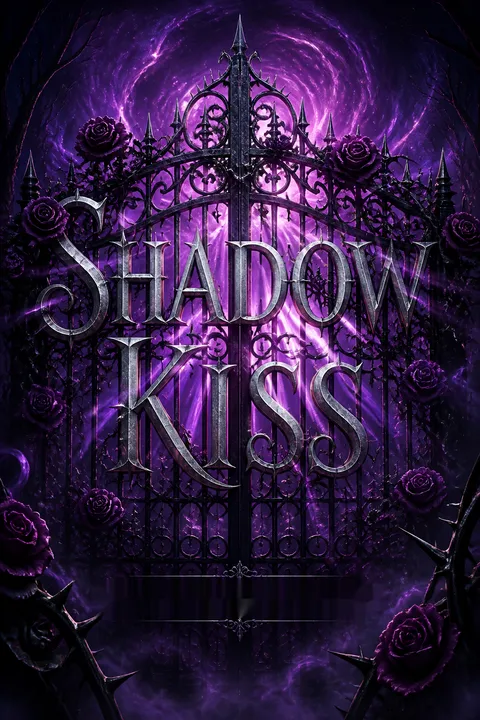


Plot Summary
A Ghost on the Lawn
Rose Hathaway, a novice guardian psychically bound to her best friend Lissa, wakes from a dream that lets her feel Lissa’s intimacy with Christian as if it were her own. Outside, she finds Dimitri Belikov, her combat instructor and forbidden love, but their fragile closeness is interrupted when Rose overhears that Victor Dashkov, the royal who tortured Lissa, still has not faced trial.
Dimitri will testify, while Rose and Lissa are barred from attending. As Rose heads back inside, she sees Mason, her friend recently killed by Strigoi, standing pale and translucent beneath an oak. He vanishes when she runs. The sight unsettles her grief just as the upcoming field experience promises to pull her and Lissa into unfamiliar roles.
The opening makes Rose’s psychic bond both a gift and an invasion: Lissa’s happiness reaches Rose without permission, sharpening the loneliness of a love she cannot express. Dimitri’s concern offers intimacy, but his role as instructor keeps it bounded. Then Mason’s apparition turns Rose’s private guilt into an apparent external presence. The unsettled sight arrives beside the news of Victor’s delayed trial, linking past violence to unresolved consequences. Rose’s instinct is to manage each problem through action, yet none can be solved by fighting alone.
The Wrong Assignment
At the six-week field exercise, Rose expects to protect Lissa, but the instructors pair her with Christian instead and assign Lissa to Eddie Castile. They explain that both Rose and Lissa must learn to work without relying on their psychic bond.
Rose accepts grudgingly, then begins finding common ground with Christian, who shares her determination to keep Lissa safe. During a staged Strigoi attack, Mason appears and points across campus. Rose freezes long enough for instructor Stan Alto to seize Christian and another Moroi.
The guardians accuse her of deliberately neglecting her charge and place her on probation, but Dimitri argues that removing her would be too severe without proof. Rose hides the real reason she froze, fearing everyone will dismiss her as unstable.
The assignment tests more than tactical skill. Rose’s bond has made protection feel like immediate knowledge, and the instructors deliberately remove that certainty so she must learn to read a person and a setting independently. Her failure, however, comes not from indifference but from an experience she cannot safely disclose. Because she conceals the apparition, the guardians interpret an involuntary freeze through the lens of her earlier defiance. Dimitri’s intervention protects Rose’s place in training, but his trust also raises the cost of her silence.
A Guardian’s Blind Spot
Rose’s first days guarding Christian alternate between teamwork and frustration. She defends him when classmates smear him because his parents became Strigoi, and the two agree that Lissa’s safety matters more than their rivalry.
Yet another Mason sighting distracts Rose during a staged attack, while her short temper sparks a separate confrontation with novice Ryan and Moroi Camille. Adrian Ivashkov uses spirit-enhanced compulsion to make Rose release Camille, forcing Rose to confront how close she came to harming someone.
Meanwhile, she tells Lissa, Christian, Adrian, and Eddie that Victor’s trial may end in acquittal and that they will not be allowed to testify. Lissa’s fear returns, and her decision to stop antidepressants so she can use spirit adds a new source of concern.
Rose’s anger is not simply a character flaw; it is an attempt to convert helplessness into control. She can defend Christian against prejudice, but she cannot explain why Mason’s image disrupts her response, so she takes the pressure out on safer targets. Adrian’s compulsion prevents harm while violating Rose’s autonomy, making the rescue morally complicated. Lissa’s return to spirit mirrors Rose’s own struggle: both want agency, but each must reckon with powers that carry psychological costs. Duty binds the friends together even as their private burdens diverge.
Bruises Beneath the Rules
The field exercise exposes Rose to the dull vigilance as well as the fighting: she must guard Christian through classes, meals, and hours of waiting. When a staged attack targets Lissa, Eddie reacts quickly and earns praise, while Rose is criticized for concentrating on the fight instead of the Moroi behind her.
Rose also notices that Brandon Lazar has unexplained bruises, then learns from younger student Jill that Dane Zeklos and Brett Ozera have been beaten too. Their injuries and evasive explanations connect uneasily with Brandon’s.
At the same time, Lissa heals Eddie’s facial scratches after stopping her medication, proving her spirit ability has returned. Adrian sees how intensely she uses it, and Rose begins to fear the power’s toll on both of them.
This section makes competence less glamorous than Rose expects. Eddie’s success depends on attention, timing, and protecting the person behind the immediate threat, while Rose’s hunger to prove herself can distort her judgment. The unexplained bruises introduce a quiet pattern of coercion beneath the school’s formal exercises. Lissa’s healing gives the pattern a counterpoint: spirit can repair visible harm, but its emotional aftereffects remain harder to contain. Rose is surrounded by evidence that strength is not just the ability to strike. It is also the discipline to notice what others conceal.
The Court Opens Its Doors
Rose’s probation leaves her frustrated and doubtful that Dimitri has done enough to get her and Lissa into Victor’s trial. She argues with him during community service, then learns that Adrian, not Dimitri, used his royal connections to win them permission to attend.
At the Royal Court, Lissa meets Queen Tatiana and challenges the way Moroi privilege protects royals while leaving dhampirs to fight. Tatiana acknowledges Lissa’s promise but keeps her reasons guarded.
Rose later receives a note from Victor, who has been moved to the Court’s prison and wants to speak with her. Dimitri arranges a visit. Behind bars, Victor probes Rose’s shadow-kissed condition and asks after Lissa, revealing that he still sees her as a possible instrument of political change.
The Court concentrates power in a place that looks polished and secure, but access still depends on family ties and political leverage. Adrian can open a door that Dimitri’s professional authority cannot, complicating Rose’s assumptions about who can help her. Lissa’s challenge to Tatiana shows that her charisma can serve ideas, not merely social ease. Victor’s interest in Lissa is more expansive than personal survival: he imagines her power as a means to remake Moroi society. His political vision does not excuse his crimes; rather, it shows how reform can become another form of possession.
A Verdict and a Threat
At Victor’s trial, the guardians describe his crimes, Rose and Christian confirm key events, and Lissa recounts the torture she endured. Victor taunts Rose and Dimitri with knowledge of their attraction, but the queen finds him guilty and sentences him to life in prison.
Afterward, Tatiana offers Lissa a place at Court and admission to nearby Lehigh University, partly because she wants the last Dragomir involved in politics. In private, the queen mistakes Rose’s friendship with Adrian for an affair and orders her to end it.
She also reveals her intention to steer Lissa toward Adrian and away from Christian, whom she considers politically unsuitable because his parents became Strigoi. Rose conceals this plan from Lissa and Christian, unwilling to deepen their anxieties.
The verdict gives Lissa a public account of what happened, but the queen’s later offer shows that justice does not dissolve political calculation. Tatiana values Lissa’s intelligence and lineage while also imagining how to direct her future. Her assumptions about Rose expose the hierarchy built into Moroi society: a dhampir woman is treated as sexually available and socially disposable, even when her record proves her value. Rose’s decision to withhold the matchmaking scheme protects Christian in the short term, yet it extends the pattern of secrets that isolates her from the people she loves.
The Cards Turn Dark
Before leaving Court, Rose and Lissa visit the spa, where they meet Ambrose, a dhampir who chose to work as a feeder rather than fight Strigoi. He takes them to his aunt Rhonda, a Moroi fortune-teller.
Rhonda predicts leadership and transformation for Lissa, while Rose receives a warning about destroying the undead; Dimitri’s reading foretells the loss of what he values most. On the flight home, Rose develops a crushing migraine and sees shadowy faces.
When the plane lands at an unwarded regional airport, the visions overwhelm her: Mason, murdered Moroi and dhampirs, and Lissa’s dead family surround her, pointing toward a dark opening. Rose collapses. At the infirmary, she admits to seeing ghosts, and the staff put her on reduced field duty and require counseling.
The readings give each character a different relationship to uncertainty. Lissa receives a future organized around public influence; Rose receives an image of violence she already associates with her work; Dimitri hears that love carries a cost. The airport episode makes Rose’s inner conflict spatial: protected Court wards kept the dead at bay, while the unwarded human world exposes her to them. Her collapse resists a simple diagnosis. Trauma may explain part of the experience, but the specificity of the figures suggests that Rose’s connection to death is changing.
The Hand Reveals Itself
As Rose investigates the bruised Moroi, she learns the secret society Mână, called the Hand, is tied to the attacks. Jesse Zeklos and Ralf Sarcozy belong to the group, which wants royals to preserve their influence and is secretly practicing compulsion. Jesse and Ralf pressure Lissa to join, claiming they can help her politically and reveal information about Christian.
Lissa pretends to consider the offer so she can learn more, but the group abducts her and tests her through magical torture. Members strike her with rocks and use water and air to suffocate her, echoing Victor’s earlier abuse. Rose senses Lissa’s pain through their bond and races across campus, arriving as the attack begins to break her friend’s composure.
Mână turns privilege into a private weapon. Its members preach collective protection for royals while using coercion against their own peers, revealing that their concern is less safety than control. Lissa’s decision to feign interest is a calculated attempt to uncover their intentions, but the group’s initiation ritual strips away her ability to manage the danger. The elemental attacks deliberately replay the methods used against her by Victor, collapsing political intimidation into personal trauma. Rose’s bond gives her access to Lissa’s suffering, yet access is not the same as prevention; she can feel each injury before she can stop it.
Darkness Changes Hands
Rose reaches Lissa and drives off the attackers, but Lissa has turned Jesse’s mind against him with a terrifying compulsion that makes him experience a nightmare. Rose recognizes the corruption of spirit in the magic and urges Lissa to release it through their bond. Lissa does, and the dark force floods Rose instead.
Rose attacks Jesse with uncontrolled fury until Eddie restrains her and Dimitri takes her to an isolated cabin. There, Dimitri helps her recognize the rage as something transferred rather than chosen. Rose’s fear that spirit could destroy her gives way to a moment of trust, and she and Dimitri finally become lovers. Soon after, Mason appears and manages to warn her that Strigoi are coming.
Rose’s intervention saves Lissa from continuing an act she cannot control, but it does not erase the harm. Their bond becomes a channel for psychological burden as well as affection, and Rose discovers that protecting someone may mean absorbing what they cannot bear. Dimitri’s restraint is not simply physical: he helps Rose distinguish her identity from the rage moving through her. Their intimacy follows that recognition, making love an act of mutual trust rather than a cure. Mason’s warning immediately interrupts the private refuge, returning both lovers to a world where danger cannot be postponed.
Strigoi Breach the Academy
Mason’s warning proves true when Strigoi attack St. Vladimir’s Academy. Dimitri tells Rose to run to the guardians with the alert word for storm, and she raises the alarm before the invaders reach the school’s central buildings. The campus locks down, but Christian is outside the chapel and Rose leaves her assigned post to find him.
They meet on the grounds and kill two Strigoi together, combining her stake work with his fire magic. Instead of retreating to safety, they head to the elementary campus, where guardians are fighting a much larger force. Rose and Christian join the battle and help hold the dormitory, but the attack leaves students and guardians dead and carries thirteen captives away, including Eddie.
The attack converts training into consequence. Rose’s early warning helps the school organize, but the moment she leaves her assigned floor to find Christian, her sense of duty becomes a personal risk. The choice is not presented as flawless: she knowingly puts herself and her charge in danger. Their partnership nevertheless demonstrates what Moroi magic can contribute when paired with guardian skill. The attack also shatters the Academy’s central promise, that its wards and trained adults make children safe. The missing captives prevent the battle from ending with victory; survival now requires pursuit.
The Cave at Daybreak
With the school counting its dead and missing, Rose persuades Dimitri to use Mason as a guide beyond the wards. Mason points to caves near the Academy, where the Strigoi have hidden their captives until nightfall. The guardians approve a rescue, and Rose’s mother, Janine, helps persuade them to bring senior novices and fire-using Moroi.
The assault frees twelve captives, including Eddie, but the fighting is costly. As the rescuers retreat before sunset, a blond Strigoi who has recognized Rose ambushes Dimitri and bites him. Rose tries to turn back, but Janine and Stan force her to run as more Strigoi close in. The party reaches the wards without Dimitri, whose body is missing from the dead brought back later.
Mason’s ability to point but not explain makes Rose’s connection to the dead useful without making it easy. The rescue plan also marks a change in institutional thinking: guardians accept novice backup and Moroi fire users because the old defensive approach has failed. That shift costs lives, and the cave’s narrow passages make every tactical advantage temporary. Dimitri’s disappearance is particularly devastating because Rose must obey the same order he once taught her: protect those who remain, even when the person she loves is behind her. The missing body offers hope only in its most frightening form.
Neither Living Nor Dead
The Academy records fifteen Moroi and twelve guardians dead, with thirteen people initially taken; the cave rescue brings twelve captives home. Rose waits through the daylight, unable to accept that Dimitri may be gone.
When the recovery party returns without his body, her mother can only suggest that the Strigoi took him. Rose crosses the wards and summons Mason. He confirms Dimitri is neither alive nor dead in the ordinary sense, then answers her final question: the Strigoi turned him.
The revelation destroys Rose’s belief that Lissa might heal him back into himself. Mason’s presence is fading as his time among the living ends, and Rose understands that she must leave the Academy if she is to reach Dimitri before he becomes irretrievable.
The novel refuses the comfort of a clean death. Dimitri’s absent body leaves Rose suspended between hope and knowledge, and Mason’s limited answers make the supernatural truth feel brutally precise. His confirmation also transforms the earlier prophecy: what Rose has lost is not simply a loved person’s life but the personhood that defined him. Lissa’s healing cannot solve this without repeating Victor’s logic of treating another being as material to be altered. Rose’s grief becomes a demand for action, but the action she chooses will require abandoning the safety and relationships that once defined her.
Rose Leaves the Wards
Rose asks Adrian for money and promises, without meaning it, to consider him when she returns. On her eighteenth birthday she files withdrawal papers, then walks toward the gate with a stake and a plan to find Dimitri. Lissa intercepts her and confronts her about hiding her love for him. Rose admits she must go, even though leaving means abandoning her best friend and their future at Court.
When Lissa tries to compel her to stay, Rose rejects the magic and insists that, for once, her own need must come first. She returns Lissa’s chotki for safekeeping and crosses the wards. Outside, Mason appears for a last time, confirms he is moving on, and leaves Rose to continue alone toward the man she intends to kill.
Rose’s departure answers the book’s opening conflict over who gets to choose and whose needs come first. Her devotion to Lissa remains real, but it no longer erases her own grief or desire. The chotki makes the separation tangible: Rose does not reject the bond, but she cannot carry its symbol while pursuing a path outside her assigned role. Lissa’s compulsion repeats the violation Rose suffered from Adrian, and Rose’s refusal establishes a boundary between love and control. Mason’s farewell grants one relationship a form of closure, while Dimitri’s fate remains unresolved and morally perilous.
Analysis
Shadow Kiss makes protection intimate, political, and psychologically costly. Rose’s bond with Lissa is an extraordinary instrument of care, but it also denies the distance that ordinary friendship requires. Rose can feel Lissa’s fear and magic as if they were her own, and eventually learns that this permeability runs both ways. The bond saves Lissa from spiraling deeper into destructive spirit use, yet transfers its darkness to Rose. The novel refuses to treat sacrifice as automatically noble: a person can choose service freely, but a culture that demands self-erasure makes that choice difficult to distinguish from obedience.
The Moroi hierarchy gives this personal conflict a public structure. Royals receive guardians, political access, and presumptions of worth, while dhampirs are trained to place their bodies between power and danger. Tatiana’s assumptions about Rose and Christian’s family show how status reproduces itself through intimate judgments. Lissa’s arguments for reform and Rose’s insistence on defending Moroi who reject her reveal different forms of resistance. Mână, by contrast, uses the language of collective protection to preserve elite control. The group’s torture of Lissa exposes the authoritarian impulse beneath its rhetoric.
The novel’s supernatural elements make grief material without making it easy. Rose’s apparitions are connected to her death and her own violence, while her trauma still offers a plausible human explanation for some symptoms. That ambiguity mirrors her larger struggle to decide whether her perceptions deserve trust. Mason can guide her but cannot deliver certainty; the living must interpret and act. The final revelation about Dimitri is especially brutal because the story’s desired rescue cannot restore the person Rose loves. Her departure is not a triumph over grief. It is a choice to pursue what remains, even when that pursuit requires breaking the role that has defined her life.
Review Summary
Shadow Kiss receives widespread praise from readers for its intense plot, character development, and emotional impact. Many consider it the best book in the series so far, with Rose's growth and her relationship with Dimitri being highlights. The ending is frequently described as shocking and heartbreaking. Readers appreciate the deeper exploration of the vampire world and politics. Some criticize certain character decisions or find parts of the romance frustrating, but overall, the book is highly rated for its compelling story and memorable scenes.
People Also Read





Characters
Rose Hathaway
The fiercely loyal noviceRose is a dhampir novice trained to guard Moroi, and she expects eventually to protect Lissa, her closest friend. Fast, funny, and impulsive, she often trusts action more than reflection. Her psychic bond with Lissa lets her sense danger and emotion, but it also makes privacy and separation difficult. Rose’s fierce loyalty can look like selflessness, yet she struggles to recognize when duty has become a reason to deny her own needs. Grief over Mason’s death and love for Dimitri complicate her training, while her instinct to challenge unfairness brings her into conflict with authority. She is brave without being invulnerable, and her bluntness often conceals fear she does not know how to share.
Vasilisa Dragomir
The last Dragomir heirLissa is a Moroi princess and Rose’s best friend, protected by a bond created when Lissa used spirit magic to bring Rose back from death. Gentle and socially graceful, she is also observant, principled, and increasingly willing to challenge the customs that benefit her. Her rare spirit abilities can heal, but using them risks depression and psychological instability. Lissa wants to help people without becoming a resource controlled by powerful royals. Her relationship with Christian gives her emotional intimacy beyond Rose, while her bond with Rose offers a constant, sometimes intrusive form of closeness. She is learning that compassion needs boundaries and that leadership means choosing how her power is used.
Dimitri Belikov
Rose’s disciplined mentorDimitri is a highly respected dhampir guardian and Rose’s combat instructor. He is patient, controlled, and deeply committed to protecting Moroi, qualities that make him both an exceptional teacher and a difficult person to know. Beneath his composure is a private life shaped by loneliness, homesickness, and a strong sense of responsibility. His love for Rose conflicts with the professional role that binds them to Lissa’s protection. He takes Rose seriously even when he doubts her conclusions, and he tries to balance support with honest challenge. His calm is not lack of feeling; it is a discipline he uses to keep fear and desire from dictating his choices.
Christian Ozera
The defiant fire userChristian is a Moroi and Lissa’s boyfriend, marked by the stigma attached to parents who chose to become Strigoi. Sarcastic and self-contained, he uses humor to keep others from defining him by his family. His willingness to use fire magic against Strigoi challenges a tradition that expects Moroi to remain passive while guardians fight. Though he and Rose initially irritate one another, their shared commitment to Lissa gives them a basis for trust. Christian’s insecurities about status and his family’s reputation surface in his relationship with Lissa, but he is capable of courage, loyalty, and practical cooperation.
Adrian Ivashkov
The irreverent spirit userAdrian is a royal Moroi who drinks, smokes, flirts, and performs carelessness with considerable skill. He is also one of the few known spirit users, able to perceive auras, enter dreams, and use unusually strong compulsion. His jokes often mask perceptiveness, especially about Rose’s emotional life and the strain placed on Lissa by magic. Adrian wants Rose’s affection, though he recognizes that she is drawn elsewhere. His royal connections can accomplish what institutional rank cannot, and he sometimes acts generously without making his motives easy to read. His talent and privilege coexist with a genuine desire to be taken seriously.
Mason Ashford
The grieving friendMason was Rose’s friend and fellow novice, an openhearted young man who cared for her more romantically than she could return. His death during the earlier Strigoi encounter leaves Rose and Eddie burdened by guilt. In Rose’s life, his memory becomes a test of whether grief can be faced without turning into self-punishment. Mason’s friendship with Eddie and his affection for Rose make him part of the group’s shared history, not merely a personal regret. Rose remembers his humor alongside the circumstances of his death, which is why her struggle to understand him is also a struggle to remember him as more than a loss.
Eddie Castile
The watchful fellow noviceEddie is a dhampir novice, Mason’s closest friend, and a steady protector assigned to Lissa during the field exercise. His experience as a captive of Strigoi has made him more guarded and serious, but he retains warmth and humor. He takes responsibility for Lissa without treating her as helpless and becomes a reliable partner when danger turns real. Eddie’s loyalty to Mason shapes his concern for Rose, whom he watches over without demanding that she accept his help. His caution is earned, not timid, and his competence shows how trauma can sharpen vigilance while carrying a private cost.
Victor Dashkov
The imprisoned royal schemerVictor is a former Moroi prince whose intelligence and political ambition are inseparable from a willingness to use people. He targeted Lissa’s healing power to preserve his own life and manipulated others through magic and coercion. Victor sees himself as a reformer who understands the failures of Moroi society, but his methods reproduce the domination he claims to oppose. His interest in Rose’s shadow-kissed condition reflects a habit of treating unusual people as evidence or instruments. He is charming when it serves him, unsettlingly composed under pressure, and convinced that his larger purpose can justify intimate cruelty.
Janine Hathaway
Rose’s formidable motherJanine is a senior guardian and Rose’s mother. Years of duty have made her direct, demanding, and more comfortable with action than emotional reassurance. Rose has long resented her distance, though their relationship has begun to soften as they recognize each other’s strength. Janine believes in the guardian system and the obligations that sustain it, but she can revise her position when a crisis demands it. Her authority comes from competence rather than charm, and she expects Rose to accept consequences as well as praise. Beneath her guarded manner is a protective attachment she rarely expresses tenderly.
Queen Tatiana
The calculating Moroi queenTatiana governs the Moroi court with formal composure and a sharp sense of political risk. She recognizes Lissa’s intelligence and lineage, but she also views the young princess as a valuable figure whose future must be managed. Tatiana’s judgments reflect a society that privileges royal blood and treats dhampir women according to damaging assumptions. She is not merely cruel or benevolent: she can reward talent while attempting to direct it toward outcomes she considers safe. Her authority rests on tradition, yet Lissa’s arguments force her to acknowledge that preserving the old order may not be enough.
Jesse Zeklos
The ambitious society memberJesse is a royal Moroi novice whose confidence and social ease conceal a hunger for influence. He resents challenges to the hierarchy that favors wealthy royal families and helps recruit students into Mână, a secret society. His treatment of Christian exposes his prejudice, while his efforts to draw Lissa in show that he recognizes her unusual power. Jesse favors manipulation over honest persuasion and can mistake access to authority for moral legitimacy. His rivalry with Rose is fueled by her refusal to defer to him.
Ralf Sarcozy
Jesse’s complicit allyRalf is a royal Moroi novice and Jesse’s frequent companion. He is physically imposing, less socially polished than Jesse, and often follows Jesse’s lead. His participation in Mână places him inside a group that uses status and compulsion to protect its own interests. Ralf’s family connections give him access to information beyond his usual circle, and he can use that knowledge to pressure others. He is not as careful as Jesse about concealing the group’s intentions, making his bluntness revealing as well as threatening.
Mia Rinaldi
The former rival turned allyMia is a Moroi student who once made life difficult for Rose and Lissa, driven by old resentment and a desire to retaliate. Captivity by Strigoi changes her understanding of what matters, and she becomes more independent and willing to train. Her family’s lower status makes her aware of the limits imposed by royal privilege. Mia’s practical courage is visible in her use of water magic during the escape from Strigoi. She offers Rose a perspective from outside the tight circle of Lissa’s closest relationships.
Alberta Petrov
The guardians’ steady captainAlberta is the Academy’s guardian captain, responsible for discipline, training schedules, and campus security. Tough and pragmatic, she expects novices to understand that their choices affect the Moroi they protect. She is willing to enforce rules but tries to judge fairly, as shown when she gives Rose probation rather than removing her from the field exercise. In a crisis, Alberta organizes people quickly and makes decisions without confusing authority with certainty. Her seriousness provides a counterweight to Rose’s impulsiveness.
Stan Alto
The demanding combat instructorStan is a guardian instructor who tests novices by staging realistic attacks. Gruff and exacting, he judges not only whether a novice can fight but whether they can keep a Moroi protected during confusion. His blunt assessments frustrate Rose, especially when he questions her motives, but his standards reveal the difference between seeking a fight and performing a guardian’s actual task. He treats training as preparation for situations where errors cannot be undone.
Ambrose
The unconventional dhampirAmbrose is a dhampir who works as a feeder and masseur rather than becoming a guardian. His choice challenges Rose’s assumption that every dhampir man should fight Strigoi. Cheerful, perceptive, and comfortable with his unconventional life, he describes its pleasures without denying the stigma attached to it. He introduces Rose and Lissa to Rhonda and offers a glimpse of dhampir identity beyond the Academy’s rigid expectations.
Rhonda
The Court’s card readerRhonda is a Moroi of Roma heritage who reads tarot cards and claims access to forces ordinary people cannot perceive. She is Ambrose’s aunt and a familiar adviser at Court, including to the queen. Her readings are brief but unsettling, especially when she predicts loss for Dimitri and a confrontation with the undead for Rose. Rhonda neither explains her knowledge nor insists that others accept it, leaving her role suspended between spiritual insight and an uncertain craft.
Father Andrew
The priest who studies the deadFather Andrew is a Moroi priest whose chapel provides a place of reflection for students and guardians. He speaks with Rose about beliefs surrounding spirits after death, offering context without claiming certainty about what she has seen. His patience and lack of judgment make him a useful confidant, though his theological perspective cannot resolve Rose’s supernatural questions. He also assigns Rose and Dimitri community service, creating space for their conversations.
Jill
The curious younger noviceJill is a younger Moroi student who admires Rose’s combat record and wants to learn how to defend herself. Her questions reveal how students interpret the recent Strigoi attacks and expose a pattern of unexplained beatings among Moroi. She is eager, direct, and drawn to the possibility that magic can be used in defense.
Alice
The perceptive feederAlice is an older human feeder whose years of donating blood have left her mentally scattered. Christian seeks her out, partly because he enjoys her unusual observations. Her warnings about wards and the dead sound eccentric, but they prompt Rose to reconsider how the Academy’s protections work.
Priscilla Voda
The queen’s trusted adviserPriscilla is Tatiana’s close friend and adviser, a poised Moroi noble who recognizes Lissa’s political promise. She praises Lissa’s composure while remaining alert to the queen’s reactions. Her family ties connect her to other royal students and court decisions.
Natalie Dashkov
Victor’s manipulated daughterNatalie is Victor’s daughter, whose trust in him leaves her vulnerable to his ambitions. Her place in his schemes demonstrates how his political and personal loyalties collapse when he sees someone as useful.
Deirdre
Rose’s probing counselorDeirdre is the counselor assigned to help Rose process her experiences. Rather than offering simple instructions, she asks Rose to examine grief, obligation, and the choices she assumes are unavailable. Rose resists her interpretations, but the sessions expose questions Rose has avoided.
Plot Devices
The shadow-kissed bond
Shared sight and feelingLissa’s spirit magic brought Rose back from death and created a psychic connection between them. Rose can sense Lissa’s emotions and, when she deliberately opens herself to the link, experience events through Lissa’s perspective. The bond helps Rose locate Lissa and understand her emotional state, but it also blurs the boundary between care and intrusion. It becomes a channel through which Rose can absorb some of the psychological strain caused by Lissa’s spirit use. Its value is therefore inseparable from its cost: Rose can protect Lissa through closeness, yet that closeness exposes Rose to burdens she cannot always control.
Spirit magic
Healing with a hidden costSpirit is a rare Moroi element that allows Lissa to heal injuries and perform abilities beyond ordinary elemental magic. Its effects can be euphoric, but prolonged use threatens the user’s mental stability. Lissa’s medication suppresses the power, and stopping it allows her to heal again while reviving the risk she had hoped to avoid. Adrian’s work with spirit reveals other capacities, including dream walking, aura sight, and unusually strong compulsion. The story links magic’s capacity to repair with its capacity to distort judgment, making ethical restraint part of the power itself.
The Academy’s wards
A border against the deadMoroi wards are protective boundaries made from the four elemental magics. They keep Strigoi away from places such as the Academy and the Royal Court, but they require maintenance and can be disrupted. Rose’s visions are absent at the heavily warded Court and overwhelming at an unwarded airport, which leads her to suspect the boundary affects what she can perceive. Later, destructive elemental magic used near the Academy’s border appears to interfere with its protection, leaving the school vulnerable to a Strigoi attack. The wards turn security into a physical and political question: who is protected, and what can quietly undo that protection?
The field experience
Practice under pressureThe Academy’s six-week field experience pairs novice guardians with Moroi and subjects them to staged attacks. Students must maintain watch through ordinary routines, respond to simulated Strigoi, and learn how to work with someone who is not a close friend. Rose is assigned to Christian while Eddie guards Lissa, forcing Rose to operate without her constant psychic access to her best friend. The exercises expose Rose’s strengths and blind spots, especially her urge to enter combat before checking the position of the Moroi she must protect. When a real attack comes, the training’s lessons collide with instinct and imperfect orders.
Mason’s apparitions
A warning from beyondMason appears to Rose as a translucent figure after his death, usually sad and unable to speak. His gestures initially confuse Rose, who fears she is hallucinating or being blamed for his death. She gradually learns that her own return from death has left her connected to the dead, and that killing Strigoi strengthens her perception of them. Mason’s appearances intensify outside warded spaces and eventually give Rose a crucial warning and a route to the missing captives. He can point, nod, and eventually force out a few words, but he cannot simply explain what he knows, so Rose must interpret him.
FAQ
Synopsis & Basic Details
What is Shadow Kiss about?
- Psychic bond intensifies: Rose's psychic connection with Lissa becomes more intrusive, blurring the lines between their experiences, especially regarding Lissa's romantic life.
- Political intrigue surfaces: The trial of Victor Dashkov reveals deeper political tensions within the Moroi world, impacting Rose's personal life and her role as a guardian.
- Personal quests begin: Rose's personal journey is marked by loss, love, and a growing sense of responsibility, leading her to make a life-altering decision.
Why should I read Shadow Kiss?
- Emotional depth explored: The novel delves into complex emotions like love, loss, and betrayal, offering a rich and engaging reading experience.
- Intriguing plot twists: The story is filled with unexpected turns and revelations, keeping readers on the edge of their seats.
- Character development: The characters undergo significant growth and transformation, making them relatable and compelling.
What is the background of Shadow Kiss?
- Moroi society: The story is set within a hidden society of Moroi vampires, with their own unique culture, politics, and social hierarchy.
- Dhampir guardians: Dhampirs, like Rose, are half-human, half-vampire protectors, trained to defend Moroi from Strigoi.
- Strigoi threat: The constant threat of Strigoi, undead vampires, adds a layer of danger and urgency to the narrative.
What are the most memorable quotes in Shadow Kiss?
- "You don't have to do this alone.": Dimitri's words to Rose highlight their deep connection and his willingness to support her, despite their complicated relationship.
- "Freedom to love who I wanted.": Rose's internal monologue reveals her longing for autonomy and the ability to make her own choices, especially in love.
- "I'm not going to take her away from you. I can't. No one can, not as long as you guys have that bond.": Christian's words to Rose show his understanding of the unique connection between Rose and Lissa, and his acceptance of their bond.
What writing style, narrative choices, and literary techniques does Richelle Mead use?
- First-person perspective: The story is told from Rose's point of view, allowing readers to experience her thoughts, emotions, and internal conflicts directly.
- Fast-paced action: The narrative is driven by action sequences and suspenseful moments, keeping the story engaging and exciting.
- Dialogue-driven scenes: The dialogue is sharp, witty, and often reveals character traits and relationships, adding depth to the story.
Hidden Details & Subtle Connections
What are some minor details that add significant meaning?
- Recurring weather patterns: The harsh winter weather in Montana mirrors Rose's internal struggles and the bleakness of her situation, foreshadowing the challenges ahead.
- The chotki's significance: Lissa's gift of the chotki to Rose symbolizes their bond and the weight of their shared history, highlighting the importance of their connection.
- The mention of Siberia: Dimitri's wistful comments about Siberia reveal a hidden part of his past and his longing for a place he can call home, adding depth to his character.
What are some subtle foreshadowing and callbacks?
- Adrian's aura comments: Adrian's observations about Rose's aura being "edged in darkness" foreshadow her growing internal conflict and the darkness she will face.
- The mention of Tasha Ozera: The reference to Tasha Ozera, Christian's aunt, foreshadows the growing movement of Moroi who want to fight, and the potential for change in their world.
- The recurring dream sequences: The dream sequences with Adrian foreshadow the growing connection between them and the potential for a different kind of relationship for Rose.
What are some unexpected character connections?
- Rose and Christian's understanding: Despite their initial animosity, Rose and Christian find common ground in their shared desire to protect Lissa, revealing a deeper connection.
- Rose and Adrian's bond: Adrian's genuine concern for Rose and his willingness to help her, despite her initial resistance, reveal a complex and unexpected bond.
- Rose and Eddie's shared trauma: Rose and Eddie's shared experience of being captured by Strigoi creates a bond of understanding and mutual protection, highlighting the lasting impact of trauma.
Who are the most significant supporting characters?
- Alberta: As captain of the guardians, Alberta represents the established order and the challenges of leadership, often clashing with Rose's rebellious nature.
- Father Andrew: The priest's knowledge of Moroi history and his views on the afterlife provide a different perspective on the supernatural elements of the story.
- Ms. Carmack: As a teacher of magic, Ms. Carmack represents the traditional Moroi views on magic, and her presence highlights the conflict between tradition and change.
Psychological, Emotional, & Relational Analysis
What are some unspoken motivations of the characters?
- Dimitri's self-sacrifice: Dimitri's actions are driven by a deep sense of duty and a desire to protect Rose, even at the cost of his own happiness.
- Lissa's need for control: Lissa's desire to master her spirit magic stems from a need to control her own life and protect herself and those she loves.
- Adrian's desire for connection: Adrian's pursuit of Rose is driven by a longing for genuine connection and a desire to be seen as more than just a spoiled royal.
What psychological complexities do the characters exhibit?
- Rose's internal conflict: Rose struggles with her desire for love and freedom and her duty as a guardian, leading to internal conflict and emotional turmoil.
- Christian's insecurities: Christian's insecurities about his family history and his place in the Moroi world drive his actions and his relationships with others.
- Lissa's burden of responsibility: Lissa's role as the last Dragomir and her unique powers create a sense of responsibility that weighs heavily on her.
What are the major emotional turning points?
- Rose's decision to leave: Rose's decision to leave the Academy marks a major turning point, driven by her love for Dimitri and her desire to save him.
- Lissa's acceptance of her powers: Lissa's decision to stop her medication and embrace her spirit magic marks a turning point in her character development.
- Christian's acceptance of his feelings: Christian's admission of his feelings for Lissa and his willingness to fight for her mark a turning point in his character arc.
How do relationship dynamics evolve?
- Rose and Dimitri's love: Their relationship evolves from a forbidden attraction to a deep and passionate love, marked by sacrifice and devotion.
- Rose and Lissa's bond: Their bond is tested by external forces and internal conflicts, but their friendship remains a source of strength and support.
- Rose and Christian's respect: Their relationship evolves from animosity to a grudging respect, as they learn to work together and appreciate each other's strengths.
Interpretation & Debate
Which parts of the story remain ambiguous or open-ended?
- The nature of the ghosts: The nature of the ghosts Rose sees and their connection to her shadow-kissed state remain ambiguous, leaving room for interpretation.
- The true extent of spirit magic: The full potential and limitations of spirit magic are not fully explored, leaving room for speculation about its future impact.
- The future of the Moroi world: The novel leaves the future of the Moroi world uncertain, with the potential for both positive change and further conflict.
What are some debatable, controversial scenes or moments in Shadow Kiss?
- Rose's decision to leave: Rose's decision to leave the Academy is controversial, as it goes against her duty as a guardian and her responsibility to Lissa.
- The use of compulsion: The use of compulsion by both Lissa and Adrian raises ethical questions about the nature of power and control.
- The treatment of dhampirs: The novel highlights the systemic inequalities faced by dhampirs, raising questions about their role in Moroi society.
Shadow Kiss Ending Explained: How It Ends & What It Means
- Rose's departure: Rose's departure from the Academy signifies her commitment to her love for Dimitri and her willingness to defy expectations.
- Uncertain future: The ending leaves the future uncertain, with the fate of Dimitri and the Moroi world hanging in the balance.
- Themes of sacrifice and love: The ending emphasizes the themes of sacrifice and the power of love, as Rose chooses to follow her heart, even at great personal risk.
Vampire Academy Series


About the Author
Other books by Richelle Mead


Download PDF
Download EPUB
.epub digital book format is ideal for reading ebooks on phones, tablets, and e-readers.








