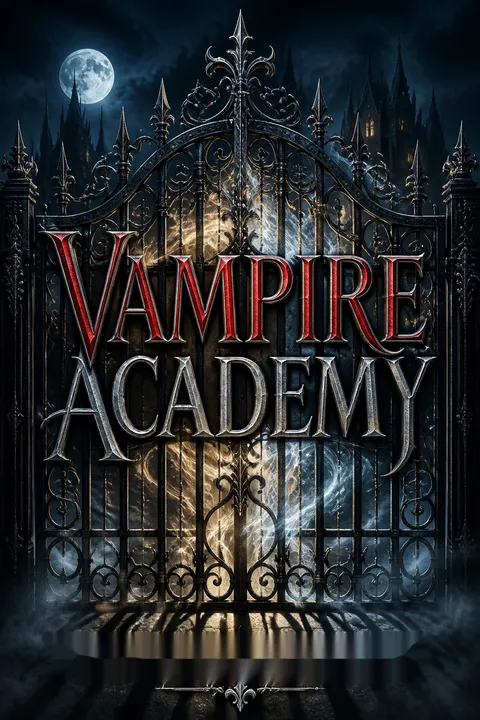


Plot Summary
The Runaways Found
Rose Hathaway wakes to her best friend Lissa Dragomir screaming through another nightmare about the car crash that killed Lissa’s family and left Rose inexplicably alive. Rose offers her blood, and Lissa feeds from her, restoring her strength. Then Rose spots a watcher outside their Portland house. She and Lissa flee toward a borrowed car, but a squad of guardians blocks them.
Rose attacks their leader, Dimitri Belikov, and he catches her before she falls. The blood on her neck reveals that Lissa has been feeding from her. Outnumbered, the girls are taken to St. Vladimir’s Academy in Montana, the school they escaped two years earlier. Rose expects punishment; she fears most that returning will put Lissa in danger again.
The opening makes protection both intimate and physical: Rose gives Lissa blood, then puts her own body between Lissa and the guardians. Their bond is not simply a supernatural shortcut; it intensifies an already unequal arrangement in which Rose acts, decides, and absorbs consequences while Lissa depends on her. The concealed bite also establishes the story’s moral friction. A private act of survival carries social stigma, and the Academy’s rules are already waiting to define the girls before anyone asks why they ran.
A Probationary Return
At the Academy, Headmistress Kirova blames Rose for taking Lissa away and threatens to expel her, despite Lissa insisting that she chose to leave. Dimitri argues that Rose’s rare ability to sense Lissa’s emotions makes her worth training, then agrees to mentor her himself. Rose stays on probation, barred from most social life and required to catch up in class and combat.
The reunion exposes how far she has fallen behind: former friend Mason Ashford defeats her repeatedly in training, while instructor Stan Alto publicly challenges her judgment as a guardian. Dimitri refuses to flatter her. He tells her that wanting to guard Lissa is not enough; she must earn the skill to do it.
Rose’s loyalty earns her another chance, but not the authority she assumes comes with it. Dimitri’s insistence that she train converts devotion from a self-image into a testable discipline. The Academy’s rules are harsh, yet they name a real weakness: Rose has kept Lissa alive without the preparation expected of a guardian. Her anger protects her from shame, while her probation forces her to confront the gap between being willing to take a blow and being capable of preventing one.
Old Cliques, New Wounds
Back among her classmates, Rose finds Lissa’s former boyfriend Aaron attached to Mia Rinaldi, a younger, newly popular Moroi who greets Lissa with open contempt. Rose threatens Mia, but Lissa asks her to stay out of royal politics. Lissa would rather keep a low profile with Natalie Dashkov, her awkward, kind cousin, than resume the status games she once endured after her brother Andre died.
Rose agrees reluctantly, even as she misses the parties and attention. Seeking privacy, Lissa retreats to the chapel attic and meets Christian Ozera, a sharp-tongued royal outcast whose parents became Strigoi. He recognizes that Rose supplied Lissa’s blood while they were away, but promises to keep their secret.
The girls return to the same institution with different needs. Rose misses a social world that let her perform confidence without inheriting its responsibilities; Lissa fears the royal attention that comes with her family name. Their disagreement is not a simple clash between reckless and cautious temperaments. Rose’s protective choices can become controlling, while Lissa’s retreat can conceal fear rather than resolve it. Christian’s recognition of the feeding secret gives Lissa a rare connection based on being seen, not merely being ranked.
The Fox on Lissa's Bed
A dead fox appears on Lissa’s pillow, its throat cut and blood spread across the bed. Lissa is horrified, and Rose tries to dismiss it as a cruel prank, although the scene recalls a dying raven they found in the woods before they fled. Around the same time, Mia’s mockery and the school’s gossip keep Lissa under scrutiny.
When Ralf Sarcozy taunts the girls in class, Christian engulfs him in flame without burning him, displaying a kind of offensive magic Moroi are not supposed to use. The incident makes Christian impossible to ignore and leaves Rose unsure whether his power is protective or dangerous. Lissa admits she has spent more time with him than Rose approves of.
The fox turns private fear into a public spectacle, and Rose’s first instinct is to manage Lissa’s reaction rather than examine its cause. That response repeats the pattern of their friendship: she believes denial can keep Lissa safe. Christian’s controlled fire unsettles the Academy’s assumptions about acceptable magic, but the class cannot tell whether his act is defense, pleasure, or both. The scene’s uncertainty matters. The danger may lie not only in what people can do, but in the rules that prevent them from admitting what they can do.
A Rumor Turns Cruel
Rose sneaks away with royal student Jesse Zeklos, hoping for distraction and flirtation. When Jesse realizes she once let Lissa feed from her, he presses the taboo, then the encounter is interrupted by Dimitri. Later, Jesse and Ralf spread lies that Rose had sex with them and offered her blood during it.
Mia has used the boys to punish Rose for exposing her family’s low social standing. Rose wants to fight them, but doing so would violate probation and leave Lissa without her. She walks away instead, then cries alone. Lissa identifies Mia as the source and vows to restore Rose’s reputation by reclaiming influence among the royals, even though Rose had urged her to avoid them.
The attack works because it exploits a truth Rose has guarded and distorts it into a public accusation. The distinction between feeding for survival and feeding as sexual currency disappears under the Academy’s stigma, making Rose’s care for Lissa easy to weaponize. Her refusal to fight is a genuine act of self-command, but it costs her the social identity she has relied on. Lissa’s promise reverses their usual roles: she intends to protect Rose, yet chooses the same royal system that has made both girls vulnerable.
Lissa Takes the Circle
Lissa quietly uses compulsion to persuade royal students that Rose’s accusers lied, and her popularity returns as Mia loses influence. Rose notices that the friendships are being engineered, not simply renewed. At a party, a Moroi boy humiliates a human feeder and drags her away despite Rose’s intervention. Lissa compels him to smash up his room, then nearly directs him to strike himself with a bat.
Rose interrupts before he is badly hurt and takes the blame for the damage. This recalls the earlier incident that led the girls to flee: after Lissa’s anger erupted at another party, Rose covered for her and decided the Academy was unsafe. The secret behind their first escape is no longer just Rose’s choice.
Compulsion gives Lissa a means to resist cruelty, but it also lets her reproduce the coercion she condemns. Her action against the feeder’s abuser begins as protection and approaches violence; Rose sees both the justice of Lissa’s anger and the danger of its force. By accepting blame, Rose keeps Lissa from scrutiny while reinforcing her own role as shield and interpreter. The flashback revises the meaning of their escape: Rose did not simply rebel against school authority. She feared what Lissa’s emerging power might make of her.
The Spirit in the Records
Rose studies St. Vladimir’s writings after learning that his guardian, Anna, was described as shadow-kissed and bound to him. The records say Vladimir healed the sick and that his powers brought periods of despair; Rose recognizes echoes of Lissa and their unusual bond.
A memory of teacher Sonya Karp sharpens the warning: Karp once healed Rose’s injuries and urged her to protect Lissa, then vanished from the Academy. Rose asks Mason to get Christian to lend her the old books. She also apologizes directly to Christian for making him believe Lissa despised him. He agrees to speak with Lissa again, but warns Rose that she should seek help from someone who understands what is happening.
Rose’s investigation marks a change from instinctive protection to deliberate interpretation. She is learning to read patterns across testimony, memory, and present behavior, even though she lacks the vocabulary to explain them. Anna’s bond with Vladimir suggests that Rose and Lissa’s connection may be more than an accident of friendship, while Karp’s warning makes knowledge feel dangerous as well as useful. Rose’s apology to Christian is another small departure from her usual defensiveness: she admits that protecting Lissa has also meant interfering with her.
A Field Test in Missoula
Victor Dashkov arranges a supervised shopping trip to Missoula for Lissa, Natalie, and Rose, with Dimitri and other guardians providing security. Rose learns the mechanics of paired protection and is assigned to work beside Dimitri. He explains that guardians may have to kill Strigoi who were once people they knew, and Rose accepts that she would want the same mercy if she were turned.
Victor recalls Mikhail Tanner pursuing Sonya Karp, revealing that Karp became Strigoi and that Mikhail had loved her. The news unsettles Rose and Lissa, who have both seen Karp’s strange healing firsthand. The trip briefly restores the girls’ old ease, but Lissa challenges Rose for withholding the truth about Karp.
The outing gives Rose a first practical glimpse of the work she has romanticized. Guarding means more than proximity and affection; it demands decisions that can permanently sever personal bonds. Dimitri’s account of killing Strigoi reframes his severity as grief managed through duty, not emotional coldness. Karp’s fate also changes the stakes of Rose’s research. The teacher’s warning was not merely eccentricity. Yet Rose’s decision to keep the truth from Lissa shows how easily care becomes paternalism when fear persuades her that another person cannot bear knowledge.
The Bench Gives Way
On the return to campus, Rose’s foot crashes through a rotted bench and her ankle twists beneath her. She wakes in the clinic without serious injury, then realizes Lissa must have healed her. Rose links this to the car accident: Lissa may have brought her back after she died, awakening the bond and the frightening powers she has tried to hide.
When Rose follows Lissa’s feelings into the chapel attic, she finds her overwhelmed by guilt, heartbreak, and the effort of pretending to enjoy royal company. After learning that Andre once mistreated Mia, Lissa cuts her arm. Rose breaks out of the vision, tells Dimitri where she is, and accepts that keeping Lissa’s condition secret is no longer protection.
The accident’s meaning shifts from miraculous survival to a debt neither girl chose. Rose’s life may have been preserved through Lissa’s power, but that rescue appears to have wounded Lissa in ways Rose could not see. The revelation complicates Rose’s gratitude: she loves the person who saved her and fears what saving her cost. Her decision to tell Dimitri breaks the private pact that has defined their friendship. It is not abandonment. It is recognition that loyalty cannot substitute for care from others.
The Dance Becomes a Trap
Lissa returns from the clinic angry at Rose for telling Dimitri, while rumors leave them estranged. At the school dance, Mia publicly threatens to reveal Lissa’s self-harm and treatment. Rose punches Mia, accepting the likely punishment rather than letting Lissa face the attack alone.
As guardians escort Rose away, she sees Lissa flee and urges Christian to follow. Meanwhile, Victor’s people abduct Lissa from the chapel attic and knock Christian unconscious.
A charm on the rose necklace Victor gave Rose compels her to pursue Dimitri instead of remembering Lissa’s danger. Dimitri recognizes the spell and removes the necklace, restoring Rose’s memory. She tells him that Lissa was taken by guardians, and the Academy finally organizes a pursuit.
The dance brings the book’s private vulnerabilities into public view: Mia weaponizes medical information, Rose answers with violence, and Lissa loses the fragile control she has been trying to maintain. Rose’s impulse to defend her friend is understandable, but it also gives Victor the distraction he needs. The necklace turns desire into a tool of incapacitation, exposing how easily intimate feeling can be manipulated when its source is misunderstood. Dimitri’s intervention matters because he treats Rose’s confusion as evidence, not weakness, and acts on what she knows.
Victor’s Cure Demanded
Rose follows Lissa through the bond to a cabin, where Victor reveals that Natalie helped him stage the animal killings to test Lissa’s healing. He knows Lissa revived Rose after the crash and believes she can cure his terminal Sandovsky’s Syndrome.
He calls her power spirit, a forgotten element that heals by consuming the user’s own strength. When Lissa refuses to heal him, Victor has Kenneth torture her with air magic until she gives in. The healing restores Victor’s youth, but Lissa collapses.
While guardians prepare to raid the cabin, she escapes through a window and is cornered by psi-hounds. Rose reaches her with Christian; the hounds attack, and Alberta kills them. Rose gives Lissa blood so she can heal Christian, whose wounds close as he revives.
Victor’s motive is not simple greed: he believes his survival could restore Moroi leadership and resistance to the Strigoi. That political ambition makes his violation of Lissa more chilling, because he can describe coercion as public service. Spirit joins capacity to cost: healing is not a renewable gift but an expenditure of the self. Lissa’s refusal establishes that she is more than a source of power, while Rose’s blood donation and Christian’s rescue show care moving through a network rather than remaining Rose’s solitary burden.
The Cost of Staying
Back at the Academy, Lissa and Rose explain the secret powers to a small circle of adults, and Lissa begins treatment for depression while choosing not to use spirit. Victor is held for trial. Natalie, desperate to free her father, turns Strigoi and attacks Rose in the detention center.
Dimitri arrives and kills her with a silver stake, then carries the injured Rose to the clinic. He admits that his feelings for Rose are real but refuses a relationship because their age difference and shared duty to Lissa make it dangerous.
Lissa later ends things with Aaron and begins dating Christian, while accepting that Andre could have loved her and still hurt Mia. Rose learns that Anna’s bond helped Vladimir endure his powers, and sees the healed raven return, another life linked to Lissa.
The resolution does not erase the cost of power or duty. Lissa’s treatment steadies her, but she still misses the magic she has chosen to suppress; Rose’s bond remains both comfort and exposure. Natalie’s fate shows how Victor’s private desperation can consume even the people closest to him. Dimitri’s rejection wounds Rose, yet his reason echoes the principle she has long claimed for herself: Lissa’s safety must come before personal desire. The raven’s return offers a quieter counterpoint, suggesting that connection may sustain life without demanding that anyone surrender their agency.
Analysis
Vampire Academy turns the familiar school story into a study of care under pressure. Rose and Lissa’s friendship is both its emotional center and its most unstable system: Rose’s vigilance preserves Lissa’s safety, but secrecy and control also keep Lissa from receiving help. Their bond literalizes intimacy as access, raising a question the story refuses to simplify: when does knowing another person’s pain authorize intervention, and when does it become intrusion?
The Academy’s hierarchy magnifies that dilemma. Moroi royal status grants influence, dhampir service is treated as obligation, and human feeders are needed while being socially diminished. Rose’s blood donation crosses these categories, yet the school’s response focuses less on the girls’ survival than on the shame attached to the act. Mia’s revenge succeeds because she understands how quickly a rigid society can turn care into scandal. Lissa’s compulsion then offers power inside that same structure, but her efforts to secure acceptance begin to resemble the manipulation she resents.
Spirit magic makes the psychological stakes physical. Healing is wondrous, but it draws on Lissa’s own vitality and intensifies a depression that cannot be solved by willpower alone. Victor’s argument that her gift could serve the Moroi exposes the danger in treating a person’s capacity as a public resource. His political vision contains legitimate criticism of a passive leadership, yet his coercion destroys the moral authority he claims to seek.
Rose’s development is not a move away from loyalty, but a deeper definition of it. She trains instead of relying on nerve, seeks help when secrecy fails, and learns that Lissa’s life cannot be protected by Rose alone. Dimitri’s restraint reinforces the cost of duty without making that cost noble by default. The ending leaves the girls with no easy cure: Lissa misses her power, Rose still carries her bond, and both must choose connection without surrendering judgment or selfhood.
Review Summary
Vampire Academy receives mostly positive reviews, with readers praising its engaging plot, strong female friendships, and complex characters. Many appreciate the unique vampire world-building and Rose's fierce personality. Some criticize the writing style and pacing, particularly in the first half. The forbidden romance between Rose and Dimitri is a divisive element. Despite its flaws, readers find the book addictive and enjoyable, often leading them to continue with the series. Many consider it a standout in the YA vampire genre.
People Also Read







Characters
Rose Hathaway
The fiercely loyal noviceRose is a dhampir, part human and part Moroi, raised at St. Vladimir’s to become a guardian. Quick to act, physically fearless, and armed with a sharp wit, she often meets vulnerability with defiance. Her deepest commitment is to Lissa, her childhood best friend, whose emotions Rose can sense through an unexplained bond. That devotion gives Rose courage, but it can also make her controlling: she decides what Lissa should know, whom she should trust, and when they should run. Rose’s confidence depends partly on being useful, so falling behind in training unsettles her more than she admits. Under the bravado is a young woman learning that protection requires discipline, judgment, and respect for another person’s choices.
Lissa Dragomir
The last Dragomir princessLissa is a Moroi princess whose parents and older brother died in the crash that also nearly killed Rose. Gentle, socially perceptive, and drawn to helping others, she is burdened by grief and by the expectation that she inherit her family’s place among the royals. Her kindness is not weakness, though she often struggles to set limits on what others demand of her. The emotional bond with Rose offers companionship but also leaves Lissa feeling exposed when Rose enters her perspective without permission. Lissa wants to be valued for herself rather than for her name, yet she is tempted by the influence her status can provide. Her central tension is between care for others and the need to protect her own inner life.
Dimitri Belikov
Rose’s demanding mentorDimitri is an experienced Russian guardian assigned to protect Lissa and train Rose. Tall, composed, and highly skilled, he treats danger as a practical problem rather than a stage for heroics. His discipline comes from intimate knowledge of loss: a former charge died, and Dimitri understands that a guardian’s smallest lapse can have irreversible consequences. He expects Rose to take responsibility for her weaknesses instead of relying on courage alone. Beneath his reserve is a thoughtful man who measures his choices by the people placed in his care. His relationship with Rose develops through training, conflict, and mutual recognition, making him both an authority she resists and a model of the duty she hopes to embody.
Christian Ozera
The stigmatized fire userChristian is a Moroi royal whose parents became Strigoi, leaving him isolated and treated as a possible threat. He protects himself with sarcasm and an air of indifference, but he pays close attention to people others overlook. His fire specialization and willingness to challenge Moroi restrictions make him provocative in a culture that prizes restraint. He is drawn to Lissa’s honesty and recognizes her unusual abilities before most people do. Christian’s guardedness is not lack of feeling; it is a defense against being condemned for his family’s history before anyone knows him.
Victor Dashkov
Lissa’s ailing royal uncleVictor is a royal Moroi and longtime friend of Lissa’s family, weakened by Sandovsky’s Syndrome. Kind and thoughtful in Rose’s early impressions, he is devoted to his daughter Natalie and fascinated by old Moroi history. His illness gives him a personal stake in the possibilities of magic, while his political ideals make him critical of the leaders’ cautious approach to the Strigoi. Victor combines genuine concern for Moroi society with an intense belief in his own judgment, a mix that makes his influence on Lissa complicated.
Natalie Dashkov
The overlooked royal cousinNatalie is Victor’s daughter and Lissa’s cousin. Earnest, talkative, and often awkward in elite company, she gravitates toward people who make room for her. Her warmth is real, but her hunger for her father’s attention leaves her vulnerable to his wishes. Natalie has little of the social polish prized by her peers and seems more comfortable discussing ordinary concerns than competing for status. Her desire to be included makes her a revealing contrast to Lissa, who has inherited influence but feels trapped by it.
Mia Rinaldi
The ambitious social climberMia is a Moroi student who has worked hard to gain acceptance among the Academy’s royal cliques despite lacking royal status. She is clever, socially alert, and deeply sensitive to humiliation. Her sharp insults often disguise the insecurity beneath her carefully maintained image. Mia’s history with Lissa’s family gives her resentment a more personal source than Rose initially understands, while her relationship with Aaron makes school status feel like something she could lose. She is neither a harmless bully nor a simple outsider; she knows how the hierarchy works because she has struggled to enter it.
Mason Ashford
Rose’s loyal novice friendMason is a red-haired dhampir novice, a capable fighter and one of Rose’s old friends. Funny and generous, he helps Rose reconnect with the novice community and quietly supports her when classmates turn against her. His feelings for Rose are deeper than she first recognizes, though he rarely makes them her problem. Mason’s practical kindness contrasts with Rose’s appetite for dramatic gestures: he shows up, offers help, and does not demand that she give up her independence to accept it.
Headmistress Kirova
The Academy’s strict authorityKirova runs St. Vladimir’s with a stern commitment to rules and institutional safety. She sees Rose’s escape as a serious breach of a guardian’s duty and is skeptical of any exception made for her. Her rigidity can seem punitive, especially when she dismisses the girls’ fears, but she also faces the responsibility of protecting students within a fragile community. Kirova represents an institution that values order partly because the threats outside its walls are real, even when its procedures fail to understand the people living under them.
Sonya Karp
The unsettling former teacherSonya Karp was a Moroi teacher at the Academy, remembered by Rose as brilliant, eccentric, and increasingly fearful. She once healed Rose’s injuries and spoke with urgency about dangers surrounding Lissa. Students dismissed her warnings as signs of instability, leaving Rose with memories she cannot easily interpret. Karp matters because she links the girls’ private experiences to a larger history of unusual magic, while her absence leaves Rose wondering whether the school understood her at all.
Queen Tatiana
The Moroi monarchTatiana is the reigning Moroi queen, a formal authority whose public attention can shift the Academy’s social balance. She speaks in the language of lineage and legacy, reminding students that royal names carry expectations. Her manner is ceremonious rather than intimate, and her influence comes as much from the traditions she represents as from personal contact with the students.
Aaron
Lissa’s former boyfriendAaron is a kind, agreeable Moroi student and Lissa’s former boyfriend. He is earnest in his affection and more comfortable following the social current than challenging it. His presence links Lissa to the romantic and political expectations of the royal student world, while his decency makes him less a villain than an unsuitable match for what she wants.
Jesse Zeklos
The careless royal flirtJesse is a handsome Moroi royal who enjoys attention and treats flirting as entertainment. His status gives him confidence in social settings, but he is not especially brave when consequences arrive. His interactions with Rose reveal the different standards imposed on Moroi boys and dhampir girls.
Ralf Sarcozy
A taunting royal studentRalf is a Moroi student who uses crude jokes to provoke Rose and Lissa. He is more interested in an audience than in understanding the people he targets, and his behavior reflects the casual cruelty that can pass as humor within the Academy’s social hierarchy.
Alberta Petrov
The guardians’ captainAlberta leads the Academy’s guardians and carries herself with the clipped authority of someone responsible for many lives. She oversees security and acts decisively when danger becomes immediate. Her presence reminds Rose that guardianship is a profession and a collective duty, not only a personal bond between two girls.
Mikhail Tanner
A guardian with a pastMikhail is a guardian whose history with Sonya Karp complicates Rose’s understanding of what happened to her former teacher. His name enters the story through Victor’s account of the Moroi world’s private griefs and dangerous choices.
Plot Devices
The psychic bond
Shared feeling, private accessRose can sense Lissa’s emotions, and powerful feelings sometimes pull Rose into Lissa’s perspective, allowing her to see and experience what Lissa does. The bond warns Rose when Lissa is frightened or in danger, helps her track Lissa during the kidnapping, and makes emotional closeness inseparable from questions of privacy. Rose can also choose to enter Lissa’s mind, but doing so risks turning protection into surveillance. Its history is tied to the car crash and to the older account of the guardian Anna and St. Vladimir.
Spirit magic
Healing at personal costA forgotten Moroi element associated with healing and unusually strong compulsion. Lissa’s use of it can restore living beings, including those near death, but each act drains her and intensifies her emotional instability. The old records about St. Vladimir and Sonya Karp give Rose clues that Lissa’s abilities are not ordinary elemental magic. Victor later identifies the element and explains why he has been testing Lissa’s powers.
Compulsion
Influence without consentMoroi can influence others through direct attention, but Lissa’s ability is unusually potent and can work on Moroi as well as humans and dhampirs. She uses it to avoid detection while living away from the Academy and later to regain social power and punish an abuser. The same ability can become coercive, especially when Lissa is overwhelmed. Its use exposes the tension between protecting someone and taking away that person’s freedom to choose.
Blood feeding
Survival tangled with stigmaMoroi need blood, usually provided by human feeders whose exposure to Moroi saliva produces an addictive rush. Rose’s willingness to let Lissa feed from her keeps them alive while they are fugitives, but the Academy treats dhampir feeding as shameful and sexually charged. That double standard turns a private act of friendship into ammunition for rumors. Later, Rose offers her blood again so Lissa can recover enough strength to heal Christian.
The guardian code
Duty under mortal pressureDhampir guardians train to protect Moroi from Strigoi, undead vampires stronger than their living counterparts. Their work requires vigilance, sacrifice, and the willingness to use silver stakes against enemies who may once have been Moroi, dhampirs, or humans. Dimitri’s lessons make Rose confront the difference between daring and competence, while the expected arrangement of paired guardians shapes her future with Lissa. The code gives purpose to Rose’s devotion, but also limits her freedom and complicates her feelings for Dimitri.
FAQ
Synopsis & Basic Details
What is Vampire Academy about?
- Supernatural boarding school: Vampire Academy follows Rose Hathaway, a half-vampire (dhampir) training to be a guardian, and her best friend, Lissa Dragomir, a Moroi (mortal vampire) princess, as they navigate the dangers and politics of their supernatural boarding school.
- Friendship and protection: The story centers on their unique psychic bond and Rose's fierce dedication to protecting Lissa, while also exploring themes of friendship, loyalty, and self-discovery.
- Hidden threats and mysteries: The narrative unfolds with hidden threats, political intrigue, and the looming danger of Strigoi (immortal, evil vampires), creating a world where safety is an illusion and secrets abound.
Why should I read Vampire Academy?
- Unique supernatural world: The book offers a fresh take on vampires, with a detailed system of Moroi, dhampirs, and Strigoi, each with their own rules, abilities, and social structures.
- Compelling characters: Rose and Lissa are complex and relatable, with strong personalities and a deep, believable friendship that drives the story forward.
- Action and romance: The story blends action-packed fight scenes, political intrigue, and a slow-burn romance, creating a captivating and engaging reading experience.
What is the background of Vampire Academy?
- Hidden supernatural society: The story is set in a world where vampires exist secretly alongside humans, with Moroi living as mortal vampires with elemental magic and dhampirs as their protectors.
- Structured hierarchy: The Moroi society is structured around royal families and a strict social hierarchy, with guardians trained to protect them from Strigoi.
- Academy setting: St. Vladimir's Academy serves as a training ground for both Moroi and dhampir students, creating a contained environment where social dynamics and supernatural threats collide.
What are the most memorable quotes in Vampire Academy?
- "I felt her fear before I heard her screams.": This opening line immediately establishes the psychic bond between Rose and Lissa and sets the tone for the story's intense emotional connection.
- "Because I'm her guardian.": This quote, spoken by Rose to Dimitri, highlights her unwavering loyalty and dedication to protecting Lissa, even when facing overwhelming odds.
- "You're strong and fast by nature. You just need to keep yourself trained.": Dimitri's words to Rose emphasize the importance of discipline and training, while also acknowledging her inherent potential as a guardian.
What writing style, narrative choices, and literary techniques does Richelle Mead use?
- First-person perspective: The story is told from Rose's point of view, providing a witty, sarcastic, and often humorous voice that draws the reader into her thoughts and feelings.
- Fast-paced narrative: Mead uses a fast-paced narrative style with plenty of action, dialogue, and internal monologue, keeping the reader engaged and invested in the story.
- Foreshadowing and symbolism: The author uses subtle foreshadowing and recurring symbols, such as the color red and the presence of animals, to hint at future events and deepen the story's themes.
Hidden Details & Subtle Connections
What are some minor details that add significant meaning?
- Oscar the cat's reactions: The housemate's cat, Oscar, is wary of dhampirs, but loves Moroi, especially Lissa. This detail highlights the natural connection between Moroi and animals, and foreshadows Lissa's unique abilities.
- Dimitri's molnija marks: The six tiny lightning bolt tattoos on the back of Dimitri's neck, each representing a Strigoi he's killed, reveal his experience and skill as a guardian, adding depth to his character.
- The description of the Academy: The Academy's gothic architecture and sprawling campus, described as resembling a university more than a high school, emphasize the Moroi's focus on tradition and their separation from the human world.
What are some subtle foreshadowing and callbacks?
- Ms. Karp's paranoia: Ms. Karp's warnings about being watched and followed foreshadow the later reveal of Victor's surveillance and the dangers Lissa faces.
- The mention of "blood whores": Rose's angry comment about being sent to be a "blood whore" foreshadows the later revelation of the stigma surrounding dhampirs who allow Moroi to feed from them.
- The description of St. Vladimir: The priest's description of St. Vladimir's ability to heal and his struggles with madness foreshadows Lissa's own journey with her spirit magic.
What are some unexpected character connections?
- Victor and Lissa's family: Victor's close relationship with Lissa's family and his promise to her father to look after her adds a layer of complexity to his betrayal and makes his actions more personal.
- Christian's connection to Strigoi: Christian's parents being Strigoi creates a unique bond between him and Lissa, who is also an outcast in the Moroi world.
- Mason's uncle and the Drozdovs: Mason's uncle being a guardian for the Drozdovs reveals a hidden connection to Mia's family and provides a source of information about her background.
Who are the most significant supporting characters?
- Mason Ashford: Rose's friend and fellow novice guardian, Mason provides comic relief and a sense of normalcy, while also serving as a confidant and potential love interest.
- Natalie Dashkov: Lissa's cousin and roommate, Natalie's innocence and naivete contrast with the political machinations of the Academy, and her eventual betrayal adds a layer of tragedy to the story.
- Alberta Petrov: The captain of the school's guardians, Alberta serves as a role model for Rose and a reminder of the dedication and sacrifice required to be a guardian.
Psychological, Emotional, & Relational Analysis
What are some unspoken motivations of the characters?
- Dimitri's guilt: Dimitri's intense dedication to his duty stems from a deep-seated guilt over the death of a Moroi he was assigned to protect, driving his need to be the best guardian possible.
- Mia's insecurity: Mia's constant need for validation and her desire to fit in with the royal Moroi stem from her insecurity about her non-royal background and her past relationship with Andre.
- Victor's desperation: Victor's manipulative actions are driven by his desperation to cure his disease and his belief that he is the only one who can save the Moroi from the Strigoi.
What psychological complexities do the characters exhibit?
- Lissa's depression: Lissa's struggle with depression and self-harm highlights the psychological toll of her powers and the burden of her royal responsibilities.
- Christian's bitterness: Christian's cynicism and bitterness stem from his parents' choice to become Strigoi and the stigma he faces as a result, making him an outsider in the Moroi world.
- Rose's internal conflict: Rose's internal conflict between her desire for freedom and her duty to protect Lissa creates a complex character who is both fiercely independent and deeply loyal.
What are the major emotional turning points?
- Lissa's self-harm: Lissa's self-harm after finding the dead rabbit reveals the depth of her emotional pain and her struggle to cope with her powers and responsibilities.
- Rose's vulnerability with Dimitri: Rose's vulnerability with Dimitri in the weight room, where she admits her fears about her future, marks a turning point in their relationship and reveals her deeper emotions.
- Lissa's decision to use compulsion: Lissa's decision to use compulsion on the other royals to get back at Mia marks a shift in her character and highlights the dangers of her powers.
How do relationship dynamics evolve?
- Rose and Dimitri's connection: The relationship between Rose and Dimitri evolves from a mentor-student dynamic to a complex attraction, with both characters struggling to balance their feelings with their duties.
- Lissa and Christian's bond: Lissa and Christian's relationship evolves from a wary alliance to a deep connection based on shared experiences and a mutual understanding of their outsider status.
- Rose and Lissa's friendship: Rose and Lissa's friendship is tested by secrets and misunderstandings, but their bond remains unbreakable, highlighting the importance of loyalty and trust.
Interpretation & Debate
Which parts of the story remain ambiguous or open-ended?
- The nature of spirit magic: The exact nature of spirit magic and its connection to the user's mental state remains ambiguous, leaving room for further exploration in later books.
- The long-term effects of compulsion: The long-term effects of compulsion on both the user and the target are not fully explored, leaving questions about the ethical implications of this power.
- The future of the Moroi world: The future of the Moroi world and its relationship with the Strigoi remains uncertain, leaving the reader to wonder what challenges lie ahead for Rose and Lissa.
What are some debatable, controversial scenes or moments in Vampire Academy?
- Rose's relationship with Dimitri: The age difference and power dynamic between Rose and Dimitri make their relationship a controversial topic, raising questions about consent and responsibility.
- Lissa's use of compulsion: Lissa's use of compulsion on other Moroi raises ethical questions about the morality of using such a power, even for seemingly good reasons.
- The portrayal of feeders: The portrayal of feeders as drug addicts raises questions about the morality of the Moroi's reliance on human blood sources and the power dynamics inherent in that relationship.
Vampire Academy Ending Explained: How It Ends & What It Means
- Lissa's healing and Victor's capture: The climax of the story sees Lissa using her spirit magic to heal Victor, but also reveals his manipulative nature and his willingness to exploit her powers. Victor is captured, but the experience leaves Lissa questioning her abilities and her future.
- Natalie's tragic turn: Natalie's transformation into a Strigoi and her subsequent death highlight the dangers of blind loyalty and the devastating consequences of the Strigoi threat.
- Rose and Lissa's strengthened bond: Despite the challenges they face, Rose and Lissa's bond is strengthened by their shared experiences, and they emerge from the ordeal with a renewed sense of purpose and determination. The ending emphasizes the importance of friendship, loyalty, and the courage to confront one's fears.
Vampire Academy Series



About the Author
Other books by Richelle Mead


Download PDF
Download EPUB
.epub digital book format is ideal for reading ebooks on phones, tablets, and e-readers.








