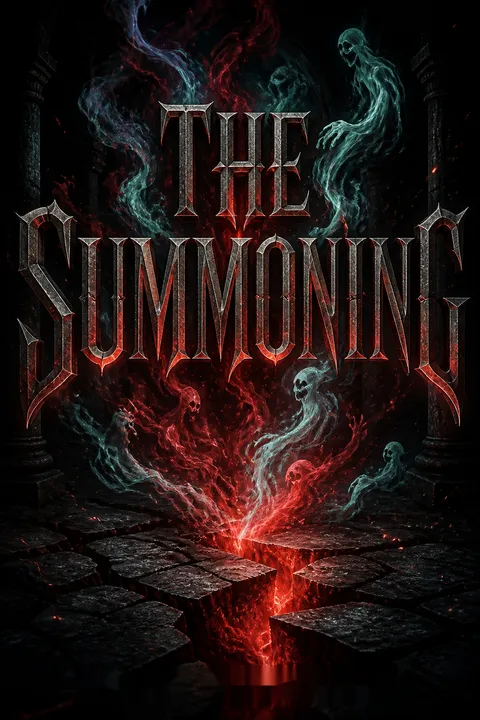


Plot Summary
Prologue
Twelve years before the main story, little Chloe is sent into her family’s basement to fetch a drink for her babysitter, Emily. The room is already crowded with people Chloe thinks of as playmates, including an old woman in a pink housecoat and a silent man hanging behind the furnace. When the old woman reveals a skull beneath her burned skin, Chloe’s fear becomes a memory her parents will try to bury by moving away.
The opening gives Chloe’s childhood imagination a disturbing physical setting: the basement is not simply dark, but populated. Adults dismiss her experiences as make-believe, so the move that follows protects her from fear without explaining it. The scene plants the novel’s central uncertainty before Chloe can name it: whether she invents the dead or perceives what others cannot. Its return of the basement woman also makes memory feel less like a solved childhood episode than a sealed room that has begun to open again.
The Boy in Traffic
Fifteen-year-old Chloe Saunders is an aspiring filmmaker at an arts high school, anxious about her grades, her appearance, and how young she looks. On the way to school, she spots a boy dart into traffic in front of her taxi. The driver swerves, but the lane is empty.
Later, after Chloe gets her first period and dyes red streaks into her hair in a school bathroom, she hears a girl crying in an empty stall. A burned custodian appears, follows her through the halls, and speaks as if she alone can hear him. Teachers restrain Chloe when she tries to escape him, and paramedics sedate her. By day’s end, a private vision has become a public crisis.
Chloe’s first crisis unfolds among ordinary adolescent pressures, so the supernatural disturbance cannot be cleanly separated from the body and social world changing around her. Her sudden menstruation appears to offer a plausible explanation for the visions, while her film training gives her a habit of turning frightening events into scenes she can examine. But the school’s response strips away that interpretive control: adults see a student fighting teachers, not a girl pursued by someone they cannot perceive. The inciting event is therefore both paranormal and institutional. Chloe loses trust in her senses just as other people begin claiming authority over them.
Lyle House's Yellow Rooms
At the hospital, Chloe’s aunt Lauren, a physician, tells her that the school requires a two-week evaluation at Lyle House to avoid a damaging permanent record. Chloe’s father flies in from a business trip, but soon leaves again after helping arrange her admission.
Doctors rule out drugs and a brain tumor; Lyle House psychologist Dr. Gill calls Chloe’s visions symptoms of schizophrenia and begins medication. The home looks like a cheerful Victorian residence, yet alarms protect its doors and windows, staff control outings, and residents follow strict schedules.
Chloe arrives ashamed and frightened, carrying only her stuffed koala and missing the ruby necklace her mother gave her. The comforts feel staged, while the rules make clear that she cannot simply walk out.
Lyle House makes care and confinement difficult to distinguish. Its daisies, shared meals, and patient routines promise domestic safety, but alarms and controlled movement quietly establish who holds power. Chloe’s diagnosis gives her a language for what happened, yet it also turns uncertainty into a verdict before she understands her own experience. The adults’ confidence contrasts with her lack of evidence, leaving her to wonder whether accepting help means surrendering judgment. Her father’s awkward presence and quick departure reinforce the emotional pattern of the home: people may care about Chloe, but she is still left to manage the consequences largely by herself.
A Room Full of Labels
At Lyle House, cheerful Liz welcomes Chloe, while her friend Tori mocks Chloe’s stutter and appearance. Rae, a blunt girl who is fascinated by fire, becomes easier to talk to. The boys, Simon and Derek, are foster brothers: Simon is sociable and artistic, while Derek is large, withdrawn, and watchful.
Younger resident Peter mostly keeps to his handheld game. Staff distribute pills and enforce chores, classes, and therapy. Chloe’s first meal turns tense when Tori tells the others that Chloe sees ghosts; Simon objects, but the disclosure leaves Chloe feeling exposed.
She later hears an unseen man calling from behind a locked laundry-room door. Dr. Gill explains her diagnosis in clinical terms, and Chloe agrees to treatment because she wants to leave.
The residents’ varied behaviors complicate Chloe’s fear that Lyle House contains one recognizable kind of illness. The home sorts young people into private diagnoses, but their relationships immediately make those labels public: Tori uses Chloe’s secret to provoke her, while Simon tries to interrupt the humiliation. Chloe’s choice to agree with Dr. Gill is strategic as much as sincere. She wants treatment to help, but also believes compliance may shorten her stay. The locked door and unseen voice add a second problem: she cannot know whether the house’s explanations are complete, yet she has learned that expressing doubt may make adults trust her less.
Liz's Impossible Return
Liz’s behavior grows alarming after she throws a pencil hard enough to injure tutor Ms. Wang. That night, Liz asks Chloe to help contact the poltergeist she believes is protecting her.
Bottles and framed pictures fly around the bedroom, cutting Chloe’s leg, and staff sedate Liz before taking her away for more intensive care. The next morning, Chloe sees Liz sitting on her bed, describing a frightening dream about being restrained in a hospital. Chloe reaches for her, but her hand passes through Liz’s arm.
Liz sees it too and screams before disappearing. Chloe decides she must be hallucinating and takes the medication she had hidden, while staff promise she may speak to Liz later. Their reassurance cannot explain what Chloe felt beneath her fingers.
Liz’s episode makes the distinction between symptom and supernatural event harder for Chloe to sustain. The flying objects appear to confirm the staff’s account of a behavioral crisis, while Liz’s later presence and insubstantial body point toward something the clinical explanation cannot contain. Chloe responds by choosing the interpretation that seems safest, not necessarily the one she believes. Taking the concealed pill is a bid to restore order, but it also shows how authority has taught her to distrust her own perception. Liz’s fear of being transferred mirrors Chloe’s fear of being disbelieved, making their brief intimacy both a comfort and a source of dread.
The Custodian's Obituary
After Rae suggests that the burned custodian might have been real, Chloe searches online and finds an obituary for Rod Stinson, the former head custodian at her school. He died in a chemical explosion decades earlier, and a photograph matches the face that chased her.
Derek sees the article and identifies Chloe as a necromancer, a person able to perceive the dead. Chloe mistakes his explanation for a scare tactic. When she mocks his suggestion, Derek grabs her and throws her across the laundry room.
Shaken, Chloe and Rae secretly copy Derek’s file and discover that he has a history of violent outbursts and extraordinary strength. The evidence confirms her fear of him, but his later behavior suggests that he is also frightened by what he can do.
The obituary changes Chloe’s problem from a question about perception into a conflict over what kind of reality she inhabits. The photograph is evidence, but it does not immediately overcome the stigma of a diagnosis that already makes her vulnerable to being dismissed. Derek’s attempt to force belief through bluntness becomes physical harm, undercutting his claim to be helping. Chloe’s decision to inspect his file is a form of self-protection, though it also turns the household into a place of surveillance, with residents investigating one another because the staff’s secrecy leaves them little recourse. Knowing Derek’s history does not make him safe; it makes the risks more legible.
Simon Makes the Ball Rise
Simon seeks Chloe out in the yard and demonstrates that he can lift a basketball with a spell. He explains that he is a sorcerer, that Chloe’s ability to see ghosts has a name, and that Derek’s unusual strength belongs to another supernatural kind. Chloe begins to accept that her visions may not be illness.
That night, a ghost draws her toward the attic, where she sees Liz again and realizes she is not solid. Mrs. Talbot and Tori find Chloe speaking to the unseen, and the staff treat the episode as proof she has not accepted Dr. Gill’s diagnosis. Chloe loses the chance to leave early and must provide urine samples to verify that she is taking her medication.
Simon’s demonstration gives Chloe a form of proof she can test, unlike the medical explanations that require her to take other people’s word for what she experiences. His easy warmth also creates a contrast with Derek’s coercive approach, making the supernatural world feel less like a threat and more like a possible community. Yet belief does not grant Chloe freedom. The attic encounter is interpreted by the staff as relapse, and her honesty or confusion becomes evidence against her. This turn exposes the novel’s central power imbalance: Chloe may be right about what she sees, but she has no recognized authority to make that truth count.
The Locked Crawlspace
Chloe and Rae return to the locked basement door after the unseen man urges Chloe to open it. A key Derek provides unlocks a cramped closet, where a ladder leads through a concealed hatch into a dirt crawlspace. Rae and Chloe find a metal box of old property records, but no obvious answer to the ghost’s request.
Chloe experiences a flash of a sharply dressed man, and the flashlight dims in her hand, leaving her unsettled. Their search marks a shift in the friendship: Rae accepts Chloe’s account instead of treating it as a diagnosis, while Chloe begins to trust someone at Lyle House with what she actually believes. The crawlspace remains unexplained, and its hidden depth invites them back.
The concealed passage turns Lyle House’s domestic architecture into evidence that its visible rooms do not tell the whole story. Chloe and Rae do not discover a simple answer, but their shared investigation changes how Chloe approaches uncertainty: she can test a possibility without pretending she already knows what it means. Rae’s willingness to accompany her matters as much as the physical discovery. Their friendship offers a kind of trust absent from the formal therapy room, where every admission risks becoming part of Chloe’s file. The crawlspace’s empty records box also frustrates the urge for a neat solution, keeping the house’s history unresolved and the girls’ curiosity active.
Tori's Dark Invitation
Tori’s mother visits and pressures her to improve, shaming her for remaining at Lyle House and warning her away from Simon. Soon after, Tori offers Chloe a truce and claims she knows where the crawlspace’s hidden valuables are. She leads Chloe into the dark, then attacks her, blaming Chloe for Liz’s removal, Simon’s attention, and her own stalled progress.
Tori strikes Chloe with a broken brick and leaves her unconscious, bound, and gagged underground. When Chloe wakes, the earlier voices grow clearer, and she hears the dead calling for help. She cannot see her way out or reach the locked door. Tori’s attempt to silence her instead places Chloe within reach of the buried dead.
Tori’s cruelty is not excused by her mother’s pressure, but the pressure helps explain why she treats Chloe as a rival for scarce approval. At Lyle House, progress seems to determine who is believed, rewarded, or sent elsewhere. Tori experiences Chloe’s apparent success as an accusation against her own effort. The false truce converts that resentment into physical danger. Chloe’s captivity also reverses the logic of treatment: the person labeled unstable becomes the target of violence, while the institution’s rules have left her isolated in a hidden room. Her only remaining resource is the ability everyone else has told her to distrust.
The Dead Wake Below
Still tied in the crawlspace, Chloe follows the dead man’s instructions and concentrates on the voices. Her power surges beyond her control: two buried bodies claw through the dirt, their spirits trapped again inside their decomposed remains.
Derek finds Chloe, removes her gag, and helps her focus until the spirits leave the corpses. Together they cover the shallow graves and slip upstairs, where staff discover them dirty and assume they had been hiding together. Chloe’s aunt Lauren accepts that same interpretation and scolds Chloe for making excuses for Derek.
Chloe realizes neither her aunt nor the clinicians will believe what happened below. Simon’s missing father and the boys’ uncertain future offer another path, so Chloe decides she would rather leave than wait to be transferred.
The scene’s horror is not simply that Chloe can raise the dead, but that power arrives without instruction or consent. She must manage the consequences for the spirits and the bodies while still trying to survive her own captivity. Derek’s help establishes a more complicated bond: his capacity for harm does not prevent him from staying beside her when she is terrified. The adults’ misreading of their return then restores the institution’s familiar pattern, translating an extraordinary rescue into misconduct. Chloe’s decision to run follows from this collapse of trust. She is not choosing freedom because she feels ready; she is choosing the only available way to seek answers.
Samuel Lyle's Victims
Before leaving, Chloe asks Derek how to contact a specific spirit. He helps her reach the ghost who first guided her to the crawlspace. The spirit says the house blocks ghosts, identifies its original owner as the sorcerer Samuel Lyle, and says the bodies below belonged to murdered supernaturals.
Chloe then summons a witch buried there. The woman describes how Lyle promised his subjects a better life before using them in dangerous experiments.
She cannot explain why Chloe and the other teens were placed at Lyle House, but warns that being supernatural always carries danger. The discovery makes the group home’s cheerful routines look like a cover for a history of exploitation. It also gives Chloe a reason to leave beyond her fear of an institutional transfer.
The ghost’s account connects the property’s history to the teenagers’ present without resolving the connection. Samuel Lyle’s promise of improvement resembles the therapeutic language used at the home, but the resemblance is unsettling rather than conclusive. The witch’s warning refuses to turn past suffering into a convenient explanation for everything Chloe faces. Her testimony instead enlarges the question: who decides which risks are acceptable when young people’s bodies and abilities are involved? Chloe’s developing agency depends on listening to the dead while resisting the temptation to treat any single voice as an oracle. The history gives her suspicion a basis, not a complete map.
Rae Joins the Run
Rae discovers Chloe, Simon, and Derek are planning to escape and asks to join. She admits that she once burned her mother without holding a lighter, and believes the incident may point to an ability she cannot control. Simon and Derek agree to take her, though they remain uncertain what she is. Chloe packs light and takes Liz’s green hoodie, hoping the garment can help her contact Liz.
At three in the morning, Simon and Rae prepare to leave with Chloe, but Derek is missing. Chloe finds him outside, feverish and changing into a wolf-like form. She stays despite his urging her to go. When Dr. Gill discovers them, Derek knocks her unconscious, and he and Chloe flee through neighboring yards toward the factory district.
Rae’s admission reframes her desire to be special as a search for an explanation, not merely attention. She has watched adults interpret unusual events through familiar labels, and her uncertainty parallels Chloe’s earlier struggle to distinguish illness from ability. The group’s decision to include her is an act of solidarity, but also a practical risk, since they have little experience managing their powers. Derek’s transformation exposes the limits of the information he and Simon have shared. Chloe’s choice to remain with him is not romantic surrender; it is a concrete refusal to abandon someone in crisis, even when his secrecy has given her reasons to distrust him.
Aunt Lauren's Second Door
Chloe and Derek reach an industrial yard, where staff and two strangers search for the runaways with tranquilizer weapons. Simon and Derek create a distraction with a spell and a bank of fog, sending Chloe and Rae toward a nearby warehouse. Inside, Chloe sees a ghost relive a fatal accident beside an industrial saw.
The girls wait, retrieve the tranquilizer dart as evidence, and take a cab to Aunt Lauren’s home. Lauren initially believes Chloe’s account, then brings her to a clinic, where Chloe recognizes Sue, a nurse who was with the pursuers. Dr. Davidoff arrives, and Lauren helps sedate Chloe. Chloe wakes behind a steel door, summons Liz using the hoodie, and realizes her friend is dead.
This ending makes betrayal intimate: the person Chloe trusts to protect her becomes part of the machinery that confines her. Lauren’s initial belief creates a brief return to safety, which makes the clinic’s revelation more destabilizing than a straightforward capture. Chloe has spent the novel learning that medical and familial care can coexist with control; here, those roles converge. The hoodie becomes more than a keepsake, allowing Chloe to reach the friend whose disappearance she could not explain. Her discovery that Liz is dead does not resolve the mystery of Lyle House. Instead, it sharpens the stakes and leaves Chloe with a new, fragile ally inside the place that has trapped her.
Analysis
The novel’s central conflict is epistemic as much as supernatural: Chloe must decide whether her perceptions are reliable while the people who control her care insist on interpreting them. The diagnosis is not presented as a trivial mistake. Chloe has real distress, needs support, and fears what is happening to her. The danger lies in the way one explanation becomes exclusive, so that every new observation can be recast as further proof of illness. Lyle House gives this problem an architecture: its homelike rooms promise protection, while locks, schedules, and surveillance limit the residents’ ability to test their own conclusions.
Chloe’s film-mindedness functions as both defense and method. She frames frightening events as scenes, notices visual details, and searches for records that can corroborate what she saw. Yet no amount of observation can by itself produce safety. The obituary confirms the custodian’s history, but Derek’s file also shows how knowledge can frighten rather than free her. Her growth comes not from achieving perfect certainty, but from accepting that uncertainty requires relationships. Rae listens without demanding that Chloe perform recovery. Simon offers a testable demonstration. Derek, despite his capacity for harm, helps when Chloe is in immediate danger.
The book also questions the language of care. Tori’s mother treats recovery as proof of character, and the clinicians’ routines can reduce young people to cases. Chloe’s aunt initially seems a more humane alternative, but the ending shows that affection does not guarantee trustworthy judgment. Family, medicine, and institutional authority overlap, making consent difficult to locate. The supernatural powers intensify this conflict because the teenagers have no accepted framework for learning what they can do.
The ending deliberately withholds resolution. Chloe escapes one controlled environment only to discover that a trusted relative has delivered her into another. Reaching Liz is both an act of agency and an emotional cost, because Chloe must face the possibility her friend is dead. The final movement does not close the mystery of Samuel Lyle or the group home. It leaves Chloe with less certainty, but more capacity to act on what she has learned.
Review Summary
The Summoning received mixed reviews, with ratings ranging from 1 to 5 stars. Many readers found it engaging and praised the character development, particularly Derek. Some appreciated the creepy atmosphere and supernatural elements. However, others felt the pacing was slow and criticized the cliffhanger ending. Several reviewers noted it was better suited for younger audiences. Some readers were pleasantly surprised by the book, while others found it disappointing. Overall, opinions varied widely, with some eagerly anticipating the sequel and others uninterested in continuing the series.
People Also Read






Characters
Chloe Saunders
Film-minded new patientChloe is fifteen, small for her age, and determined to become a filmmaker. Her mother’s death and her father’s frequent business travel have made her careful about depending on adults, though she remains close to her physician aunt. A stutter and persistent worries about seeming childish shape how she moves through school. She processes frightening experiences by imagining camera angles and story structure, a habit that gives her distance but can also keep her from asking for help. Chloe wants the ordinary security of friends, school, and a future she has chosen herself. Her central struggle is learning when to trust her own observations without mistaking independence for having to face everything alone.
Derek Souza
Guarded, imposing housemateDerek is Simon’s foster brother, a broad, intensely observant teenager whose silence and bluntness often make him seem hostile. He is academically gifted, physically intimidating, and wary of emotional closeness. His history has taught him to regard himself as a potential danger to others, so he uses distance and control to limit the damage he might cause. That self-protection can become aggression, especially when he believes people are ignoring an obvious risk. Derek’s loyalty to Simon is deep, but it is tangled with guilt and a belief that he must manage problems alone. Chloe’s willingness to challenge him unsettles the defenses he relies on.
Simon Bae
Artist and loyal brotherSimon is Derek’s foster brother and the more sociable of the two. He is a comic-book artist, enjoys sports, and uses humor to make tense situations easier for other people. His ease can look like carelessness, especially beside Derek’s constant vigilance, but Simon is attentive to the people around him and deeply attached to his brother. He wants room to make his own choices while remaining loyal to the family he has built with Derek. Chloe’s artistic interests give them a natural connection, and his warmth offers her a glimpse of companionship that does not depend on her pretending to be well.
Rae
Candid, searching roommateRae, whose full name is Rachelle, is Chloe’s roommate and the most direct of the girls at Lyle House. Adopted into a large, multiracial family, she is sensitive to being overlooked as her parents’ attention shifts among their children. Her interest in anime and fire gives her a vivid inner life, while her blunt humor helps her challenge the home’s rules and assumptions. Rae wants to be valued for herself, not treated as a problem or a charitable obligation. She is both street-smart and vulnerable to the hope that an unusual experience might finally make her feel distinct. Her growing trust in Chloe rests on being taken seriously.
Liz
Eager, vulnerable friendLiz is a friendly, talkative resident who tries to make newcomers feel welcome. She likes fashion, cheerful décor, and family keepsakes, and she is especially close to Tori. Beneath her sunny manner is a fear that adults see her as dangerous rather than frightened. Liz wants someone to believe her account of events and to help her retain control when she feels overwhelmed.
Tori Enright
Sharp, approval-seeking rivalTori is a polished, cutting teenager whose confidence often covers insecurity. She is protective of her friendship with Liz and attentive to the social hierarchy among the residents. Her mother’s status at Lyle House brings her privileges but also intense pressure to recover quickly and protect the family’s reputation. Tori is especially sensitive to comparisons with other girls, and her attempts to control how others see her can make her cruel.
Aunt Lauren
Physician and guardianLauren is Chloe’s aunt and a physician who has long wanted to give her a steadier home than her father’s traveling life provides. She is practical, protective, and quick to take responsibility when Chloe is in trouble. Her resentment toward Chloe’s father, whom she blames for her sister’s death, complicates the family’s loyalties. Lauren’s instinct is to solve a crisis decisively, even when Chloe needs her to listen before acting.
Chloe's father
Well-meaning absent parentChloe’s father buys and sells luxury apartments and is often away on business. He loves his daughter, but his awkwardness and distance leave much of her daily care to housekeepers and Aunt Lauren. He tries to support Chloe’s schooling and comfort, yet rarely knows how to respond to her emotional needs. His absence is less a rejection than a persistent failure to be present.
Dr. Gill
Lyle House psychologistDr. Gill is the psychologist responsible for evaluating Chloe and the other residents. She is controlled, observant, and committed to diagnosis and medication as the route to stability. Her professional certainty can feel reassuring to frightened families, but Chloe experiences it as a system that interprets doubt as evidence of illness. Dr. Gill represents the clinical authority that structures daily life at Lyle House.
Dr. Davidoff
Polished program directorDr. Davidoff oversees the organization that runs Lyle House. He presents himself as warm and encouraging, praising residents when they appear to make progress. Beneath that manner is an administrator accustomed to directing conversations and managing outcomes. His authority reaches beyond therapy into decisions about the residents’ movement and future.
Mrs. Talbot
Warm house nurseMrs. Talbot is an older nurse who manages meals, routines, and the home’s welcoming atmosphere. She is kind in small, practical ways and tries to make new arrivals feel settled. Her role also requires her to enforce the house’s restrictions, so her warmth exists alongside the rules that keep residents under supervision.
Miss Van Dop
Strict house nurseMiss Van Dop is the younger, stricter nurse at Lyle House. She monitors medication and reminds residents of the home’s limits. Chloe finds her difficult to read, especially when her amusement or concern is hidden behind a severe expression.
Peter
Quiet, game-loving residentPeter is the youngest boy at Lyle House. He is polite but usually absorbed in his handheld game, and his calm presence softens some of the household’s tension. He is eager for the ordinary comforts of home and family.
Ms. Wang
Overworked house tutorMs. Wang supervises schoolwork at Lyle House. She is tired and impatient, with little time for the residents’ personal difficulties. Her strained relationship with Liz contributes to the sense that the home’s educational routine is not always a source of support.
Tori's mother
Image-conscious board memberTori’s mother is connected to the organization that oversees Lyle House. She cares intensely about her daughter’s progress, but expresses that concern through pressure, criticism, and demands for obedience. Her visits show how family support can become another measure of performance.
Samuel Lyle
House's historical namesakeSamuel Lyle is the former owner associated with the Victorian house. His name is part of the property’s history, and the old building carries traces of a past the current residents do not understand.
The basement spirit
Unseen guideA man’s voice calls to Chloe from the laundry area and urges her to investigate a locked door. He struggles to communicate clearly, making him a fragmentary guide rather than a reliable source of answers.
The pink-housecoat woman
Childhood terrorThe old woman in the pink housecoat is one of the figures Chloe remembers from her childhood basement. Her frightening appearance becomes part of Chloe’s earliest understanding of the people she sees when no one else is present.
Emily
Unprepared babysitterEmily is the babysitter left in charge of young Chloe. She does not understand Chloe’s fear of the basement, and her demand that Chloe fetch a drink brings the child face to face with what she sees there.
Milos
Chloe's familiar cab driverMilos has driven Chloe through several moves and school changes. His easy conversation about movies gives her a brief pocket of ordinary comfort on the morning her visions begin again.
Rod Stinson
Former school custodianRod Stinson is a former head custodian at Chloe’s school. A newspaper account of his past helps connect one of Chloe’s frightening experiences to the school’s history.
Sue
Clinic nurseSue is a nurse acquainted with Aunt Lauren. She appears to offer medical help when Chloe arrives at the clinic, though Chloe recognizes her from an earlier encounter.
Plot Devices
The Ruby Necklace
A keepsake against fearChloe’s mother gave her the ruby necklace when Chloe was young and frightened by the figures she saw. Chloe treats it as a protective charm, though the book does not establish that it has supernatural force. Its importance comes from memory: when Chloe loses it at the hospital, she feels separated from both her mother and the version of herself who believed the world could be made safe. Aunt Lauren’s return of the necklace briefly restores that comfort. It connects Chloe’s childhood experiences to her present without resolving what either means.
Medication and diagnosis
A contested explanationDr. Gill identifies Chloe’s visions as symptoms of schizophrenia and prescribes medication intended to suppress them. The diagnosis gives the staff a framework for treatment, but also makes Chloe fear that any report of an apparition will be dismissed as illness. Hidden pills, urine testing, and medication side effects turn treatment into a source of suspense. The device keeps two explanations in tension: Chloe may be experiencing a mental health crisis, or the adults may be misreading an ability they do not recognize. The story treats the diagnosis as consequential, not as proof of which explanation is correct.
Personal effects
A bridge to the absentThe story establishes that objects associated with someone can help Chloe attempt contact with that person. Liz’s green hoodie becomes especially significant because Chloe takes it when she leaves Lyle House. The principle also connects supernatural investigation to ordinary memory: a garment can carry a person’s scent, history, and emotional presence even when its owner is missing. For Chloe, using such an object is not a guaranteed solution, but a focused attempt to reach someone she cannot otherwise find.
Lyle House's security
Comfort masking controlLyle House looks like a comfortable family residence, but alarms, locked doors, medication checks, and supervised outings govern the residents’ movements. These controls initially seem like ordinary safeguards in a treatment setting. As Chloe discovers more about the home, each restriction becomes harder to interpret as neutral. The security system provides a practical obstacle to escape and a recurring reminder that the residents cannot decide for themselves when to leave. It also helps the story blur the boundary between a place meant to care for vulnerable teenagers and a place designed to contain them.
The supernatural gifts
Abilities mistaken for illnessChloe’s perceptions, Simon’s spellwork, Derek’s unusual physical traits, and Rae’s unexplained experience suggest that some residents possess abilities their families or caregivers do not understand. The characters use names such as necromancer and sorcerer to organize what they are learning, but their knowledge is incomplete. This device drives the mystery of why several unusual teenagers have gathered at one home. It also complicates the apparent cure: medication or institutional discipline may suppress visible behavior without explaining its cause or teaching the young people how to control it.
FAQ
```markdown
Synopsis & Basic Details
What is The Summoning about?
- Teenager's Reality Shattered: The Summoning introduces Chloe Saunders, a seemingly ordinary fifteen-year-old whose life takes a terrifying turn when she begins seeing ghosts, leading to a public breakdown and a diagnosis of schizophrenia. This forces her into Lyle House, a secluded group home for troubled teens, where she hopes to "get better" and return to her normal life.
- Unveiling Supernatural Truths: As Chloe navigates the strict routines and eccentric residents of Lyle House, she discovers that her "hallucinations" are real, and she possesses the rare ability of necromancy – the power to see and communicate with the dead. This revelation challenges her understanding of sanity and reality, pushing her to question everything she's been told.
- Conspiracy and Escape: Chloe forms uneasy alliances with other supernaturals at Lyle House, including a sorcerer and a werewolf, as they uncover a sinister conspiracy: Lyle House is a front for an organization experimenting on supernaturals. Facing betrayal from those she trusted, Chloe and her new friends must escape to uncover the truth about their powers and the dark intentions of their captors.
Why should I read The Summoning?
- Gripping Psychological Thriller: Readers are drawn into Chloe's desperate struggle to distinguish reality from delusion, creating a tense and immersive experience. The narrative expertly blurs the lines between mental illness and supernatural ability, keeping you guessing about Chloe's true condition and the motives of those around her.
- Rich Character Dynamics: The story features a compelling cast of characters, each with their own secrets and powers, forming complex relationships that drive the plot. From Derek's gruff protectiveness to Simon's charming mystery and Rae's fiery loyalty, their evolving bonds add depth and emotional stakes to the high-octane escape.
- Unique Take on Urban Fantasy: Kelley Armstrong subverts typical supernatural tropes by grounding them in a contemporary setting and exploring themes of identity, trust, and institutional control. It offers a fresh perspective on what it means to be "special" and the dangers of being misunderstood, making it a thought-provoking read for fans of young adult fiction and urban fantasy.
What is the background of The Summoning?
- A World of Hidden Supernaturals: The story is set in a contemporary world where supernatural beings exist but are largely unknown to the general public, often misdiagnosed as mentally ill. This hidden reality creates a constant tension, as characters like Chloe must navigate their powers while trying to appear "normal" to avoid institutionalization or worse.
- Lyle House's Deceptive Purpose: Lyle House, initially presented as a therapeutic group home, is revealed to be a facility run by an organization that experiments on young supernaturals. Its founder, Samuel Lyle, was a sorcerer and alchemist who conducted "experiments on supernaturals," setting a dark precedent for the institution's true purpose.
- Puberty as a Catalyst for Powers: The emergence of supernatural abilities is linked to puberty, explaining why many of the teens at Lyle House are around Chloe's age. This biological connection grounds the fantastical elements in a relatable developmental stage, adding a layer of vulnerability and confusion for the characters as their bodies and minds undergo profound, unexpected changes.
What are the most memorable quotes in The Summoning?
- "Schizophrenia ... is not like the flu, Chloe. It is permanent." (Dr. Gill, Chapter 7): This chilling declaration from Dr. Gill encapsulates Chloe's initial despair and the crushing weight of her supposed diagnosis. It highlights the novel's central conflict between medical labels and supernatural reality, forcing Chloe to confront a future she desperately wants to deny.
- "You're a supernatural. You're always in danger." (Witch ghost, Chapter 35): Spoken by one of Samuel Lyle's victims, this line serves as a stark warning and a thematic cornerstone, revealing the inherent peril of being a supernatural in a world that doesn't understand or accept them. It underscores the constant threat Chloe and her friends face, shifting her perspective from personal "craziness" to a shared, dangerous reality.
- "I expect that brute to be handled the way he should have been handled years ago. Put down like a rabid dog." (Aunt Lauren, Chapter 47): This shocking statement from Aunt Lauren, referring to Derek, exposes her true, sinister nature and the organization's brutal intentions. It shatters Chloe's last vestiges of trust in her guardian and reveals the horrifying fate awaiting supernaturals deemed "uncontrollable," driving Chloe's desperate resolve to protect Derek.
What writing style, narrative choices, and literary techniques does Kelley Armstrong use?
- First-Person, Present-Tense Narrative: The story is told from Chloe's perspective, immersing the reader directly into her thoughts, fears, and confusion as events unfold. This narrative choice effectively heightens the psychological tension, making the reader question reality alongside Chloe and experience her growing panic and eventual empowerment firsthand.
- Subtle Foreshadowing and Misdirection: Armstrong masterfully employs subtle hints and red herrings, such as Chloe's childhood basement fears and the initial "schizophrenia" diagnosis, to build suspense and keep readers off balance. This technique allows for impactful reveals, like the true nature of Lyle House and Aunt Lauren's betrayal, making the twists more surprising and satisfying.
- Sensory and Emotional Detail: The author uses vivid sensory descriptions—like the "stink of dirt and stale air" in the crawl space or the "icy fingertips" of a ghost—and deep emotional introspection to create a rich, immersive experience. This attention to detail grounds the fantastical elements in a tangible reality, making Chloe's supernatural encounters feel both terrifyingly real and deeply personal.
Hidden Details & Subtle Connections
What are some minor details that add significant meaning?
- Chloe's Necklace as a Potential Focus: Initially presented as a "silly superstition" and a "reminder of Mom" (Chapter 16), Aunt Lauren's insistence that Chloe wear her ruby necklace after the hospital visit subtly hints at its deeper significance. While not explicitly stated in this book, this detail foreshadows the necklace potentially being a supernatural artifact or a means of tracking, given Aunt Lauren's later revealed involvement with the organization.
- Lyle House's "Too Cheerful" Aesthetic: The description of Lyle House with its "pale yellow" paint, "daisies or daffodils," and "worn, comfortable look" that felt "more a stage set than someone's house" (Chapter 5) is a subtle but potent detail. This forced cheerfulness symbolizes the deceptive facade of the institution, masking its sinister purpose of experimentation and control beneath an illusion of normalcy and care.
- Derek's "High Metabolism" and "Muscle Spasms": Derek's casual mention of a "high metabolism" and "muscle spasms" (Chapter 33, 34) initially seems like a minor detail related to his "condition." However, these are subtle clues foreshadowing his werewolf transformation, indicating the physical changes and internal struggle he's experiencing as his supernatural abilities manifest prematurely.
What are some subtle foreshadowing and callbacks?
- Chloe's Childhood Basement Encounters: The opening scene, detailing Chloe's terrifying encounters with "Mrs. Hobb" and the "hanging man" in her childhood basement (Chapter 1), serves as powerful foreshadowing. These early "visions" are later revealed not as imaginary friends but as genuine ghostly encounters, establishing her necromancer abilities long before she understands them.
- Liz's "Poltergeist" Activity: Liz's belief that a "poltergeist" is responsible for objects flying around her room (Chapter 9) subtly foreshadows the existence of other supernatural powers beyond necromancy. This is later revealed to be Liz's own uncontrolled shamanistic ability of astral projection, a callback to Simon's explanation of different supernatural races (Chapter 20).
- Derek's "Extraordinary Strength" in his File: Derek's file mentions "extraordinary strength" and "chemically fueled rage" during a schoolyard fight (Chapter 15), which is a clear foreshadowing of his werewolf nature. This detail, combined with his later physical symptoms like "hair sprouting" and "talon-like" fingers (Chapter 40), builds a consistent, if initially mysterious, picture of his developing powers.
What are some unexpected character connections?
- Aunt Lauren's Deep-Seated Betrayal: The most shocking connection is Aunt Lauren's complicity with the organization running Lyle House, revealed when she drugs Chloe and expresses a desire to have Derek "put down like a rabid dog" (Chapter 46, 47). This transforms her from a caring, if overprotective, guardian into a calculated betrayer, revealing a hidden, darker side to her character and family history.
- Samuel Lyle's Legacy and the Buried Supernaturals: The discovery that Samuel Lyle, the original owner of the house, was a sorcerer who "experimented on supernaturals" (Chapter 34) creates a chilling connection between the house's history and its current purpose. The buried witch ghost confirms they were "lab rats sacrificed to the vision of a madman" (Chapter 35), directly linking the past victims to the present residents and the organization's ongoing experiments.
- Chloe's "Unnatural" Necromancy: The ghost necromancer's comment that Chloe's powers are "too strong" and "unnatural" for her age (Chapter 34) suggests a unique and potentially dangerous aspect to her abilities. This hints at a deeper, perhaps engineered, connection to the supernatural world, distinguishing her from typical necromancers and raising questions about her true origin or purpose within the organization's plans.
Who are the most significant supporting characters?
- Rae, the Half-Demon Confidante: Rae is crucial as Chloe's first true friend and confidante at Lyle House, providing emotional support and practical help in uncovering secrets. Her own emerging half-demon powers (burning hands, Chapter 36) and her cynical, street-smart perspective offer a contrasting view to Chloe's naivety, making her an invaluable ally in navigating the dangers of their new reality.
- Simon, the Sorcerer and Bridge: Simon serves as the primary source of information about the supernatural world, explaining necromancy, sorcery, and other "races" to Chloe (Chapter 20). His loyalty to Derek and his determination to find their father drive much of the escape plan, and his charming demeanor acts as a social buffer, making him a vital link between Chloe and the more volatile Derek.
- Derek, the Werewolf Protector: Despite his gruff exterior and initial antagonism, Derek becomes Chloe's fierce protector and an unexpected source of insight into their powers. His "physical enhancements" (Chapter 20) and eventual werewolf transformation (Chapter 40) make him a formidable force, and his self-blame and desire to protect Simon reveal a complex, vulnerable character beneath the intimidating facade.
Psychological, Emotional, & Relational Analysis
What are some unspoken motivations of the characters?
- Chloe's Quest for Normalcy: Beneath Chloe's desire to "get better" and escape Lyle House lies a profound, unspoken longing for a normal life, free from her "special" abilities. Her initial denial of her powers and her willingness to "play the game" (Chapter 8) are driven by a deep-seated fear of being different and the social isolation that comes with it, a stark contrast to Rae's desire to be special.
- Derek's Self-Imposed Confinement: Derek's refusal to escape Lyle House with Simon, despite having the means and the desire to find his father, is motivated by a deep-seated guilt and self-loathing over his past violent actions (Chapter 31, 32). He believes he "belongs" in confinement due to his "dangerous" nature, seeing himself as a "monster" who needs to be controlled, even if it means sacrificing his own freedom.
- Aunt Lauren's Twisted Protection: Aunt Lauren's betrayal, while seemingly cruel, is subtly hinted to be driven by a twisted sense of protection for Chloe, albeit within the organization's framework. Her final words, "We won't let him hurt Simon, Chloe. I promise you that. When you wake up, you're going to help us find Simon and bring him home. I know he's important to you. He's important to all of us. You all are. You and Rachelle and Simon and Victoria. Very special" (Chapter 46), suggest she believes she is safeguarding Chloe and other "special" supernaturals from perceived threats like Derek, even if it means controlling them.
What psychological complexities do the characters exhibit?
- Chloe's Identity Crisis and Denial: Chloe grapples with a profound identity crisis, oscillating between accepting her diagnosis of schizophrenia and embracing her true nature as a necromancer. Her internal monologue reveals her struggle to reconcile the "crazy girl" label with her burgeoning powers, leading to denial, self-doubt, and a desperate need for external validation before she can fully accept herself (Chapter 4, 7).
- Derek's Internalized Guilt and Self-Punishment: Derek exhibits deep psychological complexity through his internalized guilt over his "violent outbursts" and "extraordinary strength" (Chapter 15). His willingness to remain at Lyle House, even when he could escape, and his self-deprecating remarks ("I'm exactly where I belong," Chapter 32) highlight a strong sense of self-punishment and a belief that he is inherently dangerous, making him a tragic figure.
- Tori's Fragile Ego and Parental Pressure: Tori's "moody" and "confrontational" behavior stems from a fragile ego exacerbated by intense parental pressure and a desperate need for approval. Her mother's harsh criticism and public humiliation ("Do you have any idea how embarrassing it is for a member of the board to have her own daughter sent to this place?" Chapter 26) reveal the psychological toll of her privileged but emotionally abusive upbringing, driving her to lash out and seek control in destructive ways.
What are the major emotional turning points?
- Chloe's Schizophrenia Diagnosis: The moment Dr. Gill tells Chloe she has schizophrenia and that it is "permanent" (Chapter 7) is a devastating emotional turning point. This diagnosis shatters Chloe's sense of self and future, plunging her into despair and denial, and forcing her to confront the terrifying possibility that her experiences are not real but a symptom of mental illness.
- Derek's Confession of Guilt: Derek's raw, uncharacteristic confession about his past violence and his self-blame for Simon's situation ("There's a kid out there who'll never walk again and I have no excuse. It's my fault. All my fault. Our dad disappearing. Simon being thrown in here," Chapter 32) is a pivotal emotional moment. It reveals his hidden vulnerability and the immense burden of guilt he carries, transforming him from a mere bully into a complex, sympathetic character in Chloe's eyes.
- Aunt Lauren's Betrayal and Chloe's Realization: The ultimate emotional turning point is Aunt Lauren's betrayal, as she drugs Chloe and reveals her involvement with the organization, referring to Derek as a "monster" (Chapter 46). This shatters Chloe's trust in her last remaining family member, forcing her to confront the depth of the conspiracy and the horrifying reality that those closest to her are not who they seem, propelling her into a desperate fight for survival and truth.
How do relationship dynamics evolve?
- Chloe and Aunt Lauren: From Trust to Betrayal: Their relationship undergoes a dramatic shift from Chloe's initial reliance on Aunt Lauren as a caring guardian to a profound sense of betrayal. Aunt Lauren's early support and concern (Chapter 2, 4) gradually give way to suspicion and judgment (Chapter 16), culminating in her active role in Chloe's capture and sedation (Chapter 46), revealing a calculated manipulation that shatters Chloe's trust.
- Chloe and Derek: From Antagonism to Alliance: What begins as a relationship marked by fear and antagonism, with Derek's intimidating presence and Chloe's stuttering reactions (Chapter 7, 12), slowly evolves into an uneasy alliance and mutual respect. Derek's unexpected rescue of Chloe from Tori (Chapter 28) and his later confession of vulnerability (Chapter 32) forge a bond of understanding, transforming their dynamic into one of protective partnership.
- Chloe and Rae: From Friendship to Shared Purpose: Their friendship deepens from casual camaraderie and shared secrets (Chapter 8) to a powerful alliance built on mutual trust and a shared supernatural identity. Rae's unwavering belief in Chloe's ghost-seeing abilities and her own revelation as a half-demon (Chapter 36) solidify their bond, transforming them into co-conspirators united by a common goal of escape and self-discovery.
Interpretation & Debate
Which parts of the story remain ambiguous or open-ended?
- The Full Extent of Chloe's "Unnatural" Power: The ghost necromancer's warning that Chloe's powers are "too strong" and "unnatural" (Chapter 34) remains largely unexplained. While it hints at her unique potential, the specific nature of this "unnaturalness" and its implications for her future development are left open, suggesting a deeper mystery about her origin or the source of her abilities.
- The Organization's Ultimate Goal for Supernaturals: While it's clear the organization experiments on supernaturals, their ultimate goal remains somewhat ambiguous. The witch ghost refers to them as "lab rats sacrificed to the vision of a madman" (Chapter 35), while Simon mentions his father worked for a company "trying to make things easier for other supernaturals" (Chapter 20). This leaves open the debate about whether the organization is purely malevolent or if there's a twisted, utilitarian motive behind their actions.
- The Fate of Simon and Derek's Father: The disappearance of Simon and Derek's father, Kit, is a central mystery that remains unresolved by the end of the book. While Simon believes he's "in trouble" and needs to be found (Chapter 31), the reasons for his disappearance and his current whereabouts are left open, setting up a major plotline for future installments and leaving readers to speculate about his connection to the organization.
What are some debatable, controversial scenes or moments in The Summoning?
- The Nature of Liz's "Poltergeist" and Her Fate: The ambiguity surrounding Liz's "poltergeist" activity and her subsequent "transfer" sparks significant debate. Chloe initially believes Liz is a shaman astral projecting (Chapter 25), but later concludes she was "dead" and "killed" by the organization (Chapter 47). This leaves readers to question whether Liz was truly a shaman whose powers were out of control, or if she was indeed murdered, highlighting the organization's ruthlessness and the precariousness of the supernaturals' lives.
- Aunt Lauren's Motivations for Betrayal: [
Darkest Powers Series
About the Author
Other books by Kelley Armstrong





Download PDF
Download EPUB
.epub digital book format is ideal for reading ebooks on phones, tablets, and e-readers.








