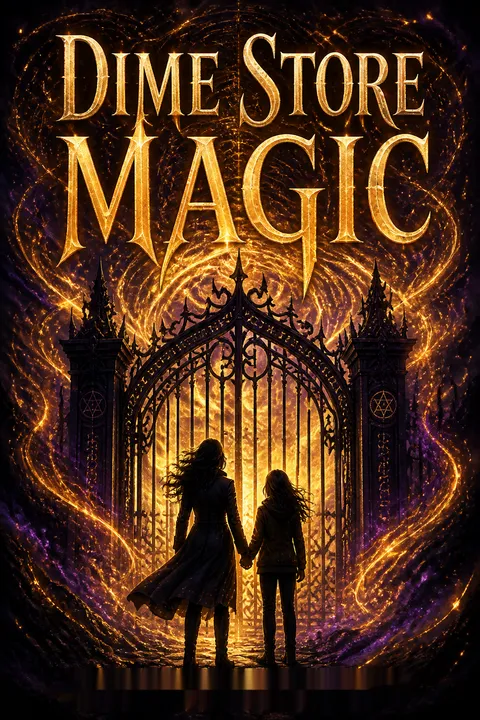


Plot Summary
Prologue
On a California highway, Leah O’Donnell, a telekinetic half-demon, tricks Kristof Nast’s bodyguard into stopping his limousine. She pins the driver beneath the car, then turns Nast’s own magic against him long enough to make an offer: she knows where his daughter Savannah is.
With Savannah’s mother dead, Leah claims, there is no one left to keep Nast away. He accepts the ride and the chance to reach his daughter, setting in motion the custody battle that will soon engulf Paige Winterbourne’s home.
The opening presents Leah as more than a brute force threat. She uses a false traffic stop, a trapped driver, and Nast’s grief to make herself indispensable. Her method previews the novel’s larger conflict: supernatural power is most effective when joined to legal leverage, family claims, and carefully managed appearances. Nast’s willingness to follow her is rooted in a father’s long-delayed desire, but the scene gives no assurance that his motive is protective. The prologue makes custody feel dangerous before Paige even learns that a claim has been filed.
A Letter From Leah
At twenty-three, Paige Winterbourne is a web designer, the nominal leader of a cautious Massachusetts witches’ Coven, and guardian to thirteen-year-old Savannah Levine. Her mother, the former Coven Leader, died nine months earlier, and Paige promised to care for Savannah, whose mother Eve was also killed.
During a tense call with Elder Victoria Alden about Savannah’s rebellious behavior, Paige receives a legal notice demanding a custody meeting. The petitioner’s name is Leah O’Donnell, the telekinetic half-demon involved in the events that killed Paige’s mother.
Paige understands that Leah is not merely contesting a guardianship. She is returning for the unusually powerful girl she once tried to control, and Paige’s promise to protect Savannah is suddenly under legal and supernatural attack.
Paige begins with two forms of authority that do not quite fit her: she inherits leadership of the Coven, yet its Elders treat her as an inexperienced subordinate; she accepts responsibility for Savannah, yet is still learning how to parent her. The letter forces those tensions into one crisis. Leah can exploit the gap between supernatural reality and human custody law, while Paige’s grief makes retreat feel like a betrayal of her mother. The story’s central problem is therefore not simply whether Paige can defeat a powerful enemy. It is whether she can act as a guardian and leader before anyone grants her the confidence or institutional support those roles usually require.
The Father Behind the Suit
Paige secures her house with spells and goes to the meeting expecting Leah to claim Savannah. Instead, Leah’s lawyer, Gabriel Sandford, reveals that the petitioner is Kristof Nast, a wealthy sorcerer and heir to the Nast Cabal.
He claims Nast fathered Savannah with Eve, an assertion Paige considers biologically impossible because witches and sorcerers are believed to have only daughters and sons, respectively. The threat is not confined to court. Leah and Sandford intend to expose Paige as a practicing witch, betting that the Coven’s fear of discovery will force her to surrender Savannah.
Paige sees that the accusation is leverage rather than a credible legal argument, but the revelation leaves her confronting a powerful family whose resources extend far beyond the courtroom.
The paternity claim turns a private guardianship into a challenge to the rules Paige has taken for granted. Her certainty about the incompatibility of witches and sorcerers reflects how thoroughly the Coven’s inherited knowledge defines what she thinks possible. Sandford’s threat works because the Elders have made secrecy a survival strategy, but that strategy also makes them easy to coerce. Paige’s first response is analytical: she separates the legal claim from the intimidation surrounding it. Yet her confidence is still borrowed from the assumption that human procedure will protect her, an assumption the Cabal is already preparing to exploit.
A Lawyer's Price
Paige hires East Falls attorney Grantham Cary Jr. and chooses the human court’s rules as her advantage. Cary recognizes that Nast would need to prove paternity, and his refusal to provide a DNA sample seems to undermine the case.
At a meeting with Leah and Sandford, Paige lets them believe she may sign away Savannah, then introduces Cary and demands testing. Sandford cannot compel Nast to submit. Paige thinks she has won, until Cary inflates his bill and implies that he will trade legal fees for sex.
She rejects him in public and leaves. That night, someone places a wax-coated severed hand on her porch, an occult Hand of Glory. Savannah quietly removes it, while Paige’s revulsion makes the girl feel that her knowledge of magic is unwelcome.
Paige’s legal gambit succeeds only on the surface. She is quick to recognize the value of DNA evidence, but trusts too readily that a human lawyer’s professional role will protect her from exploitation. Cary’s proposition exposes how power can hide inside ordinary authority, not just supernatural ability. The Hand of Glory then unsettles the home that Paige has tried to make safe. Savannah’s secretive response suggests she understands far more than Paige allows herself to ask. Their conflict is already taking shape: Paige equates protection with control, while Savannah experiences that control as a refusal to recognize her competence.
The Hand and the Altar
Unable to sleep, Paige goes outside to dispose of the hand and finds a staged Satanic altar in the woods behind her house. Someone has killed and mutilated three cats, then arranged the bodies with candles, blood, and symbols.
Paige buries the animals before the police arrive, but that makes her look more suspicious when Sheriff Ted Fowler finds the altar and calls in state investigators. Reporters and religious protesters soon gather outside. In the middle of this public storm, Lucas Cortez arrives uninvited, offering legal help and identifying himself as a sorcerer.
Paige distrusts him on principle and sends him away. Savannah, meanwhile, knows the occult objects and the danger behind them, but Paige keeps trying to shield her from what she has already seen.
The staged altar converts supernatural intimidation into a public story that humans believe they understand. Paige’s attempt to do the humane thing, burying the animals, becomes evidence against her because she does not understand how ordinary investigators will interpret the scene. Her academic knowledge of Satanic panic helps her challenge the police, but cannot undo the suspicion already attached to her. At home, the same protective impulse that leads her to hide Savannah’s knowledge also isolates her. Cortez appears as a possible ally, but Paige has learned to associate sorcerers with betrayal, so she cannot yet distinguish his offer from the danger it resembles.
Cary Falls Through Glass
After two teenage trespassers and religious demonstrators crowd Paige’s lawn, Cary deliberately crashes his SUV into her parked car while Savannah is inside, bloodying the girl’s nose. Paige confronts Cary at home, but his wife Lacey refuses to let him answer for it.
The next morning Cary summons Paige to his office. She arrives with Savannah and realizes too late that the meeting is a trap: Leah has sealed the exit. Paige and Savannah try to escape through the rear room, but Leah is outside.
Cary is hurled through a glass door in his office chair and killed. Sheriff Fowler finds Paige beside the body, while a planted report of shouting makes the scene look like the end of a violent quarrel. Leah has turned Paige’s public anger into a murder accusation.
This sequence makes reputation a weapon with immediate physical consequences. Cary’s harassment and the collision give Paige legitimate reasons to be angry, yet Leah arranges events so that each truthful grievance can be recast as motive. Paige’s choice to confront Cary is understandable, but it also exposes how little control she has over the story others tell about her. Savannah’s presence intensifies the stakes: the attack on Paige is also an attempt to remove her guardian. The scene marks a point of no return because Paige can no longer solve the custody crisis through paperwork alone; the opponent is willing to kill and let human suspicion do the rest.
A Coven Leaves Her Alone
State police interrogate Paige for hours, turning the altar, her quarrel with Cary, and the car crash into a case against her. When she asks for counsel, Lucas Cortez appears and produces documents showing that Cary’s death could not be proved as a physical act by Paige.
The police release her, though she still refuses to accept Cortez as her lawyer. At the Coven meeting, Victoria insists Paige must handle the crisis alone to avoid exposing the witches. Cortez enters anyway and lays out practical steps for protecting Paige and Savannah.
His presence terrifies the assembled witches, but Abigail Alden offers quiet support. Paige finally asks Cortez to explain the Cabals, the wealthy sorcerer families behind Nast’s power, and agrees to consider his help.
The police station and the Coven meeting offer two versions of institutional abandonment. Human investigators interpret evidence without understanding magic, while the Elders understand the danger but prioritize their own secrecy over Paige’s safety. Cortez’s intervention matters because it is concrete: he uses legal knowledge to get her out, then offers a plan where her own community offers only prohibitions. Paige’s resistance is not simple prejudice. A sorcerer represents a history in which witches were sacrificed for male power. Her gradual willingness to listen begins when she sees that refusing help may leave Savannah more vulnerable than accepting an imperfect ally.
The Lawyer Meets Leah
Cortez explains that Cabals combine legitimate businesses with supernatural muscle, hiring witches and half-demons to increase their wealth and influence. Robert Vasic sends Paige research showing that Leah is a rare Volo, capable of moving heavy objects with lethal force, though anger can disrupt her concentration.
Paige then spots Cortez sitting in a car with Leah outside her home. He denies being there when she calls, and Paige dismisses him as a Cabal plant. Her reaction is sharpened by the fact that he had been the first person to offer steady help after the Coven refused.
Cortez tries to explain that he has withheld part of his story, but Paige hangs up before he can. She heads to Cary’s funeral home to retrieve her legal file alone.
Paige’s suspicion is rationally grounded in the history she has been taught, but her discovery also touches a more intimate vulnerability: she has begun to rely on Cortez. His lie therefore feels worse than the Elders’ refusal, because it exploits a trust he encouraged. The chapter also sharpens the difference between knowledge and security. Robert’s research gives Paige a practical account of Leah’s limits, but facts cannot make her feel safe when her nearest ally appears compromised. Her decision to proceed alone is an attempt to regain control, yet it leads her directly into the next trap.
The Dead at the Viewing
At Cary’s visitation, attorney Roberta Shaw confines Paige in a storeroom and Leah and Sandford activate a magical trap. Paige escapes into the crowded funeral home, where a poppet spell bursts the lights and sends mourners crashing into a viewing room.
A dead woman emerges from behind the curtains, and Cary climbs from his coffin, his reconstructed body displaying the injuries that killed him. Paige finds another route out, but Sandford’s exit illusions conjure a snarling demon that she mistakes for real.
Cortez forces her through it and helps free Savannah, who has been caught outside. Once the pair are safe, Paige and Cortez disable the traps and release the terrified mourners. The police find only corpses and cannot verify the supernatural events.
The funeral turns the consequences of violence into a spectacle for the very people who have been asked to fear Paige. Cary’s body is not merely evidence of a crime; it is a grotesque return of the harm Leah used to frame her. Paige’s terror at the illusion shows that courage here is not immunity to fear but action taken while fear remains convincing. Cortez’s intervention complicates her certainty that he is an enemy, but does not yet erase his lie. Their shared work to free the mourners offers a small test of character: they choose responsibility even when escape would be easier.
The Cortez Name
After the funeral, Cortez finally explains why Leah approached him. He is the son of Benicio Cortez, head of the world’s most powerful Cabal, but refused the family’s formal initiation and now works independently against Cabal abuses.
His name gives him protection that ordinary opponents do not have. He admits his account to Paige was incomplete and that his instinct to lie is part of how he survived his upbringing. Paige calls Robert Vasic, who confirms Cortez’s reputation and says his motives are widely considered sincere.
She agrees to work with him, while warning that one more lie will end their alliance. Together they return to a town where strangers have gathered outside Paige’s home, and the public attention now threatens Savannah as much as the Cabals do.
Cortez’s identity changes the meaning of his earlier offer. He is not an outsider untouched by Cabal power, but someone born close to its center who has chosen to oppose it. That choice gives him unusual access and makes his rebellion credible, while his trained dishonesty keeps intimacy difficult. Paige does not accept him because he becomes fully trustworthy; she accepts a conditional partnership because Robert can verify his record and because the danger is too large for pride. Their arrangement models a more mature form of trust: not blind faith, but informed reliance with boundaries.
The Mob at Walnut Lane
The crowd around Paige’s home grows from reporters and protesters into a hostile spectacle. Cortez helps her and Savannah push through it, using small spells to clear a path without drawing attention. Inside, Savannah knocks out Ted Morton, a paranormal investigator who has broken into the house.
Cortez and Paige hide him in the basement and persuade him that he entered through a hatch and fell. Before they can settle, the Coven Elders arrive, condemn Paige’s choices, and give her twenty-four hours to find Savannah another home or face expulsion.
A Department of Social Services worker then calls, concerned that the chaos threatens the girl’s welfare. Paige’s private promise to protect Savannah has become a public test of whether she can provide a stable home.
The scene compresses the competing definitions of safety that govern Paige’s life. For the Elders, safety means avoiding exposure; for Social Services, it means a calm domestic environment; for Paige, it means keeping Savannah beyond Leah’s reach. Morton’s accidental injury reveals how quickly Paige’s home can become a crime scene, even when she is trying to protect its occupants. The arrival of outside authorities makes her guardianship legible to people who cannot see the supernatural threat. Paige must now defend not only Savannah’s physical safety but also the credibility of the family they have built together.
Savannah's Spell Riot
Unable to tolerate the crowds outside, Savannah secretly casts a confusion spell that magnifies aggression. Protesters and gawkers attack one another, and Paige joins Cortez outside to calm the violence.
A woman stabs Cortez, while Paige is cut trying to disarm her; Paige eventually uses a calming spell to slow enough of the crowd for people to restrain the others. The next morning, most outsiders have left after East Falls residents shut their businesses and refused them service.
During an early Social Services visit, Savannah’s anger suddenly gives way to excitement: she has begun her first period. The change matters magically as well as physically. Paige now has eight days to conduct the ceremony that will determine how Savannah enters her full powers.
Savannah’s spell makes visible the moral danger that Paige has been struggling to name. The girl does not merely resent the crowd; she believes her power entitles her to impose consequences without considering who will be hurt. Paige’s decision to enter the riot refuses the same indifference, even at personal risk. The first menses then shifts the conflict from an indefinite custody struggle to a precise deadline. Savannah is no longer only a child being pursued. She is approaching a threshold at which others may try to shape her powers, making Paige’s responsibility both more urgent and more ethically complicated.
East Falls Says Leave
East Falls answers the scandal with a petition signed by more than half the town’s voters, urging Paige to sell her house and leave. The names belong to neighbors, shopkeepers, teachers, and people she has tried to befriend since taking Savannah in. Paige tears up the offer and refuses to go, unwilling to let the town’s suspicion pass as proof of guilt.
That evening, five naked Wiccans arrive to perform a cleansing rite in her yard, offering the first open support she has received. Their visit is absurd and sincere in equal measure. Leah then enters the yard and asks to negotiate, shifting the immediate threat from public rejection back to the woman who started the custody attack.
The petition wounds Paige more deeply than the insults of strangers because it comes from a community whose acceptance she has been working to earn. Her refusal to leave is partly strategic, since departure might look like an admission, but it is also an assertion that belonging cannot be revoked by rumor alone. The Wiccans offer support outside the Coven’s rules, though their ritual awkwardness makes clear that solidarity is not always comfortable or useful. Their presence contrasts with the Elders’ silence: Paige receives care from people who have little power, while those with authority retreat.
Leah's Bargain Breaks
Leah asks Cortez to guarantee her immunity from the Nast Cabal and demands joint custody of Savannah in return for withdrawing from the fight. Paige rejects the offer and recognizes what Leah will not admit: she is losing influence inside the Cabal and wants Savannah as leverage. When Paige points out that Leah has traded control for a minor corporate reward, Leah’s temper rises and her telekinetic attacks falter.
Paige binds her long enough to force her out. Afterward, Savannah explains that the secret grimoires Paige practices from belonged to Eve, who believed the Coven had hidden the spells that would make witches powerful. Paige begins to question not only Leah’s motives, but the limits her own Coven has taught her to accept.
Paige’s reading of Leah is a turning point in her own authority. She stops treating Leah as an incomprehensible force and instead identifies the insecurity beneath the performance: Leah wants status and control, and the Cabal has given her less of both than she expected. That insight lets Paige use Leah’s emotional volatility rather than simply endure it. Savannah’s revelation about the grimoires then extends the same question to the Coven. Restriction may be presented as protection, but it can also preserve dependence and keep witches from imagining what their power might become.
The Missing Spellbooks
Savannah explains that the powerful spells in Eve’s grimoires are tertiary magic, which cannot be mastered without intermediate spells. Paige has unknowingly practiced from the missing middle books: the Coven’s forbidden library contains them alongside the useless-looking advanced volumes.
At Margaret Levine’s house, Paige finds the secondary grimoires and takes the book for Savannah’s ceremony. She and Cortez then gather supplies in Salem and compare Eve’s version of the ceremony with the Coven’s.
Eve’s ritual asks for unrestricted power and vengeance against enemies; Paige fears giving that much strength to a reckless thirteen-year-old. Savannah insists it is what her mother intended. Paige recognizes that refusing the ceremony would decide Savannah’s future just as surely as performing it.
The hidden spell sequence gives Paige a material explanation for a cultural loss. Her earlier failures were not evidence of weak ability; the Coven had preserved advanced spells without the instruction required to use them. The discovery therefore challenges the institution that formed her, while offering a way to restore agency to witches beyond herself. But the ceremony forces a harder question than technical mastery: knowledge is not automatically wisdom. Paige must decide whether protection means limiting Savannah or trusting her with power and accepting responsibility for teaching her how to use it.
Grave Dirt at Midnight
Savannah refuses Paige’s safer version of the menses ceremony, arguing that it would betray Eve’s wishes and leave her weaker. Paige finally agrees to perform Eve’s ritual, despite fearing its unrestricted power. They still need grave dirt from someone murdered, so they visit a cemetery after midnight.
A group of amateur necromancers interrupts them, and Savannah casts a summoning spell that draws chaotic earth spirits. Paige and Cortez lose their breath as the spirits surge through the graves; several amateur visitors are knocked unconscious.
The spirits also reveal a ghostly colonial family before Cortez clears a path through the woods. When police arrive, Cortez drives Margaret’s car off-road to escape. Savannah remains unconscious, while Paige keeps the grave dirt needed for the ceremony.
Paige’s decision to honor Eve’s ceremony is not a sudden endorsement of every belief Eve held. It is a recognition that Savannah’s inheritance cannot be reduced to Paige’s comfort or the Coven’s caution. The cemetery then makes the cost of untrained power immediate: Savannah summons forces she cannot direct, and Paige must manage consequences rather than simply condemn her. The ghostly family and the living amateurs also blur the line between knowledge and spectacle. What matters is not whether Savannah’s magic looks frightening, but whether she can understand its effects and accept responsibility for them.
Breathless in the Basement
Back home, Paige studies the intermediate grimoire and tests her theory. She first masters a spell that causes hiccups, then successfully casts the linked suffocation spell from the advanced book. The result confirms that the missing lessons unlock the magic the Coven assumed was useless.
Her exhilaration turns into a kiss with Cortez, and their alliance becomes romantic as well as practical. The next morning, Victoria calls with the news that the Coven has voted to banish Paige.
Before Paige can absorb the loss, a rock marked with a threat smashes through her window and attackers set fire to her shed and house. Paige crawls through smoke to rescue the ceremony supplies and grimoires, but she collapses outside and wakes in the hands of Leah’s people.
The successful spell is both a technical breakthrough and a recovery of agency. Paige does not gain power through a gift or a revelation alone; she tests a hypothesis, practices an intermediate skill, and earns the result. The new intimacy with Cortez follows that shared intellectual respect, but arrives just as Paige loses the community that gave her identity. The fire literalizes the cost of being visible and powerful: the materials that might help other witches are nearly destroyed with her home. Paige saves them, yet cannot save the life she expected to return to.
The Father's Offer
Kristof Nast introduces himself as Savannah’s father and offers her wealth, protection, tutors, and a place in his Cabal family. Savannah accepts on condition that Paige stay with her and teach her; Nast agrees. He also reveals that Victoria gave the Cabal information about Savannah’s first menses in exchange for the Coven’s safety.
Greta and Olivia, Nast’s witches, prepare a supposed protection rite, but the spell requires a life in exchange for Savannah’s. They bind Paige and force Savannah to watch Greta kill a runaway boy. Savannah erupts with power and is sedated. Paige is taken to a locked room, where she overhears Gabriel Sandford arrange for a Cortez brother to have her killed and blame the decision on Lucas’s rebellion.
Nast’s offer appeals to Savannah’s real needs: safety, recognition, learning, and a chance to belong without being treated as a problem. Paige cannot dismiss those needs merely because she distrusts the Cabal. The murder rite exposes the price hidden beneath that promise. The Cabal’s language of protection turns an unknown boy into disposable material, while Victoria’s bargain shows that fear can make respectable institutions complicit in the same logic. Savannah’s choice begins to fracture not because Paige wins an argument, but because Nast’s household reveals what its version of care permits.
A Demon and a Daughter
Friesen moves Paige to a van, where he threatens her while she lies bound. Paige frees enough of her mouth to cast the suffocation spell, causing Friesen to lose control and crash. She escapes and returns to the farmhouse rather than leave Savannah behind. Inside, a high-ranking demon possessing the half-demon Anton kills Sandford after he attempts to banish it.
Paige hears Savannah below, trying to summon Eve, while Nast struggles to stop her. Savannah believes Paige has been killed and, in a burst of uncontrolled telekinesis, strikes Nast’s head against the wall, killing him. Leah attacks Paige and Cortez, but Paige uses her newly mastered spell and recognizes Leah’s physical tell, weakening her aim until Paige can kill her.
Paige’s return to the farmhouse is reckless, but it follows the logic that has defined her guardianship: she will not treat Savannah as a problem to retrieve later. The danger now comes from several forms of magic at once, and none can be managed by institutional rules. Savannah’s grief kills Nast without intention, while Paige’s deliberate use of the suffocation spell against Leah marks a painful crossing of her own moral boundary. The distinction between the two acts is not that one is harmless. It is that Paige acts with awareness of the threat and accepts responsibility for what her power does.
Eve's Face in the Ruins
As the farmhouse shakes under Savannah’s frantic attempt to reach Eve, Cortez gives Paige a spell that can make her look like Savannah’s mother. Paige uses the illusion, knowing it is a deception, and goes downstairs. Savannah recognizes Eve and breaks off the summoning. Paige comforts her long enough to get her moving, then urges her to escape as the structure collapses.
Cortez waits outside, battered but alive, and helps Savannah clear the house. Savannah believes she had one last moment with her mother; Paige and Cortez decide not to take that comfort away. The immediate danger is over, but the house, Paige’s place in the Coven, and the future she expected are gone.
The impersonation is the novel’s most morally delicate act of care. Paige lies to Savannah at the moment when honesty might seem most sacred, but she does so to interrupt a ritual that could destroy them both. The scene grants Savannah an experience Paige herself longs for: one last encounter with a dead mother. Paige’s compassion is expressed through restraint afterward, as she allows the illusion to remain a source of comfort rather than claiming credit for the rescue. The collapsing house makes clear that survival does not restore the old life; care now means helping Savannah carry grief into a different future.
The Eighth Day, Reclaimed
Paige and Savannah leave Massachusetts with the grimoires and ceremony materials, while their house remains a burned shell and the Coven refuses to take Paige back. Cortez joins them, recovering from cracked ribs and a concussion as they travel west in search of a place to begin again.
On the eighth night after Savannah’s first period, they stop in a state park and prepare the ritual together. Paige calls on the powers of the elements and the ancient goddesses, asking that Savannah receive her full strength along with the wisdom to use it.
The ground trembles, the candles fall, and the cloth catches fire. Savannah feels the ceremony take hold. They have lost home and community, but Paige has kept her promise and Savannah enters adulthood with her power intact.
The ending refuses a conventional reward for survival. Paige does not regain her house, her office, or her title, and East Falls does not repent. What she retains is more intimate and more demanding: Savannah, the recovered knowledge in the grimoires, and Cortez’s chosen companionship. Performing Eve’s ceremony does not settle whether unrestricted power is safe. Instead, it makes the future an ongoing practice of teaching, accountability, and trust. Paige’s promise to protect Savannah has changed from shielding her from every danger to helping her inhabit a power no institution should control for her.
Analysis
Dime Store Magic builds its fantasy conflict out of competing systems of care. Paige believes the Coven should protect witches, but its Elders repeatedly equate protection with secrecy and obedience. The Cabal offers Savannah material security, expert teaching, and a prestigious place in a family, yet its version of belonging treats people as assets and makes violence an acceptable cost. Neither institution can claim moral authority merely by naming itself protective.
Paige’s growth is therefore less about becoming stronger than Leah than about learning to make consequential choices without institutional permission. She tests spells, gathers evidence, asks Robert for help, and eventually accepts Cortez while keeping the right to question him. The discovery that the grimoires require intermediate instruction gives this struggle a material dimension: what a community calls a natural limit may be the effect of knowledge withheld. Paige’s success does not automatically make her wise, but it gives witches a possibility their leaders have denied them.
Savannah’s arc challenges a simpler equation between power and maturity. Her confusion spell injures strangers because she mistakes resentment for justification. Her grief later kills Nast without intention. Paige does not solve this by suppressing Savannah’s magic or pretending its consequences are harmless. She stays responsible to the child while acknowledging that control cannot substitute for teaching. The ceremony becomes a promise to accompany Savannah through power rather than decide her capacity in advance.
The novel also treats public narratives as a form of force. A planted altar, a murder accusation, and sensational reporting transform Paige’s actions into evidence against her. The town’s rejection is not supernatural, but it constrains her as effectively as a spell. By the end, Paige loses the home, office, and Coven identity she expected to inherit. What remains is a smaller, more honest form of leadership: knowledge she can share, a child she has chosen to protect, and allies bound by trust that must be earned rather than assumed.
Review Summary
Dime Store Magic received mixed reviews, with many praising Armstrong's world-building and addictive writing style. Readers appreciated the shift to Paige's perspective, finding her relatable and determined. The witch mythology and fast-paced plot were highlights for many. Some readers found Savannah annoying and Paige naive at times. The romance between Paige and Lucas was generally well-received, though some felt it lacked the passion of earlier books. Overall, fans of the series enjoyed the new direction, while others missed the werewolf focus.
People Also Read






Characters
Paige Winterbourne
Young Coven heirPaige is a twenty-three-year-old witch, web designer, and the daughter of the late Coven Leader. She has been raised to lead, but her community’s caution and ceremony often leave her feeling more like a student than an authority. Her intelligence is practical: she studies evidence, builds websites, and looks for rules she can use to protect people. Grief makes her fiercely responsible, especially toward Savannah, yet her protective instincts can become controlling when she fears losing someone. Paige is drawn to stronger magic because she wants witches to have choices, not because she craves domination. Her central tension is learning to hold power and care together without confusing safety with obedience.
Savannah Levine
Restless witch in trainingSavannah is thirteen, tall, artistic, exceptionally gifted, and accustomed to moving through life without the stability other children take for granted. Her mother, Eve, raised her outside the Coven, so Savannah knows forms of magic and supernatural danger that Paige’s community would rather ignore. She uses sarcasm and defiance to protect herself from adults who make decisions about her without listening. Her fierce loyalty to her mother shapes her ideas about power, while her attachment to Paige grows through their everyday routines as much as through danger. Savannah’s impulsiveness can cause real harm, but beneath it is a child trying to remain the author of her own life.
Lucas Cortez
Rebel sorcerer advocateLucas is a young sorcerer lawyer whose formal manner and careful planning contrast with Paige’s improvisation. He understands courts, Cabal politics, and the practical risks of supernatural life, and he often responds to danger by making a list or finding a technical opening. His restraint can look cold, but it is partly a survival skill shaped by a family where loyalty and power are closely guarded. Lucas wants to use his abilities without becoming an instrument of inherited ambition. He is not naturally open: when truth seems dangerous, he can lie before he has decided to. His relationship with Paige tests whether principled action can earn trust without demanding it.
Leah O'Donnell
Ambitious telekinetic half-demonLeah is a half-demon with powerful telekinetic abilities, a police background, and a talent for disguising threats as jokes. She is socially quick, irreverent, and skilled at reading what other people fear. Her humor makes her seem less dangerous than she is, while her appetite for influence pushes her toward alliances that promise status. Leah’s power is formidable but emotionally sensitive, and she often relies on intimidation to compensate for the limits of her position. She represents a form of ambition that treats relationships as bargaining chips, yet her desire to be important is recognizably human even when her methods are not.
Kristof Nast
Nast Cabal heirKristof Nast is a wealthy California sorcerer and a leading figure in the Nast Cabal. He is accustomed to command, resources, and decisions made in the language of business, but he also carries a personal longing that makes his interest in Savannah more than an ordinary corporate calculation. Nast can be courteous and indulgent, especially when he believes people will accept his terms. His confidence rests on the assumption that influence can turn a contested relationship into a manageable arrangement. He offers safety and opportunity, but his world measures people by their usefulness, creating tension between affection and possession.
Eve Levine
Unconventional witch motherEve is Savannah’s mother and a powerful witch whose rejection of Coven limits shaped her daughter’s upbringing. She valued access to advanced magic and built a life outside the community that had raised her. Her reputation is divisive: some see a dangerous practitioner, while Savannah remembers a mother who warned and prepared her. Eve’s absence governs the emotional lives of both Paige and Savannah, though in different ways. For Paige, she is tied to the loss of her own mother and to questions about what the Coven suppresses. For Savannah, she remains the measure of love and trust.
Victoria Alden
Order-bound Coven elderVictoria is one of the Coven’s Elders and its most forceful guardian of tradition. Impeccably organized and politically alert, she understands how quickly public attention can threaten a hidden community. Her caution has a protective logic, but fear often narrows her idea of responsibility until preserving the Coven outweighs helping an individual witch. She doubts Paige’s readiness and treats authority as something the Elders must control. Victoria’s polished manners make her severity sound reasonable, which is precisely why her decisions carry weight.
Margaret Levine
Reluctant family gatekeeperMargaret is Savannah’s great-aunt, a Coven Elder, and keeper of the community’s magical library. She is graceful and kindly, but hesitant when conflict demands a firm decision. Her connection to Savannah gives her a personal stake in the child’s safety, although she often defers to Victoria and the habits of the Coven. Margaret’s library role places her at the boundary between preserving knowledge and restricting access to it. She is more comfortable organizing books than confronting the institution that decides which books witches may read.
Therese Moss
Cautious Coven traditionalistTherese is an Elder who values courtesy, continuity, and the familiar rituals of Coven life. She is less confrontational than Victoria and sometimes tries to soften disputes, but her caution tends to support the same decisions. Therese represents the ordinary comfort of tradition, including the belief that careful rules can prevent danger. She cares about the community, yet finds it difficult to separate care from compliance when Paige challenges the Elders’ authority.
Gabriel Sandford
Polished Cabal counselSandford is a sorcerer lawyer who represents the interests of powerful clients with smooth confidence. He treats legal process as a field to maneuver through rather than a neutral system, and he is skilled at presenting coercion as a reasonable offer. His tailored appearance and professional composure conceal a flexible moral code. Sandford understands that paperwork, public opinion, and supernatural force can be combined to produce the same result.
Robert Vasic
Council demonology sourceRobert is a half-demon professor and an experienced member of the supernatural interracial council. He has long studied demons, Cabals, and the political structures that other leaders prefer to treat as distant threats. His measured manner reflects a lifetime of working within institutions whose authority is limited. Robert offers Paige information without trying to take control of her choices, and his guidance helps her distinguish rumor from actionable fact.
Adam Vasic
Half-demon fire wielderAdam is Robert’s stepson, a fire-wielding half-demon and one of Paige’s longtime friends. He is outgoing, affectionate, and sometimes careless about practical details, but his loyalty is dependable. He is prepared to help when Paige is in danger, even when she would rather handle matters herself. His easy warmth offers a contrast to the guardedness of the Cabal world.
Elena Michaels
Werewolf friend and allyElena is a werewolf and one of Paige’s trusted friends from the previous supernatural crisis involving Savannah. She is direct, resourceful, and experienced at surviving situations where human rules provide little protection. Her history with Leah makes her a potentially valuable but risky ally. Elena’s willingness to help gives Paige a reminder that friendship can persist even when danger makes accepting help complicated.
Grantham Cary Jr.
East Falls attorneyCary is a local lawyer whose familiarity with East Falls makes him seem like an obvious choice for Paige’s custody case. He is socially confident and accustomed to getting his way, especially with younger women. His professional role gives him access to legal authority, but he does not consistently respect the ethical boundaries attached to it. Cary’s presence connects Paige’s supernatural crisis to the ordinary power imbalances of a small town.
Lacey Cary
Protective small-town spouseLacey is Cary’s wife and the receptionist at his law office. She is composed, socially observant, and protective of the household she shares with him. Her refusal to engage with Paige’s accusation reflects the pressure to defend family reputation, even when the facts are uncomfortable.
Greta Enwright
Cabal witch instructorGreta is the Nast Cabal’s resident witch and an instructor who presents Cabal life as orderly, modern, and materially generous. She is confident in her position and assumes that practical benefits are persuasive. Her approach to magic favors efficiency over tradition, and she sees herself as guiding a younger witch toward opportunity.
Olivia Enwright
Retired Cabal witch mentorOlivia is Greta’s mother and a former witch in the Nast Cabal. Warm and socially graceful, she makes the Cabal environment feel welcoming through hospitality and personal attention. She believes that magical practice should adapt to contemporary life, and she encourages Savannah to see the opportunities available beyond the Coven.
Roberta Shaw
Necromancer legal assistantShaw is a necromancer and a legal professional connected to the Cabal’s custody effort. She is brisk, private, and accustomed to carrying out instructions without inviting questions. Her practical manner makes the supernatural consequences of her work seem bureaucratic.
Abigail Alden
Practical Coven allyAbigail is one of the few Coven witches Paige trusts to care for Savannah. She is warmer and more open than the Elders who dominate Coven policy, and she offers support when Paige is isolated. Her role is modest but important: she demonstrates that the Coven is not a single voice, even when its leadership tries to make it one.
Ted Morton
Nosy paranormal investigatorMorton is a self-appointed paranormal investigator drawn to the rumors surrounding Paige’s home. He is intrusive and more interested in access than in understanding the people at the center of the story. His presence shows how public curiosity can become another danger for Savannah.
Plot Devices
The custody petition
Legal threat as leverageThe petition gives Leah and the Nast Cabal a human legal route to reach Savannah, while the threat of exposing Paige as a witch pressures the Coven to surrender her without a hearing. Paige initially counters with the demand for DNA evidence, believing a court will require proof of paternity. The legal frame creates a conflict between what supernatural characters know and what human institutions can recognize. It also makes Paige’s fitness as guardian publicly debatable, so every crisis at her home can be used to weaken her claim.
The Cabal system
Power behind the courtroomCabals are sorcerer-led families organized like wealthy corporations, with supernatural employees, political reach, and internal rules. Their power explains why Nast can pursue Savannah through lawyers, half-demons, witches, and shamans rather than relying on one direct attack. The system also gives Lucas an unusual position: he has access because of his family, but can act against Cabal interests because he has refused formal membership. Cabal politics make personal choices inseparable from money, succession, and institutional retaliation.
The hidden grimoires
Restoring lost magical knowledgePaige’s advanced grimoires seem ineffective until Savannah explains that their tertiary spells require intermediate instruction. The Coven has preserved those missing lessons in its library, although it has not taught them. This mechanism turns Paige’s apparent failure into evidence of a larger historical restriction. Once she learns the missing sequence, she can cast spells that the Coven considered inaccessible, including the suffocation spell. The books connect Paige’s personal need to protect Savannah with her broader desire to give witches more choices.
The first menses ceremony
A deadline for powerA witch’s first menses begins an eight-day period in which a ceremony determines how her full powers are released. The Cabals know that altering the rite can limit a young witch’s magic and make her easier to recruit. Savannah wants the version her mother intended, while Paige fears the unrestricted power it may grant. The ceremony supplies the story with a precise deadline and makes guardianship a question of agency: Paige must decide whether to choose safety on Savannah’s behalf or honor the girl’s inheritance and accept responsibility for the risk.
The Satanic panic
Public fear as a weaponThe mutilated cats and staged altar give local residents and the media an image they can turn into a story about witchcraft and evil. Paige’s attempts to explain the scene do little against sensational reporting, religious protest, and small-town suspicion. That public attention makes the house harder to defend and gives Social Services and town officials reason to question Paige’s guardianship and residence. The panic is not supernatural magic, but it becomes an effective instrument of pressure because it mobilizes human fear on the Cabal’s behalf.
Otherworld Series



About the Author
Other books by Kelley Armstrong


Download PDF
Download EPUB
.epub digital book format is ideal for reading ebooks on phones, tablets, and e-readers.








