

Plot Summary
The Heir Goes Missing
Addie Blackwood wakes in a stone cell, weak from blood loss and unable to piece together how she reached the northern fortress. The man visiting her is Raynar Leyon, an ancient Dragon King using the body of Joshua Brenheran, heir to Sives.
Addie remembers Raynar taking her blood and leaving her wounded. In Ackwood, Joshua's twin, Brax, hides the prince's disappearance while trying to hold together a court emptied by slaughter. Their mother, Crystal, has sent their sister Mckenzie to Phornes with Prince Taghi, hoping distance will keep her safe.
Brax cannot forgive the bargain, but he helps preserve the lie that Joshua is away on diplomatic business. Meanwhile, Armand Denderlain returns to Eedwood, grieving Addie's disappearance and watching reports of Shygon cult violence spread.
The opening makes political concealment a form of emergency care. Brax protects his people by lying about Joshua, but the same secrecy isolates Mckenzie from the truth and leaves the family unable to grieve openly. Addie's captivity gives the political crisis a bodily cost: the Dragon King's return is not merely a threat to borders but a daily wound inflicted on someone who has already survived the cult's violence. The split between public appearances and private catastrophe establishes the book's recurring pressure: characters must act before they can safely explain what they know.
Ulfray Opens Its Woods
After the massacre at Ackwood, warrior Gandrett Brayton travels with Nehelon, the former chancellor who saved her instead of the missing prince. At Ulfray's border, she learns he is Prince Nehelon Idresea, returning to a homeland he has not seen in four centuries.
The forest bends its paths for him, while spring flowers, autumn leaves, snow, and summer air occupy the same sky. In an abandoned settlement, they find Kepha, a young Phornian runaway who escaped a consecration ritual and has survived alone.
Kepha recognizes Gandrett's acolyte uniform and fears being dragged back to the Order of Vala. Gandrett earns her trust, then meets Nana Sina and the other exiled mages who have hidden in the forest. Their gathered magic reveals a community Nehelon did not know was still there.
The journey makes homecoming strange rather than restorative. Ulfray welcomes Nehelon, yet its impossible seasons display the damage that has accumulated during his absence. Gandrett enters this place as both outsider and fellow survivor, which allows her to recognize Kepha's fear without treating it as childish defiance. The exiled mages complicate the familiar division between dangerous magic and legitimate religion: the Order's institutions have condemned people whose gifts could also form a community. Nehelon's princely identity changes the balance between him and Gandrett, but it does not erase the history of his decisions.
Khila's Unwanted Bride
In Phornes, Mckenzie refuses to leave her room after Taghi brings her to the palace as his intended bride. She believes her mother has sold her, and she treats the servants' careful attention as another part of her captivity.
When Taghi asks her to meet his parents, she refuses to go downstairs and makes him come to her instead. Their first exchanges are sharp, but his teasing cannot make her forget that he took her from Ackwood. After she watches him train, Mckenzie cuts her hair, changes into clothes she chose herself, and begins exploring the palace.
She remains angry, yet loneliness starts to loosen her refusal to see anyone. Taghi's cousin Miitra finds her and makes clear that the court is not the silent, rigid world Mckenzie expects. For the first time, Mckenzie considers that she may have choices here.
Mckenzie's isolation is an attempt to reclaim control: if she refuses the palace, she can pretend it has not become her life. But that strategy also deprives her of witnesses and companionship, making anger the only emotion she can safely express. Cutting her hair and choosing practical clothes are small acts of self-definition, not proof that she has accepted Taghi. Miitra's presence introduces a different social order, one where servants and women speak with more freedom than Mckenzie has known. The chapter's emotional shift is modest but consequential: curiosity begins to compete with withdrawal.
A Debt in Everrun
At the Order of Vala's priory in Everrun, Drew Brayton cannot find his sister Gandrett and plans to leave rather than remain trapped in the institution that shaped her childhood. Surel catches him sneaking toward the stables and warns him that children who try to escape are punished.
She and Kaleb have tried to find a safe route out, but intend to wait until the Meister grants them assignments beyond the priory walls. Drew stays, shaken by how much suffering Gandrett must have endured there. In Eedwood, Armand's father, Hamyn, appears drunk and contemptuous, insisting that the future of Sives is lost.
Armand continues doing the work of a lord anyway. Deelah, his protector, warns him that turquoise flames have appeared in cracks above the buried Shygon temple. Their return signals that Gandrett's destruction of the temple may have awakened a dangerous force.
Drew's decision to stay is not submission so much as a change in strategy. His first instinct is to escape alone, but Surel's experience teaches him that impatience can reproduce the very helplessness he wants to escape. Armand faces a parallel problem in a different register: he must govern amid uncertainty while his father treats responsibility as foolishness. The turquoise fire makes the past physically present beneath Eedwood, linking Gandrett's earlier victory over the cult to the new danger. Both plotlines show that inherited systems are not easily abandoned. Survival depends on learning their rules while preparing to resist them.
The Painted Court
As Nehelon and Gandrett near Lei'Vreah, the prince sees his home for the first time in four hundred years and breaks down at the sight. He admits that he is the last Fae still awake. Inside the palace, his twin brother Valyn sits motionless on the throne, while every other Fae appears trapped in paintings covering the walls.
Gandrett realizes the figures are not ordinary portraits but people caught in the moment the curse struck. Nehelon explains that he needs her help, then reveals the hidden condition: a drop of her blood, given willingly, can wake Valyn.
Gandrett is furious that Nehelon concealed his purpose throughout their journey. Still, believing the price is only a drop, she cuts her finger and places the blood on Valyn's lips. The king begins to stir.
The palace turns the cost of political survival into a visible gallery of suspended lives. Gandrett can see the people who need rescuing, but she cannot know whether they feel their imprisonment, which makes her compassion operate without reassurance. Nehelon's tears make his return emotionally legible, yet his concealment transforms that vulnerability into a breach of trust. Gandrett's blood is given willingly, but the choice is constrained by information she did not have. The scene therefore distinguishes consent from a simple yes: a person cannot fully choose when the other party has hidden what the choice means.
The Prince's Geas
Valyn wakes, but the rest of the Fae remain trapped in their painted scenes. Gandrett tries to leave the palace, unwilling to let Nehelon decide her next purpose. Nehelon stops her with a geas, invoking a debt she incurred when she once thanked him for helping her.
The spell confines her to the palace grounds until he releases her or dies. Before this, he admits that he arranged Gandrett's childhood removal from her family and helped place her in the Order, hoping its training would shape her into the woman described by the curse.
Gandrett recognizes the hooded man who took her from her home as Nehelon. She retches, tells him she never wants to see him again, and walks away from him only to discover the geas has made walking away impossible.
Nehelon's act converts a relationship already built on unequal knowledge into literal confinement. His history of taking Gandrett from her family explains his motive, but explanation does not lessen the violation; it shows how a rescue mission can reproduce the violence it claims to overcome. Gandrett's anger is not a failure of empathy. It is a necessary defense of her own account of what happened to her. The geas also makes debt dangerous: a gesture of gratitude becomes a legal instrument, exposing how easily obligations can be weaponized when one person controls the rules.
Mckenzie's Letter
Mckenzie finally leaves her room and begins learning the palace, but her independence is interrupted when Taghi arranges for Brax's unopened letter to reach her. Brax explains that Joshua is missing because Raynar has taken his body, and that Taghi swore loyalty to the Dragon King to protect Phornes.
The alliance with Taghi no longer represents a future tie to a Sivesian king; Joshua is gone, and the danger in Ackwood remains hidden from the public. Mckenzie confronts Taghi in the palace yard.
He confirms that he knew the Dragon King would attack and that he chose to secure Mckenzie's escape from Ackwood, even at the cost of leaving her father and brother behind. His admission enrages her, but his explanation makes her recognize that his betrayal was also a calculated attempt to save her life.
The letter changes Mckenzie's understanding without repairing the harm. Taghi did not simply keep her ignorant to dominate her; he made a choice on her behalf and withheld the facts that might have allowed her to judge it. That mixture of protection and coercion is emotionally difficult because neither motive cancels the other. Brax's letter also moves Mckenzie from personal grievance into political knowledge: she now understands that her intended marriage is entangled with a threat to all of Sives. Her response begins to shift from rejecting the situation outright toward investigating who has power within it.
Blue Fire Below Eedwood
The cracks over the ruined Shygon temple in Eedwood widen, and turquoise fire rises through the ground. Hamyn accuses Armand of causing the danger by bringing Gandrett into the castle and reveals that he knew about the temple and the magic beneath it.
Armand's earlier belief that his father was merely cruel begins to fracture: Hamyn has been hiding knowledge while allowing his son to take responsibility for the damage. He explains that Gandrett's magic and Linniue's death may have stirred the power buried below the castle, and that magic can call to other magic.
Deelah cannot extinguish the flames, so Armand orders a wall built around the damaged ground to protect the guards. The fire remains unresolved, but Armand now understands that Eedwood may be linked to the Dragon King's return.
Armand's conflict with Hamyn is not solved by this revelation; it becomes more dangerous because the father possesses information and uses it selectively. Hamyn's insults function as a mask for strategic knowledge, forcing Armand to decide whether information from a manipulative source is still useful. The flames make magic less an individual talent than an ecology of influence: an act in one place can awaken force elsewhere. Armand's wall is a practical intervention, but it cannot answer what lies beneath it. His leadership is defined by acting under incomplete knowledge rather than waiting for certainty.
Addie's Bleeding Scar
At Lands End, Raynar keeps Addie alive while drawing blood from the scar on her arm. He alternates cold threats with unsettling gestures of care, even arranging a hot bath and clean clothes after she tells him how badly she has been treated. When the bath heals her wound, Isylte and Selloue fear that the ritual cannot continue without reopening it.
Raynar orders them away and cuts Addie again himself. The pain overwhelms her, and he tells her that he needs her to help him conquer Neredyn. Addie understands that her scar is not an incidental injury but part of a larger process tied to Shygon's power. She cannot overpower Raynar, so she keeps watching him, conserving her strength and trying to learn enough to find a way out.
Raynar's alternating tenderness and violence destabilize Addie's ability to predict what will happen, a pattern that makes apparent kindness feel as dangerous as open cruelty. The bath briefly restores comfort, but it also reveals that the wound is being maintained for a purpose. Addie's choice to observe rather than fight is not passivity; she has no weapon, limited strength, and an enemy who can control her body. Her attention becomes a survival tool. The scar externalizes the central danger of the book: power seeks to convert living people into instruments, while the captive tries to preserve an inner self that cannot be fully controlled.
A Guest Behind Bars
Gandrett spends her first days imprisoned within Lei'Vreah exploring its halls and refusing to speak with Nehelon. Kepha, who secretly followed her from the border settlement, begins visiting the stables and brings Gandrett a rare companion.
Valyn treats Gandrett with courtesy, leaves food at her door, and eventually invites her to dine. During their conversation, he explains that his mother cursed him and the Fae after he and Nehelon defeated Raynar.
The spell trapped Valyn in his throne and his people in the paintings, while Nehelon was forced to search the human lands for a cure. Valyn grants Kepha sanctuary in the palace. Gandrett later notices Gordan moving inside a painting, injured but aware, and realizes the captives may be waking one by one.
The contrast between Nehelon's coercion and Valyn's hospitality gives Gandrett a way to experience the palace without treating all Fae as interchangeable. Yet Valyn's kindness cannot erase the geas, and Gandrett remains alert to the difference between being cared for and being free. Kepha's arrival creates a bond based on mutual recognition rather than political necessity. The shifting painting introduces a fragile form of hope: the imprisoned Fae may be conscious and able to communicate, but their awakening appears slow and painful. The section turns the palace from a static cage into a place where small acts of attention can matter.
Maraoul at the Gate
Nehelon rides into the forest to hunt and encounters Maraoul, predators whose poison can kill even a Fae. The beasts attack his horse, Alvi, and Nehelon fights them off, but Alvi's wounds and poison are fatal. He ends her suffering, then is bitten himself and struggles back toward Lei'Vreah. Gandrett sees him collapse outside the gate, blocked from reaching him by the geas he placed on her.
As Nehelon's strength fails, she uses earth magic to pull him beneath the invisible boundary and into the palace grounds. The Fae awaken around them, but their first response is to seize Gandrett, suspecting her of harming the prince. Gordan recognizes her and takes her to a cell, promising to tell the court that Nehelon needs an antidote.
The scene reverses the power arrangement created by the geas. Nehelon once used magic to control Gandrett's movement; now Gandrett uses her own power to cross the boundary he imposed and save him. Her action does not imply forgiveness, but it shows that care can survive anger without making the injury disappear. Alvi's death strips Nehelon of the companion who carried him through centuries of isolation, sharpening the cost of his return to the forest. The newly awakened Fae judge Gandrett by appearances, repeating the book's pattern of institutions acting before they understand. Gordan's intervention offers a narrow bridge between suspicion and trust.
The Fae Return
Valyn finds Gandrett in the dungeon and tells her that the court healer has given Nehelon liquid crystal to counter Maraoul poison. The prince will survive, and Gandrett is released from the cell. When Valyn leads her through the palace, the once trapped Fae now crowd the halls, though many regard her with suspicion.
Kepha is safe in Valyn's protected chambers and explains that she has visions of events before they happen. She foresaw Gandrett's arrival, Nehelon's purpose, and her own journey from Khila to Ulfray, but learned that speaking a vision can make it fail. Gandrett recognizes that Kepha's silence was caution, not deceit. With the curse loosening, the court is alive again, but Gandrett's place among them remains uncertain.
The awakening restores a community but does not automatically restore justice. The Fae are newly present, yet they see Gandrett first as a possible threat, not as the person whose actions helped free them. Kepha's account adds another form of constrained agency: foreknowledge is not simple power if speaking can erase the future one hopes to reach. Her secrecy has been a survival strategy, much like Gandrett's careful withholding of trust. The court's return changes the scale of the story from an isolated palace to a living political society, while leaving open whether gratitude can overcome fear and hierarchy.
The Queen's Curse
As Gandrett grows closer to Valyn, he takes her through the gardens and finally tells her how the curse began. Their mother had secretly welcomed Raynar into Ulfray, then cursed her sons after they defeated him.
Valyn was immobilized and his people imprisoned in paintings; Nehelon was driven from his homeland and tasked with finding a cure. Their mother had promised that Valyn would lose his people and that Nehelon would not return until he found the answer.
Gandrett hears how the brothers were raised by a mother who treated their lives as tools in her own struggle for power. She asks Valyn to shelter Kepha, and he agrees. Later, Gandrett dances with him and accepts his kiss, but she remains unsure whether gratitude, attraction, or love is driving her response.
The revelation reframes the brothers' emotional reserve as a learned adaptation to a family in which affection and control were entangled. Their mother's curse extends that pattern across centuries, turning kinship into an instrument of punishment. Valyn's willingness to tell the story contrasts with Nehelon's silence, but his honesty does not settle the romantic question Gandrett faces. Her uncertainty is important: being rescued, desired, or grateful does not automatically produce love. The section resists treating intimacy as a reward owed to a benefactor. Gandrett's choices remain hers, even as the curse makes her feelings politically consequential.
The Prince's Last Truth
When Nehelon wakes, Gandrett hears the full condition he had hidden: her blood freed Valyn, but her love for the king was meant to release the other Fae. Nehelon says he trapped her in the palace so she could grow close to Valyn, and admits that his own attraction to her made him both tease her and keep his distance.
Gandrett has kissed Valyn, but she cannot honestly call her feelings love. Nehelon then releases the geas and declares her debt paid. Before she can decide what freedom means, a painting changes again and Nehelon returns from the forest poisoned by a Maraoul.
Gandrett breaks his barrier with earth magic and holds his hand as he fades. The Fae awaken during the crisis, while Gandrett's own feelings become impossible to dismiss.
Nehelon's confession exposes the moral cost of using intimacy as a mechanism of repair. He has treated Gandrett's future feelings as a component in a cure, reproducing the instrumental logic that harmed her as a child. Releasing the geas matters, but it does not retroactively restore the choices he removed. Gandrett's response to his poisoning is not proof that the betrayal was acceptable; it is evidence that attachment and moral judgment can coexist. The timing of the Fae's awakening remains emotionally charged rather than neatly explained. The story leaves the cure's mechanics unsettled at the moment its human consequences become clearest.
Freedom at Lei'Vreah
After the court healer treats Nehelon, Gandrett stays by his bed and admits privately that she cares too much to kill him, though she still distrusts him. Once he can speak, Nehelon gives her the truth about the geas and releases her.
Gandrett tells Valyn that she is leaving rather than pretending to love him. She then visits Nehelon before departing and offers a brief kiss and forgiveness, without promising to stay. He accepts her choice and promises to send Gordan with her, along with Fae warriors to help rescue Addie.
Gandrett plans to return to Everrun for Drew before pursuing the people she has left behind. Her departure is not a clean reconciliation: Nehelon is still healing, Valyn remains king, and the rescue mission has yet to begin.
Freedom is meaningful here because Gandrett uses it to leave, not because she is persuaded to remain. Her forgiveness acknowledges Nehelon's suffering and her own attachment, but it does not erase the conditions under which he harmed her. Refusing Valyn's presumed romantic role is equally important: a prophecy cannot make her feelings genuine by decree. Nehelon's promise to help with Addie converts remorse into a future obligation grounded in action. Gandrett's next step is toward her brother and friends, which restores her story to the network of human relationships that the Fae crisis had narrowed.
Fae at Everrun
In Everrun, Drew has spent weeks training and waiting with Surel, Kaleb, and Nahir, a healer who encourages him to make the priory's harsh lessons useful. He still has no word from Gandrett, but he has gained skills and a small circle of companions. Then a horn sounds outside, and Drew sees armed Fae soldiers advancing along the road toward the citadel, their banner marking their return from Ulfray.
The sight confirms that the sleeping kingdom has awakened and is moving beyond its forests. Drew knows the Order has its own history with the Fae and that their arrival may bring danger as readily as aid. The story ends before Gandrett reaches Everrun or the Fae explain their purpose, leaving the reunion and the wider conflict unresolved.
The ending turns a private rescue story into a public collision. Drew has spent the novel waiting for Gandrett, but the first force to arrive is not his sister; it is a newly mobilized people with a long and uneasy relationship to the Order. His training has made him more capable, yet he has little control over what the Fae's appearance will mean. The banner functions as both promise and warning. Because the book stops before the encounter is explained, its final effect is not closure but enlarged scale: the local institutions that shaped Gandrett and Drew are about to meet the consequences of Ulfray's return.
Analysis
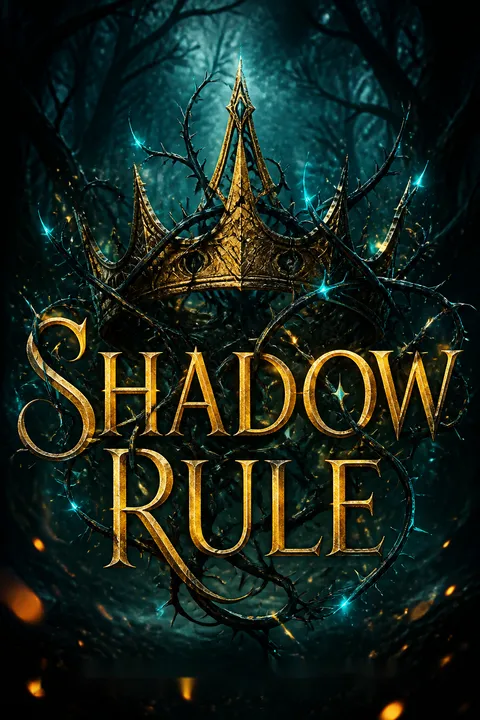
Shadow Rule makes the language of duty unstable. Nehelon calls Gandrett necessary to free Ulfray, Taghi frames his alliance as protection for Phornes, and Crystal treats Mckenzie's removal as a safeguard for the family. Each motive contains some genuine care, but care does not absolve the people who decide another person's future without consent. The novel's most important distinction is between intention and impact: Nehelon may love Gandrett and still reproduce the violence that shaped her childhood; Taghi may have saved her life and still have left her uninformed; a prophecy may identify a cure without granting anyone the right to manufacture love.
The two royal households embody different forms of damaged inheritance. The Brenherans conceal catastrophe beneath public ceremony, while the Idresea twins carry a curse inflicted by their own mother. In both cases, family loyalty becomes political infrastructure, but it also transmits trauma. Armand's fraught dealings with Hamyn, Brax's anger at Crystal, and Nehelon's divided loyalty to Valyn all show younger characters trying to govern systems built by older generations' choices.
Gandrett's arc is therefore not simply a movement from distrust to romance. Her central development is the recovery of agency. She can care for Nehelon, forgive him, and still leave; she can reject Valyn as a prescribed answer without denying their tenderness. The paintings make this ethical problem concrete: people become images when power freezes them into roles, and their first movements toward freedom are small, uncertain, and painful. The book ends with the Fae returning to the world and approaching the Order that shaped Gandrett, but the human relationships and political conflicts remain unresolved. Its final promise is not that the curse has made everyone whole, but that the people who were used as instruments may now begin choosing what happens next.
Review Summary
People Also Read





Characters
Gandrett Brayton
The trained survivorGandrett is an eighteen-year-old fighter raised in the Order of Vala after being taken from her family as a child. She is disciplined, observant, and accustomed to treating emotional restraint as a form of armor. Her sword skill and elemental magic make her valuable to people who often see her as a means to an end, while her memories of childhood deprivation give her a sharp instinct for recognizing fear in others. Her connection to Nehelon is marked by attraction, mistrust, and a history she does not know at first. Gandrett wants to protect her friends and recover her brother, but she is also learning to distinguish service from choice.
Nehelon Idresea
The exiled Fae princeNehelon is an ancient Fae warrior and prince who has spent centuries outside his cursed homeland. He is capable, guarded, and practiced at hiding vulnerability behind dry humor and command. Loyalty to his twin and people drives him, but his willingness to manipulate others reveals how desperation has distorted his judgment. He and Gandrett share a history of training, danger, and attraction, complicated by secrets he has kept from her. Nehelon struggles to reconcile his duty with his growing attachment, and his instinct to control outcomes often undermines the care he genuinely feels.
Valyn Idresea
The sleeping kingValyn is Nehelon's twin and the king of Ulfray. Where Nehelon presents as a hardened warrior, Valyn is more openly gracious, curious, and socially adept. He remembers his court as a living community and approaches leadership through hospitality and ceremony. His history with his family has left him carrying grief beneath a composed manner, while his long interruption from ordinary life makes the restored world both familiar and strange. Gandrett's presence matters to him as both a personal connection and a link to his people's fate, but he does not fully understand her complicated history with his brother.
Mckenzie Brenheran
The unwilling brideMckenzie is Brax's sister and Joshua's twin, raised in the royal household of Sives. Quick-witted and socially perceptive, she has learned to use charm and sharp humor to navigate a court where women are expected to be decorative and compliant. Being taken to Khila makes her feel powerless, so she initially protects herself through anger and isolation. Her growing curiosity about Phornian society challenges her assumptions about what authority can look like. Mckenzie cares fiercely about her family and wants the truth, but she is learning that understanding another person's motives does not require excusing the choices they made for her.
Addie Blackwood
The captive witnessAddie is a young woman caught between the court of Sives and the forces gathering around the Dragon King. She is physically vulnerable in captivity but attentive to the people and routines around her. When open resistance would be fatal, she relies on observation, patience, and the hope that knowledge can become leverage. Her connection to Armand and the Brenheran household gives her a personal stake in the political crisis, while her past encounters with the Shygon cult make her wary of anyone who calls suffering necessary. Addie's endurance is practical rather than romanticized: she wants to live, understand the ritual, and regain control over her body.
Raynar Leyon
The returning Dragon KingRaynar is an ancient ruler associated with the Shygon cult and remembered as a force of conquest. He presents himself with courtly manners, but his attention to Addie is inseparable from his pursuit of power. He can appear calm or even solicitous, then turn to violence without warning, making his behavior difficult for captives to read. His relationship to Joshua's body raises the central question of what remains of a person under possession. Raynar's ambitions are vast, and he treats individuals as instruments in a design that reaches beyond the borders of any single kingdom.
Taghi Saza Brina
The Phornian princeTaghi is the prince of Phornes, a skilled fighter who prefers the scythe and carries the confidence of someone raised within a different political culture from Sives. He uses teasing to conceal discomfort and can be evasive when a truth threatens his plans. His sense of responsibility toward his kingdom shapes his decisions, sometimes at the expense of the people those decisions affect. His connection with Mckenzie begins under coercive circumstances, making trust difficult even when he acts from concern. Taghi is not simply a charming suitor or a political schemer; he is a young ruler trying to protect his people while learning the cost of deciding for someone else.
Brax Brenheran
The burdened lordBrax is Mckenzie's brother and the remaining public face of the House Brenheran in Ackwood. His humor and youthful ease have been replaced by the work of protecting a damaged court and preserving dangerous secrets. He feels responsible for the family members he could not protect, even when their choices were not his to make. Brax's relationship with his mother is strained by her political decisions, and he misses the siblings who once gave his life its shape. Beneath his reluctance to rule is a growing capacity for practical leadership, built from the unglamorous tasks of securing guards, managing appearances, and planning for threats.
Armand Denderlain
The reluctant lordArmand is the rightful Lord of Eedwood, a soldier forced to assume political responsibility as Sives fractures. He is disciplined and morally serious, carrying anger toward his father and grief over the people whose lives have been caught in their family's conflicts. His connection to Addie is intimate but difficult for him to name, while his alliance with Joshua represented hope for a more peaceful kingdom. Armand wants to act decisively, yet the magical threat beneath his castle confronts him with problems that force and loyalty cannot solve alone. He is learning that leadership means accepting uncertainty without surrendering his ethical judgment.
Kepha
The runaway seerKepha is a young Phornian girl who escaped the Order of Vala before she could be absorbed into its discipline. Resourceful and watchful, she has survived by reading danger quickly and trusting few people. Her bright, defiant manner can make her seem older than she is, but she remains a child who needs food, safety, and affection. She connects with Gandrett through their shared experience of being taken from home and treated as useful before being treated as people. Kepha's visions unsettle her as much as they empower her, especially because speaking about the future may change what she sees.
Gordan
The prince's loyal hunterGordan is a Fae warrior who serves as hunter, guard, and trusted companion to Nehelon. He is direct where the royal brothers are often evasive, and he judges people by their actions rather than their rank. His experience as a prisoner in the palace paintings gives him an unusual connection to Gandrett, who notices and responds to his attempts to communicate. Gordan has a dry humor and a practical sense of duty. He is willing to challenge danger on behalf of people he considers his own, while remaining alert to the political and personal costs of doing so.
Drew Brayton
Gandrett's waiting brotherDrew is Gandrett's younger brother, a farm boy who reaches the Order of Vala hoping to find her. Impatient with confinement and eager to act against the Shygon cult, he initially underestimates how difficult escape from the priory will be. Surel, Kaleb, and Nahir help him turn his waiting into training, giving him skills and a measure of community. Drew is loyal, blunt, and troubled by the idea that Gandrett has endured a harsher life than he understood. He wants to become someone capable of standing beside her rather than another person she must rescue.
Surel
The cautious acolyteSurel is a Vala-blessed young woman who has spent years inside the priory and understands its punishments better than the newcomers do. Her confident manner hides a strong desire to escape the institution on her own terms. She recognizes Drew's desperation and persuades him to wait for a safer chance rather than run blindly. Surel's relationship with Gandrett and Kaleb is shaped by shared training and a common plan for life beyond the priory. She is practical, perceptive, and determined not to let the Order define all the possibilities available to her.
Kaleb
Surel's fellow acolyteKaleb is a fellow acolyte at the priory and part of Surel's plan to leave once they receive assignments. He is quieter than Surel and Drew, often occupied with practical tasks such as maintaining a knife or observing what is happening around him. His presence helps give Drew a small circle of peers in a place that otherwise feels isolating. Kaleb represents the many young people who have learned to survive the Order by watching, preparing, and relying on one another.
Crystal Brenheran
The calculating motherCrystal is the widowed matriarch of the Brenheran household and mother to Brax and Mckenzie. She thinks in terms of alliances, military support, and the survival of her family, even when her strategies wound the people she hopes to protect. Her decisions leave Brax doubtful of her motives and Mckenzie feeling abandoned. Crystal is not indifferent to her children, but she expresses care through political calculation rather than emotional reassurance. That habit makes it difficult for her family to tell where protection ends and control begins.
Hamyn Denderlain
Armand's embittered fatherHamyn is Armand's father and the former authority at Eedwood. He uses contempt and provocation as familiar tools, but beneath his apparent drunkenness and bitterness he has concealed knowledge about the castle and its buried magic. His relationship with Armand is damaged by past choices and years of dismissal. Hamyn is difficult to trust because he reveals information selectively, often when it serves his own purposes. His presence forces Armand to separate useful knowledge from the manipulations surrounding it.
Deelah
Armand's steadfast protectorDeelah is a Child of Vala who helped raise Armand and continues to protect him as the political crisis deepens. She is practical, perceptive, and compassionate without being naïve about the dangers surrounding Eedwood. Her warnings about the turquoise fire push Armand to confront the possibility that his castle is connected to Shygon's power. Deelah's care for Armand carries the steadiness of family, especially where his parents have failed him. She offers counsel, but does not pretend to possess solutions when magic exceeds her knowledge.
Miitra
The candid Phornian cousinMiitra is Taghi's cousin and a trusted presence in the Phornian court. Sociable and candid, she notices Mckenzie's loneliness and offers companionship without demanding immediate loyalty in return. She understands Taghi's habits and can challenge him directly, while also explaining the customs and political structure of Phornes. Miitra's grief over losing her mother informs her close bond with Taghi and Queen Nazanin. She is comfortable with responsibility but does not treat power as the only measure of a worthwhile life.
Isylte Aphapia
The Dragon King's attendantIsylte is a noblewoman from Ilaton who serves Raynar alongside her daughter Selloue. She is calculating and attentive to political survival, but her caution suggests she understands that the Dragon King's favor is dangerous. Her interactions with Addie reveal both the cruelty of the cult's plans and the fear that governs those helping carry them out.
Selloue Grenta
The uneasy accompliceSelloue is Isylte's daughter and a participant in the Shygon cult's work around Addie's scar. She can be cruel and resentful, especially when ordered to serve someone she considers beneath her, yet she also fears Raynar's punishment. That tension makes her difficult to read: she is both an agent of harm and someone trapped within a hierarchy of threats.
Nana Sina
The exiles' wary leaderNana Sina leads the group of mages living near the Ulfrayan border. Years of exile have made her protective and suspicious of newcomers, especially those who might endanger the only community she has left. She warns Kepha against trusting too quickly and treats survival as a collective responsibility. Her caution comes from loss rather than simple hostility.
Nahir
The priory's kind keeperNahir is a Phornian woman associated with the priory who offers Drew food, counsel, and a gentler form of adult attention than he expects from the Order. She encourages him to use his training rather than waste his time in anger. Her warmth provides an important counterexample to the priory's harsh discipline.
Plot Devices
The Ulfrayan curse
A kingdom trapped in artThe curse immobilizes Valyn on his throne and captures the Fae throughout Ulfray inside paintings, while forcing Nehelon to search beyond his homeland for a cure. A riddle points him toward a human woman with magic, fighting skill, and no history of romantic love. Gandrett's blood wakes Valyn, while the intended emotional condition for freeing the wider court remains complicated by Gandrett's conflicting attachments. The curse turns a private family betrayal into a visible political catastrophe and structures the conflict between duty, consent, and love.
Nehelon's geas
A debt becomes a cageNehelon uses Fae magic to bind Gandrett to Lei'Vreah, invoking a debt she incurred when she thanked him for helping her. The spell prevents her from leaving the palace grounds until Nehelon releases her or dies. It is both a practical obstacle and a direct expression of the way he has treated her choices as pieces in a larger plan. Its eventual release allows Gandrett to choose whether she stays, making freedom a decision rather than merely an unlocked gate.
Kepha's visions
Futures that resist tellingKepha sees events before they happen, including her arrival at Ulfray and important moments involving Gandrett. She has learned that speaking a vision can make it fail, so she hides what she knows until she feels safe enough to explain. The ability helps her survive and gives the story glimpses of its own possible paths, but it is not reliable control over the future. Kepha's visions make secrecy a form of caution rather than manipulation.
The living paintings
Captives communicate through artThe Fae trapped in palace paintings are not ordinary images. They can gradually move, suffer injuries, and in some cases respond to people outside the canvas. Gandrett notices Gordan's changing pose and written message, establishing that the paintings can carry information before their occupants are fully free. The device turns the palace walls into both prison and communication network, while making the passage of time difficult to judge.
Maraoul poison
A threat that defeats healingMaraoul are dangerous forest predators whose claws and teeth carry a poison that ordinary Fae healing cannot easily overcome. Their attack kills Nehelon's horse and leaves him barely able to reach Lei'Vreah. A supply of liquid crystal in the king's chambers provides the needed antidote, while Gandrett's earth magic gets Nehelon across the barrier she cannot otherwise cross. The poison converts the danger Nehelon warned Gandrett about into a test of the geas and her remaining attachment to him.
Shattered Kingdom Series




About the Author



Download PDF
Download EPUB
.epub digital book format is ideal for reading ebooks on phones, tablets, and e-readers.








