


Plot Summary
Jezuin Rejects the Crows
Myron, Crow King of a diminished people, flies with his cousin Royad to Jezuin, seeking Cezux’s help for Queen Sanja’s coalition. Their arrival terrifies the market: Cezuxians still fear Crows as kidnappers of women. At the palace, Myron’s delegation includes Princess Clio and the human rebel Andraya, but King Dimar II meets them in pajamas and rejects their plea.
He resents Sanja for choosing fairy allies over her human homeland and would rather let Erina take Askarea than fight beside Crows. Myron loses his temper, naming himself as the monster Cezux remembers, while Andraya argues that Erina’s ambitions will eventually threaten Cezux too. The king remains unconvinced, and Myron leaves without an alliance.
The failed embassy gives the war a political shape before it becomes a military one. Myron recognizes that Cezux’s distrust is not irrational: his people once made human women pay for a curse they did not understand. His admission of collective guilt is morally honest, but it cannot instantly undo inherited fear. Andraya’s argument works on a different register, asking Dimar to see self-preservation where compassion has failed. The scene establishes that coalition building will require more than proving the enemy dangerous. It will require offering former victims reasons to trust their former predators.
The Queen Falls from the Sky
Ayna has escaped Ephegos’s carriage after bargaining for Myron and Kaira’s lives, but the magic-nullifying drug and days of flight leave her weak. A winter storm drives her into an abandoned rebel farmhouse, where food and sleep restore enough strength for her to continue toward Aceleau. Near the Askarean border, rebels shoot her crow form from the sky and catch her in a net.
Their leader Kaen threatens her with a spear, while Enhela gives her a cloak and clothes. A bargain forces Ayna to admit she is the first female Crow in millennia. When she reveals she is Wolayna Milevishja, Tavras’s rightful queen, the rebels recognize the woman for whom they have been fighting and promise to continue their cause.
Ayna’s return begins not with a welcome but with a misidentification rooted in real history. The rebels have reasons to fear Crows, and she cannot ask them to trust her merely because she is their queen. Her bargain with them turns recognition into reciprocal obligation: they commit to Tavras, while she risks naming herself. The scene also makes her new body politically consequential. She is not simply the human heir they imagined, but a Crow, the very kind their uprising has long opposed. Her survival now depends on whether identity can change without erasing the injuries attached to it.
Ayna Reclaims Her Court
At Aceleau, Herinor identifies Flame blood as a likely missing ingredient in the allies’ failed attempt to reproduce the magic-nullifying drug. Ayna then reaches the palace nearly spent, crashes through a window, and wakes unable to feel her legs. The healers treat her spinal injury, and Myron returns from Cezux to find her.
Ayna explains that she has technically returned to her Crow Court, satisfying the wording of her bargain with Ephegos. Myron sees the danger she missed: Ephegos kept his side by letting Myron live, so the bargain still binds her to him. They choose each other anyway, and their reunion restores intimacy without removing the threat. Kaira and the rest of the court welcome Ayna back.
The reunion offers emotional relief while refusing the easy logic that love dissolves coercion. Ayna has exercised agency through precise wording, but Myron’s reading exposes the bargain’s remaining cost. Their bond is both comfort and vulnerability, especially because Ephegos’s claim can be used to threaten them through one another. Her return also changes the court’s center of gravity: Ayna is no longer a rescued bride or a missing queen, but a Crow ruler who must decide what obligations she can bear. The joy of reunion therefore arrives with an unfinished legal and mortal danger.
Tata’s Betrayal Unfolds
While Ayna recovers, Kaira, Herinor, Silas, and Astorian confront Tata, the fairy who secretly fed Ephegos information. Tata’s memories show that she joined him after Crows murdered her family, and that she hopes his empire will give her belonging and power. She had helped lure Ayna into the clearing where Ephegos captured her, while secretly planning a possible escape for pregnant Queen Sanja.
Her memories also reveal that Ephegos intends to kill Myron, take Ayna, and unite Crows and Flames under his rule. The allies learn that his advance on Askarea is imminent. Herinor adds that Flame blood may be essential to the drug, making Kaira the only available source.
Tata’s betrayal is not excused by trauma, but the interrogation makes its emotional machinery visible. She trades loyalty for the family and safety she believes the world denied her, then protects Sanja in secret because compassion has not disappeared. Her divided motives complicate the coalition’s demand for clean categories of friend and enemy. The information she carries is indispensable, yet it arrives through an invasion of her mind. The scene asks what justice can mean during emergency: extracting truth may save thousands, but it also repeats the coercion that helped produce Tata’s desperation.
A Queen Sends Her People
Ayna trains with Royad, but captivity turns a practice bout into a near-fatal attack; she stops her blade just before it reaches his throat. Clio confides that her own trauma once led her to stab Tori, helping Ayna understand that survival can leave violence inside the body. At the Winter Solstice, Kaira leads the court through a Flame celebration, and Herinor and Kaira’s attraction finally becomes mutual.
Before the festivities, Ayna visits rebel camps with Clio and orders them to change course toward the coming battle. At one camp she meets Iliana, a Jelnedyn cousin who deserted Erina with 180 trained soldiers. Ayna tells reluctant rebels they may refuse her, but they choose to fight for Tavras.
Leadership here is shown as a burden of consent, not simply command. Ayna knows that the rebels are more vulnerable than she is, so she explicitly gives them permission to refuse before asking for their lives. Their decision matters because it is theirs, even though her crown and cause shape the choice. Her near-attack on Royad shows that political authority cannot shield her from trauma; Clio’s confession gives her a model for surviving shame without pretending the danger was harmless. The solstice offers connection, but the celebration remains brief, held against an approaching war.
The Army That Wasn’t
Tori’s scouts spot more than a thousand Tavrasian soldiers near the border, so Askarean forces move to intercept them. The first arrows and magic bring down real troops, but enemy numbers keep swelling as new fighters appear among the fallen. Then blows pass through bodies without resistance. Myron and Ayna recognize that many soldiers are projections, illusions that distort the battlefield and exhaust the defenders.
Erina and Ephegos appear as untouchable images to taunt the coalition. Ayna studies the glimpse of a fireplace behind Erina and realizes he is projecting from an indoor location. Clio and Tori seize the opening and transport the group to his hideout, hoping to reach him before he can move again.
The projections attack the coalition’s ability to know what is real, which is more damaging than a straightforward numerical advantage. Each apparent enemy demands attention, and every mistaken strike drains strength or endangers allies. Ayna’s observation turns fear into actionable knowledge: the image is not only a threat, it is evidence of the room from which it is being made. Her insight marks a shift from reacting to Erina’s staged appearances toward treating them as a trail. The plan is risky precisely because the enemy has manipulated perception, but refusing to act would leave the coalition fighting shadows indefinitely.
The Inn Becomes a Trap
The site-hop drops Ayna, Myron, and their allies into Erina’s inn, where a guard of Crows attacks before they can seize the king. Erina slips away during the fight, and Ayna captures one Crow, Alias, but gives the order to kill him when he refuses to change sides. More Crows arrive, while a combined silver barrier separates Herinor and Kaira from the others.
Tori and Clio are drugged and left too weak to fight. The allies escape the barrier by circling outside and breaking a window, but Ephegos’s forces return. Herinor shields Kaira and is captured while helping Myron escape. The surviving group reaches Clio and Tori in a cave, bruised, exhausted, and without their friend.
The failed raid exposes the cost of treating an opening as a guarantee. Ayna’s judgment is not foolish, but the group enters an enemy stronghold without knowing how many defenders remain or how the drug is being deployed. Her decision to kill Alias rather than risk a bargain demonstrates how little room the war leaves for rehabilitation in the moment. Herinor’s capture is especially painful because he cannot freely explain his oath or defend the people he serves. The episode converts a tactical setback into an intimate wound: the court survives, but its members are now separated by both force and obligation.
A Mage Stone Emerges
Back in Aceleau, the allies question Tata again and identify ten fairy soldiers who serve Ephegos. Sanja recognizes that Erina’s projections require human magic, likely stored in a Mage Stone and replenished by Ephegos. Destroying the artifact could stop the illusions and weaken production of the drug.
Rogue returns from Cezux with a new bargain: he will reopen the Hollow Mountains, creating a faster route between Cezux and Askarea. The tunnels offer Dimar a practical reason to join the war, and Cezux finally commits forces. The coalition adjusts its plan around the mountains and prepares to draw Erina’s army into a battle where rebels and Cezuxian troops can strike from unexpected directions.
The war’s changing balance comes from a convergence of different kinds of knowledge. Sanja’s memory of human magic identifies the mechanism behind a threat that fairy strength alone could not explain. Rogue’s bargain then translates political trust into infrastructure, making a trade route double as a military corridor. Dimar’s decision is not a sudden conversion to affection for Crows; it follows a concrete shift in his realm’s interests. This section treats alliance as material as well as moral. Shared values matter, but roads, access, and mutual exposure make cooperation durable.
Herinor Plays the Captive
In Ephegos’s fortress, Herinor endures torture rather than give away Askarea’s plans, but Ephegos’s bargain eventually forces him to reveal the coalition’s likely position. Herinor discovers that guards Ennis, Frenius, and Gorrey oppose Ephegos’s empire and are quietly organizing other Crows against him. They tell him Erina’s forces include trebuchets carrying spheres of magic-nullifying serum.
During another torture session, Shaelak appears to Herinor and says a fragment of divine power is inside Myron, giving the Crow King a chance against Ephegos. Shaelak also predicts Herinor will die in the coming battle. Herinor keeps that warning to himself and uses the time he has to pass information to Kaira.
Herinor’s resistance is constrained by a bargain that converts obedience into a weapon against his chosen family. He cannot simply refuse every command, so he searches for the narrow difference between serving Ephegos and serving the people Ephegos wants destroyed. The secret Crow faction makes that strategy collective rather than heroic solitude. Shaelak’s prophecy intensifies the pressure, but does not dictate Herinor’s choices; he hears a likely fate and continues acting. His loyalty is therefore neither pure freedom nor simple compulsion. It is a series of costly decisions made inside a system designed to remove choice.
Serum Rains from the Sky
At first light, Myron, Royad, and Silas fly out as bait so Ephegos will pursue Myron and leave Ayna elsewhere. Ayna joins Askarea’s army as Erina’s forces advance with trebuchets. Their ammunition bursts into spheres of serum, crushing soldiers and showering whole sections of the field with the drug. Myron redirects one burst with a wall of air, but the army cannot avoid the next attacks.
Ayna and Clio fight toward a trebuchet while Silas guards them; Ayna uses her magic to trigger a devastating explosion among the weapons and ammunition. The blast kills troops on both sides, but it destroys a siege engine. Meanwhile, Myron’s forces begin to falter under the endless projections and drug attacks.
The battle turns the drug from a feared possibility into a logistical system of mass incapacitation. Trebuchets make the serum difficult to evade because it falls over formations rather than targeting a single fighter. The coalition’s answer is improvised and morally costly: destroying ammunition saves others but also kills combatants caught in the blast. Ayna’s intervention illustrates the difference between heroic action and clean action. She does not win by unleashing power without consequence; she chooses a violent measure because the alternative is allowing the weapon to keep disabling the army. The battlefield makes every choice carry collateral weight.
Erina Loses His Amulet
Ayna, Clio, and Silas track Erina to a barn where he uses a carved amulet to project soldiers across the battlefield. Erina reveals his growing human magic and uses it to strike Ayna with a force that damages her ribs. She throws the stored serum from a vial at his face, breaking his shield and leaving him vulnerable.
When he lunges at her, Ayna stabs him through the throat. The amulet falls from his hand, ending his control of the projections. Before the remaining fairies can be overwhelmed by reinforcements, Iliana arrives with hundreds of deserters from Tavras’s army. Her soldiers join the fight, and Ayna directs them north to support the larger battle.
Erina’s death is both a tactical victory and a return of agency to the woman he treated as a dynastic instrument. The amulet makes his power portable, but it also gives the coalition a physical target. Ayna survives his magical attack through preparation, using the drug she carried rather than relying on strength alone. Her choice to kill him is not framed as a painless release: she recognizes the bloodshed attached to his rule and still must act to stop it. Iliana’s arrival immediately widens the meaning of the victory, transforming a personal confrontation into a coordinated uprising within Tavras itself.
Herinor Takes Ephegos Away
With Erina dead and Cezux and the rebels joining the battle, Ephegos makes his final attempt to claim Ayna and kill Myron. His soldiers drug both rulers, while Herinor, forced by his oath, brings Myron to him. As Ephegos moves to attack Ayna, Herinor breaks from his assigned role and takes the knife meant for her.
A tear opens in the air, and Herinor drags Ephegos through it into another world. There, he kills the Crow traitor before dying from his own wound. Ephegos’s body returns to the battlefield, while Herinor remains missing. Without their leaders, the enemy’s resistance collapses; Askarea, Cezux, and the rebels prevail.
The climax resolves the bargain through an action rather than a clever verbal escape. Herinor fulfills the literal demand to bring Myron to Ephegos, then chooses to intervene when Ayna is threatened, accepting that the cost may be his life. His sacrifice does not make coercion noble; it makes visible the damage an oath can do to a person who still possesses moral judgment. The other world provides the only space where Ephegos can be killed without the bargain destroying Herinor. Victory is consequently divided: the armies survive, but the court must live with the absence of the person who made that victory possible.
Tavras Chooses Its Future
After the battle, Ayna learns that Erina is dead and tells the Tavrasian survivors to rebuild rather than continue the Jelnedyn reign. She appoints Iliana to command the army and asks Andraya, Pouly, and other trusted rebels to represent the people in a new government.
Erina receives a burial so Tavras can witness the end of his rule, while Ephegos is burned as a traitor rather than honored as a martyr. Myron offers the surviving Crows a place in their future without demanding another binding oath. Thirty Crows accept, joining Myron, Ayna, Royad, and Silas. Ayna and Myron then leave Eherea with their people, bound for the eastern continent and a home of their own.
Ayna’s political resolution is an act of relinquishment. She fought to reclaim a throne, then chooses not to make personal sovereignty the measure of success. By entrusting Tavras to representatives and Iliana, she separates liberation from possession. Myron’s offer to the remaining Crows similarly rejects the coercive bargains that made Ephegos’s empire possible. Their departure does not abandon the work they did; it recognizes that the people of Tavras must govern themselves. The ending’s emotional release comes from a hard-won distinction between saving a kingdom and owning it.
A Realm Beyond the Sea
The ship carries Myron, Ayna, Kaira, Silas, Royad, and the surviving Crows to an island in Neredyn. They find an ancient Crow tower partly ruined, with old cells and a dungeon built for suffering. Ayna and Myron order most of the dungeon sealed, refusing to make the new home reproduce the violence of the old one.
The Crows build houses, a harbor, a forge, an inn, and a small theater; their blades become valued trade goods. Kepha, an emissary from Phornes, arrives with books and reveals that she shares divine ancestry with Ayna. Her arrival also brings the prospect of a future connection between the isolated Crow people and the wider continent.
The new realm is built through ordinary civic acts: closing cells, forging tools, trading, teaching, and making music. These details counter the inherited image of Crows as instruments of violence without pretending their history can be erased. The sealed dungeon is especially significant because it converts memory into a boundary: the past remains acknowledged, but it will not dictate how the community organizes itself. Kepha’s arrival expands the story beyond survival into kinship and cultural exchange. Ayna’s identity is no longer defined only by a human throne or a Crow court; it becomes one strand in a wider history.
Herinor Finds His Way Home
Months after Herinor vanished, he appears wounded in the Crow square. The God of Death had sent him into another world, where Herinor helped human soldiers defeat blood-drinking monsters, though his Crow powers did not work there. His return reunites him with Kaira, who had kept hoping despite having no proof he survived.
The court hears how he killed Ephegos in a place where their bargain could not reach him, then served the people who first took him prisoner. Around the fire, Ayna and Myron recognize that their family has survived its worst fracture. Herinor and Kaira can begin again, while the Crows’ new home grows into a community rather than a refuge.
Herinor’s return completes a different emotional arc from the military victory. His absence had left Kaira with grief but no certainty, and his arrival restores not only their relationship but the possibility that sacrifice need not end in permanent erasure. His service in another world complicates the idea that home is simply a place one reaches: he has changed through obligations to strangers, yet returns by choice to those he loves. The closing community does not promise a life untouched by danger. It offers something more modest and more credible: shared work, remembered loss, and room for affection to survive.
Epilogue
The epilogue presents a ballad about Herinor’s time in the other world. It recounts his arrival in a mountain battle, his fight against blood-drinking enemies, and his apparent death after defeating the last foe.
The song says a tomb preserves his legend, turning a private sacrifice into public history. Its version of events sits beside the novel’s account of Herinor returning to Kaira and the Crow court, leaving the other world’s memory of him distinct from the homecoming his friends receive.
The ballad shows how quickly lived experience becomes legend. Herinor’s complex choices are compressed into a heroic figure who arrives from nowhere, changes the battle, and is remembered through a tomb. That account does not cancel his return to the Crow realm; it reveals that the people he helped may understand his story through absence rather than reunion. The contrast suits the novel’s larger interest in who gets to define a person’s legacy. Herinor is at once a lover who comes home, a warrior presumed lost, and a stranger whose intervention becomes part of another world’s history.
Analysis
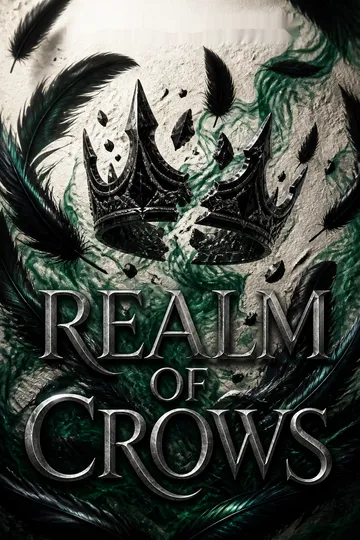
Realm of Crows treats power as the ability to define other people’s choices. Erina turns Ayna’s bloodline into a dynastic resource; Ephegos uses bargains to make loyalty enforceable; the serum strips magic from those who relied on it; and the projections make armies doubt what they can see. Against these forms of control, the novel repeatedly places acts of interpretation and consent. Ayna survives her bargain by reading its wording carefully, then exercises leadership by allowing rebels to refuse her call. Her eventual decision to leave Tavras to a representative government completes that movement: reclaiming a throne matters less than ending the conditions that made its people subjects.
The book also refuses to equate reconciliation with forgetting. Myron’s remorse about Crow history does not erase what human communities endured, and Dimar’s suspicion has a historical basis. Trust develops through specific risks and reciprocal decisions, including the practical bargain that opens the Hollow Mountains. Tata’s betrayal is similarly given context without being excused. Her need for belonging helps explain why Ephegos’s promises work, while the damage she causes remains real. This complexity allows the story to imagine changed allegiance without pretending that motives alone repair harm.
Ayna’s romance with Myron is the emotional center, but their bond does not make them invulnerable. It gives them comfort while also creating a target Ephegos can exploit. Their most consequential acts are therefore not private declarations but choices made under pressure: Myron accepts Ayna’s authority, Ayna risks herself to stop Erina, and Herinor violates the practical logic of his oath to save her. The ending relocates hope from a restored monarchy to a community built through trade, craft, education, and shared memory. Sealing the old dungeon is a small but exact political act: the Crows will remember what their past contained without reproducing it as their future.
Review Summary
People Also Read
Characters
Ayna
Queen between two peoplesAyna, also known by her birth name Wolayna Milevishja, is the rightful heir of Tavras and Myron’s mate. Once a human outlaw and pirate, she becomes a Crow and must reconcile the identity she has gained with the human kingdom she was born to lead. She is quick to act, alert to danger, and often willing to carry responsibility alone, but her compassion makes her keenly aware of the human lives her choices endanger. Ayna’s central drive is to protect the people who have become her family without turning their loyalty into another form of control. Her struggle is not simply to survive her enemies, but to decide what authority should look like after a tyrant falls.
Myron
A king haunted by guiltMyron is the Crow King, Royad’s cousin, and Ayna’s mate. He carries the history of his people’s violence with unusual seriousness, which makes him both a thoughtful leader and a man inclined to blame himself for harms he did not personally commit. He values strategy, restraint, and the protection of his court, often thinking through dangers before he shares his conclusions. His devotion to Ayna is profound, but it can turn into fear of losing her and a desire to keep her out of danger. Myron’s challenge is to lead without treating guilt as a substitute for responsibility, and to trust Ayna as an equal rather than as someone he must save.
Herinor
Oath-bound Crow warriorHerinor is an ancient Crow warrior whose bargain with Ephegos restricts what he can say and do. He is capable of formidable violence, but beneath his gruff manner is a careful observer who understands how fear and obligation shape behavior. His loyalty to Myron’s court is tested by the oath he made before he understood the full cost. Herinor often tries to protect others by withholding his own feelings, especially where Kaira is concerned. His defining tension is between the literal demands of a promise and the moral commitments he chooses for himself. He wants to be useful to his people, yet fears that his presence may become a danger to them.
Kaira
Flame with a fierce mindKaira is Ayna’s sister and a powerful part-Flame with the ability to enter and link minds. Her wit and provocative confidence often mask the isolation and coercion that shaped her earlier life. She uses her mental gift to connect allies, uncover hidden information, and coordinate them when ordinary communication fails. Kaira is fiercely protective of Ayna, yet resists being treated as someone who must be kept safe at the expense of her agency. Her relationship with Herinor develops through challenge, trust, and an emerging willingness to be seen beyond her power. She wants a place where she can choose her attachments rather than have others decide her worth.
Royad
The king’s steady shieldRoyad is Myron’s cousin, trusted strategist, and a calm presence in the Crow court. He notices small details others miss and often protects Myron without drawing attention to himself. His patience also makes him a safe person for Ayna to train with and confide in. Royad is not passive; his restraint lets him assess when a situation needs force and when it needs room to breathe.
Silas
The court’s sharp-edged fighterSilas is a veteran Crow warrior, loyal to Myron and protective of the court. His sarcasm keeps others at a distance, especially when grief or attachment might make him vulnerable. In battle he is direct and resourceful, using his hatchet and keen instincts to protect allies. His connections with other characters reveal a quieter capacity for tenderness beneath his guarded manner.
Cliophera
The fearless fairy princessCliophera, usually called Clio, is Askarea’s princess and a formidable ice-wielding fighter. Her irreverence and appetite for risk can unsettle more cautious allies, but she is also fiercely loyal to her brother, her mate Tori, and Ayna. Clio understands the afterlife of captivity and can recognize trauma in others without demanding that they hide it. Her humor is not indifference; it is one way she refuses to let fear set the terms of her life.
Tori
Askarea’s battle strategistTori is the general of Askarea’s forces and Clio’s mate. He combines military discipline with the ability to site-hop troops and wield powerful magic. His directness helps keep allies focused when uncertainty threatens to overwhelm them. Tori treats Clio as a capable soldier even when their relationship and rank could complicate command, and his loyalty to Askarea is matched by deep devotion to those he leads.
Rogue
Askarea’s rebuilding kingRogue is King Recienne of Askarea, Clio’s brother, and Sanja’s mate. He is a generous but not naïve ruler, willing to make consequential bargains to protect his people and build alliances. His instinct to spare prisoners and trust others can be criticized as softness, yet it also creates room for former enemies to become partners. Rogue’s leadership is measured by the safety and future he hopes to give his family and kingdom.
Sanja
Queen and keeper of historySanja is Queen of Askarea, a close ally of Ayna, and Rogue’s pregnant mate. Her knowledge of human magic and her memories of Cezux’s history provide the coalition with insights its fairy and Crow leaders lack. She is determined to remain with her people even when danger makes others want to send her away. Sanja’s calm authority grows from experience: she understands how political choices affect both families and whole territories.
Ephegos
The Crow general seeking empireEphegos is a powerful Crow and former ally of Myron whose ambition now reaches beyond vengeance. He promises Crows and Flames a homeland and a place in the world, appealing to real histories of exclusion. His strategic intelligence makes him dangerous, as does his ability to use bargains to constrain those around him. Ephegos can show charm and attachment, but his desire for control repeatedly overrides the people he claims to protect. He represents the seductive argument that collective suffering justifies one person’s absolute rule.
Erina
Tavras’s false kingErina Jelnedyn rules Tavras despite the Milevishja claim to the throne. He is calculating, ambitious, and willing to use imprisonment, military force, and unusual magic to preserve his power. His alliance with Ephegos gives him access to forces and methods beyond those of an ordinary human ruler. Erina’s confidence rests on making people into instruments, especially Ayna, whose bloodline he sees as useful to his dynasty.
Andraya
A human rebel diplomatAndraya is a human leader in the Tavrasian rebellion and a steadfast supporter of Ayna’s right to rule. Her courtly poise and practical judgment make her an effective speaker among rulers who might otherwise dismiss human voices. She has given up personal hopes for the cause of a free Tavras, but her loyalty is not blind: she understands the danger of sending ordinary people into battle and remains committed to organizing them.
Pouly
The rebels’ trusted organizerPouly is a human rebel, Andraya’s ally, and Enhela’s brother. He helps move information between scattered rebel groups and has earned their confidence through direct service. His practical understanding of Tavras’s people complements the magical and military knowledge of the fairy court. Pouly’s steady loyalty gives Ayna a connection to the resistance that existed before she could return to her homeland.
Tata
A fairy seeking belongingTata is a fairy who has lived among the coalition’s allies and carries a painful history of family loss. She is guarded, proud, and deeply sensitive to the difference between being tolerated and being wanted. Her desire for security makes her vulnerable to powerful promises, while her remaining attachments complicate the identity she presents to others. Tata’s story places the need for belonging beside the harm people can do when they pursue it through allegiance to power.
Iliana
The deserter commanderIliana is Erina’s distant cousin and a trained Tavrasian commander who has spent years surviving inside the king’s army. Her parents’ rebellion and deaths taught her to read danger closely and protect the soldiers who trust her. She is unsentimental about military realities but committed to justice and to the memory of her family. Iliana’s experience gives the resistance something it badly needs: people who understand how Erina’s army works from within.
Ennis
A Crow working from withinEnnis is a Crow guard in Ephegos’s stronghold who quietly opposes the general’s expanding ambitions. He is observant and disciplined, concealing his convictions until the right moment. His ability to share information without making a reckless move reflects the narrow room for action created by bargains. Ennis’s choices help show that loyalty can persist even when its outward appearance has been forced into disguise.
Frenius
A reluctant Crow allyFrenius is a Crow soldier within Ephegos’s ranks who has begun to question what he once supported. He understands the danger of revealing information and weighs each disclosure against the consequences of his oath. His guarded cooperation gives Herinor a chance to learn about the enemy’s plans. Frenius represents the possibility of changing allegiance without pretending the earlier choices never happened.
Gorrey
A guard hiding dissentGorrey is one of the guards assigned to Herinor in Ephegos’s fortress. He maintains the appearance of obedience while helping an underground group of Crows resist the general. His reserve makes his loyalties difficult to read at first, but his careful actions reveal a practical courage. Gorrey is motivated less by glory than by the belief that his people deserve a future not built on conquest.
Dimar II
Cezux’s wary kingDimar II rules Cezux and carries a bitter family memory of the harm Crows caused to human communities. His isolation behind the mountains has encouraged him to believe he can avoid a wider conflict. He is proud, skeptical, and protective of his people, though his caution can become a refusal to see danger until it reaches his borders. Dimar’s decisions turn on what he believes an alliance will cost his realm.
Gabrilla
A rebel with resolveGabrilla is one of Rochus’s children and a Tavrasian rebel who joins the coalition. She is quiet and observant, often revealing her feelings through small reactions rather than speeches. Her presence at the front shows how the rebellion draws in ordinary people with much to lose. Gabrilla’s growing connection with Silas brings out a warmer side of the guarded Crow warrior.
Ed
The youngest rebel fighterEd is Gabrilla’s brother and a young Tavrasian rebel. He is eager to fight for a better future, though his age makes Ayna sharply aware of the human cost of war. His willingness to serve is a source of hope and unease for the queen he supports.
Rochus
A rebel father and leaderRochus is a Tavrasian rebel and father to Ed and Gabrilla. His caution comes from knowing that courage does not protect ordinary people from trained armies. He questions Ayna’s orders when he fears they may cost his family their lives, then weighs duty against that fear. Rochus helps ground the rebellion in the human consequences of decisions made by immortal rulers.
Kepha
An emissary from PhornesKepha arrives from the Neredyn realm of Phornes carrying books, music, and an invitation to build relations with the new Crow community. Warm, perceptive, and playful, she is interested in the Crows as a people with a culture to make, not simply a feared history to inherit. Her arrival brings an outside perspective to the island and offers a path toward trade, learning, and kinship beyond the court’s immediate circle.
Plot Devices
The bargains
Promises become binding weaponsBargains in this world are enforced by magic, so carefully chosen words can preserve a person’s agency or trap them inside another person’s plan. Ayna uses precise wording to escape the command that she never return to Myron’s court, but the promise still leaves Ephegos with a claim over her. Herinor’s oath similarly forces him to obey certain orders even when his loyalties have changed. The device makes language materially dangerous: a promise is not just a statement of intent, but a structure that can govern bodies, choices, and allegiance. It also makes interpretation a form of resistance.
Magic-nullifying serum
Power becomes a battlefield liabilityEphegos and Erina use a drug that suppresses magical abilities and causes severe physical illness. It can coat armor and weapons, be delivered in vials, or be hurled across armies in spheres launched by trebuchets. Its strategic effect is larger than simply weakening a fighter: it makes magic-wielding soldiers vulnerable to ordinary blades at the moment they are least able to defend themselves. Kaira’s blood may help the allies reproduce the formula, but their attempts fail. The serum forces the coalition to train and strategize around its dependence on magic, while making every splash on the battlefield a threat to the whole formation.
Erina’s Mage Stone
Illusions conceal troop strengthErina uses human magic, drawn through an amulet or Mage Stone, to project soldiers across distance. The images can imitate armies and mislead defenders about where the real forces are, making it difficult to decide where to place limited troops. The projections can be attacked only when their unreality is recognized; meanwhile, Erina’s artifact must be powered and physically held. Ayna’s glimpse of a fireplace helps the allies find the room from which he operates, and destroying the amulet ends his projection advantage. The device transforms battlefield uncertainty into a problem of observation, inference, and locating its source.
The mating bond
Distance carries emotional knowledgeThe bond between Ayna and Myron lets them sense one another’s presence and emotions even when they are separated by distance or battle. It steadies them through captivity, injury, and the fear that Ephegos may exploit their attachment. Yet the bond is not a substitute for communication or protection: they still make independent choices, misread the risks, and sometimes must stay apart precisely because the enemy can use their love as leverage. The bond gives intimacy a practical dimension without making it effortless. It makes emotional connection a source of strength, while exposing the cost of caring for someone in a war designed to separate them.
The Hollow Mountains
A trade route becomes a war pathRogue offers to reopen the passages beneath the mountains where Askarea, Tavras, and Cezux meet. The tunnels promise a faster path for commerce, allowing Cezux and Askarea to exchange goods and reach one another without a long journey around the mountain range. In wartime, the same passage becomes a concealed military route that lets Cezux join the coalition quickly and unexpectedly. The bargain reveals how political cooperation can be built through infrastructure rather than sentiment alone. The mountains are both a barrier that encouraged Cezux’s isolation and a corridor that makes a shared defense possible.
Wings of Ink Series
About the Author

Download PDF
Download EPUB
.epub digital book format is ideal for reading ebooks on phones, tablets, and e-readers.








