

Key Takeaways
Claim agency over your response without pretending every hardship was your fault.
Agency begins after the event. Winget’s central argument is that people can choose what to do next, even when they did not cause the crisis. A layoff, illness, or economic downturn may be outside a person’s control; the response, decisions, and next steps are still theirs. He uses his own business and personal bankruptcies as evidence: he attributes them to his mistakes, then treats the painful experience as a reason to learn and rebuild, not as a permanent identity.
Responsibility is not self-blame. The book repeatedly asks readers to stop searching for someone else to fix their situation. Its practical message is to identify what remains controllable and act on it, rather than spend all available energy assigning fault.
The distinction between causing a hardship and having agency within it is the most durable version of this argument. In psychology, a sense of control is often useful when it directs attention toward feasible action. It becomes damaging when it turns into the belief that people cause every misfortune they experience. That belief can erase structural barriers and intensify shame. Winget’s own bankruptcy story makes the case for learning from error; it does not prove that every setback is self-inflicted. Responsibility works best as a tool for recovery, not a verdict on a person’s worth.
Trade complaint loops for written next steps.
Complaining can keep problems alive. Winget argues that repeated blame and self-pity consume the attention needed to make a plan. His example is a letter from a hairstylist who describes a breakup, an unwanted career, gambling debt, and bankruptcy, but presents the problems as a trap with no exit. Winget answers with deliberately blunt advice. The writer later tells him the reply helped him change direction.
Name the problem, then move. The book does not claim that pain is imaginary or that every problem has an instant fix. It argues that rehearsing distress is not itself a solution. The practical alternative is to state the situation plainly, decide what can be changed, and choose a next step that makes progress possible.
The value here is not that complaining is always useless. Talking through a problem can help people make sense of it, seek support, or recognize injustice. The danger is repetitive rumination, where the same account is retold without producing new understanding or action. A written plan can interrupt that cycle by converting a vague complaint into a defined task. The book’s confrontational reply may motivate some readers, but it is not a universal substitute for empathy, especially when someone faces grief, trauma, or circumstances that require professional support.
Listen first, then judge advice by the results behind it.
Attention is part of learning. Winget opens with a simple problem: people talk so much that they miss what others are telling them. He urges readers to listen closely to partners, children, customers, and people with more experience. In business, customers often hold information about what they need; hearing it can improve service. At home, listening can reveal what family members are actually experiencing rather than what a parent assumes they feel.
Check the source, too. The book advises looking at a person’s results before following their advice. Someone who has achieved the outcome being sought may have useful knowledge, or may simply be willing to do more. Winget also cautions against relying on bad examples, one-sided arguments, or people selling help without a clear interest in serving.
Listening is more than silence while waiting to speak. It is a way to gather information that can correct mistaken assumptions, a principle shared by good interviewing, clinical practice, and customer research. The book’s emphasis on observable results is a useful filter against empty expertise. Still, results alone do not establish why someone succeeded, whether the method transfers, or what role luck played. Strong advice deserves both attention and examination. The best listener stays open to experience without treating another person’s success as proof that their recipe fits every situation.
Describe the life you want, then align words and actions with it.
Make the destination concrete. Winget asks readers to specify what they want in areas such as work, money, health, relationships, possessions, and recreation. A broad wish for “more” is too vague to guide a decision. He then asks readers to list what they are actually doing to create that life, exposing the distance between a desired future and current behavior.
Words can shape conduct. Winget describes putting a “winner” label on his car and noticing that it made him question whether his driving matched the identity he claimed. The point is not that a slogan creates success by magic. He explicitly warns that affirmations without implementation are self-deception. Thoughts and language can influence action, but they matter most when they help direct real effort.
Specificity makes aspiration usable. A clearly described goal can guide choices more effectively than a general desire to improve, because it gives people something to compare their current behavior against. The license-plate anecdote illustrates a familiar identity effect: people often try to act consistently with the labels they adopt. That influence has limits. A positive self-description cannot compensate for missing skills, resources, or a workable plan. The strongest use of affirmations is as a prompt for behavior, not as evidence that reality has already changed.
Let honest discomfort expose the gap, then move through action.
Good feelings are not a plan. Winget rejects the promise that a positive attitude alone prevents hardship or guarantees success. He recalls having an optimistic outlook during business failure, financial trouble, and personal difficulties. Attitude, he argues, can affect how a person handles events, but it cannot replace effort or stop every bad event from occurring.
Inspect the results honestly. Rather than ignore what is going wrong, Winget asks readers to examine their finances, health, relationships, and work, then identify the behaviors that produced those results. Discomfort can reveal a gap between present reality and what someone wants. The next move is not endless self-criticism: it is to change a behavior, make a plan, and act. Motivation without direction, in his view, is energy without a destination.
This section usefully separates emotional encouragement from actual capability. Confidence can help someone begin, but competence grows through practice, feedback, and repeated attempts. A clear-eyed review of results can also prevent the false comfort of insisting that everything is fine. The caution is that discomfort does not always lead to constructive action; shame and harsh self-judgment can make people withdraw or avoid problems. The book’s strongest sequence is therefore honest assessment followed by a specific behavior change, not punishment for having imperfect results.
Stop confusing wanting success with being willing to do its work.
Readiness is not commitment. Winget recasts “ready, willing, and able” around the middle word: people may want better results and have the capacity to pursue them, yet avoid the effort required. He distinguishes a simple idea from an easy task. Eating less or exercising more may be straightforward to understand and still difficult to sustain.
Use what you already know. Winget’s examples include a woman earning money by cleaning dog waste and a college student who paid tuition and living costs by painting house numbers on curbs during summer. Their work is unconventional, but it demonstrates his point that action can matter more than waiting for an ideal opportunity. The book’s sharper accusation is that many people fail to use available knowledge. Its practical challenge is to choose an effort they are actually prepared to make.
The distinction between desire and willingness is a strong antidote to treating motivation as achievement. In behavioral terms, intention has to become a specific action before it can change an outcome. The examples also broaden the picture of what work can look like, and they challenge status anxiety about taking an unglamorous job. Yet willingness is not the only constraint: disability, caregiving, discrimination, local job markets, and financial precarity can sharply limit options. The idea is most helpful when it asks, “What is my next feasible effort?” rather than assuming every barrier is laziness.
Make yourself valuable by keeping promises and serving customers well.
Work creates value through service. Winget argues that businesses exist to earn money and that employees contribute by helping retain current customers, attract new ones, and make the organization worth doing business with. A job title does not change the underlying task of serving someone, whether that person is called a customer, patient, client, or coworker.
Reliability is the foundation. The book repeatedly returns to doing what was promised, when it was promised, and to the agreed standard. Winget describes driving through the night in a rental car when a canceled flight threatened to make him miss a speaking engagement. The example illustrates his belief that trust grows through delivery, not slogans. He also distinguishes effort from value: working hard matters, but the service produced is what others reward.
The connection between reliability and trust is central to both business and ordinary cooperation. Customers and coworkers make plans around commitments, so dependable follow-through reduces uncertainty and creates value beyond the task itself. The service lens can help employees see how their work affects others, even when their role is not customer-facing. Its limitation is that not every outcome is under an individual worker’s control. Organizations also need fair staffing, clear expectations, and realistic workloads. Accountability is most credible when responsibility is matched by authority and support.
Make money serve security: spend less, save, invest, and give deliberately.
Money follows arithmetic. Winget’s financial advice begins with recording income and expenses, then ensuring that spending does not exceed earnings. He presents a “10-10-10 Theory of Money”: allocate 10 percent of income to saving, 10 percent to investing, and 10 percent to giving, and live on the remaining 70 percent. The formula is meant to build security while leaving room for generosity and enjoyment.
Prioritize obligations in a crisis. When money runs short, the book recommends taking available legal work, focusing spending on essentials, contacting creditors, and selling items that are not necessary. Winget’s own account of selling possessions after bankruptcy gives these recommendations personal context. His broader point is that money is earned by providing value, and that financial stability requires attention to both income and spending.
The strength of this advice is its refusal to mystify personal finance. Tracking cash flow and spending below income are practical foundations, and a fixed allocation can make saving less dependent on mood. The 10-10-10 split is a rule of thumb, not a universal prescription: income, debt, housing costs, and emergencies differ widely. Giving matters, but an inflexible percentage may be unrealistic for someone who cannot meet basic needs. A useful budget is structured enough to guide action and flexible enough to reflect the actual constraints of a household.
Treat health as repeated choices, while respecting biology’s real limits.
Small routines shape health. Winget emphasizes eating more carefully, reducing portions, and moving regularly rather than searching for a miracle diet. His suggested aerobic activity is about 20 minutes at least three times a week, with walking offered as an accessible option. He also advises removing temptations instead of relying on willpower, such as not keeping foods at home that make overeating more likely.
The message is personal, not medical. Winget tells a story about his mother deciding she could no longer afford migraines while caring for his ill father, and says he later stopped having his own. He presents this as evidence of the power of belief. That is his interpretation, not proof that serious illness can be chosen away. The practical advice is to pursue healthy habits and seek appropriate medical guidance.
The emphasis on repeatable behavior is more useful than promising a quick transformation. Portion awareness, regular activity, and reducing environmental cues can make healthier choices easier to maintain. The section’s personal story about migraines should be read cautiously: symptoms and diseases are not simply evidence of weak discipline, and a person cannot reliably end a medical condition by deciding to do so. Biology, resources, stress, and access to care all matter. A respectful health message supports agency without turning illness or body size into a measure of character.
Choose partnership freely, preserve individuality, and repair trust through effort.
Marriage is a relationship, not a guarantee. Winget argues that a couple should choose each other continually rather than rely on the legal status of marriage to create closeness. He urges partners to maintain separate interests, keep communicating, and avoid treating one another as possessions. He also believes that staying together is not always better than separating, especially when a relationship is destructive.
Effort makes affection visible. Winget describes an older couple married for 62 years who said lasting partnership required allowing the other person to be themselves. His own account of marital damage and counseling emphasizes that trust can change after a breach and must be rebuilt through new commitments. The practical advice is to show respect, make room for independence, address conflict, and avoid taking a partner for granted.
The case for individuality is compelling: intimacy need not require merging identities, and separate interests can keep a relationship voluntary rather than possessive. The book also rightly treats trust as something demonstrated through behavior. Its broad endorsement of divorce, however, cannot determine what is best in every situation. Safety, finances, children, health, and the possibility of change all affect the decision. Counseling or separation may help some couples, while leaving may be necessary for others. The useful principle is to assess the relationship honestly, not to treat either staying or leaving as a moral badge.
Teach children by setting limits, listening, and keeping your word.
Children learn from what happens. Winget argues that parents are responsible for boundaries, discipline, communication, and example. He recalls telling his sons that a promise of punishment would still be carried out after a long vacation. The lesson he intended was consistency: a parent’s word should mean something, whether the consequence is welcome or not.
Be involved without spying. The book urges parents to know their children’s friends and activities, listen to them, and make home a place where friends can gather. It also warns against reading private diaries or messages as a substitute for trust. Winget recommends being a parent rather than trying to become a child’s best friend, and choosing which conflicts matter instead of turning every haircut, piercing, or fashion choice into a battle.
Predictability helps children understand boundaries, and listening gives parents information that commands alone cannot provide. The book’s distinction between involvement and surveillance is especially useful: trust is more likely to grow through open communication than covert monitoring. Consistency should not be confused with inflexibility, however. Consequences need to be proportionate, age-appropriate, and responsive to what a child is learning. The dog-biscuit anecdote is memorable as a lesson about promises, but parenting is not simply enforcing every agreement at any cost. Good judgment matters alongside follow-through.
Judge priorities by where your time, energy, and money actually go.
A calendar is evidence. Winget disputes the idea that people simply lack time. He argues that time, energy, and money tend to flow toward what someone treats as important. Someone who says health is a priority but never makes room for exercise, or says family matters but rarely spends time with them, can use the gap as a prompt to reconsider priorities.
Define success broadly. Winget’s self-check asks whether a person is happy, healthy, serving, loving, learning, enjoying work, having fun, and prosperous. A “no” is a signal to take action in that area, not proof of total failure. He also warns that success does not remove setbacks. His closing image is a roller coaster: a life with risk and difficulty can still contain excitement, connection, and enjoyment.
This is a practical way to test stated values against observable behavior. Time-use and spending patterns often reveal tradeoffs that people would rather leave vague, while a multi-area definition of success resists reducing life to income or status. The approach needs one qualification: schedules are shaped by obligations and resources, not just preference. A person working multiple jobs may value family deeply and still have little discretionary time. The audit is most useful when it clarifies choices and constraints, then helps identify a change that is genuinely possible.
Analysis
Winget’s book is built around a deliberate provocation: replace comforting explanations with responsibility, then convert that responsibility into visible behavior. Its strongest ideas are concrete. Listen before speaking. Define the life being pursued. Compare stated priorities with actual time and spending. Keep commitments. Make the budget add up. Serve the people who rely on the work. These claims form a practical ethic of follow-through, and the author’s stories of bankruptcy, work, family, and business give the advice a lived texture rather than presenting success as effortless inspiration.
The same force that makes the book memorable also creates its central weakness. “Your response is yours to choose” is a useful principle; “your life is your fault” can flatten the difference between personal decisions and circumstances shaped by illness, poverty, discrimination, caregiving, or chance. That distinction matters because shame often narrows attention, while accountability is most useful when it identifies a feasible next move. The book’s advice on health and relationships also sometimes treats disputed, complex matters as if one blunt rule fits everyone. Its health anecdotes are personal testimony, not evidence that illness can be controlled by belief, and a general preference for leaving an unhappy marriage cannot resolve every couple’s situation.
Read as a set of provocations rather than universal laws, the book offers a valuable corrective to passive optimism. Its best test is practical: does a claim help a reader see a choice more clearly, act more responsibly, or serve others better? If so, keep it. If it turns a real constraint into a character flaw, revise it. The enduring contribution is not harshness for its own sake. It is the insistence that improvement requires more than wanting, affirming, or consuming advice. It requires choices that can be observed in the way a person spends, works, listens, cares, and keeps their word.
Review Summary
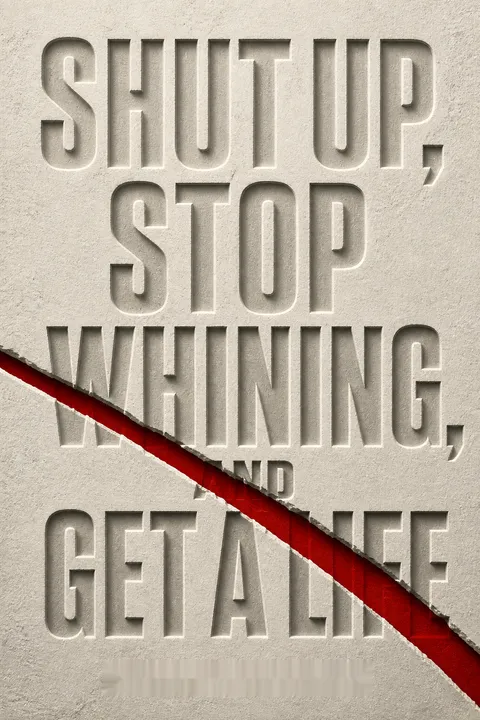
"Shut Up, Stop Whining, and Get a Life" receives mixed reviews. Some readers appreciate the author's no-nonsense approach and find the advice practical and motivating. Others criticize the book for being repetitive, contradictory, and overly focused on the author's personal opinions. The writing style is described as conversational but poorly edited. While some find the tough love approach refreshing, others see it as arrogant and shallow. The book's format as a graphic novel is noted as unique. Overall, readers seem divided on whether the book offers valuable insights or is simply rehashing common self-help advice.
People Also Read



Glossary
10-10-10 Theory of Money
three-way income allocationWinget’s money-management rule assigns 10 percent of income to savings, 10 percent to investment, and 10 percent to charitable giving. The remaining 70 percent is used for living expenses. The framework aims to build financial security and generosity through a repeatable allocation, rather than waiting to save whatever happens to remain.
prosperity consciousness
belief in available abundanceWinget uses this term for a belief that enough opportunity and resources can exist for people to become secure, provided they are willing to work toward it. He contrasts it with a scarcity-based outlook that assumes abundance is limited and another person’s gain means someone else must lose. In the book, these beliefs influence how people earn, spend, save, and give.
poverty consciousness
belief in chronic scarcityWinget’s term for a money mindset organized around lack, limitation, and fear that there will never be enough. He says this belief can affect how people view wealth, spending, and opportunity. In contrast with prosperity consciousness, it treats financial abundance as limited. The term describes a belief pattern in his framework, not a diagnosis or a complete explanation of someone’s financial circumstances.
other’s-esteem
dependence on others’ approvalWinget’s coined contrast to self-esteem. It describes organizing one’s identity and choices around gaining other people’s approval, rather than developing self-acceptance and making independent judgments. He argues that reliance on outside approval can make people vulnerable to criticism and social pressure. The term highlights the difference between respecting feedback and allowing other people’s opinions to determine one’s worth.
The Test for Success
eight-area self-checkWinget’s checklist for reviewing success across multiple dimensions. It asks whether a person is happy, healthy, serving, loving, learning, having fun, doing enjoyable work, and prosperous. A person may be succeeding in some areas while struggling in others. The test is meant to turn success from a single status label into a practical review of where life is working and where action may be needed.
FAQ
What's Shut Up, Stop Whining, And Get a Life about?
- Direct Responsibility: The book emphasizes personal accountability, stating that "Your life is your own damn fault!" It encourages readers to take full responsibility for their circumstances.
- Three-Part Approach: Larry Winget divides the book into three sections: Shut Up, Stop Whining, and Get a Life, each focusing on different aspects of personal accountability and proactive living.
- Confrontational Style: Winget's writing is direct and caustic, aiming to shake readers out of complacency and challenge conventional self-help clichés.
Why should I read Shut Up, Stop Whining, And Get a Life?
- Realistic Perspective: The book offers a refreshing take on personal development, focusing on hard truths rather than feel-good platitudes.
- Action-Oriented Advice: Winget provides practical steps to take control of your life, emphasizing that every action matters.
- Unique Voice: Winget's irreverent and humorous style makes the book engaging, with his candidness about his own failures adding credibility.
What are the key takeaways of Shut Up, Stop Whining, And Get a Life?
- Take Responsibility: Individuals must accept responsibility for their lives and choices, as "Your thoughts, words, and actions created the life you are living."
- Stop Whining: The book stresses moving past complaints and taking action, as whining prolongs problems.
- Design Your Life: Readers are encouraged to actively design their lives rather than live by default, knowing what they want is crucial.
What are the best quotes from Shut Up, Stop Whining, And Get a Life and what do they mean?
- "Your life is your own damn fault!": This encapsulates the book's core message about personal accountability, challenging readers to stop blaming external factors.
- "Stop whining and get a life!": A wake-up call to those stuck in a cycle of complaining, encouraging proactive behavior.
- "You can only choose one thing to do, so what's it going to be?": Highlights the importance of making conscious choices and deciding actions and outcomes.
How does Larry Winget suggest I change my life in Shut Up, Stop Whining, And Get a Life?
- Change Your Thoughts: Winget emphasizes that "thoughts are creative," and changing negative patterns can alter reality.
- Take Action: He insists that "you can’t learn while you are talking," stressing the importance of action for personal growth.
- Stop Trying: Winget advises against the word "try," encouraging commitment and determination with "There is no try. There is only do or do not do."
What does Winget mean by "Stop Whining" in Shut Up, Stop Whining, And Get a Life?
- Whining is Counterproductive: Winget argues that whining prolongs problems and distracts from solutions.
- Focus on Solutions: He encourages creating a plan instead of complaining, as having a plan energizes you.
- Personal Accountability: Whining often shifts blame away from oneself, but taking responsibility is essential for moving forward.
How can I "Get a Life" according to Shut Up, Stop Whining, And Get a Life?
- Live by Design: Winget stresses actively designing your life rather than living by default.
- Set Clear Goals: He encourages defining what you want out of life, as clarity is crucial for achieving desires.
- Take Action: Achieving a fulfilling life requires hard work and effort, as "You get by giving up."
What are some common myths about success that Winget addresses in Shut Up, Stop Whining, And Get a Life?
- Attitude is Everything: While important, attitude is not the sole determinant of success.
- You Can Be Whatever You Want: Winget challenges the notion that anyone can achieve any dream without recognizing limitations.
- You Become What You Think About: Action is necessary for change, not just thoughts.
How does Winget define success in Shut Up, Stop Whining, And Get a Life?
- Personal Accountability: Success is defined by taking responsibility for one's actions and outcomes.
- Service to Others: True success comes from serving others well, with financial rewards as a result.
- Continuous Improvement: Success is a journey of growth and learning, with everything in life getting better as you improve.
How does Larry Winget suggest we handle money in Shut Up, Stop Whining, And Get a Life?
- 10-10-10 Theory: Winget introduces saving 10%, investing 10%, and giving 10% of your income for financial discipline.
- Spend Less Than You Make: Living within one's means is foundational for financial stability.
- Attitude Adjustment: A positive mindset towards money can attract financial success.
What does Shut Up, Stop Whining, And Get a Life say about relationships?
- Friendship vs. Marriage: Winget distinguishes between the ease of friendships and the work required in marriages.
- Individuality in Relationships: Maintaining individuality is crucial to avoid dissatisfaction and resentment.
- Communication is Key: Open and honest communication is essential for healthy relationships.
What is the overall message of Shut Up, Stop Whining, And Get a Life?
- Take Action: Stop complaining and start taking responsibility for your life.
- Personal Accountability: Emphasizes accountability in all areas, from finances to relationships.
- Live Life Fully: Encourages living authentically and pursuing goals with determination.
Download PDF
Download EPUB
.epub digital book format is ideal for reading ebooks on phones, tablets, and e-readers.








