

Key Takeaways
Build abundance by noticing what sustains you, not waiting for more
Start with an inventory. The book begins with Breathnach overwhelmed by lost work and financial worry. Instead of listing what was missing, she wrote down what was already good in her life. Six hours later, she had recorded more than 150 blessings, none of them financial. That shift did not solve her cash-flow problem, but it changed how she saw her life. Her practical exercise is a Gratitude Journal: write down five things each day, from major supports to ordinary comforts. On difficult days, list the basics rather than forcing a cheerful mood.
Abundance is attention. Simple Abundance is the book’s yearlong inner and practical path toward contentment. Gratitude helps readers notice what is already present, making it easier to distinguish essential needs from restless wants and to make more deliberate choices. The claim is not that circumstances never matter, but that attention changes how much of life is experienced as lack.
What's striking is the move from an abstract virtue to a repeatable act of observation. Attention research suggests that what people monitor becomes more accessible to memory, so a written record can counter the mind's tendency to foreground threats and unfinished business. Yet gratitude should not be used to silence justified dissatisfaction or deny material hardship. The practice is most useful when it expands the picture, allowing both genuine difficulty and existing support to be seen at once.
Let gratitude clarify what you need, then simplify what you chase
Separate needs from wants. Breathnach argues that advertising and social comparison blur the difference, leaving people pursuing objects that promise happiness but cannot provide lasting contentment. Once gratitude makes existing resources more visible, the next question becomes what is actually essential. A family might choose to refinish a dining table rather than work overtime for a replacement, preserving time for a child’s game. Simplicity, in this account, is not mere deprivation. It is choosing fewer, more meaningful commitments and possessions.
Create room to think. The book links simpler choices with greater order and balance in daily life. A tidy desk, fewer unused belongings, or one task completed at a time can reduce the friction of ordinary routines. The goal is not a perfect home or a rigid schedule. It is enough structure to make attention, rest, and pleasure possible.
This section connects consumer choice with cognitive load: cluttered spaces and excessive options can make decisions harder and attention more fragmented. The strongest version of the argument is not that owning less automatically produces happiness, but that deliberate limits protect time and focus for chosen priorities. Simplicity also depends on circumstance. A person facing scarcity may have few choices already, so voluntary restraint should not be confused with hardship imposed by low income.
Recover your authentic self by collecting clues, not copying templates
Notice your own signals. The book uses authentic self to mean the inner source of personal preferences, capacities, and longings, often obscured by other people’s expectations. Breathnach recommends keeping a Daily Dialogue, an informal writing practice that puts worries and thoughts on paper, and an Illustrated Discovery Journal, a visual record of images that attract the reader. The point is not to create polished pages. A recurring image, a childhood memory, or a preference for a certain color can reveal a pattern the conscious mind has overlooked.
Turn clues into experiments. Creative excursions are regular solo outings devoted to curiosity, such as browsing a bookshop, visiting a market, or exploring an art gallery without needing to buy anything. The Personal Treasure Map is a collage of images representing a hoped-for life. These tools help translate vague desire into something observable, then test it in real life.
What's useful here is the idea that identity can be investigated rather than declared. In psychology, narrative identity describes how people make sense of themselves by linking memories, values, and future aims. Journaling and visual collections can surface those links without demanding an immediate life overhaul. Still, an image that feels compelling is a clue, not a command. Preferences change, and some desires reflect status pressure as much as personal fit. Small experiments provide a reality check.
Make home and ordinary work places where care becomes visible
Treat surroundings as support. Breathnach sees homecaring, the practical tending of a household, as a potential expression of attention rather than pointless drudgery. A room need not resemble a magazine spread to feel welcoming. It should work for the people who live there, offer comfort, and reflect what they value. She recommends defining a livable standard, giving possessions a place, and sharing household responsibilities instead of measuring success by perfection. Even a small corner can become a place for reflection or creative work.
Use rituals to restore order. Setting a table with care, putting belongings away, or preparing a familiar meal can turn repetitive tasks into grounding routines. The author draws on religious and domestic traditions in which everyday work carries spiritual meaning. The practical test is simple: does a routine make life calmer and more humane, or does it add another impossible standard?
The book gives domestic labor dignity by showing how rooms and routines shape attention, belonging, and rest. Environmental psychology likewise treats surroundings as active influences, not neutral backdrops. But the spiritual framing has a risk: praising homecare can romanticize work that has historically fallen disproportionately to women. Care becomes genuinely sustaining when it is chosen, shared, and bounded, not when sacred language disguises an unfair division of labor.
Protect solitude before exhaustion forces you to stop
Make private time real. Breathnach argues that solitude is not a luxury reserved for artists or people without families. It gives a person room to hear preferences, think clearly, and recover creative energy. She suggests setting aside an hour when possible, or claiming smaller intervals during a lunch break, a child’s quiet time, or a walk. A personal Sabbath can be any regular period devoted to rest, reflection, and activities that replenish rather than deplete.
Let leisure be active care. A solitary visit to a museum, a walk treated as meditation, or an afternoon spent reading can restore a sense of self beyond work and caregiving. The author also encourages hobbies and play, which many adults dismiss as frivolous. The point is not to abandon responsibilities, but to stop treating personal renewal as the reward that comes only after every demand has been met.
The central insight aligns with recovery research: attention and self-regulation are finite, and rest is part of functioning rather than a prize for productivity. Solitude can also support creative incubation, when ideas connect outside immediate task demands. The advice needs a practical qualification, however. Not everyone has control over schedules or childcare. Where an hour alone is impossible, shared caregiving, institutional support, and brief protected intervals matter more than individual resolve.
Give your gifts a schedule, not just a dream
Treat creativity as work. Breathnach urges readers to regard creative ability as something to use, not merely admire from a distance. A calling may be writing, cooking, gardening, teaching, or caring for others; it need not carry an artistic job title. The author’s own route illustrates the cost of persistence: her manuscript was rejected thirty times before it found a publisher, and she kept returning to the work. A dream becomes more plausible when it receives regular time, practical preparation, and room to develop.
Separate effort from outcome. The book distinguishes pursuing a dream from demanding a specific reward or timetable. A reader can take one concrete step, then remain open to adjustments, failure, and unexpected routes. Breathnach presents creative work as collaboration with Spirit, but the actionable core is secular too: make something, seek feedback, learn the craft, and continue after rejection.
This is a compelling blend of purpose and persistence. Research on deliberate practice emphasizes that talent develops through sustained effort, feedback, and progressively harder tasks, not inspiration alone. The book's spiritual language may help some readers endure uncertainty, while others can understand the same process through vocation or intrinsic motivation. A useful caution is that perseverance cannot guarantee publication, income, or recognition. Its more dependable return is capability, self-knowledge, and meaningful effort.
Define success around the life you can actually live
Distinguish achievement from fit. The book separates worldly success, such as money, status, or public recognition, from authentic success: work and relationships that fit a person’s values and leave room for a life beyond performance. A job may provide income, a career may build expertise, and a calling may express a deeper sense of purpose; these can overlap, but they are not identical. The right choice depends on real needs, responsibilities, and season of life.
Respect seasons and limits. Breathnach challenges the fantasy of doing everything at once. A parent may prioritize children now and return to a career ambition later; another person may need work that provides security before taking a creative risk. Boundaries, realistic schedules, and the ability to say no protect the life being built. The question is not whether a person can have every possible good, but which goods matter most in this chapter.
This framework usefully resists a single scoreboard for achievement. Work psychology distinguishes external rewards from autonomy, competence, and relatedness, needs that often determine whether success feels worthwhile. The book's seasonal model also makes trade-offs less morally loaded: a temporary priority is not necessarily a permanent surrender. At the same time, choices are constrained by wages, care duties, health, and discrimination. A meaningful definition of success must acknowledge those structures, not imply every limitation is freely chosen.
Handle money for serenity, not as a measure of worth
Separate security from identity. Breathnach begins with financial anxiety but argues that a bank balance cannot measure a person’s total wealth. She encourages readers to distinguish needs from wants, track spending, and choose purchases deliberately rather than using shopping to soothe distress. The book also recommends saving regularly, even if the amount starts small, and treating a reserve as a source of calm rather than punishment. Affordable pleasures, such as flowers or a good meal, can make a modest life feel cared for without requiring extravagant spending.
Give with intention. The author presents tithing as a spiritual practice of circulating some income toward religious or charitable work. She believes generosity can ease fear and deepen abundance. This is her faith-based interpretation, not a guaranteed financial mechanism. The practical value is in choosing a budget for saving, spending, and giving that reflects actual resources and priorities.
The book's most grounded money advice is behavioral: notice spending, save before money disappears, and avoid equating purchases with self-worth. Those practices can create predictability, a real component of financial well-being. Its claim that generosity or positive thinking attracts money is spiritual belief, not established financial causation. That distinction matters because debt, low wages, illness, and unstable work cannot be solved by mindset alone. Serenity can include both inner perspective and concrete material support.
Use beauty and ritual to make ordinary days inhabitable
Give the senses a role. The book treats beauty not as luxury or decoration for display, but as a way to notice life. Flowers, music, a scented bath, comfortable clothes, seasonal food, and a carefully set table can bring attention back to the present. Small rituals also mark transitions: lighting a candle, pausing before a meal, or making a familiar holiday dish can make an ordinary day feel distinct and cared for.
Choose the quality of the day. Breathnach’s larger claim is that circumstances do not determine every moment’s meaning. A hard day may still contain a walk, a kind conversation, or a meal worth savoring. This is not a demand to be cheerful through grief or illness. It is an invitation to notice what remains available, and to create small moments of comfort without waiting for life to become perfect.
This emphasis on sensory detail gives the book a memorable counterweight to abstract self-improvement. Mindfulness practices similarly use sound, smell, taste, and touch to anchor attention in immediate experience. Rituals can also create continuity during uncertain periods. The nuance is important: beauty cannot cancel loss, and a person in crisis may need care more than a candlelit meal. Its best use is as an added resource, not a substitute for practical help or honest grief.
Analysis
Simple Abundance is best understood as a yearlong reflective daybook rather than a conventional argument or step-by-step program. Its recurring narrative begins with a working mother caught between money worries, family demands, and a sense that her own life has gone missing. A modest act of recording blessings becomes the opening through which the author explores identity, home, work, creativity, money, relationships, and spiritual life. The book’s organizing movement is cumulative: notice what is present, reduce what distracts, create more order, recover personal preferences, and make room for beauty and joy.
Its distinctive strength is its scale. It translates large questions about purpose and faith into ordinary scenes: a cluttered kitchen, an interrupted workday, a garden, a meal, a tired evening. The recurring tools, including journals, visual collages, solo outings, and small rituals, give readers concrete ways to observe themselves rather than merely consume advice. The author’s literary and domestic anecdotes also make the book feel companionable, not clinical.
The approach has limits. Its spiritual account of abundance, prayer, and money is meaningful within the author’s worldview, but some readers may mistake metaphysical reassurance for a causal explanation of economic outcomes. The book also dignifies domestic work while sometimes placing its burden squarely on women. A contemporary reading should preserve its respect for care and beauty while asking who performs that care, and under what conditions.
The most durable lesson is not that gratitude makes hardship disappear. It is that attention, reflection, and deliberate choices can help a person recover agency inside an imperfect life. The book offers a vocabulary for treating everyday experience as material for a more authentic one.
Review Summary
Simple Abundance receives overwhelmingly positive reviews, with readers praising its daily meditations and life-changing impact. Many appreciate the updated version, finding it relevant and inspiring. Readers highlight the book's emphasis on gratitude, simplicity, and self-discovery. Some prefer the original edition, feeling it had more charm. The book is described as comforting, joy-inducing, and a must-read for women seeking balance and authenticity. A few criticize its outdated or religious undertones, but most find it a valuable daily companion for personal growth and reflection.
People Also Read






Glossary
Simple Abundance
A path to contentmentThe author’s term for an inner and practical process of living more fully by noticing existing blessings, clarifying personal needs, and shaping daily life around what matters. It combines spiritual reflection with ordinary choices about time, home, work, creativity, money, and pleasure. The book presents it as a gradual practice rather than a quick makeover.
authentic self
Inner preferences and giftsThe book’s name for the self beneath outside expectations, habits of pleasing others, and assumptions about who a person should become. The authentic self is revealed through recurring preferences, memories, longings, and abilities. It is not a perfected persona, but a source of personal direction that can be explored through reflection and experiment.
The Gratitude Journal
A daily record of blessingsA notebook used to record five things for which the writer feels grateful each day. Entries can describe large sources of support or small, ordinary pleasures. On hard days, the author advises recording basic provisions rather than forcing positivity. The practice is intended to train attention toward what is sustaining life in the present.
The Daily Dialogue
Writing to clear the mindAn informal, recurring writing practice in which a person puts worries, questions, and thoughts onto paper. The author uses it to reduce mental clutter and to listen for more considered responses beneath repetitive self-talk. It is not a polished diary or literary exercise. A plain notebook is recommended so that perfectionism does not obstruct honest writing.
The Illustrated Discovery Journal
A visual map of preferencesA notebook built from pictures, colors, quotations, sketches, and other images that attract the reader. Rather than following a fixed design, its pages develop over time and can reveal preferences that are difficult to express in words. The author treats visual selection as a practical way to explore personal style, interests, and possible directions.
Your Personal Treasure Map
A collage of aspirationsA private collage representing a person’s hoped-for life, assembled from images or drawings that suggest desired surroundings, work, relationships, and experiences. The author presents it as a way to clarify aspirations and keep them visible. It is meant to encourage imaginative exploration, not to guarantee that every pictured outcome will occur.
The Golden Mirror Meditation
Visualizing the inner selfA guided visualization in which the reader imagines a large, luminous mirror and encounters a radiant image of the person she might become. In the book, that image represents the authentic self, offering reassurance and direction. The exercise uses imagination as a contemplative tool, not as a claim that visualization alone can produce external results.
Creative Excursions
Solo outings for discoveryRegular outings taken alone to spend attentive time with personal interests and curiosity. Examples include browsing a bookstore, visiting a market, or exploring an art supply shop without an obligation to purchase. The author frames these excursions as investments of time rather than money, intended to help a person rediscover preferences and creative energy.
Divine Discontent
Restlessness prompting changeThe author’s phrase for a period of dissatisfaction that can arise during personal growth. Rather than treating all discontent as proof of failure, she interprets some of it as energy signaling that old surroundings, routines, or choices no longer fit. The idea encourages reflection and change, while leaving room to distinguish growth-related restlessness from depression or other conditions needing support.
FAQ
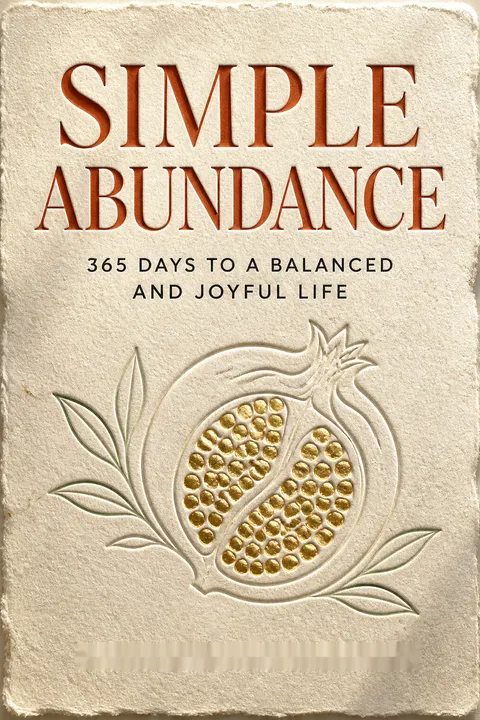
1. What is Simple Abundance: 365 Days to a Balanced and Joyful Life by Sarah Ban Breathnach about?
- Year-long daily guide: The book is structured as 366 daily essays, each offering meditations, reflections, and practical advice to help readers cultivate balance, joy, and authenticity in everyday life.
- Core focus on women’s lives: It is especially aimed at women, blending spiritual wisdom with practical tools to reconcile inner longings with daily demands.
- Six guiding principles: The narrative is woven around six core principles—gratitude, simplicity, order, harmony, beauty, and joy—encouraging readers to transform ordinary routines into meaningful rituals.
- Authentic self-discovery: Breathnach invites readers on an inner journey to discover and embrace their authentic selves, nurturing creativity and self-nurturance as essential for a fulfilling life.
2. Why should I read Simple Abundance by Sarah Ban Breathnach?
- Transformative and comforting: The book has inspired millions of women to find comfort, healing, and renewed purpose, especially during challenging times.
- Blend of practical and spiritual: It uniquely combines actionable daily advice with spiritual insights, making it accessible and relevant for modern life.
- Timeless and universal themes: The focus on gratitude, simplicity, and authenticity resonates with anyone seeking balance and meaning in a hectic world.
- Support for personal growth: Readers are guided to develop habits and rituals that nurture happiness, resilience, and well-being.
3. What are the key takeaways from Simple Abundance by Sarah Ban Breathnach?
- Gratitude as foundation: Keeping a daily gratitude journal is essential for shifting perception from scarcity to abundance and unlocking the fullness of life.
- Simplicity and order: Paring down to essentials and cultivating order in both home and mind create harmony, reduce stress, and open space for joy and creativity.
- Authenticity and self-nurturance: Embracing your authentic self and committing to self-care are spiritual imperatives, supported by creative excursions and meditative practices.
- Joy in the ordinary: The book teaches that contentment and joy are found in everyday moments, not in extraordinary achievements.
4. What are the six guiding principles of abundant living in Simple Abundance by Sarah Ban Breathnach?
- Gratitude: Recognizing and appreciating life’s blessings, which opens the heart and mind to abundance.
- Simplicity: Focusing on what truly matters, letting go of excess, and embracing the essentials.
- Order: Creating both internal and external order to foster peace, clarity, and a sense of control.
- Harmony: Balancing activity and rest, inner needs and outer responsibilities, to achieve a sense of wholeness.
- Beauty: Noticing and creating beauty in daily life as a spiritual practice that uplifts the soul.
- Joy: Embracing happiness as a habit and a state of mind, learning life’s lessons with a light heart.
5. How does Sarah Ban Breathnach define and encourage the discovery of the "authentic self" in Simple Abundance?
- Soul made visible: The authentic self is described as the “soul made visible,” representing the real you beneath external roles and expectations.
- Inner journey and tools: Discovering authenticity requires introspection, meditation, and creative expression, supported by tools like the illustrated discovery journal and golden mirror meditation.
- Living by your own lights: Authenticity means making choices aligned with your true desires and values, not societal pressures, leading to harmony and fulfillment.
- Ongoing process: The journey to authenticity is gradual, involving patience, experimentation, and self-reflection.
6. What is the "gratitude journal" method in Simple Abundance by Sarah Ban Breathnach?
- Daily gratitude practice: Each night, write down five things you are grateful for, from simple joys to significant blessings, to shift focus from scarcity to abundance.
- Transformative power: Breathnach asserts that consistent gratitude journaling changes your outlook and opens you to greater abundance.
- Foundation for other principles: The gratitude journal is the first step; it cultivates the open heart and awareness necessary for the other principles to flourish.
- Spiritual law of appreciation: The more you appreciate, the more you receive, making gratitude a catalyst for positive change.
7. How does Simple Abundance by Sarah Ban Breathnach approach the concept of time and living in the present?
- Chronos vs. Kairos: The book distinguishes between chronos (measured, pressured time) and kairos (sacred, timeless moments of presence and joy).
- Living in kairos: Readers are encouraged to slow down, focus on one thing at a time, and savor life’s moments to experience serenity and abundance.
- Practical advice: Breathnach suggests “pretending we have all the time in the world” and making time for meaningful rituals to transform time from a source of stress to one of fulfillment.
- Intimacy with the real: Embracing kairos allows for deeper connection with oneself and the sacred in everyday life.
8. What practical tools and rituals does Simple Abundance by Sarah Ban Breathnach recommend for daily life?
- Daily dialogue and journaling: Writing personal journals to clear mental clutter and converse with your authentic self, fostering clarity and emotional release.
- Illustrated discovery journal: Creating a visual autobiography with images and quotes that resonate with your authentic preferences and style.
- Golden mirror meditation: Visualizing your radiant, authentic self to inspire confidence and self-love.
- Creative excursions and comfort rituals: Setting aside solo time for creative pursuits and nurturing the soul with comfort drawers, hope chests, and playful activities.
9. How does Simple Abundance by Sarah Ban Breathnach address challenges like depression, loss, or feeling overwhelmed?
- Acknowledging setbacks: Breathnach recognizes that sadness, depression, and loss are natural parts of life and can temporarily derail progress.
- Gentle self-care: The book encourages surrendering to difficult emotions with grace, rest, and nurturing activities, as well as seeking help when needed.
- Hope and patience: Growth is not linear; setbacks are part of the process, and persistence and self-compassion are essential.
- Community and remembrance: Support from friends and rituals of remembrance help heal grief and deepen appreciation for life.
10. What role do creativity and play have in Simple Abundance by Sarah Ban Breathnach?
- Creativity as spiritual path: Creativity is seen as a form of worship and collaboration with a Higher Power, essential for nurturing the authentic self.
- Reclaiming playfulness: The book encourages reclaiming play through toy boxes, dress-up, and fun activities, emphasizing that play is vital for creativity and well-being.
- Artistic life: Every woman is an artist, creating her life as a unique work of art, with risks, experimentation, and change as part of the journey.
- Overcoming creative blocks: The book acknowledges creative droughts and burnout, advising patience and self-compassion during these times.
11. How does Simple Abundance by Sarah Ban Breathnach approach money, abundance, and financial serenity?
- Money as energy: Money is described as a force intertwined with every aspect of life, and understanding your relationship with it is crucial.
- Financial serenity vs. security: The book distinguishes between peace of mind (serenity) and the elusive goal of security, advocating for abundance as a mindset.
- Practical money habits: Advice includes saving regularly, tithing, creating a “money magnet,” and tracking spending to align with authentic values.
- Spiritual abundance: Abundance is not about material wealth but about appreciating what you have and sharing generously.
12. What are the best quotes from Simple Abundance by Sarah Ban Breathnach and what do they mean?
- “Gratitude unlocks the fullness of life.” (Melody Beattie) — Highlights gratitude’s power to transform perception and experience.
- “If the only prayer you ever say in your life is ‘Thank You,’ it will be enough.” (Meister Eckehart) — Emphasizes the spiritual potency of simple, heartfelt gratitude.
- “Outer poise mirrors inner poise.” — Stresses the link between inner calm and outward grace.
- “Chronos requires speed so that it won’t be wasted. Kairos requires space so that it might be savored.” — Underscores the importance of slowing down to experience life fully.
- “It is never too late to be what you might have been.” (George Eliot) — Inspires hope and the possibility of transformation at any stage of life.
About the Author

Download PDF
Download EPUB
.epub digital book format is ideal for reading ebooks on phones, tablets, and e-readers.








