

Key Takeaways
Recover the self you learned to hide beneath other people's expectations.
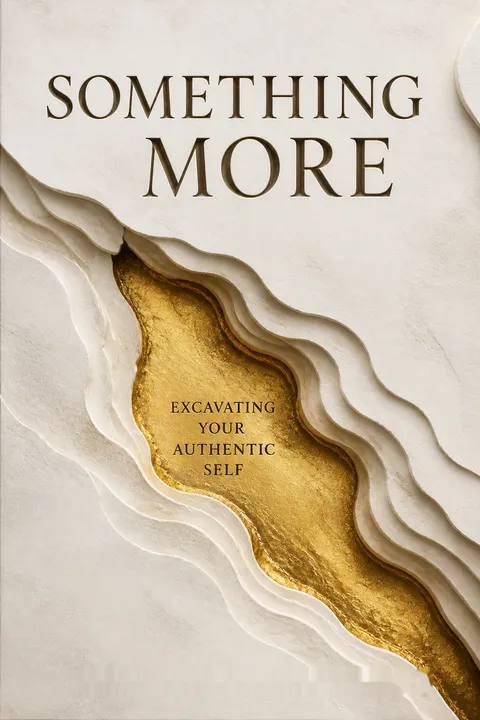
A buried continuity. After her mother's death, Breathnach finds a childhood photograph showing a determined little girl. Decades later, another image reveals the same direct gaze, but without the child's tension. The book's central claim is that personal growth need not mean inventing a new identity. It can mean recognizing qualities that were present before expectation, fear, and painful experience obscured them.
A spiritual return. Breathnach calls this recovery reembodiment: a process of reexamining past hopes, fears, and choices to live more fully as oneself in the present. She draws on reincarnation as a spiritual metaphor, but the practical task is here and now: become more honest about what matters, and build a life that reflects it.
The photograph gives an abstract idea a vivid form: identity can persist through changing circumstances. Research on autobiographical memory likewise treats the self as a story people continually revise, not a fixed record. That makes the excavation metaphor useful, though the book leans toward discovering a single, preexisting authentic core. People are also shaped by relationships, culture, and new commitments. A more flexible reading is that authenticity means acting with greater awareness of one's history and values, rather than uncovering an untouched self buried intact.
Treat your past as an excavation, not a verdict.
Collect before interpreting. Breathnach asks readers to approach memory like archaeologists: notice what is there, describe it, then consider what it may mean. Photos, letters, childhood objects, old books, and remembered pleasures can all provide clues. Her illustrated discovery journal gathers images and fragments without requiring an immediate explanation. The point is to notice recurring interests and reactions before dismissing them as trivial.
Small clues matter. Breathnach's childhood love of the book National Velvet led her to win riding lessons. After her aunt's sudden death and a later fall, fear and grief buried that pleasure for decades. Taking her daughter to a riding lesson brought the memories back, and she eventually returned to riding. The past held both pain and a lost source of delight.
This method has a practical connection to expressive arts: images and objects can help people notice associations that are hard to reach through direct questioning. Delaying interpretation also reduces pressure to produce a neat life story on demand. But memory is reconstructive, and an old photograph cannot independently prove what a child felt. Family members may remember events differently, too. The journal works best as a prompt for inquiry, not a forensic record or a tool for forcing certainty from fragmented memories.
Make small, conscious choices before crisis makes them for you.
Tiny decisions accumulate. Breathnach argues that lives are shaped not only by dramatic turning points, but by ordinary choices made repeatedly: whether to speak honestly, pursue an interest, or keep postponing a difficult conversation. She estimates that women make thousands of decisions in a year and suggests directing some of them toward a more authentic life. The estimate is rhetorical, but the principle is practical: repeated choices establish a direction.
Notice how you choose. The book distinguishes considered choices, made after reflection, from what it calls coma choices: decisions made while avoiding what one already senses is harmful. Breathnach's choice to take her first riding lesson on the day of her aunt's funeral became a small act of self-assertion. Later, fear stopped her from riding. Revisiting that decision helped her see how choices can be reconsidered.
The emphasis on everyday agency resembles behavioral approaches that focus on repeatable actions rather than dramatic resolutions. Small choices are often easier to change and can restore a sense of authorship. Still, choice is not equally available to everyone. Poverty, disability, caregiving, discrimination, and unsafe relationships constrain options. The book's language can sound as if unhappiness follows from personal decisions alone. Its strongest version treats agency as a resource to exercise where possible, without converting structural barriers or trauma into personal blame.
Read persistent longing as a signal, not evidence of ingratitude.
Gratitude can coexist with need. Breathnach describes women who appreciate their families, work, and security yet feel that something important is missing. She calls this Divine Discontent: a spiritual name for persistent unease that may point toward neglected values or desires. The phrase is not a diagnosis. It describes the book's view that discontent can prompt self-examination instead of being shamed away.
Success may not answer purpose. The writer Vita Sackville-West had financial security, a successful book, and a beautiful home, yet still asked what life was for. Breathnach uses the example to distinguish external happiness from a deeper sense of meaning. The practical question is not whether a person has enough blessings to justify wanting change, but whether a genuine need for creativity, connection, or purpose has gone unattended.
This framing usefully challenges the idea that gratitude requires contentment with every part of life. In motivational psychology, a mismatch between daily activity and personally important values can create dissatisfaction that supports change. But not every ache is a hidden calling. Persistent sadness, exhaustion, sleep disruption, or loss of pleasure can also signal depression, illness, or burnout, and spiritual language should not replace care. Longing is worth listening to, but it needs interpretation, context, and sometimes professional support.
Notice when survival has become self-erasure, then reclaim one capacity.
Survival can shrink a life. After a ceiling panel injured her, Breathnach spent months bedridden and struggled to read, speak, and recognize herself outside her roles as writer, wife, and mother. She describes this as a near-life experience, a period of existing without feeling fully engaged in life. While recovering, she imagined a confident heroine who endured what she could not yet face directly. She later understood this figure as an image of capacities she needed to reclaim.
Rebuild through care. The book also examines women who gave up creative work, ignored their needs, or learned to see themselves through criticism. Breathnach connects self-loathing with a habit of dismissing one's own desires and body. Her counterpractice is not punishment or perfection, but attentive care: for example, she began walking and noticed improvements in her mood and energy.
The imagined heroine illustrates a form of psychological distancing: a person can first picture courage in a character before recognizing it as a possible part of herself. That can support self-compassion, especially when direct self-affirmation feels false. The account also rightly treats exhaustion and self-neglect as more than a lack of discipline. Yet severe injury and trauma cannot be reduced to opportunities for growth. Recovery may be slow, uneven, and dependent on medical, social, and financial support, not willpower alone.
Name indifference before it becomes the climate of a relationship.
Silence has a cost. Breathnach warns that couples can appear functional while becoming emotionally estranged. In one example, Judy and Dan had stopped sharing interests and meaningful conversation. Rather than leaving immediately or pretending all was well, Judy told Dan that their loneliness threatened the marriage and that she could not repair it alone.
Meet each other anew. With a counselor's help, the couple began weekly dates called Imagine You Don't Know Me. They avoided routine topics such as work, money, and children, and talked instead about their hopes, fears, and inner lives. The exercise helped them encounter who each had become, not merely who they had been when they married. Breathnach's broader advice is to state needs clearly and look for mutual effort rather than treating silence as proof that everything is fine.
The story highlights a key feature of relationship repair: partners need more than shared history; they need current knowledge of each other. Structured conversations can make difficult disclosure easier by creating time and boundaries around it. The account is most useful when read as an invitation to communicate, not as a rule that every marriage should be saved. Mutual repair requires willingness and safety. Where abuse or coercion is present, prioritizing individual protection matters more than improving communication as a couple.
Make room for passion without turning self-sacrifice into virtue.
Passion is broader than romance. Breathnach uses the word for the energy that animates creative work, care, play, and daily pleasures, not just intense love affairs. She describes Margaret Morse Nice, a biologist whose family responsibilities left her frustrated. A quiet moment watching a mother bird tend its young awakened her interest in birds. That curiosity grew into work as an ornithologist and environmentalist.
Do not confuse devotion with disappearance. Breathnach challenges stories that portray a woman giving up her own desires as the noblest form of love. Her discussion of Francesca in The Bridges of Madison County asks readers to question the cost of suppressing a self for the sake of duty. The goal is not to dismiss care for others, but to stop assuming that a good life requires a woman to erase every desire of her own.
The example of Nice makes passion observable: a neglected interest can surface through attention to something ordinary, then develop through sustained practice. This resembles the idea of career construction, in which people build vocational direction from recurring interests and experiences rather than discovering a perfect job in advance. The critique of self-sacrifice is also valuable, particularly where caregiving is treated as women's natural duty. Still, passion need not outrank every obligation. The hard work is negotiating competing values without making self-denial the default.
Let a detour reveal talents you dismissed as impractical.
A setback can redirect attention. Breathnach tells of Janet, a counselor whose serious skiing accident led to a long rehabilitation. The experience changed how she understood her needs and work. After recovery, she returned to an old interest in art, trained as an art restorer, and built a consulting practice. The accident did not make the new work inevitable; it shifted what she was willing to prioritize.
Late beginnings count. The book also describes Harriet Doerr, who returned to college decades after leaving and published her first novel at seventy-four. These lives challenge the idea that a meaningful career must follow a straight path or begin young. A useful question during a detour is what old curiosity, skill, or unfinished ambition has become visible again, and what small experiment could test it.
Nonlinear careers are common, especially for people whose paths include caregiving, illness, migration, or economic change. The stories offer a generous alternative to the idea that an interrupted life is a failed one. They also risk making hardship look like a necessary doorway to purpose. A more balanced lesson is that adversity sometimes changes priorities, but it need not be justified by the success that follows. Curiosity and experimentation can guide a transition without requiring a crisis to authorize it.
Build belonging through sensory rituals, not an imaginary perfect house.
Home is a felt experience. Breathnach calls the House of Belonging a Celtic metaphor for the body as home of the soul and for the safety found in intimate connection. It is not simply a beautiful building. After divorce, one friend moved from a grand farmhouse to a modest townhouse and found unexpected peace there. Breathnach later lived in the farmhouse herself and made it a sanctuary through personal details that reflected who she was becoming.
Return through the senses. The book treats small pleasures as ways to become present: tending herbs, smelling fresh flowers, enjoying favorite food, or handling childhood objects. These practices are not grand transformations. They help ordinary days feel inhabited rather than endured, and they can make a space feel more personal without requiring an ideal home or expensive renovation.
The focus on sensory detail connects belonging to embodied experience. Familiar smells, textures, and routines can make a place feel safe and meaningful, while small rituals offer a manageable form of attention during unsettled periods. The townhouse story makes the distinction between size and sanctuary especially clear. Still, the metaphor should not obscure material realities: housing insecurity, crowding, and unsafe homes cannot be solved by decorating or mindset. Belonging is partly crafted, but it also depends on social and economic conditions.
Let grief be shared, named, and cared for in community.
Presence matters after loss. Breathnach recounts the death of Alison, a young child killed in a car accident. Alison's mother, Beth, arranged a home vigil where friends and relatives could sit with the child, share stories, and support the family. Children were allowed to ask direct questions and leave drawings. The gathering made grief communal rather than private, and gave mourners meaningful ways to care for one another.
Ritual does not erase sorrow. The experience changed Breathnach's understanding of death and showed her how families might shape farewells around their own needs. Beth later created a resource center to help others care for loved ones after death. The book gives spiritual interpretations of death, but its practical insight is simpler: grief needs witness, memory, and compassionate presence, not pressure to recover on someone else's schedule.
The vigil reflects what bereavement research and clinical practice often emphasize: social support, truthful language, and rituals can help people carry loss without pretending it has disappeared. Including children in age-appropriate ways can also make death less confusing and isolating. The account's spiritual beliefs about the soul are meaningful to the author, but they should not be treated as established fact or imposed on grieving families. Community care is valuable precisely because it can make room for different beliefs and different forms of mourning.
Analysis
Something More is a memoir-inflected guide to self-recovery, structured as an excavation of a woman's life. Its recurring movement is from buried evidence to interpretation, then from interpretation to choice. Childhood photographs and mementos reveal early preferences; painful memories explain some later evasions; relationships and work show where accommodation has become self-erasure. The book's strongest contribution is not a single technique but its insistence that small pleasures, old interests, and unresolved longings deserve serious attention.
The archaeology metaphor gives the book coherence and a practical rhythm. Readers are invited to gather artifacts, observe patterns, and make meaning slowly rather than demand an instant reinvention. Its stories, from a return to horseback riding to a late career change, keep that process vivid. The method also has limits: memory is selective, and a satisfying interpretation is not necessarily a historically complete one. The journal is best used for reflection, not as proof of what happened or what a person must do next.
The spiritual vocabulary of karma, reincarnation, and divine guidance gives hardship a larger frame for readers who share those beliefs. Those ideas remain metaphysical commitments, not demonstrated explanations for trauma or loss. The book's most portable insights do not depend on accepting them: people can examine their history, attend to their bodies, identify neglected values, and make more deliberate choices.
Breathnach's focus on women's self-denial remains resonant, especially in its attention to domestic labor and the pressure to be pleasing. At times, however, the advice risks treating personal choice as more powerful than economic constraint, illness, or unequal relationships. Its stories about leaving or repairing a marriage need careful contextual judgment. Taken as an invitation to recover agency, rather than a universal prescription, the book offers a memorable account of how a life can become more one's own through honest attention, repeated choices, and renewed connection.
Review Summary
Something More received mixed reviews. Many readers found it inspiring and life-changing, praising its insights on self-discovery and authenticity. They appreciated Breathnach's personal stories and advice for women seeking fulfillment. However, some critics felt it was less impactful than her previous work, "Simple Abundance," and detected a bitter tone. The book's exercises, like creating a discovery journal, were divisive - some found them helpful, while others felt overwhelmed. Overall, readers agreed the book resonated most with those going through difficult life transitions.
People Also Read








Glossary
Authentic Self
A more fully owned identityBreathnach's term for the person beneath habitual imitation, fear, and efforts to satisfy other people's expectations. The Authentic Self is associated with a person's genuine preferences, talents, needs, and capacity for joy. The book presents it as something recovered through reflection and choice, rather than created through external success or approval.
reembodiment
Recovering oneself in this lifeBreathnach's name for a spiritual process of becoming more fully oneself during one's present life. It involves revisiting memories, dreams, fears, and relationships to uncover what has been neglected or suppressed. Although the author relates the idea to reincarnation, its practical meaning in the book is a renewed way of living now.
Divine Discontent
Longing that prompts self-examinationBreathnach's spiritual interpretation of persistent dissatisfaction, especially when a person appears to have much to be grateful for yet feels that something important is absent. She treats this unease as a possible signal that the person is disconnected from an authentic sense of self. It is a personal growth concept, not a clinical diagnosis.
illustrated discovery journal
A visual record of self-discoveryA sketchbook used to collect images, quotations, photographs, drawings, and other fragments that evoke memories or strong reactions. Breathnach recommends gathering material before explaining it, then using collages and written reflections to notice recurring interests and associations. The journal is intended as a creative tool for exploring one's past and present.
Field Work
Exercises for personal excavationBreathnach's name for the reflective and practical assignments placed throughout the book. Exercises may involve looking through photographs, speaking with relatives, revisiting childhood interests, or recording dreams and preferences. They are meant to help readers apply the book's ideas to their own lives, rather than follow a rigid program for changing them.
near-life experience
Existing without felt engagementBreathnach's phrase for a period in which someone remains alive but feels cut off from identity, meaning, or ordinary participation in life. She uses it to describe her recovery after a serious head injury and also applies the idea to forms of emotional survival. It is a metaphor, not a medical term.
House of Belonging
An inner home of safetyA Celtic metaphor Breathnach uses for the body as the soul's earthly home and for the sense of safety, connection, and contentment found in close relationships. The image also describes creating a life and living space that reflect one's values. Belonging is presented as an inner and relational experience, not simply ownership of an ideal house.
soul-directed events
Events that prompt inner changeBreathnach's term for experiences that push a person beyond familiar patterns and invite reflection or growth. They may be confusing, painful, or unexpected, and the author interprets them as spiritually meaningful. The concept describes her worldview rather than an objective way to establish why an event occurred.
FAQ
What's Something More: Excavating Your Authentic Self about?
- Exploration of Authenticity: The book delves into the journey of self-discovery, encouraging readers to uncover their true selves beyond societal expectations.
- Reembodiment Concept: Introduces the idea of reconnecting with one's true self by learning from past experiences, essential for personal growth.
- Focus on Women: Aimed particularly at women, it addresses their unique societal challenges and emphasizes the importance of self-discovery.
Why should I read Something More: Excavating Your Authentic Self?
- Personal Growth: Offers insights into understanding oneself better and provides actionable steps for transformation.
- Empowerment for Women: Speaks directly to women, offering relatable stories and experiences that empower them to reclaim their identities.
- Practical Exercises: Includes exercises and reflections to actively engage readers in their journey of self-exploration.
What are the key takeaways of Something More: Excavating Your Authentic Self?
- Authenticity is Essential: Emphasizes living authentically as crucial for happiness and fulfillment, encouraging readers to shed societal expectations.
- Joy vs. Happiness: Distinguishes between joy and happiness, focusing on inner peace rather than external validation.
- Embrace Your Fears: Suggests confronting fears for personal growth, learning valuable lessons, and emerging stronger.
What are the best quotes from Something More: Excavating Your Authentic Self and what do they mean?
- “The soul is here for its own joy.”: Encourages prioritizing personal happiness and fulfillment.
- “We are the choices we have made.”: Highlights the importance of personal responsibility in shaping our lives.
- “First the gesture, then the grace.”: Emphasizes taking action towards goals to open oneself to opportunities.
What is the concept of reembodiment in Something More: Excavating Your Authentic Self?
- Definition of Reembodiment: Described as reconnecting with one’s authentic self and learning from past experiences.
- Accelerated Learning: Proposes that understanding fears and desires can expedite spiritual growth.
- Spiritual Journey: Frames reembodiment as a journey leading to enlightenment and fulfillment.
How does Something More: Excavating Your Authentic Self address the theme of fear?
- Fear as a Teacher: Posits that fear can teach valuable lessons if confronted.
- Invitation to Meet Fears: Encourages inviting fears into life to foster resilience and growth.
- Transforming Fear into Joy: Suggests overcoming fears can lead to joy and authenticity.
How does Something More: Excavating Your Authentic Self differentiate between happiness and joy?
- Happiness is External: Tied to external circumstances and often fleeting.
- Joy is Internal: Comes from within, rooted in self-acceptance and not dependent on external factors.
- Pursuit of Joy: Encourages focusing on cultivating joy by embracing authenticity and letting go of fear.
What role does gratitude play in Something More: Excavating Your Authentic Self?
- Foundation of Authenticity: Gratitude is foundational for living authentically, shifting mindset from lack to abundance.
- Transformative Power: Emphasizes gratitude's power to transform experiences and perceptions.
- Daily Practice: Encourages incorporating gratitude into daily routines for greater joy and fulfillment.
What is the significance of the "Wilderness" concept in Something More: Excavating Your Authentic Self?
- Metaphor for Self-Discovery: Represents a period of confusion and searching for one's true self.
- Catalyst for Change: Described as a necessary phase leading to personal transformation.
- Embracing Solitude: Encourages embracing solitude for reflection and growth.
How does Something More: Excavating Your Authentic Self address the theme of relationships?
- Relationships as Mirrors: Suggests relationships reflect our relationship with ourselves.
- Soul Mates and Anam Cara: Introduces "anam cara," emphasizing deep, meaningful connections for personal growth.
- Navigating Love and Loss: Explores complexities of love, providing insights on navigating emotional landscapes.
What methods does Sarah Ban Breathnach suggest for personal growth in Something More: Excavating Your Authentic Self?
- Daily Reflection and Journaling: Advocates journaling for self-discovery and reflection.
- Gratitude Practice: Emphasizes gratitude for cultivating a positive mindset.
- Embracing Change: Advises embracing change and taking risks for authenticity and fulfillment.
How can I apply the lessons from Something More: Excavating Your Authentic Self in my daily life?
- Practice Self-Compassion: Treat yourself with kindness and understanding, acknowledging struggles and achievements.
- Set Intentions: Use insights to set clear intentions for personal growth and take actionable steps.
- Cultivate Meaningful Connections: Surround yourself with supportive people who encourage authenticity and self-discovery.
About the Author

Download PDF
Download EPUB
.epub digital book format is ideal for reading ebooks on phones, tablets, and e-readers.








