

Key Takeaways
Hell Week tested a reason to endure, not merely a body
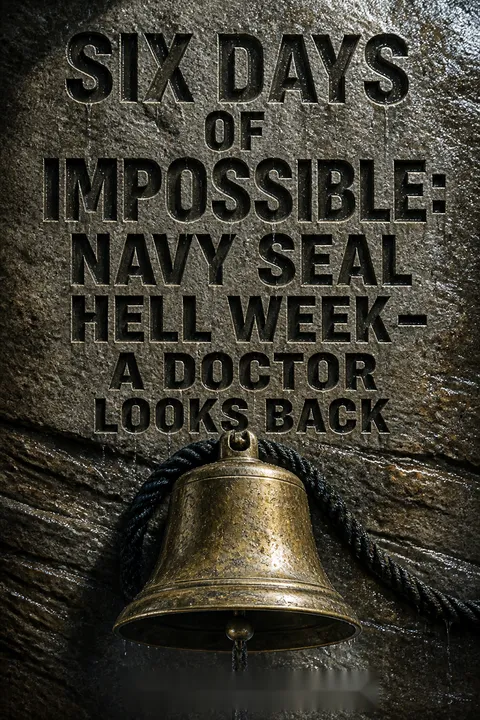
A goal acquired a history. At sixteen, Robert Adams read about the Navy SEALs and found a purpose that joined his love of the water to a way out of an unhappy home. Years later, he entered BUD/S, or Basic Underwater Demolition/SEAL training, the Navy course that prepares candidates for SEAL service. Class 81 began with about seventy men; eleven graduated.
Meaning outlasted prediction. The author says fitness tests and psychological assessments could not identify who would finish. He looks instead to the personal reasons that kept men moving, and draws on Viktor Frankl's argument that people can bear suffering when they understand it as a task. Hell Week, the book's prolonged test of cold, exhaustion, and teamwork, was not simply an athletic contest.
What's striking is that purpose appears here not as cheerleading, but as a way to organize attention when comfort and clear thinking disappear. That makes the account relevant beyond military training: a difficult commitment is easier to sustain when its costs connect to something personally chosen. Still, meaning is not a substitute for sound conditions or care. A compelling mission can help people endure, but it can also make preventable harm seem noble. The distinction between meaningful effort and unnecessary danger matters.
Past adversity can build stamina, but it cannot guarantee success
Earlier setbacks mattered. Frank Winget had quit during the second day of a previous Hell Week. He returned to BUD/S determined not to repeat that choice. Mike Suter, who had previously left training after suffering frostbite, also came back for another attempt. Their earlier failures gave them a more concrete sense of what they were choosing and, in the author's interpretation, made persistence more available.
This is an interpretation, not a formula. Adams argues that people who have endured earlier hardship may have fewer illusions about suffering and fewer appealing escape routes. But hardship did not ensure success for everyone, and the book itself offers no validated method for predicting graduates. The useful lesson is to examine what past difficulty taught, rather than assume that suffering automatically makes someone tougher.
The strongest version of this idea treats adversity as experience that can be interpreted, not as a training device that reliably improves people. Winget's return mattered because he reconsidered a specific decision and entered the next attempt with a changed commitment. That is different from claiming that trauma produces resilience. The account invites a practical question: what did a past failure reveal about preparation, motivation, or support? Without reflection, hardship can just as easily exhaust or discourage.
Measure endurance in the next minute, not six imagined days
The distant finish overwhelmed. During Hell Week, candidates faced a sequence of runs, swims, boat carries, surf drills, meals, and exercises, often without knowing exactly when the ordeal would end. Exhaustion and cold made time unreliable. The author describes a survival strategy that reduced the challenge to the task directly in front of him: finish the next push-up, move through the next stretch of water, or take the next step with the crew.
Attention stayed local. Thinking about the entire week invited doubt; focusing on the immediate instruction left less room for imagined failure. This was not a claim that the days were easy, but a way to keep action possible inside a situation too large to mentally carry all at once. The short horizon turned endurance into a series of manageable decisions.
This is a useful model for high-pressure work because attention is a limited resource. A person facing a long, uncertain task can lose energy rehearsing its total cost instead of acting on the next controllable step. The method does not make the larger goal irrelevant; it keeps the goal from flooding the present. Its limit is equally important: local focus should not silence evidence that a task has become unsafe or that the plan needs to change.
Borrow courage from your crew, but own your decision to continue
The work was shared. A boat crew was a small team that carried and paddled an inflatable boat; each candidate also had a swim buddy, a partner expected to watch out for him. Those ties made practical help possible. When Frank struggled to open a ration can with numb hands, a teammate opened it for him. When Adams became overwhelmed after an instructor's punishing exercise, classmate John Muggs took him aside and helped him recover enough to return.
Support could not decide for someone. Candidates encouraged one another, but some still chose to leave. Don Sayre tried to keep a struggling swim buddy with him, then had to continue after the man quit. The book's lesson is not that a team can eliminate individual choice. It can make the next hard action less lonely, and help a teammate reach the point where he can choose for himself.
The account shows teamwork as both logistical and emotional: someone shares a task, notices a failure, or interrupts a spiral of distress. That is more credible than treating solidarity as a vague feeling. It also preserves an important boundary. Encouragement can help someone act, but it should not erase that person's agency or turn leaving into a moral defect. Strong teams make support available without pretending that every member faces identical limits.
Lead through action before you feel ready to lead
Responsibility arrived unexpectedly. Adams hoped to avoid attention, but when the class leader, Ensign Mike Rock, left the water and quit, Adams was told to take charge. He had not planned for the role and doubted whether instructors would trust him. He nevertheless began accounting for the remaining candidates and issuing instructions. On the demolition training day, he chose to move to the front and act as a visible leader rather than hide behind the group.
Persistence was not the only standard. Ensign Vernon Wells insisted he was not quitting, but instructors removed him after concluding that his leadership was not strong enough for the role they expected. The distinction is uncomfortable: staying in training did not automatically mean an officer was ready to lead teammates into combat. The book presents leadership as a judgment made through behavior under pressure, not simply rank or toughness.
The narrative distinguishes personal endurance from responsibility for others. Adams's initial reluctance makes his shift toward visible action more persuasive than a story of effortless command. At the same time, the Wells episode exposes how consequential and subjective selection judgments can be. A team may need to assess qualities that are difficult to reduce to a test, but opaque standards invite error. Good leadership assessment requires both observation and clear explanation of what the role demands.
Adapt intelligently, but never confuse improvisation with safety
Small adjustments changed the work. Adams's boat crew added an inflatable floorboard and coated the boat with silicone in hopes of reducing drag. They also arranged vitamins and food to support the effort, although opportunities to use the supplies were limited. These choices reflected a practical impulse: examine the conditions, look for an advantage, and prepare as a team rather than rely only on brute force.
A clever plan can misfire. The book recounts another crew filling its boat with helium to reduce its weight. As the boat warmed in the sun, the gas expanded and the boat began to rise, exposing the trick. The contrast is memorable: ingenuity can improve performance, but assumptions about changing conditions matter. Adaptation is valuable when it is tested against reality, not when cleverness is mistaken for control.
The boat stories make preparation concrete. Teams do not merely endure a system; they inspect it and alter what they can. That is a valuable form of agency, especially when resources and time are scarce. Yet the helium example shows how an intervention can behave differently as conditions change. The deeper principle is not to improvise constantly, but to identify the assumption behind an adjustment and ask what could make it fail.
Cold and sleep loss damage judgment, not just comfort
The body was under strain. Candidates spent hours in cold water and wet clothes, carried heavy boats, and went without ordinary sleep. The account describes swollen feet, lost toenails, skin damage, hallucinations, and severe exhaustion. Tom Hanrath became hypothermic and hypoglycemic, was taken to the clinic, and received warmed glucose through an IV before he was allowed to rejoin his class.
Resolve had a medical boundary. The book emphasizes that the training was intended to push candidates toward exhaustion, but it also describes corpsmen, medical checks, and emergency transport. The body was not an obstacle that could simply be argued into submission. Determination sometimes kept men moving, while illness or injury required intervention or ended participation. A serious reading of the story must hold both facts together.
What's striking is how quickly discomfort becomes a question of cognition. Cold, hunger, and lost sleep do not merely make people unhappy; in the narrative, they distort perception and decision-making. That matters because a person who feels determined may still be impaired. The book's language of mental strength is powerful, but it should not be mistaken for medical guidance or proof that every symptom can safely be pushed through. Courage and monitoring belong in the same account.
A shared ordeal can forge belonging across ranks and careers
The class became a lasting group. Seventeen men completed Hell Week, but injuries, performance standards, and later training reduced the number who graduated with Class 81 to eleven. Five corpsmen joined the class for later phases. Adams describes the Hell Week graduates as remaining close decades afterward, despite differences in rank and career. The experience was shared, but each person carried a distinct reason for entering and a different path through the Navy.
The bond came from doing the work together. Candidates carried boats, watched their swim buddies, helped one another eat, and faced repeated tests as crews. The resulting attachment was not presented as an award for individual suffering alone. It grew from reliance, shared danger, and recognition of what the others had endured. The book's community is specific: a small group whose common trial became part of its history.
A shared ordeal can create belonging because it gives people a common reference point and a record of mutual reliance. In this story, the boat and swim-buddy arrangements make that interdependence visible rather than abstract. But intense group identity is not automatically virtuous, nor does it prove that outsiders cannot understand or belong. The account is strongest when it describes a particular bond without turning one kind of hardship into the sole measure of human closeness.
Passing Hell Week does not guarantee a life in combat
A test is not a vocation. Adams notes that a rare few candidates completed Hell Week, finished the ensuing training, and then decided they did not want the combat life they had prepared for. In his account, they wanted to take the test but did not choose the profession that followed it. The distinction separates proving endurance in a selection course from consenting to years of military service and its risks.
Completion is not the only measure. Hell Week had a clear endpoint, but the SEAL path continued well beyond it. Class 81's eleven graduates passed a demanding stage; they did not all arrive there with identical motives or futures. The book respects the accomplishment while acknowledging that a person can finish the ordeal and still decide that the larger life is not right for them.
This is a useful corrective to stories that treat survival of a trial as proof of lifelong commitment. A selection event can reveal capacity under particular conditions, but it cannot make a person's future obligations disappear. The distinction also sharpens the meaning of choice: enduring a test and accepting a vocation are separate decisions. Recognizing that difference makes the book's respect for perseverance more humane, and less dependent on treating every departure as defeat.
Analysis
The book works as memoir, military history, and a study of endurance, but its strongest evidence is narrative rather than predictive. Adams reconstructs Class 81's 1974-75 Hell Week through his own recollections and interviews with classmates. He also says some accounts of men who quit are composites. That method allows the book to portray the ordeal from several angles, but it means that scenes should not all be read as transcripts or as a controlled account of why candidates succeed.
The central argument is that meaning, prior adversity, and an unwillingness to accept an alternative can carry a person beyond expected limits. The stories of Winget and Suter make this persuasive as an interpretation of particular lives. They do not establish a general rule. The author also says that no study or test could reliably predict success, while proposing earlier hardship as a major distinguishing factor. That tension is productive: the book offers a hypothesis about resilience, not a dependable selection instrument. Its small group of graduates cannot represent every candidate, especially those whose histories and reasons for leaving are less fully told.
The account is most valuable when it holds endurance and dependence together. A candidate needs personal resolve, but crews, swim buddies, corpsmen, food, and medical care shape what that resolve can accomplish. The narrative can sometimes elevate persistence so strongly that bodily damage risks appearing like proof of character. Yet its own episodes of hypothermia, injury, hallucination, and treatment show why that conclusion would be too simple. This was a dangerous, supervised military selection course, not a recipe for ordinary life.
For general readers, the transferable insight is modest but substantial: commitment becomes more durable when a person understands what a hard task serves, focuses on controllable actions, and accepts support without surrendering agency. The story also cautions that endurance alone does not establish leadership, fitness for combat, or a desire to continue in that profession. A completed ordeal can reveal something important without answering every question about a life.
Review Summary
Six Days Of Impossible Navy SEAL Hell Week receives high praise from readers, with an average rating of 4.40 out of 5. Reviewers commend the detailed day-by-day account of Hell Week, offering unique insights into SEAL training. Many appreciate the book's lessons on perseverance, mental toughness, and pushing beyond perceived limits. Readers find it inspiring, eye-opening, and well-written. Some note its value extends beyond military interest, applying to personal growth and achievement. A few mention minor editing issues, but overall, the book is highly recommended for its gripping narrative and motivational content.
People Also Read









Glossary
BUD/S
SEAL selection and trainingBasic Underwater Demolition/SEAL training, the Navy course described in the book as preparing candidates for SEAL service. It includes three phases in the account: physical training, land warfare, and diving. Completing BUD/S is not the end of the path to becoming a SEAL; further advanced training follows.
Hell Week
Six-day endurance testThe most punishing portion of First Phase in BUD/S, described as a prolonged sequence of cold-water exposure, physical exercise, boat work, obstacle courses, and little or no sleep. Candidates work in crews and are repeatedly tested while instructors observe them. Completion is a major milestone, but it does not guarantee graduation from BUD/S or a career as a SEAL.
tadpole
BUD/S traineeThe informal name used for a candidate undergoing BUD/S training. Adams describes trainees wearing distinctive clothing and helmet liners as they move through the phases. The term marks their status as prospective frogmen, not graduates; the book repeatedly contrasts the trainees' early identity with the recognition they receive after completing training.
IBS
Inflatable boat, smallAn inflatable boat, small, used by the candidates for paddling and training. In Class 81's Hell Week, crews carried the heavy rubber boats on their heads, paddled them through surf, and moved them over obstacles. The boat organized candidates into working teams and made cooperation a constant physical requirement.
swim buddy
Assigned partner for safetyA candidate's assigned partner, responsible for staying together and watching out for one another during training. The book treats losing sight of a swim buddy as a serious failure because a partner may be injured, disoriented, or in danger. Pairings can change when candidates leave or are reassigned.
drownproofing
Water survival exerciseA water-training exercise in which candidates use their clothing to make flotation devices while treading water. In the Hell Week account, trainees undress in cold water and use their shirts or pants to stay afloat. The exercise combines a survival skill with the challenge of performing it while tired and cold.
rock portage
Boat landing over rocksA dangerous training evolution in which a boat crew brings its inflatable boat onto a rocky shoreline, then controls and carries it over the rocks. Waves can shift the boat and knock candidates against the boulders. The exercise tests timing and coordination while creating a substantial risk of injury.
So Solly Day
Explosives-response training dayThe name used for a Hell Week day involving demolition charges and explosions around the candidates. Trainees respond to whistle signals by dropping, covering themselves, crawling toward a sound, or recovering to standing. The repeated drills condition a response to commands amid loud, confusing activity.
Monster Mash
Punishment endurance exerciseA demanding physical punishment assigned after a perceived failure, sometimes to one candidate and sometimes to a whole group. The book describes it as a way instructors could prolong exertion and pressure candidates to meet standards. Its use varied, but it consistently meant more running or strenuous work when candidates were already tired.
Download PDF
Download EPUB
.epub digital book format is ideal for reading ebooks on phones, tablets, and e-readers.








