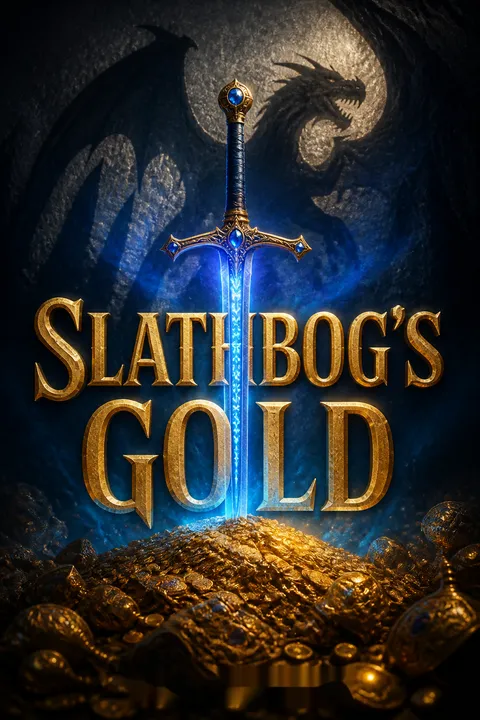


Plot Summary
The Changing Shop Sign
Fifteen-year-old Alex Taylor has spent years washing dishes at the Happy Dragon, feeling alone despite living with his stepfather, Mr. Roberts, and stepbrother, Todd. After Todd’s prank gets Alex blamed for breaking glasses, Alex walks off wishing his life could change. A bookshop sign catches his eye, its message shifting from an invitation to adventure to an offer to buy one.
The street empties as Alex approaches, and the shopkeeper, Cornelius Clutter, ushers him through a hidden gateway. Beyond it, Alex sees a winter landscape through a window where an alley should be. A dwarf, Thrang, and an elf, Arconn, arrive to assess him. They explain that only a potential adventurer could see the sign, and Alex begins to believe them.
The story begins with a small injustice rather than a grand catastrophe. Alex is not fleeing an abusive home; he is worn down by being misread, blamed, and treated as someone whose explanations can wait. That distinction makes his wish for another life emotionally credible without making his ordinary world wholly loveless. The shifting sign turns an inward longing into an external invitation, but the doorway does not erase his uncertainty. Instead, it makes uncertainty the condition of entry. Alex’s first step toward agency is not certainty that magic exists. It is his willingness to keep listening when the evidence has already made disbelief difficult.
Eight Against Slathbog
Thrang lays out the rules of an adventurer’s bargain: Alex will receive a small share of any primary treasure, obey the company’s leader, and help complete the quest. The goal is to kill Slathbog the Red, an ancient dragon believed to have destroyed cities and stolen wealth for centuries.
Alex questions whether taking the dragon’s hoard simply repeats the dragon’s own crimes. Arconn explains that stopping Slathbog’s future attacks is the company’s real purpose, while Thrang points out the customs governing recovered treasure.
Arconn tells Alex that refusing the adventure would mean regretting the lost chance. Alex feels an unexplained pull toward the quest and signs. Through Clutter’s concealed back door, he enters Telous and meets Silvan Bregnest, the company’s wary leader, and the other adventurers who will become his companions.
The bargain gives Alex a way to choose adventure while binding that choice to obligations beyond his own excitement. His question about the dragon’s hoard is not a childish objection to danger; it is an early moral test of the company’s accepted customs. The explanation that Slathbog will keep harming others does not make treasure-taking automatically righteous, but it changes the stakes from private profit to prevention. Bregnest’s hesitation also matters: the group does not greet Alex as a destined hero, but as an inexperienced risk. The contract therefore creates tension between fate and consent. Alex may feel summoned, yet he still has to sign his name.
A Bag Beyond Its Size
Andy Goodseed takes Alex through Telous to buy travel gear, then introduces him to a magic bag whose interior holds several stone rooms. The bag will carry supplies without requiring a string of packhorses, and its passwords keep others out. At a weaponsmith’s, Alex is measured for a weapon. The smith’s reference book says he could use almost anything, especially a staff, a tool associated with wizards.
Andy is startled, but Alex chooses a blue-black sword with gold markings that he cannot quite read. The next morning, Arconn gives Alex an adventurer’s handbook and an unreadable book of magic. Bregnest welcomes him into the company, and the eight set out from Telous on horseback, Alex riding Shahree, a mare he had once feared.
The equipment scenes make Alex’s transformation tangible before he understands it. The magic bag turns a fantastical world into a place with practical demands: weight, food, passwords, and the danger of being separated from supplies. His sword is more than an upgrade in weaponry because it attracts him without an intelligible reason, while the smith’s measurements suggest a capacity he cannot yet claim. His discomfort around Shahree similarly begins to change through repeated contact, not a sudden declaration of bravery. These small acts of preparation establish a useful pattern: Alex’s identity emerges through what he handles, chooses, and learns, often before his beliefs catch up.
Shahree’s Cry
After the company crosses the Great Arch into Vargland, Thrang teaches Alex two simple spells, one to kindle fire and another to extinguish it. Alex learns quickly, though each use of magic initially leaves him dizzy. Several days later, the horses bolt during the night.
Bregnest orders Alex and Andy to stay at camp while the others search, but Shahree’s frightened whinny draws Alex into the woods. He finds the mare cornered by a huge three-legged troll and draws the creature away so she can escape.
When the troll grabs him, Alex sets its boots alight, then cuts off one of its legs with his sword. With the troll about to strike, Alex uses his extinguishing spell on its body, freezing it in place. The others arrive and punish him for abandoning his post, though Bregnest acknowledges his courage.
Alex’s first real fight begins in a conflict between obedience and care. He knows the order is sensible, and he breaks it not for glory but because Shahree’s terror feels like a claim on him. The choice is dangerous and the company’s punishment preserves the fact that good intentions do not cancel risk to others. Yet Alex’s actions also expose a new kind of competence: he improvises with the fire spell and the strange sword under pressure. His instinct to protect an animal he once feared marks an emotional shift as concrete as the combat victory. He is learning that courage may look less like fearlessness than attention to someone else’s distress.
Seven Lost Bags
At dawn, sunlight turns the frozen troll to stone, and the company searches its pockets. Alex receives a black-stoned ring whose nature remains unknown, while the others divide the coins and gems. Following the troll’s tracks, they discover its cave concealed behind a moss-covered boulder.
Inside lies a much larger hoard and seven magic bags taken from adventurers who never returned. Bregnest explains that Alex, as the victor who uncovered them, should return the bags to their heirs. Alex accepts the responsibility and refuses to keep the possible reward to himself, asking that it benefit the company.
At a crossroads, the group chooses the longer eastern road to the White Tower, where an Oracle may help with the ring and the lost bags. A magical messenger soon brings Alex an invitation from the Oracle for the entire company.
The cave changes the meaning of the troll’s treasure. The coins and gems first appear to confirm the familiar adventure fantasy of danger rewarded, but the seven abandoned bags turn that reward into evidence of other people’s losses. Alex’s decision to carry the bags gives him a duty that cannot be reduced to his contracted share. It also contrasts with the adventurers’ usual arithmetic: he thinks first about restoration and only second about payment. The ring adds a smaller, unresolved mystery, while the Oracle’s invitation shifts the company’s route toward counsel rather than simple progress. The quest is becoming a network of obligations, not merely a line toward a dragon.
The White Tower’s Charge
At the White Tower, the Oracle, Iownan, hosts the company and then meets with each adventurer alone. She tells Alex that his doubts do not erase his potential as either a wizard or a warrior, and advises him to follow his heart without letting uncertainty paralyze him. She cannot identify the black-stoned ring, but warns him not to wear or sell it.
Arconn recognizes Alex’s sword as Moon Slayer, a rare weapon made by dark elves that chooses its own master. Iownan gives Alex a book of healing knowledge, and Arconn begins teaching him its script alongside the book of magic. Before the company leaves, Iownan asks them to recover a clear crystal hidden in Slathbog’s hoard. Each adventurer pledges to return it if they survive the quest.
Iownan’s counsel does not remove Alex’s doubts; it gives them a more useful role. Doubt can restrain pride, but it can also become a reason never to act, so the Oracle asks him to distinguish caution from paralysis. The sword’s history and the healing book widen his possible identities beyond the boy who happened to survive a troll. Crucially, Iownan’s request makes the dragon’s hoard morally specific: one object belongs to a community that wants it restored. The pledge is voluntary, not an Oracle’s command, preserving the company’s choice while making their word consequential. Alex’s education now includes both power and the obligations attached to using it.
Eric’s Hidden Passage
The company reaches Techen, a shabby city whose cooking smells promise better than its buildings. After selling twenty horses captured from bandits, Bregnest hears from Eric Von Tealo, an old stable keeper whose family came from Varlo.
Eric claims his ancestor escaped the dragon’s destruction through a tunnel beneath the castle, where a spring feeds a stream out of the mountain. He says Slathbog later piled rocks over the entrance without blocking the water, leaving a narrow route that would require swimming against the current.
Eric asks for payment, and Bregnest bargains for a larger reward only if the story helps them succeed. The old map shows the stream but not the tunnel itself. The company remains wary, yet decides the passage may be safer than approaching the dragon through the ruined city’s main entrance.
Eric’s story introduces information as a commodity whose value cannot be verified in advance. Bregnest neither trusts the old man blindly nor dismisses him because he is poor; he makes payment conditional on the usefulness of the route. This negotiation echoes the original adventurer’s bargain, but now the company must assess someone else’s word under uncertainty. Eric’s account is also shaped by inherited memory: Varlo is not merely a dragon’s lair to him, but the lost home of his family. The hidden stream offers tactical hope, though the rocks and current make it no guarantee. The company chooses to accept imperfect knowledge because refusing all risk would leave them only the obvious, more dangerous approach.
Umbar’s Returned Bag
In the Brown Hills, King Osrik welcomes the company into his dwarf city and asks to see the seven recovered bags. One belonged to Umbar, Osrik’s cousin, who disappeared nearly twenty years earlier. At the formal return ceremony, Umbar’s son proves his claim by giving Alex the bag’s secret passwords.
He offers one hundred true-silver pennies and half its contents. Thrang signals that Alex should negotiate for more, and Alex settles for a third of the treasure. The bag contains a fortune large enough to fill a chamber with gold, silver, gems, and rare true silver.
Alex wants to share everything with his companions, but they refuse most of the reward, insisting that returning the bag has restored the family’s honor. Osrik’s household also gives the adventurers gifts, including a true-silver dagger for Alex.
The ceremony makes ownership depend on more than possession. Alex carries the bag, but its passwords establish the heir’s relationship to it, and the return repairs a family history disrupted by disappearance. The treasure is enormous, yet the scene’s emotional center is not acquisition; it is recognition and restored honor. Alex’s instinct to give away his reward reveals how little he identifies with wealth as proof of worth. His companions resist not because they reject his generosity, but because they see the payment as properly belonging to the person who bore the burden. Their disagreement shows that generosity can itself become socially complicated when others interpret acceptance as a matter of justice.
The Wraiths’ Bargain
Near the haunted ruins of Aunk, unseen wraiths put the company to sleep and approach Alex alone. They tell him that Bregnest’s group is exploiting his talent, point to the treasure he has earned, and offer to make him a great wizard and king if he abandons his friends and takes Iownan’s crystal from Slathbog.
Their accusations exploit details Alex cannot fully explain, including Bregnest’s undisclosed prophecy. For a moment, Alex imagines the power and acclaim they promise. Then he grips Moon Slayer, and its heat clears the confusion.
He attacks the shadow figures, cutting through them until the last one vanishes with a scream. The sword’s power leaves Alex dangerously cold and weak. When his companions wake, Arconn identifies the attackers as wraiths and realizes Alex is slipping toward death.
The wraiths do not tempt Alex with something wholly foreign to him. They take his desire to matter, his uncertainty about belonging, and his suspicion that he may be used, then arrange those fears into a story where domination looks like self-respect. Their argument is persuasive because it contains recognizable fragments of truth, especially the secrecy around Bregnest’s prophecy. Moon Slayer does not simply make Alex stronger; it helps him separate friendship from flattery by reminding him of what his companions have actually done. The victory is costly, however. Rejecting a false future does not leave Alex untouched, and the cold that follows turns moral resistance into a physical crisis.
Back From the Wall
As the company races toward the dark forest, Alex drifts between waking and the gray shadowlands beyond a stone wall. Arconn keeps calling him back, but Alex is drawn toward the quiet beyond it. In the dream, Calysto, queen of the dark woods, finds him and urges him to return to life and unfinished promises.
Alex follows her back toward the light, then wakes days later in her care. His friends explain that the wraiths’ spell overcame everyone except Alex, and that Shahree carried him when they reached the elves.
At a feast held in his honor, Calysto restores the memories he had lost. Alex apologizes for nearly drawing her across the wall, but she absolves him. She recognizes his uncontrolled power and promises that the elves will remain his friends.
The wall gives the story’s danger an intimate shape: death appears not as a monster to defeat, but as relief from effort and pain. Alex’s return depends on more than force. Arconn calls him, Calysto offers a reason to choose life, and Shahree physically carries him toward help. These relationships make survival collective without making Alex’s decision irrelevant. Calysto’s return of his memories also asks him to face rather than conceal the frightening intimacy of his near-death experience. His apology matters because his power has already affected someone else, even without intent. The episode deepens the novel’s idea of responsibility: potential is not only what Alex can do, but what his actions may demand of others.
Moon Slayer Meets Slathbog
After months among the dark forest elves, the company crosses the barren wasteland surrounding Varlo and leaves its horses behind. Alex senses Slathbog’s confused, hateful thoughts as they approach the mountain. Following Eric’s directions, they find the stream and a partly collapsed tunnel.
Inside, a dragon’s spell extinguishes their torch, and a crash seals the way behind them. Alex remembers a spell from his book and magically lights the torches throughout the treasure hall, giving the company a route onward. They hide in a ruined chamber, but Slathbog finds them and attacks with fire.
Bregnest’s sword, Arconn’s arrows, and Halfdan’s axe cannot pierce the dragon’s scales. Moon Slayer can. After Alex looks into Slathbog’s eyes and breaks the dragon’s hold on his companions, Tayo drives in his spear, giving Alex the opening to kill Slathbog.
The climax pays off the book’s preparations in practical sequence. Eric’s uncertain account leads them to the stream; Alex’s study supplies the light spell; Arconn’s warning about dragon eyes becomes a rule Alex must knowingly break. The dragon’s armor renders the company’s conventional weapons useless, while Moon Slayer’s unusual power gives Alex a chance, not an easy victory. His choice to look into Slathbog’s eyes exposes him to danger but reveals fear beneath the dragon’s appetite for destruction. Tayo’s spear then interrupts the spellbound standoff and lets Alex strike. The kill belongs to the group’s combined actions, even though Alex delivers the decisive wound.
Dragon’s Bane for Tayo
Slathbog’s dying blow leaves Tayo badly injured, and Alex fears the dragon’s heat has poisoned the wound. Remembering Iownan’s healing book, he uses Dragon’s Bane, a plant he found growing near the lair, to prepare a medicinal wash and tea.
Tayo remains gravely ill despite the treatment. Alex then searches Slathbog’s enormous hoard for Iownan’s crystal, which they need to fulfill their pledge and which he hopes may help him understand how to save Tayo. After several days of despair, he spots a gleam atop a mountain of treasure and retrieves the crystal.
It shows him what he needs to know. Alex takes it to Tayo, enters the shadowlands, and finds Elsa, the woman waiting beyond the wall. She explains that Tayo’s time has not come and asks Alex to tell him she does not blame him.
This section shifts the central question from whether the dragon can be defeated to whether victory can protect the people who made it possible. Alex’s use of Dragon’s Bane draws together observation, study, and action: he recognized the plant before the battle and preserved it rather than assuming the journey ended at Slathbog. Yet medicine alone cannot resolve Tayo’s suffering. The crystal becomes an instrument of relational knowledge, revealing not a strategy for combat but Elsa’s message and Tayo’s unresolved guilt. Alex’s search is therefore both practical and emotional. He must find a lost object in an immense hoard because his friend needs permission to return to a life he believes he forfeited.
The Debt Is Paid
Elsa’s message helps Tayo release his guilt over leaving her before she died, and he wakes hungry and able to speak with his friends. As his strength returns, the company finishes sorting Slathbog’s hoard.
Bregnest assigns Alex more treasure for his wizardry, swordsmanship, and role in killing the dragon, but Alex insists on the smaller share in his original contract. He accepts the White Tower crystal as his responsibility to return.
Andy then repays his family’s old debt to Tayo by offering his entire share of the primary treasure; Tayo accepts only a portion, restoring the family’s honor without taking more than he needs. Alex recognizes that Tayo’s rescue has created a debt of its own, but Tayo agrees the debt is already balanced because he saved Alex during the dragon fight.
The aftermath tests Alex’s growth in a quieter register than combat. He can accept that he has become powerful without agreeing that power entitles him to every reward. His insistence on the original contract resists the transformation of achievement into status, while Bregnest’s counteroffer recognizes genuine work Alex has done. The debt between Andy and Tayo makes honor a communal practice with exact procedures: an offer must be made, but accepting everything can be excessive. Alex’s own rescue of Tayo complicates the ledger, yet Tayo refuses to turn friendship into permanent obligation. Their resolution suggests that reciprocity is not a demand for equal repayment. It is a way to acknowledge care without trapping people inside it.
The Crystal Comes Home
On the journey back, Alex and the company reunite with their horses, revisit Calysto’s forest, and receive a warm welcome from King Osrik. Thrain and two young dwarfs join them for the road to the White Tower.
In Techen, the travelers learn that Eric has died and that the magistrate denied him a proper headstone. Bregnest makes the city accept payment for a grave marker and a century of care. At the White Tower, Alex privately learns from Iownan that he carries human, elf, dwarf, and other ancestry she cannot identify.
The company then formally returns the crystal, completing its pledge. Bregnest reveals he has arranged for the wizard Whalen Vankin to consider Alex as an apprentice. Vankin sends books and instructions, to be opened only after Alex reaches home.
The return journey turns the adventure’s gains outward. The company does not merely bring home treasure; they renew relationships, invite the next generation into travel, and use their wealth to repair Eric’s neglected grave. That act answers the earlier uncertainty about whether his information was worth paying for: the company’s obligation survives his death. Iownan’s revelation gives Alex an explanation for some of his unusual capacities while withholding a complete account, so identity remains a question rather than a neat solution. The crystal’s formal return closes the promise that began at the tower, and Whalen’s apprenticeship offer gives Alex a future path. The ending prepares continuation without pretending that discovery has finished.
His Father’s Magic Bag
At Telous, the company declares its bargain fulfilled, and Bregnest finally explains the prophecy behind the quest: he was meant to find a wizard who could also become a warrior. Alex returns through Clutter’s shop to the moment he left, changed back to his original age and clothes.
Mr. Vankin’s letter directs him to go home rather than begin another adventure immediately. Alex expects Todd and Mr. Roberts to know nothing of his journey, but Mr. Roberts recognizes that he has been chosen. He reveals that he was once an adventurer and that Alex’s unknown father was a celebrated one.
Alex’s mother asked Mr. Roberts to keep that history from him until he was ready. Mr. Roberts gives Alex his father’s magic bag, making the homecoming an entrance into a family past as surprising as the world Alex has just left.
The return resolves the opening wish without simply replacing Alex’s home with a permanent escape. Magic restores his age and clothes, but his experience remains, and he now sees the tavern through knowledge his family withheld for protective reasons. Mr. Roberts’s revelation revises Alex’s sense of abandonment: his father was not an empty space but a person whose adventures shaped the adults who raised him. The inherited bag turns that history into a material invitation, just as Clutter’s sign did at the beginning. Yet the novel does not claim that Alex must become his father. He has gained a past to explore and a future apprenticeship to pursue, while remaining genuinely glad to return to the people and place he once wanted to leave.
Analysis
Slathbog’s Gold treats identity as something discovered through action before it can be explained. Alex begins by wishing for a different life, but the story does not suggest that his ordinary family is worthless or that adventure instantly cures loneliness. Instead, each new capacity is tested in a relationship: he learns fire magic while traveling with Thrang, discovers courage by answering Shahree’s distress, and becomes a warrior when Moon Slayer’s power enters him. His character develops through choices made under pressure, especially when he refuses the wraiths’ offer of greatness at the cost of his companions.
The book also makes obligation a counterweight to power. Alex’s first concern about Slathbog’s hoard is whether taking it repeats the dragon’s theft. Iownan’s crystal gives the quest a concrete moral duty, and the recovered bags turn treasure into a question of who has the right to inherit it. The adventurers’ customs can look transactional, but their rituals encode memory: a lost bag preserves its owner’s identity, and a debt of honor makes past help visible to the next generation. Alex’s repeated attempts to share his rewards challenge the group’s rules without simply rejecting them. He must learn that generosity does not always mean giving away what another person has rightly earned.
The wall between life and death extends this concern with relationship beyond the living. Alex returns because he still has promises and friends; later, he helps Tayo return by carrying Elsa’s words across the threshold. The scene does not make grief disappear. It loosens the guilt that has kept Tayo from choosing life. By the end, Alex’s homecoming joins two histories instead of replacing one with the other. He learns that his father was an adventurer, receives his father’s bag, and returns to the household he once wanted to escape. The result is not a completed identity but a larger inheritance of choices, skills, and relationships that Alex must decide how to carry.
Review Summary
Slathbog's Gold receives mixed reviews. Many praise its adventurous plot and engaging characters, comparing it to The Hobbit and Dungeons & Dragons. Young readers especially enjoy the fantasy elements and relatable protagonist. However, some critics find it derivative, predictable, and lacking character development. The simple writing style appeals to younger audiences but may frustrate older readers. Despite these criticisms, many reviewers appreciate the book's wholesome themes of friendship, courage, and self-discovery, recommending it for middle-grade fantasy enthusiasts.
People Also Read

Characters
Alex Taylor
Reluctant young adventurerAlex is a fifteen-year-old orphan who works in the Happy Dragon, where he often feels blamed before anyone hears his side. He longs for a life beyond chores, but his curiosity is tempered by caution and a strong instinct for fairness. He asks whether a dragon’s treasure can simply be claimed, worries about spending Thrang’s money, and repeatedly tries to share rewards rather than treating them as proof of personal worth. Alex’s emerging abilities as a wizard and warrior unsettle him as much as they excite him. He is most decisive when someone else is in danger, and his loyalty often arrives before he can explain it. His central struggle is learning to trust his capacities without confusing power with entitlement.
Silvan Bregnest
The company’s steady leaderBregnest leads the eight adventurers with a careful blend of discipline and warmth. He weighs routes, sets rules for the company, and expects members to understand that disobedience can endanger everyone. His authority is not merely forceful: he listens to the group’s views, gives Alex room to grow, and tries to balance customs with compassion. Bregnest takes promises seriously, including the pledge to return Iownan’s crystal, and his decisions shape how treasure and responsibility are shared. He also keeps a prophecy private until he believes it is relevant, revealing how leadership sometimes involves withholding information even within a group that values openness.
Arconn
Elf guide and teacherArconn is an elf of the house of Dalious and one of the first people to explain the magical world to Alex. He is observant, patient, and often speaks from long experience rather than certainty. He teaches Alex to read elfin and magical writing, helps him study plants, and offers warnings about the consequences of power. Arconn’s sense of responsibility is shaped by a lifespan and history unlike Alex’s, which makes him both a teacher and a reminder that wisdom can carry sorrow. He respects Bregnest’s leadership while trusting his own perceptions, especially when danger is close. His care for Alex is practical, protective, and restrained.
Thrang Silversmith
Dwarf with a generous purseThrang is a dwarf adventurer, skilled cook, and practical instructor who makes the strange world easier for Alex to navigate. He explains contracts, treasure shares, magic, and the customs surrounding lost bags. His blunt manner and jokes can hide a serious sense of duty. Thrang is careful with money, but once he offers to support Alex, he expects the boy to accept what he needs without shame. He takes pride in dwarven craft and family ties, and he is quick to defend Alex when others question his place in the company. His mixture of teasing and generosity gives Alex a model of friendship that is sturdy without being solemn.
Andy Goodseed
Kind first-time veteranAndy is a young human adventurer who has been on one earlier quest and treats Alex as a younger companion rather than a burden. He helps outfit Alex, explains how magic bags work, and shares the practical habits that make travel safer. His easy manner conceals private worries about his family’s honor and its obligations to Tayo. Andy is eager to enjoy food, company, and new places, but he also takes customs seriously when they concern loyalty. His friendliness gives Alex a safe person to ask about the world’s unfamiliar rules.
Skeld
The company’s bright warriorSkeld is a strong, cheerful warrior from Norsland who uses humor to keep difficult journeys from becoming unbearable. He teases Alex, tells stories, and is usually the first to make a room feel less tense. His jokes do not mean he ignores danger; he accepts the possibility of death without allowing it to consume every choice. Skeld’s loyalty appears in action, especially when a companion needs help. His levity also helps Alex see that seriousness and courage do not have to look alike.
Tayo Blackman
The guarded warriorTayo is a warrior from Norsland whose reserve sets him apart from Skeld and Andy. He speaks carefully, notices danger, and often prepares for the worst, which can make him seem gloomy to his companions. Beneath that restraint is a deep capacity for loyalty and a history of emotional pain he does not readily share. Tayo’s perspective on death and responsibility affects how the company understands risk. He is not unfeeling; rather, he keeps feeling under tight control, and the strain of that control is visible in the moments when his usual composure falters.
Halfdan Bluevest
Thrang’s blunt cousinHalfdan is a young-looking dwarf and Thrang’s cousin. He is direct, impatient with fuss, and proud of his people and their traditions. His blunt observations often puncture the company’s more romantic ideas about danger. He is less outwardly generous than Thrang, but dependable in a crisis and attentive to the practical needs of the group. His pride in the Brown Hills and its crafts gives Alex another perspective on dwarven life.
Iownan
Oracle of the White TowerIownan is the Oracle of the White Tower, a gracious host whose warmth coexists with immense authority. She explains that she sees possibilities rather than an unavoidable future, and she gives guidance without pretending to remove the burden of choice. Her kindness toward the adventurers comes with a request that matters to her personally and to the tower. She takes Alex seriously before he can take his own potential seriously, yet she does not force him into a role. Her manner invites trust, while her careful silences remind others that knowledge has limits.
Calysto
Queen of the dark woodsCalysto rules the dark forest elves and is known for an almost effortless warmth. She offers hospitality without reducing it to ceremony and speaks to Alex with unusual directness when he needs to hear difficult truths. Her happiness is not ignorance of grief; she recognizes sorrow and danger while still making room for joy. She values friendship across differences and treats Alex as someone capable of responsibility, not merely as a boy to be protected.
Shahree
Alex’s trusted mareShahree is the silver-gray mare who carries Alex through the journey. Alex begins afraid of horses, but Shahree’s calm attention helps him grow comfortable around her. Their bond develops through small acts of care: he tends to her, speaks to her, and responds when she is frightened. She is more than transportation to Alex; her presence makes his growing protectiveness visible and gives him a steady source of trust on the road.
Cornelius Clutter
Keeper of the adventure shopCornelius Clutter runs the magical shop that connects ordinary life to the adventuring world. He is brisk, cheerful, and so committed to arranging an adventure that he often talks over the person he is helping. Beneath his comic manner, he knows how to recognize potential and how to manage the shop’s gateways and records. For Alex, Clutter is the unexpected intermediary who turns a changing sign into a life-altering threshold.
Mr. Roberts
Alex’s protective stepfatherMr. Roberts runs the Happy Dragon and raises Alex alongside Todd. He is busy and loud, sometimes quick to scold, but he cares deeply about the boys and tries to provide a stable home. His relationship with Alex is affectionate without always being emotionally clear, which contributes to Alex’s sense of being alone. Mr. Roberts carries knowledge of Alex’s family history and has chosen to keep parts of it quiet out of concern for the boy.
Todd
Alex’s impulsive stepbrotherTodd is two years older than Alex and prone to fooling around without thinking through the consequences. His prank leads to Alex being blamed for broken glasses, but Todd is not cruel and is willing to apologize when he understands the harm. Their relationship gives Alex a complicated but real family connection.
Eric Von Tealo
Keeper of Varlo’s memoryEric is an elderly stable keeper in Techen whose family traces its history to Varlo. He is proud of his ancestry and carries a story about a hidden way into the ruined city. Suspicious of easy trust, he bargains for information he believes could lead to great wealth. His account makes him a living link between Varlo’s past and the adventurers’ present.
King Osrik
The plainspoken dwarf kingOsrik rules the dwarf realm of Vargland but dislikes the distance and ceremony that usually surround a monarch. He welcomes the adventurers warmly, values news from the wider world, and takes family ties seriously. His concern for a missing cousin leads him to ask about the recovered bags. He treats Alex with unexpected respect and offers hospitality that makes the dwarf city feel less like a fortress than a home.
Thrain
A restless young dwarfThrain is King Osrik’s grandson, eager to meet real adventurers and see the world beyond the Brown Hills. He is respectful but excitable, and his curiosity resembles Alex’s early hunger for a different life. Thrain’s enthusiasm is not proof that he understands the dangers ahead; it is the beginning of a choice he hopes to make for himself.
Slathbog the Red
The hoard-bound dragonSlathbog is an ancient red dragon associated with the destruction of cities and the accumulation of stolen wealth. His presence has poisoned the land around Varlo and made the ruined city dangerous even before he appears. Slathbog is powerful, magical, and protected by armor-like scales, making him more than a physical obstacle. His appetite for treasure is bound up with a deeper inability to find satisfaction, though that longing does not soften the harm he causes.
Elsa
A voice beyond the wallElsa waits in the shadowlands with a message for Tayo. Her presence is defined by love, grief, and a wish that someone she cares about should return to life rather than remain trapped in guilt. She gives Alex a brief but essential perspective on loss and forgiveness.
Whalen Vankin
A distant wizard mentorWhalen Vankin is a wizard known to Bregnest and considered reputable enough to be approached about teaching Alex. He is away on an adventure of his own, so Alex receives instructions and books before meeting him. His name represents a possible next stage in Alex’s education, rather than an instant solution to the boy’s questions.
Melnoch
Thrain’s fellow travelerMelnoch is one of the young dwarfs who accompanies Thrain toward the White Tower. He is part of the next generation drawn toward the adventuring life, traveling under Bregnest’s protection and learning the customs of a company.
Nitek
Thrain’s fellow travelerNitek travels with Thrain and Melnoch to seek the Oracle’s counsel. Like his companions, he is inexperienced in the wider world and must adapt to the pace and discipline of an adventuring company.
Plot Devices
Clutter’s magical gateway
Threshold between worldsThe changing shop sign draws potential adventurers into Cornelius Clutter’s shop, whose gateways connect Alex’s ordinary world with Telous and the lands beyond. Time behaves differently on the two sides: an adventurer can spend months or years away and return at the moment they left, restored to the age they were before the quest. The gateway makes Alex’s departure possible without requiring him to abandon his home permanently, while the repeated crossings frame adventure as a life he can enter and leave. Its rules also give the story a concrete bridge between domestic responsibility and a much larger world.
Magic bags
Portable rooms and inheritanceMagic bags contain rooms larger than their exterior and allow adventurers to carry supplies, equipment, and treasure without pack animals. Each bag is bound to its owner and protected by passwords. The bags serve practical needs throughout the quest, but they also carry personal histories: when Alex discovers seven bags in the troll’s cave, each stands for an adventurer who failed to return. Their passwords later allow heirs to prove their claims, turning the bags into a mechanism for restoring property, memory, and family honor.
Moon Slayer
A chosen sword’s powerAlex chooses a blue-black sword whose gold markings he cannot read. Arconn identifies it as Moon Slayer, a rare dark-elf weapon that selects its own master. During battle, the sword’s power enters Alex, making him a formidable warrior while filling him with a mixture of joy and sorrow inherited from its makers. It helps him resist the wraiths’ manipulation and gives him the means to wound Slathbog when the company’s other weapons fail. The sword is not simply a source of strength: Alex must learn to understand the emotions and responsibilities that come with using it.
Iownan’s crystal
A promise and a means of sightIownan asks the company to recover a clear crystal stolen from the White Tower and hidden in Slathbog’s hoard. Their voluntary pledge gives the quest a purpose beyond defeating the dragon and collecting treasure. When Tayo is close to death, Alex finds the crystal among the vast hoard and uses it to reveal the message he needs from Elsa. Its eventual return completes the company’s promise, while its power demands judgment: Alex must use it in a crisis without claiming ownership of what belongs to Iownan.
The honor bargain
Rules for trust and repaymentThe adventurers’ contract sets expectations for leadership, treasure shares, and loyalty, while regional customs govern lost bags and debts of honor. These systems turn abstract trust into visible choices. Alex signs a bargain before he understands the world, then repeatedly tests its meaning by questioning who deserves treasure and trying to share what he receives. The lost-bag ceremonies require heirs to prove ownership, and Andy’s debt to Tayo must be formally acknowledged and repaid. The customs can seem rigid, but the characters use them to recognize service, repair relationships, and prevent generosity from erasing another person’s claim.
Adventurers Wanted Series
Download PDF
Download EPUB
.epub digital book format is ideal for reading ebooks on phones, tablets, and e-readers.








