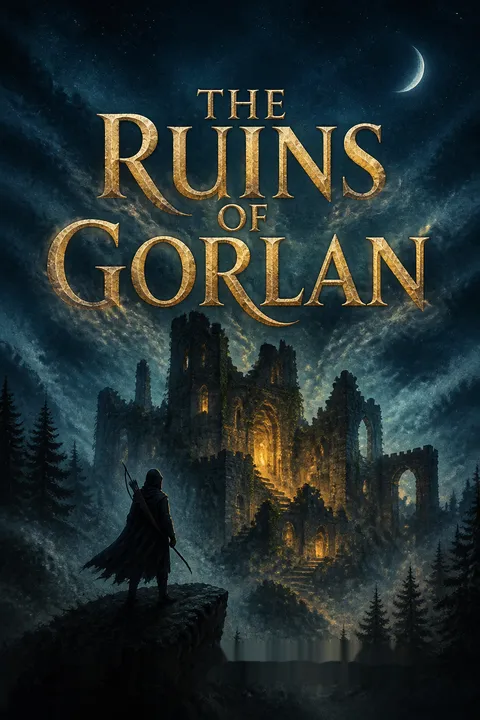


Plot Summary
Prologue
Fifteen years after his failed rebellion, Morgarath9 broods in the barren mountains where he was exiled. He had once nearly taken Araluen's throne, until a Ranger led cavalry across a hidden ford and routed his Wargal18 army.
Now Morgarath9 means to return, first weakening the kingdom through confusion and the deaths of its leaders. He has gathered new allies in the mountains: two ancient creatures called Kalkara,19 whose skill at hunting people may make them more dangerous than the mind-controlled Wargals.18
The prologue makes the coming conflict personal before Will enters the story. Morgarath is not simply a distant monster: he remembers the fertile lands he lost and plans his return around old injuries, turning revenge into military strategy. His Wargals represent force made obedient, while the Kalkara add a more selective kind of violence, aimed at the people who hold the kingdom together. The contrast also prepares readers for a story in which survival depends less on brute strength than on intelligence, observation, and the ability to anticipate an enemy.
The Choosing Day
At fifteen, Will1 has built his future around becoming a knight, imagining his unknown father17 as a heroic warrior who died fighting Morgarath.9 Choosing Day offers the castle's orphaned wards apprenticeships, and his friends find places that suit them: Horace3 enters Battleschool, Alyss6 joins the Diplomatic Service, George8 becomes a scribe, and Jenny7 enters the kitchens.
Will1 asks for Battleschool, but his small frame rules him out; the Horsemaster also refuses him, and no other Craftmaster takes him. The rejection cuts deeper because Will1 has no family name or history to claim.
Halt,2 the silent Ranger watching from the room, gives Baron Arald4 a note about Will's1 potential. The Baron4 postpones his decision, leaving Will1 without a place or an answer.
Choosing Day turns an ordinary vocational ceremony into a test of whether Will can separate identity from aspiration. He has made knighthood carry two burdens: it is a career he wants, and a way to become the son he imagines his father would recognize. The other wards' placements show that belonging can be practical and specific, while Will's refusals make his lack of physical size seem like a verdict on his whole worth. His namelessness intensifies that injury. Halt's note interrupts the apparent finality, but it offers no comfort yet. Will must wait inside uncertainty before he can learn that a different craft may fit him better than the heroic picture he inherited from his own imagination.
The Paper in the Dark
Unable to bear the thought that the note decides his future without his knowledge, Will1 climbs the castle tower at night and slips into the Baron's4 office. Halt2 catches him before he can read it.
Rather than deny his trespass, Will1 accepts responsibility, and Arald4 reveals the note: Halt2 believes the boy1 could be trained as a Ranger and will take him as an apprentice. The Baron4 explains that Rangers serve as the kingdom's eyes and ears, using concealment, investigation, and fieldcraft rather than the knight's armor and sword.
Will1 reports to Halt's2 cottage the next morning, where his first lesson is a day's worth of chores. While working, he learns that Halt2 selected him not just for climbing and stealth, but because he admitted stealing cakes instead of lying about it.
The break-in repeats Will's defining impulse, curiosity, but changes its moral meaning. In the past, climbing has been a way to escape embarrassment or satisfy appetite; here he risks punishment because he cannot tolerate being excluded from his own future. His refusal to invent an excuse matters more than the trespass itself. Halt is assessing not obedience alone but whether Will can be trusted with information and responsibility. The apprenticeship therefore begins with a paradox: Will is chosen for qualities he already possesses, yet must learn to discipline them. The domestic chores also strip the Ranger role of glamour, establishing that competence grows through attention to mundane work as surely as through daring exploits.
A Horse His Size
Halt2 introduces Will1 to a recurve bow, explaining that it gives a smaller archer useful power without requiring the strength of a full longbow. Will1 fires too quickly, bruises his arm with the string, and has to learn a safer technique before he can improve. At Old Bob's11 horse yard, he meets Tug, a shaggy pony that looks nothing like the grand warhorse in his dreams.
When Tug dodges his attempts to catch him, Will1 stops chasing and uses an apple to win the pony's trust. He then tries to mount without asking and is thrown into the dirt. After learning the Ranger horse's required request, Will1 climbs aboard, rides Tug at speed, and begins caring for the animal who will carry him on patrol.
Tug gives Will a living counterexample to the hierarchy he has absorbed from the castle. The pony is not impressive by conventional standards, yet proves fast, enduring, and intelligent; Will's first success comes when he stops trying to impose his will and learns how Tug responds. That lesson parallels the bow training. Speed without technique hurts him, just as physical force cannot secure a partnership. Halt's instruction is deliberately experiential: Will must feel the bowstring strike and the dirt meet his back before he understands patience. His emerging competence comes from adjusting to the world rather than insisting the world conform to his heroic expectations.
Harvest Day's Broken Truce
Months into training, Will1 arrives at the Harvest Day fair hoping to enjoy time with his former wardmates. Horace,3 exhausted by Battleschool and by the secret torment of three older cadets,12 arrives late and interprets the others' laughter and reserved pies as a deliberate slight. His hurt hardens into aggression: he mocks Will's1 Ranger cloak, shoves George,8 and insults Tug.
Will1 challenges him to ride the pony, knowing Horace3 has not asked permission. Tug throws Horace3 into the dirt, and Will's1 teasing sparks the bigger boy's3 rage. When Horace3 grabs a branch and threatens the pony, Will1 tackles him. Sir Rodney5 breaks up their fight and orders them to shake hands, but their resentment remains unresolved.
The fair brings together two boys whose vulnerabilities have taken opposite forms. Horace experiences institutional humiliation but cannot name it, so he converts shame into contempt and attacks the people who once knew him. Will, newly confident in his training, is less willing to retreat, yet still provokes Horace with a joke when a calmer response might have ended the encounter. Tug's refusal to carry an uninvited rider becomes a comic consequence with emotional force: Horace is physically exposed just when he is trying to perform authority. The fight does not reconcile them. It reveals how easily unspoken injury can be mistaken for insult, leaving a fragile truce imposed by adults rather than chosen by the boys.
The Boar Between Them
In winter, Halt2 and Will1 track a huge wild boar that has damaged farms and injured a villager. Baron Arald4 organizes a hunt, and Horace3 joins the party. When the first boar is killed, the hunters gather around it, leaving a second, larger animal to emerge unnoticed. Horace3 turns to meet its charge, placing himself between the boar and Will,1 but slips on the snow and loses his spear.
Will1 fires arrows to draw the beast away, then faces it with his knife as Tug charges in and kicks the boar off balance. Halt2 arrives in time to kill it with a shot through the heart. Shaken, Will1 thanks Horace3 for his courage, and the two boys make peace, with Horace3 pledging his friendship.
Their reconciliation is made credible because neither boy begins it as a calculated gesture. Horace moves first, instinctively placing himself in danger; Will answers by risking himself to pull the boar's attention away. Their actions contradict the hostile stories each has been telling himself about the other. Horace is not merely a bully, and Will is not merely a smaller rival waiting to score a point. The danger interrupts the social contest long enough for each to see the other's character in action. The scene also defines courage as reciprocal rather than solitary: Will's intervention matters, but it depends on Horace's initial protection and Halt's final shot.
The Bullies' Reckoning
The village exaggerates Will's1 part in the boar hunt, and Alda, Bryn, and Jerome12 blame Horace3 for supposedly letting a Ranger apprentice outshine Battleschool. They trap Horace,3 bind him inside a sack, and beat him with canes. When they leave to attack Will,1 Horace3 forces himself back to his feet and reaches the meadow in time to warn him.
The three cadets12 ambush Will,1 but he evades the first sack before their canes bring him down. Halt2 appears and disarms two bullies12 with arrows through their canes. He then forces the attackers to face Horace3 one at a time. After Horace3 defeats them, Sir Rodney5 investigates the abuse and expels all three12 from the castle and village.
The confrontation converts Horace's promise of friendship into costly action. He has no assurance that Will will even know what he endured, yet he interrupts his own beating to prevent another one. That choice reveals a sturdier identity beneath his earlier need to dominate: he can accept pain without making someone else pay for it. Halt's intervention is forceful, but it also exposes a failure of institutional oversight. The bullies have disguised cruelty as tradition, while Horace assumes he must endure it to belong. Their expulsion restores safety, but the deeper change is that Horace can now participate in Battleschool without privately fighting a second, unofficial war.
The Gathering Goes Dark
Halt2 takes Will1 to the annual Ranger Gathering, where apprentices are assessed and Rangers exchange intelligence. On the approach, Halt's former apprentice10 Gilan10 tries to ambush them as a test, but Will1 spots him and startles him with an arrow into a nearby tree.
The camp is already unsettled by reports that Wargals18 have crossed out of the mountains and two senior commanders have died under suspicious circumstances. Halt2 explains that Morgarath9 may be using two Kalkara,19 terrifying creatures that hunt chosen victims and can paralyze anyone who meets their gaze.
The Gathering is canceled as the Rangers mobilize. Halt,2 Gilan,10 and Will1 are assigned to find the Kalkara19 before they can kill another leader, despite Will's1 youth and limited experience.
The false ambush with Gilan functions as a threshold test: Will proves that training has become usable judgment, not just a collection of lessons. The news that follows widens the scale of the story without displacing its human focus. Morgarath's strategy attacks the kingdom's ability to act by targeting commanders, while the Rangers must work with incomplete reports and uncertain motives. Will's fear is rational, not a defect to be overcome through bravado. Halt's decision to take him reflects a harsh wartime ethic: membership in the Corps brings obligations even when the member is still learning. The canceled assessment signals that ordinary measures of progress have been overtaken by a crisis that will test him in the field.
Tracks Across the Plain
Halt,2 Gilan,10 and Will1 ride toward the desolate Solitary Plain, where the Kalkara19 are believed to hide near the eerie Stone Flutes. They cross the wind-scoured grass without lighting fires, since a glow could expose them to the creatures or their allies. A Plainsman appears and flees before they can question him.
That night, the Rangers hear the Kalkara19 howling as they set out after a new target. At dawn, Halt2 and Gilan10 divide the pursuit, following separate trails to make sure the pair do not double back. The monsters eventually turn toward the old Gorlan ruins, Morgarath's9 former stronghold. Halt2 sends Will1 ahead on two Ranger horses to bring Baron Arald4 and Sir Rodney5 to the ruins.
The Plain makes uncertainty physical. Its lack of landmarks and constant sound undermine the very skills the Rangers rely on, while the fugitive Plainsman becomes a reminder that information is never neutral in a war. The Kalkara's paired trails force the Rangers to divide their attention, transforming pursuit into a calculation of risk. Halt's choice to send Will away is both tactical and protective: he trusts the apprentice to deliver help, but also tries to keep him clear of the creatures. That trust does not remove danger. It gives Will a distinct responsibility, requiring him to carry knowledge across distance rather than simply follow a more experienced Ranger.
The Apprentice Rides Alone
Will1 sets out with Tug and Gilan's horse Blaze, alternating mounts so each can keep moving at a steady canter. The exhausting ride leaves him alone with every doubt Halt's2 presence usually quiets: he fears taking a wrong route, arriving too late, or meeting the Kalkara19 before reaching Redmont. He reaches the castle tired but delivers Halt's2 warning to Arald4 and Rodney.5
Will1 argues that the creatures may be drawing Halt2 toward an ambush at Gorlan, and the two leaders take his reasoning seriously. They prepare weapons and extra horses, order more knights to follow, and set out with Will.1 Arald4 offers him time to sleep, but Will1 insists on returning because Halt2 is his master and may be in danger.
The ride marks Will's first sustained responsibility without Halt nearby to correct or reassure him. His fear does not disappear; he manages it by following the route, resting the horses, and delivering the information accurately. More importantly, he contributes an interpretation rather than merely carrying a message. By recognizing that the hunters may be leading Halt into a trap, he changes the adults' plan. Arald's willingness to listen marks a shift in how Will is regarded: his judgment now has practical consequences. His decision to ride back is not a bid for glory but an expression of attachment and duty, grounded in the relationship built through months of training.
Flames at Gorlan
At Gorlan's ruined walls, Arald4 and Rodney5 find one Kalkara19 dying beside a bonfire, its body pierced by Halt's2 arrows and finished by the knights' lances. The second creature19 has cornered Halt2 inside the ruins, wounded him, and broken his bow. When Halt2 wounds it with a throwing knife, the Kalkara19 turns its paralyzing gaze on Rodney,5 leaving Arald4 injured and Halt2 unconscious.
Will1 spots a discarded torch, coats an arrowhead in its burning pitch, and shoots the creature. Fire catches the Kalkara's matted hair and consumes it. The surviving men tend to their wounds and wait for Gilan,10 who arrives the next day. The two monsters19 are dead, but Morgarath9 is still gathering forces, so the kingdom's preparations for war continue.
The climax pays off the story's practical lessons rather than granting Will a sudden transformation into a conventional warrior. His small bow cannot pierce the Kalkara's armor, and he understands that; instead, he recalls the creature's vulnerability to fire and adapts the available materials into a weapon. Observation, patience, and judgment succeed where direct force has failed. The rescue is also collective. Halt's arrows weaken one creature, the knights finish it, and Will finds the means to stop the other when the experienced men are incapacitated. Their victory is real but limited: killing the assassins does not erase the political crisis they were sent to exploit.
The Ranger's Own Choice
Back at Redmont, Will1 joins the continuing work of preparing the fief for war. At an audience before the Baron's4 court, Arald4 publicly credits him with courage and initiative, then offers him the chance to transfer into Battleschool. Sir Rodney5 admits that he misjudged Will,1 and the knights present a sword and shield bearing a boar emblem.
For a moment, Will1 faces the future he had wanted since childhood. He thinks instead of his training, his work with Tug, and the satisfaction of earning Halt's2 approval. Will1 declines the offer and chooses to remain a Ranger. At the village inn, he has already reunited with his friends; Horace's3 respect and Alyss's6 affection make clear that he belongs among them without needing to become a knight.
The public offer gives Will a genuine choice, not a consolation prize. He is no longer rejecting Battleschool because its gate is closed; he can enter, and the community now recognizes his worth in its own terms. That difference lets his decision express desire rather than resignation. The sword and shield retain emotional force because they embody the identity he constructed around his unknown father. Yet Will has acquired another source of self-knowledge through practice, mentorship, and friendship. His choice does not erase his old ambition; it shows that a person can honor a former dream without letting it dictate the rest of his life.
Epilogue
After the court ceremony, Halt2 gives Will1 a bronze oak-leaf pendant, the apprentice Rangers' emblem. Will1 admits that refusing knighthood leaves him wondering whether he has disappointed his father.17 Halt2 reveals that Will's father,17 Daniel,17 was a farmer's son and a sergeant, not a knight.
At Hackham Heath, Daniel17 defended a wounded stranger from the Wargals18 with a spear and then a sword, saving Halt2 at the cost of his own life. He had asked Halt2 to care for his wife and unborn child.1 Will's mother17 died after giving birth, and Halt2 arranged for the baby1 to be raised at Redmont. Will1 understands that his father's17 courage mattered more than his rank, and settles into his choice.
The revelation corrects the heroic story Will invented without stripping it of meaning. Daniel was not a knight, but his conduct embodied the courage and protection Will had associated with knighthood. The correction shifts honor away from status and toward action, allowing Will to recognize his father's example without copying the career he imagined for him. Halt's concealment of their connection also gains emotional weight: it protected Will from being defined by a Ranger's patronage before he could develop his own abilities. The pendant makes that inheritance tangible, but the final peace comes from a truer account of his past, not from a title.
Analysis
The novel's central problem is not whether Will1 can become strong enough to resemble a knight. It is whether he can build a self that does not depend on resemblance. His childhood fantasy turns his unknown father17 into a template, and Battleschool becomes a way to prove that he belongs to that imagined lineage. The story steadily replaces inheritance as performance with inheritance as conduct: Will's1 abilities emerge through attention, honesty, and adaptation, while Daniel's17 true heroism is defined by what he did for a stranger, not by rank.
The parallel story of Horace3 complicates any simple opposition between the boys. Will1 is physically slight but socially quick; Horace3 is physically powerful but emotionally isolated. Both mistake vulnerability for a reason to defend themselves through pride. Their friendship begins when each sees the other act under danger, not when either wins an argument. The bullying plot then exposes the cost of treating cruelty as a normal rite of passage. Horace's3 rescue of Will1 becomes meaningful because it reverses the logic of the institution that had taught him to endure abuse in silence.
Halt's2 teaching offers a different model of authority. He is demanding, but his tests have purpose: he wants Will1 to notice consequences, tell the truth, and make sound decisions without leaning forever on a mentor. The final battle rewards exactly those habits. Will1 does not overpower the Kalkara;19 he combines prior knowledge with quick improvisation when the adults are helpless. His heroism is therefore neither innate magic nor a rejection of fear. It is the ability to act intelligently while afraid.
The book also distinguishes belonging from public acclaim. The village's exaggerated version of the boar hunt gives Will1 fame he cannot comfortably claim, while his quieter recognition among the Rangers, his friends, and the Baron's4 court reflects what he actually did. Choosing the Ranger path turns recognition into a choice rather than a prize. The bronze leaf and the truth about Daniel17 let Will1 keep the courage he admired in his father17 while releasing the status he had invented around him.
Review Summary
The Ruins of Gorlan receives mostly positive reviews, praised for its engaging characters, world-building, and themes of friendship and growth. Readers appreciate the well-developed mentor-apprentice relationship between Will and Halt. Some criticize the writing style and character depth, while others find it a perfect entry point for young fantasy readers. The series is often compared to other popular fantasy franchises. Many reviewers express nostalgia and a desire to continue the series, despite some noting it as more suitable for younger audiences.
People Also Read


Characters
Will
The watchful apprenticeA small, quick, curious orphan raised at Castle Redmont, Will longs to become a knight partly because he imagines his unknown father17 was one. He is agile, observant, and resourceful, but his impatience can make him act before he understands the situation. His wit helps him defend himself socially, while his instinct to notice details makes him suited to Ranger work. Will wants recognition, yet he is also capable of admitting fault and learning from correction. His relationships with Halt2, Tug, and the other wards give him different kinds of belonging: earned respect, mutual trust, and the companionship he has known since childhood.
Halt
The severe Ranger mentorRedmont's Ranger is quiet, watchful, and difficult to read. Halt teaches through discipline, practical tests, and dry understatement, expecting Will1 to observe before asking for answers. His reserve is not indifference; he takes responsibility for his apprentice's1 growth and safety while respecting the boy's1 capacity to act. Halt values honesty, preparation, and competence more than ceremony or praise. His bond with Will1 develops through daily work, shared danger, and small signs of approval that carry unusual weight precisely because Halt gives them sparingly.
Horace
The Battleschool recruitA strong, athletic ward with a natural gift for swordplay, Horace enters Battleschool expecting the path to knighthood to bring admiration. Instead, its punishing routines and the cruelty of older cadets12 test his pride and resilience. He can be boastful and quick to take offense, especially when he feels excluded, but he is not defined by aggression. His relationship with Will1 begins in rivalry, shaped by old teasing and mismatched insecurities. Horace's sense of honor is more instinctive than articulate: he notices when someone is in danger and is willing to act before he has found the words to explain himself.
Baron Arald
Redmont's generous rulerThe broad, good-humored Baron takes responsibility for the castle wards and gives them a chance to enter the crafts that sustain his fief. He balances authority with a humane instinct, often noticing when ceremony is making a difficult moment worse. Arald respects the judgment of his advisers and is willing to reconsider his own decisions when new evidence appears. His relationship with Will1 is shaped by the boy's1 status as a ward and by his own sense of duty to those who serve Redmont.
Sir Rodney
Redmont's Battleschool masterThe Battlemaster leads Redmont's warrior training and values discipline, endurance, and sound judgment. He initially assesses recruits through their physical suitability, but he is attentive to unusual ability and willing to acknowledge when his first impression was incomplete. His authority gives him responsibility for both the training and welfare of the cadets. Rodney's respect for courage is practical rather than theatrical, and his close working relationship with Arald4 places him at the center of Redmont's military response.
Alyss
The poised young diplomatAlyss is Will's1 oldest companion among the wards, a tall, composed young woman already marked by tact and social intelligence. She notices other people's discomfort and often protects them without drawing attention to her kindness. Her place in the Diplomatic Service suits her ability to read a room and choose her words carefully. Alyss is neither distant nor easily flustered; her reserve is a form of self-command, not lack of feeling. She shares a long history with Will1 and understands the insecurities that he rarely admits.
Jenny
The cheerful kitchen apprenticeWarm, sociable, and devoted to cooking, Jenny brings ease to the ward group without overlooking its tensions. She is eager to learn from Master Chubb and takes genuine pleasure in feeding people, measuring success by their enjoyment as much as by praise. Her optimism is not naïveté: she tries to draw Horace3 into the Harvest Day gathering and is hurt when he lashes out. Jenny's practical generosity makes her a dependable friend and a natural center of the group's shared life.
George
The aspiring scribeThin, studious, and fascinated by rules, George tends to analyze a problem from every side. Stage fright initially makes him struggle to speak before the Baron4, but his talent for writing earns him a place in Scribe School. He is sincere and principled, though his growing confidence can make him long-winded. George's careful reasoning contrasts with Will's1 quick improvisation and Horace's3 physical directness, giving the ward group a more reflective voice.
Morgarath
The exiled rebel lordOnce Baron of Gorlan, Morgarath is a calculating enemy who has spent fifteen years in exile after failing to seize Araluen's throne. His intelligence and force of will let him dominate the Wargals18, while his bitterness turns past defeat into a continuing motive for revenge. He does not rely on strength alone; he seeks confusion, exploits weaknesses in the kingdom's leadership, and recruits frightening allies. Morgarath's long absence has made him seem almost legendary, but the threat he poses is grounded in deliberate planning.
Gilan
Halt's former apprenticeA tall, skilled Ranger, Gilan once trained under Halt2 and retains the ease of someone who knows his former mentor2 well. He is good-humored and confident, particularly in stealth, but takes the danger of the Kalkara19 seriously. His relationship with Halt2 combines professional respect with familiar teasing. Gilan's welcome of Will1 gives the young apprentice1 a glimpse of the close bonds that can form within the Ranger Corps.
Old Bob
The Ranger horse trainerOld Bob breeds and trains the small, sturdy horses used by Rangers. His untidy appearance disguises sharp eyes and deep expertise. He treats Halt2 without deference and speaks to Will1 with a teasing warmth that puts the boy1 at ease. Bob understands that a good horse is judged by endurance and temperament, not appearance, and helps Will1 learn the care that makes a working partnership possible.
Alda, Bryn, and Jerome
The cruel older cadetsThese three second-year Battleschool cadets use seniority to intimidate younger recruits. Alda leads with confidence and cruelty, while Bryn and Jerome reinforce his attacks. They disguise their abuse as accepted training, exploiting Horace's3 unfamiliarity with the school's rules and his reluctance to complain. Their behavior reveals how authority can be misused when an institution's culture is left unexamined.
Salt Peter
The frightened farmerA talkative farmer from beyond Willowtree Creek, Salt Peter has been tracking a dangerous wild boar that has harmed livestock and people. Nervous around armed strangers, he is more comic than calculating, but his report brings Halt2 and Will1 into the hunt that tests their growing skills.
Crowley
The Ranger Corps commanderCrowley leads the Ranger Corps and oversees the exchange of intelligence at the annual Gathering. He must coordinate the Rangers' response to uncertain reports while the kingdom prepares its forces. Although he appears mainly through the decisions relayed by Halt2, his role shows the scale of the organization and the difficulty of responding quickly to a threat spread across many fiefs.
Lord Northolt
The former army commanderNortholt once served as the kingdom's supreme military commander and helped rally the barons during the earlier conflict with Morgarath9. His reputation gives weight to the Rangers' concerns about threats against Araluen's leadership.
Lord Lorriac
The cavalry commanderA leading commander of the King's heavy cavalry, Lorriac is valued for his military judgment and experience. His standing among the kingdom's officers makes him an important figure in the Rangers' assessment of the danger facing Araluen.
Daniel
Will's unknown fatherDaniel is a farmer's son who serves as a sergeant in Araluen's army. He is brave, loyal to his comrades, and guided by an instinct to protect someone in immediate danger. Will1 grows up with no confirmed knowledge of him, making Daniel an imagined figure as well as a real person whose choices shape the boy's1 understanding of courage.
Wargals
Morgarath's bound armyThe Wargals are ancient, powerful creatures from the mountains, with limited speech and simple minds that make them vulnerable to Morgarath's9 control. They form the brute force behind his military plans. Their fear of horses played a part in the earlier defeat that drove Morgarath9 into exile.
The Kalkara
The mountain assassinsThe Kalkara are rare, powerful creatures that Morgarath9 recruits as hunters. Their thick, matted covering protects them from ordinary weapons, and their terrifying gaze can leave a person helpless with fear. They are intelligent enough to stalk a target but single-minded once assigned one. Their presence changes the threat from open warfare to the deliberate killing of individual leaders.
Plot Devices
Choosing Day
A future assigned by meritThe annual ceremony gives the castle wards, all fifteen years old, a chance to apprentice in one of the crafts that serve Redmont. It establishes each young character's hopes and abilities while forcing them to face the limits of their social position. For Will1, the ceremony makes his lack of a surname and small stature newly painful: he is refused the warrior path he has imagined. The delayed decision after Halt's2 intervention turns the ceremony into the story's inciting mechanism, opening a future Will1 had not considered.
Ranger fieldcraft
Skill through close observationRangers rely on stealth, tracking, accurate archery, and careful reading of people and terrain rather than heavy armor. Their mottled cloaks break up the wearer's outline, while their training teaches them to avoid unnecessary movement and act on evidence. Halt2 uses practical exercises to develop Will's1 judgment, from crossing the castle yard unseen to tracking animals and shooting under pressure. These skills shape the action throughout the story and allow Will1 to contribute without matching a knight's size or strength.
Ranger horses
Trust made visibleThe Rangers' compact horses are bred for endurance and trained to respond to individual riders. A first-time rider must ask permission before mounting, preventing the horses from being stolen. Tug's resistance teaches Will1 to notice the animal's intelligence rather than treat it as equipment. Their partnership then gives Will1 a dependable companion in training and makes it possible for him to travel quickly across the kingdom. The horses embody the story's recurring idea that effective strength comes from cooperation, not domination.
The Kalkara's weakness
Fire defeats armored hideThe Kalkara's19 coat is matted into a hard, protective shell, making ordinary arrows ineffective. Their only known vulnerability is fire, but approaching them with an open flame risks revealing the attacker. This weakness is explained before the final battle, giving Will1 information he can apply under pressure. When the knights and Halt2 are incapacitated, Will1 improvises by coating an arrowhead with burning pitch. The device makes the climax depend on remembered knowledge and adaptation rather than a sudden increase in physical power.
The bronze oak leaf
A badge of belongingThe oak leaf is the Rangers' emblem, worn in bronze by apprentices and silver by trained members. Halt2 gives Will1 the bronze version after the court ceremony, making the badge a quiet counterpoint to the sword and shield offered by the Baron4. It represents a form of recognition based on training and chosen affiliation rather than family lineage or noble status. Its meaning deepens when Will1 learns more about the father17 he has spent his life imagining.
FAQ
Synopsis & Basic Details
What is The Ruins of Gorlan about?
- Orphan Will finds purpose: The story follows Will, a small orphan, who unexpectedly becomes a Ranger's apprentice after failing to be chosen for Battleschool.
- Kingdom faces a threat: As Will trains, the exiled Morgarath plots his return, gathering forces of Wargals and the terrifying Kalkara, threatening the kingdom of Araluen.
- Will discovers his skills: Will learns the unique skills of a Ranger, including archery, stealth, and tracking, preparing him to defend the kingdom against the looming darkness.
Why should I read The Ruins of Gorlan?
- Classic coming-of-age: The book offers a compelling coming-of-age story with a relatable protagonist who overcomes adversity and discovers his hidden potential.
- Engaging fantasy adventure: Readers will enjoy the blend of action, adventure, and fantasy elements, including unique creatures and a well-developed world.
- Themes of friendship and loyalty: The story explores the importance of friendship, loyalty, and mentorship, providing heartwarming and inspiring moments.
What is the background of The Ruins of Gorlan?
- Medieval-inspired setting: The story is set in a medieval-inspired kingdom with castles, knights, and feudal lords, creating a familiar yet fantastical world.
- Ranger Corps as intelligence: The Rangers serve as a specialized intelligence and law enforcement force, maintaining order and gathering information throughout the kingdom.
- Historical conflict with Morgarath: The kingdom has a history of conflict with Morgarath, a former baron who rebelled against the crown, adding depth and tension to the present threat.
What are the most memorable quotes in The Ruins of Gorlan?
- Halt's training philosophy: "A Ranger's principal weapons are stealth and silence and his ability to avoid being seen," encapsulates the core values of the Ranger Corps and their unique approach to combat.
- Will's father's legacy: "His mother died in childbirth. His father died a hero. Please care for him. His name is Will," defines Will's mysterious origins and the weight of expectation he carries.
- Baron Arald's encouragement: "You have other talents," highlights Will's unique abilities and foreshadows his suitability for the Ranger Corps, despite his initial desire for Battleschool.
What writing style, narrative choices, and literary techniques does John Flanagan use?
- Third-person limited perspective: The story is told from Will's point of view, allowing readers to experience his thoughts, feelings, and growth throughout the narrative.
- Clear and accessible prose: Flanagan's writing style is straightforward and easy to understand, making the book accessible to a wide range of readers.
- Humor and wit: The story incorporates humor through witty dialogue and situational comedy, providing lighthearted moments amidst the serious themes.
Hidden Details & Subtle Connections
What are some minor details that add significant meaning?
- Will's climbing ability: Will's climbing skills, initially presented as mischievousness, later prove essential for his Ranger training and infiltration, highlighting the value of unconventional talents.
- The fig tree as refuge: The fig tree in the castle yard serves as Will's sanctuary, foreshadowing his need for solitude and his connection to nature, both crucial aspects of a Ranger's life.
- Halt's Hibernian accent: Halt's subtle Hibernian accent hints at his mysterious background and connection to a different culture, adding to his enigmatic persona.
What are some subtle foreshadowing and callbacks?
- Northolt's death: The seemingly accidental death of Lord Northolt early in the story foreshadows the Kalkara's role as assassins and the danger facing key figures in the kingdom.
- Will's cake theft: Will's past theft of cakes from Master Chubb's kitchen is referenced during the Choosing Day, highlighting his agility and resourcefulness, traits that later make him a good Ranger.
- Horace's bullying: Horace's initial bullying of Will is later contrasted with his act of bravery during the boar hunt, showcasing his character development and eventual friendship with Will.
What are some unexpected character connections?
- Halt and Will's father: The revelation that Halt knew Will's father and was saved by him adds a layer of depth to their relationship, explaining Halt's protectiveness and investment in Will's future.
- Alyss and Lady Pauline: The connection between Alyss and Lady Pauline is more than just mentor/apprentice, they share a similar elegance and grace, hinting at a shared understanding and future collaboration.
- Horace and the bullies: The bullies' actions towards Horace are not random, but a reflection of a deeper power dynamic within the Battleschool, revealing a hidden hierarchy and the pressures faced by new recruits.
Who are the most significant supporting characters?
- Alyss Mainwaring: Alyss's intelligence and diplomatic skills make her a valuable ally and confidante to Will, representing the importance of diplomacy and communication in the kingdom.
- Horace Altman: Horace's transformation from bully to friend highlights the potential for growth and redemption, showcasing the importance of loyalty and courage.
- Jenny Dalby: Jenny's cheerful disposition and culinary skills provide a sense of warmth and normalcy amidst the conflict, reminding readers of the importance of community and simple pleasures.
Psychological, Emotional, & Relational Analysis
What are some unspoken motivations of the characters?
- Halt's guilt and redemption: Halt's dedication to Will stems from a sense of guilt over his inability to save Will's parents, driving him to protect and mentor the young apprentice.
- Horace's need for acceptance: Horace's initial bullying behavior masks a deep-seated need for acceptance and validation, which he later finds through friendship and bravery.
- Baron Arald's paternal feelings: Baron Arald's kindness towards the wards reflects a paternal instinct and a sense of responsibility for the well-being of those under his care, stemming from his own losses and experiences.
What psychological complexities do the characters exhibit?
- Will's imposter syndrome: Will struggles with self-doubt and feelings of inadequacy, questioning his abilities and worthiness as a Ranger, despite his growing skills and accomplishments.
- Halt's emotional guardedness: Halt's stoicism and reluctance to show emotion stem from a past trauma or loss, creating a barrier that Will gradually breaks down through their shared experiences.
- Morgarath's obsessive hatred: Morgarath's exile and thirst for revenge have warped his mind, driving him to extreme measures and blinding him to reason, highlighting the destructive power of hatred.
What are the major emotional turning points?
- Will's Choosing Day rejection: Will's disappointment at being rejected from Battleschool forces him to confront his limitations and consider alternative paths, leading to his acceptance of the Ranger Corps.
- Horace's rescue by Will: Horace's near-death experience during the boar hunt and subsequent rescue by Will forces him to re-evaluate his relationship with Will and acknowledge his own vulnerability.
- Halt revealing Will's father's story: Halt's revelation about Will's father's heroism provides Will with a sense of identity and purpose, solidifying his commitment to the Ranger Corps and honoring his father's legacy.
How do relationship dynamics evolve?
- Will and Halt's mentorship: The relationship between Will and Halt evolves from a formal apprenticeship to a close bond of trust and mutual respect, with Halt becoming a father figure to Will.
- Will and Horace's friendship: The dynamic between Will and Horace transforms from rivalry to genuine friendship, based on shared experiences and mutual respect, highlighting the power of forgiveness and understanding.
- Will and Alyss's unspoken affection: The subtle hints of affection between Will and Alyss suggest a deeper connection that may develop in future installments, adding a layer of romantic tension to the story.
Interpretation & Debate
Which parts of the story remain ambiguous or open-ended?
- Morgarath's ultimate plan: The full extent of Morgarath's plans and his alliance with the Skandians remains unclear, leaving readers to speculate about his long-term goals and the challenges facing the kingdom.
- The nature of the Kalkara's power: The exact nature of the Kalkara's hypnotic gaze and its effects on their victims remains somewhat ambiguous, blurring the line between magic and psychological manipulation.
- The future of Araluen: The ending leaves the kingdom on the brink of war, with the future uncertain and the fate of Araluen hanging in the balance, setting the stage for future conflicts and adventures.
What are some debatable, controversial scenes or moments in The Ruins of Gorlan?
- Halt's treatment of Will: Halt's harsh training methods and occasional lack of empathy may be seen as controversial, raising questions about the ethics of his mentorship and the psychological impact on Will.
- The reliance on violence: The story's reliance on violence as a solution to conflict may be debated, particularly in the context of a young adult audience, raising questions about the glorification of violence and its consequences.
- The portrayal of Morgarath: Morgarath's characterization as a purely evil antagonist may be seen as simplistic, lacking nuance and failing to explore the complexities of his motivations and past experiences.
The Ruins of Gorlan Ending Explained: How It Ends & What It Means
- Will chooses his path: Will's decision to remain a Ranger's apprentice signifies his self-discovery and acceptance of his unique talents, rejecting societal expectations and embracing his true calling.
- The kingdom prepares for war: The ending sets the stage for future conflicts, with the looming threat of Morgarath and the need for Araluen to mobilize its forces, highlighting the ongoing struggle between good and evil.
- A new hero emerges: Will's recognition and acceptance by the kingdom as a Ranger solidifies his role as a protector and a symbol of hope, foreshadowing his future adventures and contributions to the defense of Araluen.
Ranger's Apprentice Series
About the Author
Other books by John Flanagan
Download PDF
Download EPUB
.epub digital book format is ideal for reading ebooks on phones, tablets, and e-readers.








