

Plot Summary
The Thaw Gives Them Away
For weeks, Will has been recovering in a mountain cabin after escaping Skandian captivity and breaking free of warmweed, while Evanlyn has kept them alive through winter. Now water drips from the icicles, the snow softens, and hunters will soon return to the high country. Evanlyn leaves to check their distant snares while Will, still weak, stays behind.
When she fails to return, he follows her tracks and finds horseprints crossing them. The marks lead to a struggle, then to the trail of a rider carrying Evanlyn away. Will knows he cannot overpower an armed captor, but he follows anyway, taking blankets, a bow, and the little strength he has regained.
The thaw is more than a change in weather: it removes the concealment that made the cabin safe and turns recovery into a deadline. Will’s helplessness is physical, but his decision to follow makes it ethical too. Evanlyn once carried him through his worst illness; now he spends his fragile strength trying to repay that care.
Dead Men at Serpent Pass
Elsewhere, Halt and Horace cross the mountains under a forged Gallican dispatch, hoping to reach Will and Evanlyn without alerting Skandia. They find the border post open and its garrison dead, each guard killed by arrows that the attackers retrieved. Halt identifies the remaining shaft as Temujai work. Tracks show that a large force crossed the border, while a small scouting party continued into Skandia.
Horace learns that the Temujai are disciplined horse warriors, not merely raiders, and that their presence could threaten every western kingdom. As they follow the scouts, Tug reacts with unusual alarm to something ahead. Halt cannot explain the horse’s fear, but it sharpens his suspicion that another danger is moving through the forest.
The massacre changes the journey from a rescue mission into a strategic crisis. Halt reads what the dead cannot report, while Horace must revise his simple picture of courage and warfare. Tug’s distress offers a quieter kind of intelligence: the trained animal senses danger before the humans can interpret its tracks.
The Arrow in the Wrist
At the camp, Will sees Evanlyn bound beside a tree and learns that her captors are arguing over whether to kill her. When one man approaches with a sword, Will steps into the open and shoots his crude arrow into the warrior’s exposed wrist. The blow drops the sword, but the other men turn on Will and a second captor moves toward Evanlyn.
A longbow answers from the trees: Halt kills two attackers, while Horace reaches Evanlyn and drives off the man threatening her. Halt and Will embrace after months apart; Horace cuts Evanlyn free. Their reunion is immediate, but the sight of the Temujai scout party leaves Halt worried. He knows their presence is part of a larger movement, not an isolated encounter.
Will’s improvised shot matters because it is precise rather than powerful: he survives by applying trained judgment despite exhaustion and inadequate equipment. The rescue restores his bonds with Halt and Horace, but it also ends the illusion that the group can simply slip home unnoticed. Relief arrives carrying a new obligation.
A Prisoner Leads Them East
As the reunited friends head toward the border, Erak, a senior Skandian war leader, intercepts them with armed men. He suspects Halt’s party killed the guards at Serpent Pass, but Halt shows him that their tracks belong to a different force and identifies their captive as a Temujai scout. To discover what the easterners are doing, Halt lets the prisoner escape under a staged lapse in the guard.
He and Erak follow the man’s trail through the mountains. From a ridge, they see a vast encampment and estimate five to six thousand Temujai combatants, with a much larger support train. The numbers destroy Erak’s plan to hold the border fort. He and Halt turn back toward Hallasholm to warn Ragnak.
Erak’s first response is suspicion, but evidence gives way to cooperation. The staged escape makes intelligence gathering depend on controlled risk rather than force. The enormous camp also reframes the Skandians’ reputation for individual bravery: courage alone cannot answer an enemy organized at this scale.
An Enemy Becomes Adviser
Erak brings the warning to Ragnak, Skandia’s Oberjarl, and secures a place for Halt as a tactical adviser despite Ragnak’s hatred of Araluens. Halt argues that the Temujai may want Skandian ships, which would let them carry their campaign across the sea. He urges the council to avoid an open field battle and instead slow the invaders with repeated raids.
Skandian parties begin burning supply wagons, scattering horses, and striking the column from both forest and coast. The attacks force the Temujai to post guards and move more slowly. Halt also convinces the jarls to choose a narrow coastal position for the eventual defense, where the enemy cannot use its numbers across a broad front.
Halt’s authority comes from useful knowledge, not rank. Ragnak accepts an outsider’s counsel because the stakes make pride costly, while Erak supplies the political trust Halt lacks. The raids turn Skandian habits of coastal attack into a deliberate military system, showing that tradition can be adapted rather than discarded.
Evanlyn Boards Wolf Fang
Feeling sidelined while Will trains and Horace prepares for battle, Evanlyn notices Slagor, a wolfship captain, behaving suspiciously and follows him to the docks. She slips aboard his ship, Wolf Fang, and hides beneath its canvas-covered prow. Slagor puts to sea without seeing her. From her hiding place, Evanlyn overhears him meet the Temujai commander Haz’kam and arrange to ferry 150 enemy soldiers behind the Skandian defenses.
The scheme would let them attack Hallasholm from the rear. After the ship returns, Evanlyn reaches the others exhausted and thirsty, but with a warning that changes the defense plan. Horace is relieved to find her safe; Will focuses first on what the betrayal means for the coming battle.
Evanlyn’s apparent idleness is partly exclusion: the men’s specialized roles leave her unsure where she belongs. Her decision to investigate converts that frustration into consequential agency. Yet her success depends on accepting real danger without the protection the others assume she needs, complicating the group’s ideas about who gets to serve.
A Vow Put on Hold
Slagor counters Evanlyn’s warning by accusing her of being Princess Cassandra, King Duncan’s daughter, and presenting a beaten Araluen slave as his witness. Evanlyn stops the woman from being tortured again by admitting who she is.
Ragnak’s old vow against Duncan’s family makes her life immediately precarious, but Erak insists that he has promised to protect her. Halt finds a narrow compromise: Ragnak will postpone acting on his vow until after the Temujai threat is settled.
With time bought, Halt names Fallkork Island and the expected rendezvous between Slagor’s ships and the enemy. Ragnak orders Erak to investigate, while Slagor is kept under guard. The political conflict remains unresolved, but the Skandians can now prepare for the invasion without splitting into factions.
Evanlyn’s confession prevents another person from suffering for her secrecy, but it exposes how little control she has over the consequences of her identity. Halt does not dissolve the vow; he changes its timing. That imperfect solution reflects wartime politics, where survival often requires postponing conflicts that cannot yet be reconciled.
Three Ships to Sand Creek
Erak sails with Halt and Borsa to Sand Creek Bay, where three squadrons of Temujai wait to board Skandian ships. Their commander expects Slagor, but Erak bluffs that suspicion at Hallasholm delayed him. When the Temujai hesitate, Erak offers to ferry them in small boats.
He draws them aboard his ships, then steers through the violent Vulture Narrows, where the land-bound horsemen become desperately seasick. At Fallkork Island, Erak sends them ashore and leaves them there, removing 150 fighters from the invasion without sacrificing a Skandian crew.
Their commander’s recognition of Slagor confirms the captain’s treason. Back in Hallasholm, the proof gives Ragnak grounds to detain Slagor and lets the defenders concentrate on the approaching army.
Erak defeats the plot by using a domain where the Temujai have no advantage: the sea. His bluff depends on understanding both the enemy’s expectations and their physical vulnerability. The episode also gives Borsa a witness to the treason, turning suspicion into public proof rather than a private accusation.
A Hundred Bows Awaken
Halt and Will recruit a hundred slaves who know how to use bows, but the men refuse to defend the Skandians who enslaved them. Halt persuades Ragnak that they must be promised freedom if they fight. Once Erak secures that promise, Will organizes the archers into small groups and trains them to shoot at set elevations on command. Erak supplies bows and arrows he had hoarded from a captured ship.
Will struggles to balance directing volleys with watching enemy marksmen, so Evanlyn volunteers to monitor the line and call when the archers are ready. Horace builds a shield drill to protect them between shots. The arrangement gives each young companion a concrete role and turns unwilling captives into defenders with a stake in survival.
The archers’ condition changes the moral structure of the defense: the Skandians must offer freedom before they can ask for loyalty. Will’s command becomes effective because he teaches a repeatable system, not because he demands obedience. Evanlyn and Horace contribute complementary skills, making cooperation more important than individual heroics.
The First Trap Springs
The Temujai reach the narrow coastal defenses and begin with a feigned attack. A small force lures nearly a hundred Skandians away from their earthworks, while another body circles around to trap them. Halt has anticipated the maneuver. At his signal, the exposed warriors form a shield wall instead of chasing the retreating riders, and Skandian axmen burst from concealed positions in the woods to hit the encircling cavalry from behind.
The Temujai lose heavily and retreat. Their commander, Haz’kam, recognizes that the Skandians are not fighting in their usual scattered fashion and suspects that an outsider has taught them. The first defense holds, but the Temujai now know they face a plan, not the disorganized enemy they expected.
The first victory depends on the Skandians resisting their own preferred response. Halt’s plan works only because they accept discipline at the moment when pursuit promises personal glory. Their success unsettles the Temujai, but it also reveals the defenders’ methods, forcing the next phase to become more dangerous.
The Archers Break Formation
Haz’kam sends mounted archers against the Skandian line, alternating arrow fire with quick saber attacks. Will waits until he sees their pattern, then reveals his trained archers. Their first concentrated volleys devastate a Temujai unit, and repeated shots disrupt the cavalry’s speed and formation.
The enemy responds by sending specialist Kaijin marksmen to target Will’s exposed position. Behind Horace’s shield, Will changes the drill, uses irregular individual shots, and keeps the archers firing at the main force while he engages the sharpshooters himself.
The system inflicts severe losses, but the Skandians also take casualties. Haz’kam commits a larger assault at the center and orders a separate force toward the archers, aiming to silence the weapon that has changed the battle.
The archery plan succeeds because Will treats shooting as coordinated timing rather than individual marksmanship. Its strength also creates a conspicuous target. Once Haz’kam adapts, Will must shift from command to personal combat, exposing the human cost behind the neat volleys and forcing his friends to cover the gaps.
The Trench Nearly Falls
Temujai fighters break through the weakened Skandian line and reach the archers’ trench. Will and Horace fight their way toward Evanlyn, who continues directing the remaining bowmen. When the Temujai commander Nit’zak raises his sword over her, Will throws his saxe knife and kills him.
The boys are soon surrounded, but Ragnak arrives in a berserker fury and tears through the attackers. Halt joins the struggle with his longbow, while Erak brings the Skandian left flank against the Temujai from the side.
Their combined pressure breaks the attack. Haz’kam orders a general withdrawal, judging that further losses would endanger the long journey home. Ragnak, mortally wounded, dies before the retreat is complete. The invasion is stopped, but the victory has cost Skandia its Oberjarl.
The climax makes the battle’s systems personal: Will’s knife, Evanlyn’s command, Horace’s sword, and Ragnak’s strength converge in the trench. Ragnak’s death is not an abstract heroic price; it leaves the people he defended with a leadership vacuum. The retreat saves Skandia, but does not erase what the defense has cost.
Erak Takes the High Seat
After Ragnak’s cremation and three days of mourning, the jarls elect Erak as Oberjarl, surprising even him. He keeps Borsa as his administrator and begins settling old disputes, including those created by his tax-collecting duties.
Before leaving for Araluen, Erak agrees to discuss a five-year defense arrangement with Halt: Araluen will station trained archers in Skandia, while both countries promise not to launch another massed attack on the other. The treaty also guarantees the archers safe passage home if relations collapse.
Since Halt cannot officially sign, Evanlyn uses her royal authority to approve the agreement for her father. What began as an alliance of necessity now has a practical framework intended to prevent another invasion or war between former enemies.
Erak’s election turns wartime competence into civic responsibility, while keeping Borsa acknowledges that leadership includes knowing what one cannot do well. The treaty translates trust into reciprocal limits. Neither side abandons its interests; each accepts safeguards because the battle has shown how costly unchecked ambition can become.
Home, Then Apart
Erak sails the four Araluens home aboard Wolfwind, and King Duncan welcomes his daughter, now openly Cassandra, along with her rescuers. Halt refuses to step ashore until his banishment is formally pardoned; Duncan grants the pardon, and Crowley returns his Ranger insignia.
At the celebration, Horace is knighted and appointed to the Royal Guard. Will is offered a prestigious post in the Royal Scouts, but chooses to continue his Ranger apprenticeship instead.
Cassandra tries to restore the closeness she shared with him as Evanlyn, yet royal life has made their difference in status impossible for Will to ignore. He rides south with Halt, awkward and distant, while Horace stays beside Cassandra. The friends are safe at home, but the roles that helped them survive now pull them onto separate paths.
The return resolves the physical journey but not every emotional bond. Will’s choice of the Ranger life is genuine, yet it also lets him retreat from a relationship altered by class and ceremony. Cassandra’s identity has not changed her affection, but it has changed how Will can imagine himself beside her.
Analysis
The novel turns rescue into a widening test of responsibility. Will begins as a weakened apprentice trying to repay Evanlyn’s care; by the battle, he must make his expertise usable to people who have never trained beside him. His growth is not simply a return to former skill. The volley system works because he accepts that leadership means coordinating others and relying on their judgment, including Evanlyn’s and Horace’s.
The Skandians face a parallel transformation. Their courage and individual strength are real, but the Temujai expose the limits of fighting as isolated champions. Halt does not ask them to become Araluens. He adapts their raiding skills into a strategy and gives their fighters a way to use their own strengths. Ragnak’s eventual acceptance of counsel shows that authority can remain forceful while admitting its blind spots.
The freed archers make the defense ethically unstable in a productive way. The Skandians need people they have enslaved, but those people will not fight willingly until freedom becomes part of the bargain. Survival therefore requires more than military efficiency: it requires changing the terms on which others are asked to serve. The treaty proposed afterward extends that lesson between nations. Neither trust nor peace is treated as sentiment alone; both need enforceable conditions.
The ending complicates the satisfaction of rescue. Cassandra comes home, yet her royal status widens the distance Will feels between them. His choice to remain a Ranger is sincere, but it cannot restore the intimacy of their winter together. The book closes its external conflict while leaving its young characters newly aware that returning home does not return them unchanged.
Review Summary
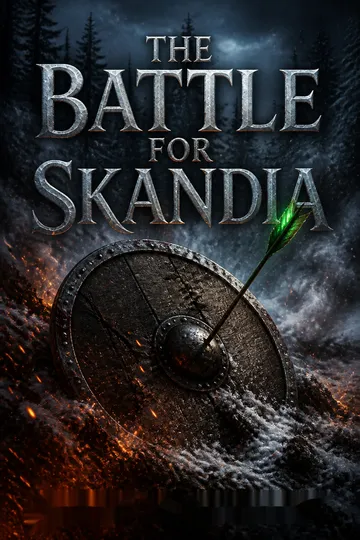
The Battle for Skandia receives overwhelmingly positive reviews, with readers praising its action-packed plot, character development, and realistic battle scenes. Many appreciate the series' consistency and engaging storyline. Some readers note the book's lighter tone and easy readability, making it enjoyable for both young adults and older readers. The strategic elements and character interactions are particularly highlighted. A few criticize the handling of Will's trauma and desire more direction in the overall series. Overall, fans eagerly anticipate the next installment.
People Also Read


Characters
Will
Recovering Ranger apprenticeWill is Halt’s young apprentice, trained to track, shoot, and think beyond the obvious. After captivity and warmweed have weakened him, he must rebuild both his body and confidence. His instinct is to solve problems through observation and skill, but his separation from Evanlyn exposes his fear of being useless and left behind. He is fiercely loyal, especially to those who have cared for him, and can confuse emotional insecurity with a need to prove himself. His growing ability to lead comes from making knowledge teachable, then trusting others to act on it.
Halt
Ranger tacticianHalt is Will’s mentor, an expert tracker and archer whose dry humor often conceals deep attachment. He prefers to observe before acting, weighing terrain, motives, and consequences rather than trusting bravado. His history with the Temujai gives him knowledge the Skandians lack, but he must persuade rather than command them. Halt’s loyalty to Will is profound, and he tries to teach through problems rather than provide ready answers. His restraint is not indifference: it is the discipline that lets him remain useful when fear or anger might otherwise take control.
Horace
Steadfast warrior apprenticeHorace is a Battleschool apprentice and Will’s close friend, physically powerful but more thoughtful than his direct manner suggests. He values fairness, clear duties, and conventional honor, which can put him at odds with Halt’s pragmatic methods. In danger, his training becomes dependable action: he protects others, reads a fight quickly, and contributes practical improvements rather than competing for credit. His uncomplicated loyalty gives the group a steady center. Horace is also learning that courage is not only charging forward; sometimes it means accepting a plan that asks him to wait, shield, or trust someone else’s judgment.
Evanlyn
Resourceful fugitiveEvanlyn is Will’s companion, a quick-thinking young woman who has survived captivity by adapting to whatever the moment requires. She can be compassionate without being sheltered by it: hunger has taught her to trap game, and danger has taught her to act decisively. When the group’s skilled boys become absorbed in their separate tasks, she feels excluded and searches for a way to matter. Her courage is often quiet, expressed through observation and persistence rather than force. She values her friendship with Will and Horace, yet she is also learning to claim agency instead of waiting for others to assign her a role.
Erak
Skandian war leaderErak is a senior Skandian jarl, a formidable sea captain with a blunt sense of humor and a practical code of loyalty. He respects courage and useful competence, even in people his country has reason to distrust. His first instinct is often direct action, but he can recognize when a problem demands strategy, diplomacy, or patience. Erak’s concern for his crew and country coexists with a raider’s appetite for adventure and a hoarder’s eye for valuable goods. He becomes a bridge between Halt’s foreign expertise and Skandian authority because he is willing to stake his own standing on a judgment he believes is right.
Ragnak
Proud OberjarlRagnak rules Skandia as Oberjarl, a forceful warrior whose authority rests on strength, tradition, and the loyalty of independent jarls. He is suspicious of Araluens and emotionally bound by his religious vows, yet he is not incapable of reassessing a decision when his country’s survival is at stake. His attachment to Skandian customs and accumulated wealth makes strategic retreat difficult for him to accept. Ragnak’s pride can look like stubbornness, but it is also tied to a leader’s responsibility to protect what his people believe is theirs. He demands respect and gives it reluctantly, when an opponent proves worthy.
Borsa
Ragnak's administratorBorsa is Ragnak’s hilfmann, an administrator whose attention to taxes and records contrasts with the jarls’ warrior culture. He has little battlefield experience, but understands how decisions affect the stability of Skandia. Borsa is cautious, observant, and more willing than the fighters to consider negotiation. His presence gives the war council a practical counterweight to pride and impulse.
Slagor
Ambitious ship captainSlagor is a wolfship captain with a reputation for being difficult to trust. He is thin-lipped, calculating, and attentive to his own standing among the Skandians. His past clashes with Evanlyn leave personal resentment beneath his political maneuvering. Slagor’s importance comes from the danger that a single captain can create when ships, secrecy, and divided loyalties converge.
Haz'kam
Temujai commanderHaz’kam commands the Temujai invasion force and approaches battle as a problem of organization, timing, and acceptable losses. He expects intelligence to be reliable and his troops to follow coordinated signals. When the Skandians behave unlike his assumptions, he considers the possibility that their methods have changed rather than dismissing the evidence. His discipline makes him formidable, while his long campaign far from home forces him to measure victory against the cost of reaching it.
Nit'zak
Temujai field officerNit’zak is a Temujai officer who specializes in making decisive attacks at the moment a line begins to weaken. He is observant and willing to commit his own men to force an opening. Unlike a commander concerned with the entire campaign, he focuses on the immediate battlefield and the task assigned to him. His confidence in disciplined force makes him dangerous in close quarters.
Olgak
Skandian raiderOlgak leads a small Skandian raiding party selected to harass the Temujai supply column. He is brave and initially drawn to the prospect of a direct fight, but proves capable of understanding Halt’s hit-and-run strategy. Olgak represents the possibility that Skandian aggression can be redirected into patience and repeated pressure.
Tyrelle
Erak's nieceTyrelle is a young woman from Erak’s family who briefly offers to help Will carry his arrows. Her friendliness gives him a small opening beyond the strained dynamic with Evanlyn, though he remains more absorbed in training than in noticing what others may want from him.
Duncan
King of AraluenDuncan is Cassandra’s father and the King of Araluen. He carries the public responsibilities of rule alongside a father’s fear for his missing daughter. His welcome to the returning party shows both his relief and his willingness to acknowledge the people who helped bring her home. He values loyalty, but allows affection and practical judgment to shape how he uses royal authority.
Crowley
Ranger commandantCrowley leads the Ranger Corps and understands its traditions and standards. His approval matters to Halt and Will because the Rangers’ craft is governed by training and judgment, not royal favor alone. He represents the institution Will chooses to remain part of.
Rodney
Horace's battlemasterSir Rodney is the Battlemaster who trained Horace at Castle Redmont. He is demanding about discipline but openly proud of his apprentices. His reaction to Horace’s return conveys how dramatically the young warrior has changed during his absence.
Plot Devices
The spring thaw
A shrinking refugeMelting snow reveals that Will and Evanlyn’s mountain cabin will soon be exposed to hunters and travelers. It turns the change of season into a deadline: they must leave before their hiding place becomes dangerous. The thaw also softens the tracks that Halt and Will follow, making the landscape both a route and a source of evidence.
The Temujai signal system
One army, many movementsThe Temujai use flags and lanterns to coordinate separate cavalry units as if they were parts of one large formation. This allows them to feint, withdraw, surround, and attack at several points with unusual precision. Halt’s knowledge of their methods lets the Skandians anticipate those maneuvers, while Will’s archers create a new problem the Temujai have not prepared to face.
Will's volley system
Archery by commandBecause the Skandians have few trained archers, Will devises a simple system based on set bow elevations, shared timing, and a commander’s estimate of range. It lets a group of unevenly skilled bowmen shoot into the mass of an advancing force. Horace’s shields protect them between volleys, and Evanlyn’s calls help Will focus on the enemy rather than the entire firing line.
Ragnak's Vallasvow
A threat held in timeRagnak’s religious vow against members of King Duncan’s family makes Evanlyn’s concealed identity dangerous once it is exposed. Halt cannot erase the vow, so he argues that Ragnak can postpone fulfilling it until the Temujai threat is dealt with. The delay protects the fragile alliance without resolving the conflict, keeping political pressure alive through the defense of Hallasholm.
Ranger's Apprentice Series
About the Author
Other books by John Flanagan
Download PDF
Download EPUB
.epub digital book format is ideal for reading ebooks on phones, tablets, and e-readers.








