


Plot Summary
The Storm Takes Them South
Will and Evanlyn are prisoners aboard Erak’s wolfship, bound for Skandia, when a storm catches them before they can reach shelter. Waves wash over the deck and nearly overwhelm the ship. Erak and his second, Svengal, turn the vessel to run with the sea, keeping it from rolling broadside into the waves.
The storm drives them far south, and seven days pass before they can turn north again. At Skorghijl, a bare island refuge, the captives learn that summer gales may hold them there for weeks. Will keeps himself fit and searches the coast for a chance to escape. Evanlyn grows discouraged, and their friction exposes how much they have come to rely on each other.
The storm strips both captives of any illusion that courage means control. Will and Evanlyn survive not by mastering the sea but by clinging to one another while Erak’s crew makes hard decisions around them. Their shared danger briefly restores the companionship forged during the earlier battle, even as imprisonment makes their future feel smaller. Skorghijl then changes the form of the threat: the immediate violence recedes, but enforced waiting gives despair room to grow. Will answers that uncertainty with exercise and vigilance, while Evanlyn turns inward, setting up the clash between his insistence on readiness and her search for another way home.
Halt Makes Treason Useful
Halt is still hunting Foldar’s imitators when he asks Ranger Commandant Crowley to release him so he can pursue Will. Crowley refuses: King Duncan needs Halt focused on the escaped lieutenant. Halt then makes his desperation public, insulting Duncan in a tavern until the Watch arrests him for treason. At trial, Halt admits what he said and refuses to plead for mercy.
Duncan must uphold the law, which allows only death or banishment, so he banishes Halt from Araluen for one year rather than for life. Halt loses his Ranger commission and Silver Oakleaf. On the road, he tells Crowley and Gilan that he engineered the sentence to escape service and keep his promise to Will. Gilan stays to track Foldar; Horace soon joins Halt instead.
Halt turns a crisis of loyalty into a calculated breach of loyalty. The law he serves becomes the only instrument capable of freeing him from orders that conflict with his promise to Will. Duncan’s sentence preserves both the authority of the crown and a measure of mercy, but Halt still pays a personal price: the Silver Oakleaf is not merely a badge, it is his place in a community built on duty. His choice also transfers responsibility to Gilan, who must remain behind. The rescue begins with a moral compromise, not a clean heroic departure.
Evanlyn Names Herself
On Skorghijl, Will assumes Evanlyn has abandoned the idea of escape, until she explains why she has stopped trying: she believes the Skandians can ransom her. She then reveals that Evanlyn is an assumed name and that she is Princess Cassandra, King Duncan’s daughter. Will understands at once that her identity could buy her release, but it would not guarantee his.
A ransom could take months to negotiate, and the Skandians might keep a Ranger apprentice even if they released the princess. Cassandra believes her father will secure both their freedom; Will privately recognizes the danger in relying on that hope. He does not challenge her confidence, but resolves to find another route home rather than wait to be separated.
The revelation reorganizes their relationship without erasing it. Cassandra’s concealment began as protection, but it has also kept Will from judging their captivity with the same information she possessed. Her rank appears to offer leverage, yet that leverage is uneven: she imagines a shared ransom while Will sees the possibility of being left behind. His silence is not agreement so much as care restrained by realism. The scene lets status function as both resource and hazard. It also marks a shift in the pair’s bond, from fellow captives reacting together to friends who must weigh different risks.
A Vow Under Snow
A battered wolfship captained by Slagor limps into Skorghijl after a storm destroys its mast and kills two crewmen. Slagor tells Erak that Skandia’s Oberjarl, Ragnak, has sworn a Vallasvow against King Duncan and his family after hearing that his son Gronel died in battle. Erak calls the vow an extreme act of vengeance, binding Ragnak to pursue every member of Duncan’s family.
Cassandra’s plan to reveal herself and seek ransom collapses: her identity would make her a target, not a valuable bargaining piece. The two crews crowd the island, and their feuding adds danger to the captives’ already bleak confinement. Will and Evanlyn now have to hide her identity and find a way out before reaching Hallasholm.
The vow transforms political distance into immediate bodily risk. Until now, Cassandra’s rank has seemed like a possible key to release; Ragnak’s oath turns it into a mark that must remain hidden. The Skandian code is not presented as mere superstition: its force comes from the social and personal consequences of breaking a vow made before the gods of vengeance. Slagor’s arrival also brings the larger war into the cramped refuge, where rival crews and a reckless captain make escape harder. Will’s practical suspicion and Cassandra’s new vulnerability pull them back into a necessary alliance.
The Bung in the Boat
When the gales ease, Will puts his plan into action. He and Evanlyn leave their shelter at night, muffle their steps, and reach the small skiff on the beach. Will has studied Svengal’s rowing, and he begins to pull them out with the falling tide. Then Evanlyn discovers water rising over the floorboards. The skiff is leaking because its drainage bung has been left out.
They turn back and bail desperately, but the current and incoming water defeat them just short of shore. Erak is waiting in the shallows with the bung in hand. He warns them not to mistake his restraint for foolishness, then sends them back to the huts. Their failure ends Will’s freedom of movement and leaves them exposed to the worsening rivalry among the crews.
The escape fails for a small, material reason, not a grand betrayal or a lack of nerve. That detail matters: Will’s intelligence cannot substitute for experience he does not yet have, and Evanlyn’s courage cannot keep a leaking boat afloat. Erak’s intervention is harsh, but it also reveals that he has been watching rather than simply punishing them. The bung becomes a measure of the limits of improvisation. The captives are resourceful, yet they are still learning a world in which a forgotten piece of equipment can decide whether a plan becomes freedom or another form of danger.
Oakleaf Across Gallica
Halt’s journey toward Skandia gains a companion when Horace, a Battleschool apprentice, catches up and joins him with his instructor’s unofficial approval. In Gallica, where feuding lords let armed men prey on travelers, Horace puts his training to use.
He disarms a knight who demands tribute at a bridge, and Halt claims the defeated man’s horse, armor, and weapons under the rules of combat. More roadside challengers follow. Halt paints an oakleaf on Horace’s shield, and the growing reputation of the Oakleaf Knight persuades some to flee before fighting.
Others fall to Horace’s sword or lance. The victories protect travelers and build a trail of captured gear, but they also draw the attention of Deparnieux, the local warlord whose authority depends on being feared.
Horace’s competence is first measured by what it prevents: ordinary people no longer have to pay extortion to cross a road or bridge. His victories are not simply displays of strength, because he repeatedly accepts the terms of combat and uses skill rather than cruelty. Halt, meanwhile, turns reputation into a practical tool by placing the oakleaf on Horace’s shield. Their different temperaments complement each other: Horace takes the field, while Halt reads the social consequences. In Gallica, where law has fractured into private force, even a symbolic emblem can briefly make justice visible.
The Warlord’s Net
Deparnieux first confronts Horace in a tavern, provoking him and trying to force a duel that would reinforce the warlord’s hold over the region. Halt stops the challenge by pinning Deparnieux’s glove to a beam with an arrow. The warning does not end the danger. Deparnieux disguises himself as a shabby bridge knight and uses Horace’s expectation of another fair contest to draw him beneath a waiting net.
Crossbowmen emerge from the trees and capture both travelers. At Château Montsombre, they see iron cages containing prisoners, including a man punished for laughing at Deparnieux. The warlord keeps Halt and Horace under guard, hoping to discover whether Halt’s unusual skills can be turned to his own advantage.
Deparnieux’s power depends on making violence look like legitimate procedure. He first provokes Horace through the language of chivalry, then captures him by exploiting the very habits that make him honorable. The net is effective because it converts a public reputation into a predictable response. Halt recognizes the threat, but the capture also exposes the cost of traveling with someone who does not share Ranger skills of concealment. Montsombre’s cages extend the warlord’s rule beyond combat: they teach every witness that even laughter can become a crime. His hospitality is simply captivity made comfortable.
Warmweed Steals Will
At Hallasholm, Erak hands Will and Evanlyn over to Borsa, the administrator of Ragnak’s household. Evanlyn is assigned to the kitchen; Will is sent to the freezing yard, where slaves haul firewood, clear snow, and keep the well’s paddles moving so it cannot freeze. Will intervenes when Egon, one of the Committee’s favored slave enforcers, beats a boy named Ulrich.
Egon answers by arranging brutal work for Will. After a shift at the icy paddles, Will returns to find his blanket gone and collapses from cold. Another slave, Handel, gives him warmweed, a narcotic used to numb the misery of the yard. Will’s body begins to depend on it, while the drug dulls his memory and separates him from Evanlyn.
The yard’s cruelty is organized, not incidental. Tirak and the Committee preserve order by distributing labor, warmth, and food unequally, making the enslaved police one another while their overseers look away. Will’s instinct to protect Ulrich is admirable, but it also exposes him to a system designed to punish anyone who refuses its hierarchy. Warmweed offers real relief from cold and pain, which is precisely why it becomes such an effective instrument of control. The tragedy is not that Will lacks courage; it is that the yard attacks the bodily conditions that courage needs.
Erak Risks His Name
Erak returns to Hallasholm and recognizes Will in the yard, weakened and vacant from warmweed. Horrified by what the drug has done, he summons Evanlyn and proposes an escape. She spends several days making her dislike of Erak conspicuous, so her departure will not implicate him. At night, she enters the yard barracks and finds Will, but Egon catches them.
Evanlyn pays him with Erak’s silver, then threatens him with the dagger Erak supplied until he lets them pass. Erak sends them toward a hidden mountain path with a pony, warm clothes, food, and a small supply of warmweed. He then cuts loose a skiff to make the escape look like a doomed flight by sea, drawing attention away from the mountains.
Erak’s decision is an ethical break with the role he has occupied as captor and trader. He does not undo the harm already done, but he accepts personal risk to prevent Will’s death and gives Evanlyn the means to act rather than merely hope. Evanlyn, in turn, moves beyond the passive posture Will once mistook for resignation. She bluffs, bargains, and threatens Egon, adapting her courage to a world where rank offers no protection. The false boat trail shows Erak applying the same tactical imagination he once used at sea in service of the two people he once owned.
A Challenge in Montsombre
At Montsombre, Deparnieux repeatedly tests Halt by mistreating servants, hoping to provoke a display of power or expose a weakness. Halt waits, even when the warlord punishes a cook and condemns a steward to flogging. When Deparnieux kills a young challenger in a staged display of superiority, Halt sees how the warlord feeds his reputation.
He and Horace use that vanity against him. Horace refuses to leave a dinner, then frames a challenge that Deparnieux must accept before witnesses if he wants to preserve his standing. Halt strikes Deparnieux with the challenge glove and claims noble Hibernian ancestry, a lie that gives the warlord no easy excuse to refuse. The combat is set for two weeks later.
Halt’s restraint is active strategy, though it exacts a moral cost. He watches abuses without intervening because an early confrontation would let Deparnieux choose the terms and timing. Horace’s impatience becomes useful only when Halt channels it into a public challenge that the warlord cannot refuse without weakening his authority. The scene tests Horace’s ideal of chivalry against a man who exploits its rituals selectively. Halt does not reject the code wholesale; he recognizes that Deparnieux has already emptied it of moral content. The invented lineage turns the same formal system into leverage against him.
The Arrow Beneath the Shield
For the duel, Deparnieux expects Halt to repeat the arrow shots he has watched him practice against a moving helmet. He deflects the first shots with his shield and abandons his lance to approach more cautiously. Halt has anticipated that defense.
He fires an armor-piercing arrow, kept separate from his ordinary arrows, beneath the shield and into a gap in Deparnieux’s protection. The warlord falls dead.
When several guards move toward Halt, Horace blocks them, while Halt orders the captain of the guard, Philemon, to free the prisoners in the cages and let the servants choose whether to stay. Halt refuses Deparnieux’s castle and possessions, asking only for the battlehorse he has won. Philemon accepts the new authority rather than risk a fight.
Deparnieux’s failure comes from mistaking visible preparation for the whole plan. He studies Halt’s practice and correctly identifies the ordinary arrows as a threat, but assumes the duel can be reduced to a contest between shield and bow. Halt wins through concealed technical knowledge and timing, not through a sudden increase in strength. The aftermath matters as much as the shot: he refuses to turn victory into ownership and makes release, rather than conquest, the first condition of the new order. Philemon’s choice shows how quickly a regime can change when fear loses its central figure, though freedom still depends on someone enforcing it.
The Boy Comes Back
In the mountain cabin, Evanlyn reduces Will’s warmweed a little at a time, enduring his withdrawal and the long periods when he barely responds to her. She finds that she cannot master the hunting bow, so she makes a sling and practices until she can bring home rabbits.
Will gradually needs less of the drug. One day he unstrings the small bow she has used, a brief sign of recognition that gives her hope. Later, after she spots a fur-clad rider in the forest and hurries back to the cabin, Will wakes with memories returning: Hallasholm, the vow against Cassandra’s family, and the months he cannot recall. He sees Evanlyn and recognizes her. His return is not complete recovery, but he can finally meet her as the friend she has been trying to save.
Recovery here is neither a sudden cure nor a reward for endurance. Evanlyn must manage hunger, cold, isolation, and the measured return of Will’s dependence while learning to feed them both with skills she was never trained to use. The sling matters because it turns frustration into competence on her own terms. Will’s unstringing of the bow and later recognition are small acts, but they restore relationship before they restore everything else. His memory returns through care sustained over time, not through a single dramatic intervention. The passing rider keeps their refuge precarious, reminding the reader that recovery has begun far from safety.
Epilogue
As Halt and Horace ride away from Château Montsombre, smoke rises from the keep. Halt treats the fire as a fitting end to the tower where Deparnieux ruled through cages and fear; the stone may survive, but its floors and stairs will burn. Horace welcomes the destruction.
The two continue north with Tug, leaving Philemon and the freed household behind to manage what remains. Their next purpose is clear: find Will. The book closes with the rescue party moving toward him, while Will and Evanlyn have only just found their way back to one another.
The burning keep gives the journey a physical mark of refusal: Halt will not leave Deparnieux’s machinery of cruelty intact for a successor to inherit unchanged. Yet the fire does not repair Gallica or guarantee that Philemon will rule differently. That unresolved political reality keeps the ending from becoming a simple victory parade. Halt and Horace leave the local power struggle behind and turn toward the original promise that sent them north. Their departure places Will’s recovery and the rescue mission beside each other, close in purpose but not yet reunited in the same place.
Analysis
The novel places two kinds of captivity beside one another. Will and Evanlyn are held by Skandian custom and the machinery of slavery; Halt and Horace are detained by a Gallic lord who disguises personal domination as law and chivalry. In both places, survival depends on seeing how authority actually works. Erak’s command of a ship, Deparnieux’s staged duels, the Committee’s control of labor, and Duncan’s obligation to uphold treason law all show power operating through rules as much as through force.
The central relationships offer different answers to helplessness. Will responds with preparation, Evanlyn with adaptation, Horace with principled courage, and Halt with patience sharpened into tactics. None is sufficient alone. Evanlyn cannot free Will by loyalty alone; she must learn to manage the drug and feed them both. Halt cannot simply leave Montsombre without abandoning Horace, so he turns Deparnieux’s need for public respect into a constraint. Erak’s change matters because he recognizes that honoring a capable enemy can require defying his own society’s expectations.
The book is also attentive to the body. Storms exhaust, cold weakens, slavery injures, and warmweed offers relief that gradually narrows a person’s life. Recovery is therefore practical and relational: shelter, food, measured withdrawal, and another person’s continued attention. Will’s memory returns after Evanlyn has sustained those conditions, not because she can command him back to himself.
The ending resists a complete resolution. Deparnieux is dead and his prisoners are offered a choice, but Gallica remains unstable. Will and Evanlyn have found one another again, but Halt and Horace are still on the road toward them. The story’s hope rests not in a world suddenly made just, but in people who use skill, loyalty, and restraint to make a specific corner of it less cruel.
Review Summary
Readers praise The Icebound Land for its character development, especially Halt's dedication to rescuing Will. Many enjoy the darker tone and Will's struggles, though some find parts slow-paced. The book explores themes of addiction and friendship. Fans appreciate the humor between characters and the exciting plot, particularly Halt and Horace's journey. Some readers note an increase in mild profanity compared to previous books. Overall, the novel is seen as a strong continuation of the series, with most giving it high ratings.
People Also Read




Characters
Will
Young Ranger in trainingWill is Halt’s apprentice, a small, observant young Ranger whose skill with a bow and habit of studying people make him more formidable than his size suggests. He is resourceful under pressure and quick to accept responsibility, sometimes before he has enough experience to judge the risks. His loyalty is practical rather than showy: he notices what others need and acts. Will’s openness and curiosity help him build trust across social boundaries, while his determination can make him stubborn about staying prepared. At the heart of his character is a belief that helplessness need not be accepted, even when the chance of changing circumstances looks remote.
Evanlyn
Resourceful young captiveEvanlyn is Will’s fellow captive, intelligent, proud, and more guarded than he is around strangers. Her upbringing has taught her poise and the management of appearances, but hardship forces her to rely on qualities less cultivated: improvisation, patience, and physical endurance. She can be sharp when frightened or frustrated, yet she is capable of revising her judgments and admitting when she has treated someone unfairly. Her friendship with Will gives her a trusted companion, but she is not simply dependent on him. When plans fail, she has to find methods of her own and accept responsibilities she never expected to carry.
Halt
Ranger bound by promisesHalt is an experienced Ranger, known for patience, concealment, and exacting skill with a longbow. His dry humor and clipped manner conceal deep attachments, especially to the apprentice he has trained. He believes in the Ranger oath and the kingdom it serves, but he also takes personal promises seriously, creating a painful conflict when official duty blocks his effort to help Will. Halt’s instinct is to observe before acting, and he often wins by understanding what an opponent expects. Beneath his self-command is a loyal mentor who finds it difficult to admit how much younger companions have altered his life.
Horace
Apprentice warrior with honorHorace is a Battleschool apprentice trained in swordsmanship and mounted combat. He is physically imposing, but his most important quality is his straightforwardness: he says what he means and does not easily mistake confidence for superiority. His early life included bullying behavior, yet discipline and experience have helped him become a reliable companion and a serious student of chivalry. Horace takes rules of honor literally because he wants them to protect people, not merely decorate powerful men. He admires Halt, though their different views of rules and tactics repeatedly challenge him to distinguish principled conduct from obedience for its own sake.
Erak
Skandian captain with conscienceErak is a formidable Skandian wolfship captain and a seasoned war leader. He prizes courage and competence, and his bluntness can make him seem harder than he is. He does not confuse strength with cruelty, though he operates within a society where captives can be treated as property. His growing respect for Will and Evanlyn complicates his obligations to his crew and the Skandian hierarchy. Erak tends to disguise concern as irritation, and he dislikes sentimentality even when his actions reveal it. His experience at sea and in war makes him pragmatic, but not indifferent to the human cost of decisions made by leaders.
Crowley
Ranger Commandant and friendCrowley commands the Ranger Corps and is one of Halt’s oldest friends. He values the institution’s discipline and carries the burden of enforcing orders even when doing so damages a personal bond. His refusal to release Halt reflects a real concern for the kingdom, not a lack of affection. Crowley is accustomed to measuring choices by their effects on the whole realm, which places him in painful conflict with Halt’s more personal obligation.
Gilan
Young Ranger with responsibilityGilan is a young Ranger and Halt’s former apprentice. He feels responsible for Will’s capture because he was not with him when the Skandians took him. That guilt makes him eager to join Halt, but he is also capable of accepting that Araluen still needs him. His mix of affection, self-reproach, and professional judgment shows how Ranger training binds personal feeling to service.
King Duncan
King balancing law and mercyDuncan is Araluen’s king and Cassandra’s father. He is a popular ruler who takes the law seriously, even when its application harms someone he loves and trusts. His position requires him to protect the crown’s authority rather than treat every offense as a private matter between friends. Duncan’s restraint is not coldness: he searches for mercy within the limits he believes his office imposes.
Svengal
Erak’s steady secondSvengal is Erak’s second in command, a capable sailor and fisherman. His conversations with Will reveal a more approachable side of the Skandian crew, even when his explanations rely on sailor’s folklore. He treats the captives with more patience than many of his countrymen and recognizes that the island’s enforced idleness is wearing everyone down.
Ragnak
Oberjarl driven by vengeanceRagnak is the Oberjarl, the senior ruler of the Skandians. His authority reaches from the wolfship captains to the administration of Hallasholm, and his grief over a family loss sharpens the danger surrounding the Araluens. He belongs to a warrior culture that prizes strength and treats vengeance as a binding obligation. Ragnak’s power makes his personal convictions matters of public life.
Borsa
Ragnak’s calculating administratorBorsa is Ragnak’s hilfmann, responsible for the practical administration of Skandia, including taxes, supplies, and household labor. He sees people in terms of work and resources rather than the warrior virtues Erak values. His efficient, impersonal decisions help keep the system running, but they can also make its cruelties seem like ordinary procedure.
Slagor
Reckless wolfship captainSlagor is a Skandian ship captain whose eagerness to reach the raiding season leads him to risk an early crossing. He is defensive when challenged and relies more on bluster than earned respect. His ship’s arrival brings fresh conflict to Skorghijl and shows how a captain’s ambition can impose its cost on an entire crew.
Deparnieux
Gallic warlord ruled by fearDeparnieux controls a province in Gallica through armed force, public spectacle, and calculated humiliation. He understands that reputation is a weapon and stages encounters to make his authority look inevitable. His version of chivalry is selective: he invokes its rules when they benefit him and discards them when they obstruct his power. He studies others for weaknesses, but his confidence in controlling every encounter leaves him vulnerable to people who can turn his own customs against him.
Sir Rodney
Horace’s demanding instructorSir Rodney commands Battleschool and has trained Horace in the discipline of combat and knighthood. He is strict, but his unofficial support for Horace’s journey shows that he can recognize when formal rules conflict with a student’s sense of loyalty. His influence remains present in Horace’s effort to behave according to a code.
Philemon
Guard captain weighing powerPhilemon is captain of the guard at Château Montsombre. He is cautious, attentive to shifts in authority, and more concerned with survival than grand declarations. When a crisis forces him to choose a side, he weighs the risks before committing.
Egon
Slave enforcer in the yardEgon is one of the Committee’s favored enforcers among the yard slaves. He uses the small authority granted to him to intimidate and punish others, especially those who challenge his position. His power depends on the wider system protecting him.
Handel
Slave sharing what savesHandel is an older, bearded yard slave who notices Will’s condition and offers him warmweed. His compassion is real, though the relief he provides carries a serious cost. He understands that survival in the yard often depends on quiet acts of mutual aid.
Ulrich
Young slave under attackUlrich is a thin, frightened boy in the yard whose mistreatment prompts Will to intervene. His vulnerability reveals how the Committee maintains its power through intimidation, and his brief appearance tests Will’s instinct to protect someone weaker.
Plot Devices
The Vallasvow
Makes identity dangerousA Vallasvow is a Skandian oath of vengeance sworn by invoking the gods associated with a shark, a bear, and a vulture. It binds the person who swears it to seek vengeance not only on the alleged offender but on that person’s family. Erak explains that breaking the vow carries its own terrible consequences. In this story, Ragnak’s vow against King Duncan’s family changes Cassandra’s identity from a possible source of ransom into a threat she must conceal. The vow is important because it turns private grief into public danger and forces Will and Evanlyn to abandon the plan they had imagined for returning home.
Warmweed
Relief becomes controlWarmweed is a narcotic given to the yard slaves to blunt pain and cold. Its immediate comfort makes the slaves’ brutal conditions more bearable, but repeated use creates dependence and can dull memory and initiative. Will encounters it after his work on the icy paddles leaves him exhausted and freezing. The drug becomes the central obstacle to his escape and recovery: Evanlyn must keep him alive through the withdrawal while reducing his supply gradually. It is not just a substance but part of the labor system, a means by which deprivation is managed without removing the conditions that cause it.
The Oakleaf Emblem
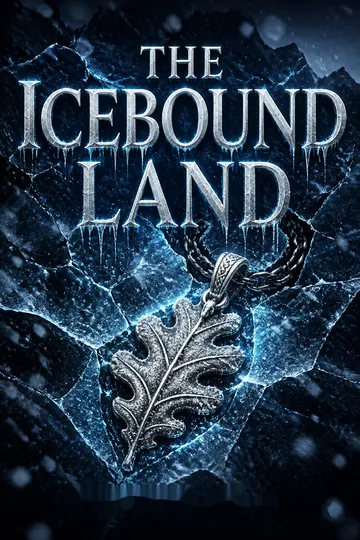
Reputation clears the roadHalt paints an oakleaf on Horace’s shield after the young warrior defeats a bridge guardian. The symbol gives Horace a public identity as the Oakleaf Knight, and word of his victories travels ahead of them through Gallica. Some predatory knights flee rather than face him, saving the travelers time and protecting those they would otherwise extort. The emblem also attracts Deparnieux, who sees Horace’s growing fame as a challenge to his own authority. It demonstrates how a simple mark can carry power when people believe the stories attached to it.
Ranger Craft
Skill counters greater forceRanger craft combines concealment, observation, tracking, archery, and practical improvisation. Halt uses stillness and camouflage to control encounters, while Will studies tides and watches for a chance to escape. The skills are not magic, although people unfamiliar with them may mistake them for it. In Gallica, Deparnieux studies Halt’s visible archery practice but fails to account for the different arrow he has prepared. Ranger craft works through attention to conditions and opponents, not invulnerability: Will’s failed skiff escape, for instance, shows that knowledge and courage cannot replace experience with the equipment at hand.
Ranger's Apprentice Series



About the Author
Other books by John Flanagan
Download PDF
Download EPUB
.epub digital book format is ideal for reading ebooks on phones, tablets, and e-readers.








