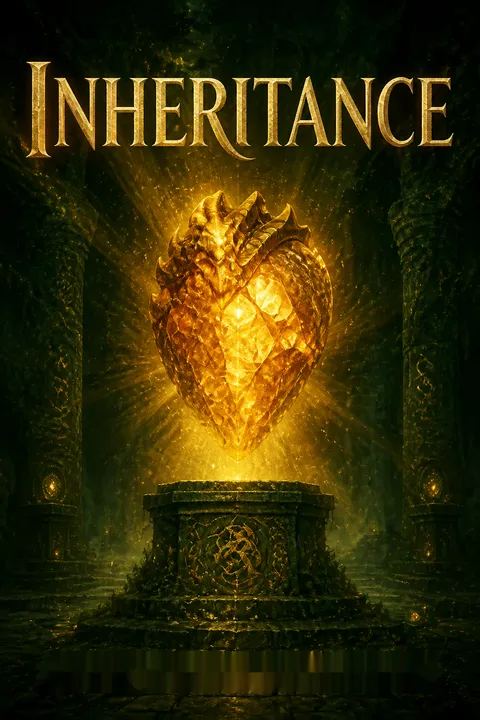


Plot Summary
The Orchid in Belatona
The Varden’s march on Urû’baen has reached Belatona, where Eragon, Saphira, Arya, and the elven guards are helping finish the siege. The city’s soldiers resist even Saphira’s fire, protected by powerful wards. Then a mounted defender hurls a glowing green lance into Saphira’s chest. The elves heal her before the wound proves fatal, while Blödhgarm kills the magician behind the attack.
Arya identifies the weapon as Niernen, one of the ancient Dauthdaertya made to kill dragons and largely impervious to magic. Its presence offers a rare possible answer to Galbatorix’s defenses. Before Eragon can act on that discovery, a crack races through the keep and the wall begins to fall toward Roran.
Belatona turns the war’s abstract imbalance into a physical wound. Saphira’s wards, usually a near certainty, cannot stop Niernen, so the weapon makes Galbatorix’s apparent invulnerability newly contestable. Eragon’s first response is emotional rather than strategic: he watches the danger close around the being he is most bound to protect. The scene also makes knowledge an uneven resource. Arya recognizes a weapon whose history Eragon was never taught, and that gap matters on the battlefield. The collapse that follows will test a different kind of power, one grounded not in magic but in Roran’s stubborn capacity to survive.
Rubble, Then Royal Cats
The keep’s falling wall buries Roran and several Varden soldiers, and Eragon fears his cousin is dead. While Saphira and the elves clear the rubble, Eragon races through the damaged keep, cuts through a portcullis with Brisingr, and finds Roran alive in the wreckage, having fought his way out. Roran immediately resumes the search for Lord Bradburn, and the governor is captured.
Then a host of werecats arrives at Belatona. Their king, Grimrr Halfpaw, offers their aid because Galbatorix has exposed a weakness by repeatedly sparing Eragon and Saphira. Nasuada accepts them as allies after negotiating their unusual terms: fitted armor, fresh meat, and a place of honor beside the throne.
Roran’s escape matters because it is not a rescue that makes him passive. Eragon reaches him only after Roran has survived the collapse and fought through the keep, preserving his cousin’s own agency. The werecats’ entrance widens the alliance while exposing its practical fragility: unity must be negotiated through needs as particular as food and status. Grimrr joins for revenge, not idealism, and Nasuada has to turn that motive into a workable political agreement. The chapter’s two reversals, a feared death averted and a secretive people joining openly, prepare the story to make cooperation both necessary and difficult.
Hope in the Camp
After Belatona, Elain, the wife of the Carvahall smith Horst, gives birth to a daughter with a severe cleft lip. The village mourns, expecting the child to be shunned, while Eragon’s friend Arya is allowed only limited help because the villagers distrust elven magic. Eragon takes the infant to his tent and spends the night carefully repairing her mouth, guided by Saphira and watched by the healer Gertrude.
He uses a remembered lullaby while shaping the baby’s bones and skin, then returns her to Horst and Elain healthy. They name her Hope. Eragon’s work earns the elves’ respect and gives the exhausted Varden a rare reason to celebrate, even as the war continues to consume their strength.
The healing of Hope brings Eragon’s power into a scale of care that conquest cannot measure. The same magic that can kill armies is used slowly, with attention to a newborn’s growth and the limits of his knowledge. Gertrude’s presence matters: the cure is witnessed by someone the villagers trust, so it can become a shared fact rather than an elven marvel the community might reject. Eragon also confronts the unintended harm of his earlier blessing of Elva. This time he proceeds cautiously, aware that good intentions do not protect others from the consequences of his power.
Nasuada’s Hard Arithmetic
Nasuada weighs the costs of the Varden’s alliance with the Urgals as King Orrin urges her to abandon it. He argues that frightened townspeople refuse to surrender when Urgals approach, but Nasuada insists that breaking the pact could provoke a second war after Galbatorix falls.
She also faces a growing crisis: soldiers and civilians across captured cities have sworn unbreakable oaths to the Empire, so the Varden must imprison them rather than risk infiltration. With too many troops tied down, Nasuada sends Roran to take command at Aroughs, where the siege has stalled. She promotes him provisionally to captain and gives him only days to capture the city, warning that otherwise Eragon and Saphira may have to leave the main army.
Nasuada’s leadership is measured in lives she cannot save as well as alliances she chooses to preserve. The Urgal pact threatens her popularity, yet she refuses to treat the race as disposable once it becomes politically inconvenient. The oath-bound prisoners create a different trap: mercy risks sabotage, while containment drains the army that needs to reach Galbatorix. Sending Roran to Aroughs is therefore not simply a test of his ambition. It is an allocation of scarce human capacity, a decision made because Eragon’s extraordinary strength cannot be spent everywhere at once.
The Dice Table Bluff
Roran reaches Aroughs exhausted, then studies its canals, mills, gates, and stone walls before choosing an attack unlike the failed assaults before him. His plan depends on turning the mill canals into a battering ram, but he must first gather barges, slate, flour, and men without alerting the city.
When Aroughs’s cavalry surprises his weakened camp, Roran refuses to flee. Instead he sits alone on a log, drinking and tossing knucklebones while the horsemen charge. He lets their commander believe he is unafraid, then reveals his identity as Eragon’s cousin and calmly offers a drink.
Carn’s illusion makes the air shimmer, unnerving the enemy magician. The cavalry withdraws, buying Roran the time his scheme requires. That night, an assassin kills a young messenger before Carn saves Roran from a fatal wound.
Roran’s bluff weaponizes reputation, but it works because he makes himself vulnerable in public. A commander who watches his men charge can still hesitate when his opponent behaves as if the encounter has already been decided. Carn’s illusion supplies uncertainty rather than force, a small application of magic that lets Roran’s nerve do the larger work. The assassin’s attack immediately punctures the triumph: survival is neither proof of invincibility nor a reward for cleverness. Roran’s mission depends on other people’s costly skills, and the coming assault will demand more than the confidence he displayed at the dice table.
Aroughs Breaks Open
At dawn, Roran releases the weakened dams above Aroughs, sending a surge of water down the canals behind four linked barges loaded with slate and flour. The makeshift ram smashes through the city’s water gate, carrying his men into a guarded chamber. Carn uses magic to deflect bolts and hurl flour sacks at the defenders; one ignites, burning many soldiers and Roran’s beard.
The Varden seize the inner city, but Carn dies in a magical duel, and Roran is shot in the back while pursuing Lord Halstead. Brigman cuts out the arrow and later commands the remaining men. Roran’s forces capture Aroughs, though Halstead dies in a burning cellar. Nasuada promotes Roran permanently and he returns to the Varden wounded, having prevented a second front.
Roran’s victory is an engineering problem solved with materials the city itself depends on. The canals that carry flour and goods become the force that breaks the gate, and the sacks of flour shift from provisions to weapons. Yet ingenuity does not make the plan clean. Carn’s death, Roran’s wound, and Halstead’s suffocation leave victory burdened with irreversible costs. Roran’s later choice of Brigman as his successor also matters: he recognizes competence despite their conflict. His command develops beyond personal courage into the capacity to judge others, trust them, and leave a city governable after the battle.
The Tunnel Beneath Dras-Leona
While Roran’s campaign unfolds at Aroughs, Eragon and Saphira reach Dras-Leona, where Murtagh and Thorn make a direct assault too dangerous. Eragon trains with Arya, but Glaedr emerges from his grief to tell him that mastery depends on understanding an opponent, not merely striking faster. He directs Eragon to discipline his mind as well as his sword arm.
Then scholar Jeod connects old records of strange sounds beneath the city and traces a possible passage built by dwarves. Nasuada approves a small infiltration team: Eragon, Arya, the herbalist Angela, and the elf Wyrden. Elva refuses to join, despite her ability to sense danger. The group enters the tunnel at night, hoping to open Dras-Leona’s gates from within.
The tunnel is found through patient reading, not a sudden revelation of magic. Jeod’s scholarship turns old descriptions of odors and echoes into a practical route, while Glaedr’s instruction shifts Eragon’s idea of strength from speed toward perception. These are parallel forms of attention: one interprets a city’s buried structure; the other interprets a fighter’s habits. Nasuada’s plan depends on a handful of unusually capable people because the army cannot afford a frontal assault. Elva’s refusal complicates the mission, reminding the group that a powerful ability does not create a duty to obey.
The Priests’ Hidden Gods
The tunnel leads the infiltration team into a maze of empty chambers beneath Dras-Leona. Masked attackers, protected by wards that dull pain, ambush them; Wyrden is killed by magical spikes, and Angela is dragged through a hidden door.
Eragon and Arya flee into a chamber where the priests of Helgrind reveal their true worship: the Ra’zac and their flying parents, the Lethrblaka. They intend to feed Eragon and Arya to two hatching Ra’zac eggs. Solembum returns battered, Angela escapes, and together they break the crystals that hold the captives.
Solembum kills one hatchling, while Eragon burns the other. Angela’s impossibly sharp blade helps them cut through the cultists, but the High Priest’s formidable mental attack forces the group into a desperate fight.
The underground maze makes the city’s religious architecture literal: the visible worship of Helgrind conceals a cult that has kept the Ra’zac’s future alive. The eggs turn old enemies into a continuing biological threat, not merely a memory of earlier battles. Wyrden’s death and the party’s capture also expose the limits of elite skill. Their wards and training do not prevent them from being surprised, and pain-resistant attackers turn ordinary injury into an unreliable signal. Angela and Solembum’s return changes the scene, but escape comes through cooperation among very different kinds of power, from stealth and speed to an artifact’s impossible edge.
The Gate Gives Way
Saphira distracts Thorn while Eragon, Arya, Angela, and Solembum reach Dras-Leona’s southern gate, only to find it packed with rubble and guarded by hundreds of soldiers. Eragon joins the fight as the Varden approaches outside. With ordinary attacks failing and the soldiers multiplying, he drains the stored energy in Brom’s ring, Aren, and hurls the rubble skyward, clearing the gate and injuring Thorn as the dragon pursues Saphira.
The Varden pours into the city. Arya is almost captured in the chaos, but Eragon helps her fight free. The victory lasts only briefly: Thorn returns to the camp and carries Nasuada away. Eragon reaches her too late, leaving the Varden without its leader just as it enters the final stage of the war.
Eragon’s use of Aren is a decisive expenditure, not a routine display of power. The ring is both a strategic reserve and one of Brom’s few remaining inheritances, so using it means choosing the army’s survival over preserving a private link to the past. The gate opens, but the price is not simply depleted energy: the victory fails to protect Nasuada. That reversal denies Eragon the comforting equation of effort with rescue. He can change the shape of a battle and still arrive too late to save the person whose leadership made the campaign possible.
Nasuada Under the Iron
In Urû’baen, Galbatorix restrains Nasuada in the Hall of the Soothsayer and tries to make her serve him. He argues that he wants to regulate magic so no spellcaster can prey upon ordinary people, then uses heated irons to force submission. Murtagh appears to obey, but later tells Nasuada that he saved her from assassination and explains how Galbatorix broke him through threats against Thorn.
He secretly heals her and gives her a ward against most wounds. Nasuada steals a spoon and sharpens it into a weapon, killing her jailer and two guards before being recaptured. Galbatorix escalates to burrow grubs and sensory illusions, but Nasuada uses a memorized verse and Murtagh’s mental signature to distinguish reality from deception.
Nasuada’s captivity tests the same discipline that made her an effective leader, but now the battlefield is her own attention. Galbatorix’s argument about regulating magic contains a real political problem, which makes his coercion more seductive than a simple villain’s boast. Nasuada recognizes the problem without accepting his right to impose its solution. Murtagh’s rebellion is constrained to small acts: healing, warning, and protecting her mind. Their alliance is built not on easy trust but on repeated evidence, as Nasuada judges him by what he risks doing rather than by the name Galbatorix has forced upon him.
A Name Hidden in Ink
With Nasuada gone, a council asks Eragon to lead the Varden. He accepts, though the burden and fear of command overwhelm him once he is alone. Solembum repeats his cryptic instruction about the Rock of Kuthian and the Vault of Souls, then unconsciously directs Eragon to a passage in Jeod’s copy of Domia abr Wyrda. The passage identifies the Rock as Moraeta’s Spire on Vroengard, the former Riders’ island.
Eragon discovers that Arya and Glaedr cannot remember the place because a powerful spell has erased it from nearly everyone’s mind. He persuades them that the memory loss is real, then prepares to leave secretly with Saphira and Glaedr’s Eldunarí, while the elves create convincing illusions to conceal their absence.
Eragon’s new authority does not steady him; it intensifies his awareness that other lives now depend on his decisions. The discovery in Jeod’s book offers a direction, not a guarantee, and its protection from memory makes knowledge itself feel dangerous. The spell’s scale is especially important: it has touched humans, elves, dwarves, and dragons without leaving them aware of the loss. Eragon cannot treat consensus as proof of truth. He must trust a clue that sounds irrational precisely because the people best positioned to confirm it have been made unable to remember.
Across the Living Storm
Saphira carries Eragon and Glaedr west across the Spine and out over the open sea. Near Vroengard, a vast storm blocks their route. When Saphira lands on the water to rest, a sea dragon called a Nïdhwal erupts from the depths and nearly catches her in its jaws. She escapes, but the storm then traps her in violent currents, hurling her between freezing updrafts and downdrafts.
Eragon and Glaedr sustain her with spells and energy while protecting her from cold and lack of air. Above the storm, they glimpse the curved horizon and realize the world is round. Saphira then rides the wind down toward Vroengard’s volcanic mountains, arriving exhausted at the ruined Riders’ city.
The journey makes the natural world a force neither dragon nor Rider can simply dominate. The Nïdhwal is not an enemy with motives to negotiate, and the storm cannot be defeated by courage alone. Saphira survives through judgment, Glaedr’s experience, and Eragon’s spellwork, each contributing something the others lack. Their glimpse of the world’s curvature also enlarges the story’s scale at a moment of physical vulnerability. The war over Alagaësia remains urgent, but it is no longer the whole horizon. The revelation deepens humility without diminishing the practical duty waiting below.
The Names That Open
On Vroengard, Eragon sees the ruins of Doru Araeba and the bones of dragons killed in the fall of the Riders. The landscape has been warped by Thuviel’s self-destruction, and strange creatures now haunt the island. At the Rock of Kuthian, speaking their ordinary names does nothing. Glaedr explains that the door requires true names, which force each of them to face the truth of their own identity.
Saphira finds her name first, accepting both her pride and her status as the last female dragon. Eragon struggles through the night, clearing rubble and examining what he wants, until he understands that he is no longer the boy who left Palancar Valley. He discovers his true name and speaks it, opening the way.
The true-name test turns self-knowledge into a literal threshold, but it is not solved by assembling a flattering list of virtues. Eragon reaches his name only after admitting that his past identity no longer fits and that his ambitions have changed. Saphira’s discovery carries a different burden: her identity includes both greatness and loneliness. The ruined island intensifies the stakes, surrounding their private reckoning with the visible remains of a nearly extinguished species. To enter the vault, they must risk not just physical harm but a knowledge of themselves they cannot later disown.
The Vault of Souls
The Rock opens only after Eragon, Saphira, and Glaedr speak their true names. Deep underground, they meet the metal-bodied guardian Cuaroc and the Eldunarí of Umaroth and the surviving free dragons. The Vault contains 136 Eldunarí and 243 dragon eggs, hidden before the Riders’ fall.
Umaroth explains that the dragons erased knowledge of the refuge from their allies, and that they secretly guided Eragon’s path, including his discovery of the brightsteel for Brisingr. Thuviel’s death helped conceal the deception from Galbatorix. The dragons agree to accompany Eragon to Urû’baen, while others stay to guard the eggs. Before they leave, a spell makes them forget the vault again, protecting its location if they are captured.
The vault reframes Eragon’s journey without erasing his choices. The dragons arranged opportunities, but he still had to survive, learn, and decide what kind of person he would become. Their secret intervention also complicates the meaning of fate: guidance can create a path without dictating every step. Most consequentially, the eggs change the future from a last stand for a dying race into a possible renewal. Yet the new hope is guarded by another deliberate forgetting. Survival requires secrecy, even when secrecy damages trust and leaves the rescuers unable to remember what they have saved.
Barst’s Iron Heart
After Eragon and Saphira return, the allied armies march on Urû’baen. Shruikan’s night flight frightens the Varden, but the attack begins at dawn while Saphira and the elves draw Thorn away.
The army breaches the outer wall and meets Lord Barst, whose armor hides an Eldunarí that makes him unnaturally strong and immune to ordinary attacks. Barst kills Queen Islanzadí and drives the Varden toward retreat. Roran realizes the bulging breastplate must contain the source of Barst’s strength.
He draws the enemy’s attention while dwarves and elves aim siege engines at the armor. Stones dent it, then Roran and the Kull hammer Barst down. Roran’s attempt to crush the breastplate succeeds, breaking the Eldunarí and killing Barst, but leaves Roran gravely wounded.
Barst converts Galbatorix’s power into a visible, portable advantage: strength hidden beneath armor, beyond the reach of normal resistance. Roran’s response is not to imitate magic but to infer its physical source and build a coordinated attack around it. His willingness to serve as bait costs him almost everything, yet the success depends on dwarves, elves, and Urgals acting together rather than on his celebrated strength alone. Islanzadí’s death makes the victory bitter. The army can break Barst’s defense, but it cannot restore the people lost while discovering how that defense works.
The Word Against the King
In the throne room, Galbatorix immobilizes Eragon, Arya, Saphira, and Elva, then threatens two children to stop them attacking. He reveals the Name of Names, which lets him control magic, and orders Eragon to duel Murtagh.
Eragon accepts defeat on purpose, allowing Murtagh to win because Murtagh hopes the victory will help him save Nasuada. Murtagh instead uses the forbidden Word to strip Galbatorix’s wards, freeing the others. Eragon then casts a spell that makes the king experience the pain and grief he has inflicted on every victim across his life.
Galbatorix cannot endure the flood of suffering and destroys himself. Arya kills Shruikan with Niernen, while the blast nearly destroys the citadel. Eragon’s protective spell saves his companions.
The final contest is won through a reversal of Galbatorix’s defining method. He treats other minds as instruments, but Eragon’s spell makes him encounter the interior consequences of his rule rather than merely hear an accusation. The enchantment becomes possible through shared knowledge and the Eldunarí, not individual force. Eragon’s choice to lose the duel is equally crucial: he recognizes that Murtagh’s hope for Nasuada can be used to create an opening. Arya’s use of the Dauthdaert and Eragon’s refusal to reduce victory to revenge complete a climax where power succeeds only when disciplined by understanding.
A Queen After Ruin
After Galbatorix’s death, Murtagh and Thorn leave, while the Varden secure Ilirea and search the damaged citadel. Nasuada becomes queen after negotiating a settlement with Orrin: Surda gains captured territories, while Orrin recognizes her rule.
She begins rebuilding the kingdom and plans oversight for magicians, a policy Eragon distrusts even as he recognizes the danger uncontrolled magic poses. Roran survives his wounds, learns that Katrina and their daughter are safe, and receives Palancar Valley as his domain.
He returns to rebuilding Carvahall rather than following Eragon east. Arya, now queen of the elves, returns with Fírnen, the newly hatched green dragon. Eragon and Arya exchange their true names, deepening their bond, but she declines to leave her people.
The political settlement refuses a simple return to the old order. Nasuada must build authority after a war fought partly against the abuse of authority, and her plan to supervise magicians echoes Galbatorix’s stated concern while rejecting his coercive answer. Roran’s title brings him back to the valley that shaped him, while Arya’s crown binds her to a different home. Eragon’s exchange of true names with Arya creates intimacy, but not possession or a promise that overrides her duty. The characters’ futures diverge because their obligations differ, not because their attachments have become false.
The River Runs East
Before leaving, Eragon and Saphira expand the ancient pact so dragons may bond with elves, humans, dwarves, and Urgals. Eragon also negotiates with the Urgal council: games will give young warriors a path to glory, while the Riders will accept Urgal children among future candidates.
He gives Roran a blood-price for Quimby’s death, and Roran accepts a cut to his palm rather than revenge. Then Eragon, Saphira, Arya, Fírnen, and Roran’s family travel to Ellesméra.
At the eastern edge of the known land, Arya and Fírnen turn back; Roran and Katrina remain behind with Ismira. Eragon gives Roran his accumulated treasure for the castle he plans to build, then boards the Talíta with Saphira and the Eldunarí. The ship carries them toward an unmapped future.
The ending converts victory into institutions and chosen obligations. Eragon does not simply leave with the surviving dragons; he changes the pact that determines who may become a Rider and creates a nonmilitary outlet for Urgal ambition. Roran’s blood-price acknowledges that peace cannot erase personal loss, while his decision to stay honors his family and homeland. Eragon’s departure is therefore both an escape from political imbalance and a responsibility to protect the eggs. The river carries him away, but the new agreements bind the world he leaves behind to a less exclusive future.
Analysis
Inheritance makes the defeat of a tyrant only the beginning of the moral problem. Galbatorix is wrong to enslave minds, but his central concern, the vulnerability of ordinary people to magic, survives his death. Nasuada’s plan to supervise magicians echoes his diagnosis while risking a gentler version of the same imbalance. Eragon’s refusal to rule or to submit to that system reflects a different understanding of responsibility: power may demand action, but it does not automatically grant the right to govern everyone it can protect.
The novel repeatedly contrasts force with attention. Roran studies canals, armor, and the habits of armies; Eragon learns to read opponents, his own motives, and the distinctions between a true name and a label. Their victories come not from being invulnerable but from noticing what others miss. Still, the story refuses to make intelligence a guarantee. Carn, Wyrden, Islanzadí, and many unnamed soldiers die despite skill and courage. Survival depends on cooperation, preparation, and chance, while every victory leaves someone carrying its cost. The dragons’ hidden eggs turn the final battle away from simple restoration. The old Riders’ order cannot simply be revived unchanged: it excluded or subordinated races, and its guardianship sometimes became a quiet form of control. Eragon’s new pact with Urgals and dwarves attempts to make belonging less exclusive, while the games he proposes address the political need for glory without requiring war. His departure is therefore neither triumphal escape nor abandonment. He leaves because a power too great to remain neutral must be placed at a distance, and because the future of dragons requires protection. The ending lets grief and hope coexist: Eragon loses his home and Arya’s daily presence, but carries forward the possibility of a more plural order.
Review Summary
Inheritance concludes the Eragon series with mixed reviews. Some praise the epic battles, character development, and bittersweet ending. Others criticize the excessive length, unnecessary details, and predictable plot. The writing quality shows improvement, but issues persist with pacing and dialogue. Readers appreciate the resolution of storylines and the growth of characters like Nasuada and Murtagh. However, many found Galbatorix underwhelming as a villain. While some fans were satisfied with the conclusion, others felt it lacked originality and relied too heavily on fantasy tropes.
People Also Read


Characters
Eragon
The burdened RiderA young Dragon Rider bonded to Saphira and trained by the elf Oromis, Eragon is the son of Brom and a central force in the Varden’s campaign. He is brave, curious, and deeply responsive to the suffering of others, but his power can tempt him to believe that responsibility means solving every problem himself. His ties to Roran, Arya, Nasuada, and Saphira pull him in different directions. He values self-knowledge because he has learned that good intentions do not prevent harm. His combination of humility and stubbornness makes him a formidable ally, while his uncertainty about authority keeps him wary of becoming the sort of ruler he opposes.
Saphira
The last blue dragonEragon’s dragon and partner of mind, Saphira is proud, perceptive, and fiercely protective. Her scale, strength, and fire make her a military force, but her closeness to Eragon is equally important: she steadies him, challenges his self-deceptions, and shares his joys and fears. She values beauty, independence, and the survival of dragons, sometimes with a vanity she is slow to recognize. Her bond with Eragon is intimate without erasing their separate wills. She speaks with a dragon’s certainty about instinct and honor, while her affection often makes her more cautious about his safety than he is.
Roran
The hammer-wielding captainEragon’s cousin, Katrina’s husband, and a human commander in the Varden, Roran has no magical gifts. He relies on physical courage, practical observation, and a refusal to yield when a situation seems impossible. His plans often begin with a detail other leaders overlook, such as a canal, a gate, or an enemy’s assumptions. He is devoted to family and protective of the people who follow him, but his willingness to risk himself can shade into recklessness. Roran measures honor through action and responsibility, not titles. His grounded perspective also exposes the cost of a war increasingly shaped by beings with powers ordinary soldiers cannot match.
Arya
The elven ambassadorAn elven warrior and diplomat, Arya has spent decades moving between the Varden, the elves, and the wider conflicts of Alagaësia. Her discipline and reserve conceal fierce loyalty, grief, and a capacity for decisive violence when her people or allies are threatened. She is an accomplished swordswoman and spellcaster, but she is also politically perceptive and refuses to let affection decide her duties. Her relationship with Eragon is shaped by mutual admiration and a real difference in age, experience, and responsibility. Arya expects him to see her as a complete person, not simply as an idealized object of longing.
Nasuada
The Varden’s strategistDaughter of the Varden’s former leader, Nasuada is a disciplined commander whose authority rests on clear judgment and the willingness to bear costs herself. She weighs alliances, supplies, prisoners, and public trust as carefully as battlefield tactics. Her scars from the Trial of the Long Knives reflect a culture she both inherits and interprets on her own terms. Nasuada understands that leadership requires decisions others may resent, yet she tries to preserve the possibility of peace among races with long histories of injury. She is ambitious in the demanding sense: she wants power because she believes she can use it to build a more stable order.
Murtagh
The bound half brotherEragon’s maternal half brother and a Dragon Rider bonded to Thorn, Murtagh grew up under the shadow of his father Morzan and within Galbatorix’s court. He is proud, quick to anger, and hungry for a name of his own, yet his loyalty to Thorn can make him accept suffering he would otherwise resist. Murtagh’s choices are constrained by magical oaths and by the king’s ability to threaten the dragon he loves. His relationship with Eragon mixes affection, envy, rivalry, and shared history. He is not easily reduced to either victim or enemy; the tension between what he wants and what he is compelled to do defines him.
Thorn
The red bonded dragonMurtagh’s red dragon, Thorn is young but unnaturally large and powerful because of Galbatorix’s interventions. He is fierce in battle, emotionally bound to Murtagh, and caught within the same coercive relationship that governs his Rider. His clashes with Saphira are not merely contests of strength; each dragon senses the other as a possible reflection of what their own life might have been. Thorn’s anger and defensive pride conceal the vulnerability of a creature raised under domination. The bond with Murtagh gives him an anchor, but it also becomes the lever by which others can control him.
Galbatorix
The oath-breaking kingThe ruler of the Empire and the last great enemy of the Varden, Galbatorix is a Dragon Rider who has amassed strength by controlling dragons’ Eldunarí. He is intelligent, patient, and capable of presenting tyranny as a solution to genuine dangers, especially the unequal power of magicians. His certainty that only he can impose order allows him to treat other people’s minds and lives as instruments. Galbatorix fears neither ordinary opposition nor moral condemnation; he measures success by control. His polished arguments and cultivated authority make him more dangerous than a merely brutal ruler, because he believes his abuses serve a greater good.
Glaedr
The grieving elder dragonThe golden dragon who trained Eragon and Saphira, Glaedr carries the memory of the Riders’ fall and the death of his partner, Oromis. His grief withdraws him from the living world, but his experience remains essential to the younger Rider’s education. Glaedr teaches through hard questions and close observation, emphasizing calm, timing, and knowledge of an opponent. He is proud and sometimes severe, especially when others question his losses. Yet his devotion to the survival of dragons and Riders draws him back toward action. His presence links Eragon’s urgent present to a history far older than the Varden.
Arya’s mother, Islanzadí
The elven queenQueen of the elves and Arya’s mother, Islanzadí is regal, strategically capable, and accustomed to carrying the grief of her people without displaying it. She supports the Varden while guarding elven independence and understands the political risks of binding her people to a human-led cause. Her relationship with Arya is affectionate but strained by years of separation and conflicting duties. Islanzadí respects courage, yet her love for her daughter makes her fear the cost of Arya’s choices. She represents a long-lived civilization attempting to act decisively in a crisis that threatens to outlast its confidence.
Orik
The dwarf kingEragon’s foster brother and king of the dwarves, Orik is a practical leader shaped by clan customs and the burdens of succession. He is loyal to Eragon but does not confuse friendship with unthinking agreement. His craft, patience, and understanding of dwarven politics help him find stability in a fractious society. Since taking the throne, he feels the distance authority creates between himself and former companions. Orik’s friendship with Eragon offers both men a relationship that can survive changes in rank. His dry humor and steady judgment often make him a bridge between the personal and political demands of the alliance.
Angela
The unaccountable herbalistA herbalist, spellcaster, and traveling companion of Solembum, Angela is irreverent, resourceful, and difficult to categorize. She helps the Varden when it suits her purposes, but resists being claimed by any faction or explained by anyone else. Her knowledge often exceeds what she is willing to reveal, and she treats danger with a mixture of competence and mischief. Angela is capable of startling violence, yet her curiosity and eccentric humor make her an unpredictable presence rather than a conventional mentor. Eragon’s repeated attempts to understand her past meet evasions, reminders that not every ally can be made legible.
Elva
The pain-sensing childA child altered by Eragon’s mistaken blessing, Elva can sense the pain and approaching suffering of others. Her ability makes her a valuable ally and a difficult companion, because other people’s distress presses upon her constantly. She is sharp-tongued, proud, and determined not to be treated as a tool simply because adults find her useful. Her anger toward Eragon has a moral basis: his good intention shaped a life she never chose. Elva’s small stature contrasts with her influence over powerful people, and her insistence on autonomy challenges the Varden’s habit of turning every exceptional person into a weapon.
Umaroth
The hidden dragon elderThe white Eldunarí who speaks for the dragons hidden on Vroengard, Umaroth is measured, diplomatic, and burdened by the knowledge of his people’s near destruction. He and the other Eldunarí preserve both dragon eggs and historical memory, while carefully limiting what outsiders can know. Umaroth is willing to guide Eragon, but he does not pretend that guidance guarantees victory. His presence expands the conflict beyond the Varden’s immediate needs, reminding Eragon that his choices affect a species and a future measured in centuries.
Solembum
The werecat guideA werecat who can shift between animal and human forms, Solembum is observant, proud, and sparing with explanations. He passes Eragon a cryptic warning about the Rock of Kuthian, though he does not know who planted the knowledge in his people’s minds. His loyalty is real but never servile; he resents being summoned or treated as a familiar. Solembum moves through the story’s hidden spaces, noticing what others miss and carrying fragments of knowledge whose origins remain uncertain. His independence makes him a useful ally and a poor possession.
Rhunön
The ancient swordsmithAn elven smith who forged the Riders’ swords, Rhunön has spent centuries perfecting her craft and refuses to make another blade in the usual way. She helps Eragon create Brisingr by allowing him to serve as her hands while she guides the work. Her pride is rooted in mastery rather than status, and she treats the making of a sword as a serious moral act. Rhunön’s skill links the Riders’ lost era to Eragon’s present, giving him a weapon that is both personal and unlike any ordinary blade.
Jeod
The Varden’s scholarA merchant, scholar, and longtime ally of the Varden, Jeod uses patient research to recover information that others have overlooked. His study of old records helps identify a possible tunnel beneath Dras-Leona, turning obscure historical details into a military opportunity. Jeod’s curiosity is practical as well as intellectual; he reads because knowledge can change what people are able to do. His connection to Brom also gives him a personal stake in Eragon’s story. He is one of the few people who can meet Eragon’s power with questions rather than deference.
Nasuada’s father, Ajihad
The fallen Varden leaderAjihad led the Varden before Nasuada and taught her the demands of command through both example and inheritance. His death leaves her with a cause to continue and a model she must not simply imitate. Though absent from the central action, his choices shape Nasuada’s understanding of loyalty, sacrifice, and responsibility to people who cannot protect themselves.
Brom
Eragon’s hidden fatherA former Dragon Rider who hid his past beneath the role of a wandering storyteller, Brom trained Eragon in magic, combat, and caution. His love for the boy was real even when his history remained concealed. Brom’s lessons continue to shape Eragon’s judgments, while his own choices reveal the cost of carrying dangerous knowledge alone. Eragon’s connection to him is built from both remembered affection and unanswered questions, making Brom a presence in the story even when he is absent.
Horst
Carvahall’s steadfast smithHorst is the blacksmith from Carvahall, husband to Elain, and father to a growing family. Practical and dependable, he contributes the skills of a craftsperson to the Varden without seeking glory. His relationship with Roran is built on mutual respect and the shared history of their village. Horst’s care for his family gives the war a domestic measure: the people at risk are not abstractions but parents, children, and neighbors who hope to live beyond the fighting.
Katrina
Roran’s steadfast wifeKatrina, once held by the Ra’zac and later reunited with Roran, is a practical and emotionally perceptive partner. She refuses to make courage depend on never feeling fear, and she offers Roran a homeward perspective amid the demands of battle. Her pregnancy deepens the stakes of their separation without reducing her to a symbol of domestic safety. Katrina’s strength appears in daily care, honest disagreement, and a determination to make a future even while the war threatens to erase one.
Grimrr Halfpaw
The werecat kingGrimrr leads the werecats when they choose to join the Varden. Small, scarred, and fiercely self-assured, he negotiates for his people with the precision of a ruler who refuses to imitate human customs. His motives include revenge on Galbatorix, but he also understands the value of acting with the other races. Grimrr’s pride and secrecy make him difficult to read, while his command of ordinary cats gives the alliance an unusual reach.
King Orrin
Surda’s restless kingThe king of Surda, Orrin supports the Varden with troops and supplies, while struggling to balance responsibility to his people with the pressure of war. He is intelligent and curious, but danger and loss make him more defensive and ambitious. Orrin’s desire for recognition is not merely vanity; he fears that Surda’s sacrifices will be overlooked when the new order is formed. His political disagreements with Nasuada reveal how an alliance can be essential and still fragile.
Cuaroc
The vault’s metal guardianA dragon-headed metal guardian fashioned to protect the Vault of Souls, Cuaroc can wield a Rider’s sword and shield with formidable strength. His body houses an Eldunarí, allowing him to act as a champion for the hidden dragons. Silent and dutiful, he embodies the lengths to which the Riders went to protect a future they might never see.
Lord Barst
Galbatorix’s armored championA commander chosen to lead the Empire’s army in Urû’baen, Barst is feared for his strength, intelligence, and ruthless discipline. His broad frame and imposing armor make him a visible threat on the battlefield, but his greatest advantage is not obvious to those who face him. Barst does not waste force on empty gestures; he advances when he believes he can win. His presence tests whether ordinary warriors can respond to a magical advantage without surrendering their own agency.
Plot Devices
Eldunarí
Stored dragon mindsA dragon may disgorge its heart of hearts, an Eldunarí, and remain alive. The gemlike object preserves the dragon’s consciousness and magical strength, making it a source of extraordinary energy and knowledge. Galbatorix uses captured Eldunarí to strengthen himself and control Murtagh and Thorn. Eragon carries Glaedr’s Eldunarí, while the Vault of Souls holds a hidden group of free dragons who can lend their power against the king. The device joins questions of identity, consent, and memory to the practical imbalance of the war.
The Name of Names
Magic’s master keyThe ancient language gives magic its rules, but Galbatorix discovers its true name, allowing him to override spells and silence other magicians. The name is not simply a stronger incantation; it changes who can control the system of magic itself. Its existence explains why wards and spells fail at crucial moments, and why Eragon and Arya cannot rely on their usual methods in the throne room. Murtagh’s knowledge of the name later gives him a narrow opportunity to rebel.
Dauthdaert Niernen
A weapon against dragonsNiernen is one of the ancient elven death spears, created to pierce dragons’ defenses and survive magic that would destroy ordinary weapons. It first appears when it wounds Saphira at Belatona, revealing both its danger and its potential value against Galbatorix. Arya safeguards and uses the lance during the campaign against Dras-Leona and in the final assault. Its power does not guarantee victory: the wielder still has to reach the target, and the weapon’s presence cannot replace judgment or sacrifice.
True names
Identity made knowableA true name expresses the deepest and most changeable aspects of a person or creature. Knowing one can grant power over its owner, so discovering or sharing a true name requires painful self-scrutiny and exceptional trust. The Rock of Kuthian opens only when Eragon, Saphira, and Glaedr speak their names. Eragon’s discovery marks his changed identity, while later exchanges between him and Arya make emotional vulnerability part of the same system of knowledge.
The Rock of Kuthian
A hidden refuge for dragonsThe Rock of Kuthian is a concealed entrance on Vroengard, its location protected by a spell that erases memories of it. Solembum’s cryptic warning and Jeod’s historical book lead Eragon to the site. Its doors require true names, and behind them lies a refuge prepared before the Riders’ fall. The concealment explains why Galbatorix believes the dragons and their eggs are nearly gone, while also forcing Eragon to question whether the clues guiding him are trustworthy.
FAQ
Synopsis & Basic Details
What is Inheritance about?
- Final conflict against tyranny: Inheritance is the concluding volume of the Inheritance Cycle, chronicling Eragon Shadeslayer's final struggle against the tyrannical King Galbatorix, who has ruled Alagaësia for a century. The narrative follows Eragon, his dragon Saphira, and their allies, the Varden, elves, dwarves, Urgals, and werecats, as they march toward the capital city of Urû'baen.
- Gathering strength and allies: The story details the Varden's campaign, capturing cities like Belatona and Dras-Leona, while Eragon seeks deeper knowledge and power to match Galbatorix's formidable magic and enslaved dragons. Key plot points include Roran's military leadership, the werecats joining the Varden, and the discovery of ancient secrets that could turn the tide of the war.
- High stakes and personal journeys: Beyond the large-scale war, the book explores the personal growth and sacrifices of its characters, including Eragon grappling with his identity and destiny, Roran's unwavering determination to protect his family, and Nasuada's resilience in the face of capture and torture. The narrative builds towards a climactic confrontation that will determine the fate of all races in Alagaësia.
Why should I read Inheritance?
- Epic conclusion to a beloved saga: Inheritance provides the long-awaited resolution to the story arcs and conflicts established in the previous three books, offering closure on Eragon's journey, the fate of the Dragon Riders, and the war against Galbatorix. Readers invested in the world and characters will find satisfying, albeit sometimes challenging, answers.
- Deep dive into magic and identity: The book significantly expands upon the nature of magic, the ancient language, and the concept of true names, offering complex philosophical and practical insights into power and self-understanding. It explores how characters grapple with their own identities and destinies in a world shaped by ancient forces.
- Themes of sacrifice, leadership, and change: Beyond the fantasy adventure, Inheritance delves into mature themes such as the cost of war, the burdens of leadership, the complexities of morality, and the inevitability of change. The narrative challenges characters and readers alike to consider difficult choices and the impact of their actions on the world.
What is the background of Inheritance?
- A world shaped by ancient conflicts: The story is set in Alagaësia, a land with a rich history of conflict between its various races: dragons, elves, dwarves, humans, Urgals, and the predatory Ra'zac. The central historical event is the Fall of the Dragon Riders, orchestrated by the rogue Rider Galbatorix and his Forsworn, leading to decades of his tyrannical rule.
- The legacy of the Riders: The narrative builds upon the lore of the Dragon Riders, their pact with the dragons, their role as peacekeepers, and their eventual destruction, leaving only Galbatorix, his enslaved dragon Shruikan, and a few hidden survivors and artifacts. Eragon's discovery of Saphira's egg reignites the hope for the Riders' return.
- Political and cultural landscape: The Varden, a rebel group composed primarily of humans and supported by the dwarves and elves, represents the main opposition to Galbatorix's Empire. The story navigates the complex political alliances and cultural differences between these races as they unite against a common enemy, highlighting their distinct traditions, languages, and worldviews.
What are the most memorable quotes in Inheritance?
- "Waíse néiat!" (Be not!): This chilling phrase, the name of the ancient language, is Galbatorix's ultimate weapon, capable of unmaking existence itself. It defines his absolute power and the existential threat he poses, representing the ultimate negation of life and will.
- "A man's work, or a woman's, is whatever needs to be done.": Spoken by Roran to Katrina when she hesitates to let him help with laundry, this quote encapsulates Roran's pragmatic and egalitarian worldview. It highlights his rejection of traditional gender roles in the face of necessity and his focus on practical action over societal expectations.
- "The way of the warrior is the way of knowing.": Glaedr imparts this wisdom to Eragon during their mental sparring sessions. It elevates combat beyond mere physical prowess, emphasizing the importance of understanding oneself, one's opponent, and the underlying rhythms of the world. This quote defines Eragon's path to true mastery, integrating mental and physical discipline.
What writing style, narrative choices, and literary techniques does Christopher Paolini use?
- Detailed world-building and descriptive prose: Paolini employs extensive descriptions of Alagaësia's landscapes, cities, and creatures, immersing the reader in the fantasy world. His prose is often detailed, focusing on sensory information to create vivid imagery, from the stench of Dras-Leona's streets to the glittering scales of dragons.
- Multiple perspectives and character focus: While primarily told from Eragon's third-person limited perspective, the narrative frequently shifts focus to other characters like Roran and Nasuada, offering diverse viewpoints on the war and its impact. This choice allows for a broader understanding of the conflict and the motivations of key players.
- Integration of invented languages and lore: A defining feature is the consistent use of invented languages (Ancient Language, Dwarvish, Urgal, Nomad) and a complex system of magic tied to the Ancient Language. This linguistic and magical framework is deeply integrated into the plot, influencing character interactions, spellcasting, and the very fabric of the world.
Hidden Details & Subtle Connections
What are some minor details that add significant meaning?
- The Werecats' Mysterious Knowledge: Solembum's cryptic advice about the Rock of Kuthian and the Vault of Souls, later revealed to be information implanted by the Eldunarí, highlights a hidden layer of manipulation guiding Eragon's destiny. This suggests that seemingly random encounters or pieces of lore are part of a larger, unseen plan orchestrated by ancient forces.
- The Significance of Names: Beyond true names, the text subtly emphasizes the power and meaning of names in various cultures. The elves' careful naming rituals, the dwarves' connection to their clan names, and even the Urgals' titles like "Mooneater" or "Kingkiller" reveal deeper cultural values and historical weight attached to identity and reputation.
- Environmental Reflections of Character: The description of the Varden's camp becoming a "nigh on impassable morass" after the storm subtly mirrors the army's and characters' exhaustion and struggle. Similarly, the twisted, menacing trees and strange creatures on Vroengard reflect the island's corruption by dark magic and the lingering trauma of the battle fought there.
What are some subtle foreshadowing and callbacks?
- Angela's Prophecies and Actions: Angela the herbalist's seemingly random pronouncements and actions, like her "cheep cheep" to Grimrr or her knowledge of the "belt of the twelve stars," often hint at deeper connections and future events. Her ability to foresee Eragon's departure from Alagaësia, mentioned in his internal monologue, is a direct callback to her fortune-telling in Eragon, subtly reinforcing her enigmatic nature and connection to fate.
- The Raven Blagden's Role: Queen Islanzadí's companion, the white raven Blagden, is more than just a pet. His ability to speak in the ancient language and his fierce loyalty, culminating in his desperate attack on Barst, foreshadow his true nature as a powerful magical being or perhaps even a transformed elf, hinting at hidden depths within seemingly minor characters.
- The Nature of Galbatorix's Power: Galbatorix's casual mention of having other Ra'zac eggs hidden elsewhere, and his claim that Shades are "easy to make," subtly foreshadows the potential for future threats even after his defeat. This suggests that the Varden's victory, while significant, may not entirely eliminate the dark forces he commanded.
What are some unexpected character connections?
- Brom's True Paternity: The revelation that Brom, not Morzan, is Eragon's father is a major plot point, but the subtle ways it's woven into the narrative beforehand are noteworthy. Oromis's careful phrasing about Eragon's heritage and the emotional weight Brom's memory carries for Eragon throughout the book gain new significance in light of this truth, highlighting the hidden bonds of family.
- Murtagh and Nasuada's Complex Relationship: Beyond captor and captive, Murtagh and Nasuada develop a strange, fraught connection. Murtagh's moments of vulnerability, his healing of her wounds, and his eventual act of rebellion to save her reveal a hidden depth to his character and a bond with Nasuada that transcends their initial adversarial roles, hinting at the possibility of redemption.
- The Werecats' Alliance with the Varden: While the summary mentions the alliance, the underlying reason given by Grimrr Halfpaw – that Galbatorix showed weakness by not killing Eragon and Saphira – reveals a pragmatic, almost predatory, motivation for the werecats. This unexpected perspective highlights their nature as hunters who seize opportunities, rather than simply joining a moral crusade.
Who are the most significant supporting characters?
- Angela the Herbalist: Far from a simple herbalist, Angela is revealed through subtle hints and actions to be an ancient, powerful, and enigmatic figure with knowledge of deep magic, hidden histories, and connections to various races and creatures (werecats, perhaps even dragons or other beings). Her presence adds a layer of mystery and hints at forces beyond the main conflict.
- Jeod Longshanks: Eragon's old friend and scholar, Jeod provides crucial historical information that leads Eragon to the Rock of Kuthian. His dedication to knowledge and his connection to the ancient order of the Arcaena highlight the importance of preserving history and learning in the fight against ignorance and tyranny.
- Orik, King of the Dwarves: Orik's unwavering loyalty to Eragon and the Varden, his leadership of the dwarves, and his willingness to embrace change (like the new Rider pact) make him a vital ally. His character represents the steadfastness and honor of the dwarves, and his personal bond with Eragon underscores the theme of cross-racial friendship.
Psychological, Emotional, & Relational Analysis
What are some unspoken motivations of the characters?
- Galbatorix's Quest for Control: Beyond simple tyranny, Galbatorix's motivation is deeply rooted in a desire to control magic itself, viewing it as the ultimate injustice. His plan to bind all spellcasters with the name of the ancient language reveals a motivation driven by a twisted sense of order and a fear of unchecked power, stemming from his own experiences and losses.
- Arya's Pursuit of Duty and Vengeance: Arya's relentless dedication to fighting the Empire is fueled not only by a sense of duty to her people and the Riders but also by a deep-seated desire for vengeance for her father's death. This unspoken motivation adds intensity to her actions and explains her willingness to take extreme risks, including becoming a Rider herself.
- Roran's Need for Control and Protection: Roran's fierce determination and often reckless bravery are driven by a profound need to protect his family and assert control over his own fate after the trauma of losing his home and foster father to the Ra'zac. His actions are a direct response to feeling helpless, showcasing a deep-seated psychological need for agency.
What psychological complexities do the characters exhibit?
- Eragon's Struggle with Identity and Power: Eragon grapples with the psychological burden of his immense power and his evolving identity as a Rider, Shadeslayer, and potential leader. His moments of doubt, his fear of becoming like Galbatorix, and his struggle to reconcile his past as a farm boy with his present destiny reveal a complex internal landscape shaped by trauma, responsibility, and rapid change.
- Nasuada's Resilience and Vulnerability: Nasuada's psychological strength is evident in her defiance under torture, but her moments of despair, her reliance on ritual, and her struggle with the psychological manipulation inflicted by Galbatorix reveal her vulnerability. Her character explores the limits of human endurance and the psychological toll of leadership and trauma.
- Murtagh's Torment and Redemption: Murtagh is a deeply psychologically complex character, tormented by his past, his forced servitude to Galbatorix, and his conflicting loyalties. His internal struggle between the king's control and his own conscience, culminating in his act of rebellion, showcases the psychological damage inflicted by tyranny and the possibility of finding agency even in seemingly hopeless situations.
What are the major emotional turning points?
- Roran's Breakdown and Acceptance: Roran's emotional collapse after the keep wall falls in Belatona, where he admits his fear and momentary surrender, is a significant emotional turning point. His subsequent conversation with Katrina, where she validates his feelings and redefines his courage, marks a moment of profound emotional vulnerability and acceptance in his character arc.
- Arya's Grief and Resolve after Islanzadí's Death: The death of Queen Islanzadí is a devastating emotional blow for Arya. Her initial grief and rage, followed by her quiet resolve to continue fighting and her acceptance of the mantle of leadership, mark a pivotal emotional turning point where personal loss fuels her dedication to duty and her people.
- Eragon's Realization of His True Name and Identity: Eragon's discovery of his true name on Vroengard is a major emotional turning point. It forces him to confront his flaws and accept his identity, leading to a sense of peace and self-understanding. This moment resolves much of his internal conflict and prepares him for the challenges ahead, fundamentally changing his perception of himself and his place in the world.
How do relationship dynamics evolve?
- Eragon and Arya's Deepening Bond: The relationship between Eragon and Arya evolves significantly, moving from mentorship and friendship to a complex bond forged through shared trauma, mutual respect, and unspoken affection. Their sparring sessions, their imprisonment together, and their eventual exchange of true names reveal a deepening connection that transcends their initial roles and hints at a potential future together.
- Murtagh and Nasuada's Unexpected Connection: The dynamic between Murtagh and Nasuada transforms from captor and captive to a relationship marked by empathy, shared suffering, and a fragile alliance. Murtagh's moments of kindness and his eventual act of defiance on her behalf reveal a hidden bond that challenges the simple hero/villain dynamic and adds complexity to their interactions.
- Eragon and Roran's Brotherhood: The bond between Eragon and Roran, already strong, is tested and reaffirmed throughout the book. Their moments of conflict, Roran's resentment of Eragon's power, and their unwavering loyalty to each other in the face of danger highlight the complexities of family relationships under extreme pressure. Their final farewell underscores the enduring strength of their brotherhood despite their diverging paths.
Interpretation & Debate
Which parts of the story remain ambiguous or open-ended?
- The Menoa Tree's Price: The price the Menoa tree demanded from Eragon for the brightsteel remains unnamed and unfulfilled within the text. This ambiguity leaves open the possibility of future consequences or a hidden debt that Eragon may have to pay in later stories, adding a lingering mystery to his acquisition of Brisingr.
- Angela the Herbalist's True Nature: Angela's origins, powers, and motivations are never fully explained. Her ancient knowledge, her connection to various magical beings and artifacts, and her ability to perform seemingly impossible feats leave her character shrouded in mystery, inviting speculation about her true identity and role in the larger world beyond Alagaësia.
- The Fate of the Enslaved Eldunarí: While some of the Eldunarí rescued from Galbatorix are taken by Blödhgarm to be healed, the text indicates that many were deeply traumatized and might never fully recover. The ultimate fate and mental state of these dragons remain ambiguous, leaving open questions about the long-term impact of Galbatorix's cruelty on the dragon race.
What are some debatable, controversial scenes or moments in Inheritance?
- Nasuada's Torture and Interrogation: The detailed depiction of Nasuada's psychological and physical torture by Galbatorix, including the use of hot irons and burrow grubs, is a controversial element. Readers may debate the necessity and graphic nature of these scenes, and whether they serve the narrative effectively or are gratuitous.
- Roran's Actions and Justification: Roran's decision to sacrifice his hand to end the duel with Barst, and his earlier willingness to kill his own men to prevent them from contacting Galbatorix, are debatable moments. Readers might question the morality and necessity of his extreme actions, weighing his pragmatic approach against traditional heroic ideals.
- Eragon's Decision to Leave Alagaësia: Eragon's ultimate choice to leave Alagaësia with Saphira and the dragons, rather than staying to help rebuild the kingdom and train new Riders within the established society, is a significant and potentially controversial decision. Readers may debate whether this is a fitting conclusion to his journey or an abandonment of his responsibilities to the land he fought to save.
Inheritance Ending Explained: How It Ends & What It Means
- Galbatorix's Defeat and the Power of Empathy: The climax sees Eragon defeat Galbatorix not through superior physical or magical combat, but by using a spell of understanding, amplified by the collective power of the free Eldunarí. This spell forces Galbatorix to experience the cumulative pain and suffering he has inflicted, leading to his self-destruction. The ending emphasizes that true power lies not just in force, but in empathy and the ability to understand the impact of one's actions.
- A New Era and Shifting Power Dynamics: With Galbatorix dead, Nasuada is crowned queen, establishing a new human-led kingdom. The power dynamics in Alagaësia fundamentally shift, with the elves, dwarves, Urgals, and werecats forming alliances with Nasuada, but also asserting their own independence. The return of the Eldunarí and the promise of new dragon eggs signal the potential rebirth of the Dragon Riders, but their future role and relationship with the other races remain to be defined.
- Eragon's Departure and the Future of the Riders: Eragon and Saphira, along with the majority of the Eldunarí and dragon eggs, decide to leave Alagaësia to raise the next generation of Riders in a distant, safe location. This signifies a new beginning for the Riders, separate from the political entanglements of Alagaësia. The ending suggests that the Riders will return someday, but their departure leaves the future of magic regulation and inter-racial relations in Alagaësia in the hands of Nasuada and her allies, highlighting the theme of passing the torch to a new generation of leaders.
The Inheritance Cycle Series

About the Author

Download PDF
Download EPUB
.epub digital book format is ideal for reading ebooks on phones, tablets, and e-readers.








