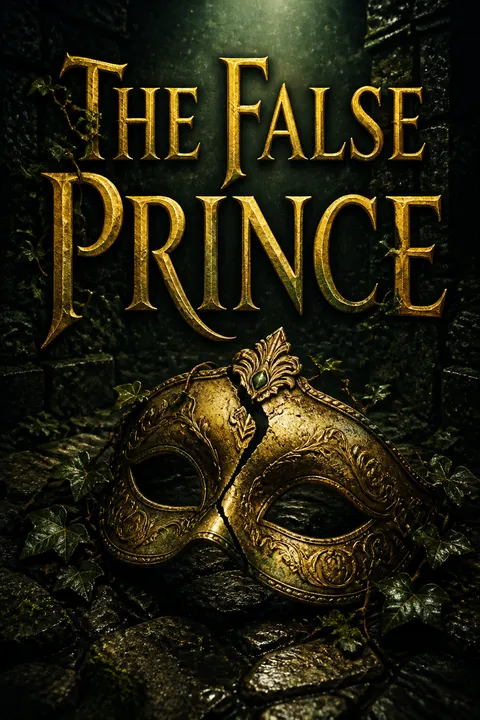


Plot Summary
A Roast Buys a Prisoner
Sage steals a roast to feed the hungry boys at Mrs. Turbeldy’s orphanage, but a passerby trips him and the butcher catches up. Bevin Conner pays off the butcher, then buys Sage from the orphanage. Sage tries to escape and is knocked unconscious by Conner’s guards. In the wagon, he meets two other recruits, the ambitious Roden and bookish Tobias, along with sickly Latamer.
At their first camp, Conner offers the boys a chance to leave. When Latamer accepts, Cregan shoots him dead. Sage understands that the offer was a trap, and stays because escape now means risking the same fate. Conner has made the stakes of his recruitment brutally clear.
The roast establishes Sage’s governing skill: he treats rules as obstacles to survival, while still acting on behalf of other hungry children. Conner immediately turns that instinct into a test of control. Latamer’s killing makes the recruitment more than a coercive apprenticeship; it is a closed system in which consent is manufactured through fear. Sage’s choice to stay is not loyalty, but an attempt to remain alive long enough to understand the trap.
The Dead King's Empty Throne
At Farthenwood, Conner reveals that King Eckbert, Queen Erin, and Crown Prince Darius have been murdered. With the royal line apparently ended, ambitious regents threaten civil war, and neighboring Avenia may invade. Conner says the missing younger prince, Jaron, is presumed dead, but many still hope he survived. He plans to present one of the boys as Jaron and asks them to become convincing nobles in two weeks.
Only one will be chosen; Conner leaves the others’ fate unstated. Tobias welcomes the chance to save Carthya, Roden sees a rare route out of poverty, and Sage suspects Conner wants a controllable puppet. When Conner explains that the boys’ appearance and character all matter, Sage refuses to pretend the scheme is wise.
The political crisis gives Conner’s deception a public justification, but his methods expose the private logic beneath it: stability is valuable enough to excuse nearly anything. Each boy hears a different promise in the plan. Tobias imagines civic duty, Roden imagines escape from powerlessness, and Sage recognizes the danger of surrendering judgment to a man who has already demonstrated what he will do to dissenters.
Lessons at Farthenwood
Conner’s estate gives the boys clean clothes, elaborate meals, and an exhausting schedule of lessons in Carthyan history, etiquette, riding, reading, and swordsmanship. Tobias’s education gives him an early advantage, while Roden applies himself to reading and combat.
Sage resists the lessons, steals small valuables, and explores the estate’s walls and hidden passages rather than accepting his new role. He notices Imogen, a young kitchen servant who seems frightened and is repeatedly mistreated.
After a riding challenge, Cregan gives Sage a wild mare; she carries him far from Farthenwood before he falls near a river. Mott finds him bruised and brings him back. Sage realizes his defiance has consequences, but asks Mott to help him become a better candidate.
Farthenwood makes social identity look teachable: clothes, posture, accent, and table manners are treated as tools for manufacturing nobility. Sage’s refusal is partly self-protection, since accepting the costume would mean accepting Conner’s ownership. Yet the episode with the mare shows that resistance alone cannot protect him or others. His request for Mott’s help marks a practical shift: he can learn without conceding that the role defines him.
The Gold That Wouldn't Bend
Conner confiscates a small gold-colored stone from Sage’s old clothes, dismissing it as worthless. Sage demands it back, and Conner has him dragged to the dungeon when he refuses to reveal where he has hidden it. Mott and Cregan whip and starve him, but Sage will not give up the stone because the fight has become a test of whether Conner owns his will.
Imogen secretly enters the dungeon with water and bread. She reveals that she can speak, though she has hidden her voice to avoid Conner’s attention, and urges Sage not to surrender. After two days, Conner releases him and asks whether he will be his prince. Exhausted, Sage agrees, believing he needs the role to survive.
The stone matters because neither boy values it as wealth. Conner wants compliance; Sage clings to a private possession as proof that some part of him remains beyond purchase. His resistance is costly and not purely heroic: it nearly destroys him. Imogen’s concealed voice mirrors Sage’s performed identity, but her intervention offers something Conner’s lessons cannot, care without a bargain attached.
The Princess Behind the Rumor
As the selection nears, Tobias grows desperate. He corners Sage in Farthenwood’s secret passages and cuts his back with a stolen kitchen knife to frighten him into withdrawing. Sage disarms the situation through a bluff, then uses Tobias’s fear of Conner to force him to abandon the contest.
When the betrothed princess Amarinda visits, Conner disguises the boys as servants. She hears rumors that the royal family is dead and grieves for Darius, whom she expected to marry.
After Sage honestly points out dirt on her face, she asks him to escort her away from dinner and confides her uncertainty about going to the castle. Sage encourages her to choose hope, but conceals that Darius is dead and that Conner’s scheme may make him her future husband.
Sage’s first serious protection of another rival comes through manipulation rather than open generosity. He prevents Tobias from escalating, but keeps control by exploiting the boy’s fear. With Amarinda, the cost of concealment becomes more intimate. She trusts Sage because he seems outside the court’s flattering machinery, while he uses that trust to protect a secret that will reshape her life. Honesty and deception now occupy the same relationship.
A Search Through Secret Walls
Conner dyes and cuts Sage’s hair to resemble the last portrait of Prince Jaron. Before he can settle on a candidate, the powerful regent Veldergrath arrives at Farthenwood with armed men, demanding to search for the prince and an emerald-covered box. Sage hides Roden and Tobias in the estate’s tunnels. During the search, Imogen distracts a soldier who discovers their room, but the man attacks her.
Sage emerges from hiding and kills him with the imitation of Jaron’s sword. Mott wounds himself and claims the dead soldier attacked him, diverting suspicion from the boys. After Veldergrath leaves, Conner finds Tobias’s incriminating notes among the hidden evidence. Sage will not promise to live by Conner’s lie, so Conner chooses Roden instead.
The threat becomes physical and immediate when political suspicion reaches Farthenwood. Sage’s killing is defensive, but it does not leave him untouched: protecting Imogen means crossing a boundary he had hoped to avoid. Mott’s self-injury is another costly act of loyalty, though his allegiance is beginning to shift. Conner’s preference for Roden confirms that he wants more than a convincing face; he wants a candidate willing to make deception permanent.
The Coin Names the Prince
As Roden prepares to leave for the castle, Sage rolls a coin over his knuckles, a trick Conner associates with Jaron. Conner realizes that Sage is the better candidate and summons him privately. The truth emerges for the reader: Sage is Jaron. Four years earlier, he escaped his ship through a porthole before pirates attacked it, then obeyed his father’s order to remain missing so Carthya would not be forced into war.
Eckbert arranged for him to live as an orphan, and Sage buried his identity beneath a new name. Conner asks him to become prince; Sage agrees only if Roden, Tobias, and Imogen come too. Mott returns Jaron’s imitation sword, which Jaron throws into a river. He will not claim his identity through a counterfeit weapon.
The coin trick turns a seemingly trivial habit into evidence that identity can survive deliberate concealment. The revelation also reframes Sage’s hardships: his orphanhood was not a disguise imposed by Conner, but a sacrifice arranged by his father and sustained by Jaron’s own anger. His conditions for accepting the crown are significant because he uses power before possessing it to protect people who could expose him.
Conner's Crown of Lies
At the Traveler’s Inn, Conner prepares Jaron for court and supplies the story he expects him to tell. Jaron asks for the truth instead. Conner admits that he hired the pirates to attack Jaron’s ship, hoping the prince’s apparent death would force Eckbert into war with Avenia.
He also gives Jaron Queen Erin’s emerald box, containing her sketch of her son, and the crown taken from the pirates. Conner intends these objects to support the false story, unaware that they can confirm Jaron’s real identity.
At the castle gates, guards reject the pair because so many claimants have arrived. Jaron leads Conner and the others toward a concealed entrance through the foul watercourse beneath the kitchens, where he once secretly entered the castle as a child.
Conner’s confession exposes the gap between patriotic language and political appetite: he engineered violence to provoke a war he believed would protect Carthya. The evidence he offers is meant to make a counterfeit claim persuasive, but each object carries a truth he cannot control. Jaron’s route into the castle also reverses his childhood pattern. The hidden passage once served escape and mischief; now it is the only way back to the home he left.
The River's False Crown
In the watercourse, Cregan reveals that he and Roden intend to seize the throne for themselves. Roden believes Conner would have left him to die, while Cregan expects a noble title and a place in government. Jaron proposes a duel to avoid a bloody standoff. Although Roden is stronger and better trained, Jaron uses a feint to disarm him and wins without killing him.
Cregan attacks, but Mott kills him; the crown slips into the current with his body. Jaron lets Roden flee, then sends Tobias to recover the crown. When Jaron pretends to be injured, Conner and Mott hurry ahead, leaving Imogen to help him reach the court by another route. She speaks openly for the first time, urging him onward.
The ambush tests whether Jaron will reproduce the ruthless logic that has governed the others. He defeats Roden but refuses to make victory depend on killing him, turning mercy into a deliberate political act rather than a weakness. Cregan’s death shows the danger of treating the throne as a prize to be grabbed. Imogen’s revealed voice completes a parallel movement: as Jaron steps toward his public identity, she chooses to speak for herself.
The Court's Final Test
Jaron enters the great hall carrying his original sword and recounts a private memory known to High Chamberlain Kerwyn. He gives Kerwyn the humble stone his father left him; a note from Eckbert confirms that this gesture identifies the real prince.
The court accepts Jaron, and he is crowned king. He dismisses Veldergrath, then accuses Conner of arranging the pirate attack, murdering Latamer, and poisoning the royal family. Jaron presents a vial of dervanis oil found in Conner’s office and has him arrested.
During a dance, Amarinda confronts Jaron for hiding the truth about Darius; he promises honesty but cannot erase her grief. He frees Imogen from her family’s debt and grants her noble status. Still mourning and wary of the future, Jaron chooses to celebrate his return for one night.
Jaron’s recognition rests not on appearance alone but on intimate, costly forms of evidence: a childhood memory, a family token, and the habits he could not fully erase. His victory therefore depends on the person beneath the performance, even as he must continue performing kingship. He holds Conner accountable, but cannot make Amarinda’s trust or grief disappear by decree. The ending offers a beginning rather than a settled peace: Jaron is home, and the political danger remains.
Analysis
The False Prince turns a succession crisis into a study of how identity is shaped under pressure. Conner believes a king can be manufactured from appearance, education, and obedience, while the three boys interpret the opportunity through their own injuries: Tobias wants agency through preparation, Roden wants security through power, and Sage distrusts any freedom offered on another person’s terms. Their contest makes performance both a political necessity and a psychological danger. The strongest evidence of identity is not a title or costume but a pattern of habits, memories, loyalties, and choices that survives disguise.
Sage’s humor and defiance initially look like simple rebelliousness, yet they protect a self that has been repeatedly treated as disposable. His development does not require him to become docile or abandon his tricks. Instead, he learns to direct those abilities toward protecting others and to accept a public responsibility he never desired. His refusal to kill Roden, his defense of Imogen, and his insistence on bringing the boys with him all distinguish leadership from domination.
The novel also refuses to let a patriotic cause cleanse its methods. Conner’s plan may prevent immediate political collapse, but his manipulation, torture, and violence create new victims and nearly reproduce the threat he claims to oppose. Jaron’s return restores a legitimate heir, not a painless order. Amarinda’s grief remains, the kingdom faces danger, and Jaron’s freedom narrows even as his authority grows. The final celebration is therefore meaningful precisely because it is temporary: homecoming can begin repair, but it cannot undo the cost of survival.
Review Summary
People Also Read










Characters
Sage
The defiant street orphanSage survives through quick observation, theft, and a sharp refusal to let authority define him. His jokes often serve as armor, keeping fear and attachment at a distance. Yet he notices who is hungry, frightened, or being mistreated, and his choices repeatedly expose a conscience he pretends not to have. Forced into a contest that rewards obedience and performance, Sage must decide which parts of himself are defenses and which are the source of his strength. His loyalty is rarely easy or sentimental; he tests people before trusting them and prefers action to confession.
Bevin Conner
The calculating regentConner is a wealthy regent who treats politics as a problem to be solved through preparation, leverage, and risk. He can be charming when it serves him, but his composure hides a willingness to sacrifice individuals for what he calls the country’s survival. He believes good intentions excuse methods that would otherwise look monstrous. Conner’s relationship with Sage is shaped by their competing definitions of loyalty: Conner demands obedience as proof of commitment, while Sage insists that judgment must remain his own. His control is strategic, not effortless, and depends on people accepting his version of necessity.
Mott
The disciplined swordmasterMott manages Conner’s household and trains the boys, combining practical skill with a guarded sense of duty. He is physically formidable, observant, and often more humane than his role permits him to appear. Mott believes in service, but he is not blind to the difference between serving a cause and serving a man. His lessons challenge Sage to distinguish courage from recklessness, while his silences reveal the moral compromises required by Conner’s scheme. He tends to express concern through instruction, protection, and restraint rather than tenderness.
Roden
The ambitious fighterRoden is strong, competitive, and painfully aware that poverty and lack of education have narrowed his choices. He sees Conner’s contest as a rare opening into a life where he might matter, so his ambition is rooted as much in deprivation as in vanity. Roden is eager to prove himself, but his confidence can conceal insecurity and fear of being left behind. His rivalry with Sage mixes resentment with moments of genuine respect. He wants power partly because he believes it is the only reliable protection against helplessness.
Tobias
The book-trained strategistTobias is educated, studious, and quick to understand the political stakes of Conner’s plan. Having lost his family and the grandmother who taught him, he longs for a future shaped by more than other people’s decisions. He believes preparation and intelligence can secure that future, but his need to control outcomes makes him vulnerable when the contest becomes uncertain. Tobias and Sage provoke one another because they embody opposing survival strategies: careful planning and improvisation. Beneath Tobias’s composure is a boy afraid that one mistake will return him to powerlessness.
Imogen
The watchful kitchen servantImogen works in Conner’s kitchen under an arrangement that binds her family to his household. She appears silent and withdrawn, but she is attentive to the danger around her and understands how quickly a person can be punished for attracting notice. Her reserve is a survival strategy, not an absence of thought or feeling. Imogen sees Sage’s contradictions clearly: his instinct to defend others can be generous, but it can also expose them to greater risk. She values freedom as something a person must claim, not a gift another person can bestow.
Amarinda
The betrothed princessAmarinda is a princess from Bultain, promised in marriage to the ruler of Carthya as part of a political alliance. She has learned to read a room because her future depends on decisions made by others, yet she is not content to be treated as a symbol or bargaining piece. Her affection for Darius makes the rumors about the royal family personally painful. She responds to plain honesty because courtly flattery leaves her isolated. Amarinda’s intelligence and emotional candor make her more than a prize in the succession struggle.
Cregan
Conner's hard-handed guardCregan is one of Conner’s guards and instructors, quick to use force and resentful when others make his work harder. He values strength and obedience, and interprets Sage’s defiance as a personal challenge. His sword skill and access to Conner’s confidence give him influence beyond that of a simple guard. Cregan’s ambition makes him dangerous, especially when he believes a path to status has opened.
Santhias Veldergrath
The throne-hungry regentVeldergrath is the prime regent, a powerful court figure who has spent years eliminating rivals and gathering support. His ambition is disciplined rather than impulsive; he knows how to turn uncertainty into leverage. Conner regards him as a threat to Carthya, while Veldergrath considers Conner’s secrecy suspicious. He embodies the danger of a political order in which powerful men can treat the kingdom as a possession to be won.
Joth Kerwyn
The king's trusted chamberlainKerwyn is the high chamberlain and a longtime adviser to King Eckbert. He commands respect without needing physical force, relying on experience, discipline, and deep loyalty to Carthya. His knowledge of the royal household makes him a crucial judge of claims to the throne. Kerwyn values evidence, but he also understands that personal memory can reveal what rehearsed answers cannot.
King Eckbert
The cautious rulerEckbert is Carthya’s king and the father of Darius and Jaron. He favors diplomacy and fears that open conflict could destroy his country, even when restraint carries its own risks. His relationship with his younger son is strained by expectations of royal duty and a failure to understand how deeply his decisions wound the boy. Eckbert’s choices reveal the burden of trying to preserve a kingdom while also protecting a family.
Queen Erin
The adventurous queenErin came from a modest background and entered royal life without surrendering her independent spirit. She is especially close to her younger son, whose unruliness reminds her of herself. Her history gives her a perspective on class and obligation that differs from the court’s polished assumptions. Erin’s love is attentive and personal, rooted in seeing the child behind the title.
Darius
The crown princeDarius is the elder royal son, raised from childhood to inherit the throne. He is remembered as educated, compassionate, and composed, qualities that make him a model against which others measure themselves. His relationship with Jaron is more protective than the younger boy understands. Darius represents the cost of duty when a person’s life is organized around public expectation.
Latamer
The sickly recruitLatamer is a frail orphan recruited alongside Sage, Roden, and Tobias. He knows he is less physically capable than the others and is wary of a dangerous contest. His attempt to leave shows how little choice the boys actually possess.
Errol
Sage's young attendantErrol is a young servant assigned to help Sage dress and navigate Farthenwood’s rules. Though obligated to obey Conner, he treats Sage with patience and humor. His own family debt gives him a personal understanding of constrained freedom.
Mrs. Turbeldy
The orphanage keeperMrs. Turbeldy runs the orphanage where Sage has learned to survive through scarcity and sharp bargaining. She is harsh and self-interested, but their uneasy arrangement suggests that even her hostility has limits.
Plot Devices
The prince-selection contest
A test of power and identityConner gathers three orphan boys and trains them to impersonate the missing Prince Jaron. Lessons in manners, history, riding, and combat make the contest look like a practical search for the best candidate, while the boys’ uncertain fates turn every lesson into a survival test. The contest also gives the novel a way to examine performance: the candidates must imitate a prince, but their different motives shape what they believe a ruler should be. For Sage, the central question is whether he can use the role without letting Conner own him.
Farthenwood's hidden passages
Secrets move behind the wallsThe tunnels allow movement through Conner’s estate without passing guards or servants. Sage discovers them while exploring, then uses them to hide the boys during Veldergrath’s search and to uncover the estate’s surveillance of their room. Later, the concealed route helps the party approach the castle when guards reject their claim at the gate. The passages turn architecture into both a tool of control and a means of resistance: Conner’s house keeps secrets, but Sage’s curiosity makes those secrets usable.
The gold-colored stone
A private token proves identitySage treats a small stone as a treasured possession, while Conner dismisses it as worthless and confiscates it to assert control. Its true significance only becomes clear at court, where the real Jaron gives it to Kerwyn. A private note left by Eckbert explains that the humble token is a recognition sign. The stone therefore works on two levels: it is an emotional link to Sage’s hidden past and a piece of evidence that a counterfeit claimant could not easily reproduce.
The coin roll and royal crown
Habits and heirlooms authenticate JaronSage’s skill at rolling a coin across his knuckles reminds Conner of a distinctive habit associated with Prince Jaron and changes the selection. The crown recovered from the pirates, along with Queen Erin’s drawing, is intended by Conner as support for his manufactured claim. Yet those objects connect to Jaron’s actual history. At court, his original sword, a remembered private exchange with Kerwyn, and his father’s token supply additional proof. Each object or habit gains meaning from who can use or recognize it, not merely from its appearance.

Download PDF
Download EPUB
.epub digital book format is ideal for reading ebooks on phones, tablets, and e-readers.








