

Plot Summary
Prologue
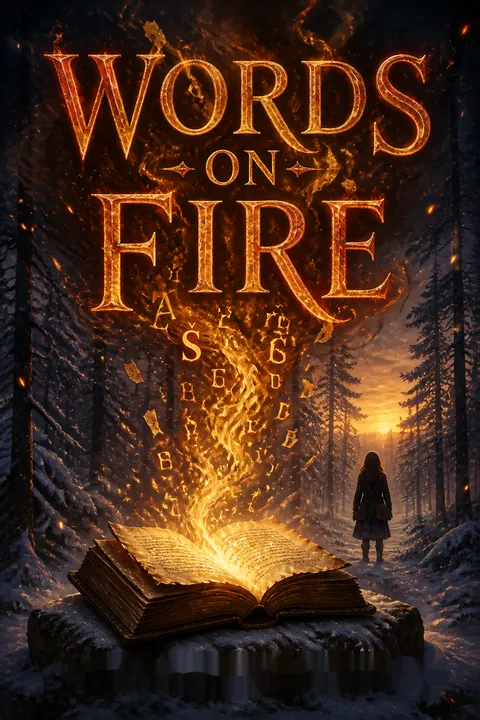
Audra introduces herself through the language the occupiers have forbidden: Lithuanian. Her name means storm, and she is carrying sacks along a dangerous road because people are counting on her, beginning with her parents.
The opening looks ahead to the girl she will become, then the story returns to the summer of 1893, when she is still a farm girl who believes her father’s magic consists only of tricks.
The frame turns Audra’s name into a question of selfhood before the plot explains the danger surrounding her. If a language is outlawed, its names and the identities shaped by it are threatened too. The future-facing image of a girl carrying burdens gives the reader a destination, but not yet the cost of reaching it. The flashback then measures the distance between the quiet child Audra thinks she is and the person her circumstances will demand she become.
Midsummer Burns Bright
Twelve-year-old Audra has learned that her parents, Henri and Lina, keep dangerous secrets, though they still let her believe Henri travels as a magician. On Midsummer’s Eve, soldiers arrive while the couple hides packages in Henri’s traveling bag. Henri stays behind to delay them; Lina runs with Audra, but a wire Audra neglected to repair tangles Lina’s leg.
Lina forces her daughter to take the bag and carry its hidden package to Milda Sabiene in Venska. Soldiers seize Lina, while the farm catches fire and Audra escapes into the forest. Believing her parents may have died, Audra hides with the package, then hears Officer Rusakov tell villagers that the Zikaris couple has been arrested.
The raid converts family secrecy into immediate consequence. Audra’s forgotten chore becomes a physical trap for Lina, making the child’s guilt concrete rather than abstract. Her parents’ opposing instincts also emerge under pressure: Henri chooses to delay the soldiers, while Lina prioritizes her daughter’s survival and the package’s delivery. The fire destroys the sheltered world that had kept Audra ignorant, but it does not make her an informed hero at once. She leaves with an object she resents and a command she barely understands, so duty begins as a burden before it becomes a conviction.
A Fern Blossom’s Shelter
Audra, limping and carrying Henri’s bag, reaches a Midsummer gathering where Rusakov searches for her and promises a reward to anyone who finds her. Violeta, a market girl Audra recognizes, spots her in a patch of ferns. Rather than expose her, Violeta calls the hiding place a magical fern blossom and gathers the other celebrants around it, concealing Audra in their circle until the soldiers leave.
The villagers give Audra a shawl, cakes, and directions to Venska. Lost in the woods the next day, she meets Lukas, a boy traveling with a stubborn donkey. Audra wins his help with one of Henri’s card tricks, and Lukas guides her to Milda’s home.
Violeta uses the community’s shared ritual as practical cover: the soldiers dismiss the fern legend, while the young villagers make it a shield. Their protection gives Audra her first evidence that resistance can be collective rather than solitary. Lukas, by contrast, enters through improvisation and mutual suspicion. Audra secures his help by using a trick, a small inheritance from Henri that lets her act before she understands the larger cause. The journey therefore shifts her from fleeing alone to depending on strangers, though she still treats trust as a transaction.
The Book Beneath Milda
Milda greets Audra in a convincing disguise, then sheds her hunched posture and false skin to reveal the woman who knew Henri and Lina. The package is a locked book, not a weapon or treasure that can buy her parents’ release. Beneath Milda’s house, Audra finds a hidden bookstore and school, but refuses Milda’s offer of shelter and lessons because she blames books for the arrests.
When Cossacks search the home, Audra is trapped underground with Roze, a young student who has returned for a book. Audra uses a coin trick to steady Roze, then helps her escape through a garden shed. Having protected Milda’s school, Audra agrees to carry one book in her parents’ honor.
The locked volume frustrates Audra’s wish for a direct exchange: she wants an object with immediate leverage, but Milda shows her a network whose value is communal and long-term. Audra’s refusal to learn is not simple stubbornness; it protects her from admitting that the thing she resents may also be the work her parents chose. The Cossack search changes that balance. By protecting Roze and the school, Audra performs the very kind of work she had rejected. Her first commitment is modest, framed as a single act for her parents rather than allegiance to a movement.
Audra Takes the Route
Milda tests Audra’s ability to hide a pastry in public. After failed attempts, Audra masks its smell with mint and disguises it among lavender, proving she can adapt rather than merely obey instructions.
Milda explains that Russia has banned Lithuanian books to erase the language and the memory of Lithuania. Audra carries a history book toward Ben Kagan, but a Cossack offers her a Russian primer and the promise of schooling. She accepts it to look harmless.
Lukas finds her, calls the primer a weapon of assimilation, and hides it in a manure cart before taking her to Ben. When Audra separates from Ben’s wagon to distract a patrol, Rusakov recognizes her and offers her parents’ return in exchange for the name of the young smuggler traveling with her.
Audra’s first successful concealment depends on noticing what the assignment does not forbid: she cannot hide the pastry’s scent, so she redirects attention toward flowers and mint. That practical intelligence becomes the basis of her smuggling style. The Russian primer presents the same choice in ideological form. It offers literacy and advancement, but only through the language of the occupying power. Audra’s acceptance is tactical, not consent. Rusakov’s bargain then turns her family’s vulnerability into an instrument against her new companions, making her first real test not whether she can evade a search but whom she is willing to endanger.
A Bargain With Rusakov
Ben lets Audra rejoin the wagon, and she keeps Rusakov’s offer to herself while the carriers deliver books to a priest in Šiauliai. The priest explains that the books preserve the history and ideas the empire is trying to suppress. Audra begins sounding out letters in an alphabet book, but the words for child, home, and mother seem painfully small beside what she has lost.
A warning reaches the church that soldiers are coming, so Ben sends the carriers along separate routes with hidden books and a map written in milk. Audra follows hers alone. In the forest she hears soldiers whipping Lukas, who has been caught with books, and realizes Rusakov’s target is the boy she was asked to betray.
The priest gives Audra a political explanation, but her first experience of reading is intimate: basic words cannot contain her mother’s particular warmth or the shape of home. That limitation keeps the book’s power from becoming a simplistic cure for grief. The emergency departure also makes the movement’s methods visible as fragile and distributed: secret maps, separate routes, and individual carriers. Rusakov’s offer has not disappeared, but the sound of Lukas being punished gives the choice a human face. Audra must soon decide whether the promise of family reunion justifies making another family suffer.
The Forest Chooses
Audra distracts Lukas’s captors by releasing a harmless snake near their horses, then gathers his scattered books and helps him escape. She returns to the remains of her burned farm and breaks down beside the place she once called home. While Lukas recovers in the barn, he explains that Ben carries guilt from surviving an earlier uprising in which his comrades were executed.
Audra also reads a poem about a ruined forest and understands it as an image of Lithuania under occupation. At dawn, she decides not to meet Rusakov or trade Lukas for her parents. She and Lukas carry their books to Šiluva, where young readers eagerly claim them from a hidden room, showing Audra that each delivery reaches people who are waiting for it.
Audra’s choice is not a clean victory over fear. By refusing Rusakov, she accepts that her parents may be sent to Siberia, and she must live with that loss without knowing whether the decision can ever be repaired. Her rescue of Lukas is therefore both ethical and personal: she refuses to make another person pay for the possibility of her own relief. The poem and the crowded book room then enlarge her understanding of the work. A book cannot defeat an empire by itself, but it can restore a reader’s access to ideas and make resistance less isolated.
Books Beneath the Wedding
Back with Milda, Audra watches the Šiluva readers carry books away, then spends three months learning from the underground school. She moves from recognizing letters to reading for herself and begins writing a story about Rue, a resourceful girl shaped by Lukas’s fable. Audra also makes small deliveries through hidden drop sites.
At a wedding, she brings a prayer book wrapped as a quilt, but Rusakov’s soldiers raid the celebration and find it. While Lukas leads Audra toward an exit, she helps Roze get Milda out through the shed and draws the soldiers’ attention with a magic trick. The rescue succeeds, but Rusakov captures Audra. He demands names, takes Henri’s bag, and sends her toward prison while the town burns.
Audra’s literacy develops through private effort rather than a sudden gift: she studies after class, writes imperfectly, and gradually discovers that sentences can carry more than labels. Rue gives her a safe form in which to test courage before she can fully claim it as her own. The wedding raid tests that growth in public. Audra’s performance distracts soldiers long enough for Milda to escape, but the trick cannot protect Audra from capture. The sequence keeps skill and power distinct: ingenuity can create an opening, yet an occupying force can still impose costs on the person who makes it.
The Bag Through Bars
Rusakov tries to frighten Audra into naming the carriers, using her parents’ possessions and the threat of Siberia. Instead, she writes his name on the page he left for her, refusing to betray anyone. The authorities sentence her to Siberia, but during the transfer a guard returns Henri’s shoulder bag.
Audra uses its small explosive pops to startle the driver, slips away in the confusion, and misdirects him by joining a group of children. She travels by night to Venska and finds Milda’s home burned and its hidden rooms emptied. Roze reveals that Milda escaped, Lukas saved the books, and Rusakov has lost his position. Roze takes Audra to Lukas, who is hiding in the woods and preparing to cross into Prussia for more books.
The interrogation tries to make Audra experience loyalty as a childish luxury, setting the lives of her friends against the lives of her parents. Her refusal is costly precisely because it does not produce an immediate rescue or a sense of triumph. The returned bag, however, gives her a means to act. She turns Henri’s theatrical tools into practical escape devices, transforming inherited tricks into her own resourcefulness. At the burned house, the empty shelves initially look like defeat. Roze’s news revises that image: the books have moved, Milda is alive, and the network has survived dispersal.
Under the Neman
Lukas explains that he is going to Tilsit, in Prussia, to collect printed books, and Audra insists on joining him. Because she has no papers, they leave Lithuania by crawling beneath a bridge and crossing the Neman River on a rope hidden under its planks. In Tilsit, a printer has a much larger order than Lukas expected.
Audra reads his note from Milda and learns that Milda has also crossed the border to help the work from a safer base. She and Lukas plan to return with books hidden in coffins, using a corpse disguise to pass the guards. While waiting for the print run, Audra studies Henri’s notebook and experiments with a recipe for smoke bombs, hoping to create another way to distract soldiers.
The crossing makes the border a physical expression of the regime’s control: Audra cannot simply claim the right to travel, so she and Lukas must move beneath the official route, literally under the soldiers’ feet. The printer’s oversized order reveals demand that no single delivery can satisfy. Milda’s move to Prussia offers a safer alternative, but Audra’s commitment is now too strong for safety alone to settle the question. Her work with the notebook also joins two forms of inheritance: Henri’s stagecraft and the resistance’s need for practical ingenuity.
A Coffin Crosses Home
Lukas drives across the bridge with papers while Audra lies in a coffin above the hidden books, disguised as a dead girl. The Cossacks let them pass, but a Lithuanian couple recognizes Lukas from his earlier life in a Russian household and captures both carriers, hoping to trade them for their arrested son.
Audra loosens her bindings, frees Lukas, and helps him seize the wagon; a shot pierces the coffin as they escape. On the road, Lukas reveals that his father is Officer Rusakov and that he fled after his father tried to punish a Lithuanian family for reading. Audra and Lukas then hurry to Kražiai, where the priest’s church and its worshippers are threatened with a Cossack attack.
The coffin scheme turns the border’s own rituals against it: a request to inspect the dead is answered with a convincing stillness, while the books remain hidden beneath Audra. The couple’s capture exposes another consequence of occupation, as ordinary people are pushed toward trading strangers for imprisoned relatives. Lukas’s history complicates the conflict without excusing his father. His opposition is not abstract nationalism alone; it began when state violence entered a friend’s home and his own family became part of its machinery. Their arrival at Kražiai shifts the danger from covert transport to an open confrontation.
Kražiai Faces the Rifles
At Kražiai, Cossacks surround the church and prepare to destroy it. Ben insists that Audra and Lukas protect the books, while he stays with the townspeople. Audra and Lukas disobey, then use one of Audra’s smoke bombs to pull people out of the soldiers’ line. A Cossack drags Audra into the river to drown her, but Rusakov intervenes and is shot in the leg.
Lukas and Audra get him to a barn where survivors shelter. The priest later reports mass arrests, dozens of injuries, and at least six deaths by drowning. Ben does not return. Audra tells the survivors that the books preserve their language and identity, then leaves with Lukas to continue the work.
The climax forces Audra to confront the limit Ben has repeatedly tried to teach: carrying books preserves a future, but it cannot prevent every immediate act of violence. Her smoke bomb saves some people, not all, and the partial success carries grief rather than uncomplicated triumph. Rusakov’s intervention does not erase his earlier cruelty; it shows that the role of enforcer and the role of father have collided, forcing a choice he had previously avoided. Ben’s absence leaves the movement without its most experienced protector, while Audra’s appeal to the survivors turns private conviction into public speech.
The Locked Book Opens
After the attack, Lukas gives Audra the locked book Ben had kept hidden, along with the key she found among her parents’ belongings. Inside are family records linking Ben to Lina and, through her, to Audra. Ben had been protecting his granddaughter while trying to keep her out of the dangers that had already shaped his own life.
He wanted her to leave Lithuania, and Audra accepts that request now that the secret is no longer hidden from her. Milda is waiting across the border, and Lukas plans to return home to give his wounded father a chance to change. Audra prepares to leave the country, carrying her parents’ work and Ben’s final wish with her.
The genealogy book changes the meaning of Ben’s protectiveness without canceling its effects. His distance was not indifference but fear sharpened by personal loss, and his silence deprived Audra of knowledge even as he tried to spare her danger. The key joins the two halves of the family’s hidden history: the object Lina entrusted to Audra and the record Ben guarded. Audra’s departure is not a retreat from the cause. It is a shift in how she serves it, from carrying books inside Lithuania to sustaining the network from the other side of the border.
Epilogue
In 1904, the Russian press ban is lifted. On the anniversary of Milda’s death, Lukas finds Audra at her grave with her father’s recovered shoulder bag and news that the forbidden books are legal again. Henri and Lina arrive, and Audra embraces the parents she had feared she would never see.
Later, she and Lukas raise children who can read Lithuanian openly. Lithuania’s formal independence comes in 1918, after years of struggle, but Audra’s family has long treated the country as free in the ways that matter at home: through its language, its stories, and the books they share.
The reunion does not undo the years of separation or the deaths and injuries that resistance cost. Instead, the lifted ban changes the conditions under which Audra can return: the books her parents risked everything to preserve are no longer contraband. Lukas’s return of Henri’s bag reconnects Audra with childhood, but the object now signifies a lineage of work rather than a lost, simpler life. The final family reading scene makes freedom ordinary and repeatable. Children learn Lithuanian not through a covert school or a smuggled volume, but in their own home, where the language can be spoken aloud.
Analysis
Words on Fire makes literacy a political practice by showing what must happen before a child can read freely. Audra’s first contact with books is shaped by danger, grief, and resentment: the locked volume seems to have cost her parents, while the letters she learns initially appear too small to describe the people she loves. That skepticism prevents the novel from treating reading as a magical cure. Books matter because people carry them, teach from them, hide them, and choose to read them after punishment has made the cost unmistakable.
The story’s strongest structure is its movement between private and collective risk. Audra begins by wanting to recover her parents, a personal motive that makes Rusakov’s offer genuinely tempting. Each new relationship complicates that desire: Violeta’s crowd protects her, Milda gives her a place to learn, Lukas shares danger with her, and the young readers in Šiluva show the consequences of a successful delivery. Her refusal to betray Lukas does not restore her family, and the novel does not pretend that ethical choices reliably produce immediate rewards. Instead, her decision changes what kind of person she can live as.
Audra’s development also joins reading and authorship. She moves from not knowing the letters in her own name to writing a story, speaking publicly, and making decisions that others once made for her. The fable of Rue offers rehearsal for that agency, while Henri’s tricks provide a practical method: attention can be redirected, but the danger remains real. Finally, the family record complicates protection. Ben’s secrecy comes from love and fear, yet Audra has still been denied knowledge. The novel therefore treats identity as something preserved by language and relationships, but also something young people must be allowed to interpret for themselves.
Review Summary
People Also Read





Characters
Audra Zikaris
Reluctant book carrierAudra begins as a watchful farm girl who prefers the edges of a room to its center. Her father’s magic tricks give her a practical education in misdirection, but her parents’ secrecy leaves her unsure of what she is capable of and what their work demands. After their arrest, she carries a locked book toward Milda, initially hoping it can buy her parents’ freedom. Her intelligence shows itself in improvisation: she masks a pastry with herbs, reads soldiers’ attention, and turns a prison transfer into an escape. Learning to read and write gives her a language for thoughts she had kept silent. Audra’s central tension is how to remain loyal to family while accepting responsibilities beyond it.
Lukas
Restless border runnerLukas is a young smuggler who survives through humor, stories, and a willingness to take risks. He meets Audra when she is lost and injured, then guides her toward Milda while concealing how much he knows about her parents’ work. His fables about Rue offer Audra a way to imagine courage without being lectured into it. Lukas can be impulsive and overconfident, yet his loyalty is practical: he shares food, teaches Audra the routes, and returns for people as well as books. He has a complicated relationship with his family and with the Russian authority he opposes. Beneath his easy grin is a boy trying to decide what belonging means when home itself has become unsafe.
Milda Sabiene
Disguised underground teacherMilda runs a secret bookstore and school beneath her home while disguising herself as eccentric or ill to discourage Cossack scrutiny. She knew Audra’s parents and offers the girl shelter without pretending that the work is safe. Her teaching is both practical and humane: she trains Audra to conceal a delivery, explains why Lithuanian books are banned, and gives her room to choose whether to help. Milda’s disguises are not merely comic performances; they are a survival craft that lets her remain visible as a harmless shopkeeper while protecting a hidden institution.
Ben Kagan
Scarred veteran carrierBen is an experienced book carrier, an impatient planner, and one of the movement’s most cautious members. His rough manner can make him seem dismissive, especially toward Audra and Lukas, but he measures risk through memories the younger carriers do not yet share. He believes preserving people and books requires patience, concealment, and limits on courage. His history in an earlier uprising has left him wary of leading others into danger. Ben’s discipline can frustrate Audra, whose instincts push her toward immediate action, yet his guarded care helps her understand that responsibility includes keeping others alive.
Officer Rusakov
Cossack law enforcerRusakov is a newly assigned officer who enforces Russian laws with particular severity and treats Lithuanian language and books as threats to imperial authority. He uses surveillance, rewards, threats, and punishment to pursue carriers, believing force can make the occupied population accept Russian identity. His confidence rests on an assumption that people will choose safety when the cost of resistance becomes personal. Audra’s refusal challenges that calculation. Rusakov is not presented as a simple monster detached from family or feeling; his role as an enforcer creates conflicts that he cannot resolve through authority alone.
Henri Zikaris
Magician and courierHenri is Audra’s lively, affectionate father, known publicly for traveling magic shows. His tricks delight his daughter and quietly teach her how attention can be redirected. Behind that public work, he helps move illegal Lithuanian books, a secret he keeps from Audra in an effort to protect her. His confidence in the cause often clashes with Lina’s fear of what the work may cost their family. Henri’s two kinds of magic, theatrical illusion and the preservation of words, shape Audra’s understanding of courage.
Lina Zikaris
Farmer and organizerLina is Audra’s warm, practical mother, responsible for the farm and involved in the book network alongside Henri. She worries about the danger that their work brings home and tries to keep Audra outside it for as long as possible. Her care is protective but not passive: when soldiers arrive, she secures the package’s delivery and pushes Audra toward survival, even at terrible personal cost. Lina’s love is expressed through work, food, and attention, while her secret organizing shows that domestic life and political resistance have never been separate for her.
Violeta
Market girl turned allyVioleta sells pastries in the market and is one of the first villagers to recognize Audra after the raid. At the Midsummer gathering, she invents a fern-blossom search that lets the crowd hide Audra from Rusakov’s soldiers. Her choice risks punishment for herself and the people who follow her lead. Violeta’s courage works through coordination rather than force: she gives the group a shared pretense and trusts them to understand what it protects.
Filip
Young village guideFilip is one of the young people who help shield Audra during the Midsummer search. He gives her directions toward Venska and warns her that soldiers will search the villages. Later, he is among the readers who welcome the books Audra delivers. His practical help makes the resistance visible as a community, not only a chain of secret couriers.
Roze
Student with quiet courageRoze is a younger student at Milda’s hidden school, eager to read and initially frightened when Cossacks search the house. Audra steadies her with a coin trick and helps her escape through the garden shed. Roze later returns that courage by carrying warnings and watching for Audra. Her enthusiasm for books gives Audra an early glimpse of what access to learning can mean to someone who has not yet been taught to fear it.
The priest
Priest and book distributorThe unnamed priest helps distribute books through the church and shelters carriers when routes become dangerous. He explains to Audra how Lithuanian books preserve history and give people a way to imagine a future outside Russian rule. His religious role does not make him obedient to the occupying power; he treats the right to worship and read in Lithuanian as bound together. He is a patient interpreter of the movement’s purpose, while the villagers around him turn that purpose into action.
Otto
Lukas’s childhood friendOtto is a Lithuanian boy whose family’s reading introduces Lukas to the danger attached to forbidden books. His household gives Lukas a glimpse of the community and culture his father’s authority would have him reject. Though he appears through Lukas’s recollection, Otto’s family becomes an important measure of what Lukas is willing to risk for his friends.
The printer
Prussian underground printerThe printer in Tilsit produces Lithuanian books for carriers returning across the border. He depends on the smuggling network but also worries about the danger it brings near his shop. His willingness to fulfill large orders reflects the support available among Lithuanians living in Prussia, where printing can continue despite the ban across the river.
Plot Devices
The Lithuanian book ban
Weaponized cultural erasureThe Russian authorities prohibit Lithuanian printing and punish people who distribute, hide, teach from, or read the books. The ban gives the plot its central danger: Audra’s parents are arrested for their work, Milda conceals a bookstore and school, and carriers cross the border to bring new printings home. The books preserve more than literacy. They carry language, history, prayer, and stories that challenge the empire’s claim over Lithuanian identity. The law turns ordinary reading into a form of resistance and makes every delivery a choice with consequences.
Henri’s magic tricks
Misdirection under pressureHenri’s cards, coin tricks, disappearing cloth, magnetic ring, and small explosive pops give Audra a vocabulary for managing attention. At first they are family entertainment; after the raid, she adapts them to calm Roze, distract Cossacks, escape a prison transfer, and help rescue Milda. The tricks do not grant supernatural power. Their value lies in timing, observation, and the ability to make people watch the wrong thing long enough for someone to act.
The story of Rue
A fable for becomingLukas tells Audra a changing folk tale about Rue, a girl who faces a snake, a bear, and a boy. As Audra grows more involved in the resistance, the story develops alongside her, giving her a way to consider loyalty, fear, and the choices that shape a person. The tale is not a coded map with a single fixed meaning. Its shifting roles let Audra and Lukas speak indirectly about their own lives before either is ready to explain everything plainly. Audra eventually writes her own version, turning the borrowed story into an act of authorship.
The smuggling network
Distributed resistance infrastructureMilda’s concealed rooms, church storage spaces, village drop sites, Prussian printers, and individual carriers form a network that can survive when one person or location is exposed. Its methods are varied: books travel under fabric, straw, flowers, food, and eventually inside a coffin. Hidden routes and coded maps allow carriers to keep moving without knowing every participant. This structure explains why the authorities cannot end the work simply by raiding one shop. It also makes each reader part of the chain, since the books are valuable only when people continue to receive and use them.
The locked family book
A key to hidden kinshipThe worn, locked volume Audra carries from her parents remains unread through much of the story. It first seems like an obstacle to her immediate goal of bargaining for their return, and later disappears during the burning of Milda’s home. The key found among her parents’ possessions eventually opens it. Its family records explain Ben’s protectiveness and alter Audra’s understanding of the support he gave her. The book therefore holds both the movement’s hidden history and a personal truth Audra could not have learned through the ordinary routes of trust.
Download PDF
Download EPUB
.epub digital book format is ideal for reading ebooks on phones, tablets, and e-readers.








