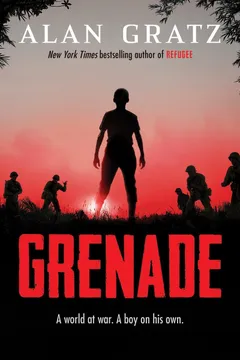


Plot Summary
Graduation Under Fire
As American shells destroy his school, fourteen-year-old Hideki Kaneshiro is hurriedly declared a soldier in Okinawa’s Blood and Iron Student Corps. Lieutenant Colonel Sano gives each boy grenades and insists the Americans will murder their families.
Hideki is frightened, but he wants to prove himself braver than Yoshio, the older schoolmate who bullies him. Yoshio swaps his own fragile ceramic grenades for Hideki’s metal ones, leaving Hideki with weapons he barely knows how to use.
Sano’s final instruction is that one grenade should kill an American and the other should end the boy’s own life rather than let him be captured. Across the water, Marine Ray Majors leaves his landing craft for his first battle, expecting the beach to be a killing ground.
The two boys enter the same battle under opposite systems of instruction, yet both are denied the freedom to decide what courage means. Sano turns children into expendable instruments by pairing patriotic ceremony with a suicide order. Ray’s military training also teaches obedience, but he has joined voluntarily and still imagines that personal judgment might matter. Hideki’s smallness and fear are not incidental traits: they make him especially vulnerable to a culture that treats hesitation as moral failure. The ceremony begins the story by showing how institutions can give children weapons before they have the emotional or practical means to understand what using them will do.
The Pig Pen Sniper
Ray reaches Okinawa’s beach without resistance. The Japanese have withdrawn inland, leaving the Marines to cross open farmland that looks almost peaceful. When Ray’s squad stops at a farm to slaughter a pig, a sniper kills nineteen-year-old Billy Lineker.
Ray recognizes the sound of the sniper’s bolt-action rifle from hunting at home, so Sergeant Meredith sends him across an exposed road to throw a grenade toward the hidden shooter. The blast misses, but it drives a young Okinawan boy out of hiding.
Ray argues that the boy may be a civilian; Big John shoots him anyway, treating anyone who fires on Marines as an enemy. Ray has survived his first day, but the difference between a combatant and a child has already become a question with a body attached.
Ray’s first encounter with combat dismantles the reassuring story that skill and good intentions can keep violence orderly. His farm experience helps him identify the sniper, but it cannot tell him what justice requires once the boy appears. Big John’s decision is efficient in military terms and devastating in human ones; Ray’s hesitation cannot reverse it. The scene also establishes a central pressure on Ray: he notices the person inside the enemy category, while the veterans around him have learned to suppress that recognition. His discomfort is not yet a solution, but it becomes the beginning of a moral practice that will repeatedly place him at odds with his squad.
A Schoolboy’s Failed Charge
Hideki and the other student soldiers set out to attack the Americans, but shelling drives them into a cave. When the bombardment pauses, an Okinawan family asks to shelter there. Yoshio bars the entrance, and Hideki joins him rather than risk being bullied again.
Soon the boys mistake their school principal, Norio Kojima, for an enemy and nearly attack him. Kojima escapes with photographs of the Emperor, which he believes preserve the ruler’s spirit. Drawn by the smell of American cooking, the students creep toward a Marine camp.
A grenade explodes among them, and Takeshi dies; gunfire kills more boys, while Katsumasa’s grenade rebounds and kills him. Hideki cannot throw his own weapon. He flees through the wreckage, later finding Kojima dead beside the photographs.
The attack makes the cost of Hideki’s training immediate: boys who were promised heroic sacrifice instead meet confusion, friendly mistakes, and weapons they cannot reliably control. Hideki’s inability to throw his grenade looks like cowardice under the army’s rules, but it also prevents him from killing anyone in this moment. His earlier refusal to shelter civilians shows how fear can make him cooperate with cruelty even when he recognizes it. Kojima’s devotion to the Emperor’s photographs extends the same logic of sacred duty, but the images cannot protect their keeper. The scene strips official symbols of their promised power while leaving Hideki with a more intimate obligation to the living.
The Tomb’s Last Truth
Hideki carries Kojima’s photographs to his family tomb, where he finds his father, Otō, gravely wounded. While Hideki cleans the neglected tomb and offers rice to their ancestors, Otō reveals that Hideki’s mother and younger brother died when their evacuation ship was torpedoed.
He also explains that Japan withdrew its best troops from Okinawa and expects the island to delay the Americans while mainland defenses are prepared. A private soon commandeers the tomb, eats the ancestral offering, and forces father and son into the rain.
Otō admits no doctor is coming and that he was shot while fleeing. Before dying beneath a banyan tree, he asks Hideki to find Kimiko, their surviving sister, and tells him that their supposedly cowardly ancestor may have been brave enough to know when a fight was hopeless.
The family tomb gathers the novel’s competing definitions of duty: care for ancestors, obedience to the army, and responsibility to the living. Hideki’s father overturns the state’s promise that sacrifice will defend Okinawa. The island is not being saved; its people are being spent to buy time elsewhere. This revelation also recasts Hideki’s inherited shame. The family’s story of cowardice may have mistaken survival for disgrace, a possibility Hideki cannot yet accept but will need later. Otō’s final request gives Hideki a concrete purpose that can outlast the Emperor’s photographs. His task is no longer to prove his worth through violence, but to find the sister who remains.
Smoke Instead of Grenades
After Marines throw a grenade into a cave, Ray sees Okinawan civilians flee in terror and leap from a cliff rather than be captured. The squad cannot understand why they chose death, and Ray cannot eat with the others afterward.
Later, a grenade destroys a family hiding in a tomb. Ray protests that the Marines should use smoke to drive people out instead of killing whoever may be inside. Sergeant Meredith backs him, orders the squad to change its procedure, and rebukes a private who dismisses Ray’s concern.
Soon afterward, a grenade accidentally activates in Meredith’s pouch. He throws it away but is badly wounded; Big John carries him to medical care. Meredith survives, but is evacuated, and Big John receives a field promotion to lead the squad.
Ray’s compassion becomes consequential only when it changes a procedure, not merely when he feels bad. Meredith’s support gives that protest institutional force, while Big John’s pragmatic acceptance shows that loyalty among soldiers can coexist with moral disagreement. The episode does not pretend that smoke grenades will make combat humane; it establishes only that the squad can reduce avoidable killing when someone insists on trying. Meredith’s injury also removes the leader who has made space for Ray’s judgment. Big John now commands a unit shaped by his tougher assumptions, so Ray’s effort to protect civilians will become more difficult precisely as the fighting intensifies.
Refugees in the Crossfire
As Ray’s squad moves south toward the front, Okinawan refugees approach through the rain. Ray lowers his rifle to help, but Japanese soldiers concealed among the civilians discard their blankets and open fire.
The Old Man, Corporal Travis Starks, is killed, and Big John orders the Marines to shoot before the attackers can overwhelm them. Ray fires into the crowd without time to distinguish soldiers from families. When the shooting stops, many of the dead are Okinawans who had come seeking safety.
Ray recognizes that he has become the kind of threat they feared. He does not excuse himself by blaming the disguised soldiers, though he knows he would fire again if his squad faced the same danger. The knowledge leaves him less certain that good intentions can survive fear.
The ambush exposes the brutal asymmetry between moral clarity at a distance and decision under threat. Ray has argued for protecting civilians, yet in the moment he cannot separate them from the soldiers using them as cover. The scene refuses an easy judgment: he is responsible for his shots, but the situation has been engineered to make discrimination nearly impossible. His honesty about firing again is more unsettling than a simple declaration of guilt, because it recognizes how survival can reproduce the harm one condemns. Starks’s death also costs the squad a source of companionship and perspective, leaving Ray with fewer voices to counter Big John’s hardening view of war.
The Photograph at School
Keeping his promise to Otō, Hideki searches his sister’s school. An American bomb has killed students in their classroom, but Kimiko is not among them. A military notice says fifth-year girls have been assigned to the army hospital at Ichinichibashi, far to the south.
While Hideki hides among the bodies, a young Marine enters and removes the class photograph from its frame. Hideki does not know why the soldier wants it, but he watches him fold it carefully and carry it away.
The Marine is Ray, collecting photographs of people whose lives have crossed his path. Hideki heads toward Shuri Castle and the hospital, even though the route leads deeper into the battle. His search for Kimiko now outweighs both the army’s orders and his fear of Americans.
The classroom turns Hideki’s private search into a confrontation with the war’s machinery: the army has assigned girls to a hospital, and American bombing has made even a school a battlefield. Ray’s quiet act of preserving the photograph creates a connection between the boys before they meet, though Hideki can only interpret it through the propaganda he has heard. His decision to keep moving south is a meaningful shift from survival by hiding to survival through purpose. At the same time, the absent photograph suggests that images can travel between enemies without erasing the violence that made them necessary. The scene plants a fragile possibility of recognition without pretending recognition is already understanding.
The Cave’s Human Shields
Traveling south through destroyed villages, Hideki is caught by a Japanese unit hiding in a cave. Its lieutenant plans a dawn counterattack against a nearby American camp. Wounded soldiers are ordered to kill themselves, and Okinawan civilians are fitted with explosives to walk ahead of the attack.
Hideki objects, but the lieutenant threatens him and forces his ceramic grenades back into his hands. A gunshot grazes Hideki’s arm, so he climbs through a narrow air shaft and escapes onto the ridge.
Nearby, American soldiers use a flamethrower on a cave without first determining who is inside; the fire singes Hideki as he tries to surrender. Seeing both armies endanger civilians, Hideki rejects the idea that either side is protecting Okinawa. He decides he must reach Kimiko without becoming either army’s weapon.
Hideki’s escape is the point at which the Japanese army’s claim to defend Okinawa becomes impossible for him to maintain. Its officers treat wounded men and local civilians as disposable materials, while the Americans’ flamethrower shows that surrender offers no guarantee of safety. The novel places these acts beside each other without making them identical in every circumstance; instead, it shows how military fear and strategy repeatedly erase the distinction between people and obstacles. Hideki’s choice to flee rather than obey does not yet make him safe or morally certain. It does give him a new standard: he will judge actions by whom they protect, not by the flag or authority behind them.
Kakazu Ridge Breaks
At Kakazu Ridge, Ray and Big John survive the climb into the saddle between two hills, but Japanese fire kills or scatters many Marines. When Japanese soldiers launch a counterattack, Ray fires until his ammunition runs low.
Then Okinawan civilians appear, including a woman carrying a baby with explosives strapped to her waist. Big John orders the Marines to shoot. Ray cannot bring himself to fire, and Big John kills the woman before she reaches them. During the renewed attack, a grenade lands between Ray’s legs.
He escapes down the slope, unsure whether Big John and the others are alive, and runs away from the front. He has now seen civilians turned into weapons by one army and killed by the other, with no safe position from which to stop either.
Ray’s refusal is not a clean act of heroism: the woman is still killed, and his hesitation does not halt the attack. Yet his inability to reduce her to a target marks a limit he will not surrender, even when that limit endangers him and his comrades. Big John’s choice reflects the opposite pressure, the belief that hesitation can kill the whole group. The scene makes their disagreement material rather than rhetorical: one man fires, the other freezes, and a civilian dies. Ray’s flight afterward is both physical and moral exhaustion. He is no longer able to pretend that remaining inside the squad automatically means doing good.
Two Boys, One Blast
Hideki and Ray flee in opposite directions through the same shattered landscape. Each follows a different path around a lone pine tree, and they collide hard in the mud. Ray reaches for his rifle; Hideki grabs a grenade. Ray fires as Hideki throws. The blast knocks both boys unconscious. When Hideki wakes, he sees that the American is dead.
He feels no triumph, only shock and a grief he cannot undo. The Marine is close to his own age, and Hideki recognizes him as the boy who took the school photograph. He finds the soldier’s pack and carries it away, unable to meet the dead boy’s face. The event divides Hideki’s life into before and after, and the name he later recovers from the pack is Ray, heard in his memory as Rei.
The collision compresses the novel’s two perspectives into one instant of mutual fear. Neither boy recognizes the other as a person before the trained reflexes take over; each reads the other’s weapon as the only fact that matters. The blast therefore does not resolve their conflict so much as make its cost intimate. Hideki’s grief arrives after survival, when the threat has passed and the dead face can no longer be mistaken for an abstract enemy. Taking the pack is necessary for his journey, but it also binds him materially to the boy he killed. The encounter makes responsibility more complicated than intention: Hideki did not seek Ray as an individual, but his action still ended Ray’s life.
A Pack Full of Lives
Hideki scavenges Ray’s pack for food and finds photographs of American and Japanese families, including one of the class picture from Kimiko’s school. A snapshot of Ray with his father convinces Hideki that the dead Marine had a life beyond his uniform.
When Hideki meets Yoshio again, the former bully is gaunt and unexpectedly affectionate, searching for water for his mother and sister. Yoshio brings Hideki to a cave where civilians shelter with Private Maeda, a Japanese soldier growing increasingly suspicious and unstable.
An elderly Okinawan woman identifies Hideki’s haunting visions as Ray’s mabui, the spirit he believes attached itself to him after the violent death. When Maeda threatens them, Hideki uses his remaining grenade to hold the soldier back, takes Maeda’s rifle, and escapes with Ray’s pack.
The photographs give faces and relationships to the people war has flattened into categories. Hideki’s recognition of Ray as a son and friend does not undo the killing, but it prevents him from treating the death as an anonymous military achievement. The old woman’s account of mabui gives spiritual form to this burden, while also reflecting Hideki’s need to make sense of trauma through the beliefs he inherited. Yoshio’s changed behavior complicates Hideki’s memory of him: deprivation has made the bully vulnerable, but fear has not disappeared from their relationship. Hideki’s standoff with Maeda is a first use of force on his own terms, meant to protect civilians and escape rather than satisfy the army’s demand for sacrifice.
Food Without Poison
Weak from hunger and fever, Hideki opens the American rations in Ray’s pack and discovers they are food, not poison. Later he finds a Miyagi family hiding in a tomb after their supplies have run out.
He shares the remaining tins and tells them the Americans treated his wounds, though he warns that soldiers may still be dangerous during combat. The family decides to surrender. Hideki guides them back to an American camp, where they are accepted as refugees.
Their gratitude and the mother’s embrace remind Hideki of the family he has lost, but he refuses to stay with them. He still has to find Kimiko. The choice costs him the immediate safety and food the camp offers, yet confirms that he can help other Okinawans without carrying out orders for either army.
The ration scene converts propaganda into a practical test. Hideki does not accept American kindness because he suddenly trusts every soldier; he tests the food, remembers his treatment, and weighs the danger of waiting against the danger of approaching. His advice to the Miyagis is similarly conditional, acknowledging that people can become lethal when frightened. This is a more mature judgment than the simple categories of monsters and heroes with which he began. Leading the family to safety also turns his experience into knowledge he can share. He declines rescue not because he rejects it, but because his promise to find Kimiko remains unfinished and gives his movement a direction.
The Hospital Inferno
At the Shikina command post, Hideki searches among student nurses for Kimiko but finds no one who knows her. Americans attack the crowded cave, killing those near the entrance with flame and explosions. Hideki pulls a metal cabinet over himself and nurse Masako, shielding them from the worst of the blast. They escape through a rear passage and reach another abandoned post, where Masako finds leftover rations.
Japanese soldiers soon seize the food and drag both teenagers to a different bunker. There Hideki hears a nurse scold a child in the familiar, exasperated way Kimiko used with him. He pushes through the crowd and finds his sister alive, tending to children who are about to be used as human shields in another planned attack.
The hospital fire forces Hideki to act with the same urgency that has repeatedly trapped him between helplessness and violence. He cannot prevent the attack, but he uses the metal cabinet to protect Masako and himself, making survival a shared task rather than an individual escape. The nurse’s presence also reveals the hidden labor of conscripted girls, who have been expected to care for wounded men without adequate medicine or protection. Hideki’s recognition of Kimiko comes through a small relational habit, not a dramatic sign: he knows her by the way she treats a child. Their reunion is therefore both emotional relief and a new crisis, since the children around her face immediate danger.
Past the Unexploded Bomb
Kimiko explains that the Japanese plan to send the children ahead of the soldiers as human shields. The group’s only rear exit is blocked by a huge unexploded bomb. Kimiko squeezes past it, followed by Masako and the children; when a Japanese guard tries to stop them, Hideki places himself between the soldier and the last boy, Kazuo.
He warns that a shot could strike the bomb, then slips through the gap himself. Outside, Masako urges him to use his grenade to destroy the bunker and its occupants. Hideki refuses. Instead, he takes the children north, away from the planned attack and back toward home. For the first time, his destination is not escape from one army or pursuit of another. It is a life he hopes to preserve.
The bomb creates a physical version of Hideki’s moral predicament: movement is necessary, but every careless action could kill the people he is trying to save. His refusal to detonate it is not simply fear. He has learned that killing the enemy can reproduce the same logic that made the children expendable in the first place. By placing himself between Kazuo and the guard, he accepts risk without making another person a weapon. The choice also resolves the movement of his character: he no longer measures bravery by how many enemies he can destroy. He measures it by whether he can protect vulnerable people while refusing the false certainty that violence will make them safe.
The Naked Surrender
A Japanese machine-gun nest blocks the group’s route north. Hideki distracts its two soldiers with a fabricated report that the battleship Yamato is coming, buying Kimiko, Masako, and the children time to pass. Ahead, an American camp blocks the road. Rather than attack, Hideki decides they will surrender at dawn in their underclothes, with no weapons to make them look threatening.
American guards raise their rifles, and one shoots Kazuo in the arm. Big John, now leading Ray’s former squad and missing an ear, restrains the shooter and allows the group to approach. When Japanese fire strikes the camp, Hideki’s party reaches safety amid the confusion. A medic takes the wounded Kazuo, and the survivors are led away from the battlefield.
Hideki’s deception at the machine-gun nest and his surrender to the Americans are not contradictions; they are adaptations to different dangers. He lies to armed Japanese soldiers to protect children, then strips away weapons and clothing to make his group legible as civilians to the Americans. The shooting of Kazuo proves that surrender does not guarantee innocence will be recognized. Big John’s intervention matters because one soldier chooses restraint over the reflex to defend his own side without question. The subsequent Japanese attack ends the standoff through combat, not trust, but Hideki has still crossed the line alive. Safety emerges through several imperfect acts of judgment, none of which can erase the risks that preceded them.
Photographs on the Wall
Four days later, Hideki and Kimiko leave the refugee camp for the ruins of Shuri Castle. Hideki hangs framed photographs of Japanese and American soldiers on the remaining wall, including Ray with his father.
He sees the people in the images as brothers, parents, and children before they became combatants. Kimiko explains that Hideki has lost his own mabui, while Ray’s spirit remains with him; Hideki also understands that the family ancestor he feared may have been a farmer facing impossible odds, not a coward.
He wants to help Ray’s spirit find peace before seeking his own. Looking across the devastated island, Hideki imagines Okinawa rebuilt, with Kimiko beside him. The photographs cannot restore the dead, but they let him begin remembering them as people.
The wall of photographs transforms Hideki’s earlier habit of framing the world into an ethical practice. The images do not excuse the soldiers’ actions or equalize the suffering of every group; they insist that military identities are not the whole of a person. By placing American and Japanese faces together, Hideki resists the national story that demanded his hatred while honoring the private attachments each side carried into battle. His understanding of Shigetomo also loosens shame from fear: survival under overwhelming force need not be a moral failure. The unresolved loss of Hideki’s own mabui keeps the ending honest. Recovery is imagined as collective work, not a magical erasure of trauma.
Analysis
Grenade places two young people inside a system that insists fear must be converted into violence. Hideki is told that courage means dying for the Emperor; Ray is trained to survive by treating danger as a target. Their collision does not happen because either boy is naturally cruel. It happens because they meet without time, language, or context, carrying weapons that make suspicion faster than recognition. The novel’s alternating perspectives expose how each side’s propaganda narrows the other into a threat, while civilians are repeatedly caught between military strategies that claim to protect them.
Okinawan culture gives the book a vocabulary for what the battlefield does to a person. Mabui makes spiritual injury legible without reducing it to a medical label, and the family tomb ties grief to inherited care. Hideki’s belief that an ancestor has made him a coward is gradually unsettled by his father’s account of an impossible fight. The change is not a simple lesson that fear should be overcome. Rather, Hideki learns to distinguish fear from shame, and courage from obedience. That distinction enables him to refuse both the Japanese army’s demand for self-sacrifice and the retaliatory violence that might make the Americans treat civilians as enemies.
Ray’s photographs provide a parallel education. He gathers images because he wants the dead to remain more than bodies, and Hideki eventually sees in them the domestic lives that military labels conceal. The final wall does not reconcile the nations or absolve the soldiers. It changes the terms of remembrance, placing Japanese and American people beside one another as individuals who had families before combat consumed them. The ending’s imagined rebuilding of Okinawa is therefore neither denial nor easy optimism. It is a commitment to repair a home whose physical landscape, spiritual inheritance, and human relationships have all been damaged. The novel’s central claim is concrete: refusing to make civilians into weapons, targets, or symbols is one beginning of peace.
Review Summary
Grenade by Alan Gratz is a highly praised young adult historical fiction novel set during World War II in Okinawa. The story alternates between two teenage protagonists: an American soldier and an Okinawan boy. Readers appreciate the book's intense action, emotional depth, and educational value. Many consider it a page-turner that offers insights into a lesser-known aspect of WWII. While some found certain parts predictable or difficult to connect with, the majority of reviewers highly recommend the book for its engaging narrative and exploration of themes like bravery, survival, and the human cost of war.
People Also Read
Characters
Hideki Kaneshiro
Fearful Okinawan schoolboyHideki is a fourteen-year-old Okinawan student whose small build and anxious temperament make him a target for Yoshio’s bullying and an uneasy recruit for the Blood and Iron Student Corps. He wants to be brave, partly because he believes his family carries the spiritual shame of an ancestor who surrendered to invading samurai. His sister Kimiko has taught him to notice people and listen to their stories, while the photographer Lieutenant Tanaka has taught him to frame what he sees. Hideki’s instincts often pull him between self-preservation and concern for others. His perspective brings Okinawan culture, family memory, and the civilian cost of war into a conflict dominated by competing armies.
Ray Majors
Uneasy young MarineRay is a farm-raised teenager from Nebraska who enlists in the Marines before the war can end without him having served. He arrives on Okinawa with hunting skills, a strong sense of fairness, and limited knowledge of what battle will demand. His father’s history as a soldier and a violent incident on the farm have left Ray wary of becoming hardened or unpredictable. He pays attention to the lives represented by the photographs he collects, even as combat repeatedly forces him to make choices under pressure. Ray’s character is defined by the gap between the humane person he wants to remain and the actions that fear and military necessity can demand.
Kimiko Kaneshiro
Hideki’s perceptive sisterKimiko is Hideki’s older sister, a student nurse and a yuta, an Okinawan spiritual practitioner believed to communicate with the dead. A white streak in her hair marks an experience she has kept largely private. She is perceptive about both spiritual traditions and ordinary human needs, and she often sees the practical explanation behind behavior others attribute to the supernatural. Kimiko is protective without being indulgent: she challenges Hideki when he uses fear or family legend as an excuse to avoid acting. Her nursing work places her among the wounded, while her role as a sister gives Hideki a living connection to home and to the traditions that shape his understanding of loss.
Yoshio
Hideki’s schoolyard bullyYoshio is an older student who uses his size and seniority to intimidate Hideki and other younger boys. He mocks fear and expects obedience within the school’s hierarchy, even as war destroys the structures that once gave him power. His behavior makes Hideki’s desire to prove himself more urgent and more dangerous. Yoshio is also an Okinawan boy caught in the same military machinery, with a family he wants to protect. His role complicates the easy division between bully and victim by showing how a person’s conduct can change under pressure without erasing the harm he has caused.
Big John
Ray’s battle-hardened buddyCorporal John Barboza, known as Big John, is Ray’s foxhole partner and an experienced Marine. His size, strength, and blunt survival rules make him an imposing presence among new recruits. He often assumes the safest choice is to treat anyone who threatens the squad as an enemy, a view shaped by earlier battles and loss. Yet his loyalty to Ray is real, and his roughness does not make him incapable of concern. Big John represents the protective bonds that form in combat, along with the emotional armor that can make those bonds coexist with severe violence.
Sergeant Walter Meredith
Ray’s principled squad leaderSergeant Meredith leads Ray’s squad with a veteran’s discipline and a practical understanding of fear. He recognizes Ray’s inexperience without treating it as a defect, gives him responsibility, and listens when Ray argues that Okinawan civilians should not be killed indiscriminately. Meredith’s authority matters because he can turn a private objection into a change in how the squad operates. He also tries to keep grief from overwhelming the men under his command. His leadership offers Ray an example of toughness that does not have to mean moral indifference.
Otō
Hideki’s burdened fatherHideki’s father, called Otō by his children, is a short, stocky Okinawan man drafted into the Japanese army. He is responsible for sending his wife and younger son away from the island, a decision made under the belief that evacuation would keep them safe. He cares deeply for his family and for the rituals that connect them to their ancestors, especially the maintenance of their family tomb. His understanding of the military situation differs sharply from the patriotic assurances Hideki receives at school. Through him, Hideki begins to see that fear, responsibility, and survival can coexist.
Masako
Conscripts’ nurse and companionMasako is a high-school student conscripted into nursing work at a Japanese field hospital. She has tended wounded soldiers with too little medicine and too few clean supplies, and she carries the exhaustion of watching patients die while remaining responsible for the next one. Masako is brave in practical acts but also honest about her fear; she does not become fearless simply because others need her. Her experience connects Hideki’s search for Kimiko to the wider group of young women forced into military service, and her choices help shape the small community trying to survive the battle.
Private Maeda
Fractured Japanese sentryPrivate Maeda is a Japanese soldier assigned to guard a cave where Okinawan civilians are hiding. Hunger, isolation, and constant danger make him suspicious of anyone who speaks Okinawan or carries American supplies. His fear turns ordinary differences into evidence of disloyalty, putting the refugees around him at risk. Maeda is not presented as a monster by nature; he is a frightened man whose authority and weapon make his breakdown dangerous to others.
Norio Kojima
School principal and guardianKojima is Hideki’s school principal, devoted to his students and to the Emperor’s portraits displayed in the school. He treats protecting the images as a sacred responsibility because he believes they carry part of the Emperor’s spirit. His behavior shows how official loyalty and Okinawan beliefs about spiritual presence can overlap, even as the war makes such duties increasingly perilous.
Lieutenant Colonel Sano
Voice of military sacrificeSano is the Japanese officer who turns Hideki and his classmates into soldiers during the invasion. He commands with certainty and presents death as an honorable obligation owed to the Emperor and Okinawa. His speeches give the boys a rigid script for courage before they understand the weapons in their hands. Sano embodies the power of military authority to make coercion sound like patriotic choice.
Lieutenant Tanaka
Photographer who teaches framingTanaka is a Japanese army photographer who brings Hideki along to carry his equipment and observe the island. He teaches Hideki to consider what a photograph shows, what came before it, and what may follow. That lesson gives Hideki a way to think beyond the official story attached to any single image. Tanaka represents a form of attention based on context rather than slogans.
Takeshi
Frightened student soldierTakeshi is one of Hideki’s fourth-year classmates and a close friend of Katsumasa. He is quiet and visibly frightened as the boys are pushed toward battle. His presence reminds Hideki that the student corps is made up of children with private fears, not the fearless soldiers their officers describe.
Katsumasa
Hideki’s loyal classmateKatsumasa is a student in Hideki’s year and Takeshi’s best friend. He tries to meet the army’s demand for courage and stands straighter than the frightened boys around him. His loyalty to his peers and to the ideal of military bravery places him in sharp contrast with Hideki’s hesitation.
Rei
Ray’s fellow young MarineRei is the name Hideki recalls from Ray’s belongings and uses for the young American soldier whose photographs become important to him. The images reveal a person connected to family and memory, not only to a uniform. Through the photographs and Hideki’s sense of spiritual attachment, Rei becomes a continuing presence in Hideki’s effort to understand what he has done.
The Old Man
Veteran with a familyCorporal Travis Starks, called the Old Man by the younger Marines, is twenty-four, married, and the father of twin daughters. His nickname reflects the age and family responsibilities that distinguish him from new recruits such as Ray. He shares practical battlefield knowledge and carries the experience of a veteran who has seen men die before.
Billy Lineker
Ray’s unlucky squadmatePrivate First Class Billy Lineker is a red-haired Marine from South Carolina whose earlier wound at Peleliu earned him the nickname Hard-luck. His humor and appetite briefly lighten the squad’s first day on Okinawa, making the abrupt danger around him feel all the more immediate.
The Miyagi family
Starving Okinawan refugeesThe Miyagis are an Okinawan family sheltering in a tomb after months of fighting have exhausted their food. They remain attached to their home and ancestors, yet they are willing to reconsider what they have been told when Hideki shares food and describes his own treatment by American medics. Their decision-making shows how civilians must weigh tradition, propaganda, hunger, and immediate danger.
Plot Devices
Mabui
Spirit made visibleMabui, an Okinawan understanding of spirit or self, shapes how characters interpret memory, trauma, and the dead. Hideki believes that an ancestor’s mabui explains his fear, and later learns that a shocking death can cause a spirit to cling to someone else. The concept lets the novel express psychological injury through a culturally grounded spiritual framework, while Kimiko’s perspective keeps belief connected to observation and human care. It also gives Hideki a way to ask what healing might mean when a death cannot be undone.
Family photographs
Faces beyond uniformsPhotographs begin as keepsakes Ray collects from soldiers and places he encounters, but they acquire a wider role when Hideki finds them in Ray’s pack. Their images of parents, partners, children, and homes contradict the idea that an enemy is only a uniform. Hideki also connects the photographs to Okinawan beliefs that images can carry spiritual presence. At the end, he frames and displays the pictures together, turning a private collection into a memorial that honors lives without pretending the war’s violence did not happen.
Ceramic grenades
Weapons of coerced dutyShortages lead the Japanese army to issue some students fragile ceramic grenades alongside metal ones. Hideki receives the ceramic pair after Yoshio swaps them with him, and the boys are ordered to use one against Americans and the other on themselves rather than surrender. The grenades embody the gap between military commands and a child’s actual control over events. Their uncertain fuses make each use dangerous, while Hideki’s changing relationship to his final grenade tracks his shift from trying to prove himself through violence toward choosing what his actions will protect.
Finger-framed photographs
A changing point of viewHideki learns from Lieutenant Tanaka to frame scenes with his fingers and ask what happened before and after the visible moment. He first uses the habit to look at the American fleet, then repeatedly applies it to a world shattered by combat. The technique helps him imagine Okinawa before the invasion and picture what it could become after destruction. It also reinforces the story’s concern with perspective: what a person includes or excludes from a frame changes the story they think they see.
Surrender leaflets
A risky path to safetyAmerican leaflets explain how civilians can approach troops and indicate that surrender may offer protection. Hideki initially rejects the instructions because they conflict with the Japanese army’s warnings about American cruelty. His later experiences with food and medical care give him reasons to reconsider, while the violence he witnesses prevents him from treating surrender as automatically safe. The leaflets provide practical information, but the story tests that information against changing battlefield conditions and the difficulty of proving civilian intent to armed, frightened soldiers.
About the Author

Download PDF
Download EPUB
.epub digital book format is ideal for reading ebooks on phones, tablets, and e-readers.








