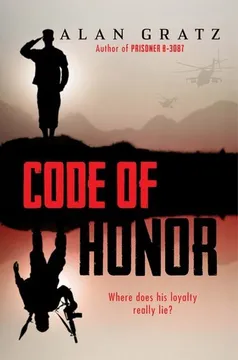


Plot Summary
A Crown Before the Raid
At East Phoenix High’s homecoming, Kamran Smith, a Persian-American senior and star running back, is crowned king beside his girlfriend, Julia Gary. His best friend, Adam Collier, offers him a Super Bowl ticket, but the celebration turns when Kamran steps between bully Jeremy Vacca and two younger students.
Jeremy insults Kamran and calls his older brother, Darius, a terrorist. Kamran fights him, proud that Darius graduated from West Point and serves as an Army Ranger.
His mother arrives in tears, not because of the brawl, but because a video shows Darius leading an attack on the US embassy in Turkey. At home, Kamran watches Darius claim responsibility on camera. The brother he planned to follow into West Point now appears to have betrayed his oath.
The homecoming crown makes Kamran’s ordinary sources of worth visible before they are stripped away: athletic recognition, romance, friendship, and the future he imagines at West Point. Darius’s televised confession turns family loyalty into a public liability. Kamran’s first response is to defend his brother physically, but the attack also exposes how quickly other people interpret his Persian appearance as evidence against him. The crisis begins both as a mystery about Darius and as a social expulsion Kamran cannot control.
The Family Becomes Evidence
More videos show Darius training militants and urging attacks, so classmates begin treating Kamran as guilty by association. Julia, frightened by the footage, ends their relationship; Adam remains nearby but admits that Darius’s own public words have shaken his faith.
At football practice, Kamran loses control and fights a teammate, then quarrels with Adam when his friend refuses to dismiss the evidence. The conflict follows Kamran home: Homeland Security searches the Smith house, empties his room, and questions his parents about Darius’s beliefs and contacts.
Reporters camp outside, and Kamran sees his family’s privacy become another casualty of the accusations. In Darius’s room, he finds their childhood Code of Honor, the rules they invented for their shared hero stories. The battered paper gives him a reason to keep believing.
Kamran’s losses arrive through different forms of intimacy. Julia’s fear makes the public suspicion personal, while Adam’s hesitation hurts because it comes from a friend who knows the family. The government search turns suspicion into physical fact: drawers, books, and bedrooms are treated as possible evidence. Yet the Code survives this invasion. Its authority is not legal or institutional; it comes from years of shared play, giving Kamran a fragile but usable standard when every external judgment tells him who he is.
The Code Beneath the Debris
Kamran watches Darius’s full videos instead of the edited news clips and catches a reference to Rostam trapped by a Sith Lord, a story only the brothers invented. Kamran reads it as a secret signal that Darius has been captured and forced to cooperate.
His West Point nomination is withdrawn, and his parents, overwhelmed by the media storm, cannot accept his theory. After another video shows Darius standing by during an American journalist’s murder, a vandal paints the Smith home with a slur. That night federal agents hood and remove Kamran, then hold him in Washington for interrogation.
Agent Tomaszewski uses Darius’s childhood, military ambitions, and possible interest in Islam to build a case against him. Kamran’s certainty falters, but CIA analyst Mickey Hagan listens to the boy’s memories rather than dismissing them.
The private story works because it is not a code invented for espionage. It is the residue of an actual relationship, legible only to the brothers. At the same time, Kamran’s belief cannot remain pure certainty: public evidence and official questioning force him to examine whether love has blinded him. The withdrawn nomination gives that doubt a concrete cost. By moving Kamran into detention, the authorities make him both a possible source of intelligence and a young person whose own account is treated as suspect.
Warnings Become Targets
Hagan tells Kamran about his own painful history of trusting a brother, then admits he wants to believe Kamran’s instincts this time. Together they match Darius’s childhood references to events outside the videos. One story points toward stolen Iraqi museum artifacts; another suggests a bomb aimed at the Women’s World Cup in Canada.
Darius’s gestures also repeat the brothers’ old warning signal. A later reference to a football containing a bomb leads Hagan to expect an attack near the tournament, while another tale suggests Darius may be ready to die.
The agencies raid a militant cell near the Afghanistan-Pakistan border and find explosives and stadium plans, but Darius and suspected commander Haydar Ansari are absent. Kamran insists the blurred mountain in a training video is Superstition Mountain in Arizona, a claim the experts reject.
Hagan’s personal story gives the investigation an ethical tension: loyalty can preserve someone’s humanity, but it can also make evidence harder to see. Their method depends on treating children’s imaginative play as a shared language rather than nonsense. Each successful interpretation validates Kamran, yet the failed raid complicates victory. The clues save lives but do not recover Darius, and the disputed mountain image leaves a dangerous gap between technical expertise and the knowledge Kamran carries from home.
A Door Beneath Washington
When officials declare the Canadian plot contained and stop pursuing Kamran’s Arizona theory, Hagan privately decides that the case is not finished. Kamran, still detained, believes he must escape and attacks two guards with a metal tray.
He triggers a microwave fire, slips through a keypad door, and pushes a mail cart toward an exit. The route is not luck alone: hacker Jimmy Doran has disabled alarms, former Green Beret Dane Redmond is waiting, and CIA consultant Aaliyah Sayid guides Kamran toward the mail room.
Hagan joins them in a van and admits he had arranged a quieter extraction. To protect himself from suspicion, he lets Dane shoot him in the leg as the team flees. Kamran is now a wanted fugitive, but he has allies and a path west.
Kamran’s escape is a reversal of the power relation that has defined his detention: the government’s systems are no longer simply barriers, but a maze the team can manipulate. His first instinct is to act alone, while the adults around him show that courage can depend on accepting help. Hagan’s staged injury makes trust costly rather than sentimental. Their alliance protects Kamran, but it also places him inside the same dangerous machinery he once hoped to join as a cadet.
Hot Dogs, Hidden C-4
Hagan’s team investigates a Nashville food supplier after Kamran connects a childhood Godzilla story to hot dogs. Aaliyah pretends to be a television reporter, Jimmy breaks into the company’s systems, and Dane infiltrates the loading crew.
They find that hot-dog boxes contain enough C-4 to devastate a stadium. Floor manager Fred Sorenson admits he was coerced because his daughter was being held, but a hidden gunman kills him before he can explain more. Armed attackers open fire, trapping the team among the pallets.
They escape through a skylight, and Dane detonates explosives to destroy the warehouse’s hidden cache. The team has prevented the shipment, but the attack proves someone knew where they would be. Jimmy suspects a leak, and the journey west becomes a test of whether any of them can trust one another.
The hot dogs turn a shared childhood joke into operational intelligence, showing how private memory can become useful without losing its emotional origin. The warehouse raid also reveals the limits of cleverness: Sorenson’s fear is not abstract, but rooted in a threatened child, and his death closes off an easy explanation. The team’s success therefore produces a new vulnerability. Their suspicion of a mole echoes the public suspicion Kamran has endured, but now the consequences may be lethal.
Snipers Above the Cave
The team crosses Arizona and follows the mountain image into the Tonto National Forest. Dane, whose military career ended after he struggled with trauma and medication, trains Kamran to control his anger and survive an armed confrontation.
On horseback, they find a sniper watching the cave and subdue him; Dane then locates three more guards. The team enters under cover of darkness, using Jimmy’s camera trick and an explosive-laden ATV to break through the entrance. After a firefight, Kamran reaches a locked room and finds Darius alive.
The reunion lasts only seconds: Darius takes Kamran’s gun and holds him at gunpoint. A veiled woman enters, shoots Dane dead, and reveals that Ansari died in an earlier American drone strike. She calls herself the Black Widow and confines Kamran.
The forest journey strips away the comforts of Kamran’s original self-image: he is no longer a star athlete protected by a team, but a frightened novice learning how anger can make him predictable. Dane’s history gives his instruction moral weight, since discipline is something he has had to rebuild after failure. The reunion with Darius then overturns the emotional reward of the search. Kamran must confront the possibility that his loyalty has brought him directly into danger.
The Brother’s Gun
Darius slips into Kamran’s cell and lets his brother disarm him. He explains that militants captured him in Afghanistan and that he pretended to join them so he could send warnings home through their childhood stories.
Kamran cannot accept the explanation immediately, but when a guard raises a rifle at Darius, Kamran fires and saves him. Darius leads him to Aaliyah, who is bound in another room. The Black Widow and armed men are waiting there. She confirms that Darius had been deceiving the militants, but says his messages were also useful for feeding the United States selected information.
Jimmy has already left with money from her, revealing that he was the team’s informant. The captors seize Kamran, Darius, and Aaliyah, leaving their earlier victories exposed as pieces of a larger deception.
Kamran’s shot is the point at which loyalty becomes action rather than belief. He still cannot prove Darius’s innocence, but he chooses to protect him when a threat is immediate. The Black Widow’s account destabilizes even that choice by making truth and manipulation coexist: Darius’s warnings were genuine, yet his captors shaped what the authorities learned. Jimmy’s betrayal completes the pattern of compromised trust without making Kamran’s renewed faith in his brother foolish.
The Halftime Trap
Bound beneath the Super Bowl halftime stage, Kamran and Darius hear the crowd above them and recognize the bomb’s ticking timer. They use their old wall-tapping code to free each other, then crawl out as the show is about to begin.
A guard sees Darius and reaches for his weapon, but a disguised attacker shoots him. Darius tackles the gunman while Kamran calls Hagan and drives the explosives-laden platform onto the field to reduce the blast’s damage. There, Kamran recognizes ESPN reporter Emily Reed as Bashira Ansari, Haydar’s widow and the Black Widow.
He exposes her on camera just before the stage explodes. The blast tears apart the field machinery but spares the evacuated crowd. Kamran tackles Bashira as she tries to flee; Darius, alive, joins him, and police arrest them both.
The stadium turns the brothers’ private code into a last practical resource: the childhood signal that once meant a parent was coming now helps them escape a bomb. Kamran’s choice to move the stage is imperfect but consequential, an act of triage under pressure rather than a clean heroic solution. Bashira’s double identity exploits the trust granted to a familiar public face. The explosion makes survival costly, while Darius’s return converts their fractured bond into a working partnership.
Home, Not Unchanged
After repeated debriefings, Kamran and his parents are released, while Darius faces further questioning. Video of the stadium attack confirms Kamran’s account, and public opinion swings from suspicion to praise. Hagan arranges a new West Point recommendation and builds a CIA counterintelligence team; Kamran agrees to train with him, Aaliyah, and Darius.
Hagan also credits Dane with the operation, helping restore the dead soldier’s military standing and benefits for his family. Jimmy remains at large. At home, Kamran and Darius discuss the coded messages, Darius’s private search for spiritual meaning, and the trauma both brothers carry.
Kamran agrees to counseling rather than trying to manage the killing alone. When his mother says Adam is calling again, Kamran chooses to answer, leaving open the difficult work of repairing a friendship rather than returning to his old life unchanged.
The resolution refuses the easy fantasy that public vindication repairs private injury. The same people who feared Kamran now celebrate him, but their reversal does not erase the isolation he remembers. His willingness to answer Adam is not instant forgiveness; it is a decision to leave room for accountability and change. Darius’s search for faith and both brothers’ need for counseling also extend the book’s idea of honor beyond combat: keeping faith with one another includes admitting damage and accepting help.
Analysis
Code of Honor makes identity a contest between private knowledge and public interpretation. Kamran knows Darius through years of shared life, but that knowledge does not make him immune to doubt. News footage, federal questioning, and the reactions of classmates all offer persuasive, incomplete versions of his brother. The suspense therefore comes not only from decoding attacks, but from deciding what evidence deserves trust. The childhood Code and invented Rostam stories give the brothers a language that is both emotionally intimate and practically useful. Their games become a cipher because they were once real shared experiences, not because the boys anticipated espionage. Kamran’s interpretive skill grows from attention to relationship. Hagan’s expertise matters, but it becomes effective only when he takes that relational knowledge seriously.
The book also examines how suspicion travels through institutions and communities. Kamran’s Iranian heritage makes him vulnerable to racialized assumptions, while Darius’s apparent conversion and military service are treated as clues that can be arranged into a verdict. The novel does not equate this prejudice with the militants’ violence; it shows instead how prejudice narrows perception and damages people who have done nothing wrong.
Honor, finally, is not obedience to a fixed rule or confidence in a perfect hero. Kamran’s loyalty survives because he questions it, tests it, and accepts help. He learns that courage includes controlling anger, admitting trauma, and choosing whether to reopen damaged friendships. The ending restores his future, but not his old innocence. His next step is meaningful precisely because he knows trust will require work.
Review Summary
Code of Honor received mostly positive reviews, with readers praising its fast-paced action, engaging plot, and exploration of themes like racism and terrorism. Many found it thrilling and unpredictable, though some felt it was unrealistic at times. Readers appreciated the character development and emotional depth. Some concerns were raised about language and violence, but overall, it was well-received by both teens and adults. The book's ability to keep readers hooked and its relevance to current events were frequently mentioned as strengths.
People Also Read
Characters
Kamran Smith
The loyal younger brotherKamran is a Persian-American high school senior, accomplished football player, and aspiring West Point cadet. His identity rests on family devotion, athletic discipline, and the belief that effort can earn belonging. When people judge him through Darius’s alleged actions, he responds first with anger, then with a stubborn commitment to discover what is true. His loyalty is not simple certainty: he doubts, revises, and struggles with what he learns. That capacity to keep acting while uncertain distinguishes his courage from mere bravado.
Darius Smith
The Ranger brotherDarius is Kamran’s older brother, a West Point graduate and Army Ranger whose childhood stories shaped the boys’ private code. He has long served as Kamran’s model of strength, though the image of a flawless hero does not capture the complexity of a soldier confronting war, faith, and personal meaning. His bond with Kamran is expressed through shared play and coded signals, giving their history an intimacy no official record can reproduce.
Mickey Hagan
The doubting CIA analystHagan is an experienced CIA analyst who has lost confidence in his own judgment and works at the edges of institutional influence. His caution comes from painful personal history, but Kamran’s insistence gives him a reason to test his instincts again. Hagan combines professional knowledge with a willingness to listen to a teenager’s intimate understanding of his brother. His role is not to replace Kamran’s judgment, but to help make it actionable.
Aaliyah Sayid
The counterterrorism consultantAaliyah is a Jordanian international-relations specialist who consults for the CIA. Her experience of prejudice after September 11 gives her a personal understanding of Kamran’s isolation, while her training lets her assess threats without reducing people to their identities. She is poised, capable, and professionally direct, with a playful attachment to American pop culture that complicates assumptions about where she belongs.
Dane Redmond
The wounded veteranDane is a former Green Beret with tactical skill and a disciplined, quiet manner. His military experience includes the psychological cost of combat, a struggle he has had to face rather than conceal. He teaches Kamran that anger can be useful only when controlled and that survival is not the same as honorless behavior. Dane’s hard exterior is balanced by a serious belief in protecting the people beside him.
Jimmy Doran
The irreverent hackerJimmy is a skilled computer intruder who now works with government agencies after making a deal to avoid prison. His humor and technical ingenuity make him seem loose and unbothered, but his past has taught him to think in terms of leverage and risk. He treats espionage as a game, a view that both helps him stay nimble and makes it difficult for others to know what he truly values.
Adam Collier
Kamran’s longtime friendAdam has known Kamran since childhood and shares his love of football. His friendship is sincere, but the public evidence against Darius unsettles him, exposing the difference between long familiarity and certainty under pressure. Adam is neither a simple betrayer nor an unquestioning ally; his response forces Kamran to reckon with what trust asks of people who do not possess his private knowledge.
Julia Gary
The fearful girlfriendJulia is Kamran’s girlfriend and a drama student who knows him in the easy rhythms of school life. Her response to the allegations is shaped by fear, which makes her retreat painful precisely because their relationship had felt secure. She represents the way public terror can enter private affection, turning a person’s familiar face into something others no longer feel safe approaching.
Special Agent Tomaszewski
The interrogating agentTomaszewski leads the questioning of Kamran in federal custody. Organized and persistent, she treats family history, religion, and childhood anger as possible parts of a security profile. Her interrogation shows how institutions can convert uncertain details into a coherent suspicion, even when that coherence is not the same as proof.
Bashira Ansari
A name in the case fileBashira appears in intelligence material as the wife of Haydar Ansari, a militant commander. The sparse information available about her illustrates how a person can enter Kamran’s world first as a line in a file, defined by family ties and political association rather than by a known voice or perspective.
Haydar Ansari
The elusive militant leaderAnsari is an Iraqi militant leader whom intelligence agencies associate with intricate attacks and carefully planted clues. His history includes political upheaval, lost privilege, and a turn toward violent extremism. In the story, he is less a visible adversary than the organizing idea behind a threat that investigators struggle to locate.
Kamran’s parents
The frightened familyKamran’s father, an academic, and his mother, an Iranian-born horse-ranch worker, share a deep commitment to their sons and to the life they built in Arizona. The media and government intrusion leave them frightened and uncertain, but they continue to protect Kamran as best they can. Their different cultural and religious backgrounds also challenge assumptions about what an American family is supposed to look like.
Jeremy Vacca
The school bullyJeremy is a senior whose racist taunts provoke Kamran’s first fight. He turns prejudice into a public accusation, giving voice to the assumptions that later spread through the school and media.
Plot Devices
The Code of Honor
A moral compassKamran and Darius create a childhood list of rules for the heroes in their invented adventures. The Code gives the brothers a shared ethical vocabulary, and its references to strength, loyalty, truth, and helping the helpless shape Kamran’s decisions when he cannot rely on official accounts. Its importance lies not in making him certain, but in giving him a way to act while uncertain.
Rostam stories and signals
A private message systemThe brothers’ improvised Persian-legend and pop-culture adventures, along with their childhood knocks through the bedroom wall, become a channel for warnings. Because the references belong to their shared history, outsiders initially mistake them for meaningless oddities. Kamran and Hagan connect them to real events, transforming intimate memories into intelligence about threatened targets.
The Super Bowl stage
A concealed bomb carrierThe halftime platform conceals explosives beneath the spectacle of the game. Its presence turns the Super Bowl, already established as Kamran’s longed-for event, into a public target. When Kamran moves it onto the field, he tries to reduce the blast’s reach; the device links the brothers’ personal rescue to the lives of a stadium crowd.
About the Author

Download PDF
Download EPUB
.epub digital book format is ideal for reading ebooks on phones, tablets, and e-readers.








