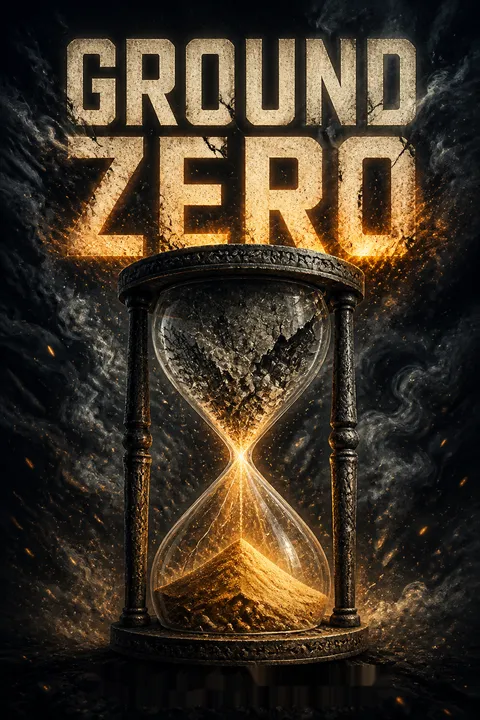


Plot Summary
Suspension on September Eleventh
Brandon Chavez,1 nine, has been suspended for punching a bully21 who stole his friend Cedric's20 toy claws. His father,5 Leo,5 takes him to work at Windows on the World, the restaurant atop New York's North Tower, because neither can afford for Leo5 to miss another shift.
Leo5 reminds Brandon1 that they are a team, but Brandon1 feels he has let him down. In Afghanistan in 2019, eleven-year-old Reshmina2 gathers firewood while imagining a future as a teacher or translator. Her twin,4 Pasoon,4 has abandoned school and talks of joining the Taliban.
Their teasing briefly recalls childhood closeness, until shouting rises from their village. Afghan soldiers and American troops are searching homes, and the day that begins with ordinary family worries turns dangerous in both lives.
The parallel openings give each child a private problem before history overwhelms it. Brandon's suspension tests his belief that protecting someone excuses violence; Leo counters with accountability, not condemnation. Reshmina's chores and interrupted education show how gender and poverty narrow her choices before any soldier arrives. Yet both children already imagine themselves as responsible for others: Brandon defends Cedric, while Reshmina looks for a way to support her family. Their ordinary impulses toward protection become the moral groundwork for the emergencies ahead. The date binds their stories before either child understands the chain of consequences that will connect a New York morning to an Afghan village.
Searchers Bring the Ambush
The soldiers search Reshmina's2 home for Taliban weapons, finding only Pasoon's4 treasured toy airplane hidden in a wall. An Afghan translator, Mariam,10 explains the raid and gives Reshmina2 a glimpse of a woman working beyond the limits imposed on girls around her.
Pasoon4 accuses the Americans of killing their sister Hila and resents Afghan soldiers taking foreign orders. Their father,7 Baba,7 refuses to pretend the past is over, while Reshmina2 challenges the American sergeant's demand that villagers choose a side.
After the troops leave, Pasoon4 reveals that Taliban fighters planted the rumor to lure them into an ambush. Reshmina2 wants to warn the soldiers, but gunfire erupts before she can act. The family shelters as the battle engulfs the village.
The raid turns political abstractions into immediate pressure on a family. A toy airplane, harmless to Reshmina, becomes suspicious evidence to armed outsiders, while Mariam's presence offers a rare image of female independence. The sergeant's demand for allegiance exposes the coercion beneath military assurances: the villagers risk punishment whichever side they choose. Pasoon sees the raid as proof that resistance is necessary; Reshmina sees that silence also has consequences. Their disagreement grows from shared grief over Hila, not from one sibling lacking compassion. The chapter establishes that a young person's choices are made inside forces she did not create, but cannot simply ignore.
The Tower Starts Tilting
At the restaurant, Brandon1 watches his father5 handle a kitchen fire, then slips away toward the underground mall to replace Cedric's20 broken toy. He boards a local elevator instead of waiting for the express car.
At 8:46 a.m., a plane strikes the North Tower, and the elevator lurches sideways before dropping and stopping. Smoke pours into the car. Brandon1 and four adults, including restaurant worker Shavinder,17 wet napkins to breathe through and try to break out.
When the elevator doors open onto a blank wall, they chip through layers of drywall with serving utensils. A hole large enough for Brandon appears first, so he crawls into a bathroom on the eighty-fifth floor to find help. The elevator's instability makes every delay a threat to the people still inside.
Brandon's attempt to repair a small harm to Cedric becomes the accident that separates him from Leo. That irony does not make his choice foolish; it shows how ordinary intentions can be overtaken by events no child can foresee. Inside the elevator, adults and a child share the same bodily vulnerability, and practical cooperation replaces familiar hierarchies. Brandon's knowledge of the tower's layout helps him understand why the first escape route fails, while the adults' strength and resourcefulness help widen the opening. Survival begins not with a lone hero's certainty but with people improvising together under conditions that keep changing.
Refuge for an Enemy
After the village battle, Reshmina2 finds an American soldier3 alone in the scrub, badly wounded and unable to see. Pashtunwali gives her two competing obligations: badal permits revenge, while nanawatai requires refuge for someone who asks for help. She guides the soldier,3 Taz,3 to her home and persuades Baba7 to shelter him.
Taz3 recognizes Reshmina2 as the girl from the earlier search, and her family tends his wounds despite the danger. Pasoon4 returns boasting that the Taliban ambushed the troops and killed Mariam10 and the others. When he discovers Taz,3 he demands revenge and threatens to alert the Taliban. Baba7 insists that their promise of refuge stands. Pasoon4 storms away, and Reshmina2 notices his airplane is missing from its hiding place.
Reshmina's decision is not a simple rejection of revenge. Her culture names both retaliation and sanctuary as duties, forcing her to decide which obligation governs when they collide. By asking Baba to help, she accepts that compassion has consequences for the whole household, not only herself. Pasoon's anger also has a moral logic: the American uniform carries the history of Hila's death. Yet his wish to punish Taz cannot restore his sister or protect his family. The absent airplane turns a family keepsake into evidence that Pasoon may be choosing a future outside his home.
The Cliff Between Twins
Reshmina2 follows Pasoon4 toward the mountains, remembering that older boys once paid him to shoot at an American base. She spots him approaching Taliban fighters just as an Apache attacks the ridge. In the chaos, Pasoon4 pulls Reshmina2 away from the gunfire; when she slips over a cliff, he catches her.
They escape the battle and find a Kochi nomad camp, where the family offers food and prayer despite the fighting nearby. Reshmina2 steals Pasoon's4 toy airplane, hoping to keep him from leaving, but he insists the Taliban can offer him money and a grown man's place. Their closeness survives in flashes, yet neither can make the other turn back. Pasoon4 resumes his journey, and Reshmina2 continues after him.
The cliff makes the siblings' conflict physical: Pasoon saves the person he is preparing to abandon, so affection and ideological separation coexist rather than cancel each other out. The Kochi camp offers a brief alternative to settled life and armed allegiance, but it cannot erase the pressures that send boys toward the Taliban. Reshmina's use of the airplane is both tender and controlling; she understands its emotional value but tries to make it decide for Pasoon. His refusal marks a step toward an identity built on money, masculinity, and resistance, while her pursuit shows how difficult it is to love someone without being able to choose for them.
The Stairwell Ends
Brandon1 climbs from the elevator escape through damaged stairs, reaches an open edge of the eighty-ninth floor, and freezes above the street. A police helicopter spots him but cannot land. Richard,6 the man whose coffee Brandon1 helped steady that morning, pulls him away from the ledge.
Together they try to climb toward Windows on the World, but flames and packed rubble block the stairs at the ninety-third floor. On their way back down, they find another elevator trapped behind a curtain of burning jet fuel.
A woman runs through it and suffers severe burns; the car then drops with its remaining passengers. Brandon1 blames himself for urging them to escape. Richard6 helps him see that staying would have meant certain death, then leads him toward safer floors.
The building's broken architecture makes the emotional divide between Brandon and Leo visible: one can climb only so far, while the other is trapped above the fire. Richard's rescue begins a bond grounded in action, not instant intimacy. Brandon's guilt after the elevator accident reflects a child's belief that words can control outcomes, even when every available choice is dangerous. Richard does not erase the horror by calling it a good result; he gives Brandon a way to understand that survival can carry grief and moral residue. The section shifts Brandon from seeking his father to relying on another adult, a change he resists but needs.
A Voice Above the Fire
A working office phone lets Brandon1 speak with Leo,5 who confirms that people above the impact zone are trapped and that he cannot get down. A second plane hits the South Tower while Brandon1 is still on the line. Leo5 tells him to leave the building, and Brandon1 joins Richard's6 group in the long descent. Later, from the twentieth floor, Brandon1 calls again.
Leo5 describes smoke, fire, and buckling floors, then asks Richard6 to keep Brandon1 safe. He reassures his son1 that he can survive on his own and says he loves him. The call ends before Brandon1 can say goodbye properly. As Brandon1 and Richard6 continue downward, he carries the knowledge that Leo5 may be dying and that no route leads back up to him.
The phone call reverses the usual parent-child arrangement. Leo remains the emotional anchor, but he must use their connection to send Brandon away rather than keep him close. Brandon hears this as abandonment at first because their family identity has depended on being a pair. Leo's final reassurance does not make independence feel welcome; it gives Brandon a responsibility he has not asked for. The second call is especially painful because it supplies intimacy without rescue. Their voices cross the tower's vertical separation, briefly joining them, while the dead line makes the separation final in practical terms.
The Rifle in the Cave
Reshmina2 follows Pasoon4 to a hidden cave where Taliban weapons from many countries are stored. After the siblings escape a small fire, Pasoon4 takes an old Soviet rifle and heads for the abandoned American camp, planning to summon Taliban fighters with gunshots. Reshmina2 argues that the Taliban will endanger their family, but Pasoon4 says their sister's death and the promise of paid work have settled his choice.
He strikes Reshmina2 when she challenges his authority as a man. Then he fires again to attract the Taliban and tells her he will reveal that Taz3 is hiding at home. Reshmina2 runs toward the village to warn her family. Her brother's4 decision turns a private refuge into a threat to everyone under their roof.
The weapons cave gives visible form to Afghanistan's inherited conflict: guns made elsewhere have accumulated underground while generations of children learn to treat violence as a route to adulthood. Pasoon's choice is not driven by ideology alone. Poverty, grief, and the promise of status all make recruitment persuasive. His slap marks a change in their sibling bond, as he invokes gender hierarchy to silence the twin who has known him as an equal. Reshmina's flight accepts the painful limit of persuasion: she cannot make Pasoon choose differently, but she can still act to protect those he is endangering.
A Village Under Fire
Reshmina2 reaches her village ahead of the Taliban and warns her family that Pasoon4 has exposed Taz.3 Villagers prepare to flee, but Anaa9 points them toward caves beneath the settlement. They disguise the wounded, still-blind soldier3 in a burqa and move down the crowded steps as Taliban fighters and American forces exchange fire.
A missile destroys Reshmina's2 house, and the group takes shelter underground. Bombs bring down part of the cave ceiling, killing villagers and trapping Reshmina's2 family with Taz.3
Reshmina2 finds a hidden chamber filled with relics of past invasions and spots daylight through a crack. With a Soviet land mine and an old shield, she blasts an opening. The survivors escape through the breach, carrying injuries and the knowledge that their home is gone.
Reshmina's quick decision to use the caves grows from childhood play, turning a familiar hiding place into communal refuge. Yet the cave is not a clean escape: it protects some people while killing others, and the artifacts reveal that even shelter bears the marks of earlier wars. Her use of an old mine is a grim reversal, making a weapon serve escape rather than conquest. The destruction of her home fulfills her mother's fear, but Reshmina does not surrender to it. She acts under uncertainty, accepting that courage cannot guarantee safety and that the only available path may be one she must make herself.
The Towers Come Down
As Brandon1 descends, the stairwell crowds until he is briefly crushed away from Richard,6 who pushes back through the line to find him. They reach the underground mall after the South Tower has collapsed, but another blast buries them in darkness and water. Brandon1 joins survivors Pratik and Gayle, then follows the sound of Richard6 singing to locate him beneath debris.
Using the mall's familiar smells and the touch of the Bugs Bunny statue, Brandon1 guides the group toward an exit. They emerge onto Vesey Street and see the South Tower is gone. The North Tower then collapses, and its dust wave throws Brandon1 and Richard6 into the street. Richard's6 hand moves until Brandon1 takes it; each confirms the other is alive.
Brandon's knowledge of the mall, first presented as a child's familiarity with shops and landmarks, becomes practical navigation when sight disappears. The shift turns consumer space into a survival map, while the ringing phone buried under rubble marks people who cannot be reached. Richard's singing functions as an act of hope without requiring confidence that help will come. Brandon and Richard survive through alternating dependence: one calls, the other finds; one leads, the other steadies. The final handclasp answers the book's opening idea of a team, but enlarges it beyond father and son to include people who choose to help one another.
Why America Came
After the cave survivors reach daylight, Taz3 explains that September 11 is the anniversary of the attacks that brought American forces to Afghanistan. He reveals that he was the boy who escaped the North Tower with Richard after his father,5 Leo Chavez,5 died there; Richard6 later adopted him, and Taz3 joined the army seeking revenge.
He clarifies that al Qaeda, not the Taliban, carried out the attacks, though the Taliban sheltered its leaders. Reshmina2 challenges the cost of punishing Afghans for crimes they did not commit.
Soon American soldiers call in an airstrike on insurgents in a village house. The strike triggers a chain of collapsing buildings, destroying the entire settlement. Taz3 apologizes, but Reshmina2 watches the place she knew disappear beneath dust.
The revelation joins the timelines through a survivor who has carried grief into the very conflict that injures Reshmina's family. Taz's history complicates the easy division between victim and soldier: he once sought retaliation, yet now doubts what that mission accomplishes. Reshmina recognizes the original crime against Americans while refusing to treat that recognition as permission for limitless reprisal. The airstrike makes the argument concrete. Even a tactically aimed attack can produce consequences beyond its target, and apologies cannot restore homes. By making Taz both a witness to 9/11 and an agent within the war, the novel tests whether empathy can interrupt inherited revenge.
Two Paths Forward
Richard6 brings Brandon1 to his home in Queens, where his wife,13 Talisha,13 welcomes the exhausted boy and his children make room for him. Brandon1 leaves a message for Leo,5 saying he escaped and loves him, then watches the news with Richard's family13 as the scale of the attacks becomes clear. He begins to understand that survival came from people working for one another, not from standing alone.
In Afghanistan, Reshmina2 and Baba7 sift through the wreckage and decide to stay and rebuild, though many villagers leave for Pakistan. Taz3 offers her a future in an interpreter program, but she declines until she can choose her own route. He gives her his Tasmanian Devil charm. Reshmina2 sees Pasoon4 at a distance, turns away, and starts down another path.
Neither ending repairs what has been lost. Brandon cannot recover Leo, and Reshmina cannot restore her village or reunite with the brother who chose violence. Instead, each protagonist revises what survival means. Brandon accepts care from Richard's family and understands connection as something larger than a two-person pact. Reshmina refuses both the fatalism that would keep her trapped and the easy promise that American sponsorship can solve her future. Her decision to remain and rebuild is not simple optimism; it is a claim to agency in a place where choices are constrained. Their futures stay uncertain, but neither child is defined solely by revenge or grief.
Analysis
Ground Zero builds its central argument through paired lives rather than a single historical explanation. Brandon1 experiences 9/11 as a child inside the targeted building, while Reshmina2 experiences the long war that follows from the Afghan side. Their connection through Taz3 makes history intimate: the soldier who enters Reshmina's home3 is also the boy whose father died in the tower.3 That link does not equate the harms each character suffers. Instead, it shows how private grief can be carried into public policy and then imposed on people who did not cause the original injury.
The novel treats revenge as emotionally understandable and politically self-perpetuating. Pasoon4 sees armed resistance as a way to earn money, assert manhood, and answer Hila's death. Taz3 once joined the military for a related reason, hoping to prevent another loss like his father's.5 Reshmina2 recognizes the force of both impulses, but her choice to shelter Taz3 insists that ethical action can interrupt retaliation even when it cannot undo violence. The story does not romanticize that choice: her family loses its home, villagers die, and the village is eventually destroyed. Moral courage matters, but it is not a guarantee of safety.
Objects and places keep this argument grounded. Toys preserve relationships that conflict threatens to erase; stairwells and caves turn survival into a sequence of blocked routes and improvised decisions. Both children learn that no one can control the whole disaster, but both can act within the next available moment. Brandon's1 idea of being a team expands beyond his father5 to strangers who help him live. Reshmina's2 future remains less secure, yet she refuses to let either the Taliban or American promises choose it for her. The ending offers no clean repair. It offers instead a modest ethic of responsibility: grief deserves recognition, but it cannot justify treating another generation's home as the price of settling an old account.
Review Summary
Ground Zero receives mostly positive reviews for its gripping dual narrative following a boy during 9/11 and an Afghan girl in 2019. Readers praise Gratz's ability to tackle complex themes and create emotional impact. Many find the 9/11 storyline particularly compelling and educational for younger readers. Some criticize the political commentary in the final chapter. Overall, reviewers appreciate the book's exploration of historical events and their lasting effects, though opinions vary on its suitability for different age groups.
People Also Read
Characters
Brandon Chavez
Dreaming New York skaterBrandon is a nine-year-old Brooklyn boy whose love of skateboarding and comic-book toys sits beside a fierce instinct to defend his friends. After losing his mother, he and his father5 have built a close partnership around the idea that they face life together. Brandon can be impulsive and stubborn, especially when he believes someone is being treated unfairly, but he also feels responsibility keenly and replays his mistakes. His experience in the tower forces him to act without the adult he depends on, while the strangers he meets teach him that trust can extend beyond family. His emotional world is shaped by grief, guilt, courage, and the difficult discovery that growing up does not mean surviving alone.
Reshmina
Dreaming village studentReshmina is an eleven-year-old Afghan girl who studies English while carrying a heavy share of her family's chores. She wants an education and imagines becoming a teacher or translator, ambitions that conflict with expectations that she will marry and remain at home. Her bond with twin brother Pasoon4 is affectionate, teasing, and increasingly strained by his attraction to the Taliban. Reshmina is observant, persistent, and capable of questioning both her family's customs and foreign military authority. Her decisions are guided by Pashtunwali, especially the tension between revenge and granting refuge. She is not fearless; she doubts herself intensely, but keeps acting when the people around her are in danger.
Taz
Wounded American adviserTaz is an American special-forces soldier serving in Afghanistan, where he advises troops and has spent years moving through a conflict that has outlasted the people who began it. He carries a battered Tasmanian Devil charm and a personal attachment to the soldiers he works beside. His military training gives him practical knowledge, but it cannot protect him from injury, grief, or uncertainty about the mission. Taz can be direct and defensive when he believes his country is trying to help, yet he listens when Reshmina2 challenges the consequences of that help. His story explores how a person's desire to prevent future harm can become entangled with the impulse to avenge past harm.
Pasoon
Twin drawn to insurgencyPasoon is Reshmina's2 twin brother, a boy who has left school and spends time with older youths drawn to the Taliban. He shares his sister's2 childhood memories and affection, but his sense of the future is increasingly shaped by anger, poverty, and a desire to be treated as a man. The death of Hila gives his resentment a personal center, while the promise of wages makes armed service seem like a practical escape from hardship. Pasoon is not simply a product of outside persuasion; he makes choices and wants them recognized as his own. His relationship with Reshmina2 shows how love can persist even as siblings adopt opposing answers to grief.
Leo Chavez
Brandon's devoted fatherLeo is a widowed father and kitchen manager at Windows on the World. Money is tight, and he works hard to keep life stable for Brandon1 after the boy's mother dies. Their closeness is expressed through shared routines and a family belief that they are a team, but Leo does not confuse love with excusing bad behavior. He expects Brandon1 to accept consequences while reminding him that mistakes do not erase their bond. Leo's steady, practical care gives Brandon1 a model of responsibility, tenderness, and resilience. His role in the story centers on the question of how a parent prepares a child to face a world the parent cannot control.
Richard Lowery
Stranger turned protectorRichard is a Black office worker who first crosses paths with Brandon1 on the escalator in the World Trade Center. He is resourceful, compassionate, and willing to take responsibility for people beyond his immediate circle. Richard repeatedly helps Brandon1 navigate danger, but he does not present himself as invulnerable or all-knowing. His own memories of childhood loss allow him to recognize that grief cannot be hurried away. Through his relationship with Brandon1, Richard becomes a source of practical care and emotional steadiness, while still depending on others himself. He represents the kind of chosen connection that can form when strangers face the same crisis and decide not to leave one another behind.
Baba
Honorable village fatherBaba is Reshmina2 and Pasoon's4 father, a farmer who walks with a crutch after a land mine injured his leg. He weighs the danger of sheltering Taz3 against the duty created when someone asks for refuge, and he accepts responsibility for his family's promise. His authority is firm but not unthinking; he listens to his children even when their choices alarm him. Years of war have made him cautious, yet he continues to act according to an ethical code he believes should bind friend and enemy alike.
Mor
Mother shaped by lossMor is Reshmina's2 mother, a hardworking parent whose experience of violence has narrowed her hopes for her daughters. She emphasizes chores, marriage, and caution because those are the tools she trusts to keep them alive. Her fear of Reshmina's2 ambitions can feel harsh, but it comes from a life marked by bereavement and insecurity rather than indifference. Through her, the novel shows how trauma can make protection resemble restriction.
Anaa
Keeper of older memoriesAnaa is Reshmina's2 grandmother, a storyteller whose memories reach back to a time when Afghan women studied and worked more freely. She offers the children a history beyond the present war and helps Reshmina2 understand why Mor8 distrusts hope. Calm under pressure, Anaa combines affection with a clear sense of duty, guiding her family without pretending danger can be wished away.
Mariam
Afghan army translatorMariam is an Afghan woman who translates for American and Afghan troops. Her work makes her a rare example of a woman earning authority outside her household, and Reshmina2 sees in her a possible future. Mariam understands the danger villagers face when armed groups demand loyalty from them. She tries to communicate both sides' intentions, but her presence cannot make an unjust choice safe.
Marzia
Sister facing marriageMarzia is Reshmina's2 older sister, whose arranged marriage is approaching. She helps with domestic work and is often quiet during family disputes, but she shares Reshmina's2 fear and remains close to her. Her situation makes the limited choices available to girls in their village tangible without reducing her to a symbol.
Zahir
Youngest family memberZahir is Reshmina's2 two-year-old brother. He is cared for by the women in the family and is too young to understand the war around him. His vulnerability gives the adults a constant, concrete reason to seek shelter and keep moving.
Talisha
Richard's welcoming wifeTalisha is Richard's6 wife and the mother of their two children. When Richard6 returns with Brandon1, she offers the exhausted boy food, shelter, and a place among the family. Her calm generosity makes care feel practical rather than ceremonial.
Esther
Richard's steady assistantEsther works with Richard6 and helps the small group of office survivors stay organized. She keeps people informed, searches for news, and helps guide others through crowded evacuation routes. Her clear-headed presence offers order without pretending the crisis is manageable.
Anson
Blind guide-dog handlerAnson is a software representative who is blind and uses a white cane and a guide dog named Daphne. During the evacuation, he remains composed and navigates by touch and the dog's guidance. His competence challenges Brandon's1 assumption that blindness must mean helplessness.
Mr. Khoury
Lebanese refugee survivorMr. Khoury is an elderly Lebanese man who works in the World Trade Center. Having once fled conflict in his youth, he meets the emergency with an unusual calm. His measured pace and presence remind Brandon1 that people carry histories of displacement long before a new disaster begins.
Shavinder
Restaurant veteranShavinder works at Windows on the World and has been part of the restaurant since it opened. Trapped with Brandon1 in the elevator, he helps organize the escape and shares what he knows about the tower. His experience becomes useful when familiar systems fail.
Mike
Practical elevator survivorMike is a New Jersey job applicant caught in the elevator with Brandon1. He uses his strength to help open the doors and free the other passengers, then assists Stephen19 during the descent.
Stephen
Coughing bankerStephen is an investment banker trapped in the elevator. Smoke leaves him struggling to breathe, so Mike18 and Shavinder17 support him during the descent. His condition makes the group's evacuation more difficult and urgent.
Cedric
Brandon's bullied friendCedric is Brandon's1 friend at school. When a bully21 takes and breaks his toy claws, Brandon1 intervenes, setting off the disciplinary trouble that takes him to work with his father5.
Stuart Pendleton
Schoolyard bullyStuart is the student who steals Cedric's20 toy and is punched by Brandon1. His actions trigger the suspension that places Brandon1 in the tower on September 11.
Darwesh and Amaan
Older Taliban recruitersDarwesh and Amaan are older village youths who influence Pasoon's4 view of the Taliban. They present armed service as a source of wages, status, and purpose, giving his anger a practical direction.
Carter
American infantrymanCarter is an American soldier who joins Taz3 after the village fighting. He reflects the certainty of a military culture that divides people into allies and enemies, contrasting with Taz's3 growing doubts.
Plot Devices
Interwoven September Elevenths
Two timelines, one woundThe novel alternates between Brandon1 in New York on September 11, 2001, and Reshmina2 in Afghanistan on the same calendar date in 2019. At first their stories seem separate: one follows a child trapped in a skyscraper, the other a girl caught between the Taliban and American forces. The parallel structure gradually connects personal grief to political consequence, culminating in the revelation that Taz carries Brandon's history. It lets the reader experience the attacks as immediate terror and as a long aftermath, while resisting the idea that one day's violence ends when its news coverage does.
Pashtunwali
Rival duties shape choicePashtunwali, the ethical code Reshmina's2 family follows, gives the Afghan storyline its central moral conflict. Badal permits retaliation against someone who has caused harm; nanawatai requires shelter for a person who asks for refuge. Reshmina2 must decide which duty applies when she finds Taz3, an American soldier whose country is connected to her sister's death. The code does not provide a painless answer or guarantee that others will honor it. Instead, it makes her choice legible within her culture and shows how principles can demand risk when revenge might feel safer.
Tower and Cave Routes
Escape through broken spacesThe World Trade Center's elevators, stairwells, sky lobbies, and underground mall create a shifting map of danger for Brandon1. Familiar knowledge helps him and others move through the building, but damaged floors and fire repeatedly close routes. Reshmina's2 village and its caves form a parallel maze of stairs, mountain paths, hidden chambers, and blocked passages. In both settings, survival depends on reading a place under pressure and changing plans when the expected exit disappears. These physical routes make each child's progress concrete, while linking escape with improvisation rather than certainty.
The Toy Tokens
Small objects carry griefA series of toys and keepsakes gives the novel's large conflicts an intimate scale. Brandon1 wants to replace Cedric's20 broken Wolverine claws, a decision that helps place him in the elevator when the plane hits. Pasoon's4 hidden toy airplane ties him to Hila and becomes a sign of his departure from home. Taz's3 worn Tasmanian Devil charm travels with him through combat and later passes to Reshmina2. Each object means something different to its holder, but each carries a relationship that war, guilt, or distance threatens to break.
Taz's Hidden History
A survivor links the storiesTaz's name, his attachment to a charm, and his long service in Afghanistan initially present him as one more American soldier. His history eventually reveals that he was Brandon1, the child who escaped the North Tower and later lost his father5. The reveal connects the two timelines through a person shaped by 9/11 and places his military service inside a personal search for meaning and revenge. It also changes the reader's understanding of Reshmina's2 encounter: she is speaking not only with an American adviser but with someone who has lived through the loss that brought his country into her home.
FAQ
Basic Details
What is Ground Zero about?
- Dual Narratives of Trauma: The novel follows two children, Brandon in New York City on September 11, 2001, and Reshmina in Afghanistan in 2019, whose lives are irrevocably shaped by the events and aftermath of 9/11.
- Survival Amidst Chaos: Brandon is a young boy trapped in the North Tower of the World Trade Center during the attacks, navigating smoke, fire, and collapse to find safety and his father.
- War's Enduring Impact: Reshmina is an Afghan girl whose village is caught between the Taliban and American forces years later, forcing her to confront difficult choices about loyalty, refuge, and her future.
Why should I read Ground Zero?
- Unique Dual Perspective: The book offers a powerful, dual narrative showing the immediate impact of 9/11 in the US and its long-term consequences in Afghanistan, providing a comprehensive view of the conflict's reach.
- Emotional Resonance & Resilience: It delves into the raw emotions of fear, loss, and hope through the eyes of child protagonists, highlighting the incredible resilience of the human spirit in the face of unimaginable tragedy.
- Historical Context for Young Readers: Alan Gratz makes complex historical events accessible and engaging for middle-grade readers, fostering understanding of 9/11 and the subsequent War in Afghanistan.
What is the background of Ground Zero?
- Historical Events as Foundation: The novel is based on the real events of the September 11, 2001 terrorist attacks on the World Trade Center and the subsequent US military involvement in Afghanistan, which began in late 2001.
- Author's Personal Connection: Alan Gratz was teaching in Tennessee on 9/11 and felt the collective shock and confusion, later deciding to write the book to help new generations understand the event and its global repercussions (Author's Note).
- Fictional Characters in Real Settings: While Brandon and Reshmina are fictional, their experiences in the World Trade Center and Kunar Province, Afghanistan, are grounded in extensive research and accounts of actual events and locations (Author's Note).
What are the most memorable quotes in Ground Zero?
- "We're a team. That's what we've always said. This is how we survive, right? Together. It's you and me against the world.": Leo Chavez's words to Brandon early in the book establish their core relationship and survival philosophy, which Brandon clings to throughout the tragedy, making the eventual loss even more poignant.
- "You always have a choice... You can pick our side, or their side." / "That's no choice at all... You're telling them to choose death!": This exchange between the American sergeant and Mariam the translator starkly illustrates the impossible situation faced by Afghan civilians caught between warring factions, highlighting a central theme of the Afghanistan narrative.
- "It isn't me against the world... It's everyone, working together. And not against the world either, but for each other. That was how they survived.": Brandon's realization near the end transforms his father's earlier quote, reflecting his growth and the broader theme of collective humanity and mutual aid in the face of disaster.
What writing style, narrative choices, and literary techniques does Alan Gratz use?
- Alternating First-Person Narratives: The book employs a dual first-person perspective, switching between Brandon's experience on 9/11 and Reshmina's story years later, creating immediacy and contrasting the direct attack with its long-term consequences.
- Fast-Paced, Action-Driven Prose: Gratz uses concise sentences and vivid descriptions to maintain a high level of tension and urgency, particularly during the escape and battle scenes, mirroring the chaotic nature of the events.
- Symbolism and Motif: Recurring symbols like the Twin Towers, the poppy fields, and the concept of "Ground Zero" are used to represent broader themes of destruction, resilience, and the cyclical nature of conflict, adding depth to the narrative.
Hidden Details & Subtle Connections
What are some minor details that add significant meaning?
- Brandon's LEGO Watch: This small detail emphasizes Brandon's youth and innocence at the start of the day, contrasting sharply with the horrific, adult world he is thrust into, highlighting the loss of childhood.
- The Businessman's Spilled Coffee: Richard Lowery's near-accident on the escalator is a seemingly trivial moment that connects him to Brandon and his father before the attack, establishing the relationship that will become crucial for Brandon's survival and future.
- Pasoon's Toy Airplane: The small toy, a gift from his deceased sister Hila, represents Pasoon's lingering connection to his family and a more innocent past, making his decision to use it to signal the Taliban a poignant symbol of his turn towards violence and revenge.
What are some subtle foreshadowing and callbacks?
- The Kitchen Fire at Windows on the World: This early, contained fire foreshadows the much larger, uncontrollable infernos that will engulf the towers, hinting at the danger Brandon's father faces and providing Brandon a reason to leave the restaurant.
- References to the 1993 WTC Bombing: Mentions of the earlier attack and the subsequent safety measures (like glow-in-the-dark paint in stairwells) serve as a callback to previous threats, while also highlighting the unprecedented scale of the 9/11 attacks that overwhelmed these preparations.
- The "Us Against the World" vs. "For Each Other" Theme: Leo's initial "us against the world" mantra is subtly challenged by the cooperation Brandon witnesses among strangers during the escape, culminating in Brandon's realization that survival comes from working "for each other," echoing Richard's actions.
What are some unexpected character connections?
- Brandon's Rescuer Becomes His Adoptive Father: Richard Lowery, the man who pulls Brandon from the ledge on the 89th floor, is later revealed to be the same person who adopts Brandon, creating a profound, life-saving connection born from the disaster.
- Taz is the Adult Brandon: The American soldier Reshmina helps is revealed to be Brandon Chavez, now Brandon Lowery, years after 9/11, linking the two seemingly separate narratives directly and showing the long-term impact of the attacks on his life.
- Mariam, the Afghan Translator: Her brief but impactful appearance as a professional Afghan woman working with the Americans offers Reshmina a glimpse of a different future, subtly influencing Reshmina's own aspirations despite Mariam's tragic fate.
Who are the most significant supporting characters?
- Richard Lowery: Richard is pivotal to Brandon's survival after the plane hits, guiding him through the tower and later taking him in, embodying the theme of strangers helping each other in crisis and becoming Brandon's new family.
- Anaa (Reshmina's Grandmother): Anaa provides historical context and wisdom, sharing stories of Afghanistan's past and her mother's experiences, offering Reshmina perspective on the cyclical nature of war and the importance of hope despite hardship.
- Mariam (The Translator): Though present for only a short time, Mariam represents a potential future for Afghan women that Reshmina aspires to, and her death underscores the dangers faced by Afghans caught between conflicting forces, fueling Reshmina's desire for change.
Psychological, Emotional, & Relational Analysis
What are some unspoken motivations of the characters?
- Brandon's Need for Redemption: Beyond just finding his father, Brandon's desperate climb up the stairs is fueled by guilt over getting suspended and leaving his dad alone, a silent plea for forgiveness and a chance to prove he isn't a disappointment.
- Pasoon's Search for Identity and Purpose: Pasoon's increasing anger and eventual decision to join the Taliban are driven by a desire for respect, a sense of belonging, and a clear role in a world where traditional paths are limited and American presence feels like an affront to his identity.
- Taz's Underlying Trauma and Search for Meaning: Taz's decade-long military service in Afghanistan is implicitly motivated by the unresolved trauma and loss of 9/11, a subconscious attempt to find meaning and prevent similar attacks, even as he questions the effectiveness and purpose of the war.
What psychological complexities do the characters exhibit?
- Brandon's Shift from Childlike Fear to Determined Action: Brandon initially reacts with paralysis and tears, but the urgency of the situation and his bond with his father push him to overcome fear, make difficult decisions (like using the fire ax), and take on adult responsibilities.
- Reshmina's Internal Conflict Between Tradition and Ambition: Reshmina grapples with the societal expectations for women in her village versus her personal dreams of education and a career, a psychological struggle between conforming to a perceived safe path and pursuing a dangerous, hopeful alternative.
- Taz's Disillusionment and Moral Ambiguity: Taz, initially driven by post-9/11 patriotism and revenge, shows psychological complexity as years of war lead to disillusionment, questioning the mission's purpose and the unintended harm caused, revealing the moral toll of prolonged conflict.
What are the major emotional turning points?
- The First Plane's Impact: For Brandon, this is the abrupt transition from a mundane, slightly tense morning to sheer terror and chaos, marking the loss of normalcy and the beginning of his fight for survival.
- Reshmina's Encounter with Mariam: Seeing an Afghan woman working as a translator is an emotional turning point for Reshmina, igniting her ambition and showing her a tangible path to a different future beyond traditional roles.
- Witnessing the Towers' Collapse: For Brandon, seeing the South Tower fall, and later the North Tower, is the devastating emotional climax, confirming his worst fears about his father's fate and forcing him to confront the enormity of the loss and the changed world.
How do relationship dynamics evolve?
- Brandon and Leo's Father-Son Bond Tested by Crisis: Their relationship, initially strained by Brandon's suspension, is reaffirmed by their shared survival mantra ("We're a team") and Brandon's desperate attempt to reach his father, culminating in a final, heartbreaking phone call that solidifies their love despite separation.
- Reshmina and Pasoon's Twin Connection Fractured by Ideology: Their close, playful sibling relationship deteriorates as Pasoon embraces the Taliban's ideology of revenge, leading to conflict, physical violence, and ultimately, a painful separation as their chosen paths diverge.
- Brandon and Richard's Stranger-to-Family Transformation: Their relationship evolves from a brief, chance encounter to a life-saving partnership forged in crisis, culminating in Richard's offer of adoption, demonstrating how profound connections can arise from shared trauma and compassion.
Interpretation & Debate
Which parts of the story remain ambiguous or open-ended?
- Pasoon's Ultimate Fate: While Pasoon is last seen alive, his decision to join the Taliban leaves his future uncertain – whether he survives, becomes deeply involved in violence, or eventually regrets his choice is left open to interpretation.
- The Long-Term Impact on Reshmina's Village: The novel ends with the village destroyed and families deciding whether to stay or leave, but the success of their rebuilding efforts or the continued threat of conflict remains unresolved.
- The Full Extent of Psychological Trauma: While the immediate emotional reactions are shown, the long-term psychological effects of witnessing such horrific events on Brandon, Taz (Brandon Lowery), and the Afghan villagers are implied but not fully explored, leaving the depth of their healing process open.
What are some debatable, controversial scenes or moments in Ground Zero?
- Pasoon Striking Reshmina: This moment of physical violence between siblings, fueled by ideological differences and traditional gender roles, is shocking and highlights the brutal impact of war and radicalization on family bonds, sparking debate about the portrayal of such violence in a middle-grade novel.
- The American Soldiers' Perspective on the War: The portrayal of American soldiers like Taz and Carter, particularly Carter's callous remark ("Bombed 'em back up to the Stone Age") and the discussion of revenge ("That's for 9/11"), presents a potentially controversial view of the US military's actions and motivations in Afghanistan.
- The US Compensation for Afghan Losses: The scene where American soldiers offer monetary compensation for lives and property lost is presented with Reshmina's bitter critique ("You Americans think you can fix everything by throwing money at it"), raising questions about the adequacy and appropriateness of such measures in the face of profound loss and cultural context.
Ground Zero Ending Explained: How It Ends & What It Means
- Survival and Separation: The novel ends with both Brandon and Reshmina physically surviving the immediate dangers they faced – Brandon escaping the collapsing tower and finding refuge with Richard's family, and Reshmina surviving the cave-in and village destruction with her family. However, both experience profound loss and separation (Brandon from his father, Reshmina from her brother Pasoon and her home).
- The Cycle of Revenge and the Hope for a New Path: The ending highlights the destructive cycle of revenge (Pasoon joining the Taliban for revenge, the US military actions framed as "for 9/11") but contrasts it with the possibility of choosing a different path. Reshmina rejects joining the Taliban or fleeing to Pakistan, choosing instead to stay and rebuild, while Brandon (as Taz) later questions the purpose of the war, suggesting a potential shift away from pure retaliation.
- Finding Connection and Moving Forward: Despite immense loss, both protagonists find new connections and the strength to move forward. Brandon finds a new family in Richard and his wife, realizing survival is about mutual support. Reshmina, though devastated, finds renewed purpose in the idea of rebuilding and pursuing her dreams, embodying resilience and the enduring human capacity for hope even in "Ground Zero."
About the Author

Download PDF
Download EPUB
.epub digital book format is ideal for reading ebooks on phones, tablets, and e-readers.








