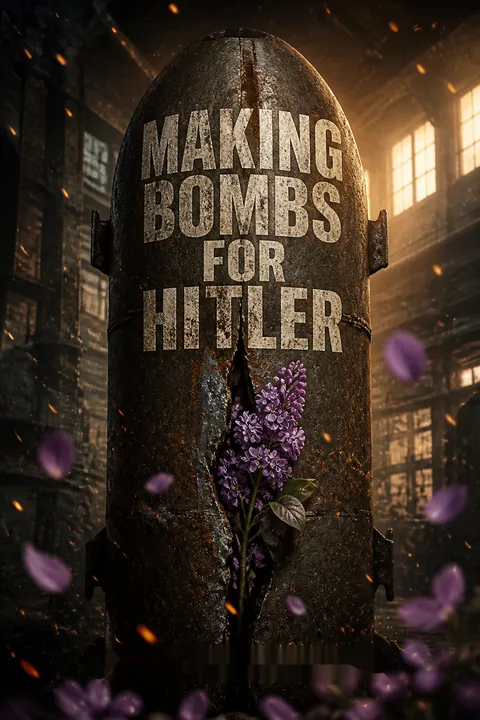


Plot Summary
The Night Train Takes Lida
At a Nazi sorting station, ten-year-old Lida Ferezuk grips her little sister Larissa until a medical examination separates them into different groups. Guards shove Lida into a cattle car bound for Germany, leaving her with only a promise to find Larissa. In the packed darkness, she meets Luka, a wary boy from Kyiv, and Marika, a girl too weak to eat.
Lida persuades the other children to share their watery soup with Marika, then joins Luka in singing a lullaby that spreads through the car. The song gives the frightened children a way to comfort one another, but Luka's account of an earlier Nazi capture warns Lida that usefulness may be the price of survival.
A Seamstress Buys Time
The train delivers the children to a fenced labor camp, where guards shave their heads, disinfect them, and strip away their clothes. Marika is too ill to stand; an officer orders her carried away, and Lida never sees her again. During registration, Lida claims to be thirteen rather than ten, hoping to escape the fate reserved for children considered too young to work.
At roll call, an officer nearly sends her to the hospital, but she points out a loose button and frayed collar on his uniform. Her careful stitching on the OST badge proves the skill she claims, and she is assigned to the laundry. There, Inge makes her wash heavy sheets before allowing her to sew.
The Cross Changes Hands
Among the girls in Barracks 7, Lida grows close to Zenia, who has been hiding that she is Jewish. Lida remembers the Nazis killing her own mother for trying to protect Jewish neighbors, and gives Zenia the family crucifix to help her conceal her identity. The sacrifice costs Lida her last keepsake from her parents, but it gives Zenia a chance to pass unnoticed.
Meanwhile, Juli, a Hungarian prisoner assigned to the camp hospital, tells Lida what happens to the youngest children sent there: doctors drain their blood for wounded German soldiers, and many die. Lida realizes her age lie may have saved her life. She cannot save the children already taken, so she holds on to the people she can still protect.
The Camp Counts Its Living
Days settle into a punishing cycle of thin turnip soup, cold water, long shifts, and roll calls. Lida uses her sewing skill to make scraps of fabric useful, while Oksana and Marta barter the barracks girls' carvings and embroidery for scraps of food. On rare weekends, Juli and Natalia bring back provisions from farm work, risking punishment to share them.
Luka tells Lida how Soviet authorities imprisoned his pharmacist father, while the two children trade stories of the families they hope to find. Lida also carries guilt over accepting candy from a Nazi woman who had coaxed information from her before the sisters were seized. Sewing, sharing, and remembering keep the girls from being reduced to the camp's labels.
A Bomb Finds the Factory
An Allied raid strikes the metalworks where Luka and Zenia labor. Lida helps prepare hospital beds, then watches Zenia return with cuts and Luka carried in with a badly bleeding leg. At the hospital, Lida sneaks to Luka's bedside and finds him awake; he tells her he will seek her after the war. Soon afterward, he disappears from the hospital, having escaped among the dead.
Amid the factory chaos, Lida sees a blond girl in a Nazi officer's car reach toward her in a way that recalls Larissa. She cannot be certain it is her sister, but the glimpse turns hope into a painful question. Officer Schmidt moves Lida from Inge's laundry to a factory room where she and five other women must assemble bombs.
Six Hands Learn the Bomb
At the new factory, each prisoner receives a dangerous, precise task: Lida measures powder, Zenia inserts explosive rods, and Mary operates a press. A glass partition keeps a German supervisor watching them.
One Sunday, Natalia shares a little brown sugar she has smuggled back from farm work. Kataryna notices that its grains resemble the gunpowder, and the group begins planning how to spoil the bombs with dirt or moisture. Around the same period, Lida learns that camp officials poisoned the separate Russian soup served to newly arrived, starving prisoners.
She understands how chance has kept her alive, but refuses to let the work continue untouched. When the supervisor is absent or distracted, the women begin quietly corrupting the materials.
Their Sabotage Meets Fire
As German oversight weakens, Lida and the others fill bomb noses with dirt, wet the explosive rods, and leave scraps of paper for Allied forces inside the shells. Then an Allied bomb punches through the factory roof and lands unexploded in their lunchroom. Lida recognizes the danger and gets all six women out before the bomb detonates, demolishing their room.
On the train back, another attack stops the car; a Hitler Youth boy climbs the door and releases the prisoners. Mary and Bibi run, while Lida, Zenia, Natalia, and the injured Kataryna head toward camp. They arrive to find the buildings burning. The women have survived the factory, but the camp's collapse leaves them exposed to guards and a new danger.
Juli Faces Officer Schmidt
With the camp in flames and the Nazis retreating, Juli takes a pistol from the abandoned hospital office and confronts Officer Schmidt in the yard. She wounds him, but his return shot kills her before Lida can stop the exchange. A young armed guard then orders Lida and other prisoners into a truck.
Zenia, Natalia, and Kataryna are missing; a fellow prisoner gives Lida the crucifix back and explains that the three escaped with others before the guards arrived. The truck carries Lida away from the friends Juli helped protect. At its destination, Nazis force the survivors into a hidden workshop and put them to work filling ammunition cartridges. Lida has lost her friends again, but she knows at least some escaped.
The American Door Opens
In the hidden workshop, Lida and the remaining prisoners sleep beside their machines and survive on almost nothing. When the overseer stops bringing food and materials, their strength drains away. American soldiers finally break through the door and offer food and medical care. Lida leaves the cellar, is treated by Nurse Astrid, and slowly learns to trust care that once meant danger to her.
At a displaced persons' camp, she prays in a makeshift church built around a rescued Ukrainian icon. Luka finds her there, explaining that he escaped his earlier camp by hiding among corpses and later survived in the woods. Their reunion restores one bond, but neither has found family, and Lida still searches for Larissa.
Home Becomes a Dangerous Word
Lida's teacher, Pani Zemluk, warns her that Stalin treats captured Soviet citizens as collaborators and urges her to claim she was born in prewar Poland. Luka chooses to return to Kyiv after Red Army soldiers promise his father is alive, but Soviet guards beat him, strip his belongings, and send him toward Siberia. He escapes from a boxcar and makes his way back to Lida.
Together they leave the camp, search refugee notices, and move among displaced people rather than risk forced repatriation. A rescued German-speaking child with a hidden identification tattoo makes Lida fear that Larissa may have been taken into a German family. They settle in a British camp, take new identities, and keep looking.
Epilogue
Years pass in the refugee camp. Lida sews for people preparing to emigrate, while Luka apprentices to a pharmacist and helps her search the Red Cross lists. Then a letter arrives from Canada with a sprig of lilac and a photograph.
Larissa has survived, been adopted by a Ukrainian couple, and now goes by Nadia. She remembers Lida and asks her to join them in Canada. Lida accepts the reunion, then makes clear that Luka belongs in the future she is choosing too. The sister she spent the war searching for has finally found her.
The ending answers the novel's central question of whether separation must become permanent, but it does not pretend that reunion restores the lost family or homeland intact. The lilac sprig turns a private childhood memory into evidence that Larissa retains a self beyond the identity imposed on her. Her adopted name marks both adaptation and survival. Lida's choice to include Luka in the future she accepts extends kinship beyond blood without replacing her sister. Their hoped-for migration is not a return to the life they lost; it is the beginning of a life built from memory, chosen bonds, and the possibility of safety.
Analysis
The novel makes survival a series of decisions under conditions designed to deny meaningful choice. Lida's age lie, sewing, and guarded use of identity are not simple acts of bravery; each is a calculation made with incomplete information and a child’s limited power. The camp's bureaucracy sharpens this pressure by sorting prisoners into categories that determine food, labor, and exposure to death. The language of usefulness does more than justify exploitation. It teaches the captives to see themselves through the machinery that consumes them.
Against that machinery, the book sets forms of care that are concrete and costly. Lida feeds Marika, gives Zenia the crucifix, repairs clothing, and shares resources. These actions do not defeat the system, but they prevent its categories from becoming the characters' only reality. Sewing is especially apt: Lida cannot restore the family or homeland she has lost, but she can join torn pieces, make something usable, and give other people warmth. The metaphor remains grounded in labor rather than sentiment.
The war's end does not produce a clean moral landscape. Soviet repatriation threatens people whom the Nazis had already enslaved, and Lida must choose between a dangerous imagined home and uncertain safety abroad. Her decision to stay does not mean she stops longing for Ukraine or Larissa. It means she recognizes that loyalty to home cannot require surrendering her freedom. The final reunion matters because it arrives through persistence and communication, not destiny. A remembered lilac, a letter, and the sister's continued search restore connection without erasing the years of coercion, loss, and adaptation that changed them both.
Review Summary
Making Bombs for Hitler is highly praised for its powerful portrayal of Ukrainian children in Nazi labor camps during WWII. Readers appreciate the author's ability to handle difficult subject matter sensitively while not shying away from historical realities. The book is lauded for its engaging storytelling, strong characters, and educational value. Many reviewers note its popularity among young readers and its effectiveness in sparking discussions about the Holocaust. While some find it emotionally challenging, most consider it an important, eye-opening read that offers a unique perspective on WWII history.
People Also Read



Characters
Lida Ferezuk
The watchful elder sisterLida is a Ukrainian girl whose fierce responsibility for her younger sister shapes the way she reads every danger. She watches closely, learns quickly, and understands that her hands can do more than survive: her sewing can win her work, clothe other prisoners, and give her leverage with people who hold power over her. Lida's instinct is to protect, though guilt sometimes makes her believe she caused losses she could not control. Her mother's lesson about making beauty from scraps becomes a practical discipline, not a denial of suffering. She preserves tenderness through acts of care, while gradually learning that surviving also requires judgment, concealment, and choices she cannot make for everyone.
Larissa
Lida's little sisterLarissa is Lida's younger sister and the person whose safety gives Lida's survival its purpose. At the beginning, she is frightened by separation and depends on Lida for reassurance, but she is more than the child Lida remembers: the sisters share a history, a lullaby, and the sensory memories of home. Because Lida cannot know where Larissa has gone, her absence becomes a force that shapes decisions about work, escape, and whether to return east. Larissa's importance lies in the emotional bond that survives even when the sisters cannot communicate, and in the question of how a child keeps hold of identity after adults and governments claim her.
Luka Barukovich
The hardened fellow survivorLuka is a Ukrainian boy from Kyiv, already marked by capture and loss when he meets Lida in the cattle car. His knowledge of Nazi camps makes him practical where Lida is still learning the rules, yet he has not let experience erase his capacity for gentleness. He comforts the sick, shares Lida's lullaby, and treats their friendship as a form of family. His father's imprisonment and his mother's forced labor leave him with little reliable information about home. Luka's caution and Lida's hope balance one another, while their loyalty gives each a witness to a past that others may prefer to classify or forget.
Zenia Chornij
The guarded Jewish friendZenia is a fourteen-year-old from Kyiv who becomes one of Lida's closest companions in the camp. She has learned to keep a dangerous part of her identity hidden, and her composure often masks grief and exhaustion. Lida's gift of the family crucifix is an act of trust that helps Zenia pass as someone she is not, while also forcing both girls to confront what survival can demand. Zenia is capable and observant, but the heavy labor and repeated violence around her take a physical toll. Her friendship with Lida rests on mutual protection rather than easy optimism.
Juli
The haunted hospital workerJuli is a Hungarian prisoner who works in the camp hospital and understands more than she can safely say. Her sharpness toward Lida at their first meeting conceals the strain of witnessing children harmed by the medical staff. She offers knowledge when Lida needs it, but carries the burden of being forced to assist in a place where compassion has little authority. Juli's occasional access to food and her care for the wounded make her a practical ally. She shows how a person may be constrained by a brutal system without surrendering the ability to protect others.
Inge
Lida's laundry supervisorInge runs the camp laundry and first treats Lida chiefly as a useful pair of hands. She is invested in keeping her own work out of trouble, yet she recognizes Lida's precision and gradually gives her more skilled sewing. Inge's relationship with Lida exposes the uneven moral terrain of the camp: limited kindness can matter enormously without making the larger arrangement humane. Her attachment to fine clothing and stolen luxuries also reveals the distance between the prisoner who repairs garments and the German household that claims them.
Natalia
The resourceful Polish workerNatalia is a Polish prisoner from Lviv who survives through alertness, practical courage, and an ability to find small openings in rigid rules. She works in the kitchen and later takes farm jobs, using those opportunities to bring food and information back to her friends. Natalia is not reckless, but she understands that waiting passively can be its own danger. Her Polish status also gives her different options from the Ukrainian girls around her, making her a reminder that the camp's categories determine both treatment and possible futures.
Kataryna Pich
The clear-eyed older girlKataryna is an eleven-year-old from the Kyiv region who recognizes that appearing too young may put a prisoner at risk. She lies about her age for the same reason Lida does, but rarely calls attention to herself. Her judgment becomes valuable among the girls, especially when they consider ways to interfere with bomb production. Kataryna is observant rather than showy, and her practical intelligence helps turn fear into a plan.
Marika Steshyn
The frail train companionMarika is a girl from near Lida's village whom Lida meets in the cattle car. Too ill and weak to feed herself, she draws out Lida's instinct to care for someone beyond her own family. Her brief presence makes the children's shared food and singing concrete acts of survival.
Pani Zemluk
The wary refugee teacherPani Zemluk is a former high school teacher from Lviv who brings discipline and education to the displaced children's lives. She sees that Lida's desire to find Larissa could expose her to Soviet authorities, and urges her to think beyond the longing to go home. Her advice is protective but not simple: it asks Lida to hide part of herself in order to remain free. She represents the hard knowledge of adults who have learned that liberation from one regime does not guarantee safety from another.
Mary
The young resistance teacherMary is a Ukrainian teenager captured while helping run a secret school. Prison life has made her appear much older, though she is still young. Her quiet competence and willingness to act alongside the other women give her a place in their fragile circle. She has seen how quickly ordinary work can become a matter of life and death.
Oksana
The enterprising older sisterOksana is a Ukrainian prisoner and Marta's older sister. She uses the limited freedom attached to her Polish badge to sell the girls' handmade goods outside camp, turning their spare-time craft into food. Her initiative helps the barracks survive.
Marta
Oksana's younger sisterMarta is a Ukrainian teenager who arrives at Barracks 7 with her sister Oksana. She joins the small community of girls who share work and scarce resources, and helps carry their handmade goods into town for barter.
Officer Schmidt
The camp's polished enforcerOfficer Schmidt oversees roll calls and assignments with a controlled manner that can be more frightening than open shouting. He evaluates prisoners according to their usefulness, including Lida's ability to sew, and treats discipline as permission to wield violence. His polished uniform and careful authority make visible the bureaucratic face of cruelty.
Nurse Astrid
The patient American nurseAstrid treats Lida after liberation, offering medical care with a patience that helps the girl begin to distinguish healing from the violence done in the camp hospital. She washes Lida, tends her injured feet, and finds her proper boots, restoring small parts of ordinary life.
Plot Devices
The family lullaby
A song carried between survivorsLida's mother taught her a lullaby that Lida once shared with Larissa. In the cattle car, Luka recognizes the melody, and the children begin singing together. The song gives them a way to soothe one another when food, safety, and family are absent. Later, Lida uses the same kind of quiet comfort with displaced children, turning a private family memory into a portable form of care. Its meaning changes as the story moves: it begins as a link to home, then becomes a way to make temporary kin among strangers.
Lida's sewing
Skill becomes a means of survivalLida's mother taught her to sew, and Lida's practiced hands become legible to the camp authorities when she repairs an officer's uniform. That skill earns her a laundry assignment rather than immediate removal to the hospital, then gives her access to needle, thread, cloth, and a degree of protection from Inge. Lida uses sewing to mend camp linens and make clothing for other girls. The skill is not a magical escape from danger; it is a narrow, hard-won resource that lets her bargain, contribute, and preserve agency inside an institution designed to reduce people to labor.
The crucifix
A keepsake becomes a disguiseLida's parents leave her a family crucifix on a leather cord. When Zenia reveals that she is Jewish and fears being identified, Lida lends her the cross so that its visible symbol may help shield her. The object therefore carries two meanings at once: Lida's bond to her family and the risk Zenia accepts in wearing another faith's sign. Its movement between the girls makes their friendship tangible, while its return to Lida later connects separation with the possibility of recognition and renewed trust.
Age and identity papers
A false identity buys timeThe camp sorts children by age, nationality, and perceived usefulness. Lida claims to be older so she will not be sent with younger children to the hospital, while the German paperwork refuses to recognize Ukraine as a nationality and records her origin in a way that erases her identity. After the war, the same problem returns in another form: Soviet authorities may punish people who were captured by the Nazis, so refugees conceal where they were born. Identity is not merely personal in the novel. It is an administrative decision with consequences for food, work, safety, and freedom.
The bomb components
Forced labor becomes covert resistanceThe six women at the factory are assigned precise stages of bomb assembly, under observation and under threat of punishment. Their work gives them knowledge of how each component fits together and which materials can be damaged without making sabotage obvious. Natalia's smuggled sugar helps them imagine substituting dirt for powder; later, they exploit moments when supervision weakens to corrupt the explosives. The bombs embody the cruel contradiction at the center of Lida's assignment: she is forced to make weapons for the enemy, yet the very knowledge imposed on her gives the group a way to resist.
FAQ
Synopsis & Basic Details
What is Making Bombs for Hitler about?
- A harrowing survival narrative: Making Bombs for Hitler follows ten-year-old Lida Ferezuk, a Ukrainian girl captured by Nazis and separated from her younger sister, Larissa, during a brutal selection process. Her desperate promise to find Larissa becomes her driving force for survival.
- Forced labor and resistance: Transported to a German labor camp, Lida must prove her "usefulness" to avoid death, eventually using her sewing skills in a laundry. When reassigned to a bomb factory, she and her fellow prisoners engage in subtle acts of sabotage against the Nazi war effort.
- Journey through displacement: The story chronicles Lida's experiences with starvation, dehumanization, and the formation of deep bonds with other child laborers, culminating in her liberation by American forces and her long, uncertain journey through displaced persons' camps in search of her lost sister and a new home.
Why should I read Making Bombs for Hitler?
- Insightful historical perspective: The novel offers a rare and poignant look into the little-known history of Ostarbeiters, Eastern European forced laborers during WWII, providing a vital human dimension to a often-overlooked aspect of the Holocaust.
- Themes of resilience and hope: Lida's unwavering determination to survive and find her sister, despite unimaginable suffering, showcases the incredible strength of the human spirit and the enduring power of hope in the face of despair.
- Emotional depth and moral complexity: The story delves into the psychological toll of captivity, the moral dilemmas faced by prisoners, and the unexpected acts of kindness and cruelty from both captors and fellow victims, prompting reflection on humanity's capacity for both good and evil.
What is the background of Making Bombs for Hitler?
- Ostarbeiter historical context: The book is rooted in the historical reality of the Ostarbeiters, millions of Eastern European civilians, primarily Ukrainians, forcibly abducted by Nazi Germany for slave labor during World War II, often under brutal conditions.
- Nazi and Soviet dual oppression: The narrative highlights the complex geopolitical reality of Ukraine, caught between Nazi and Soviet aggression, where both regimes inflicted immense suffering, as seen in Lida's father being taken by Soviets and her mother by Nazis.
- Post-war displacement and repatriation: The story accurately reflects the plight of displaced persons (DPs) after the war, particularly the fear of forced repatriation to the Soviet Union, where former Nazi prisoners were often considered traitors and sent to Siberian gulags.
What are the most memorable quotes in Making Bombs for Hitler?
- "Mama was right. Beauty could be made anywhere.": This quote, uttered by Lida in the cattle car as children sing their lullaby, encapsulates a central theme of finding hope and humanity in the bleakest circumstances, a testament to her mother's enduring wisdom.
- "Be useful or they will kill you.": This chilling whisper from the hollow-cheeked woman at the train stop reveals the brutal logic of the Nazi labor camps, establishing the core survival mechanism Lida must adopt and the constant threat she faces.
- "Where I go, you go.": Lida's declaration to Luka at the end, after receiving Larissa's letter, signifies her expanded understanding of family and her commitment to shared survival and a new beginning, transcending blood ties.
What writing style, narrative choices, and literary techniques does Marsha Forchuk Skrypuch use?
- First-person, child's perspective: Skrypuch employs a direct, immediate first-person narration from Lida's perspective, allowing readers to experience the horrors of the camps through the eyes of a child, which amplifies the emotional impact and highlights the innocence lost.
- Sensory and symbolic imagery: The author frequently uses vivid sensory details—the smell of "rotting straw, bleaching powder, and misery," the taste of "sawdust bread," the "whizz-boom" of bombs—to immerse the reader in Lida's harsh reality, often contrasting these with symbolic elements like the lilac scent representing lost home and family.
- Understated emotional resonance: Skrypuch's prose is often spare and direct, allowing the gravity of the events to speak for themselves, yet she masterfully conveys Lida's internal emotional landscape through subtle observations, quiet reflections, and moments of profound empathy, making the trauma deeply felt without being overly graphic.
Hidden Details & Subtle Connections
What are some minor details that add significant meaning?
- The "metal instrument" in the medical exam: In Chapter One, the nurse uses a "metal instrument" on Larissa's face, causing her to scream. This seemingly minor detail subtly foreshadows the later revelation of the hospital's true purpose—not healing, but blood extraction, where instruments are used to harm, not help.
- Officer Schmidt's frayed uniform: When Lida first encounters Officer Schmidt, she notices his "loose button" and "frayed edge on his collar." This detail, seemingly insignificant, allows Lida to demonstrate her sewing skill and secure her "useful" position in the laundry, highlighting her keen observation and adaptability as a survival mechanism.
- The "humming bees" dream: In Chapter Two, Lida dreams of "humming bees" in the cattle car, which she later realizes is the "thrumming of the train on its tracks." This initial misinterpretation connects to her mother's lullaby and the search for comfort, subtly linking the traumatic journey to a lost sense of security and the power of memory.
What are some subtle foreshadowing and callbacks?
- Luka's hospital warning: Early in Chapter Six, Luka whispers to Lida, "Stay out of the hospital," a seemingly cryptic warning that later proves to be a crucial piece of foreshadowing about the hospital's horrific practice of draining children's blood, saving Lida from a similar fate.
- "Different ways of being killed": After witnessing the starving German patients in the hospital in Chapter Nine, Lida reflects, "It seemed that just as there were different soups, there were different ways of being killed, depending on your nationality." This callback to the segregated Kantine soups (German, Aryan, Polish, Russian) subtly foreshadows the mass poisoning of "Russian soup" in Chapter Twelve, reinforcing the Nazis' systematic and discriminatory methods of extermination.
- The recurring lilac motif: The scent and memory of lilac blossoms appear throughout the book, from Lida's childhood memories with Larissa (Chapter Four) to her longing for its scent in the barracks (Chapter Four) and finally, the sprig of lilac in Larissa's letter (Epilogue). This motif consistently symbolizes lost innocence, the enduring bond between the sisters, and the eventual return of hope and connection.
What are some unexpected character connections?
- Juli's shoes and the dead woman: In Chapter Twelve, Juli gives Lida a pair of shoes, and Lida later recognizes one of the dead bodies in the truck as the woman who replaced her in the laundry, realizing the shoes came from her. This creates an unexpected, tragic connection, highlighting the grim reality of survival at others' expense and the constant cycle of death and replacement in the camps.
- Luka and Lida's shared lullaby: The discovery that Luka knows Lida's "family's personal song" (Chapter Two) creates an immediate, unexpected bond, establishing him as a "brother of the heart" long before they explicitly acknowledge it. This shared cultural touchstone transcends their initial roles as strangers and foreshadows their deep, enduring connection.
- The Polish girls' prior camp experience: Oksana, Marta, and Natalia, the new girls in Barracks 7, reveal that "This isn't our first camp" (Chapter Six). This detail subtly expands the scope of the forced labor system beyond Lida's immediate experience, hinting at the vast network of camps and the widespread suffering endured by countless individuals.
Who are the most significant supporting characters?
- Juli, the compassionate truth-teller: Juli is significant not only for revealing the horrific truth about the hospital's blood-draining practices (Chapter Nine) but also for her profound empathy and ultimate self-sacrifice in confronting Officer Schmidt (Chapter Thirteen), directly enabling Lida's escape and embodying moral courage.
- Luka, the steadfast surrogate brother: Luka serves as Lida's constant companion and emotional anchor, offering practical advice ("Figure out a skill," Chapter Two), shared comfort through song, and unwavering loyalty. His own harrowing escape and subsequent betrayal by Soviet forces (Chapter Fifteen) underscore the complex dangers faced by survivors, making his eventual reunion with Lida a powerful symbol of enduring human connection.
- Inge, the complex German supervisor: Inge is crucial as an "ambivalent oppressor" who, despite her complicity in the Nazi system, shows Lida unexpected moments of kindness and even pride in her work (Chapter Eight). Her character complicates the simplistic good-vs-evil dynamic, demonstrating the nuanced human interactions that could occur even within a brutal regime.
Psychological, Emotional, & Relational Analysis
What are some unspoken motivations of the characters?
- Lida's guilt-driven self-preservation: Lida's relentless drive to prove her usefulness and survive is not just for herself, but deeply intertwined with her guilt over being separated from Larissa and her belief that she must live to find her. Her internal monologue often returns to Larissa, suggesting this quest is a coping mechanism for her trauma and a way to atone for perceived failures.
- Officer Schmidt's subtle power plays: While seemingly detached, Officer Schmidt's actions, like his "near smile" when Lida lies about her age (Chapter Four) or his "dismissive" reaction to Inge's praise of Lida's sewing (Chapter Eight), suggest a subtle enjoyment of his power and a calculated assessment of individuals' "usefulness," rather than purely bureaucratic indifference.
- Juli's need for moral action: Juli's willingness to share the horrifying truth about the hospital and her ultimate sacrifice (Chapter Thirteen) stem from an unspoken, profound moral imperative. Despite her own suffering and the risks, she cannot remain passive in the face of such atrocities, driven by a deep need to alleviate suffering and resist evil.
What psychological complexities do the characters exhibit?
- The normalization of horror: Lida and her friends exhibit a chilling psychological adaptation to their brutal reality. They learn to eat "wormy turnip soup" (Chapter Five), become "used to making bombs" (Chapter Eleven), and even find "beauty anywhere" amidst squalor, demonstrating the human mind's capacity to normalize the abnormal for survival.
- Survivor's guilt and moral compromise: Lida grapples with profound survivor's guilt, especially after learning about the children in the hospital and the poisoned soup (Chapter Nine, Chapter Twelve). Her decision to lie about her age, which saves her but condemns others, forces her to confront the moral compromises necessary for survival, leading to self-blame and a sense of "blood on my hands."
- The struggle for identity and self-worth: Stripped of their names, clothing, and dignity, the children constantly battle against dehumanization. Lida's meticulous sewing of the OST badge (Chapter Six) and her insistence on being "Ukrainian" despite Nazi denial are small but significant acts of reclaiming identity and asserting self-worth in a system designed to erase it.
What are the major emotional turning points?
- The lullaby in the cattle car: The moment Lida and Luka sing their shared lullaby, joined by other children (Chapter Two), marks a powerful emotional turning point. It transforms a space of terror into one of shared humanity and comfort, forging initial bonds and demonstrating the resilience of the human spirit through collective expression.
- Juli's revelation about the hospital: Juli's confession about the children's blood being drained for Nazi soldiers (Chapter Nine) is a devastating emotional blow for Lida, shattering her remaining illusions about the camp's "hospital" and intensifying her guilt and resolve to resist.
- Larissa's letter and the lilac sprig: The arrival of Larissa's letter with the sprig of lilac (Epilogue) is the ultimate emotional climax. It provides long-awaited closure, validates Lida's enduring hope, and symbolizes the miraculous reunion of family and the possibility of healing and a new beginning after years of trauma.
How do relationship dynamics evolve?
- Lida and Luka: From strangers to chosen family: Their relationship evolves from initial shared fear in the cattle car to a deep, almost familial bond, with Luka becoming Lida's "brother of my heart" (Chapter Three, Epilogue). They provide mutual emotional support, practical advice, and a shared sense of purpose, demonstrating how profound connections can be forged in extreme adversity.
- Lida and Inge: A complex power shift: The dynamic between Lida and Inge shifts from a clear master-slave relationship to one of grudging respect and even a form of mentorship. Inge's initial disdain gives way to appreciation for Lida's skill, culminating in Inge defending Lida to Officer Schmidt (Chapter Eight), showcasing a nuanced evolution beyond simple oppressor-victim roles.
- The Barracks 7 girls: A surrogate family: The girls in Barracks 7, initially strangers, quickly form a tight-knit surrogate family, sharing food, comfort, and acts of defiance. Their collective singing, mutual support, and shared grief over lost friends (Chapter Four) illustrate how community and solidarity become vital for psychological and physical survival in the dehumanizing environment of the camp.
Interpretation & Debate
Which parts of the story remain ambiguous or open-ended?
- The full extent of Larissa's experience: While Larissa's letter confirms her survival and adoption, the details of her time with the Nazi family and how she came to be with them remain largely ambiguous. This leaves readers to ponder the psychological impact of her "re-education" and the extent to which she remembers her past.
- The long-term psychological healing: The ending provides a hopeful reunion and a path to a new life, but the deep psychological scars of Lida's and Luka's experiences are not fully resolved. The narrative leaves open the question of how they will truly process and heal from years of trauma, starvation, and loss in their new lives.
- The fate of other survivors: While Lida reunites with Natalia and Zenia's safety is confirmed, the ultimate fates of many other supporting characters, like Mary and Bibi, remain unknown. This ambiguity reflects the vast scale of displacement and loss during the war, where not every story could have a clear resolution.
What are some debatable, controversial scenes or moments in Making Bombs for Hitler?
- The moral justification of sabotage: The decision by Lida and her friends to sabotage bombs (Chapter Eleven) raises a complex moral debate. While it's an act of resistance against their oppressors, it also involves tampering with dangerous explosives, potentially risking their own lives and the lives of other factory workers if the bombs exploded prematurely.
- The portrayal of "kind" Germans: Characters like Inge and Herr Klein, who show Lida and Juli unexpected kindness, can be controversial. Some might argue that their portrayal risks softening the brutality of the Nazi regime or implying that "good Germans" were common, while others might see it as a realistic depiction of human complexity even within an evil system.
- Lida's lie about her age: Lida's decision to lie about her age to appear "useful" (Chapter Three) directly leads to younger children, like Olesia, being sent to the hospital for blood extraction. This moment forces a difficult ethical question: is Lida's self-preservation justified, even if it indirectly contributes to the suffering of others?
Making Bombs for Hitler Ending Explained: How It Ends & What It Means
- A reunion forged in resilience: The novel concludes with Lida receiving a letter from her sister, Larissa (now Nadia), who has found her through the Red Cross and offers sponsorship to Canada. This reunion, symbolized by the sprig of lilac, signifies the triumph of enduring love and hope over years of separation and trauma, fulfilling Lida's driving quest.
- Expanding the definition of family: Lida's immediate decision to include Luka in Larissa's sponsorship ("Where I go, you go," Epilogue) expands the traditional definition of family beyond blood ties. It highlights the profound bonds forged in shared suffering and the creation of new, chosen families among survivors, offering a path to healing and mutual support.
- Bittersweet liberation and new beginnings: The ending is hopeful but tinged with the lingering scars of war. While Lida and Luka gain freedom and the promise of a new life, they also acknowledge the impossibility of returning to their original homes and the permanent loss of their past. It signifies that liberation is not an end to suffering, but a new beginning fraught with the challenges of rebuilding lives and identities.
Download PDF
Download EPUB
.epub digital book format is ideal for reading ebooks on phones, tablets, and e-readers.








