

Plot Summary
Roses at the Border
At the edge of Mortlak, Widow Arden raises Blanche and Rosamund in a cottage beside a forest where the border of Faerie shifts unseen. Their knowledge of Latin and herbs, and their regular trips into the woods, feed villagers' suspicions, so the Widow temporarily forbids their forest walks.
Nearby, Queen Elizabeth's astrologer John Dee and his associate Edward Kelly plan to seize power from Faerie through a secret ritual. In Faerie, Madini and two allies fear the realm's ties to mortal lands and plot to use the sorcerers' attempt for their own ends. These schemes converge around the sisters' home, though none of the three groups yet understands how completely their choices will entangle them.
The opening makes knowledge itself socially dangerous. The Widow's literacy and herbal practice help her keep her family alive, yet the same competence makes the villagers imagine secret sin. Dee and Kelly face a different form of suspicion, but their ambition carries them toward the very power they do not understand. Meanwhile, Madini treats mortal connection as a threat to Faerie's integrity. Each group responds to uncertainty by trying to control it: the Widow restricts her daughters, the magicians design a ritual, and Madini plots behind her Queen's back. Their conflicting forms of caution and appetite establish the story's central collision.
The Impossible October Rose
While barred from the forest, Rosamund gathers the last hawthorn berries beside a country path and meets a charming peddler who helps fill her basket. He calls himself John, walks her toward home, and gives her a fresh crimson rose, though the garden's roses have long since faded. The gift confirms that he is no ordinary traveler.
In Faerie, John learns from his brother Hugh that their mother, the Queen, has hidden the border from him and forbidden him to leave. His mortal sympathies and repeated travels have made him unwelcome to many courtiers. Madini sees his return as a danger to her plan and works with Bochad-Bec and Furgen to turn the coming ritual against him.
The rose is both a token of intimacy and a quiet breach in the ordinary calendar. Rosamund notices its impossibility, but she responds to the giver as a person before she can place him within Faerie's rules. John's divided inheritance has the opposite effect: the court reads his human ties as contamination, while his affection for mortal life is part of his identity. The Queen's restriction turns a familiar seasonal pattern into captivity, and Madini converts that grievance into political opportunity. The encounter gives the romance a concrete beginning while making clear that attraction will unfold inside a struggle over belonging.
All Hallows' Spell
When the Widow needs elecampane for a sick village child, she sends Blanche and Rosamund back into the woods despite the approaching All Hallows' Eve. The sisters find the herb, then follow signs of frightened animals and a distant fire to a clearing where Dee and Kelly are performing their ritual. Their spell forms a globe of power and sends it across the Faerie border.
The globe strikes Hugh instead of John, enveloping him in a black cloud and dropping him unconscious. Dee and Kelly capture the returning power in a lamp, believing their experiment has succeeded. Madini is furious that the spell hit the wrong brother, but sees a chance to blame John and exploit the disaster.
The spell's accidental target exposes the gap between intention and consequence. Dee and Kelly want an abstract force they can direct, but the power they summon is entangled with living Faerie beings. Their confidence turns a person into an unintended cost of research. The sisters, meanwhile, witness the ritual because practical care for a sick child sends them beyond the safety of home. That motive matters: their later involvement grows from ordinary responsibility, not a wish to meddle in grand magic. Madini's response shows how quickly an accident becomes political material when a faction already wants an enemy.
The Border Disappears
After their vigil in Faerie, Blanche and Rosamund wake near a dangerous cliff and find John watching over them. His mother's spell prevents him from locating the border, but he uses an invisibility ring to follow the sisters across it. The ring nearly exhausts him, yet he reaches the mortal world and begins searching for Hugh.
Back in Faerie, healers cannot stop Hugh's transformation or restore the part of him the ritual has taken. Once he becomes a bear, the Queen's law requires his expulsion. Sent through the border into a worsening snowstorm, Hugh struggles to find food and shelter, while John searches the woods without knowing where his brother is.
The brothers' separation is imposed through two different systems of authority. John defies his mother's command because he believes Hugh needs help, while Hugh is expelled by a law that leaves no room for a personal exception. The border, initially a place of wonder and passage, becomes an instrument of exclusion. John's escape depends on the sisters' presence, though he must conceal himself and risk a rare magical resource to follow them. The result is a chain of mutual dependence none of them has chosen: mortal girls guide a half-Faerie man, while a transformed prince is left to survive in a world he barely understands.
A Bear at the Door
As snow closes over Mortlak, Hugh reaches the Widow's cottage and pushes his bear's head through the door, hoping for warmth. Rosamund raises a firewood branch, Blanche hides, and the Widow grips a small knife; then Hugh's anguish persuades them that he is asking for help rather than attacking. They let him lie by the hearth.
Through questions and gestures, they learn that he was once human-shaped, came from Faerie, and has been enchanted. The Widow recognizes the bear from a vision she obtained by scrying for her daughters. Though she fears the risks, she agrees to investigate, and later teaches the sisters from her guarded book of magic so they can understand the danger around them.
Hospitality here begins as a test of judgment rather than a sentimental reflex. The women assess Hugh through his restraint, his distress, and his willingness to answer, not through his frightening appearance alone. Blanche's impulse to touch him shifts the household from fear toward care, while Rosamund remains more suspicious and the Widow weighs danger against conscience. Their decision also changes the family: the magic the Widow has concealed becomes shared knowledge because secrecy can no longer protect them. The hearth becomes a temporary shelter for someone made monstrous by a spell, but shelter brings the responsibility to ask who caused it and what can be repaired.
A Voice Through Smoke
For months, Hugh visits the cottage at night while the Widow, Blanche, and Rosamund search for a remedy. At Christmas, the sisters recognize Dee and Kelly as the men they saw at the Faerie border. When rumors of a bear hunt threaten Hugh, the family hastily completes an experimental counterspell in a field. It fails to change his shape, but Hugh regains his voice and clearer thoughts.
That night John arrives, and the bear recognizes his brother. John explains that he and Hugh are sons of the Faerie Queen and the mortal poet Thomas Learmont. Their father once carried John into the human world and had him baptized, giving him a lasting mortal identity. John asks the Ardens to help recover the Faerie power stolen from Hugh.
The partial success matters because it returns relationship before it returns appearance. Hugh can speak to the people who have sheltered him, and John can recognize his brother as more than a suffering animal. The counterspell also teaches the Ardens that mortal magic can affect a problem Faerie's own healers could not solve, even if the result is incomplete. John's family history complicates the idea that identity is inherited intact: his father's choice and the baptism shaped which world could claim him. The sisters' work now becomes a deliberate alliance, grounded in an exchange of knowledge rather than mere compassion.
The Hunt Goes Astray
The morning after John and Hugh reunite, Master Kirton leads villagers and hired bear handlers into the forest. John uses Faerie magic to pixy-lead the entire party, drawing riders and hounds through mist, false trails, and bewildering glimpses of impossible bears until they emerge exhausted and frightened. The hunt fails, and the bear handlers' mastiffs are left unwilling to pursue bears again.
John returns to the cottage spent but relieved that Hugh is safe. He initially resists the Ardens' offer to help restore Hugh, fearing witchcraft accusations and danger from Dee and Kelly. The Widow argues that her knowledge is necessary, and John finally accepts the alliance, even as Hugh worries about bringing harm to his human friends.
John's misdirection is protective, but it also creates the public legend that will later threaten the people he means to shield. His magic solves the immediate danger by making the forest itself unreliable to the hunters. The episode reverses the usual image of a hunt: the armed party becomes lost prey, while the bear is never captured. At home, the debate about whether the Ardens should help reveals different moral instincts. John frames danger as a reason to withdraw; the Widow sees that refusing aid can be a choice with consequences too. Their alliance begins when protection stops meaning simple avoidance.
The Stolen Lamp
As spring approaches, John and the Ardens design a second spell to return Hugh's missing Faerie power, choosing May Eve to oppose the timing of Dee and Kelly's first ritual. On the appointed day, they find the sorcerers already preparing another working at the forest border. Bochad-Bec, hidden in an oak, brings down a branch that traps Dee and Kelly beneath the scattered equipment, then steals their lamp and flees into Faerie.
John frees the wizards without revealing himself. Madini later uses the stolen lamp as a link to the crystal holding Hugh's power. Her interference causes Hugh intense pain and begins eroding the voice and clarity the Ardens restored, forcing the family to postpone its own spell.
This interruption exposes how many parties now treat the same magical objects as leverage. Bochad-Bec steals the lamp for reasons tied to Faerie's hostility toward mortals, while Madini turns it into a remote instrument for reaching the crystal. Dee and Kelly's tools have become a contested infrastructure, carrying effects across borders without any participant fully controlling them. The Ardens' careful preparations cannot protect Hugh from a second group's intervention. Their work is not simply a contest between good and evil magic; it is a struggle over access, ownership, and whether a living being can be reduced to a source of power.
The Crystal's Living Link
As Hugh's mind and speech begin to fade, John uses his invisibility ring to search Dee's guarded house while Blanche and Rosamund watch through a scrying mirror. Kelly is being driven by Furgen's spell to carry the crystal away, and John sees that the globe contains Hugh's stolen Faerie essence.
When a thread of light appears to connect the crystal to the suffering bear, Blanche instinctively overturns the bowl and breaks the viewing spell. The severed link disrupts Furgen's control of Kelly and sends the magical recoil back through the lamp, killing the water fay. Hugh's spasms stop, but the crystal remains with the wizards, and the group now knows that Faerie conspirators are involved.
Blanche's act is a small physical gesture with an enormous consequence. She does not understand the full structure of the spell, but she recognizes that watching Hugh suffer is no longer neutral observation. Breaking the mirror interrupts a network that turns his body into a conduit between distant powers. The scene gives her intuition a practical form: care can produce knowledge, but knowledge must sometimes be abandoned to stop harm. It also clarifies the difference between witnessing and intervening. The crystal is identified as a prison, yet destroying the link does not free Hugh, so insight increases urgency rather than resolving the problem.
Joan's Wrong Name
Joan Bowes, a servant who resents the Widow's refusal to make her a love potion, turns to Kelly for a spell to bind John to her. She follows his instructions but writes John's everyday name on the charm instead of Thomas, the baptismal name that would reach him, so the spell fails. Stung by John's indifference, Joan watches the sisters gathering herbs and accuses them of witchcraft.
Charles Sledd's quarrel with Kelly has already made the sorcerers' reputations volatile, and Master Rodgers arrives to investigate the growing rumors. As the Widow forbids further magic, Blanche and Rosamund secretly prepare a herbal ointment for Hugh. Dee and Kelly, meanwhile, plan to leave for Poland with the crystal.
Joan's failed charm makes the story's concern with names concrete. John carries several identities, and the wrong one renders Joan's attempt powerless, while her wish to possess him persists as resentment. She converts private humiliation into public accusation, exploiting a culture ready to interpret women's knowledge as criminal. The danger to the Ardens therefore comes not only from Faerie or ambitious sorcerers, but from ordinary social mechanisms: gossip, surveillance, and the authority of investigators. The sisters' secret ointment shows them adapting their practice to that climate. They work quietly, not because they have lost conviction, but because public exposure could destroy the people they are trying to save.
The Wizards Find the Cottage
John returns to the Ardens after learning more from Robin, and the Widow adapts her scrying spell to detect Madini's magic around Dee's house and the crystal. Dee and Kelly notice the contact and use their own tracing spell to follow it. They arrive at the cottage while the family is preparing dinner, accuse the Widow of interfering with their work, and produce the glowing crystal as proof.
Its surface reveals the Ardens and John as participants in the struggle. Rosamund names the harm plainly: the globe holds part of Hugh. Kelly refuses to surrender it, insisting the crystal is essential to the wizards' research. Outside, Rodgers hides behind the hedge, listening as the dispute turns into a confrontation neither side can conceal.
The cottage's ordinary dinner preparations sharpen the collision between domestic life and magical ambition. Dee and Kelly enter a household that has been feeding and sheltering the person their experiment harmed, yet they first interpret the women as threats to their work. The crystal's image confirms connection without explaining responsibility, so the characters must argue over what the object means. Kelly's refusal reveals that the conflict is no longer merely an unintended accident: he now understands enough to choose his research over Hugh's recovery. Rodgers's hidden presence adds another audience, turning a private ethical dispute into evidence that can be distorted by public fear.
The Quartz Globe Shatters
Madini appears at the cottage and claims the crystal, while Kelly uses its power to freeze the Widow, her daughters, John, and Madini in place. Hugh, drawn there by the crystal's pull, charges from the woods and strikes Kelly's arm. The globe falls against the gatepost and breaks. Blanche immediately pours her secret ointment over Hugh, and its rose-and-honey vapors draw the freed power back into him.
Hugh regains his voice, his mind, and then his human body. Madini threatens the Ardens with witch-hunters and reveals that Rodgers witnessed the scene, but Robin arrives after pixy-leading the investigator away. He carries news that the Faerie Queen has summoned the group to hear the full story.
The climax depends on several kinds of agency arriving together. Hugh's body breaks the object that imprisons him; Blanche's prepared remedy gives the released power a path home; and the sisters' hidden labor makes the decisive moment possible. Neither brute force nor herbal knowledge alone would suffice. The scene also reverses Madini's contempt for mortal magic: the supposedly lesser practice succeeds where Faerie's own specialists could not. Yet freedom brings immediate political danger, since Rodgers has seen enough to provoke accusations. Robin's intervention prevents that danger from deciding the ending before the Queen can hear the evidence.
Madini Faces the Queen
Robin leads the Widow, Blanche, Rosamund, John, and Hugh into Faerie, where the Queen hears how Dee and Kelly's experiment began and how the Ardens restored her son. Madini tries to describe their actions as service to Faerie, but Bochad-Bec's testimony confirms that she conspired against the Queen's wishes and sought to sever the realm from mortal lands.
The Queen condemns Madini to seven years bound within a crystal and declares that Faerie must remain connected to the human world. She also rules that John, for disobeying her, is now mortal, though she permits him to return and plead his case. The Ardens receive leave to visit Faerie, and the Queen acknowledges her debt to them.
The hearing converts a tangled sequence of private motives into a public account that can be judged. Madini's stated concern for Faerie cannot excuse acting without the Queen's authority or treating her sons as instruments in a political project. The sentence mirrors the harm she sought to inflict: she is confined in a crystal and made dependent on mortals. John's punishment is less simple. He loses his Faerie nature, yet the Queen's decision preserves a route back through relationship and permission. The Ardens' recognition matters too, because their work is no longer dismissed as dangerous village magic but heard as a meaningful contribution.
Two Roses, One Departure
With Hugh restored, the Queen allows him to return to Faerie and grants the Widow, Blanche, and Rosamund the right to visit. Hugh asks permission to marry Blanche, who accepts him without looking away. John, now mortal, asks Rosamund to marry him; she answers that she would choose him over anyone else. The Queen blesses both matches, and the court begins preparations for the weddings.
Meanwhile, Robin's spell-delayed Master Rodgers finally reaches Mortlak in a confused state, and his account of the bear and the sorcerers inflames the villagers against Dee and Kelly. The mob arrives too late to catch the wizards, who have fled for Poland, and burns their empty house and its magical contents.
The two courtships resolve the sisters' different emotional temperaments without making them interchangeable. Blanche accepts Hugh openly after a relationship built through patient care, while Rosamund meets John's teasing with equal boldness and chooses him on her own terms. The Queen's consent matters because romance here crosses political and social borders, not merely personal preference. In Mortlak, the same story becomes a weapon: rumors and partial testimony redirect collective anger toward the absent wizards. The wedding preparations and the burned house offer sharply different forms of closure, one built through acknowledged bonds, the other through a crowd's violent attempt to make fear concrete.
The Cottage Gives Way
While the family remains in Faerie for the Queen's hearing and wedding preparations, Mortlak's mob wrecks Dee and Kelly's abandoned home. The Widow later returns to the village and tells Mistress Townsend that distant relatives needed her help; to Mary Hudson, her trusted friend, she gives a version closer to the truth.
Then she packs her Bible, prayer book, and spellbook and leaves again with her daughters. Dee and Kelly, already in Poland, eventually resume their experiments with another crystal; Madini's imposed service becomes part of their work, though Dee never again attempts direct dealings with Faerie.
The Widow's departure closes the sisters' life beside Mortlak's suspicious villagers and carries their family toward a future shaped by chosen alliances rather than local rumor.
The ending refuses to treat public recognition as a cure for social danger. The Ardens have helped restore a prince and earned the Queen's favor, but Mortlak remains governed by gossip, fear, and violence. Their departure is therefore not defeat so much as a decision about where they can live without continually defending their dignity. The Widow preserves both religious and magical books, refusing the false choice between piety and knowledge that her neighbors impose. Dee and Kelly's continued experiments also leave the cost of ambition visible beyond the central family. The story closes on movement: safety comes not from making the village understand, but from choosing a different ground.
Analysis
The novel turns the familiar fairy-tale pattern of two sisters and a bear into a story about who gets to define another being. Dee and Kelly treat Faerie power as material for research; Madini treats John and Hugh as instruments in a political theory; Joan tries to bind John's affection through a charm. Each act of control fails to account for the person being controlled. By contrast, the Ardens' magic begins in practical attention: they nurse a lamb, listen to Hugh's gestures, learn the limits of their knowledge, and revise their attempts when a spell causes pain. Their care is not passive. It becomes an intellectual method, one that combines observation, inherited skill, experimentation, and moral restraint.
The book also makes belonging deliberately unstable. John is mortal by upbringing and baptism, Faerie by birth and capacity, and never entirely at ease in either community. Hugh's courtly identity does not protect him from being expelled when law reduces him to a changed body. The sisters cross the border with knowledge their neighbors cannot understand, while their own village turns that knowledge into evidence of witchcraft. Borders therefore operate socially as well as magically: they mark who may speak, who may travel, and whose account will be believed.
The romance grows from this larger argument rather than replacing it. Rosamund and John challenge each other's assumptions; Blanche and Hugh build trust through sustained acts of care. Their relationships are choices made across differences, not rewards bestowed for beauty or obedience. The final contrast between the Faerie court's hearing and Mortlak's mob is especially sharp. The Queen listens, weighs testimony, and accepts that her own court has failed; the villagers turn suspicion into destruction. The ending suggests that justice depends on institutions willing to hear complexity, while safety may still require leaving a community that refuses to do so.
Review Summary
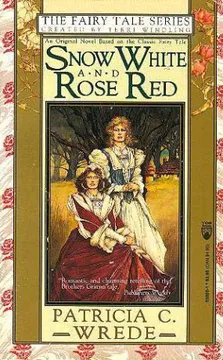
Snow White and Rose Red received mixed reviews. Some praised its Elizabethan setting, clever retelling, and charming characters, particularly enjoying the sister relationships and cozy atmosphere. Others found the dialogue stilted and the plot slow-paced. The Elizabethan language was divisive, with some appreciating its authenticity and others finding it distracting. Critics noted flat characters and underdeveloped romances. Overall, readers familiar with Wrede's other works had varying reactions, with some disappointed and others delighted by this fairy tale adaptation.
People Also Read

Characters
Rosamund Arden
The forest-hearted sisterThe younger Arden daughter is energetic, curious, and quick to act, especially when the forest or a person in danger draws her attention. Her adventurousness can tip into impatience, and her mother often has to remind her that courage without caution creates risks for others. Rosamund is also observant and emotionally direct: she recognizes kindness in John beneath his disguise and challenges him when he underestimates mortal magic. Her bond with Blanche is affectionate but not passive; she argues, teases, and sometimes moves first, while still relying on her sister's steadier judgment. She is driven by a desire to know what lies beyond the safe path and to turn that knowledge into practical help.
Blanche Arden
The steady-hearted sisterBlanche, the elder Arden daughter, is patient, observant, and careful with both people and practical work. She often acts as a counterweight to Rosamund's impulsiveness, but her caution is not timidity: when she judges someone vulnerable, she can commit herself with quiet resolve. Her care for the lamb and the bear reflects a habit of attending to needs others might overlook. Blanche also has a disciplined mind, able to follow complex instructions and notice patterns that change what the family understands. Her closeness with Rosamund is built on trust rather than sameness; she can disagree without withdrawing affection. She is motivated by responsibility and a deep wish to make care effective.
Widow Arden
The guarded healerThe sisters' mother is a skilled herbalist and a discreet practitioner of magic, living with the vigilance demanded of a poor widow in a suspicious community. She refuses charity that might compromise her independence, yet her pride does not make her unkind; she takes in a rejected lamb and later risks social danger to help an injured stranger. Her caution comes from experience with witchcraft accusations, not from a lack of courage. As her daughters press for knowledge, she must balance protecting them against preparing them for threats she cannot control. Her friendship with Mary Hudson offers her a rare place to speak honestly. She values learning, family loyalty, and practical judgment.
John
The divided Faerie sonJohn is the elder son of the Faerie Queen and a mortal poet, raised largely in the human world before choosing life in Faerie. His father's influence and baptism give him a strong mortal identity, while his upbringing grants him Faerie knowledge and magic. He is witty, socially agile, and accustomed to concealing personal matters behind teasing or evasion. Beneath that ease lies fierce loyalty, especially toward Hugh, and a willingness to risk his own safety when others are threatened. John often underestimates the value of mortal skills because he compares them with Faerie power; Rosamund and her family challenge that assumption. His central tension is not simply which realm he belongs to, but how to honor both without surrendering his judgment.
Hugh
The exiled Faerie brotherHugh is John's younger brother and a son of the Faerie Queen. Unlike John, he is more closely shaped by Faerie court life, where polished manners and composure are expected. He is proud and dignified, but also gentle, capable of gratitude, humor, and deep loyalty. His bond with John is unusually strong, and his presence gives the brothers a shared emotional language even when they are separated. Hugh's experience of danger makes him attentive to the cost his friends might bear on his behalf. He tends to protect others by withdrawing from them, a response that clashes with Blanche's instinct to remain beside someone who needs care.
The Queen of Faerie
The realm's sovereign motherThe Faerie Queen is both ruler and mother to John and Hugh, though the demands of sovereignty often harden her personal responses. She values order and the continued stability of Faerie, and expects her subjects to respect her authority. Her manner is controlled, making affection difficult to distinguish from political calculation. She can be severe when challenged, but she also listens to testimony and understands that ruling requires judgments beyond personal preference. Her conflict with John reflects a tension between parental attachment and the laws she must enforce.
Madini
The ambitious court ladyMadini is a powerful and beautiful courtier who regards mortal influence as a danger to Faerie. Her conviction gives her a sense of purpose, but pride and impatience make her willing to scheme beyond the Queen's authority. She treats other people as instruments when their actions might advance her vision of Faerie's future. Her contempt for mortals also makes her underestimate forms of knowledge she does not respect. Madini's political intelligence is considerable, but her need to control events leaves her vulnerable to allies who have their own ambitions.
John Dee
The royal occult scholarJohn Dee is Queen Elizabeth's astrologer, a learned man whose interests span scholarship and magic. He approaches the unknown with intellectual seriousness and some moral hesitation, particularly when his experiments risk harm. His friendship with Edward Kelly is complicated by loyalty, shared ambition, and different tolerances for danger. Dee wants knowledge and recognition, but he is more troubled than Kelly by the possibility that their work has crossed a boundary they cannot repair. His standing at court protects him from easy accusation while making public scandal especially consequential.
Edward Kelly
The hungry spellmakerEdward Kelly is Dee's younger collaborator, an occult specialist whose confidence and appetite for results push their experiments forward. He is charismatic, shrewd, and skilled at persuading Dee to continue when the older scholar hesitates. Kelly is also ambitious in material ways, eager to turn magical knowledge into wealth and status. He can be resourceful under pressure, but his certainty makes it difficult for him to accept that his work may have harmed someone or become uncontrollable. His past brushes with authority have left him alert to exposure and defensive about his reputation.
Robin
The irreverent Faerie scoutRobin is a quick-witted Faerie youth who turns teasing into a way of testing people and gathering information. His irreverence irritates more formal characters, but it also allows him to move through court gossip with unusual freedom. Beneath the playfulness, he is curious and loyal, particularly toward John, and will take risks when a friend's need catches his attention. Robin resists behaving as decorum demands, though his appetite for mischief can make others unsure when he is being serious.
Joan Bowes
The resentful servantJoan is a young servant whose longing for social and romantic power curdles into resentment when she is refused. She first seeks a love potion from the Widow and later turns to Kelly for a different charm. Her attempts to control another person's affection reveal how little regard she has for consent. Joan is observant enough to notice the sisters' unusual activities, but she interprets what she sees through jealousy and self-interest. She uses rumor as a means of retaliation, giving private frustration a public consequence.
Mary Hudson
The loyal village allyMary Hudson is the Widow's longtime friend, a comfortable and outspoken woman whose social position gives her room to speak more freely than the Ardens can. She combines practical intelligence with warmth, offering counsel without reducing friendship to charity. Mary is perceptive about village gossip and quick to recognize when a rumor is being used maliciously. Her loyalty is not merely private: she challenges accusations when others are ready to believe them.
Bochad-Bec
The hostile oakmanBochad-Bec is a small, irritable Faerie creature tied to oak trees and deeply hostile to mortals. He is blunt, stubborn, and easily offended by Madini's habit of treating him as a subordinate. Though not as subtle as his conspirators, he is capable of practical action and has a strong sense of his own grievances. His distrust of human influence makes him useful to schemes that promise to preserve Faerie's separation from mortal life.
Furgen
The calculating water fayFurgen is a water creature whose cool manner conceals a firm dislike of mortals. It is more patient and strategic than Bochad-Bec, often questioning Madini's assumptions even while cooperating with her. Furgen understands that magical influence can travel through objects and relationships, and it prefers indirect leverage to open confrontation. Its polished courtesy makes its hostility harder to read, but not less real.
Mistress Townsend
The meddling village moralistMistress Townsend is a pious, well-meaning neighbor who repeatedly warns the Widow about her daughters' prospects and safety. Her advice often arrives as criticism, and she mistakes conventional respectability for protection. She is not malicious, but her assumptions help show how quickly a woman's independence can become a subject of public judgment.
Phillip Rodgers
The cautious investigatorPhillip Rodgers is a government investigator sent to examine rumors of sorcery around Mortlak. He is politically cautious and prefers a manageable suspect to a scandal involving powerful men. Rodgers's judgment shifts with the evidence before him, revealing how official investigations can be shaped by convenience as much as by truth.
Charles Sledd
The vindictive informantCharles Sledd is a sly investigator whose prior conflict with Kelly makes him a poor neutral observer. He enters the Dee household under a pretext, but Kelly recognizes him and exposes their history. His presence intensifies public suspicion and gives the magicians another reason to fear scrutiny.
Master Hinde
The lamb's former ownerMaster Hinde is a local sheep farmer who offers the Widow a rejected winter lamb. His practical generosity gives the family an animal to nurse and later becomes an innocent detail distorted by village rumor.
Plot Devices
The shifting Faerie border
A perilous thresholdThe border between England and Faerie moves through the forest and can become difficult or impossible to find, particularly when magic or the season interferes. It makes ordinary herb-gathering dangerous, traps Blanche and Rosamund overnight, and complicates John's attempt to leave Faerie. The border also defines political limits: crossing it can draw attention from the Queen's court, while spells and objects can carry power between realms without a person crossing at all. It turns geography into a shifting condition of belonging and access.
The Faerie crystal
A stolen essence prisonDee and Kelly's ritual captures Faerie power in a lamp, which they later transfer into a crystal globe. The men think they have acquired a magical resource, but the power belongs to Hugh and is tied to his lost Faerie nature. Madini and Furgen use the lamp as a link to reach the globe, while John and the sisters work to identify and recover what it holds. Its breakage releases the power needed for Hugh's restoration.
The Arden counterspells
Care made magicalThe Widow and her daughters combine prayer, learned ritual, seasonal plants, and careful observation to oppose Dee and Kelly's work. Their first spell does not restore Hugh's shape, but gives him speech and clearer thought. Later, Blanche and Rosamund prepare an herbal ointment from plants they know well. It becomes useful when the crystal breaks and Hugh's stolen power is released. These spells make the sisters' domestic skills consequential without suggesting that effort guarantees success.
John's invisibility ring
A limited escape toolThe ring can make its wearer invisible, but it has only a few uses. John spends one use to follow Blanche and Rosamund out of Faerie when the Queen has hidden the border from him, then keeps the remaining use for a later attempt to enter Dee's house. The ring lets him pass unseen, but it cannot defeat every protection: Dee's wards still bar him from the study where the crystal is kept. Its scarcity forces John to treat each use as a consequential choice.
Names and binding spells
Identity controls enchantmentJoan follows Kelly's instructions for a love charm, using a vial, a written cloth, and a name repeated through ritual. She writes John rather than Thomas, the name given to him at baptism, and the spell fails to reach him. The mistake connects the subplot to John's divided identity: his public name and his deeper magical identity do not operate as interchangeable labels. More broadly, the novel's spells repeatedly depend on precise links between objects, people, and intentions.
Download PDF
Download EPUB
.epub digital book format is ideal for reading ebooks on phones, tablets, and e-readers.








