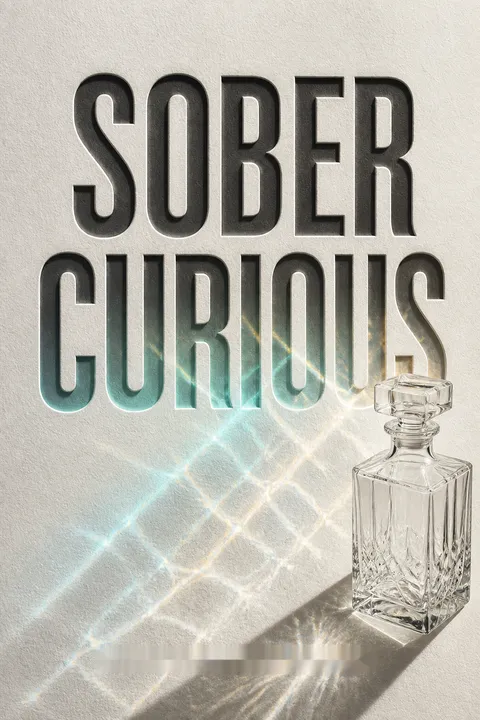


Key Takeaways
Ask whether alcohol improves your life before deciding what your drinking means
Start with a question. Warrington’s change began not with a dramatic collapse but with recurring hangovers, anxious mornings, and the suspicion that alcohol was making ordinary life feel worse. After a weekend without drinking on a yoga retreat, she noticed an unusually hopeful Monday and began asking whether her life might improve without booze. That question, rather than a label, became the start of her inquiry. Curiosity is the method. Sober Curious means examining alcohol’s effects on your own body, moods, relationships, and choices. It can lead to abstinence, or to a different understanding of your relationship with drinking. The book’s point is that a person need not wait for a crisis to ask the question.
The book’s strongest move is replacing the all-or-nothing question, “Am I an alcoholic?”, with a practical inquiry: what does drinking actually do in this life? That can lower defensiveness and make self-observation possible. It also resembles a behavioral experiment: change one condition, notice what follows, and compare the result with expectation. The limit is that self-experimentation cannot diagnose alcohol use disorder or reliably assess medical risk. For people who drink heavily or experience withdrawal symptoms, stopping suddenly can be dangerous; professional guidance matters. Curiosity opens the door, but it is not a substitute for clinical care.
Treat drinking as learned behavior, not proof of a defective character
Habit grows in context. Warrington links her own drinking to the rewards around it: nightlife, free drinks at work events, a new social identity, and the sense of belonging that alcohol seemed to provide. She draws on Marc Lewis’s account of learning and addiction: the brain strengthens patterns associated with pleasure or relief, making repeated behavior easier to perform without much deliberation. Marketing and social norms reinforce the pattern, presenting alcohol as a near-universal tool for celebration, relaxation, and connection. Shame can deepen the loop. If drinking becomes a source of regret, labeling the self defective may add distress that drinking temporarily relieves. The author argues for understanding the behavior and its context, rather than treating shame as a cure.
This framing helpfully shifts attention from moral weakness to reinforcement, cues, and social learning. Those ideas are consistent with behavioral science, where repeated rewards make actions more likely and environmental cues can trigger behavior outside conscious intention. But the claim that nearly everyone who drinks regularly is “a little addicted” is the author’s broad interpretation, not a clinical definition. Regular use alone does not establish addiction, and alcohol problems vary greatly in severity. A useful middle ground is to question both extremes: neither dismiss every concern as normal nor turn every drinking habit into a diagnosis.
Stop negotiating with moderation; use abstinence to learn what alcohol changes
Test the pattern directly. Warrington describes repeated attempts to set limits, such as avoiding weekday drinks or stopping after a small number. In her experience, these rules kept attention fixed on alcohol and were difficult to sustain. She suggests a period without drinking as a way to interrupt the routine and observe what changes. Notice the reminder. She prefers treating a lapse as information rather than proof of personal failure. A drink after a period of abstinence may reveal its effects on mood, sleep, or regret more clearly than abstract warnings do. She also recommends “playing it forward”: when nostalgia makes drinking seem appealing, remember the whole sequence, including the next morning. This is not a claim that everyone should drink again to test themselves.
A temporary break can function like an N-of-1 experiment, making patterns more visible than repeated promises to “cut back.” The practical value lies in observation: what situations provoke craving, and what changes when alcohol is absent? Yet the book’s preference for abstinence over moderation should not be mistaken for a universal clinical rule. Some people can reduce drinking; others cannot safely stop without support. Likewise, a lapse is useful information only when interpreted without minimizing danger. For someone with severe dependence, repeated attempts to stop or restart should prompt professional help, not more unsupervised experimentation.
Face sober social firsts instead of letting FOMA choose your calendar
FOMA names the fear. Warrington uses FOMA, or “Fear of Missing Alcohol,” for the worry that social life, celebrations, dating, or relaxation will be diminished without drinking. She recommends identifying the situations that activate it, from weddings and work events to airports and the end of a deadline. Another useful idea is “euphoric recall”: remembering the fun of drinking while overlooking the arguments, blackouts, or miserable mornings. Try the event sober. Rather than withdrawing from social life or reserving alcohol for every supposedly unavoidable occasion, attend a chosen event without drinking and let the initial awkwardness pass. A “Sober First” is a first experience of a familiar situation without alcohol, an opportunity to learn whether the feared discomfort lasts and what the event is like in reality.
This approach resembles exposure learning: a feared situation is entered without the usual safety behavior, allowing new evidence to update expectations. The point is not to endure every unpleasant event, but to find out whether alcohol is truly necessary for connection. The advice also recognizes that settings shape behavior. A bar built around drinking may be a poor test of sober sociability, while an activity-based gathering offers more to share. One caution: discomfort is not always a false alarm. If a setting is unsafe, coercive, or simply unwanted, leaving is sound judgment, not failed exposure.
Let clear-headed dating expose compatibility, boundaries, and the quality of sex
Clarity changes intimacy. Warrington argues that alcohol can make a date feel easier by muting self-consciousness, but it can also blur judgment and make it harder to notice whether a person is respectful or appealing. One friend realized that, had she been drinking, she might have gone home with a date whose comments made her feel small. Meeting sober helped her end the interaction sooner. Presence can deepen connection. The book also describes alcohol’s capacity to dull sensation and complicate communication about desire and consent. Sober dating can feel exposed at first, so the author suggests lower-pressure settings, shared activities, and honest conversation. In long-term relationships, removing alcohol may reveal friction that drinking softened, but it can also create room for more direct care and intimacy.
The insight extends beyond alcohol: anything that lowers inhibition can feel like confidence while also reducing the quality of information available for a decision. Clear attention can support boundary recognition, though sober dating does not guarantee safety, compatibility, or good sex. Nor does intoxication make an assaulted person responsible for another person’s actions. The book is right to emphasize consent and discernment, provided those ideas are not turned into victim-blaming. Its most useful implication is modest: use settings and communication that make it easier to know what each person wants and to change course freely.
Use better sleep and mornings as evidence your body can understand
Notice the physical contrast. Warrington reports more restorative sleep, improved digestion, clearer skin, more energy, and less anxiety during periods without alcohol. She pays particular attention to sleep: alcohol may make falling asleep feel easier, yet she describes disrupted rest, early waking, and mornings that felt like prolonged jet lag. Her account gives readers a concrete way to assess the experiment: compare how the body feels after drinking with how it feels after a sustained break. Listen without scaremongering. The book does not rely mainly on disease statistics to persuade. It asks readers to take familiar effects such as nausea, thirst, fatigue, and confusion seriously, rather than treating them as the standard price of a good night.
This emphasis on felt experience can be more persuasive than distant risk statistics. Sleep is also a useful feedback signal because alcohol’s sedative effect can be mistaken for restorative sleep. Still, personal improvement does not prove that every symptom came from alcohol, and the book’s health claims should not replace medical evaluation. Benefits vary with amount consumed, health, medications, and other conditions. The larger lesson is epistemic: combine bodily observation with reliable medical evidence. Neither anecdote nor a single favorable study should carry the whole argument.
Meet the feelings alcohol muted, with support rather than shame
A clear head reveals more. Warrington connects her drinking to anxiety, shame, and unresolved pain from an abusive relationship and an eating disorder. When she took longer breaks from alcohol, feelings she had kept at a distance returned. She presents meditation as one way to notice thoughts without immediately obeying or suppressing them. In a simple breath practice, the mind wanders, the person notices, and attention returns to breathing. Do not confuse presence with treatment. The author also values community, peer support, and professional help for difficult emotional work. Her argument is that abstaining alone may not address the reasons someone drank; understanding those reasons can make change more meaningful and sustainable.
The distinction between removing a coping behavior and addressing the distress it managed is essential. Mindfulness can help people observe urges without acting automatically, while supportive relationships can reduce isolation and make difficult experiences speakable. But meditation is not a universal remedy, and introspection can intensify distress for some people, especially those with trauma. The book’s best version of this advice is therefore relational, not heroic: notice what is emerging, seek trusted support, and use trained mental-health care when needed. Spiritual language may help some readers; it should remain an invitation rather than a required explanation.
Replace the drink’s job with pleasures that take effort to discover
Build alternatives deliberately. Warrington warns against stopping drinking and then waiting for life to improve by itself. Alcohol may have been doing several jobs: helping someone relax, feel included, dance, celebrate, or escape boredom. She suggests finding other ways to meet those needs, including music, singing, dancing, creative projects, exercise, meditation, nature, service, and community. One vivid example is her sober dance event in Croatia: she expected alcohol to be necessary for dancing, then found herself moving freely and saw others enjoy the night without drinking. Expect different rewards. These alternatives may be subtler or slower than a drink, and may require practice before they feel satisfying. The task is to discover which ones fit the individual.
This is a functional approach to behavior change: identify what a habit provides, then find a safer or more durable way to provide it. Replacing alcohol’s social function may require not just willpower but new routines, venues, and companions. The book’s menu is broad, which is a strength, though no activity will work equally well for everyone. Some people may need treatment, medication, or structured recovery support, not just new hobbies. The useful question is concrete: what need is the drink serving right now, and what other response could meet at least part of it?
Make sobriety a chosen practice, not a new purity test
Keep the choice personal. Warrington resists both the idea that every drinker must follow one recovery model and the impulse to preach to friends. Her “Alternative 12 Steps” emphasize knowing triggers, trying sober firsts, speaking honestly, finding supportive people, attending to feelings, and replacing alcohol with meaningful practices. She also discusses “positive drinking,” but not as a moderation formula or a license to ignore consequences. For her, any choice to drink should be deliberate, informed, and consistent with one’s values; repeated obsession about whether to drink may itself be a reason to pause. Look beyond the individual. She imagines that more hangover-free time and attention could support families, creative work, and civic life, while rejecting prohibition as a solution.
The refusal to turn sobriety into a moral ranking is valuable, particularly in a culture where abstainers can be treated as judgmental and drinkers as irresponsible. The social vision is plausible at the level of individual time and attention, but the book sometimes moves too quickly from personal clarity to broad claims about collective transformation. Alcohol use is shaped by stress, access to care, poverty, marketing, and social conditions, not simply individual choice. A stronger public-health reading pairs personal agency with structural change and harm reduction. The personal experiment matters, but it cannot carry the whole social burden.
Analysis
Sober Curious is part memoir, part self-help guide, and part cultural critique. Its organizing story is a shift from treating alcohol as a normal feature of adult social life to examining its actual effects. Warrington begins with ordinary discomfort rather than catastrophe: hangovers, anxiety, and the sense that a celebrated weekend leaves her less able to inhabit the week. That accessible entry point is the book’s main contribution. It makes questioning drinking available to people who do not identify with a severe addiction narrative.
The book is most persuasive when it describes concrete mechanisms: repeated rewards create habits, social settings cue drinking, and the prospect of belonging can make abstinence feel costly. Its advice to observe triggers, test sober social situations, and replace alcohol’s functions is coherent with behavioral approaches to change. It also handles shame with care, treating a lapse as information rather than as proof of a defective self.
Its main tension is between personal experimentation and clinical reality. Warrington’s broad suggestion that regular drinkers may be “a little addicted” is provocative but not equivalent to diagnostic criteria. Nor are abstinence, moderation, and recovery interchangeable choices for every person. The book’s own insistence that individual stories differ supports a more careful formulation: questioning is widely available, but treatment needs vary. Abrupt cessation can be medically dangerous for someone with physical dependence, and professional support may be essential.
A second tension appears in the blending of neuroscience, wellness, and spirituality. Meditation and ritual are presented alongside claims about energy, consciousness, and healing. Readers can benefit from the practices without accepting every metaphysical explanation. The most durable idea survives that distinction: alcohol may appear to supply confidence, pleasure, or connection, while also obscuring the needs that produced the desire. The book invites readers to examine that trade, rebuild sources of reward, and decide with more awareness. Its vision of broader social change is inspiring, though it is strongest when grounded in individual and community action rather than treated as a substitute for policy or care.
Review Summary
Sober Curious receives mixed reviews, with an average rating of 3.61/5. Readers appreciate the author's insights on alcohol's impact and suggestions for sober living. Many find the book inspiring and relatable. However, some criticize the writing style as repetitive and pretentious, and note a lack of scientific information. Critics also point out that the advice may not be accessible to all socioeconomic groups. Despite these drawbacks, many readers find value in exploring sobriety and challenging societal drinking norms.
People Also Read




Glossary
Sober Curious
Questioning alcohol’s roleWarrington’s term for deliberately questioning how alcohol affects a person’s body, mood, relationships, and life. The practice often includes periods without drinking and observing what changes. It is not a medical diagnosis or a single recovery program, and it may lead to ongoing abstinence, occasional drinking, or a clearer understanding of personal risk.
FOMA
Fear of missing alcoholAn abbreviation for “Fear of Missing Alcohol,” Warrington’s name for the concern that social connection, celebration, relaxation, or excitement will be harder to access without drinking. FOMA can be triggered by particular settings, memories, people, or transitions, such as parties, travel, or finishing work. Identifying its triggers can reveal what someone expects alcohol to provide.
Sober Firsts
Familiar events without alcoholWarrington’s term for the first occasions a person experiences a familiar activity or social setting without drinking. Examples include a date, party, wedding, or concert. These events can feel awkward because alcohol has become part of the expected routine. They also offer a chance to discover whether the anticipated discomfort occurs and what the experience is like sober.
euphoric recall
Remembering drinking selectivelyA psychological term Warrington uses for remembering past drinking experiences mainly through their pleasurable or exciting aspects while overlooking related costs. A person may recall dancing, friendship, or a sense of freedom but omit conflict, impaired judgment, or a painful next morning. She suggests deliberately recalling the full sequence when nostalgia makes drinking seem especially attractive.
cognitive resonance
Alignment between values and actionsWarrington’s label for the sense of calm and coherence she associates with thoughts, words, and actions matching one another. She contrasts it with cognitive dissonance, the discomfort of acting against one’s beliefs or intentions. In the book, honest choices about drinking and relationships are presented as one way to reduce that internal conflict.
Four bodies wellness
Whole-person well-beingWarrington’s framework for considering well-being across physical, mental, emotional, and spiritual dimensions. Rather than treating health as only diet or exercise, it asks whether habits and experiences support the whole person. In her account, improvements in digestion, emotional processing, attention, and spiritual connection are related parts of a broader change.
FAQ
What's "Sober Curious" by Ruby Warrington about?
- Exploration of Alcohol-Free Living: "Sober Curious" is about exploring the benefits of living without alcohol, questioning the societal norms around drinking, and understanding the personal and collective impact of alcohol consumption.
- Personal Journey: The author, Ruby Warrington, shares her personal journey of questioning her relationship with alcohol and the positive changes she experienced by reducing her intake.
- Cultural Critique: The book critiques the pervasive drinking culture and offers insights into how alcohol is marketed and normalized in society.
- Alternative Lifestyle: It presents an alternative lifestyle choice that emphasizes wellness, presence, and deeper connections without the influence of alcohol.
Why should I read "Sober Curious"?
- Self-Reflection: It encourages readers to reflect on their own drinking habits and the reasons behind them, offering a chance for personal growth and self-discovery.
- Health Benefits: The book outlines the physical and mental health benefits of reducing or eliminating alcohol, such as improved sleep, focus, and emotional resilience.
- Empowerment: Warrington provides tools and insights to empower readers to make conscious choices about alcohol, promoting a sense of control and agency over one's life.
- Community and Support: It highlights the importance of community and support in making lifestyle changes, offering resources and stories from others on similar journeys.
What are the key takeaways of "Sober Curious"?
- Questioning Norms: Challenge societal norms around alcohol and consider the personal impact of drinking.
- Health and Wellness: Recognize the significant health benefits of reducing or eliminating alcohol, including better sleep and mental clarity.
- Emotional Awareness: Develop emotional intelligence by understanding the reasons behind drinking and learning to cope with emotions without alcohol.
- Community and Connection: Find support and build connections with others who are exploring a sober or reduced-alcohol lifestyle.
How does Ruby Warrington define "Sober Curious"?
- Exploration, Not Abstinence: Being "Sober Curious" means exploring the role of alcohol in your life without necessarily committing to complete abstinence.
- Questioning and Awareness: It involves questioning why you drink, when you drink, and how it makes you feel, fostering greater awareness and mindfulness.
- Personal Choice: The concept emphasizes personal choice and empowerment, allowing individuals to decide what level of alcohol consumption, if any, is right for them.
- Cultural Shift: Warrington sees it as part of a broader cultural shift towards wellness and conscious living.
What are the benefits of being "Sober Curious"?
- Improved Health: Benefits include better sleep, increased energy, and improved mental clarity.
- Emotional Growth: It allows for greater emotional awareness and the ability to handle stress and emotions without relying on alcohol.
- Deeper Connections: Being sober curious can lead to more authentic and meaningful connections with others.
- Increased Productivity: Without the effects of alcohol, individuals often find they have more time and energy to pursue their goals and passions.
What are some challenges of adopting a "Sober Curious" lifestyle?
- Social Pressure: Navigating social situations where drinking is the norm can be challenging and may require finding new ways to socialize.
- Emotional Discomfort: Facing emotions and stress without alcohol can be difficult but ultimately rewarding.
- Identity Shift: Changing one's relationship with alcohol can lead to a reevaluation of personal identity and social circles.
- Cultural Norms: Overcoming the pervasive cultural messaging that equates alcohol with fun and relaxation.
How does "Sober Curious" address the concept of FOMA (Fear of Missing Alcohol)?
- Understanding Triggers: The book encourages identifying situations and emotions that trigger the fear of missing out on alcohol.
- Reframing Socializing: It offers strategies for socializing without alcohol, such as finding new activities and building a supportive community.
- Euphoric Recall: Warrington discusses the concept of euphoric recall, where people remember the positives of drinking while overlooking the negatives.
- Mindful Reflection: Encourages mindful reflection on past drinking experiences to understand the true impact of alcohol.
What role does spirituality play in "Sober Curious"?
- Spiritual Awakening: Warrington describes her journey as a spiritual awakening, where reducing alcohol led to greater clarity and connection with her spirit.
- Alternative Practices: The book suggests exploring spiritual practices like meditation, yoga, and breathwork as ways to connect with oneself without alcohol.
- Inner Peace: Emphasizes finding inner peace and fulfillment through spiritual exploration rather than external substances.
- Holistic Approach: Encourages a holistic approach to well-being that includes physical, mental, emotional, and spiritual health.
What are some practical tips from "Sober Curious" for reducing alcohol consumption?
- Set Intentions: Start by setting clear intentions about your relationship with alcohol and what you hope to achieve.
- Identify Triggers: Recognize and address the situations and emotions that lead to drinking.
- Find Alternatives: Explore non-alcoholic beverages and activities that provide relaxation and enjoyment.
- Build Support: Connect with others who are also exploring a sober or reduced-alcohol lifestyle for support and accountability.
What are the best quotes from "Sober Curious" and what do they mean?
- "Would life be better without alcohol?" This central question encourages readers to reflect on the role of alcohol in their lives and consider the potential benefits of reducing or eliminating it.
- "Happiness is our natural state." Warrington suggests that joy and contentment are inherent to us and that alcohol often masks these natural states.
- "The only way to change a habit is to change your habits." This emphasizes the need for conscious action and commitment to alter drinking patterns.
- "Your Sober Curious journey is yours and yours alone." Highlights the personal nature of the journey and the importance of individual choice and empowerment.
How does "Sober Curious" suggest handling social situations without alcohol?
- Plan Ahead: Prepare for social events by deciding in advance how you will handle offers of alcohol.
- Bring Alternatives: Consider bringing your own non-alcoholic drinks to share and enjoy.
- Communicate Openly: Be honest with friends and family about your choice to explore a sober lifestyle.
- Focus on Connection: Shift the focus from drinking to connecting with others through conversation and shared activities.
What impact does "Sober Curious" aim to have on society?
- Cultural Shift: Warrington envisions a cultural shift where questioning alcohol's role becomes normalized and accepted.
- Increased Awareness: Aims to increase awareness of the health and social impacts of alcohol, encouraging more mindful consumption.
- Empowerment: Seeks to empower individuals to make conscious choices about alcohol, leading to healthier and more fulfilling lives.
- Collective Change: Hopes to inspire a collective movement towards wellness and conscious living, reducing the societal reliance on alcohol.
About the Author
Other books by Ruby Warrington

Download PDF
Download EPUB
.epub digital book format is ideal for reading ebooks on phones, tablets, and e-readers.








