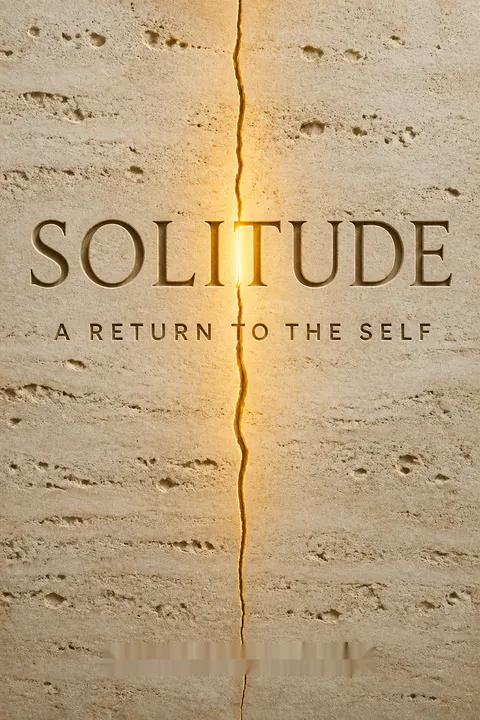


Key Takeaways
Let solitude, work, and love share the job of making life meaningful
More than one anchor. Storr challenges the belief that intimate relationships must be the main source of happiness. Edward Gibbon, who spent long stretches writing alone, also enjoyed friends, conversation, and a close friendship with Lord Sheffield. His chief pleasure and source of self-worth, however, was his historical work. The point is not that relationships are unimportant, but that a life can be rich without marriage or a single overriding attachment.
Keep the social world broad. Intimate bonds are only one kind of connection. Familiar colleagues, neighbors, and shopkeepers can provide recognition and a sense of belonging, even without deep disclosure. Work and absorbing interests can contribute purpose and continuity too. Storr argues that placing the entire burden of happiness on a partner makes relationships carry more than they can reliably bear.
What's valuable here is the distinction between needing people and needing one relationship to supply an entire life. A varied set of attachments, roles, and interests can make a person less vulnerable when one bond changes or ends. This also reframes independence: it need not mean emotional distance, only a broader distribution of meaning. The argument should not become a rationale for neglecting relationships, though. Work and hobbies can sustain a life, but they cannot always provide the care and mutual recognition that close bonds offer.
Learn to be alone without confusing solitude with abandonment
Security makes space. Storr draws on psychoanalyst Donald Winnicott's idea that the ability to be alone begins with feeling safe in another person's presence. A child who trusts that a caregiver will return can explore, play, and gradually tolerate time apart. Winnicott called this the capacity to be alone: not withdrawal from others, but the ability to remain settled and in touch with oneself when no one is actively attending to you.
Alone is not isolated. A solitary child who enjoys imagination should not automatically be treated as socially impaired. Nor should contented solitude be confused with the painful withdrawal that can follow rejection or fear. Storr links early security with later self-discovery: when people are not busy monitoring others' reactions, they may notice feelings and preferences that get lost in constant accommodation.
This account makes solitude relational without reducing it to relationships. Confidence in another person's availability can become an inner resource, allowing exploration rather than dependence on constant reassurance. The distinction is useful for parents and adults alike: a quiet child is not necessarily a lonely child, and a sociable adult may still lack room to hear their own preferences. The theory describes a plausible developmental pathway, not a diagnosis. Temperament, circumstance, and changing relationships also shape how comfortable someone feels alone.
Give important thoughts quiet time to combine before demanding answers
Insight needs incubation. Storr describes a creative process in which preparation comes first: a person gathers material, studies a problem, and then steps away. During incubation, the mind may keep comparing and organizing ideas outside deliberate attention. The next stage, illumination, is the sudden appearance of a new connection or solution. Composer Johannes Brahms reportedly set new musical ideas aside for months before returning to them in altered form.
Sleep is part of the work. Storr also points to everyday experiences of waking with a decision clearer or recalling material better after sleeping. He discusses research on REM sleep and dreaming as possible forms of mental sorting, while acknowledging that the mechanism was not settled. His practical point is modest: thinking is not only active problem-solving. Time, rest, and reduced interruption can help ideas take shape.
The argument offers a useful counterweight to the modern habit of treating every pause as wasted time. Attention can collect and manipulate information, but stepping away may allow less deliberate associations to surface. That does not mean every hunch is insight, or that sleep automatically solves a problem. Incubation works best after genuine preparation, and a promising idea still needs testing. The distinction between generating possibilities and checking them helps preserve both the value of reverie and the discipline of evidence.
Use chosen solitude to metabolize loss and revise a life
Grief takes time. Storr argues that mourning is partly a private process because the lost relationship contained experiences others could not share. He describes rural Greek mourning customs that give grief a long period and repeated rituals, making the reality of death difficult to evade. He also cites research in which widows who showed little emotion soon after bereavement reported more prolonged distress than those who expressed grief early. Support matters, but busyness and stoicism can postpone rather than resolve pain.
Retreat can reset perspective. Solitude can also help after a major life change. Admiral Richard Byrd chose to spend an Antarctic winter alone, seeking quiet after years of crowded obligations. The experience gave him a renewed sense of proportion and appreciation for life. Storr's point is not to prescribe extreme isolation, but to recognize that stepping out of routine can create room to reconsider what matters.
This view treats grieving as active adaptation rather than a problem to be hurried away. Ritual and protected time can make loss socially legible, giving mourners permission to feel what ordinary schedules often suppress. A retreat can similarly loosen habitual roles long enough for reconsideration. Yet solitude is not automatically restorative: a person may need company, practical help, or professional care. The relevant question is not whether to withdraw, but what kind of support and space allows a particular person to face reality without being overwhelmed.
Never mistake imposed isolation for a healthy retreat
Control changes the experience. Storr sharply distinguishes chosen solitude from confinement imposed by others. People held in solitary cells reported insomnia, poor concentration, memory problems, anxiety, and, in some cases, hallucinations. Experiments that reduced sensory input also found deteriorating performance and increased suggestibility. The harms of political imprisonment were compounded by uncertainty, sleep loss, discomfort, and threats, not by aloneness in isolation.
Protect a small choice. Accounts of prisoners Edith Bone and Christopher Burney show how mental routines could help preserve a sense of agency. Bone mentally recited poetry and revisited remembered places; Burney emphasized retaining even minor personal decisions. Such strategies do not make abusive conditions acceptable or harmless. They show that autonomy and meaningful mental activity can matter when the outside world is controlled.
The distinction between voluntary retreat and coercive isolation is essential. Similar surroundings can feel very different when a person has chosen them, trusts the people involved, and can leave. This is a broader lesson about autonomy: control over small decisions can preserve a sense of self even when larger choices are absent. The examples should not be read as proof that resilience can defeat torture. Survival strategies belong to the person enduring harm; they do not transfer responsibility from captors or institutions.
Use imagination to test possibilities against the real world
Fantasy can do useful work. Storr disputes the idea that imagination is merely an escape from reality. Children invest ordinary objects with invented meanings: a toy can become a companion, and a household object can become something else in play. Winnicott called a comfort object such as a blanket or toy a transitional object because it bridges the child's inner world and the external world. Storr sees this capacity to connect personal meaning with real things as an early form of creativity.
Keep a reality check. The same imaginative reach can produce a scientific hypothesis, a story, or an unfounded belief. Newton's theory of gravity and Kekule's imagined image of atoms forming a ring are examples Storr uses of ideas that connected imagination to observable reality. A fantasy becomes fruitful when it helps us see the world differently and can withstand contact with evidence.
Imagination is most powerful when it neither submits passively to the world nor cuts itself off from it. The image of a bridge captures a general creative method: propose a pattern, then see whether experience supports it. This applies beyond art and science, including the stories people tell about their own lives. Those narratives can open possibilities, but they can also harden into comforting errors. The value lies not in imagination alone, but in its ongoing exchange with what is actually there.
Let interests shape identity alongside intimacy and community
Interests are not consolation prizes. Storr argues that hobbies, study, and work can be central sources of meaning rather than substitutes for failed relationships. Fishing, gardening, music, and scholarship may absorb people in ways that are valuable even when no audience is present. Ordinary social ties matter too: familiar colleagues and neighbors can affirm a person's place without becoming intimate friends.
Temperaments differ. Storr uses Jung's terms introversion and extraversion to describe broad differences in whether people tend to orient toward inner thought or toward people and events. He also discusses children more drawn to patterns and objects than to social storytelling. These are tendencies, not boxes that determine a person's fate. Kant, for example, built a life around philosophical work and strict routines while retaining friendships and a place in society.
This section widens the idea of belonging. People can be known through what they make, study, care for, or reliably contribute, not only through private intimacy. That matters for those who feel misplaced by a culture that treats sociability as the default measure of well-being. At the same time, interests can become rigid refuges that exclude necessary relationships. The useful standard is not how much time someone spends alone, but whether their chosen pursuits support a life that remains responsive to other people and the world.
Treat childhood loneliness as one possible seed, never a creative recipe
Isolation can redirect attention. Several writers Storr discusses developed vivid inner worlds in childhood. Anthony Trollope said that exclusion by schoolmates led him to invent private stories. Beatrix Potter, raised with little access to other children, drew and observed animals closely; her illustrated animal tales began with a letter for a sick child. Rudyard Kipling's painful separation from his parents also shaped his imagination and his watchfulness toward other people's feelings.
A cost is not a requirement. These biographies suggest that imagination can compensate for deprivation and later become a genuine vocation. They do not show that loneliness creates talent, or that suffering is necessary for art. Storr notes that people differ in temperament and in how they respond to early circumstances. A creative life may grow from hardship, security, curiosity, or a combination of all three.
The biographies make a compelling case that inner life can become unusually vivid when companionship is scarce. They also risk encouraging a romantic myth that pain produces genius. The more careful lesson is that people make use of the circumstances they inherit, sometimes transforming a refuge into a craft. Supportive relationships remain important in childhood, even for children who love solitary play. A capacity to create can be a resource, but it is not a fair substitute for care or a reason to leave a child alone.
Make art a form of repair, not a replacement for care
Creation can restore agency. Storr describes creative work as one way of expressing grief and rebuilding a sense of order. Alfred Tennyson began writing a long poem after his friend Arthur Hallam died, returning to it over many years. The work gave shape to feelings that had made ordinary life seem empty. William Cowper, who experienced recurring depression, found that writing could help him act and think when helplessness threatened to take over.
Expression is not a cure-all. Storr also reviews research linking mood disorders with some groups of writers and artists. One study of writers in an Iowa workshop reported affective illness in 67 percent, compared with 13 percent in a matched control group; another small sample of British writers and artists found many had received treatment for mood disorders. These selected samples do not establish that illness causes creativity. Severe depression may stop work altogether, and may require clinical treatment.
The account gives creative activity a realistic role: it can organize emotion, restore a measure of control, and make private experience communicable. That resembles other forms of meaning-making, such as keeping a journal or shaping a personal narrative. But therapeutic benefit is not the same as medical treatment, and artistic achievement should not be used to justify untreated suffering. The reported figures are striking, yet the samples are small and selected. They support a question about association, not a simple story in which mental illness fuels art.
Seek coherence in later life without expecting permanent serenity
A life can keep developing. Storr observes that some older artists turn from direct communication toward more inward, abstract work. Beethoven's late string quartets, with their unusual structures and sharply contrasting musical ideas, exemplify a search for new forms of unity. The shift is not simply decline or withdrawal; it can reflect a different kind of artistic attention.
Integration is ongoing. Jung called the lifelong effort to bring different parts of the psyche into a more coherent relationship the process of individuation. He encouraged some patients to use active imagination, a reflective practice of noticing images and thoughts without immediately controlling them. Storr connects this inner work with creative development. Neither artistic coherence nor psychological integration produces permanent happiness: new circumstances keep requiring adjustment, and the work of making sense continues.
This ending gives solitude a developmental role rather than treating it as a retreat from life. People may change what they seek as responsibilities, bodies, and relationships change, and creative work can make that changing inner life visible. The model is suggestive, not universal: not every older person becomes more abstract, and late style cannot be reduced to age alone. Its strongest implication is that growth need not always mean greater social intensity. Sometimes development means finding a more coherent relation among experiences already lived.
Analysis
Storr's central intervention is a correction to a narrow account of well-being: relationships matter profoundly, but they are not the only place where identity, pleasure, and purpose are formed. He treats solitude not as a single condition but as a spectrum, from secure private thought to coerced sensory deprivation. That distinction prevents a common category error. A quiet hour chosen for reflection and a prisoner's enforced isolation are not psychologically equivalent merely because both involve being alone.
The book is strongest when it opens the definition of a meaningful life. Gibbon, Kant, writers, composers, and ordinary people with absorbing interests show how work and attention to the impersonal can sustain a person. Its stories also give memorable form to a subtler claim: creative work can be both an object in the world and a means of reorganizing experience within the creator.
Its evidence is more uneven. The book draws heavily on biographies, psychoanalytic interpretation, and studies that often involve small or selected samples. These sources illustrate possibilities more convincingly than they establish general causal laws. Childhood adversity may shape an artist's themes, but the biographies cannot show that adversity produces talent. Likewise, claims about sleep, temperament, and late-life development should be read as historically situated interpretations, not timeless clinical conclusions.
The best practical reading is therefore neither an argument for withdrawal nor a dismissal of attachment. It is a case for a plural life: close bonds, wider community, purposeful work, and unclaimed mental space. That plurality offers resilience without pretending that interests replace care, or that solitude is always benign. The question is not whether a person is social enough, but whether their mix of connection and inward attention lets them live authentically and respond to the demands of their particular circumstances.
Review Summary
Solitude is praised for its exploration of the benefits of being alone, particularly for creative individuals. Readers appreciate Storr's challenge to the idea that relationships are the sole source of fulfillment. The book's analysis of historical figures and psychological theories is seen as insightful, though some find it repetitive or overly focused on psychoanalysis. Many readers relate personally to the content, finding validation for their own solitary tendencies. Critics note the book's academic tone and lack of practical advice for average people.
People Also Read





Glossary
Capacity to be alone
Secure independent solitudeWinnicott's term for the ability to be content and emotionally settled without another person actively engaging with you. He argues that it develops from early experiences of feeling safe in a caregiver's presence, and then tolerating that caregiver's absence. It differs from fearful withdrawal or social isolation.
Object-relations theory
Relationships shape the psycheA psychoanalytic approach that gives primary importance to a person's relationships with significant others, especially early caregivers. In Storr's account, its proponents often see the quality of these relationships as central to later emotional health. He accepts their importance while arguing that work, interests, and inner life also contribute to well-being.
Introjecting a good object
Internalizing reliable careA psychoanalytic description of taking an emotionally dependable caregiver into one's inner world. The person can then draw on an internal sense of support even when the caregiver is absent. Storr uses the idea to explain how repeated experiences of reliable care may help someone feel secure while alone.
Transitional objects
Objects linking inner and outerWinnicott's term for familiar objects, such as a blanket or toy, that comfort a young child as the child begins to manage separation from a caregiver. The object is real and external, yet carries personal emotional meaning. Storr treats this combination as an early example of imagination connecting subjective experience with the outside world.
Creative apperception
Imaginative engagement with lifeWinnicott's term for experiencing the external world as something that can be engaged with creatively, rather than merely endured or adapted to. Storr links it to the ability to bring personal imagination into contact with objective reality. This active participation can make ordinary life feel meaningful and open to invention.
Active imagination
Reflective attention to imagesA Jungian practice in which a person enters a reverie while remaining conscious, notices images and thoughts as they arise, and allows them to develop without immediately directing them. Storr describes it as a way to encounter neglected aspects of the self and observe inner change, rather than as ordinary daydreaming or deliberate problem-solving.
Process of individuation
Lifelong psychological integrationJung's term for the continuing development of a more integrated personality through engagement with both conscious and unconscious aspects of the psyche. It is not a final state of perfect balance. In Storr's account, it involves discovering neglected parts of oneself, accepting inner complexity, and revising one's way of living as circumstances change.
Oceanic feeling
Experienced unity with everythingA term discussed by Freud after Romain Rolland used it to describe a feeling of boundlessness and unity with the external world. Freud interpreted it as a return to an early undifferentiated state. Storr argues that such experiences can be deeply significant, whether prompted by solitude, nature, love, religion, or discovery.
Third period
An artist's late styleStorr's label for a late phase in some long creative careers. Such work may be less concerned with pleasing or persuading an audience, more unconventional in form, and more focused on inward or abstract problems. Beethoven's late quartets are a central example, though Storr presents this pattern as a tendency rather than a universal rule.
FAQ
What's Solitude: A Return to the Self about?
- Exploration of Solitude's Value: The book examines how solitude fosters creativity and self-discovery, contrasting it with the modern focus on interpersonal relationships.
- Creative Individuals' Preference: Storr highlights how thinkers like Descartes and Newton thrived in solitude, suggesting it can be a source of happiness and fulfillment.
- Critique of Psychoanalysis: The author challenges the psychoanalytic view that happiness is solely derived from relationships, emphasizing the importance of personal interests and solitary pursuits.
Why should I read Solitude: A Return to the Self?
- Insight into Creativity: The book offers valuable insights into how solitude enhances creativity, essential for anyone interested in the creative process.
- Challenging Conventional Wisdom: It questions the belief that happiness is primarily found in relationships, encouraging a reevaluation of solitude's role in personal fulfillment.
- Historical and Philosophical Context: Storr uses historical examples and philosophical arguments to enrich understanding of solitude's role throughout history.
What are the key takeaways of Solitude: A Return to the Self?
- Solitude as Happiness: Solitude can lead to profound happiness and self-understanding, contrary to the belief that it equates to loneliness.
- Balance in Life: Storr emphasizes the need for a balance between personal relationships and impersonal interests for a fulfilling life.
- Creativity in Solitude: Many creative individuals find their best work emerges from solitude, highlighting its importance for personal growth.
What are the best quotes from Solitude: A Return to the Self and what do they mean?
- “Conversation enriches the understanding...”: This quote underscores that while social interactions are valuable, solitude is essential for deep thinking and creativity.
- “The burden of value...”: Storr suggests that over-relying on relationships for happiness can lead to disappointment, advocating for a broader view of fulfillment.
- “We must reserve a little back-shop...”: Emphasizes the necessity of personal space and time for self-reflection, vital for mental health and creativity.
How does Anthony Storr define solitude in Solitude: A Return to the Self?
- Positive State: Solitude is defined as a state of being alone that can lead to self-discovery and creativity, not as loneliness.
- Contrast with Isolation: Solitude is a choice fostering growth, while isolation is often imposed and detrimental.
- Essential for Creativity: Solitude is crucial for the creative process, allowing deep engagement with thoughts and ideas.
How does Solitude: A Return to the Self relate solitude to creativity?
- Catalyst for Creativity: Solitude acts as a catalyst, allowing individuals to tap into their imagination and produce their best work.
- Psychological Mechanism: Solitude enables deep reflection and imaginative thought, often hindered in social settings.
- Historical Examples: Figures like Kafka and Beethoven illustrate how isolation can lead to significant artistic breakthroughs.
How does Anthony Storr critique modern views on relationships in Solitude: A Return to the Self?
- Overemphasis on Relationships: Storr critiques the belief that happiness is solely derived from intimate relationships, calling it limiting.
- Value of Impersonal Interests: He emphasizes the importance of solitary pursuits, suggesting they provide significant fulfillment.
- Cultural Shift: Societal changes have increased anxiety about relationships, advocating for a balanced view that includes solitude.
What psychological theories does Anthony Storr reference in Solitude: A Return to the Self?
- Psychoanalytic Critique: Storr critiques Freud's focus on relationships as the primary happiness source, highlighting solitude's value.
- Jungian Concepts: He incorporates Jung's ideas of introversion and extraversion, exploring how temperaments relate to solitude.
- Object-Relations Theory: Discusses how early relationships shape personality, arguing solitude helps reconcile past experiences.
How does Solitude: A Return to the Self address the concept of introversion?
- Introversion and Creativity: Introverts may thrive in solitude, using it for creativity and reflection, finding fulfillment in their inner worlds.
- Psychological Resilience: Introverts develop resilience through solitary experiences, leading to deeper self-understanding.
- Cultural Implications: Storr argues society undervalues introverts' contributions, advocating for appreciating solitude's strengths.
How does childhood experience play into the themes of Solitude: A Return to the Self?
- Impact of Isolation: Childhood isolation can influence creativity, with solitary children developing rich inner lives.
- Formation of Identity: Solitude helps children form a coherent sense of self, crucial for development.
- Long-term Effects: Childhood solitude impacts adult relationships and creativity, highlighting the importance of understanding these dynamics.
How does Anthony Storr differentiate between solitude and loneliness in Solitude: A Return to the Self?
- Solitude as Positive: Solitude is a positive state for self-reflection and creativity, unlike loneliness, which is negative and isolating.
- Psychological Benefits: Solitude increases self-awareness and emotional clarity, while loneliness can lead to depression.
- Coping Mechanisms: Embracing solitude as a coping mechanism can transform it into a source of strength, reducing loneliness.
What is the significance of the title Solitude: A Return to the Self?
- Self-Discovery: The title reflects using solitude to reconnect with one's true self, fostering personal growth.
- Cultural Commentary: Challenges society's emphasis on social interaction, urging reconsideration of solitude's value.
- Integration of Experiences: Suggests integrating past experiences through solitude, leading to a coherent and fulfilled identity.
Download PDF
Download EPUB
.epub digital book format is ideal for reading ebooks on phones, tablets, and e-readers.








