

Key Takeaways
Call it procrastination only when you choose needless delay over an intended action.
Delay is not always failure. Procrastination is the voluntary, unnecessary postponement of an action someone intends to take, despite knowing the delay may damage results or well-being. A parent who puts off laundry to care for a sick child is making a necessary choice, not procrastinating. Waiting for crucial information before making a decision can also be wise.
Look for the avoidable choice. The useful question is whether something outside your control required the delay, or whether you turned away from a task you could have started. The distinction matters: blaming yourself for unavoidable delays adds shame without solving anything. Pychyl cites cross-cultural research suggesting that roughly 20 percent of people have a chronic procrastination habit that affects multiple areas of life.
The distinction protects the concept from becoming a label for every unfinished task. It also points toward a useful diagnostic: examine the choice available at the moment, rather than judging yourself by the final outcome alone. That matters for people with caregiving demands, illness, or unpredictable work, where a schedule can fail without any self-regulation failure. At the same time, “voluntary” does not always mean effortless or fully conscious. Habits and environments can narrow perceived choices, so identifying the moment of avoidance is more useful than simply assigning blame.
Treat procrastination as a threat to your time, not merely your output.
The losses accumulate. Procrastination is associated with lower achievement, more negative feelings, and health problems. Delaying work often leaves too little time for a careful result. Delaying exercise, sleep, or healthier eating can turn a small postponement into a long-running pattern, while the stress of unfinished tasks adds another cost. Putting off saving also sacrifices benefits that depend on starting early.
There is a personal cost. At a conference on grief, a psychologist described how people mourn things they meant to do for someone who died. Pychyl distinguishes these specific, unfulfilled intentions from vague wishes or social expectations, and notes that intended actions left undone can bring especially painful regret. The larger point is that personal goals are part of a life in progress. Repeatedly avoiding them means losing time that cannot be recovered.
This framing shifts procrastination from a narrow productivity issue to a question of agency: which parts of life are being postponed? The grief example makes the cost unusually vivid because it connects ordinary delay to relationships and finite time, not just work quality. Still, regret can be an imperfect guide. People often judge their past selves harshly with information they did not have at the time. The practical value lies less in cultivating fear of future regret than in identifying a meaningful action that is available now.
When an unpleasant task hurts, notice the escape impulse before obeying it.
Relief reinforces avoidance. Pychyl describes procrastination as a self-regulation failure: a person intends to act but gives priority to immediate emotional relief instead. A task may evoke boredom, anxiety, frustration, resentment, or self-doubt. Turning to something else reduces those feelings for a moment, which makes avoidance more likely to recur. The task itself may not have changed; the short-term relief is what rewards the delay.
Stay with the first feeling. The proposed initial response is to recognize the discomfort and resist the automatic move away from the task. That does not require pretending to enjoy it. A person can acknowledge fear or frustration while continuing to act in line with another concern, such as curiosity or a valued goal. The book treats this willingness to remain with discomfort as a necessary first step, not a complete solution.
The account resembles a basic principle of learning: behavior followed by relief can become more persistent, even when it creates longer-term costs. It also suggests why self-criticism often misses the mechanism. A person may not need a better argument for doing the task; the immediate problem is escaping the feeling attached to it. The challenge is that persistent distress can signal more than ordinary reluctance, including an unrealistic workload or a task that needs clarification. Emotional tolerance helps, but it should not replace sensible problem-solving.
Stop waiting for tomorrow's mood; motivation can follow action.
Future feelings are misjudged. Affective forecasting is the attempt to predict how one will feel later. Pychyl draws on research showing that people often make inaccurate predictions because present feelings dominate their picture of the future. Focalism means overlooking how other events will shape that future state. Presentism means giving the current state too much weight. Together, these biases help explain why a task seems easier to postpone when a person feels relieved after rescheduling it.
Act without matching feelings. Imagining a future self can help make distant consequences more vivid, but it may not sustain action. The more reliable correction is to expect that tomorrow may not feel better, and to act without waiting for enthusiasm. The book notes that behavior can change attitudes: beginning a task may improve motivation, rather than motivation needing to arrive first.
This insight challenges a familiar but fragile rule: action should wait until the right mood appears. It is especially useful because it treats motivation as something that can be partly produced through engagement, not merely a prerequisite. The future-self exercise can also make remote consequences emotionally legible. Yet vivid images are not always enough to overcome immediate pressures, particularly when the reward is far away. A concrete appointment or cue may do more than imagining a distant outcome, because it reduces the number of decisions required in the moment.
Turn your favorite excuse into a cue to begin.
Excuses reveal predictable traps. People may underestimate how long a task takes, assume they can finish it in a few hours, or repeatedly decide that the next day is better. The planning fallacy is this tendency to underestimate time and overestimate what can be accomplished. Temporal discounting makes distant rewards feel less valuable than immediate ones. Some people also delay to protect self-esteem: a weak result can be blamed on having started too late, while a strong one seems especially impressive.
Pressure is no magic. Pychyl challenges the claim that most people perform better under deadline pressure, noting that time pressure can increase errors. Rather than treating familiar thoughts as proof that delay is sensible, use them as signals. If “there is plenty of time” is a habitual refrain, let it prompt an immediate, small action on the task.
The useful move is to turn self-knowledge into a behavioral trigger. A familiar rationalization can become a warning light, making a hidden pattern easier to interrupt. This also reframes excuses as information: they may reveal fear of evaluation, poor planning, or a preference for immediate comfort. Not every deadline-driven worker is self-deceived, and urgency can help some people focus. The important test is whether the pattern reliably improves both performance and well-being, rather than whether it occasionally produces a last-minute success story.
Make an if-then plan that decides the first concrete move in advance.
Predecide the response. An implementation intention is a plan that links a specific situation to a specific action. Instead of only deciding to work on a report, decide what event will cue work and what precise first step will follow. Such plans reduce the need to deliberate when the moment arrives. Pychyl draws on Peter Gollwitzer’s research, including studies of people following through on intentions such as taking vitamins or exercising after surgery.
Make the step tangible. A blank page can make a writing project feel enormous. A person can instead open the document, add a working heading, gather sources, or jot down rough ideas. These actions do not finish the report, but they convert an abstract intention into contact with the task. The point is to select an achievable entry point, not to mistake planning or list-making for progress.
The strength of this technique is that it moves some control from the heat of the moment into advance planning. In behavioral terms, it makes the cue-action link more automatic and less dependent on mood. Its specificity is also a safeguard against the illusion of productivity: a detailed plan feels satisfying, but it only matters if it leads to behavior. Plans should remain adaptable, however. If the chosen cue is unreliable or the first action is still intimidating, revise the plan rather than treating failure to follow it as proof of weak character.
Start small, then protect the work from the next interruption.
Starting is only the opening move. In experience-sampling studies, researchers contacted participants during ordinary days to record what they were doing and feeling. Avoided tasks were often rated as more stressful and unpleasant before engagement than after people finally began them. Participants sometimes wished they had started earlier because the work proved more interesting or manageable than expected. Making progress can also improve a person’s sense of control and satisfaction.
Plan for the derailment. A person who begins work may still stop when a friend calls, a difficult section appears, or a message arrives. Remove predictable distractions before starting, such as silencing a phone or closing social media. For interruptions that cannot be predicted, create an if-then response in advance. Pychyl cites an older study in which participants reported spending 47 percent of their online time procrastinating, underscoring how easily a quick check can expand.
The combination of initiation and protection recognizes that work is not a single decision. It is a sequence of vulnerable moments, each of which can invite escape. Reducing interruptions is a form of choice architecture: it makes the intended behavior easier without requiring constant resistance. Digital tools can also serve legitimate work and social needs, so blanket disconnection is not always realistic. A more durable approach distinguishes necessary access from habitual checking, then builds specific intervals for communication instead of leaving every alert in control.
Spend willpower strategically instead of trusting an exhausted evening self.
Capacity varies with context. The book describes experiments in which participants who first had to control a response, such as suppressing emotion or resisting tempting food, showed less persistence on a later demanding task. A stressful workday can similarly make passive entertainment more appealing than evening exercise. Pychyl argues that motivation influences whether people use the capacity they have, so feeling depleted does not always mean being incapable.
Make effort easier to access. Schedule demanding tasks when energy is more dependable, get adequate sleep, and use cues that reduce the need for fresh decisions. A prepared plan for what to do after dinner, for example, can help someone reach the treadmill before settling on the couch. Small, consistent acts of self-regulation are also presented as practice. The key is strategic support, not expecting the same effort from oneself at every hour.
This account combines biological limits with the role of motivation, which is more nuanced than simply telling people to try harder. It encourages attention to sleep, timing, and the demands accumulated across a day. The muscle metaphor can be useful as a reminder that routines take practice, but the idea of willpower as a single, depletable resource remains contested in psychology. It is safest to treat perceived exhaustion as relevant information, not a final verdict: sometimes rest is needed, and sometimes a smaller planned action is still possible.
Use personality as a warning label, never as an alibi.
Traits create different risks. The book connects lower procrastination with conscientiousness, which includes being organized, dutiful, and persistent. Anxiety, impulsiveness, and socially prescribed perfectionism can increase vulnerability. A socially prescribed perfectionist believes other people expect unrealistic performance and may delay rather than risk falling short. These patterns are not destiny, and the book’s brief self-rating exercise is explicitly presented as a rough reflection tool, not a scientifically validated test.
Adapt the strategy to the risk. Someone prone to impulsive choices can remove tempting alternatives before working. Someone who feels disorganized can break a project into smaller tasks, while watching that tidying does not become a new avoidance activity. Someone trapped by anxious thoughts can examine whether the feared failure is realistic. Advance decisions help people act against habitual tendencies without waiting for their personality to change.
This framing avoids two common errors: treating personality as irrelevant, or treating it as fate. A trait is most helpful when it predicts where friction is likely to appear and guides a tailored response. That perspective also makes self-observation more practical than self-labeling. However, a rough checklist can easily be mistaken for diagnosis, especially when someone is already self-critical. The useful question is not “What kind of person am I?” but “Which recurring situation makes avoidance likely, and what support would change that situation?”
After a lapse, forgive yourself and re-enter the task.
Change is uneven. New responses require repeated conscious effort before they feel routine, and some people must keep renewing that effort. Pychyl recommends choosing one or two specific problems to address rather than trying to overhaul everything at once. Setbacks are part of that process, but turning a lapse into a verdict about oneself can deepen avoidance.
Forgiveness can reopen action. In a study described in the book, students who forgave themselves for procrastinating while preparing for one exam were less likely to procrastinate while preparing for the next. The proposed explanation is that self-forgiveness reduces the urge to avoid the task associated with the failure. It does not excuse the delay or erase its consequences. It helps separate “I procrastinated” from “I cannot change,” leaving room to restart with a concrete next step.
Self-forgiveness is valuable here because it serves action rather than denial. It interrupts the cycle in which guilt makes a task more aversive, avoidance brings temporary relief, and shame then grows. The distinction between accepting responsibility and condemning the self is central: the first supports repair, while the second can become another reason not to look at the task. The evidence described is specific to students and exam preparation, so its scope should not be overstated. Its practical logic, however, applies broadly: review the lapse, adjust the plan, and begin again.
Analysis
Pychyl’s central explanation is that procrastination is less a scheduling problem than an emotion-regulation problem. A task produces discomfort; postponement relieves it; relief teaches the person to postpone again. This account connects the private experience of avoidance to observable consequences, from weaker work to neglected health routines and unfulfilled commitments. Its practical strength is the emphasis on action design: predeciding a response, making the first move concrete, and removing tempting interruptions.
The book also avoids a crude morality tale. It distinguishes chosen avoidance from wise or forced delay, recognizes personality differences, and treats setbacks as expected rather than disqualifying. That matters because advice to “be disciplined” often assumes the very capacity that is failing. Pychyl instead asks readers to identify their individual pattern and intervene at the point where it operates.
Some claims need careful interpretation. The willpower-as-limited-resource model gives readers a useful vocabulary for fatigue, but it can encourage fatalism if depletion is treated as a fixed physical tank. Likewise, a small first step is powerful for an aversive but manageable task, yet it cannot solve every problem of unclear expectations, excessive workload, or inadequate resources. In those cases, asking for help or renegotiating the task may be more appropriate than pushing through.
The book’s most durable contribution is therefore not a slogan but a sequence of diagnosis and response: distinguish unavoidable delay from avoidant delay, notice the feeling or excuse that precedes escape, prepare a specific action, and restart without turning a lapse into an identity. That sequence respects both human vulnerability and human agency. It makes change less dependent on heroic motivation, while leaving room to question whether the task itself, or the conditions around it, need to change.
Review Summary
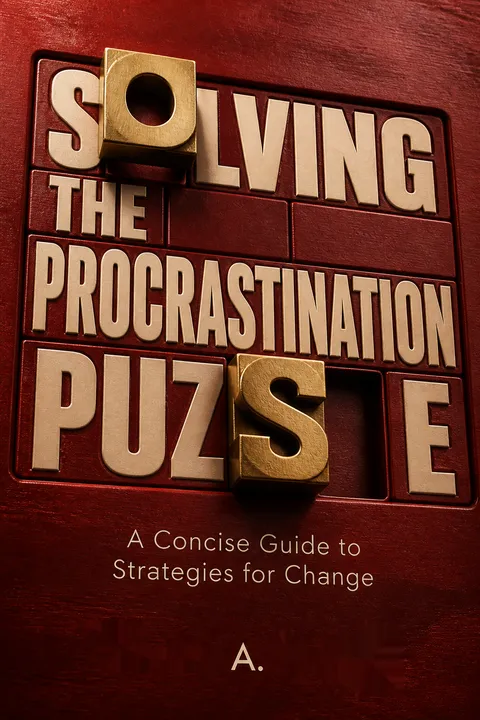
Solving the Procrastination Puzzle receives mixed reviews, with many praising its concise nature and practical advice. Readers appreciate the author's expertise and clear explanations of procrastination habits. Some find the strategies helpful, particularly the "just get started" approach. Critics note that the content isn't groundbreaking and can be repetitive. The book's brevity is seen as both a strength and weakness. While some readers found it transformative, others felt it lacked depth. Overall, it's considered a quick, accessible guide for those struggling with procrastination.
People Also Read





Glossary
Procrastination
Needless voluntary delayThe voluntary postponement of an intended action even though the person knows the delay may harm performance or well-being. The definition separates procrastination from delays required by changing circumstances, competing responsibilities, or a wise decision to wait for needed information.
Affective forecasting
Predicting future feelingsThe process of predicting how one will feel in response to a future event or situation. Pychyl uses it to explain why people may expect to feel more willing to do an unpleasant task tomorrow, even though their forecast is shaped too heavily by their mood and circumstances today.
Focalism
Overlooking other future influencesA bias in predicting future feelings in which a person gives too much attention to one event and underestimates how other events will affect the future experience. In the book, it helps explain why people misjudge how they will feel when an intended task actually arrives.
Presentism
Overweighting the presentA bias in which current feelings and circumstances dominate predictions about the future. When making plans, people may assume that their future mood will resemble their current mood, even though the situation and feelings may change by the time action is required.
Temporal discounting
Devaluing distant rewardsThe tendency to experience future rewards as less valuable or appealing than rewards available now. Pychyl uses this idea to explain why an immediate distraction can outweigh the more distant benefit of completing work, saving money, or maintaining a health routine.
Planning fallacy
Underestimating time and effortA tendency to underestimate how long a task will take and overestimate how much can be accomplished in a limited period. The book links this overly optimistic planning to procrastination, because people postpone work while assuming there will be ample time to finish it later.
Self-handicapping
Protecting self-worth with an excuseCreating or relying on an obstacle that can explain poor performance and protect a person’s sense of ability. Procrastinating until the last moment can serve this function: a weak result can be blamed on the lack of time, while a strong result may seem especially impressive.
Cognitive dissonance
Discomfort from conflicting beliefsThe uncomfortable state that arises when a person’s beliefs, intentions, or actions conflict. Someone who intends to work but avoids the task may reduce this discomfort through distraction, excuses, or by minimizing the goal’s importance. Changing behavior to match the intention is another possible response.
Implementation intention
A cue-linked action planA predecided plan that links a specific situation to a specific behavior, commonly structured as an if-then statement. It supports a broader goal by specifying when, where, or how to act, or how to respond to a likely distraction. The cue can prompt action without requiring a fresh decision in the moment.
FAQ
What's "Solving the Procrastination Puzzle" about?
- Focus on Procrastination: The book is a concise guide to understanding and overcoming procrastination, offering practical strategies for change.
- Research-Based Insights: It draws on nearly two decades of research by the author, Timothy A. Pychyl, to provide evidence-based solutions.
- Accessible Format: Designed to be a short, no-nonsense read, it aims to help readers quickly grasp and apply key concepts to reduce procrastination.
- Structured Approach: Each chapter is organized to introduce a concept, provide examples, summarize research, and offer actionable strategies.
Why should I read "Solving the Procrastination Puzzle"?
- Practical Solutions: The book offers actionable strategies to help you overcome procrastination and improve your productivity.
- Research-Driven Advice: It provides insights based on extensive research, making the advice credible and effective.
- Concise and Focused: With its digest format, the book is designed to be read quickly, ensuring you can start implementing changes immediately.
- Self-Improvement: It encourages self-reflection and personal growth, helping you understand and change your procrastination habits.
What are the key takeaways of "Solving the Procrastination Puzzle"?
- Understanding Procrastination: Not all delay is procrastination; it's the voluntary delay of an intended action despite knowing it may harm you.
- Emotional Awareness: Procrastination often stems from a desire to avoid negative emotions associated with tasks.
- Just Get Started: Initiating a task can change your perception of it and improve your mood, making it easier to continue.
- Implementation Intentions: Predeciding how to act in specific situations can help overcome habitual procrastination.
What is procrastination according to Timothy A. Pychyl?
- Voluntary Delay: Procrastination is the voluntary delay of an intended action despite knowing it may harm you.
- Needless Delay: It is characterized by needless delay, where there is no external reason for postponing the task.
- Emotional Avoidance: Often, procrastination is a way to avoid negative emotions associated with a task.
- Habitual Behavior: For many, procrastination becomes a habitual response to tasks or situations.
How does "Solving the Procrastination Puzzle" suggest overcoming procrastination?
- Just Get Started: Initiating a task can change your perception of it and improve your mood, making it easier to continue.
- Implementation Intentions: Use "if...then" statements to predecide actions in specific situations, helping to break habitual procrastination.
- Emotional Awareness: Recognize and address the negative emotions that lead to procrastination.
- Minimize Distractions: Proactively reduce potential distractions to maintain focus on tasks.
What role does willpower play in procrastination according to the book?
- Limited Resource: Willpower is a finite resource that can be depleted, affecting your ability to self-regulate.
- Strategic Use: It's important to use willpower strategically, focusing on high-priority tasks when your willpower is strongest.
- Motivation Boost: Motivation can counteract willpower depletion, so aligning tasks with personal values can help.
- Implementation Intentions: These can help conserve willpower by automating responses to common procrastination triggers.
What are implementation intentions and how do they help with procrastination?
- Predecisional Strategy: Implementation intentions are "if...then" plans that specify how to act in certain situations.
- Automate Responses: They help automate responses to procrastination triggers, reducing the need for conscious decision-making.
- Enhance Self-Regulation: By setting clear cues for action, they improve self-regulation and task initiation.
- Research-Backed: Studies show that implementation intentions can significantly reduce procrastination and improve task performance.
How does personality affect procrastination according to Timothy A. Pychyl?
- Conscientiousness: High conscientiousness is negatively related to procrastination, as it involves being organized and dutiful.
- Emotional Instability: Traits like anxiety and impulsiveness, part of emotional instability, are linked to higher procrastination.
- Perfectionism: Socially prescribed perfectionism, where individuals feel external pressure to be perfect, can lead to procrastination.
- Adaptation Strategies: Understanding your personality traits can help you develop strategies to counteract procrastination tendencies.
What are the costs of procrastination as discussed in "Solving the Procrastination Puzzle"?
- Lower Achievement: Procrastination often results in less time for thorough work, leading to poorer performance.
- Negative Emotions: It is associated with negative emotions like guilt and stress, affecting overall well-being.
- Health Impacts: Chronic procrastination can lead to stress-related health issues and neglect of health behaviors.
- Life Delay: Procrastination is essentially delaying life itself, as it prevents you from achieving personal goals.
What are some common excuses for procrastination and how can they be addressed?
- Rationalizations: Common excuses include "I work better under pressure" or "There's lots of time left."
- Self-Deception: Recognize these as self-deceptions that justify needless delay.
- Implementation Intentions: Use them to flag these excuses and trigger a new response, like just getting started.
- Awareness and Change: Increasing awareness of these rationalizations is the first step toward changing procrastination habits.
How does "Solving the Procrastination Puzzle" address the impact of technology on procrastination?
- Cyberslacking: The book highlights how Internet and social media can lead to significant time-wasting.
- Immediate Rewards: Online activities provide immediate rewards, making them addictive and distracting.
- Distraction Minimization: It suggests shutting off unnecessary online tools to maintain focus on tasks.
- Predecisional Planning: Plan "ebreaks" consciously to avoid unconscious habits of procrastination online.
What are the best quotes from "Solving the Procrastination Puzzle" and what do they mean?
- "Just get started." This emphasizes the power of initiating a task to overcome procrastination and change perceptions.
- "I won’t feel more like doing it tomorrow." Highlights the fallacy of waiting for the right mood to start a task.
- "Willpower is a limited resource." Reminds readers to use willpower strategically and not rely solely on it for task completion.
- "Procrastination is failing to get on with life itself." Underlines the broader impact of procrastination on personal growth and life goals.
About the Author
Other books by Timothy A. Pychyl
Download PDF
Download EPUB
.epub digital book format is ideal for reading ebooks on phones, tablets, and e-readers.








