Plot Summary
Shadows of Sevenwaters Past
The story opens in the ancient, mystical forest of Sevenwaters, where Liadan, daughter of Sorcha and Hugh (Iubdan), grows up in a household shaped by legend and loss. Her mother's tale of saving her brothers from enchantment is both a source of pride and a shadow over the family. Liadan, her twin Sean, and older sister Niamh are raised with skills in healing, combat, and the old ways, but also with the knowledge that the Fair Folk's prophecy hovers over them. The family's unity is tested by the scars of past betrayals, the ever-present threat of the Britons, and the subtle, watchful presence of the Otherworld. The children sense that change is coming, and that their fates are bound to the unfinished business of their parents' generation.
Sisters, Secrets, and Prophecy
Liadan and Niamh's relationship is fraught with jealousy, longing, and misunderstanding. Niamh, beautiful and restless, resents her role as a pawn in political alliances, while Liadan, practical and inward, is content with her healing and the rhythms of home. The prophecy that one of the Sevenwaters children will restore the lost Islands and bring peace to Erin and Britain weighs heavily, especially as alliances are forged and suitors like Eamonn and Fionn circle. The sisters' differences are sharpened by their parents' expectations and the mysterious, sometimes cruel, interventions of the Fair Folk, who seem to be weaving a new pattern in the family's fate.
The Painted Man's Arrival
A new threat emerges in the form of the Painted Man, a mercenary leader whose band terrorizes the borders with ruthless efficiency. Eamonn's lands are attacked, his men slaughtered, and a challenge is issued. The Painted Man's reputation for violence and his enigmatic, half-wild appearance—marked by intricate tattoos and a raven's mask—both terrify and intrigue Liadan. When she is later abducted by his men to heal a wounded comrade, she is thrust into their world of loyalty, brutality, and exile. The encounter forces Liadan to confront her own courage and the limits of her compassion, as well as the dangerous allure of the Painted Man himself.
Niamh's Forbidden Love
Niamh's secret affair with Ciaran, a young druid, is discovered, shattering the family's hopes for a strategic marriage and exposing old wounds. The revelation brings shame, anger, and a sense of doom, as the family's leaders—Liam, Iubdan, and Conor—react with harshness and secrecy. Niamh is forced into a loveless marriage with Fionn, and Ciaran is banished. Liadan, caught between loyalty to her sister and obedience to her elders, is haunted by the sense that the Fair Folk's prophecy is twisting their lives in ways none of them can control. The sisters' bond is tested to the breaking point.
Betrayal and Banishment
Niamh's marriage to Fionn is a disaster, marked by abuse and despair. Liadan, meanwhile, is abducted by the Painted Man's band to heal a dying smith, and finds herself drawn into their code of loyalty and survival. She forms a bond with Bran, the Painted Man, discovering his hidden pain and the trauma of his past. When she helps him save his comrade, she earns the respect of the outlaws and the beginnings of a dangerous love. Niamh, broken by her marriage, is eventually rescued by Liadan and Bran in a daring escape, faking her death to free her from Fionn's grasp. Both sisters are now exiles, forced to forge new paths outside the safety of Sevenwaters.
Liadan's Captivity and Escape
Liadan's time among the Painted Man's outlaws is transformative. She is forced to use all her healing skills to save a man's life, and in doing so, she earns the trust and admiration of the band. Her relationship with Bran deepens, moving from mutual suspicion to a powerful, forbidden attraction. The code of the outlaws—no past, no future, only today—clashes with Liadan's longing for connection and meaning. When she is finally released, she returns home changed, carrying both the trauma of her ordeal and the secret of her love for Bran.
The Mercenary's Code
The Painted Man's band is revealed as a brotherhood of outcasts, each with a story of loss and betrayal. Their code is harsh but fair: loyalty to each other above all, no ties to the world they left behind. Bran's leadership is both respected and feared, his own past a source of pain and strength. Liadan learns that even among killers, there is room for compassion and redemption. The band's skills—stealth, strategy, and violence—are both a shield and a curse, setting them apart from the world but also making them indispensable in times of war.
Healing in the Shadows
As Liadan returns to Sevenwaters, she discovers she is pregnant with Bran's child. The knowledge brings both joy and fear, as she must hide the truth from her family and navigate the expectations of marriage and alliance. Her mother, Sorcha, is dying, and the household is fractured by grief and secrets. Liadan's healing gifts are tested as she cares for her mother, her son, and the wounds of her own heart. The prophecy looms ever larger, and the old evil—embodied in the legacy of the sorceress Oonagh—begins to stir again, threatening all that Liadan holds dear.
Bargains and Broken Trust
The political landscape grows ever more treacherous. Eamonn, rejected by Liadan, becomes obsessed with vengeance and power, betraying the alliance to the Britons and capturing Bran and Gull. Liadan is forced to bargain for their lives, using her knowledge of Eamonn's treachery as leverage. The cost is high: she must risk everything to save Bran, even as the web of lies and secrets grows tighter. The old alliances are shattered, and trust is in short supply. Liadan's choices will determine not only her own fate, but the future of Sevenwaters.
The Price of Vengeance
Bran and Gull are imprisoned and tortured by Eamonn, who is consumed by jealousy and hatred. Liadan, with the help of the Fair Folk and her own growing powers, orchestrates a daring rescue, leading the wounded men across the deadly marshes to freedom. The ordeal leaves them all scarred, but also binds them together in a new fellowship. The cost of vengeance is high, and the lines between justice and cruelty are blurred. Liadan's healing is tested to its limits as she fights to bring Bran back from the brink of death.
Death, Birth, and Farewell
Sorcha's death marks the end of an era at Sevenwaters, and the birth of Liadan's son heralds a new beginning. The family gathers to mourn and to celebrate, but the wounds of the past are slow to heal. Liadan's secret is revealed to her parents, and the truth of Bran's lineage comes to light. The prophecy is given new meaning, as the child of both Erin and Britain is born. The cycle of life and death, love and loss, continues, and the future of Sevenwaters hangs in the balance.
The Old Evil Awakens
The legacy of the sorceress Oonagh, and the forbidden love between Niamh and Ciaran, are revealed as the source of a new threat. The old evil, thought vanquished, is stirring again, seeking to destroy the line of Sevenwaters and prevent the prophecy's fulfillment. Liadan learns the truth of her family's secrets, and the cost of silence and lies. The Fair Folk warn her that her choices will have far-reaching consequences, and that the fate of her son—and of all Erin—depends on her courage and wisdom.
The Web of Lies
The family is torn apart by secrets and betrayals. Niamh and Ciaran, revealed as half-siblings, are exiled by the family's silence and the weight of taboo. Liadan's own choices—her love for Bran, her refusal to be a pawn—set her apart from her kin. The web of lies grows ever more tangled, as each attempt to protect the family only brings more pain. The old evil feeds on these wounds, and the prophecy seems ever more distant. Only by facing the truth can Liadan hope to break the cycle.
The Rescue and the Fire
As Eamonn's vengeance reaches its peak, Liadan, Bran, Gull, and Johnny are forced to flee Sidhe Dubh across the deadly marshes. With the help of Ciaran's magic and the intervention of the Old Ones, they escape just as a supernatural fire consumes the place they left behind. The rescue is both a triumph and a warning: the forces arrayed against them are powerful, and the cost of defiance is high. The survivors are changed by their ordeal, and the path ahead is uncertain.
Choosing the Light
In the aftermath of rescue, Liadan brings Bran back from the brink of death, using all her healing gifts and the power of love. The truth of Bran's past is revealed, and he is offered a new future as the heir of Harrowfield. The outlaws are given a chance to build a new life, teaching their skills to others and finding a place in the world. Liadan and Bran choose each other, defying prophecy and the will of the Fair Folk. The old patterns are broken, and a new path is forged—one of hope, courage, and the promise of peace.
A New Path Forward
The story ends with Liadan, Bran, and their son setting out for a new life, carrying with them the lessons of the past and the hope of the future. The prophecy remains, but its meaning has changed: it is not fate, but choice, that shapes their destiny. The old evil is not defeated, but it is held at bay by love, truth, and the courage to choose the light. Sevenwaters endures, and the next generation is ready to take up the challenge. The wheel turns, and a new story begins.
Characters
Liadan
Liadan is the youngest daughter of Sorcha and Hugh, a healer with a deep connection to both the mortal and Otherworld. She is practical, compassionate, and fiercely loyal, but also marked by the Sight and a capacity for defiance that sets her apart. Her bond with her twin Sean is strong, but her relationship with her sister Niamh is more complex, shaped by rivalry and love. Liadan's journey is one of self-discovery, as she learns to trust her own judgment, challenge the will of the Fair Folk, and choose love over duty. Her relationship with Bran, the Painted Man, is transformative, forcing her to confront the darkness in herself and others. As a mother, she is determined to protect her son and break the cycle of pain and secrecy that haunts her family.
Bran (The Painted Man)
Bran is the enigmatic leader of a band of mercenaries, marked by intricate tattoos and a raven's mask. His past is one of trauma and abandonment: the son of Margery and John of Harrowfield, orphaned and abused, he grows up believing himself unworthy of love or hope. His code is harsh—no past, no future, only today—but beneath it lies a longing for connection and redemption. Bran's relationship with Liadan is both a source of healing and a test of his deepest fears. Through her, he confronts his past and is offered a new future as the heir of Harrowfield. His journey is one of transformation, from exile and violence to acceptance and hope.
Niamh
Niamh is Liadan's older sister, celebrated for her beauty but tormented by longing and shame. Her secret love for Ciaran, a druid, leads to disaster when their forbidden relationship is discovered. Forced into a loveless, abusive marriage, Niamh is broken by the weight of family expectations and the silence that surrounds her. Her rescue and exile are both a liberation and a loss, as she is cut off from her family and forced to forge a new identity. Niamh's story is a cautionary tale about the cost of secrets and the power of love to both wound and heal.
Sean
Sean is Liadan's twin, raised to be the next lord of Sevenwaters. He is strong, capable, and ambitious, but also impatient and sometimes blinded by duty. His bond with Liadan is deep, but tested by the secrets she keeps and the choices she makes. Sean's leadership is forged in crisis, as he must navigate the loss of his uncle, the betrayal of allies, and the shifting landscape of war and alliance. His relationship with Aisling offers hope for the future, but he is haunted by the cost of leadership and the burden of prophecy.
Sorcha
Sorcha is the heroine of the previous generation, whose courage and sacrifice saved her brothers and shaped the destiny of Sevenwaters. As a mother, she is both nurturing and wise, but also marked by the scars of her own ordeal. Her death is a turning point, forcing her children to confront the legacy of the past and the challenges of the future. Sorcha's presence lingers as a source of guidance and strength, even as the old ways fade and new patterns emerge.
Hugh (Iubdan)
Hugh, known as Iubdan, is a Briton who gives up his birthright to marry Sorcha and become part of Sevenwaters. He is practical, fair, and deeply loving, but also haunted by the consequences of his choices. His relationship with his children is marked by both pride and regret, especially as the old wounds of Harrowfield resurface. Hugh's journey is one of reconciliation, as he seeks to heal the rift between past and present, and to support his family through loss and change.
Eamonn
Eamonn is a neighboring chieftain, a childhood friend and would-be suitor to both Niamh and Liadan. His sense of honor and pride is wounded by rejection, and he becomes obsessed with vengeance and power. Eamonn's betrayal of the alliance and his cruelty to Bran and Gull mark his descent into darkness. His actions are driven by jealousy and a need for control, and he becomes both a cautionary figure and a tragic antagonist.
Ciaran
Ciaran is a gifted druid, raised in the nemetons and marked by both light and shadow. The revelation that he is the son of the sorceress Oonagh and half-brother to the Sevenwaters siblings shatters his identity and drives him into exile. His love for Niamh is both a source of hope and a curse, as their union is forbidden by blood and taboo. Ciaran's journey is one of self-discovery, as he struggles with the legacy of evil and the possibility of redemption.
Gull
Gull is Bran's right hand, a black-skinned warrior with a tragic past and a fierce loyalty to his leader. His strength and endurance are tested by torture and loss, but his friendship with Liadan and Bran is a source of hope. Gull's maiming is both a symbol of the cost of violence and a catalyst for change, as he helps envision a new future for the outlaws as teachers and protectors.
The Fair Folk
The Fair Folk are the ancient, magical beings who shape the fate of Sevenwaters through prophecy and intervention. Their motives are mysterious, sometimes cruel, and often at odds with human desires. They represent both the allure and the danger of the Otherworld, and their fading power is a sign of the changing times. Their relationship with Liadan is complex: they seek to use her and her child to fulfill the prophecy, but are ultimately defied by her courage and will.
Plot Devices
Prophecy and the Power of Choice
The central plot device is the prophecy that a child of both Erin and Britain, marked by the raven, will restore the lost Islands and bring peace. This prophecy shapes the actions of the characters, driving alliances, betrayals, and sacrifices. Yet the story subverts the idea of fate by emphasizing the power of individual choice: Liadan's refusal to be a pawn, Bran's struggle to overcome his past, and the outlaws' decision to build a new life all challenge the notion that destiny is fixed. The tension between prophecy and free will is mirrored in the interventions of the Fair Folk, whose manipulations are ultimately thwarted by human courage and love.
Duality and the Mirror Image
The narrative is structured around dualities: Liadan and Niamh, Bran's two faces, the mortal world and the Otherworld, love and violence, healing and destruction. The use of twins, mirrors, and patterns reinforces the theme that identity is complex and multifaceted. The characters are forced to confront the shadows within themselves and to choose which path to follow. The motif of the box—Bran's childhood prison, the secrets that bind the family, the constraints of prophecy—serves as a symbol of both confinement and the possibility of escape.
The Healing Journey
The story is structured as a journey of healing, both literal and metaphorical. Liadan's skills as a healer are tested in the physical world, but her greatest challenge is to heal the wounds of the spirit: Bran's trauma, Niamh's despair, the family's legacy of pain and secrecy. The act of healing becomes an act of defiance against the old patterns of violence and betrayal. The use of storytelling, song, and ritual as tools of healing reinforces the idea that narrative itself can be redemptive.
The Web of Lies and Secrets
The plot is driven by secrets: the true parentage of Ciaran, the abuse of Niamh, the identity of Liadan's child's father, the betrayals of Eamonn. Each secret is kept to protect, but ultimately brings more pain. The web of lies is both a shield and a trap, and the story's emotional arc is shaped by the gradual revelation and confrontation of these truths. The cost of silence is high, but the act of speaking—of telling the story—becomes the means of breaking the cycle.
The Sight and the Otherworld
Liadan's gift of the Sight is both a blessing and a curse, offering glimpses of possible futures but never certainty. The interventions of the Fair Folk and the Old Ones add layers of ambiguity and danger, as the boundaries between worlds blur. The use of visions, dreams, and magical messengers (like the raven) creates a sense of mystery and suspense, but also underscores the theme that knowledge is always partial, and that courage is required to act in the face of uncertainty.
Analysis
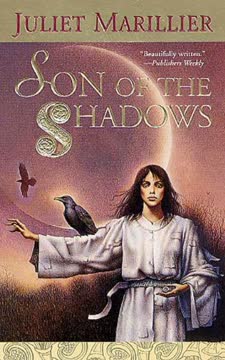
Son of the Shadows is a masterful exploration of the tension between fate and free will, tradition and change, and the enduring power of love to heal even the deepest wounds. Juliet Marillier weaves a narrative that is both epic and intimate, using the tools of myth, prophecy, and family saga to examine the cost of secrets and the courage required to break old patterns. The novel's emotional arc is shaped by the choices of its central characters—Liadan's refusal to be a pawn, Bran's journey from exile to acceptance, Niamh's struggle for survival, and Sean's growth into leadership. The story challenges the idea that destiny is fixed, showing instead that it is the act of choosing—of telling one's own story—that creates meaning and hope. The legacy of violence and betrayal is not easily overcome, but through acts of healing, forgiveness, and defiance, the characters forge a new path. The novel's use of dualities—light and dark, past and present, self and other—reinforces the idea that identity is complex and that redemption is always possible. In a world where magic is fading and the old ways are under threat, Son of the Shadows offers a vision of hope rooted in the strength of the human spirit and the transformative power of love.
Last updated:
Review Summary
Son of the Shadows by Juliet Marillier receives mixed reviews averaging 4.33/5 stars. Many readers praise the emotional depth, beautiful prose, and Celtic mythology woven throughout. The story follows Liadan, daughter of Sorcha from the first book, who falls in love with the Painted Man (Bran), a mercenary leader. Positive reviews appreciate the complex family dynamics and passionate romance. Critical reviews cite issues with characterization, particularly Liadan being too perfect or judgmental, rushed romance development, and the problematic treatment of her sister Niamh. Some felt it lacked the impact of Daughter of the Forest, though most still found it compelling and beautifully written.