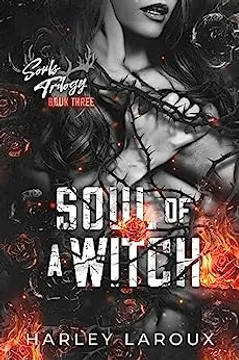


Plot Summary
The Witch in the Ashes
Two thousand years before Everly’s story, Callum leads Hell’s army in its final defense against invading gods. The victory costs him thousands of companions, and he walks the battlefield removing the jewelry they had given him, unable to bear its reminder. Amid the dead, he finds a wounded mortal witch whose scent and bright eyes cut through his grief.
She knows his name and begs for his help. Callum cannot understand how she reached him, but the vision brands itself into his memory. The gods are defeated in Hell, yet he believes their danger has not ended. He leaves his expected honors behind and begins hunting them across Earth, carrying the image of the witch who promised to find him.
Callum’s first glimpse of Everly arrives at the moment his old identity has collapsed. Victory gives him no relief because it cannot restore the people he failed to save. The witch’s appeal therefore becomes more than prophecy: it offers a future-oriented purpose to someone trapped in the moral aftermath of war. His later devotion begins in grief, but the vision also creates a danger of its own. He may mistake destiny for permission to decide what Everly needs. Their eventual bond must turn that one-sided purpose into a relationship shaped by her choices.
Juniper's Bloodied Escape
Seven years before the main action, fifteen-year-old Juniper Kynes survives a ritual arranged by Everly’s father, Kent Hadleigh, and half-sister Victoria. The Libiri, Kent’s cult, meant to offer Juniper to the Deep One, an ancient being beneath Abelaum.
Juniper accuses Everly of watching while the family abandoned her in a flooded mine. Everly’s mother, Heidi, had secretly shielded Juniper and helped her escape, but the cult tells the town Juniper harmed herself.
Kent tortures the family’s bound demon, Leon, for failing to find the girl, then warns followers that another sacrifice from Juniper’s family can replace her. Heidi tries to tell Everly the truth, but Kent interrupts. Two years later, Heidi dies by suicide, leaving a warning that Everly must reclaim her power before the Deep One uses her as a vessel.
The childhood flashback makes Everly’s guilt concrete: she did not cause Juniper’s ordeal, but she obeyed the family system that made it possible. The cult’s cover story turns violence into a social fact, isolating the victim while protecting the perpetrators. Heidi’s rescue attempt complicates Everly’s grief because love and complicity coexist in the same mother. Kent’s control of the story, the household, and even Leon’s body shows how power works here through enforced silence as much as magic. Everly’s central conflict begins with the question of whether knowing better can matter if fear still keeps her passive.
Marcus Dies at Calgary Hall
At twenty-three, Everly still lives under Kent’s control, studies history in secret, and suffers nightmares about a woman named Raelynn. When half-brother Jeremiah lures her and Marcus Kynes into a dark university building, she realizes the Libiri intend to make Marcus their next sacrifice.
Jeremiah and his friends pin Marcus down and carve ritual marks into his chest. Everly screams for them to stop, but fear and the Deep One’s pressure overwhelm her. Her magic erupts, teleporting her into the forest before she can intervene.
There she finds an unfamiliar ancestral house, with Eld beasts closing in behind her. Its warded door opens when she touches it, and the creatures flee. Inside, Everly discovers a portrait identifying the house as the home of her mother’s Laverne coven.
The murder of Marcus repeats Juniper’s attempted sacrifice, but Everly’s response marks a difference: she resists even though resistance cannot yet save him. Her teleportation is both escape and involuntary power, a bodily refusal of the role her family has assigned her. The house that opens to her offers a counter-image to Kent’s home, where protection is conditional and ownership is disguised as care. Yet escape does not erase responsibility. Everly carries Marcus’s blood with her, so the new refuge begins not as a clean break but as a place from which she must decide what to do next.
The Archdemon Wakes
The house’s protection gives way to its neglected dangers: wraiths pursue Everly through the halls until she bursts into a room containing a sleeping demon. The archdemon Callum wakes and destroys the attackers, then recognizes her as the last Laverne witch. He has waited centuries for the woman from his battlefield vision, but his first response is frighteningly predatory.
When he sees bruises on her arm, he hunts down Sam Hawthorne, the man who caused them, and leaves Sam to die in the forest. Back at the house, Callum gives Everly his true sigil, the mark that could let a witch command him. His gesture unsettles her, but it also gives her a means to resist if he becomes dangerous.
Callum’s entrance combines genuine protection with behavior that would be alarming outside the context of his eventual care. His hunger, playfulness, and violence make him powerful but not automatically trustworthy. Giving Everly his sigil changes the balance between them: he offers her leverage instead of asking for faith without proof. His revenge on Sam reveals the limits of that gesture, however. Callum still assumes that protecting Everly means choosing violence on her behalf. The relationship’s tension is therefore not simply whether she can trust him, but whether he can learn that her safety includes her authority over what happens around her.
Winona Names the Stakes
In the greenhouse, Everly discovers that the voice on an old radio belongs to Winona Laverne, her dead grandmother. Winona explains that House Laverne is Everly’s inheritance and that its abandoned library holds the coven’s research. She confirms Kent’s Libiri have long served the Deep One, which needs three human sacrifices before it can rise. Marcus’s death has begun that process.
A sealed vault may contain knowledge to stop it, but Sybil Laverne’s grimoire is the key, and Kent possesses it. Winona also reveals that Everly’s magic is immense, not weak as Kent taught her. Callum, whom Winona summoned years earlier, has been waiting for Everly because he once foresaw her. Everly chooses to fight and agrees to return home for the grimoire.
Winona’s revelation replaces Everly’s learned helplessness with a more accurate account of her abilities, but it does not instantly make her confident. The difference between weakness and lack of training gives her a practical path forward. The family house also becomes a material inheritance, not merely a mystical symbol: its library, vault, and research offer tools she can use. Callum’s prophecy gives their connection cosmic scale, while Winona’s caution insists that Everly still has a choice. Destiny may create the crisis, but it cannot substitute for consent or practice.
A God Shows Its Face
Everly returns to Kent’s house and pretends her disappearance was an accident caused by her supposedly dangerous magic. Kent responds by locking glass manacles around her wrists; their barbs hurt her and drain her power.
He also withdraws her university enrollment, then reveals that the Deep One intends to inhabit her body. To prepare her, he takes her to the ruined church of St. Thaddeus and forces her to experience the deity’s psychic vision.
It first appears as a beautiful promise of a remade world, then breaks into scenes of rot, corpses, and a tentacled monster. Everly escapes the vision by finding her way back to her body. Kent tells her that Raelynn Lawson will be the next sacrifice, confirming the girl from Everly’s nightmares is real.
Kent’s restraint of Everly is both physical and epistemic: he has taught her to distrust her own magic, then uses that belief to make the cuffs seem like protection. The church vision exposes the cult’s central fraud. Its beautiful future is not an alternative interpretation of the horror but a deliberately manufactured lure. Everly’s ability to see through it gives her an early form of resistance, though she remains trapped in the family’s power structure. Raelynn’s name turns the vision into an immediate obligation. Everly now knows what the cult plans, but knowing alone has never been enough to stop it.
The Grimoire Slips Away
Everly plans to steal Sybil’s grimoire while Kent is distracted at the Historical Society. She slips it from his jacket, but when he unexpectedly returns, she hides it in a box of donated books rather than risk being caught with it. Kent searches her bag and clothing, then orders her home and keeps her under surveillance.
Callum, who promised to help, does not appear because Lucifer has captured him and taken him to Hell. Everly is left with the draining cuffs, a watchful Leon, and the Deep One’s growing reach into her mind. At the university’s Art Fest, she meets Raelynn, whom Victoria has brought along as a supposed friend. Everly’s visions show Raelynn handling the missing grimoire, and the cult’s next sacrifice is now close at hand.
This failure strips away Everly’s expectation that courage will be rewarded with a clean escape. She does manage to take the book, but her father’s sudden return forces a choice between immediate exposure and a precarious chance to recover it later. Callum’s absence intensifies the lesson: protection cannot be treated as a guarantee, especially when larger powers can interrupt it. At the Art Fest, Everly’s art and tarot table become the setting for a new kind of perception. The visions do not solve the crisis, but they link Raelynn, the grimoire, and the coming sacrifice in a way Everly can act upon.
Blood Calls Him Back
At home, Leon refuses Kent’s order to abduct Raelynn because Kent no longer has the grimoire needed to command him. The conflict exposes Kent’s weakening control, but Everly remains trapped in her manacles.
When Meredith strikes her, Everly’s power bursts out, injuring Meredith and driving Everly into the night. Eld beasts attack her in the forest. The cuffs poison her magic as she destroys them, but she survives long enough to summon Callum with his sigil. He returns from Hell and finds her close to death.
To save her, he offers a binding bargain: his protection and service in exchange for her soul. Everly consents, and he carves his sigil into her body before breaking the cuffs. The bond restores her strength and ties their lives together.
The bargain is a rescue, but it also formalizes the story’s central ethical problem: how to accept help without surrendering agency. Everly consents while dying, so the choice is made under extraordinary pressure; the narrative makes that pressure visible rather than pretending the decision is casual. Callum’s fear of attachment is overcome by an act that makes loss more possible, not less. The bond changes their power relation in both directions. He becomes bound to protect her, while her survival now draws on his strength. Their intimacy is not separate from the plot’s politics of control; it becomes a negotiated alternative to Kent’s coercion.
The Grimoire Comes Home
After recovering, Everly trains with Callum and Winona, then returns to Raelynn’s cabin to search for the grimoire. Her magic locates it among the books, and she casts a protective ward over the cabin before leaving. Back at House Laverne, the grimoire opens the sealed vault. Everly finds Sybil’s laboratory below it, full of experiments on the God and its corrupted creatures.
An Eld beast attacks her before she can escape. In panic, she transforms her jaw into a set of crushing teeth and kills it. The discovery proves her magic can alter her body as well as affect the world around her. She and Callum also find old mine plans, which help them identify possible routes from the house into the tunnels beneath Abelaum.
Everly’s first successful spell is small in scale but important in kind: she acts deliberately, with a protective purpose, instead of being carried by a magical surge. The vault then turns inherited knowledge into a dangerous physical space. Sybil’s work suggests the God can be studied rather than merely worshiped or feared, while the beast attack shows that research carries immediate bodily risk. Everly’s transformation is not mastery; it is an instinctive response that saves her. The distinction matters because the story treats power as something that must be practiced, interpreted, and ethically directed, not simply possessed.
Juniper Returns Armed
Everly encounters Juniper in town, where Victoria has begun befriending Raelynn. Juniper pursues Everly through the streets, and Everly escapes by making herself invisible before teleporting home. Callum wants to kill the woman he believes is a threat, but Everly orders him not to.
When Juniper later enters the forest with her demon, Zane, Callum attacks them. Everly stops him and insists on speaking to Juniper herself. Juniper admits she has returned to avenge Marcus and the years of abuse and disbelief that followed her escape.
Everly does not excuse her own silence or promise easy forgiveness. Instead, she tells Juniper the cult’s plans and asks her to keep fighting. Juniper agrees to target the Libiri while Everly prepares to face the God.
Juniper’s return makes Everly meet the consequences of her past as a person, not an abstract memory. Her anger is warranted, and the story does not make reconciliation a prerequisite for cooperation. Everly’s growth appears in her refusal to let Callum erase the conflict through murder. She also stops using remorse as a substitute for action: asking Juniper to continue her mission recognizes both the harm done and the agency Juniper retains. The alliance is deliberately limited. It is built around a shared enemy, not repaired trust, and that makes it more credible than a quick absolution.
A Blade for Halloween
Everly studies Sybil’s coded notes until a vision reveals the instructions for a ritual to empower a weapon. It requires the blood of a resentful dead person, a lover’s freely given blood, a binding night, and offerings of sweetness, alcohol, and pain.
On Halloween, Juniper kills Kent during the family’s party, and Everly takes his blood for the ritual. She and Callum combine it with Callum’s blood and the enchanted offerings, then summon the Old Man, the fae king of the forest.
He recognizes that they mean to destroy the Deep One and blesses their blade, making it capable of piercing a god’s flesh. The ritual brings their relationship into the open: Callum tells Everly he loves her, and she returns the declaration before the fae king appears.
The ritual transforms intimacy, grief, and violence into a tool, but it does not confuse them. Kent’s blood is taken from a man whose choices have harmed others; Callum’s blood is offered willingly. That contrast gives the weapon a moral structure as well as magical force. The fae king’s blessing is not purchased by the offerings alone. He responds to their purpose and to the forest’s own need to survive the God’s corruption. Callum’s confession lands in the middle of this dangerous work, binding private commitment to public risk. Love does not remove the cost of the mission; it clarifies what the cost threatens.
Hell Grants Its Warrant
Callum takes Everly through the Veil into Hell, where he returns to Dantalion after centuries away. The city’s demons recognize him, and he reunites with Kimaris, his former second-in-command. At the Onyx Citadel, Everly asks Hell’s council for permission to execute the Deep One, arguing that her soul is already bound for Hell and she means to defend it.
The council grants its approval. It also reveals that Victoria has been killed and consumed by the God, while Jeremiah carries a fragment of its power. Raelynn remains alive but is in the Libiri’s hands as the third sacrifice. The council’s news changes the threat from a distant plan into an active emergency, and Everly and Callum return to Earth with permission to fight.
Hell gives Callum a chance to return to a home he had treated as inseparable from grief. His reunion with Kimaris shows that memory can be painful without making every return impossible. For Everly, the council’s audience is a political threshold: she speaks as someone who intends to belong to Hell, not as property being transferred between realms. The news of Victoria and Jeremiah clarifies the Deep One’s strategy. It is using family ties as both sacrificial material and access points. The council’s consent offers institutional support, but it cannot do the fighting for them or guarantee that Raelynn will survive.
The House Turns Rotten
Back at House Laverne, Everly finds the protective plants dying and hears Victoria’s voice coming through Winona’s radio. The Woodsprie Darragh has been infected by fungal growth spreading from the mine tunnels. Everly realizes the Deep One has found a way beneath the house and enters the vault with Callum. In the flooded passages, they meet a reanimated Victoria, her body carrying the God’s voice and power.
Everly refuses to let the creature enter her home, then attacks with fire and lightning. She burns Victoria’s body until only blackened remains are left. The God taunts her with the news that Raelynn has been taken to its lair. Everly and Callum continue into the mine, following the route toward the creature.
The invasion converts House Laverne from sanctuary into contested ground. Darragh’s infection is especially consequential because the forest’s protection depends on living relationships between the coven and the land. The God’s use of Victoria’s body weaponizes family memory, trying to make Everly hesitate by speaking through someone she knows. Everly’s refusal is not emotional numbness so much as triage: she postpones mourning until the immediate threat is contained. Her command that the house is hers to defend marks a shift from inheriting protection to exercising authority. The refuge now depends on her active power.
The Veil and the God
Deep in the mine, Everly and Callum find Raelynn’s belongings beside a black pool, then face the Deep One as it bursts into the cavern. Callum attacks while Everly uses the blessed blade and her magic, but a tentacle strikes her and hurls her against the wall.
Her soul slips beyond the Veil. In the darkness, she follows the silver thread linking her to Callum and glimpses Raelynn stabbing the God from within its grasp. The thread carries Everly back to Callum’s battlefield two thousand years earlier, completing the vision that began the story.
She returns to the mine by calling on the forest; roots bind the God and revive her. Everly reaches Raelynn’s embedded blade and channels fire through it, burning the God from the inside until its body collapses into ash and rot.
The climax makes the novel’s framing structure causal rather than ornamental: Everly’s apparent death sends her to the exact past in which Callum first saw her. The vision is not a command imposed from outside but a consequence of her attempt to return to someone she loves. Raelynn’s resistance from within the God’s body gives the earlier alliance a decisive payoff, while the forest answers Everly because she has defended it. Victory comes through combined agency: Juniper’s resistance, Raelynn’s attack, Callum’s defense, the fae roots, and Everly’s magic. No single savior can claim the result.
A Home After War
After the God falls, Everly crawls back to Callum and waits beside him in the rain. The Old Man appears briefly, promising that the wounds will heal and thanking her for saving the forest. When Callum finally stirs, Everly guides his hand to her stomach and tells him she is carrying their child.
The news turns survival into a future neither had been certain they could reach. Callum admits he remembered her warning from the battlefield and held on through the fight. Everly tells him the war is over, and he accepts the possibility of peace rather than another endless hunt. The family’s old cycle of coercion has been broken, though the years of harm cannot be undone.
The ending answers the opening’s image of a witch asking a grieving warrior to keep fighting, but it changes what fighting is for. Callum survives not to pursue war forever, but to share a life beyond it. Everly’s pregnancy is not presented as a cure for trauma or a reward that cancels loss. Instead, it makes the future newly concrete and raises the stakes of the peace they have won. Her declaration that the family cycle ends with her is enacted through a different form of inheritance: care, consent, and protection without ownership.
Epilogue
Three years later, Everly paints in the House Laverne garden while Callum watches their daughter, Heidi. The child inherits golden eyes and enough magic to climb garden walls and evade ordinary rules. Everly has stopped fearing the dark, though she still meditates and sometimes dreams of Raelynn.
A vision tells her that Raelynn and Leon are alive in France, so she plans to send her friend a painting. Callum offers to take Everly traveling, turning the future from a sheltered refuge into a world they can explore together. Their daughter runs to her grandmother for dinner, while Everly and Callum steal a quiet moment beneath the sunset.
The epilogue measures victory through ordinary freedoms rather than another display of power. Everly paints because she wants to, raises a magically unruly child without the cult’s discipline, and imagines travel instead of escape. The garden remains a protected place, but it is no longer a hiding place cut off from the world. Remembering Raelynn and Leon keeps the ending from pretending every wound has vanished; friendship persists across distance, and art becomes a way to reach outward. Callum’s protectiveness also changes shape. He still wants closeness, but he supports a life that includes movement, choice, and other people.
Analysis
The novel makes inherited power inseparable from inherited harm. Everly receives a coven, a house, and vast magic, but she also inherits the consequences of generations of silence around the Libiri. Her mother’s attempt to save Juniper does not erase her earlier participation, just as Everly’s guilt cannot undo the harm she failed to prevent. The narrative’s moral movement is therefore not from innocence to purity. It is from passive complicity toward accountable action, including the difficult work of facing people who have reason not to forgive her.
The book also contrasts two systems of power. Kent’s authority depends on secrecy, coercion, and other people’s bodies: he binds Leon, restrains Everly, and treats his children as tools. Callum begins with a different but related impulse, interpreting devotion as a license to decide what is dangerous for Everly. Their relationship becomes more ethical as Everly insists that protection must answer to her judgment. The soul bargain gives Callum duties, but it does not make Everly’s choices irrelevant. Her command to spare Juniper is a decisive test of whether love can coexist with autonomy.
The body is both battlefield and source of knowledge. The Deep One invades minds and uses human flesh as a vessel; the cult turns bodies into sacrifices; Everly’s magic, by contrast, becomes something she learns to inhabit rather than fear. The changing body that once seemed evidence of danger becomes a means of survival. The climax requires her to risk that body, but not to accept the God’s claim over it.
Finally, the novel refuses a solitary-hero model of victory. Everly and Callum matter, but so do Juniper’s testimony and vengeance, Raelynn’s resistance, Winona’s research, the forest’s power, and the fae king’s decision to help. The God falls because a network of beings acts against the isolation it has cultivated. Peace is not the absence of danger or grief. It is a future in which neither has the right to dictate whose life belongs to whom.
Review Summary
Reviews for Soul of a Witch are mixed, averaging 4.3/5 stars. Readers widely praise Callum as an obsessive, devoted archdemon with swoon-worthy nicknames and witty dialogue. However, many found Everly's character inconsistent — shifting between shy and dominant in ways that felt jarring. Common criticisms include pacing issues, repetitive plot elements shared with previous books, and anticlimactic moments. Fans of the series celebrated the conclusion's spice and emotional depth, while disappointed readers felt the chemistry and tension between the leads fell short of expectations.
People Also Read



Characters
Everly Laverne
The reluctant witchEverly is a history student raised inside Kent Hadleigh’s Libiri cult, where she learns to hide her intelligence, suppress her magic, and treat fear as obedience. Her mother’s complicity in Juniper’s attempted sacrifice leaves her with guilt that cannot be solved by self-punishment. Everly is observant and scholarly, drawn to books, painting, and the past because they offer ways to understand what people try to conceal. Her power is far greater than she believes, but confidence comes through practice, difficult choices, and allowing others to help without surrendering her judgment. She is compassionate without being naturally forgiving, and her struggle is to turn remorse into action rather than let it keep her silent.
Callum
The grieving archdemonCallum is an ancient warrior who survived a war against the gods and carries the memory of the comrades he lost. He uses appetite, danger, humor, and physical intensity to manage a grief he has never been able to put down. His devotion to Everly begins with a vision, but his first instinct is often to protect her through force and possession. Beneath that ferocity is a need to serve and a fear that every attachment will end in loss. Everly challenges him to make protection responsive to her wishes. His development depends on learning that loyalty is not the same as control and that peace requires more than putting down a weapon.
Heidi Laverne
Everly's conflicted motherHeidi is Everly’s mother, a gifted witch who becomes entangled in Kent’s religious ambitions. She loves her daughter but has also participated in the Libiri’s violence, leaving Everly with a legacy that cannot be reduced to innocence or cruelty. Her growing awareness of Kent’s plans leads her to act against the cult, though she cannot undo what she helped create. Heidi’s story shapes Everly’s understanding of how fear and love can coexist with wrongdoing.
Kent Hadleigh
The cult's controlling patriarchKent leads the Libiri and presents himself to the town as a composed, credible authority. Within the family, he uses shame, surveillance, religious certainty, and selective affection to keep others obedient. He believes the Deep One’s rise will fulfill a sacred purpose, and he treats his children as instruments of that plan. His calm manner makes his control harder to recognize from the outside.
Winona Laverne
The guiding ancestorWinona is Everly’s grandmother, a diviner whose knowledge continues to guide the living after her death. She is blunt, funny, and intellectually demanding, especially when Everly mistakes lack of training for lack of ability. Winona’s history with her daughter is marked by love and regret, and she tries to support Everly without dictating her choices. Through the radio, she connects the family’s old research to the crisis unfolding now.
Juniper Kynes
The survivor seeking justiceJuniper is the girl the Libiri once chose for sacrifice and the older sister of Marcus. She is observant, tough, and unwilling to let the town’s false account erase what happened to her. The violence she endured has left her guarded and shaped her return to Abelaum. Her relationship with Everly is complicated by Everly’s failure to intervene, so she does not owe her easy trust or forgiveness. Juniper’s drive for justice makes her an independent force in the struggle against the cult, not merely a reminder of Everly’s guilt.
Marcus Kynes
Juniper's searching brotherMarcus is Juniper’s younger brother, a university soccer player who still hopes to reconnect with her after her long absence. His questions about Juniper unsettle the family’s silence and show how the cult’s story has left him without a truthful account of his own past. He is kind and open enough to trust people who have reason to protect him.
Victoria Hadleigh
The polished half-sisterVictoria is Everly’s half-sister and Kent’s favored daughter. She understands how to perform warmth and loyalty while keeping her motives difficult to read. Her friendship with Juniper and later relationships are shaped by the Libiri’s demands, while her rivalry with Everly reflects the family’s hierarchy. Victoria has learned to treat cruelty as ordinary and to use social charm as a shield.
Jeremiah Hadleigh
The cruel older brotherJeremiah is Everly’s stepbrother, a popular athlete whose confidence masks a taste for domination and violence. He treats family authority as permission to bully and uses humor to make cruelty appear harmless. His loyalty to Kent’s cause is entwined with the power it gives him over others.
Meredith Hadleigh
The hostile stepmotherMeredith is Kent’s wife and the mother of Victoria and Jeremiah. She resents Everly as a reminder of Kent’s infidelity and reinforces the household’s unequal treatment of the girls. Her hostility is direct where Kent’s control is often polished, making her a constant source of emotional pressure in Everly’s home.
Leon
The bound household demonLeon has served generations of the Hadleigh family under the control of a grimoire. He is powerful, proud, and accustomed to hiding resentment beneath obedience. His position gives him intimate knowledge of the family’s rituals and its weaknesses. His feelings for Raelynn complicate the role the Libiri have forced him to play.
Raelynn Lawson
The threatened newcomerRaelynn arrives in Abelaum with an enthusiasm for horror, folklore, and art that draws Everly’s attention. She is not initially aware of the danger surrounding her, and her curiosity makes her an easy target for people presenting themselves as friends. Raelynn is more capable of resistance than the cult expects, and her relationship with Leon gives her an ally outside the Hadleigh family.
Zane
Juniper's demon allyZane is the demon who accompanies Juniper back to Abelaum. He is loyal to her and quick to defend her, though he is less practiced and less powerful than Callum. His affection for Juniper makes him protective, while his talkative, sociable manner contrasts with Callum’s severe instincts.
Darragh
The forest's watchful WoodsprieDarragh is a Woodsprie, a tree-being bound to the forest around House Laverne. He is mischievous, vain, and prone to teasing, but his connection to the land makes him a valuable guardian and source of information. His resentment toward humans reflects the destruction his kind has suffered.
Lucifer
The wary ruler of HellLucifer rules from the Onyx Citadel and once expected Callum to join Hell’s council. He values order and the security of his realm, but his concern often emerges as command and confinement. His history with Callum combines affection, wounded pride, and disagreement about how much risk a warrior should be allowed to take.
Leaina
Lucifer's exacting envoyLeaina serves as Lucifer’s trusted representative and carries out the council’s procedures. She is direct, disciplined, and more concerned than her formal manner first suggests. Her role is to make Callum answer for choices that Hell cannot simply ignore.
Kimaris
Callum's former secondKimaris once served beside Callum as his second-in-command during Hell’s war. Her survival and welcome in Dantalion give Callum a living connection to the companions he lost. She is loyal without being deferential and can recognize how much his return means.
William Frawley
Everly's gentle friendWilliam is a university librarian who offers Everly practical kindness and companionship. His affection is sincere, but he does not know the danger surrounding her family. His ordinary decency highlights how carefully Everly has learned to keep people at a distance.
The Old Man
The fae king of the forestKnown as the Old Man and the Lord of the Forest, he is a powerful fae sovereign who watches over the land near House Laverne. He is wary of witches and demons, but judges their intentions rather than accepting their offerings at face value. His presence carries the authority of a forest under threat.
Niamh
The jeweler of HellNiamh is a demon jeweler with a collection of rare metals and gems. She has known Callum for centuries and treats his return with teasing familiarity. Her wariness of witches comes from experience rather than hostility.
Sam Hawthorne
The man who bruised EverlySam is one of Jeremiah’s friends and a source of physical intimidation for Everly. His casual disrespect helps show how the Hadleigh household’s cruelty extends beyond its formal rituals into ordinary interactions.
Plot Devices
Callum's Sigil
A dangerous bond of powerA demon’s sigil is its true name rendered as a symbol. Witches can use such marks to summon or command demons, which makes possession of one a form of leverage and a threat to a demon’s freedom. Callum gives Everly his sigil voluntarily, allowing her to call him and test her own authority. Later, their soul bargain turns the mark into a permanent bond of mutual obligation. Its meaning changes from a possible instrument of control into a sign of chosen service and shared risk.
Sybil's Grimoire
The key to buried knowledgeThe grimoire contains the Laverne coven’s spells and is required to open the vault in House Laverne. Kent’s possession of it gives him a practical advantage over both witches and demons, since its spells help him control Leon. Everly’s claim as a Laverne witch allows her to recover the book, despite Kent’s belief that it belongs to him. Inside the vault, Sybil’s research offers a way to study the God’s physical nature and develop a weapon against it.
The Veil and Betwixt
A passage through time and worldsThe Veil separates the living world from other realms, while the Betwixt allows witches to move beyond ordinary space and time. Everly first meets it through the Deep One’s psychic attacks and later learns to enter it deliberately with Callum’s guidance. In the climax, her soul is displaced from her wounded body and follows the bond to Callum’s battlefield centuries earlier. The passage completes the novel’s framing vision and gives Everly a route back to the present, but it also risks leaving her lost between worlds.
The Three Sacrifices
Fuel for the Deep OneThe Libiri believe they must offer three human souls to free the Deep One from its underground prison. The first intended victim, Juniper, escapes because Heidi secretly helps her, so the cult substitutes Marcus from the same family. The later sacrifices draw the God’s influence closer to the surface and help it reach human hosts. This ritual structure creates the race against time, while also showing how Kent turns religious language into a system for selecting, harming, and controlling people.
The Fae-Blessed Blade
A weapon that can pierce godsSybil’s coded notes point Everly toward a ritual that requires blood, sweetness, liquor, and heightened sensation. Everly uses Kent’s blood and Callum’s willingly given blood to summon the Old Man, who blesses the weapon so it can penetrate a god’s flesh. The blade does not defeat the Deep One by itself. Raelynn’s attack lodges a similar empowered knife in the creature, and Everly channels her fire through it to burn the God from within.
About the Author
Other books by Harley Laroux


Download PDF
Download EPUB
.epub digital book format is ideal for reading ebooks on phones, tablets, and e-readers.








