

Key Takeaways
Measure spirituality by whether it makes you more fully human
The test is life. Benner’s central claim is that spirituality should help people become more alive, integrated, and deeply human, not encourage escape from ordinary life. A spirituality that alienates people from their bodies, emotions, sexuality, or other communities may be spiritually damaging, even if it involves sincere belief and regular religious practice. Drawing on the second-century Christian teacher Irenaeus, Benner argues that human flourishing can itself honor God. The point is not to replace holiness with self-indulgence, but to ask whether spiritual commitments foster wholeness.
Start with what is. Benner urges readers to assess their lived spirituality, not just the identity or beliefs they claim. He calls a life-giving way of walking the human path “soulful spirituality”: a way of relating to what lies beyond the self while staying grounded in embodied experience. Its starting point is honest attention to the person one is now, not the ideal person one hopes to become.
This reframing gives spirituality a practical test: what does it produce in a person’s conduct, relationships, and capacity to face life? It also resists the false choice between religious devotion and psychological health. Yet “fully human” should not be confused with constant energy, comfort, or self-optimization. People can be deeply alive while grieving, disabled, or dependent on others. The stronger reading is that spiritual growth should increase honest participation in human life, rather than impose a narrow ideal of what a flourishing person must look like.
Treat persistent longing as fuel to understand, not a flaw to silence
Desire points somewhere. Benner describes spirituality as a response to deep longing, which can orient a person beyond narrow self-interest. But longing can be misdirected. His story of Nasrudin makes the point: after losing his house key indoors, the man searches outside under a streetlamp because the light is better. People, too, may seek fulfillment in visible external rewards while avoiding the difficult inner questions their desires raise.
Three ways to handle desire. Benner names pursuing every impulse “ego inflation,” suppressing vitality “ego deflation,” and accepting and channeling life energy “ego integration.” The first can lead to excess and collapse; the second to numbness and disconnection. Integration means recognizing passion and directing it toward meaningful, self-transcending commitments. Benner’s own desire for respect, for example, brought admiration but sometimes kept people at a distance.
The useful distinction here is not between desire and discipline, but between noticing desire and obeying it automatically. Contemporary motivational science also treats goals as powerful organizers of attention and behavior, while warning that some goals undermine well-being when they depend on status or external approval. Benner’s account makes room for that tension. Longing can disclose a need for connection or purpose, but it is not automatically wise: desire still requires reflection, ethical judgment, and attention to consequences.
Pair spirit's reach with soul's capacity to hold real life
Two lenses on one person. Benner uses “spirit” and “soul” as metaphors for ways of living, not separate parts inside a person. Spirit names vitality, longing, and the impulse to reach beyond the self. Soul names the capacity to hold experience and find meaning in the particular realities of life, including pain and uncertainty. Spirit without soul can become flight from human limits; soul without spirit can become enclosed in the self.
Ground the heights. Benner compares spirit to a climb toward a wider horizon and soul to a descent into the details of daily life. A successful venture capitalist he counseled wanted to preserve his integrity during a divorce, not merely his money. His concern for the good his life could do kept aspiration connected to concrete choices. The balance is not a compromise between ordinary life and transcendence. Each can deepen the other.
The distinction works as a diagnostic metaphor. When aspiration becomes grandiose or detached from consequences, the soul’s attention to lived reality can steady it. When practical life becomes repetitive or constricted, spiritual longing can reopen possibility. This resembles the psychological idea of integrating emotion with reflection: neither raw feeling nor abstraction alone is enough. The metaphor should remain a lens, however, not a claim that spirit and soul are independently measurable faculties.
Build a capable ego, then let it serve something larger
Ego is useful. Benner draws on Jung’s distinction between the ego, the conscious sense of “me,” and the larger “Self,” which includes conscious and unconscious life and, in his Christian framing, is related to God. Ego supports judgment, impulse control, and a stable sense of identity. The problem is not having an ego, but egocentricity: organizing life around protecting and enlarging the ego as if it were the whole self.
Crisis can expose the mismatch. Success, money, or approval can become ultimate aims, leaving a person cut off from deeper sources of meaning and connection. Loss or midlife disappointment may reveal that this way of living no longer holds. Benner sees such crises as invitations to reorganize life around something larger than personal control. This is not ego destruction. It is a capable ego taking a supporting role rather than acting as the sole authority.
This account avoids a common spiritual mistake: treating individuality or healthy self-protection as something to erase. Developmental psychology likewise distinguishes a stable sense of self from self-centeredness, and people generally need the former to form mature relationships. The proposed movement toward a larger Self is meaningful within Benner’s religious framework, though readers need not treat the theological language as a clinical finding. Nor should midlife crisis be treated as universal; the pattern is a helpful map, not a timetable.
Bring body, emotions, and sexuality inside spiritual life
Human life is embodied. Benner argues that people do not merely possess bodies; bodily sensation is part of how they know themselves and the world. When spirituality prizes abstract belief while ignoring physical experience, it can also distance people from emotion, desire, and reality. Emotions, in his account, register changes in bodily states and can inform judgment rather than simply obstruct it.
Sexuality is broader than sex. Benner describes sexuality as life energy that can animate intimacy, affection, play, creativity, and connection. He distinguishes physical gratification from the deeper relational and spiritual possibilities of sexuality, while arguing that these dimensions can become integrated. This does not mean every person must express sexuality in the same way. It means that treating the body as an enemy or a mere instrument risks dividing a person from important sources of vitality and relationship.
The emphasis on embodiment resonates with research in cognitive science showing that bodily signals and emotion contribute to decision-making, not just sensation. It also offers a corrective to spiritual ideals that reward disconnection from physical needs. Care is needed, however, when discussing sexuality as a path to wholeness. People’s experiences differ widely, and trauma, illness, identity, and personal choice shape what embodiment means. The principle is inclusion and integration, not a prescribed sexual ideal.
Choose a tradition that deepens belonging without shrinking your world
Religion can give spirituality roots. Benner sees religion as a communal framework that can orient people toward the sacred, provide practices, and connect seekers to others. Without such a container, a self-designed path may lack continuity and community. But religious affiliation by itself does not guarantee transformation. The monks who helped revive Centering Prayer discovered that Christian seekers sometimes viewed Christianity only as beliefs and obligations, not as a contemplative path.
Look for deep religion. Benner uses this term for religion that keeps mystery alive, grounds people in everyday life, and supports love, trust, belonging, and meaning that can withstand suffering. A shallow version can instead enforce conformity or encourage escape from reality. The measure is not how religious a practice appears, but whether it fosters relationships marked by care and a life open to people beyond one’s own group.
Traditions can provide what solitary spirituality often lacks: shared language, intergenerational memory, and relationships that persist beyond personal enthusiasm. They can also turn belonging into a boundary against outsiders. Social identity research helps explain both sides: group membership supports connection, while strong in-group identification can distort judgments of those beyond it. Benner’s emphasis on love and openness offers a valuable test. It does not remove the need to question institutions when their practices contradict those stated values.
Use ordinary attention to interrupt spiritual sleepwalking
Awareness begins nearby. Benner opens his chapter on awareness with a Zen story: after years of training, an apprentice cannot remember exactly where he placed his umbrella or which way he was breathing. The lesson is not that every tiny detail must be memorized, but that people often move through life without noticing it. Awareness means becoming awake to present experience, including bodily sensation, thoughts, and surroundings.
Return through the senses. Benner recommends simple practices such as noticing a few breaths, scanning the body, or giving an ordinary object undivided attention. Mindfulness, as he uses the term, means noticing experience in the present rather than eliminating thoughts or feelings. The practice can be brief: use a familiar cue, such as a doorway or traffic light, to pause and notice what is happening. Attention connects inward awareness with greater responsiveness to other people.
This practice is valuable partly because it is small enough to use in ordinary life. Attention training can help people distinguish an event from their immediate interpretation of it, creating space for a considered response. Still, inward attention is not universally calming. For someone with trauma or intense anxiety, close focus on bodily sensations may heighten distress. A flexible practice can shift attention outward, use movement, or stop when needed. Awareness should support agency, not become another demand to perform calmness.
Let wonder restore mystery to ordinary sights
Curiosity changes perception. Benner argues that wonder grows from attention but adds delight and reverence. Children often notice details adults overlook, while an overreliance on explanation and control can make familiar life seem dull. Wonder does not reject reason. It makes room for what analysis cannot fully capture, such as the mystery of love, suffering, beauty, or another person’s life.
Make room for it. Benner suggests taking a slow walk without a destination and letting one small detail hold attention. A leaf, a familiar face, or a patch of light can become newly vivid when approached without rushing to classify it. He recounts how an immigrant reflecting on decades of an ordinary life found himself amazed by each meal, home, and person he had encountered. The point is not to manufacture awe, but to leave enough stillness for it to arise.
Wonder can counter the flattening effect of treating every experience as a task to optimize or explain. Research on awe links encounters with vastness or novelty to a diminished focus on the self, which aligns with Benner’s claim that wonder can loosen self-preoccupation. But wonder and explanation need not compete. Scientific understanding can reveal new intricacy rather than drain significance from it. The practical challenge is to remain curious after learning how something works.
Meet people as strangers with stories, not mirrors or threats
Otherness can unsettle and teach. Benner argues that every person has a perspective that cannot be reduced to one’s own. People manage the discomfort of difference by dismissing others as outsiders or pretending they are essentially the same. A more extreme response casts someone as a monster through projection, or idealizes them as a flawless guide. Each move protects the observer from genuine encounter.
Practice hospitality. Benner uses hospitality to mean more than polite hosting: it is a readiness to welcome another person’s distinct experience. Dialogue goes beyond exchanging information. It involves sharing how each person sees the world and being willing to learn or change. Benner’s example of a cultural anthropologist living among the Karamojong shows how curiosity about another way of life can become a central commitment, even for someone who does not identify as religious.
This is a strong account of listening as an encounter, not a technique for gathering information while preparing a rebuttal. It also connects spiritual openness to social learning: unfamiliar perspectives can expose assumptions that feel like simple facts from inside one’s own group. Yet openness does not require treating every view as equally sound, or ignoring unequal power in a conversation. Respectful dialogue can include disagreement, boundaries, and attention to who bears the cost of being misunderstood.
Stop editing your life before you can learn from it
Illusion protects the preferred self. Benner describes defenses such as denial, rationalization, and projection as ways people make unwelcome truths more comfortable. Someone who resents a colleague might claim to be too busy for lunch, even convincing themselves that scheduling is the real issue. Repeated avoidance can build a life around a story that no longer matches reality.
Authenticity starts with the actual. Benner uses the story of Rabbi Zusia, who fears being asked why he did not become himself rather than a famous biblical leader. The lesson is to live the particular life one has, not an imagined identity borrowed from someone else. Accepting reality does not mean approving every circumstance or abandoning change. It means beginning from an honest account of one’s history, limits, feelings, and present choices.
Naming self-deception is useful because people rarely change what they cannot acknowledge. This also resembles approaches in psychotherapy that distinguish observing a thought from treating it as fact. But acceptance can be misused if it becomes pressure to tolerate preventable harm. Benner’s point is strongest when reality acceptance means seeing clearly enough to act, not surrendering the possibility of action. Truth can free a person precisely because it clarifies what can be changed and what cannot.
Make inner room before offering someone your full attention
Presence needs space. Benner distinguishes physical company from genuine presence. A person can seem to listen while mentally rehearsing a reply or planning what comes next. Stillness, silence, and solitude can help create inner availability, although sitting quietly does not automatically quiet the mind. For Benner, inner stillness means releasing distractions rather than forcibly suppressing them.
Practice letting attention settle. Meditation can train presence through concentration, observation of thoughts, or the gentle release of whatever arises. Benner also describes Centering Prayer, a Christian contemplative practice in which a chosen sacred word helps practitioners release attachments and remain open to God. In everyday relationships, a simpler version is to notice what is pulling attention away, set it aside for the moment, and return to the person in front of you.
The connection between inner attention and interpersonal attention is important: people who notice their own reactions may be less likely to mistake those reactions for the other person’s intentions. Contemporary work on attention also emphasizes the cost of switching repeatedly between tasks. Still, presence is not simply intensity of focus. In some relationships, safety requires distance or divided attention. The goal is not unconditional availability, but a more deliberate choice about when and how to be genuinely with another person.
Release control over what happened, while choosing your next response
Surrender is inward, not passive. Benner distinguishes surrender from resignation or submission to another person’s power. Surrender means acknowledging present reality without the inner struggle of pretending it has not happened. A person can accept a loss and still take practical steps to change what remains changeable. The distinction matters especially in illness, bereavement, or other situations where control is limited.
Use welcome to interrupt resistance. Benner’s Welcoming Prayer is a practice for responding to emotional upset: focus on the feeling as it appears in the body, welcome its presence, then let go of the assumptions driving the reaction, such as the belief that happiness depends on control or approval. He shares stories of people who found new openness amid severe suffering. Their examples are not a promise that suffering is good, but evidence that a person’s response can change.
The distinction between accepting an emotion and approving its cause is ethically crucial. It allows people to stop fighting the fact of a feeling while still resisting unjust conditions. This resembles acceptance-based therapies, which aim to reduce futile struggle so attention can return to chosen action. The practice should not be used to blame people for pain or to demand gratitude for trauma. Its value lies in restoring room to respond, especially when circumstances cannot be immediately controlled.
Analysis
Benner’s distinctive move is to make human development the test of spiritual health. Rather than treating the body, desire, emotion, sexuality, and ordinary relationships as distractions from religious life, he argues that spiritual practice should bring them into a larger, more integrated life. This gives the book a clear narrative arc: longing wakes the person to a need for change, psychological development explains why the self becomes defensive, and six practices offer ways to become more attentive, receptive, and less governed by control.
The bridge between clinical psychology and Christian spirituality is both the book’s strength and its central interpretive risk. Concepts such as embodiment, attachment, avoidance, and emotional awareness help explain why belief alone may not transform a person. Benner also takes religious communities seriously as sources of practice and belonging, while acknowledging that they can become insular or harmful. The result is a critique of both thin religion and self-designed spirituality without reducing either to caricature.
Some claims need to be read as theological or therapeutic interpretations rather than settled empirical conclusions. The idea of a larger Self related to God gives the developmental account its spiritual meaning, but it is not a premise every reader will share. The book’s account of early attachment can also sound more deterministic than contemporary developmental thinking warrants, and its discussion of gender and sexuality reflects assumptions that may not fit every reader. These limits do not undo its practical contribution. They clarify where the book offers a compelling map rather than a universal law.
The practices are most persuasive when understood as ways to improve contact with reality, not as techniques for achieving serenity. Attention may reveal discomfort; dialogue may unsettle certainty; surrender may clarify that a situation should be changed. Their shared discipline is honest receptivity. For readers who want spirituality to shape how they inhabit a body, love others, meet uncertainty, and respond to suffering, this is the book’s durable contribution.
Review Summary
Soulful Spirituality receives mixed reviews, with many praising its depth and insights on integrating spirituality with human experience. Readers appreciate Benner's blend of psychology and theology, finding it helpful for personal growth. Some critics feel the book leans too heavily on Eastern philosophies and lacks a strong Christian focus. The practical spiritual exercises in the latter half are widely praised. Overall, readers find the book thought-provoking, though some struggle with its complexity and perceived departure from traditional Christian theology.
Glossary
Soulful spirituality
Embodied spiritual livingA way of living that connects a person to what transcends the self while remaining grounded in bodily experience, relationships, and everyday reality. It is not a separate spiritual path or a list of religious activities. Benner uses the term for spirituality that supports human growth, integration, and fuller participation in life.
Deep religion
Life-integrating religious faithBenner’s term for religion that connects people to the sacred without reducing mystery to rigid formulas. Deep religion supports love, trust, belonging, and meaning, and helps people live honestly and courageously in ordinary life. It contrasts with religious practice that becomes an empty routine, a tool of exclusion, or an escape from reality.
Actual spirituality
Lived orientation beyond selfThe way a person’s life is actually organized around something beyond the individual self, whether or not the person identifies as spiritual or religious. Benner distinguishes this lived orientation from a person’s stated beliefs or affiliations. Passions, behavior, relationships, and sources of meaning can reveal an actual spirituality that differs from the one someone assumes.
Spirit and soul
Metaphors for human lifeBenner uses these words as perspectives on the whole person, not as separate inner components. Spirit names vitality, longing, and movement toward what transcends the self. Soul names the capacity to hold experience and find meaning in particular, embodied life. Healthy spiritual development needs both aspiration and grounded engagement with reality.
Ego inflation
Unrestrained pursuit of desireOne of Benner’s three ways of responding to basic life energy. Ego inflation pursues gratification with little effort to channel desire, producing expansiveness and excess that may end in collapse. Benner contrasts it with ego deflation, which suppresses vitality, and ego integration, which accepts and directs vital energy toward life-giving commitments.
Ego deflation
Suppression of vital desireBenner’s term for attempting to extinguish passion and longing because they seem disruptive or painful. He argues that suppressing desire also suppresses energy needed for living, encouraging numbness and alienation. It is one of three responses to life energy, alongside unrestrained pursuit and the more integrative practice of channeling desire.
Ego integration
Channeling desire into lifeBenner’s term for accepting and understanding vital desires, then directing their energy toward commitments that connect a person to life beyond narrow gratification. Integration does not mean eliminating passion or achieving a perfectly unified self. It means allowing desire to contribute to resilience, meaningful action, and a more whole life.
Self
The larger whole of personalityFollowing Jung, Benner uses the capitalized Self for the totality of personality, including both conscious and unconscious dimensions. It is larger than the conscious ego and represents a deeper center of identity. In Benner’s Christian interpretation, the Self is related to God and to a person’s participation in a reality beyond individual isolation.
Welcoming Prayer
A practice of emotional surrenderA practice for meeting emotional upset without immediately suppressing, judging, or acting it out. The person first focuses on the feeling and its bodily sensations, then welcomes the feeling’s presence, and finally lets go of the assumptions or attachments intensifying the reaction. The practice accepts an inner response, not necessarily the external circumstances that caused it.
Centering Prayer
Christian contemplative prayerA Christian contemplative practice that uses a chosen sacred word as a gentle way to release thoughts and attachments and return to openness before God. Benner describes it as a form of meditation grounded in surrender, rather than an effort to control thought or produce a particular experience. It is intended as prayerful presence, not merely a relaxation technique.
FAQ
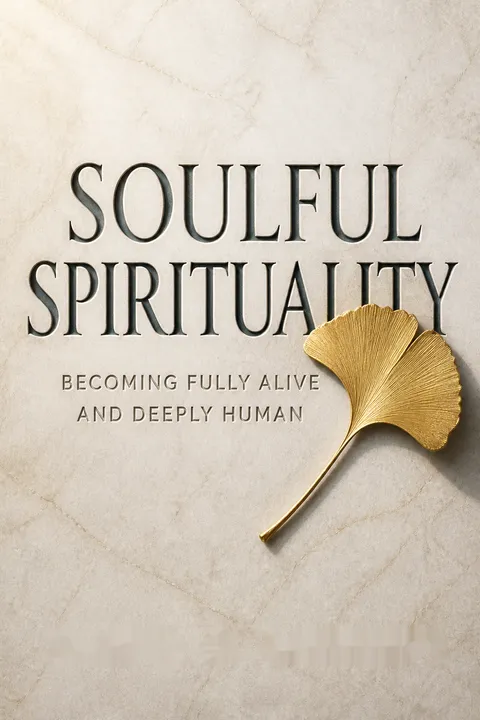
1. What is Soulful Spirituality: Becoming Fully Alive and Deeply Human by David G. Benner about?
- Core integration theme: The book explores how authentic spirituality is inseparable from becoming fully human, emphasizing the integration of spirit, soul, and body in everyday life.
- Grounded spirituality: Benner argues that true spirituality is deeply embodied, rooted in reality, and not an escape from human experience.
- Developmental journey: The narrative guides readers from egocentricity toward a broader identification with life, others, and the divine.
- Practical and psychological: It combines spiritual wisdom with psychological insights, offering both conceptual frameworks and actionable practices.
2. Why should I read Soulful Spirituality by David G. Benner?
- Addresses spiritual dissatisfaction: The book is ideal for those frustrated by traditional religion or unfulfilled by their current spiritual practices, offering a fresh, integrative perspective.
- Bridges psychology and spirituality: Benner provides a psychologically grounded approach, making it valuable for personal growth, counseling, or ministry.
- Practical spiritual guidance: Readers receive accessible practices for awareness, presence, and surrender, applicable to daily life.
- Challenges toxic spirituality: The book helps readers avoid harmful spiritual patterns that alienate them from their bodies, emotions, or reality.
3. What are the key takeaways from Soulful Spirituality by David G. Benner?
- Integration is essential: Authentic spirituality must be embodied and connected to human experience, not abstract or escapist.
- Spiritual practices matter: Foundational practices like awareness, wonder, honoring otherness, embracing reality, presence, and surrender are central to soulful living.
- Transformation over conformity: The goal is not religious conformity but personal transformation and wholeness.
- Healthy spirituality is loving: Markers of healthy spirituality include loving relationships, belonging, and transcendent meaning.
4. How does David G. Benner define "soulful spirituality" in Soulful Spirituality?
- Integration of spirit and soul: Soulful spirituality is a way of walking the human path that unites spiritual vitality with grounded human experience.
- Beyond beliefs and rituals: It is not about correct theology or ritual, but about how we live and respond to life’s energies and desires.
- Rooted in reality: Practices are grounded in the present moment, bodily awareness, and authentic engagement with self and others.
- Fosters wholeness: The approach aims to help individuals become fully alive and deeply human, rather than less human.
5. What is the relationship between body, spirit, and soul in Soulful Spirituality by David G. Benner?
- Body as foundation: The body is the primary home of the self; authentic spirituality must be embodied and not escapist.
- Spirit as vital energy: Spirit is described as the dynamic, passionate force that drives us toward transcendence and meaning.
- Soul as container: The soul holds our experiences, tensions, and meaning, grounding us in reality and allowing integration.
- Breath as intersection: Breath symbolizes the meeting point of body, spirit, and soul, anchoring spirituality in the present.
6. How does Soulful Spirituality by David G. Benner distinguish between religion and spirituality?
- Religion as container: Religion provides communal structure, creeds, and rituals for engaging the sacred.
- Spirituality as broader: Spirituality encompasses all ways of relating to the transcendent, inside or outside religious contexts.
- Deep vs. shallow religion: Deep religion integrates body, spirit, and soul, while shallow religion is rigid and disconnected from authentic experience.
- Healthy spirituality markers: Loving relationships, belonging, and transcendent meaning are key, whether religious or not.
7. What does David G. Benner mean by "toxic spirituality" in Soulful Spirituality?
- Alienation from the body: Toxic spirituality distances us from our embodied selves, repressing emotions and physical reality.
- Overemphasis on beliefs: It reduces spirituality to intellectual assent or mechanical rituals, losing relational depth.
- Narcissistic and escapist: Such spirituality isolates individuals from others and real-life challenges, fostering self-centeredness.
- Lack of transformation: Instead of fostering wholeness, toxic spirituality leaves people fragmented and disconnected.
8. What are the six key spiritual practices in Soulful Spirituality by David G. Benner?
- Awareness: Cultivating present-moment attention to body, emotions, and surroundings as the foundation for spiritual growth.
- Wonder: Nurturing awe and reverence for life’s ordinary and extraordinary aspects, opening to mystery.
- Honoring Otherness: Engaging with the uniqueness of others, nature, and the transcendent through hospitality and dialogue.
- Embracing Reality: Accepting life as it is, including suffering and limitations, rather than escaping into illusion.
- Presence: Developing stillness, silence, and solitude to be fully present to self, others, and the divine.
- Surrender: Letting go of control and resistance, welcoming life’s flow with trust and openness.
9. How does Soulful Spirituality by David G. Benner describe the role of awareness in spiritual growth?
- Foundation of spirituality: Awareness is the starting point for awakening from unconscious living and deepening spiritual life.
- Cultivated through practice: Mindfulness, contemplative attention, and breath awareness are key methods for expanding awareness.
- Opens to the transcendent: Increased awareness allows recognition of the sacred in everyday life and enhances empathy.
- Counters distraction: Awareness helps move beyond habitual thought patterns and fosters receptivity to deeper realities.
10. What is the significance of wonder in Soulful Spirituality by David G. Benner?
- Natural companion to awareness: Wonder arises when awareness is welcomed into the soul, transforming attention into joy and enchantment.
- Openness to mystery: Wonder invites reverence for the ineffable and fosters a deep connection to life and the divine.
- Practical cultivation: Practices like contemplative walking and gazing at the sky nurture wonder and enlarge the soul.
- Prevents cynicism: Without wonder, spirituality becomes dry and disconnected from the heart.
11. How does David G. Benner explain "honoring otherness" in Soulful Spirituality?
- Recognizing uniqueness: Honoring otherness means respecting the unique identity and sacredness of every person.
- Hospitality and dialogue: Creating space for authentic encounter and mutual transformation through genuine dialogue.
- Spiritual significance: Otherness reflects the image of God; honoring it is essential for deep spirituality.
- Challenges egocentricity: This practice opens us to deeper communion and integration with others and the divine.
12. What does Soulful Spirituality by David G. Benner teach about surrender and its role in spiritual transformation?
- True meaning of surrender: Surrender is inner acceptance and letting go, not defeat or resignation.
- Ego and control: The ego resists surrender, but letting go is necessary for aligning with forces beyond the self.
- Spiritual practice: Practices like Welcoming Prayer help focus on, welcome, and release emotional responses.
- Gateway to freedom: Surrender is essential for becoming fully alive, enabling transformation and deep humanity.
About the Author
Other books by David G. Benner








Download PDF
Download EPUB
.epub digital book format is ideal for reading ebooks on phones, tablets, and e-readers.








