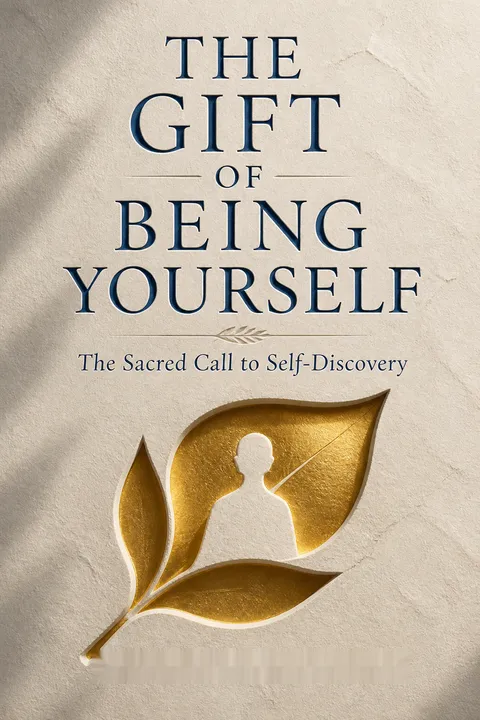


Key Takeaways
Know yourself and God together; either kind of knowledge stays incomplete.
Two kinds of knowing. Benner argues that spiritual change depends on knowing both God and oneself, because each becomes clearer in relationship to the other. Facts about God or personality can remain detached from lived experience. He calls knowledge that changes a person transformational knowing: personal, relational understanding that reaches beyond information. A pastor in Benner’s clinical work appeared spiritually knowledgeable and candid, yet had built a polished public identity that concealed his actual life. His lack of self-awareness helped destructive behavior remain hidden until it damaged his family and congregation.
Peter learns through failure. The disciple Peter’s confidence in Jesus grew alongside painful discoveries about himself. After insisting he would never deny Jesus, he did so under pressure. The risen Jesus then met him with forgiveness and renewed trust. Peter’s failure revealed both his fear and the character of the one he followed.
The mutuality here is more than a devotional slogan. Self-understanding is often distorted by shame, while beliefs about God can be shaped to protect a preferred self-image. A relationship that challenges both can interrupt that loop. Peter’s story also makes transformation look developmental rather than instant: insight follows real encounters, including failure. One important distinction is that self-knowledge is not automatically healing. It can become rumination or self-accusation unless held within a relationship that offers acceptance, accountability, and a reason to act differently.
Trade distant facts about God for encounters that involve your whole life.
Meet rather than merely study. Benner distinguishes information about God from personal knowledge of God, which grows through relationship and experience. Scripture and shared beliefs provide a foundation, but they do not by themselves make divine love an inwardly known reality. He suggests Gospel meditation, a prayer practice of imagining oneself present in a specific scene from Jesus’ life. The aim is not to analyze a passage or invent a lesson, but to attend to Jesus and one’s responses. He also recommends a daily examen, a prayerful review of the day that looks for where God may have been present in ordinary events.
Try the ordinary details. A conversation, an awkward feeling, or a moment of grief can become a place for attention. Benner suggests asking what was felt or experienced, rather than forcing an explanation for why it happened.
These practices shift spiritual attention from abstract claims to embodied experience: images, emotions, memories, and daily interactions all become relevant. That resembles reflective practices used in therapy, where noticing an experience without immediately explaining it can reveal patterns that intellectual analysis misses. The approach is strongest when reflection remains open and compassionate, rather than treating every feeling as a coded message. Imagination can deepen engagement with a Gospel story, but it should remain guided by the text and understood as a contemplative exercise, not historical evidence.
Build identity on being loved, not on proving you deserve attention.
Love before achievement. Benner says a Christian identity begins with being loved by God, not with professional status, moral success, or other people’s approval. He notices that when his own self-esteem feels threatened, he instinctively recalls accomplishments and plans. That reflex exposes how easily identity becomes tied to performance. Jesus offers a different pattern: his work flows from his relationship with God rather than serving as proof of his worth.
Risk being fully seen. Benner connects this identity to approaching God honestly, including with shame or failure, instead of presenting an improved version of oneself. He points to the Samaritan woman who encounters Jesus at a well. Jesus sees her difficult history without rejecting her, and she receives a response different from the condemnation she might have expected. Acceptance, in this account, makes honest self-knowledge possible.
An identity that does not have to be earned can loosen the grip of perfectionism and public approval. In psychological terms, secure relationships can make it safer to acknowledge mistakes without treating them as proof of total worthlessness. Benner’s religious framing gives that security a theological source and a direction: love is received, then expressed in action. A useful nuance is that unconditional acceptance need not mean indifference to harm. A sturdy account of love can hold together the person’s worth, the consequences of conduct, and the obligation to repair damage.
Welcome the parts you hide before trying to change them.
Make room for the whole self. Benner uses the term part-selves for aspects of one person’s experience that may be ignored or rejected, such as insecurity, shame, anger, or playfulness. These are not simply social roles. Denying an unwanted part does not make it disappear; it can instead operate outside awareness and shape behavior. Benner argues that self-acceptance means acknowledging what is present, not approving every action or treating every impulse as wise.
Acceptance enables discernment. Judith, a student raised in a secular Jewish home, began exploring spirituality after years of psychotherapy helped her face frightening aspects of herself. As she came to understand God as accepting her whole person, she found more courage to approach those aspects honestly. Benner’s practical invitation is to notice, name, and bring hidden experience into a trusted relationship rather than rushing to suppress it.
The distinction between accepting an experience and endorsing an action is crucial. People can acknowledge anger without acting cruelly, or recognize a desire without obeying it. This stance can reduce the secrecy that often gives unwanted patterns room to grow. It also resists a common trap in self-help: treating discomfort as evidence that a part of the self must be eliminated. Still, welcoming difficult material may require support, especially when trauma or compulsive behavior is involved. Solitary reflection is not a substitute for skilled care when safety or functioning is at stake.
Look beneath repeated behavior for the need or pride driving it.
Move from symptom to motive. Benner distinguishes particular wrong actions from deeper patterns of desire and self-protection. In his example, Stuart, a pastor seeking help for compulsive pornography use, initially understood the problem as sexual appetite alone. Therapy helped uncover a search for intimacy that avoided the vulnerability of a real relationship, alongside resentment and a sense of entitlement. Accepting his need for intimacy and facing his pride gave him a more honest account of the problem than repeated promises to stop had provided.
Use personality patterns cautiously. Benner presents the Enneagram as a tool for noticing recurring temptations associated with nine personality patterns. For example, he describes one pattern organized around success and fear of failure, which can encourage self-deception. He warns that it is easy to choose a flattering type. The point is not to label oneself, but to uncover a recurring inner strategy that needs attention.
Looking for the function of a behavior can reveal what a narrow moral label misses. A habit may regulate loneliness, threat, or a need for control, even while causing real harm. Understanding that function can make change more targeted, but it does not erase responsibility or make every proposed motive correct. The Enneagram can serve as a prompt for reflection, not a validated diagnosis or fixed identity. Benner’s own account of initially choosing types that felt safer captures a broader risk: frameworks can illuminate blind spots, but they can also become new costumes.
Spot your false self where image, control, and approval become necessities.
Notice what must be protected. Benner calls the false self an identity organized around an image a person tries to preserve, often through achievement, possessions, control, or approval. A valued trait becomes misleading when treated as the whole person. He suggests watching for defensiveness, petty irritations, and compulsive pursuits, because these can reveal where an image feels threatened. His own irritation at being called by a nickname helps expose his desire to appear serious and distinctive.
Power can disguise the same need. Benner describes Saul, the persecutor of early Christians, as driven by ambition before his conversion to Paul redirected his zeal toward service. He also interprets Jesus’ wilderness temptations as invitations to ground identity in power, prestige, or possessions. Jesus refuses these substitutes, holding to his relationship with God instead.
The false-self idea links everyday reactions to a larger question: what must remain true about the self for a person to feel safe? That makes small irritations potentially informative, though not conclusive. A dislike or strong preference may have an ordinary explanation, so suspicion should not become an excuse for endless self-scrutiny. The concept is most useful as a hypothesis tested against repeated behavior and its effects on others. Saul’s redirection also shows that transformation need not erase a person’s energy or talents; it can change what those capacities serve.
Receive your true self through relationship, rather than manufacturing a better persona.
Identity as gift. Benner’s true self is not a hidden personality type or a perfected image to construct. In his Christian account, it is the whole person understood as created and being restored in relationship with God. The false self seeks worth through what it owns, achieves, or persuades others to think. The true self receives worth through being loved and becomes more fully itself through trust and surrender.
Seek God, not a polished identity. Benner argues that searching directly for an ideal self can simply create another performance project. He instead presents Jesus as the model of human identity grounded in relationship with God. The spiritual journey, then, is not a campaign to become impressive or interchangeable with other believers. It is a process of becoming more truthful, more open to grace, and more distinct in the life one is given.
This is a pointed alternative to the idea that authenticity means acting on every impulse or inventing oneself without limits. Benner treats freedom as relational: a self becomes more itself through connection, not isolation. That view can challenge consumer culture’s promise that identity is assembled from choices and display. It also rests on a theological premise, namely that each person has a God-given identity. Readers who do not share that belief can still examine the practical contrast between an identity secured by approval and one shaped by relationships that permit honesty.
Treat vocation as the distinctive way your gifts meet the world's needs.
Calling is more than a job. Benner defines vocation as a way of being and serving, not merely an occupation or ministry role. It grows from the particular mix of a person’s abilities, temperament, interests, and deep desires, while also responding to needs beyond the self. These clues do not guarantee an easy path: biblical figures such as Moses and Jonah resist parts of their callings, and Jesus faces a mission he does not find painless.
Identity gives service its shape. Jesus reads a passage in a synagogue that describes bringing good news to the poor and freedom to the oppressed, then identifies that mission as his own. Benner presents this as a connection between identity and action. He encourages prayerful reflection on one’s life and discussion with someone trustworthy, so calling can be considered in community rather than chosen from ambition alone.
Vocation here avoids two extremes: reducing a life to a job title, and treating private fulfillment as the only measure of direction. Linking personal gifts to shared needs makes calling both individual and accountable. Community can help test whether a supposed calling reflects genuine capacity and service, or merely a preferred self-image. The model also leaves room for constraint: not every person can choose work freely, and meaningful service may happen inside roles that do not feel like a perfect fit. Discernment should illuminate available choices without turning circumstance into personal failure.
Analysis
Benner’s central achievement is to make self-knowledge a spiritual necessity rather than a rival to devotion. His argument moves through a persuasive sequence: abstract belief can protect a person from lived truth; honest self-awareness exposes fear, shame, and desire; acceptance makes that truth bearable; and a relationship with God provides the context in which the self can change without being reduced to its failures. Peter’s denial and restoration gives this sequence a human narrative, while the pastor and Stuart show how hidden motives can damage real relationships.
The book also makes an important distinction between authenticity and self-invention. Its true self is not a private preference elevated into moral authority. It is a relational identity received from God and expressed through a distinct vocation. This lets Benner preserve individuality while rejecting self-absorption. The strongest practical consequence is that readers are asked to notice experience before judging or explaining it, then bring it into prayer and trusted relationships.
The argument’s reach depends on theological commitments. Readers who do not believe in God may find the claim that identity is grounded in divine love unpersuasive, although the critique of performance-based worth can still stand independently. The book’s language about sin as a condition of being is also powerful but risks sounding fatalistic if separated from its emphasis on love and restoration. Likewise, the Enneagram can provoke useful reflection, but its type descriptions should not be mistaken for clinical assessment. Benner’s own caution about self-flattering interpretations is apt.
A further strength is his resistance to spiritual bypassing: focusing on God must not become a way to avoid one’s own behavior, and self-analysis must not become a substitute for relationship. The approach works best when contemplative reflection is paired with accountability, community, and appropriate professional support. Its memorable claim is not that every inward feeling reveals divine direction, but that reality must be faced honestly before it can be transformed.
Review Summary
The Gift of Being Yourself receives overwhelmingly positive reviews, with readers praising its depth and transformative impact. Many highlight its exploration of self-discovery through knowing God, and its emphasis on shedding false selves to embrace one's true identity in Christ. Readers appreciate Benner's accessible writing style, psychological insights, and integration of spiritual concepts. While some found parts repetitive or challenging, most consider it a profound, life-changing read that merits multiple revisits for continued growth and reflection.
People Also Read








Glossary
Transformational knowing
Relational knowledge that changesBenner’s term for personal, experiential knowledge that changes how someone understands and lives. It differs from merely possessing facts about God or oneself. It develops through relationship, openness, and lived experience, and in Christian spirituality involves knowing God and oneself in relation to one another.
False self
Identity built around an imageAn identity organized around a constructed image of who one must be, often maintained through achievement, approval, control, or possessions. Benner sees it as a defensive way of seeking security apart from dependence on God. It can include genuine traits, but becomes false when one trait or public presentation is treated as the whole person.
True self
The self received in GodBenner’s Christian account of a person’s deepest identity as created by God and being restored in relationship with God through Christ. It is not a perfected persona or a personality category to discover through analysis. It involves becoming more truthful and distinct, while receiving worth rather than trying to manufacture it.
Personal emotional program
A learned plan for feeling secureA coping strategy developed around what a person believes will bring love, safety, power, or control. It often grows from childhood experiences and reinforced strengths, then becomes a habitual way of seeking happiness and managing vulnerability. Benner treats excessive reliance on this strategy as a foundation for the false self.
part-selves
Recognizable aspects of one selfBenner’s term for distinct aspects of a person’s inner experience, such as insecurity, anger, playfulness, or the wish to please. They are not simply social roles. Some may be ignored because they feel unacceptable, yet still influence behavior. Acknowledging them allows a person to understand and integrate experience rather than deny it.
Gospel meditation
Imaginative prayer with a Gospel sceneA contemplative practice in which a person slowly attends to a specific Gospel episode and imaginatively enters its setting. The purpose is not primarily textual analysis or extracting a lesson, but spending attentive time with Jesus in the scene and noticing one’s responses. Benner presents it as a way to develop personal, experiential knowledge of Jesus.
daily examen
Prayerful review of the dayA reflective prayer practice in which a person revisits recent daily events and attends to feelings, reactions, and possible signs of God’s presence. Benner emphasizes noticing what arises rather than forcing an explanation. Its purpose is spiritual awareness and relationship, not self-analysis for its own sake.
Enneagram
Nine-pattern personality reflection toolA personality framework Benner uses as a possible aid to noticing recurring temptations and core needs. It describes nine patterns, each associated in his account with a characteristic vulnerability, such as pride, fear, or envy. He recommends prayerful reflection rather than quick labeling, and treats the framework as a tool for self-understanding, not a flattering identity or diagnosis.
FAQ
What's "The Gift of Being Yourself" about?
- Spiritual Journey: The book explores the concept of the spiritual journey as a process of transformation, emphasizing awakening and spiritual awareness over mere achievement.
- Self-Discovery: It focuses on the sacred call to self-discovery, encouraging readers to find their true self in relation to God.
- Identity in God: The book argues that our true identity is grounded in being deeply loved by God, and that knowing God and self are interdependent.
- Practical Guidance: It provides practical advice on how to embark on this journey, including meditation on the Gospels and reflecting on daily experiences.
Why should I read "The Gift of Being Yourself"?
- Deepen Spirituality: It offers insights into deepening your spiritual life by understanding the connection between knowing God and knowing yourself.
- Transformational Insights: The book provides transformational insights that can lead to a more authentic and fulfilling life.
- Practical Exercises: It includes practical exercises and meditations to help you engage with the material and apply it to your life.
- Personal Growth: Reading it can aid in personal growth by helping you uncover and embrace your true self in Christ.
What are the key takeaways of "The Gift of Being Yourself"?
- Interdependence of Knowing: Knowing God and knowing self are deeply interconnected; one cannot proceed far without the other.
- Identity in Love: Our identity should be grounded in being deeply loved by God, not in what we do or what others think of us.
- False vs. True Self: The book distinguishes between the false self, which is based on illusions and attachments, and the true self, which is found in God.
- Vocation and Fulfillment: Our true calling or vocation is aligned with our true self and leads to genuine fulfillment.
How does David G. Benner define the "false self" in "The Gift of Being Yourself"?
- Illusory Identity: The false self is an identity based on illusions, attachments, and the belief that happiness comes from living life our way.
- Defensive Nature: It is characterized by defensiveness and the need to maintain an image that is not true to our deepest self.
- Attachments: The false self clings to possessions, accomplishments, and others' opinions as sources of value.
- Hiding from God: It represents a way of hiding from God and ourselves, preventing us from embracing our true identity in God.
What is the "true self" according to "The Gift of Being Yourself"?
- God-Centered Identity: The true self is who we are in relation to God, grounded in being deeply loved by Him.
- Authentic Being: It is the self that is free from illusions and attachments, living in truth and surrender to God.
- Unique Vocation: The true self is aligned with our unique calling and gifts, leading to fulfillment and service to others.
- Christ as Model: Jesus is presented as the model of the true self, showing us how to live in relation to God.
What practical exercises does "The Gift of Being Yourself" suggest for self-discovery?
- Gospel Meditation: Engaging in Spirit-guided meditation on the Gospels to deepen your relationship with Jesus and, through Him, with God.
- Daily Reflection: Conducting a prayerful review of daily experiences to discern God's presence and invitations for growth.
- Solitude and Silence: Spending time in solitude and silence to meet God in the depths of your being and embrace your true self.
- Community Support: Seeking spiritual friendship and community to support your journey of self-discovery and transformation.
How does "The Gift of Being Yourself" address the concept of sin?
- Ontological Sin: Sin is described as a fundamental flaw in our being, not just a matter of moral behavior.
- Core Sin Tendencies: The book encourages identifying core sin tendencies that underlie specific sins, such as pride or greed.
- Acceptance and Transformation: Accepting our sinfulness is necessary for transformation, as it allows us to meet God in our brokenness.
- Enneagram Tool: The Enneagram is suggested as a tool to help identify and understand our core sin tendencies.
What role does identity play in the spiritual journey according to "The Gift of Being Yourself"?
- Transformational Identity: The spiritual journey involves the transformation of identity, moving from a false self to a true self in God.
- Identity in Christ: Our deepest identity is found in Christ, and the journey involves realizing this truth.
- Dynamic Process: Identity is not static; it develops and changes as we grow in our relationship with God.
- Foundation of Being: The journey reveals that our being is grounded in God, and our identity is intertwined with our relationship with Him.
What are some of the best quotes from "The Gift of Being Yourself" and what do they mean?
- "There is only one problem on which all my existence, my peace, and my happiness depend: to discover myself in discovering God." This quote emphasizes the inseparable link between knowing God and knowing oneself.
- "Our identity is who we experience ourselves to be—the I each of us carries within." It highlights the importance of understanding our identity as grounded in God's love.
- "We do not find our true self by seeking it. Rather, we find it by seeking God." This underscores the idea that our true self is discovered through our relationship with God.
- "The false self is the tragic result of trying to steal something from God that we did not have to steal." It points to the futility of seeking fulfillment outside of God's will.
How does "The Gift of Being Yourself" suggest we deal with the false self?
- Awareness and Honesty: Becoming aware of and honest about the false self is the first step in dealing with it.
- Surrender to God: Surrendering the false self to God and trusting in His love and guidance is crucial for transformation.
- Embrace Vulnerability: Embracing vulnerability and acknowledging our weaknesses allows us to move beyond the false self.
- Seek Truth: A radical encounter with truth, facilitated by the Spirit, is necessary to dispel the illusions of the false self.
What is the significance of vocation in "The Gift of Being Yourself"?
- Expression of True Self: Vocation is seen as the expression of our true self, aligned with our unique gifts and calling.
- Service to Others: It involves serving God and others in a way that reflects our true identity and fulfills our purpose.
- Dynamic and Evolving: Vocation is not static; it evolves as we grow in our relationship with God and understanding of self.
- Grounded in God: Our vocation is grounded in our identity in God, and living it out leads to genuine fulfillment.
How does "The Gift of Being Yourself" integrate psychology and spirituality?
- Depth Psychology: The book draws on depth psychology to explore the complexities of the self and the process of self-discovery.
- Spiritual Practices: It integrates spiritual practices, such as meditation and prayer, to facilitate personal and spiritual growth.
- Interconnectedness: The book emphasizes the interconnectedness of psychological and spiritual transformation.
- Holistic Approach: By combining insights from psychology and spirituality, it offers a holistic approach to understanding and becoming one's true self.
The Spiritual Journey Series
About the Author
Other books by David G. Benner






Download PDF
Download EPUB
.epub digital book format is ideal for reading ebooks on phones, tablets, and e-readers.








