

Key Takeaways
Expand the canon by changing what counts as musical evidence.
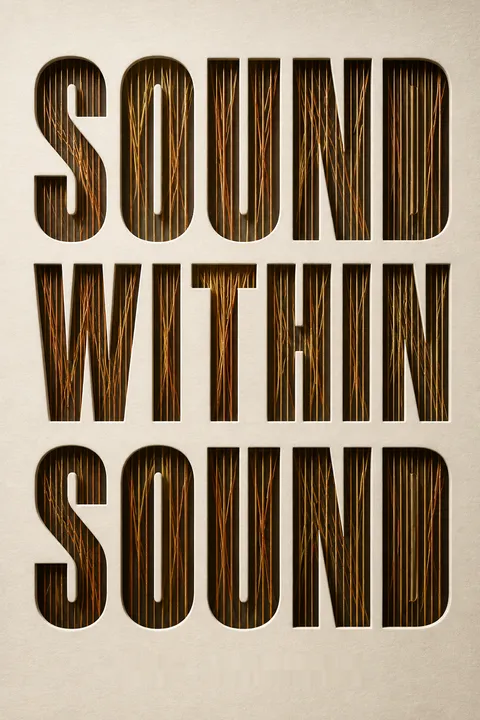
The missing is made. Kate Molleson argues that the narrow story of twentieth-century music is not proof that important composers were absent. It reflects choices made by histories, curricula, concert programmes, and record companies, which repeatedly centre white men from Europe and the United States. The book follows ten composers whose work makes that omission audible, from microtonal experiments in Mexico to collective music-making in the Philippines and Chicago.
Inclusion is not a checklist. Molleson does not propose replacing familiar composers or simply adding a few unfamiliar names to existing programmes. She asks listeners to encounter music in its own historical and cultural context, rather than valuing it only when it resembles established European models. The aim is a larger, more accurate account of musical invention.
What's striking is that the argument concerns institutions as much as taste. A canon is reproduced through practical decisions about teaching, publishing, archiving, and programming, so broadening it requires changing those routines, not merely expressing openness. The warning against tokenism is especially useful: adding a work without its context can leave the hierarchy intact. At the same time, inclusion cannot mean that every neglected artist must be declared a genius. A better test is whether the history gives listeners enough context to judge the work on its own terms.
Treat microtones as new territory, not proof of cultural authenticity.
Notes between notes. In 1923, Mexican composer Julián Carrillo proposed Sonido 13, an umbrella vision for dividing the octave into intervals smaller than the familiar semitone. He built instruments to explore these possibilities, including pianos with up to ninety-seven keys within an octave. His music ranges from the uncanny microtonal textures of Preludio a Colón to the orchestral mirage of Horizontes. Carrillo’s grand claims were often contradictory, and he sometimes invented details to promote his priority.
No single national sound. Carrillo rejected the nationalist expectation that Mexican music should draw on Indigenous traditions, while Silvestre Revueltas used street sounds and rough-edged musical collage to resist polished folkloric stereotypes. Their contrast exposes how authenticity can become a political test rather than a description. Carrillo’s own views on colonialism and Indigenous people were troubling, so hearing his music need not excuse his politics.
The episode shows why artistic innovation and ethical approval should not be collapsed into one verdict. Carrillo’s microtonality unsettles the assumption that the twelve-note system is universal, but his cultural politics reveal that formal radicalism does not guarantee political insight. Revueltas offers a different challenge: vernacular material can be represented without being cleaned up to serve a national myth. The distinction matters beyond music. Cultural authenticity is often treated as a fixed inheritance, when lived cultures are mixed, contested, and continually remade.
Protect creators from being forced to choose between art and care.
A career interrupted. Ruth Crawford wrote a strikingly modern body of work in the 1920s and early 1930s, including String Quartet 1931 and Three Chants for Women’s Chorus. After marrying Charles Seeger and raising four children, she largely stopped composing standalone works. Her own phrase for the conflict was a struggle between career, love, and children. Yet she continued working: she transcribed folk recordings with painstaking accuracy, taught, wrote songbooks, and cared for her household.
Silence can conceal labor. Crawford’s story makes clear that her creative life did not simply end. Her folk work carried musical judgement and craft, even as domestic expectations and her husband’s views constrained her composing. She began writing larger works again in the late 1940s, but died of cancer in 1953, aged fifty-two. Her unrealized possibilities are part of the history, not evidence of lesser talent.
Crawford’s biography resonates with the concept of a care economy: creative work depends on time, support, and often invisible household labor. Institutions tend to count finished compositions more readily than transcription, teaching, or caregiving, producing a distorted picture of who was productive. The account also avoids an easy counterfactual. No one can know exactly what Crawford would have written with different support. What can be known is that unequal conditions shaped which parts of her work became visible and which were treated as secondary.
Build instruments that let ordinary people become co-authors.
Sound made by hand. Swiss-born Walter Smetak settled in Salvador, Bahia, where he built more than 150 plásticas sonoras, or sound sculptures. Made from inexpensive local materials such as bamboo, gourds, wire, and discarded instrument parts, many could be played without specialist technique. His five-metre collective flute had twenty-two holes for twenty-two players. Its uneven pitches and comic first attempts turned performance into shared discovery rather than a virtuoso display.
A city inside the instrument. Smetak’s inventions belonged to Salvador’s cultural crossings, where African, Indigenous, European, and popular traditions already mingled. His music and instrument-making also fed into the ferment around Tropicália, which rejected demands for culturally pure Brazilian art. Smetak called his hoped-for union of sound and other senses caossonance. Many of his instruments deteriorated, and his grand Egg Studio remained unrealized, leaving his work partly embodied in ideas and fragile objects.
Smetak’s low-cost, participatory instruments anticipate a broader design principle: tools shape who gets to act. An instrument that welcomes many players changes both the sound and the social arrangement of performance. This does not automatically make participation equal. Someone still decides how an object is built, who is invited, and what counts as a successful result. The value of Smetak’s practice lies partly in making those decisions visible and open to experiment, rather than hiding them behind the mystique of technical mastery.
Make a city listen together, but ask who controls the broadcast.
A score across Manila. In 1974, José Maceda’s Ugnayan used thirty-seven radio stations to broadcast music across metropolitan Manila, then home to about 4.7 million people. Twenty tape parts, based on performances by one hundred musicians, were distributed among the stations. Listeners carried radios through public spaces, and the overlapping signals changed with each person’s location. The audience’s movement helped shape the mix, turning a mass broadcast into a shifting performance.
Participation under martial law. The Marcos regime supported the event as a national spectacle, and stations and citizens had little choice about taking part. Maceda later felt that his work had been used for political purposes, though he accepted the arrangement to make the project possible. His ambition was to connect indigenous musical practices with modern urban life, not simply to provide a soundtrack for nationalism.
Ugnayan makes participation a question of power, not just a pleasing artistic technique. The audience helps create the work, yet the state controls access to the airwaves and can compel attendance. That tension resembles contemporary debates about digital platforms: distributed contributions do not necessarily mean distributed authority. Maceda’s work remains compelling precisely because its musical openness and political capture coexist. It invites a more careful question than whether participation is good: who sets the conditions, who can opt out, and who claims the resulting collective expression?
Let music testify to pain without translating it into comfort.
Physical testimony. Galina Ustvolskaya’s later music turns sound into an ordeal. Her 1973 Dies irae sets eight double basses, piano, and a hollow wooden box in a severe ritual. In her final piano sonata, written in 1988, dense clusters are struck with hands and elbows. The effort is audible in the repeated blows, while brief quiet passages make tenderness feel startling rather than reassuring.
A life beyond the label. Ustvolskaya lived through the Soviet state’s pressure on artists and wrote both approved works and fiercely individual music. She was Shostakovich’s student, but later resented being framed mainly through him. Her music is often described as testimony to isolation and spiritual struggle, though she resisted interpretation and left a deliberately obscure biography. Taking her work seriously means hearing its force without pretending to solve her.
Ustvolskaya complicates the widespread belief that art should convert suffering into insight or consolation. Her sound can make strain bodily, a connection that performance studies and trauma research also examine: physical action can carry experience that ordinary explanation cannot contain. Still, pain should not be romanticized as proof of artistic truth. The demands placed on performers are real, and an audience’s intense response is not a substitute for understanding the historical conditions around the music. The work resists both easy comfort and easy diagnosis.
Use inherited forms as materials, not limits, for a new voice.
A life rerouted. Emahoy Tsegué-Mariam Guèbru grew up in an Ethiopian diplomatic family, studied violin and piano in Europe and Cairo, and expected to continue her musical education in London. In 1946, the government denied her travel visa. The rejection led to a severe depression, followed by a religious turn and ten years living barefoot at a monastery on Gishen mountain. She later returned to the piano and began composing in a more personal, improvisatory way.
Two musical worlds, no hierarchy. Her pieces draw on the classical training she received abroad and the pentatonic scales and ornaments of Ethiopian music. Works such as Homesickness and The Song of the Abayi carry a sense of place and longing without fitting neatly into either classical or traditional categories. She recorded an album to raise money for children living on the streets, making music both private devotion and public action.
Emahoy’s story illustrates how creative agency can survive a life-changing constraint without making the constraint seem beneficial. Her response to the denied visa was consequential, but the loss of opportunity remains real. This distinction matters in stories of resilience, which can accidentally turn injustice into a necessary step toward artistic fulfilment. Her music also unsettles the familiar East-meets-West formula: the influences are not opposing sides to be blended into a novelty, but resources she inhabits without ranking one above the other.
Turn private memory into sound, without sanding away its trauma.
The city as score. Danish composer Else Marie Pade joined the resistance during the Second World War, was arrested, and wrote music in prison. Later, she used recordings, tape loops, and electronic tones to make work from everyday sound and memory. Symphonie magnétophonique condenses a day in Copenhagen into a sound collage, moving from morning routines and street traffic toward echoes of bombs, soldiers, and sirens. Her soundtrack for The Little Mermaid makes the tale’s mutilation and longing audible.
Technology serves imagination. Pade worked with musique concrète, music shaped from recorded sounds, alongside electronically generated tones. She was not trained as an engineer and depended on male technicians to operate studio equipment, yet her vivid ideas guided the work. Her later piece Face It confronts wartime memory through repeated recordings of Hitler’s voice. Sound becomes both an artistic medium and a form of witness.
Pade’s work suggests that media can preserve emotional traces that public narratives prefer to smooth over. Sound collage is especially suited to this task because it can place fragments beside one another without pretending they form a tidy explanation. But autobiographical art should not be treated as transparent evidence: sounds are selected, edited, and shaped. Pade’s achievement is not that the work gives unmediated access to trauma, but that its construction allows the listener to experience the tension between daily life and buried memory.
Give every musician tools to invent, not just permission to perform.
A workshop becomes a movement. In 1960s Chicago, Muhal Richard Abrams led the Experimental Band, a Monday-night workshop where musicians brought compositions, tested ideas, and developed ways to notate music together. The group helped seed the Association for the Advancement of Creative Musicians, founded in 1965. The AACM built its own performance opportunities and school, challenging the assumption that Black musicians belonged only in a narrow category called jazz.
Method makes freedom teachable. Abrams studied the Schillinger System, a compositional approach that uses structured processes to generate musical material. He treated it as evidence that composition could be learned and practiced, rather than reserved for people presumed to possess innate genius. His instruction against recycled musical clichés encouraged invention, while his own work crossed improvisation, electronics, jazz, and concert music.
The AACM shows how access to tools can matter more than abstract permission. A workshop, shared notation, and teaching structure gave musicians practical means to author their own work and history. This resembles community-based models in education, where learners develop expertise by making things together, not merely receiving instruction. Yet a collective is not automatically harmonious. The AACM included disagreement and strong personalities. Its significance is not that conflict disappeared, but that organizational structure made room for distinct voices to continue working.
Slow listening reveals change that speed mistakes for stillness.
Hear the note’s interior. Éliane Radigue spent decades exploring subtle shifts in electronic sound, first through tape and feedback, then with analogue synthesizers. Her music often moves so gradually that a listener may initially mistake it for a sustained drone. Radigue instead attends to the partials and harmonics that give a note its changing inner texture. Her three-hour Trilogie de la mort makes minute transitions feel both intimate and immense.
Collaboration without a conventional score. Since the early 2000s, Radigue has worked with selected performers on the Occam series. They begin by discussing a personally meaningful body of water, then develop a verbal, evolving structure she calls a living score. Each musician shapes the work through close collaboration and prolonged attention. Radigue’s method values the specificity of a performer’s listening over a fixed notation that could be handed to anyone.
Radigue’s music offers a useful counterpoint to attention economies built around novelty and rapid switching. Slow change can make perception more discriminating, much as sustained observation helps researchers notice patterns invisible in a quick survey. But slowness is not inherently profound, and long duration can exclude listeners who lack time, access, or familiarity. The important lesson is not that every listener should endure hours of music. It is that attention has resolution: changing its pace can reveal features that ordinary listening filters out.
Let the world alter the work instead of controlling every note.
Composing by listening. Annea Lockwood’s Piano Transplants place old pianos in processes they cannot control: burning, drowning, or becoming part of a garden. The point is not destruction for spectacle. Lockwood listens to how fire, water, wind, and decay transform an instrument designed for deliberate human performance. Her river works apply the same attentiveness to moving water, recording the Hudson and Danube alongside people who live and work near them.
Attention can create care. Lockwood and composer Ruth Anderson developed exercises that ask people to listen closely to a sound or to another person. Lockwood sees listening to natural environments as a way to feel connection rather than separation. She avoids turning every work into a direct political message, but her sound maps invite listeners to encounter rivers as physical presences, not merely scenery.
Lockwood’s practice connects artistic form with ecological attention: the work changes because the environment is allowed to act upon it. Environmental humanities similarly asks how perception shapes responsibility, though attention alone cannot repair pollution or protect a river. The method is strongest when treated as an opening to care, not a substitute for political action. Its invitation is concrete: notice the source, the material, and the living systems usually hidden behind an aesthetic object.
Analysis
Sound Within Sound is both a corrective history and an argument about how knowledge is made. Its composers do not form a single alternative movement. Their differences are the point: Carrillo treats tuning as a frontier, Maceda builds structures for mass participation, Ustvolskaya makes musical pain physical, and Lockwood lets environmental processes reshape instruments. Together, they undermine the assumption that twentieth-century innovation followed one central European trajectory.
The book’s sharpest intervention is to show that exclusion is not simply a failure to notice good music. Institutions create categories that determine what can be heard as serious, national, classical, or technically accomplished. The same artist may be rejected as insufficiently authentic, labelled through a more famous man, or praised only after being made into a convenient symbol. Recovering the work therefore requires more than inserting names into a syllabus. It requires context: who supported the artist, what traditions they drew on, what constraints shaped their choices, and how later institutions described them.
The portraits also distinguish artistic freedom from uncomplicated heroism. Carrillo’s innovations coexist with self-mythology and reactionary views. Maceda’s participatory ideal operated within an authoritarian spectacle. Crawford’s creative life was shaped by unequal domestic labor, while Pade depended on technicians who controlled access to studio machinery. Such contradictions strengthen the history rather than discrediting it. They prevent neglected artists from being recast as flawless replacements for established geniuses.
The book’s focus on listening is therefore methodological as well as aesthetic. It asks for attention to sound, but also to the systems that make some sounds familiar and others strange. Its limitation is inherent in any ten-person selection: many equally important histories remain outside the frame. Molleson acknowledges this by presenting the collection as a starting point, not a replacement canon. The lasting challenge is to build musical institutions capable of sustaining many histories without forcing them into one standard of value.
Review Summary
Sound Within Sound by Kate Molleson explores ten underappreciated 20th century composers, offering diverse perspectives on experimental music. Readers praised Molleson's engaging writing style, detailed research, and ability to make complex musical concepts accessible. Many discovered new composers and expanded their musical horizons. Some found the book enlightening and horizon-expanding, while others felt the prose was occasionally overwrought. Overall, reviewers appreciated the focus on marginalized voices in classical music and found the book a valuable addition to music history literature.
People Also Read




Glossary
Sonido 13
Carrillo’s microtonal visionJulián Carrillo’s broad concept for exploring musical intervals smaller than a semitone and imagining scales beyond the conventional twelve-tone octave. It was not one specific note or tuning system. Carrillo developed instruments and compositions to investigate microtonal possibilities, presenting them as a major break with inherited musical expectations.
plásticas sonoras
Smetak’s sound sculpturesWalter Smetak’s term for handmade instruments that function as both visual sculptures and sound-making objects. He built them from inexpensive materials such as bamboo, gourds, wire, and discarded instrument parts. Some could be played by many people at once, and many did not follow a standard tuning or demand conventional instrumental technique.
Ugnayan
Maceda’s citywide radio workJosé Maceda’s large-scale musical work broadcast across metropolitan Manila in 1974. Thirty-seven radio stations transmitted different combinations of recorded parts, while listeners carried radios through public spaces. The resulting mix varied according to each listener’s location and the nearby radios, making movement and listening part of the performance.
Association for the Advancement of Creative Musicians
Chicago musicians’ collectiveFounded in Chicago in 1965, the AACM supported Black musicians’ artistic independence through workshops, performances, education, and employment. Its members composed and performed across styles, challenging narrow racial and musical categories. The collective also established a school where musicians taught composition and creative practice to younger students.
musique concrète
Music built from recorded soundsA compositional approach that uses recordings of real-world sounds as musical material. Through techniques such as cutting, looping, splicing, and altering playback, composers can organize noises from everyday life into new forms. Pade and Radigue encountered this approach as a way to treat environmental sound as a source for composition.
dissonant counterpoint
A method for organizing dissonanceA compositional approach associated with Charles Seeger and developed with Ruth Crawford that treats dissonance as a structured musical resource rather than a problem that must resolve into conventional harmony. Crawford’s engagement with the method informed her modernist work, including tightly organized lines that retain expressive force without relying on familiar tonal resolution.
living score
A verbal, evolving structureÉliane Radigue’s name for the verbal and pictorial structures she develops with performers in the Occam series. A work begins with discussion of a meaningful body of water, then takes shape through close collaboration with the specific musician. The score guides gradual musical development without fixing every detail in conventional notation.
Piano Transplants
Pianos transformed by natural processesAnnea Lockwood’s works and instructions for placing pianos in situations where natural forces alter them. In different pieces, pianos are burned, submerged, or set in gardens and left exposed to weather. The project focuses on careful listening to the sounds of transformation rather than on destruction as spectacle.
caossonance
Smetak’s sensory unionWalter Smetak’s term for an imagined state in which conventional divisions between sound and other senses are overcome. It expresses his ambition to connect music, light, physical space, instruments, and spiritual experience. The idea informs his sound sculptures and his resistance to familiar boundaries between musical categories.
Download PDF
Download EPUB
.epub digital book format is ideal for reading ebooks on phones, tablets, and e-readers.








