

Key Takeaways
Treat readiness as something built before the pressure arrives
Calm is constructed. The day begins in a spotless kitchen, but the previous night’s long prep lists reveal the work hidden beneath that calm. As opening sous chef, the narrator checks who has called out, greets the early crew, inspects stations and refrigerators, and verifies deliveries against orders. These routines catch small failures before they become service emergencies. The restaurant serves about 90 dining-room guests at a time, but a busy Friday can bring roughly 300 covers. That volume cannot be handled by improvisation alone.
Preparation protects attention. By the time dinner begins, the kitchen’s surfaces, equipment, ingredients, and staffing must already be in order. The quiet morning is not downtime so much as the first stage of service, when the team creates the conditions for good work.
What's striking is how the opening rounds resemble safety checks in aviation or medicine: routine inspections make hazards visible before people are rushed. Their value lies less in any single checklist item than in building a shared expectation that someone has checked. Yet readiness is not simply an individual's virtue. A callout, broken refrigerator, or late delivery can exceed one sous chef's control. Reliable operations need procedures and enough staffing, not just a conscientious person willing to absorb every surprise.
Protect ingredients before the stove gets a chance to ruin them
Quality starts in storage. The sous chef treats each refrigerator as part of the cooking process. Fish receives especially strict attention: its box should stay between 34 and 38 degrees Fahrenheit, whole fish should rest upright in ice, and portions should be wrapped and kept from pooled liquid. The meat cooler has its own priority: keep raw chicken below and separate from other foods to reduce cross-contamination. Produce is labeled, dated, and rotated so older stock is used first.
Tools carry responsibility. The narrator maintains sharp Japanese knives suited to specific jobs, from breaking joints to slicing fish. Their value is practical, not ornamental: precise cuts preserve the food and make later cooking more predictable. Clean equipment, safe temperatures, careful handling, and skilled knife work are all parts of the same craft.
The account makes a useful point that culinary skill begins well before heat is applied. In food safety, the chain of custody matters: temperature, separation, labeling, and handling determine whether an ingredient can safely become a meal. The knife kit adds another dimension, since specialized tools can reduce error when matched to practiced technique. Still, care should not be confused with perfectionism for its own sake. A beautiful knife cannot compensate for unsafe storage, and a craft culture is strongest when safety procedures are shared rather than left to individual memory.
Make distinct strengths work together instead of competing for rank
A restaurant is a coordinated crew. The kitchen follows a brigade de cuisine, a hierarchy that assigns people to defined responsibilities. The executive chef leads; two sous chefs divide opening and closing duties; station cooks handle meat, fish, vegetables, and cold dishes; prep cooks make stocks, sauces, and other components; dishwashers keep equipment moving. The roles differ in status, but each supports the same service.
Information travels across the hierarchy. The opener knows inventory and staff schedules, while the closer manages the end of service and tomorrow’s prep. Back waiters, though technically part of the dining-room staff, report which tables are ready and how guests are responding. A strong team is not a collection of interchangeable workers. It depends on people sharing timely information and respecting work that diners may never see.
This kitchen illustrates distributed cognition: a group can notice and manage more than any one person, provided information reaches the right people. The back waiter’s updates, the prep cook’s production, and the sous chef’s coordination all extend the team’s awareness. The hierarchy can clarify responsibility, but it can also silence people lower down. The story’s strongest version of leadership is therefore not command alone. It is making sure expertise from every station can influence decisions before a small issue becomes a collective failure.
Break a crushing prep list into sequences, then delegate with judgment
Order creates speed. The narrator describes kitchen rhythm as a repeatable sequence: perform one step, prepare for the next, and move smoothly between tasks. Repetition builds consistency and reduces the number of decisions a cook must make while working. That leaves more attention available for anticipating what is needed next.
Delegation turns pressure into a plan. On this Friday, the chef adds five specials with only a few hours before service. The sous chef assigns pasta to his fellow sous, asks a prep cook to prepare carrots and endive, gives a trusted meat cook the pork, and reserves delicate fish work for himself. He also identifies which components must begin immediately, such as potatoes that need time to cool. The list remains daunting, but dividing it by urgency, skill, and available hands makes it workable.
The practical insight aligns with research on cognitive load: familiar sequences reduce the mental effort spent deciding what to do next. Delegation adds a social form of the same efficiency, matching a task to someone's capacity instead of treating labor as fungible. The limit is important, though. A plan can look efficient while depending on unpaid effort, overtime, or one expert's constant rescue work. Good delegation should distribute ownership and preserve safety, not merely move pressure down the chain.
Contain pre-service anger before it becomes a safety hazard
Stress changes the work. A mistake made during dinner may provoke a brief outburst, but irritation that builds during prep can color the entire shift. The narrator sees how worry about the chef’s mood makes ordinary tasks feel dangerous, slows decisions, and creates more opportunities for error. In a kitchen of hot pans and sharp blades, distraction has physical consequences.
Small lapses compound. The narrator leaves supplier samples out, gets caught smoking, burns a tray of hazelnuts, and breaks an expensive pan. Each mistake adds embarrassment and tension just before service. By contrast, a clean station and a settled sequence help cooks see what they are doing and what comes next. Emotional control here is not politeness for its own sake; it is part of keeping the crew and food safe.
The scene connects emotional regulation to human-factors engineering. Under stress, working memory narrows, attention becomes more selective, and people are more likely to miss peripheral cues. A clean station and repeated routines can act as external supports when concentration is strained. But the burden cannot rest only on workers staying calm around an explosive boss. A culture that uses humiliation or thrown objects may produce compliance in the moment while undermining trust, learning, and long-term safety.
Run the pass as the kitchen's information and quality-control center
Orders need a common picture. The pass is where food is finalized and transferred to the dining room. Tickets print at the pass and individual stations, while the chef calls each order so cooks can coordinate timing. He groups tables into pickups, meaning batches of orders prepared together. The sous chef tastes food for seasoning, texture, and temperature, sorts pans by dish and table, and relays special instructions to the chef and cooks.
Preventing a refire preserves the whole service. If an undercooked fish reaches a diner and returns, the cook must interrupt current work, reconstruct the order, and prepare another portion. That can delay several tables at once. On a night forecast to bring about 300 guests, the sous chef’s quiet checks and updates are not clerical extras. They keep the kitchen’s many stations working from the same information.
The pass functions like a control room: it joins local knowledge from separate stations into a shared operational picture. That resembles distributed systems, where small delays or ambiguous messages can cascade through an entire network. The book shows why redundancy matters: cooks have their own tickets, while the chef calls orders aloud and the sous checks the food. Yet communication norms need room for clarification. A loud, rigid command structure may synchronize action, but it can also discourage someone from raising a concern in time.
When a teammate collapses, take over without losing sight of the guest
The service cannot pause. During the Friday rush, the fish cook, Raffy, becomes ill and vomits beside his station. His area is disorganized, tickets are backed up, and several plates have been mishandled. The narrator takes the station, cleans and resets it with help from another cook, and starts cooking the orders himself. A food critic is also dining, but the immediate task is to get safe, properly cooked food to every table.
Backup is part of competence. The narrator does not pretend the handoff is easy: he must recover the station, identify what is still usable, and catch up while other tickets keep arriving. The episode makes teamwork concrete. A colleague’s failure becomes everyone’s problem, and a functioning kitchen needs people able to step across their usual roles when circumstances demand it.
The recovery shows resilience as a team capacity, not an inspirational trait possessed by a lone hero. Cross-training and willingness to help can prevent one person's failure from stopping the operation. At the same time, the station’s collapse exposes a weakness in the system: the team is forced to improvise after warning signs were visible. A safer workplace would address repeated impairment and staffing contingencies before the dinner rush. Taking over protects guests in the moment, but repeated rescue should trigger a management response.
Keep the unseen diner, not the chef's praise, at the center
The guest is the point of the craft. Near the end of the night, the narrator argues with a colleague about why cooks work so hard. Recognition from a chef, career advancement, and pride in technique matter, but they are not the final purpose. A diner who never sees the kitchen trusts the staff to prepare food safely and thoughtfully. The work’s precision is meaningful because it feeds and cares for that person.
The calling has a cost. After a three-hundred-cover Friday, the narrator misses plans with his girlfriend, drinks with coworkers, and gets home near dawn. A few hours later, he is back for brunch, hungover and late, facing another rush. The final morning folds into the opening one: cooking draws him back, but the cycle consumes time, health, and relationships.
This ethic resembles care work in nursing and teaching: the quality of labor is measured partly by what another person receives, often without seeing the effort behind it. That orientation can make repetitive work feel consequential. It also deserves a boundary. When service is framed as devotion, employers can present exhaustion as proof of virtue and shift the costs onto workers. The diner matters, but so do the people producing the meal. A durable craft must make room for their health and lives beyond the kitchen.
Analysis
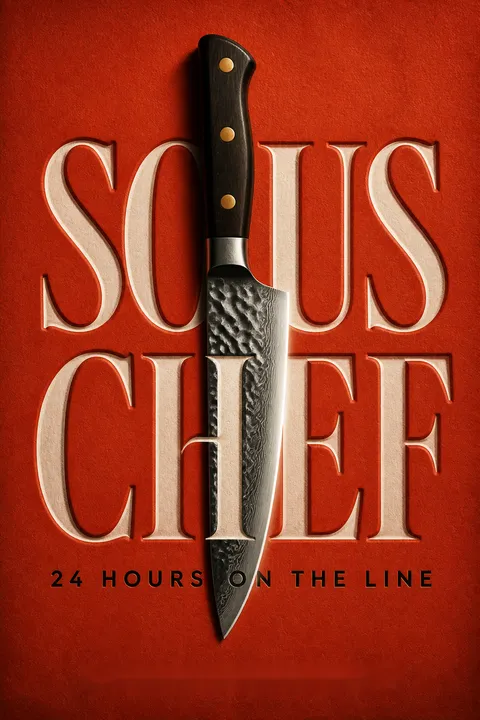
Sous Chef: 24 Hours on the Line turns one composite restaurant day into a close study of work that diners rarely see. Its structure is cyclical: an immaculate morning gives way to preparation, a punishing dinner rush, cleanup, drinking, a short night, and another shift. The return to brunch makes the rhythm feel less like a single dramatic ordeal than a recurring occupational reality. The book’s second-person narration places readers inside that cycle, where they must learn the kitchen’s vocabulary through action rather than detached explanation.
The central subject is not simply cooking technique. It is coordination under pressure. Safe storage, sharp knives, prep sequences, station assignments, ticket calls, and the pass all connect individual skill to an operation capable of feeding hundreds. The most revealing moments are often failures: an absent cook, a misread order, an undercooked fish, or a station overwhelmed by illness. These episodes show that excellence depends on systems and colleagues as much as on a chef’s talent.
The book also holds two ideas in tension. Cooking is presented as skilled service to people who may never know who fed them. At the same time, the work demands long hours, missed personal plans, smoking breaks, and drinking after shifts. Camaraderie makes the strain bearable, but it does not erase it. That tension prevents the story from becoming a simple celebration of hard work: devotion can be sincere while the conditions remain punishing.
Because the author says he draws on multiple restaurants and periods, the day should be read as a crafted composite, not a universal portrait of every kitchen. Its specificity is its strength. The reader sees how food, labor, authority, and care meet in a real working space, and why the quiet plate arriving at a table represents far more than a recipe.
Review Summary
Sous Chef offers readers an intense, immersive experience of 24 hours in a high-end restaurant kitchen. Written in second person, it provides vivid descriptions of the culinary world's challenges, hierarchies, and techniques. While some readers found the level of detail overwhelming or the narrative style distracting, many appreciated the insider's perspective on the demanding profession. The book's strengths lie in its authentic portrayal of kitchen life, though some felt it romanticized the industry. Overall, it's recommended for food enthusiasts and those considering a culinary career.
People Also Read

Glossary
mise en place
prepared ingredients and setupThe preparation and organization of ingredients, tools, and equipment before service. Mise en place can refer both to the work of getting ready and to the items produced by that work. In the book, a cook’s station is considered ready when its ingredients are portioned, tools are accessible, and the workspace is organized for orders.
brigade de cuisine
hierarchy of kitchen rolesA system of kitchen organization that assigns responsibilities through a hierarchy of chefs and station cooks. The book describes the executive chef, sous chefs, meat and fish cooks, vegetable cooks, cold-side staff, prep cooks, and dishwashers as parts of a coordinated brigade. The structure clarifies duties, while successful service depends on communication across its ranks.
pickup
group of orders prepared togetherA batch of table orders that the chef coordinates for simultaneous preparation and service. The chef groups tickets, announces the tables, and adjusts the sequence to account for how busy each station is. Cooks then prepare the food to a shared timing plan, and the pass organizes the finished dishes before they go to the dining room.
soigné
carefully executed and presentedA kitchen term for food made with careful attention to ingredients, technique, and presentation. It implies more than visual polish: the dish should be properly cooked, seasoned, and handled, then served in a considered form. The book connects the term to care for the diner, treating a well-made plate as evidence that someone has looked after the person who will eat it.
FAQ
What's "Sous Chef: 24 Hours on the Line" about?
- Day in the life: The book provides a detailed account of a single day in the life of a sous chef, capturing the intensity and rhythm of working in a high-end restaurant kitchen.
- Narrative style: Written in the second person, it immerses the reader in the experience, making them feel as if they are the sous chef navigating the challenges of the kitchen.
- Kitchen dynamics: It explores the hierarchy, teamwork, and pressure that define the kitchen environment, highlighting the roles and responsibilities of each team member.
- Culinary insights: The book offers insights into the culinary world, including techniques, terminology, and the passion that drives chefs.
Why should I read "Sous Chef: 24 Hours on the Line"?
- Authentic experience: The book provides an authentic glimpse into the life of a professional chef, making it a must-read for food enthusiasts and aspiring chefs.
- Engaging narrative: Michael Gibney's writing style is engaging and vivid, drawing readers into the fast-paced world of a restaurant kitchen.
- Educational value: It offers a wealth of knowledge about culinary techniques, kitchen operations, and the intricacies of food preparation.
- Inspiration and passion: The book captures the passion and dedication required to succeed in the culinary industry, inspiring readers to appreciate the art of cooking.
What are the key takeaways of "Sous Chef: 24 Hours on the Line"?
- Teamwork is crucial: The success of a kitchen relies heavily on teamwork and communication among its members.
- Attention to detail: Precision and attention to detail are essential in maintaining the quality and consistency of dishes.
- High-pressure environment: The kitchen is a high-pressure environment that demands quick thinking, adaptability, and resilience.
- Passion for cooking: A deep passion for cooking and a commitment to excellence drive chefs to endure the challenges of the profession.
What are the best quotes from "Sous Chef: 24 Hours on the Line" and what do they mean?
- "Cooking will always keep calling you back." This quote reflects the irresistible pull and passion that chefs feel for their craft, despite the challenges they face.
- "We are here to cook for people." It emphasizes the fundamental purpose of a chef's work: to nourish and bring joy to others through food.
- "Every table is PPX, every guest is a VIP." This highlights the importance of treating every guest with the utmost care and attention, ensuring a memorable dining experience.
- "Focus, discipline, effort, care." These words encapsulate the core values that drive success in the culinary world, underscoring the dedication required to excel.
How does Michael Gibney describe the kitchen hierarchy in "Sous Chef: 24 Hours on the Line"?
- Brigade system: The kitchen operates under a brigade system, with clearly defined roles and a chain of command that ensures efficiency and order.
- Executive chef: The executive chef is the leader, responsible for overseeing the entire kitchen operation and making key decisions.
- Sous chef: The sous chef acts as the executive chef's right hand, executing their vision and managing the day-to-day activities of the kitchen.
- Line cooks and prep staff: Line cooks and prep staff handle specific tasks and stations, working together to prepare and serve dishes.
What specific culinary techniques are highlighted in "Sous Chef: 24 Hours on the Line"?
- Arrosé technique: The book describes the arrosé technique, which involves basting food with hot fat to enhance flavor and speed up cooking.
- Sous vide cooking: Sous vide is a method of cooking food slowly in a vacuum-sealed bag at a precise temperature, ensuring perfect doneness.
- Knife skills: The importance of sharp knives and precise cuts is emphasized, as they are crucial for maintaining the quality of ingredients.
- Plating and presentation: The book highlights the art of plating, where food is arranged beautifully to enhance the dining experience.
What challenges do chefs face according to "Sous Chef: 24 Hours on the Line"?
- Time pressure: Chefs work under constant time pressure, needing to prepare and serve dishes quickly without compromising quality.
- High expectations: There is a constant demand for perfection, with every dish expected to meet high standards of taste and presentation.
- Physical demands: The job is physically demanding, requiring long hours on one's feet and the ability to handle hot and heavy equipment.
- Emotional stress: The high-pressure environment can lead to emotional stress, requiring chefs to manage their emotions and maintain focus.
How does "Sous Chef: 24 Hours on the Line" depict the relationship between chefs and their team?
- Mutual respect: The book emphasizes the importance of mutual respect and trust among team members to ensure smooth kitchen operations.
- Communication: Effective communication is crucial for coordinating tasks and managing the flow of service in a busy kitchen.
- Mentorship: Experienced chefs often mentor younger cooks, passing on knowledge and skills to help them grow in their careers.
- Conflict resolution: The book illustrates how conflicts are resolved quickly to maintain harmony and focus on the common goal of serving great food.
What role does creativity play in "Sous Chef: 24 Hours on the Line"?
- Menu development: Creativity is essential in developing new dishes and specials that excite and delight diners.
- Problem-solving: Chefs use creativity to solve problems, such as substituting ingredients or adjusting recipes on the fly.
- Presentation: Creative plating and presentation enhance the visual appeal of dishes, making them more enticing to guests.
- Innovation: The book highlights the importance of innovation in staying competitive and keeping the menu fresh and interesting.
How does Michael Gibney convey the sensory experience of cooking in "Sous Chef: 24 Hours on the Line"?
- Vivid descriptions: Gibney uses vivid descriptions to capture the sights, sounds, and smells of the kitchen, immersing readers in the sensory experience.
- Attention to detail: The book pays close attention to the details of cooking, from the sizzle of a pan to the aroma of fresh herbs.
- Emotional connection: The sensory experience is tied to the emotional connection chefs have with their craft, highlighting the passion and satisfaction of cooking.
- Engaging narrative: The second-person narrative style draws readers into the experience, making them feel as if they are part of the kitchen action.
What advice does "Sous Chef: 24 Hours on the Line" offer to aspiring chefs?
- Embrace hard work: Success in the culinary world requires dedication, hard work, and a willingness to learn and improve.
- Develop strong skills: Aspiring chefs should focus on developing strong technical skills, such as knife work and cooking techniques.
- Stay passionate: Maintaining a passion for cooking is essential for enduring the challenges and long hours of the profession.
- Value teamwork: Building strong relationships with colleagues and working effectively as part of a team are crucial for success in the kitchen.
How does "Sous Chef: 24 Hours on the Line" reflect the broader culinary industry?
- Realistic portrayal: The book offers a realistic portrayal of the culinary industry, capturing both the glamour and the grit of working in a professional kitchen.
- Industry challenges: It highlights the challenges chefs face, such as maintaining quality under pressure and adapting to changing trends.
- Culinary culture: The book delves into the culture of the culinary world, including the camaraderie, competition, and creativity that define it.
- Inspiration and aspiration: It serves as both an inspiration for those passionate about cooking and a cautionary tale about the demands of the industry.
Download PDF
Download EPUB
.epub digital book format is ideal for reading ebooks on phones, tablets, and e-readers.








