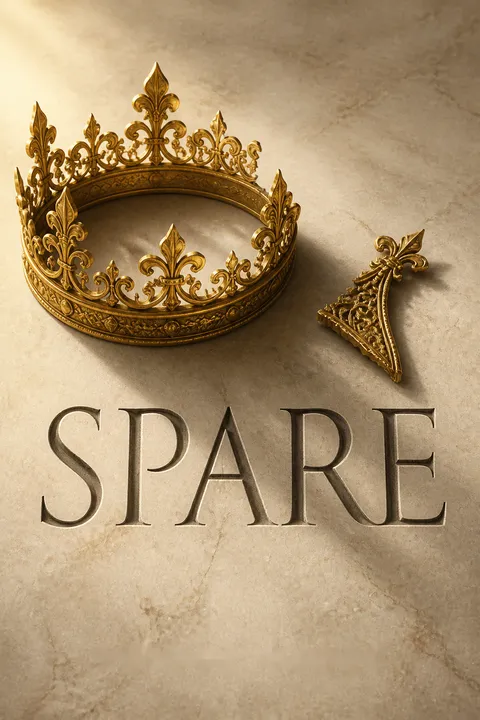


Key Takeaways
The Spare role made belonging feel like a job to perform
A rank became a role. Harry describes growing up as the younger son, with his brother’s position as heir shaping even their childhood arrangements. At Balmoral, William had the larger half of their shared bedroom. In family shorthand, Harry was the backup if something happened to his brother, including, in his darkly comic account, a source of spare body parts. He says he accepted this as an unchangeable fact and understood loyalty as standing behind those he loved.
The title reached inward. Being the Spare was not only his place in the succession or a label used by newspapers. It became a template for how he understood his value: useful in support, but rarely central. The book’s title names that private burden as much as his public position.
What's striking is how a constitutional category becomes an intimate family script. The role gives Harry a ready-made purpose, which can feel like belonging, but it also makes affection seem conditional on usefulness. That pattern is not unique to royalty: families often assign children fixed parts, such as caretaker, achiever, or peacemaker. The difference here is that succession made the assignment official and highly visible. The memoir also shows that accepting a role without complaint does not mean it has no cost.
Childhood denial postponed grief, but could not make loss disappear
The mind rejected the news. Harry was twelve when his father told him that Diana had died in a Paris car crash. He recalls not crying, and later imagining that his mother had staged her death to escape public attention. Even a lock of her hair, brought back by an aunt, did not end the hope that she was alive somewhere. At the funeral, he cried while imagining the possibility of her death, rather than accepting it as fact.
Grief waited in the wings. For years, he says, the belief that she might return helped him avoid fully facing the loss. His memories of her felt inaccessible, and he regretted not telling her how much he loved her during their final phone call. The memoir presents grief as delayed, not absent.
The account complicates the familiar idea that grieving means steadily moving from disbelief to acceptance. For Harry, uncertainty becomes a shelter: it softens an unbearable reality, but keeps him suspended in it. That is an emotionally intelligible response, not evidence of indifference. The memoir also recognizes that memory is not a recording device. The scenes are vivid, yet he repeatedly questions their order and accuracy. That self-awareness makes the story more trustworthy as an account of felt experience, while limiting its value as a precise chronology.
When coverage becomes stalking, privacy becomes a safety measure
Public attention crossed a line. Harry describes photographers pursuing his mother, then turning their cameras on her children. After her death, he and William walked past mourners while being photographed; at school, tabloids turned a bad haircut into a fabricated image and a minor thumb injury into a sensational crisis. Later, a newspaper used photos from a charity visit to suggest he had been to drug rehabilitation, a claim he says was false.
A public role became a product. He felt that coverage assigned him permanent parts, including the naughty prince and the foolish one, regardless of what he actually did. The book portrays privacy not as a wish to avoid all scrutiny, but as protection from harassment, exposure, and stories that distort a person into a marketable character.
The distinction between scrutiny and intrusion matters. Public institutions deserve reporting, but a person’s public status does not make fabricated claims or relentless pursuit harmless. The memoir’s sharpest point is that attention can change from observation into a commercial incentive: the more distressing the image, the more valuable it may become. At the same time, a first-person account cannot establish every photographer’s motive or every newsroom’s practice. Its force lies in showing what sustained exposure felt like to the people living inside it.
Combat gave him a role, not immunity from grief or fear
The battlefield offered structure. After a deployment to Iraq was canceled because threats against him put other soldiers at risk, Harry eventually served in Afghanistan. As a forward air controller, he monitored battlefield information and coordinated aircraft with troops on the ground. Later, as an Apache gunner, he flew missions supporting troops under fire. Using the name Widow Six Seven, he felt unusually anonymous and useful, far from the royal identity that followed him at home.
Responsibility remained personal. He says that recorded footage let his unit review each strike and that he counted twenty-five enemy combatants killed across his tours. He describes neither pride nor shame in the number, but insists on accountability. Combat gave him purpose, yet war did not erase the grief and anger he had carried since childhood.
The military gives Harry a role with clear tasks, a team, and immediate consequences. That structure contrasts with the vague, performative demands of royal life. But the story also resists the idea that purpose is a cure: combat can organize distress without resolving its source. His reflections on recorded targeting sharpen the ethical tension. Technical precision can support accountability, but it can also make killing feel abstract. His insistence on counting the dead confronts that risk without pretending it disappears.
Turn a public platform toward veterans' agency, not royal celebrity
Service widened beyond the uniform. Harry’s time in Lesotho led him to support children affected by HIV through Sentebale, which he founded with Prince Seeiso. His work in Africa also drew him toward conservation and the threat to wildlife. After meeting wounded service members, he became determined to create a major sporting event that could draw attention to their lives and recovery.
Competition offered a new role. That effort became the Invictus Games, an international event for wounded, injured, and sick service personnel and veterans. Harry had seen American Warrior Games and heard competitors explain how sport helped them reconnect with their abilities. He also visited an injured soldier who later ran a marathon. The games made recovery public without reducing participants to their injuries.
The shift from royal visibility to useful visibility is central here. Harry’s platform matters most when it directs attention toward people who are usually spoken about rather than listened to. Sport supplies a concrete setting for agency: athletes compete, adapt, and define their own ambitions. There is a tension, though. Public stories of resilience can inspire, but they can also turn injured people into symbols for audiences. The account is strongest when it keeps the focus on participants’ choices, relationships, and work, not simply on the spectacle of overcoming adversity.
Name the grief before it hardens into panic, anger, and avoidance
Distress took other forms. Years after Diana’s death, Harry describes panic around crowds, cameras, public appearances, and even putting on a suit. He stayed home, drank, and tried to avoid the situations that triggered him. A therapist helped him connect these reactions to trauma, including the loss of his mother, which he had spent years refusing to face.
Speaking made memory accessible. His partner Cressida helped him cry about his mother for the first time since the funeral. Later, therapy brought back memories he thought were gone. Smelling his mother’s perfume helped him recall ordinary moments, such as sharing sweets and being chased by photographers in a car. The return of memory brought pain, but also joy at hearing her laughter again.
The memoir presents emotional avoidance as protective in the short term and costly over time. Anger, panic, and withdrawal are not treated as character flaws; they are signals that an unresolved experience is still shaping the present. Sensory memories make this especially vivid: a smell can open access to scenes that deliberate searching cannot reach. Yet vivid recall is not the same as perfect recall. The account is most useful when read as Harry’s changing relationship with memory, rather than as a claim that recovered impressions settle every historical detail.
Defend your partner before institutional silence normalizes abuse
The attacks changed character. When Harry began dating Meghan, tabloids published racist and class-based coverage, pursued her family, and spread stories he says were false. The harassment continued during her pregnancy and after Archie’s birth. Meghan’s private letter to her father was published, and Harry describes her as becoming so overwhelmed that she considered ending her life.
Silence felt like abandonment. Harry says he asked Palace staff and family members to intervene, but they often advised him to ignore the coverage or avoid public comment. He eventually issued a statement and pursued legal action. In his account, the institution’s reluctance to defend Meghan did not remain neutral: it left her exposed while protecting the family’s relationship with the press.
A powerful institutional lesson emerges: silence can communicate alignment even when decision-makers describe it as restraint. In a crisis, the absence of a correction or defense may protect short-term relationships while placing the cost on the person under attack. The memoir’s account also invites care in separating impact from intent. It cannot prove that every quiet response was designed to harm Meghan. It does show why a system that values message control over an individual’s safety can feel, to that individual, like complicity.
Inherited roles can keep brothers competing after childhood ends
Siblinghood carried a rank order. Harry and William shared childhood memories, grief, and military interests, but the Heir and the Spare never stood on equal ground. Harry describes William’s distance at school and conflicts over how much independence Harry should have. As adults, their disagreements deepened around Meghan, press coverage, and their competing roles within the family.
Trust broke in stages. Harry recounts an argument at his home in which William shoved him to the floor, followed by later confrontations and long silences. At Frogmore after their grandfather’s funeral, the brothers and their father again failed to agree on why Harry had left Britain. The memoir does not end with a repaired relationship. It ends with love still present, but trust badly damaged.
This is more than a story of two brothers who argue. Their family gives ordinary sibling rivalry an institutional structure: one son inherits the central role, while the other must define himself beside it. That imbalance can make disagreement feel like insubordination rather than a conflict between peers. The account is necessarily one-sided, and its descriptions of private conversations cannot settle the other brother’s view. Still, the narrator’s admission that both men felt unheard prevents the conflict from becoming a simple tale of one speaker and one villain.
Leaving the palace was an attempt to regain safety and choice
The proposed compromise failed. Harry and Meghan hoped to spend part of each year away from Britain while continuing public service. At the Sandringham meeting, the family considered several arrangements, but Harry says the realistic choices narrowed to staying in the old role or leaving it entirely. They eventually stepped back from royal duties and moved to North America.
Independence came with costs. The couple lost official security, royal positions, and financial support from Harry’s father. They relied on friends for temporary shelter while arranging protection and a new home. Harry presents the decision not as a rejection of service, but as an effort to protect his family and reclaim control over their lives. He also acknowledges that access to friends, money, and private security made their escape possible.
The departure is framed as a safety decision, not a lifestyle upgrade, and the distinction matters. Yet the story also exposes a privilege most people cannot rely on: a powerful network, inherited resources, and the ability to hire protection. That does not invalidate the danger described; it clarifies the unusual means available to respond to it. The deeper question is whether a role that requires surrendering autonomy can remain sustainable when its protections appear conditional. Harry’s account says that, for his family, it could not.
Let fatherhood, not succession, define what you pass on
A new family changed the measure. Harry and Meghan’s son Archie was born amid extraordinary secrecy, followed later by their daughter Lilibet. Harry describes being present through the births and wanting his children to know safety, tenderness, and a less constrained home life. Becoming a father also brought his mother’s absence into sharper focus: ordinary acts of care carried both happiness and grief.
The title lost its final word. At his daughter’s birth, Harry describes holding her briefly before placing her with Meghan. He understands the moment as a new kind of identity, not based on succession or service to a royal institution. The memoir’s closing image is not a restored family hierarchy, but a father and mother building a life with their children.
The ending turns the title inside out. Harry begins by describing a life defined by his position relative to an heir; he closes by measuring himself through care for the next generation. That does not erase the grief, press conflict, or family rupture that precede it. Rather, it offers a different inheritance: emotional presence instead of assigned rank. The memoir’s claim is intimate, not universal. Parenthood does not automatically heal old wounds, but it can make the choice to repeat or interrupt family patterns newly concrete.
Analysis
Spare is a memoir of identity under pressure. Its central question is not simply why Harry left royal life, but how a person becomes legible to himself when family, institution, press, and public keep assigning him a role. The title condenses that conflict: a constitutional backup becomes a psychological position, then a media character, then a role the narrator tries to escape.
The book’s structure links private memory to public events. Diana’s death is both an early bereavement and the beginning of Harry’s suspicion that visibility can be dangerous. Later scenes of tabloid fabrication, military service, panic, therapy, marriage, and departure accumulate around that original rupture. The result is an argument about causation: childhood loss does not explain every adult choice, but it shapes what safety, loyalty, and abandonment mean to the narrator.
Memory is central to the book’s credibility and its limits. Harry openly describes gaps, uncertain sequences, and recollections restored through therapy. That candor distinguishes emotional truth from documentary certainty. Readers should therefore recognize the narrative as testimony, not a neutral history of the royal household. Private motives attributed to relatives, courtiers, and journalists remain his interpretations, even when the effects on him are clearly described.
The memoir is also strongest when it shows competing systems of loyalty. The Army gives Harry clear duties and comradeship; royal life demands public service while restricting autonomy; the press turns attention into an economic pressure; family silence can preserve institutional calm while deepening personal injury. His exit makes these systems visible, but does not solve them. The narrative closes with a new household and a changed sense of self, not a final reconciliation. That unresolved ending suits the book’s deepest insight: leaving a role can be necessary, but it cannot by itself repair the relationships that role has damaged.
Review Summary
Spare receives mixed reviews, with ratings ranging from 1 to 5 stars. Positive reviews praise Harry's honesty and vulnerability, while negative reviews criticize his perceived entitlement and lack of self-awareness. Many readers find the book well-written and compelling, offering insights into royal life and Harry's personal struggles. Critics argue that the memoir is self-indulgent and potentially damaging to family relationships. The book's length and structure are debated, with some finding it overly long and others appreciating its detailed accounts.
People Also Read









Glossary
Heir and the Spare
succession rank becomes identityThe Heir is the person next in line to inherit the throne; the Spare is the next child, whose position historically provides a fallback. In Harry’s memoir, the phrase extends beyond succession. It describes how family hierarchy shaped his sense of being secondary, useful in support, and expected to stand behind his older brother.
red mist
surge of angerHarry’s phrase for an intense rush of anger that narrows his attention and can overwhelm his judgment. He recalls it most often when he believes William is under attack, including childhood fights and roughhousing. The memoir connects the feeling to powerful protectiveness, while also showing that it could become difficult to control.
Royal Rota
designated royal press poolThe Royal Rota is a group of British news organizations that share reporting access to the Royal Family. Harry argues that the arrangement gives a small set of outlets privileged access and can foster a sense of entitlement. His dispute with the system includes both the conduct of individual journalists and the rules governing who receives access.
Forward air controller
coordinates battlefield air supportA forward air controller, or FAC, helps coordinate aircraft with forces operating on the ground. In Harry’s account, the role involves gathering information about the battlefield, communicating with pilots, and directing air support when troops need assistance. He trained for the work in Britain before serving in Afghanistan.
Kill TV
aircraft surveillance feedKill TV is soldiers’ informal name for a screen showing remote video from aircraft or other surveillance systems. Harry describes watching compounds, tunnels, and terrain for signs of enemy activity. The name sounds dramatic, but much of the work consists of long periods of waiting and observing rather than immediate combat.
Invictus Games
adaptive sports for service membersThe Invictus Games is an international sporting event for wounded, injured, and sick service personnel and veterans. Harry developed the idea after seeing the effect of sport on wounded competitors in the United States. The games aim to support recovery, camaraderie, and public recognition of participants’ abilities, rather than define them only by injury.
Court Circular
annual royal engagement recordThe Court Circular is the published record of official royal engagements. Harry describes it as a source of comparison among members of the family, with annual totals used to suggest who is busiest. Because the entries depend on how engagements are counted and reported, he argues that the figures can obscure differences in resources and in the kinds of work being done.
FAQ
What's Spare about?
- Personal Journey: Spare is a memoir by Prince Harry, The Duke of Sussex, detailing his life from childhood in the royal family to stepping back from royal duties.
- Themes of Grief and Loss: It explores his struggles with identity, the impact of his mother Princess Diana's death, and his journey to find his own path.
- Critique of Media and Royal Life: The book critiques the media's relentless scrutiny and the pressures of royal life, affecting his mental health and personal relationships.
Why should I read Spare?
- Authentic Voice: Prince Harry offers an unfiltered look at his life, providing insights into his thoughts and feelings often hidden from the public eye.
- Relatable Themes: His struggles with grief, identity, and mental health resonate with many readers, encouraging open discussions on these topics.
- Behind-the-Scenes Royal Life: The memoir provides a rare glimpse into the complexities of royal duties and personal desires, revealing the inner workings of the royal family.
What are the key takeaways of Spare?
- Importance of Mental Health: Harry emphasizes the need for mental health support, advocating for seeking help and breaking the stigma surrounding these issues.
- Finding Personal Identity: The memoir illustrates his journey to define his identity outside of being a royal, stepping away from duties to pursue a life aligned with his values.
- Critique of Media Influence: Harry highlights the detrimental effects of media intrusion on personal lives, calling for accountability and change in media operations.
What are the best quotes from Spare and what do they mean?
- “The past is never dead. It’s not even past.”: This quote reflects how past experiences, especially trauma, continue to influence the present, as seen in Harry's life.
- “I wanted peace.”: It signifies Harry's quest for a life free from chaos and scrutiny, seeking personal happiness and fulfillment.
- “I was the shadow, the support, the Plan B.”: This highlights his role as the "Spare" in the royal family, speaking to his struggle for recognition and individuality.
How does Spare address the impact of Princess Diana's death?
- Ongoing Grief: Harry discusses the constant pain of losing his mother and the challenges it brought throughout his life.
- Media's Role: He critiques the media's role in her death and its continued impact on his family.
- Legacy of Love: Despite the pain, Harry emphasizes the love and lessons from his mother, striving to honor her legacy through his choices.
How does Spare reflect on the media's treatment of the royal family?
- Invasive Scrutiny: Harry critiques the invasive nature of media coverage and its toll on mental health and personal well-being.
- Consequences of Fame: The memoir illustrates the pressure to maintain a certain image and the impact of negative press.
- Call for Change: Harry advocates for a more respectful and ethical approach to journalism, urging accountability in media practices.
How does Prince Harry describe his relationship with Prince William in Spare?
- Brotherly Bond: Harry reflects on their close bond during childhood, filled with shared experiences and mutual support.
- Conflict and Misunderstanding: He details moments of conflict and misunderstanding, particularly regarding their differing approaches to royal life.
- Hope for Reconciliation: Despite challenges, Harry expresses a desire for reconciliation and healing in their relationship.
What role does mental health play in Spare?
- Personal Struggles: Harry candidly discusses his mental health struggles, including anxiety and depression, stemming from childhood experiences.
- Advocacy for Support: He uses the memoir to advocate for mental health awareness, encouraging others to seek help and break the stigma.
- Healing Journey: Harry shares his journey towards healing, highlighting the significance of therapy and self-reflection.
How does Spare depict Prince Harry's military service?
- Pride in Service: Harry conveys a deep sense of pride in his military service, describing it as a significant part of his identity.
- Confronting Reality of War: The book addresses the emotional toll of war, reflecting on the complexities of combat.
- Transition to Civilian Life: Harry discusses the challenges of transitioning from military to civilian life, resonating with many veterans.
How does Spare explore themes of identity and belonging?
- Struggle for Authenticity: Harry grapples with his identity as a royal and the expectations that come with it, seeking to be true to himself.
- Search for Connection: He expresses a longing for genuine connections and understanding, both within his family and personal relationships.
- Evolution of Self: The narrative highlights Harry's evolution as he navigates royal life, military service, and personal relationships.
How does Spare address Prince Harry's relationship with Meghan Markle?
- Deep Connection: Harry describes his relationship with Meghan as transformative, emphasizing their shared values and commitment.
- Challenges Faced: He details the difficulties they encountered due to media scrutiny and public perception.
- Support and Protection: Harry’s promise to protect Meghan is a recurring theme, highlighting his commitment to her well-being.
What does Spare reveal about Prince Harry's future plans?
- Commitment to Philanthropy: Harry expresses a strong desire to continue his philanthropic work, particularly in mental health and conservation.
- Focus on Family: He emphasizes his commitment to raising his children away from royal pressures, envisioning a more private life.
- Desire for Freedom: Harry seeks freedom from royal constraints, prioritizing happiness and well-being for himself and his family.
Download PDF
Download EPUB
.epub digital book format is ideal for reading ebooks on phones, tablets, and e-readers.








